11 490 résultats
24420Three from 1937 18 January 28 November and 10 December; seven from 1938 13 20 and 27 February 6 March 7 April 6 May and 13 November. All addressed from ‘P.O. Box 286. Tsingtao. China / via Siberia’. A good well-written correspondence painting a good picture of the day-to-day life of an English expatriate in the occupied city. Letters are signed ‘Malcolm’ and once ‘Mac’. Young names himself in valedictions as Celia’s brother. He does not sign with his surname which can however be deduced from the combination of postscripts signed ‘M H Y’; and Celia being named in the endorsement to one letter as ‘C. G. Young’. He is is presumably ‘Malcolm H. Young agent’ who features in the Tsingtao / Hong Kong List for 1941. Several references indicate a conventionally Christian religiosity and some connection with a church for English expatriates in the city. Ten long letters. Three from 1937 18 January 28 November and 10 December; seven from 1938 13 20 and 27 February 6 March 7 April 6 May and 13 November. A total of 30pp 4to neatly and closely written. A little aged and worn but in good overall condition. Two of the letters are incomplete; that of 10 December 1937 only consists of the first page; that of 13 November 1938 lacks the fourth page of five. The correspondence contains a deal of personal matter but the extracts that follow concentrate on the political situation on the ground. Letter One 18 January 1937 puts us straight in the action: ‘I think I last wrote to you on Sunday before last just before the Japanese came in. This took place on the Monday without incident or conflict of any kind - no one killed or injured & no shot fired. It was a tense time however all the forenoon as it was not known what would happen. From early morning Airplanes were flying all over quite low & making an noise. It was alarming but they were only making quite sure that there were no soldiers here. They dropped a few bombs in the outskirts to frighten people - & where they thought there might be soldiers - but no harm was done. / It was a day of deliverance & thankfulness when in the afternoon they marched in quietly & took possession.’ He refers to ‘many unpleasantnesses’ as ‘a new City Govt: is inaugurated - this took place yesterday just a week after the troops came in - we are glad to have the war cloud removed - that is we hope it will be - Shops have been kept close shut & the poor Chinese much frightened by their rough treatment & seizure of houses goods & people. However they also gave employment to many coolies. Even the houses of Foreigners were not exempt from intrusion but on the whole as invading armies go they have not been too bad.’ This brings us to the end of the first of the thirty pages of text. He continues the first letter with more news of the state of affairs including: ‘We had a lot of the soldiers encamped just below here in empty summer bungalows some of whom were a nuisance & our servants were alarmed; - they even intruded on ours and our neighbours premises but did no harm: and on our complaining to the Consel who took prompt action with the Japanese Military Head Quarters were soon checked. This crowd has moved on elsewhere now & I hope we shall have no more.’ He reports that ‘The Censors . are at work here in the P.O. making delay in delivery of mails’. In the second letter November 28 1937 he reports: ‘The Japanese are advancing in the N. of the province but rather hesitantly - I suppose negotiations are going on. They have huge commercial interests in Shantung - especially at Tringtao which it is to their interest to preserve. The Chinese may be using these to bargain with the enemy at our gates. It is hard to know what is happening. Meanwhile Shai is suffering terrible aftermath of war with its hungry crowds of refugees poorly clad & with sickness among them; & still the Japanese advance & Nanking is threatened is threatened.’ He has every sympathy for ‘the Chinese who have fought so bravely’ but believes it is time to make peace ‘since they cannot hope to win in the unequal struggle. Japan’s better trained & equipped armies carrying all before them. Locally the tension increases & the price of food & coal increases. The railway being if not actually interrupted so denuded of cars removed South by the Govt. that no coal trains can come from the mines.’ On 13 February 1938 he reports on ‘Work on clearing the port - blocked by departing Chinese troops with sunken ships & other obstructions - . while the demolition of buildings - destroyed by the Chinese - is progressing preparatory to re-building later. Whatever happens the Japanese are going to keep Tsingtao so the only thing is to make the best of things & as far as possible work with them - this for Chinese & Foreigners alike . I fear that the Chinese will be afraid to open up their shops much. The Japanese are opening & numbers of them returning by every steamer from Japan & Dairen. Commodities too are showing cheaper prices. Water is very short but work is in hand for repairs & they say that after 10 days there will be improvement.’ On 6 March 1938: ‘As you surmise it is still far from plain sailing both for ourselves and the original inhabitants of these regions the Chinese. The power & authority of the new masters is everywhere felt and we as well as the Chinese have to mind our Ps & Qs with them. The name and authority of the Occidental powers is not what it was - & they like to let us know it. . The Railway is not yet working fully & the harbour is still closed’. On 6 May 1938 he bemoans ‘the present disturbed state of the country which alas shows no signs of improvement. - But what would you - if the incomers win peace & order follow but naturally the people of the land oppose them in all ways with resulting chaos & danger to all. It is very sad. & fighting with heavy losses on both sides continues. . all along the Railways we are told villages on both sides have been burned down. Business of all kinds is very little except among the Japanese who appear to be very busy & are re-building their factories & doing other business - giving employment it is true to some workmen but as they are self-sufficient & very efficient they have no use for Foreign help. Chinese with money have largely departed elsehwere & those remaining will not do anything this year. - The new regime have installed a very good & quick Bus service which gives rapid & convenient transportation to & fro town’. In the last letter 13 November 1938 he complains that ‘The days are short now & “Tokyo†time is tiresome but we adjust things to some extent by altering times. For instance Early Service Holy Communion is put at 8.30 instead of 8 which helps. We were glad to be there this morning & the church room was warmed by a welcome stove fire The first time it has been required this season. There were not so many present . On Friday 11th. we went out to the British. Cemetery here at the Cenotaph the usual memorial service was held. It as a bitter day. A detachment from H.M.S. “Folkestone†now in port were present many of the men being war veterans. There were also of course the United States Service Association members with their medals.’ Three from 1937 (18 January, 28 November and 10 December); seven from 1938 (13, 20 and 27 February, 6 March, 7 April, 6 May and unknown
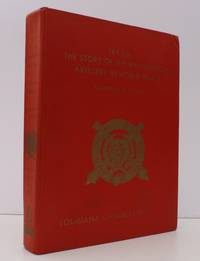
197139514Claitor's Publishing Baton Rouge LA 1971. Roy. 8vo. First Edition with photographs in the text; red cloth upper board and backstrip blocked and lettered in gilt a near fine copy. Claitor's Publishing, Baton Rouge LA, hardcover
6207132408.Gpaperback. Good. Access codes and supplements are not guaranteed with used items. May be an ex-library book. paperback
189282525Washington DC: Government Printing Office 1892. Presumed First Edition First printing. Stiff boards. Good. Format is approximately 3.75 inches by 4.75 inches. War Department Document No. 196 Office of the Adjutant General. 4 54 2 pages with two foldouts Specimen Page of a Topographical Note-Book 28 A map and Specimen Page of a Topographical Note-Book 28 B which is a table with columns entitled Remarks Left. Offsets Left. Courses and Distances. Offsets Rights. and Remarks Right. The President of the United States directs that the following regulations for troops in campaign be published for the government of all concerned and they they be strictly observed. Nothing contrary to the tenor of these regulations will be enjoined in any part of the forces of the United States by any commander whatsoever. S. B. Elkins Secretary of War. The major contents are: I Organization of an Army in the Field II Tents Baggage and Baggage Trains III Headquarters Depots etc. IV Intrenched Posts V Reconnaissances VI Military Occupations Contributions and Requisitions VII Safeguards VIII Prisoners of War IX Marches X Journals of Marches Military Maps XI Convoys and their Escorts XII Movement of Troops by Rail and Water XIII Advance Guards and Outposts XIV Sieges XV Battles. These regulations were specifically for volunteer forces not individuals in the Regular Army National Guard or Reserve. These were the regulations of record during the Spanish-American War and possibly also for the Punitive Expedition into Mexico led by General Pershing. The Army of the United States is one of the four major service components of the United States Army the others being the Regular Army the United States Army Reserve and the Army National Guard of the United States but it has been inactive since the suspension of the draft in 1973 and the U.S. military's transition to a volunteer force. Personnel serving in the United States Army during a major national emergency or armed conflict either voluntarily or involuntarily were enlisted into the Army of the United States without specifying service in a component. It also includes the "Retired Reserve". Those are retired soldiers that have reached the required years of creditable service or creditable service and age; regardless of the component or components they formerly served in. The term "Army of the United States" or "Armies of the United States" is also the legal name of the collective land forces of the United States as prescribed by the United States Constitution. In this concept the term "Army of the United States" has been in use since at least 1841 as in the title General Regulations for the Army of the United States. The original concept of a non-Regular Army component existing to augment the standing military can trace its origins to the United States Volunteers. State volunteer forces were used extensively to augment the Regular Army throughout the 19th and early 20th century. There is no equivalent to the Army of the United States in the Navy Marine Corps or Coast Guard. During WWII officers who joined one of these branches were typically commissioned into the "Naval Reserve" "Marine Corps Reserve" or "Coast Guard Reserve" respectively the last of these being newly created in the run up to the war with the understanding that their active service would be only for the duration of the hostilities. In 1948 for a very brief period a component known as the "Air Forces of the United States" AFUS existed to augment Army Air Forces personnel who held AUS ranks into the newly created United States Air Force. Government Printing Office hardcover
19162445Brownsville 1916. Very good. Panoramic photograph approximately 7.5 x 39.5 inches. Mounted on card manuscript identifications along foot. Light wear minor soiling. A large formal portrait of Troop C of the 1st Virginia Cavalry in camp at Fort Brown Brownsville Texas. National guard units were called up in 1916 to guard the border while General Pershing made his incursions into Mexico against revolutionary and regular military units involved in the Mexican revolution and civil war of the 1910s. The image depicts the entire troop mounted in a single file with the commissioned officers at far left sixty-six men in all. Although the photographer does not identify himself each man in the unit is named in clear manuscript along the foot of the photograph making the present image a valuable record of the Virginia Cavalry's service in Texas during the Border War. unknown
19952111902153101029Nippon Eiga Shinsha/Nippon Crown 1995. Soft Cover. Fine. Number of books: 1 Nippon Eiga Shinsha/Nippon Crown paperback
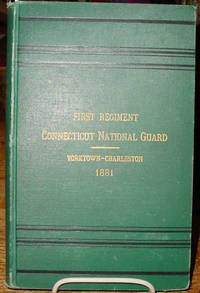
188232984Hartford CT: Press of the Case Lockwood & Brainard Company. Fair with no dust jacket; Boards worn first signature starting rear . hinge tender. 1882. Hardcover. Blindstamped green cloth binding stamped in black and gilt on front boards and spine. Within two decades after the close of the American Civil War the 600 members of the Connecticut National Guard and Governor Hobart B. Bigelow and his retinue traveled to Virginia and South Carolina to celebrate the Centennial of the surrender of Lord Cornwallis at Yorktown and help unveil a commemorative monument. Connecticut was one of the original thirteen American colonies sending a military and political presence to mark the occasion. Charleston was tacked onto the trip as "it became more and more apparent that the Yorktown ceremonies would be tiresome and the pleasure but little owing to its almost inaccessibility the obvious mismanagement of the managers in the matter of making visitors comfortable and the well-known quality of Virginia mud and sand." A lively account of this junket from ballads about sea-sickness the warmth of the reception accorded to Yankee soldiers in former "Rab" territories and how "the Connecticut boys took quite kindly to corn whiskey". Includes speeches news articles and sermons by various participants and local press. One speech by New Haven Postmaster Henry T. Sperry states that "the vote of the people should be directed by intelligence" and that "the south needs assistance to secure the enlightenment and education of her masses and the time is not far distant when she will get it" alluding to voting restriction laws. The Connecticut National Guard had traveled south by steamer but various problems led to a return trip by rail so the soldiers stopped off in various cities and towns including Columbia South Carolina where they hired some "darkies" to sing and dance. Many engravings of various Connecticut politicos and soldiers and one strange view of the back of the author's balding head. Rathbun refers to himself throughout the narrative as The Historian. There is a strange engraving on the errata page at the rear depicting Sperry's Buzzard in Charleston it's a chicken-like bird running after a flying grasshopper and a Sperry's Buzzard in Hartford a buzzard body with a stereotypical blackface human head. H. T. Sperry was the aforementioned New Haven postmaster who was also a poultry judge and fancier who was apparently enamored of the buzzards of Charleston. An illuminating look at how quickly white elites from North and South were able to reconnect as Americans after the Civil War but how African-Americans were excluded by both. ; 8vo 8" - 9" tall . Press of the Case, Lockwood & Brainard Company hardcover
1988015576Baarn: Bosch & Keuning N.V. 1988 3 banden in kunstleder complete set in schuifcassette. Licentie-uitgave voor Sesam-Hilversum b.v. Foto's kaartjes afbeeldingen. Band 1 oorlog 1870-1871 1e Wereldoorlog 367 pagina's. fotokatern ongenummerd; band 2 Tweede Wereldoorlog 1939-1942 432 pagina's; band 3 Tweede Wereldoorlog 1943-1945 448 pagina's. reprint / herdruk. artificial leather/kunstleder. good / goed. A5 formaat. Bosch & Keuning N.V. unknown
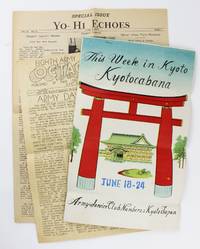
194931741949. Very good. Three items as detailed below. Old folds general overall wear. A collection of three items printed for American military personnel serving in occupied Japan following World War II. These items are as follows:<br /> <br /> 1 Eighth Army Octagram. Vol. 13 No. 31. Published by TI&E Sec. HQ. Eighth Army. Yokohama: April 7 1949. 4pp. on two loose folio sheets. Single issue of this scarce U.S. Army regimental newspaper that touts itself as "The Only English Language Newspaper Published Daily in Yokohama." This issue contains stories on the Army Day Parade and house number changes for military personnel along with Classified ads news on "Cinemas & Clubs"a notice on Jewish Services and more.<br /> <br /> 2 Yo-Hi Echoes. Special Issue. Vol. II No. 13. Yokohama: June 10 1949. 4pp. on a single folded sheet of newsprint. Contains news and notes on student and school activities at the Yokohama American School. "Yokohama American School got underway in 1946 when the Eighth Army took over a girls’ commercial college. The school started with eighteen students and two teachers. The original building consisted of a three-story structure with twelve classrooms a gym auditorium lab room sewing room and an art studio. By September 1947 the school had grown to 150 students and ten teachers. In 1948 it produced its first graduating class of 24 students" - American Overseas Schools Historical Society.<br /> <br /> 3 This Week in Kyoto. Kyotocabana. Army Service Club Number 23. Kyoto: June 1949. 6pp. Original pictorial self wrappers stapled. Contains event programs news descriptions of services information on shopping the area and more for the Army Service Club in Kyoto Japan. unknown
20130739174703_usedLexington Books 2013-04-25. Hardcover. Like New. 0x0x0. Lexington Books hardcover
20130739174703_newLexington Books 2013-04-25. Hardcover. New. 0x0x0. Lexington Books hardcover
2015x-1498511015Lexington Books 2015. Paperback. New. reprint edition. 203 pages. 9.25x6.00x0.75 inches. Lexington Books paperback
0332844994.Ghardcover. Good. Access codes and supplements are not guaranteed with used items. May be an ex-library book. hardcover
133495450X.Gpaperback. Good. Access codes and supplements are not guaranteed with used items. May be an ex-library book. paperback
20152111902154607561Shiromizu-sha 2015. Soft Cover. Fine. The book is in fine condition. Shiromizu-sha paperback
20022111902154700492Gendaijinbunsha Daigakusho 2002. Soft Cover. Fine. Number of pages: 79p Size: 21cm Gendaijinbunsha Daigakusho paperback
1917EN5945New York: E. P. Dutton & Co 1917. HB. Tan cloth black lettering on front cover and spine 16mo xvi 144 pp. The author was an American from Philadelphia who enlisted in the 29th Vancouver Battalion in 1914 saw action along the Belgian front and was commissioned a second lieutenant in the British army in 1916. This manual attempts to explain in detail what trench warfare was like in World War I. Owner's name and address on ffep no other marks in book binding tight. Minor soiling to edges of text block. Book condition VG. E. P. Dutton & Co hardcover
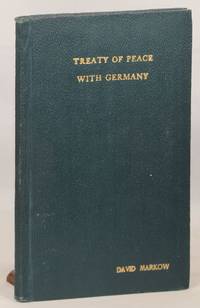
1919000014223Washington DC: Government Printing Office 1919. First edition. Hardcover. Very Good. 8vo. 3 4-192 pp. Bound in later green faux leather with gold lettering on the front board. Bound without the original wrappers. From the 66th Congress the 1st session document number 49. The concluding document of the First World War and according to some the catalyst for the Second World War. A small split to the front hinge. Government Printing Office hardcover
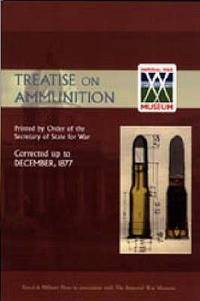
188854207London: H. M. S. O. 1888. 1st edition. Nice Copy. tall octavo. orig. cloth 4 142 vipp. fldg. pls. appends. index Fine manual inc. many nice plates some folding & some colour primarily of weapon mechanisms & ammunition. Scarce H. M. S. O. hardcover
1843425602.Gpaperback. Good. Access codes and supplements are not guaranteed with used items. May be an ex-library book. paperback
2003x-1843425327Naval & Military Press Ltd 2003. Paperback. New. new edition edition. 404 pages. 9.13x6.14x1.02 inches. Naval & Military Press Ltd paperback
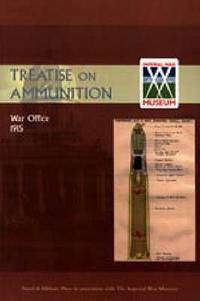
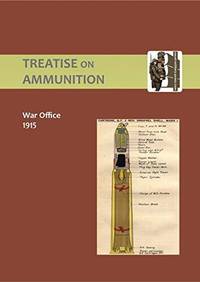
ria9781843425601_inpPaperback. New. New Book; Fast Shipping from UK; Not signed; Not First Edition; This Naval and Military Press series on military technology continues with this very important publication which gives details of all ammunition in use by the British Army at the end of 1914. With few exceptions it covers ammunition paperback
1737735like new. unknown
1737735-nnew. unknown
19073818London: Harrison and Sons 1907. Good. Octavo : pp. 3 publisher adverts including paste-down 166pp 7 publisher adverts including final paste-down 2 pp errata loosely inserted : 27 plates as called for : a.e. speckled : original red cloth boards with debossed double borders and corner decorations lettered in gilt to spine.<br /> <br /> Some holes in the cloth; covers covered in adhesive plastic : leaves with the publisher's adverts are toned; errata are edge-worn; two short red lines to the outer margin op.10 highlighting an observation about the porous nature of coal. Harrison and Sons unknown