1 572 résultats
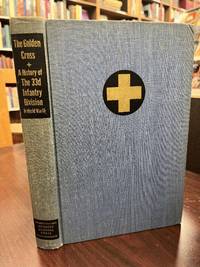
1948231312Infantry Journal Press 1948-01-01. First Edition. hardcover. Good. 0x0x0. First Edition stated. Blue cloth boards have minor wear top front board has a bump minor fading of color to the spine and board edges. Clean has a good binding no marks or notations. 404 pages. Infantry Journal Press hardcover
19202090202120402693Ogawa makoto Kiyoshi 1920. Soft Cover. Fine. Number of books: 1 Ogawa makoto Kiyoshi paperback
0365553999.Ghardcover. Good. Access codes and supplements are not guaranteed with used items. May be an ex-library book. hardcover
1333689519.Gpaperback. Good. Access codes and supplements are not guaranteed with used items. May be an ex-library book. paperback
0331597187.Ghardcover. Good. Access codes and supplements are not guaranteed with used items. May be an ex-library book. hardcover
178039506X.Gpaperback. Good. Access codes and supplements are not guaranteed with used items. May be an ex-library book. paperback
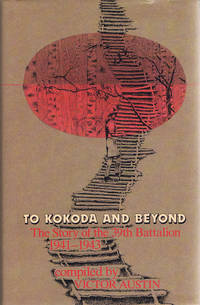
1988133289Melbourne: Melbourne University Press 1988. Pp. xviii268last blank 12 plates full page maps and plans appendices index; dust wrapper; date stamp 25 Mar 1988 on upper free endpaper; Melbourne University Press Melbourne 1988. First edition. The 39th Australian Infantry Battalion was formed in late 1941 and existed as a unit for less than two years. Almost immediately the largely untrained battalion found itself in the front line of Australia's defence in Port Moresby just after the Japanese attack on Pearl Harbour. Melbourne University Press unknown
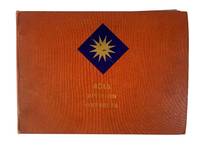
1944220931944. 40th Infantry Division Pacific campaign photograph album documenting combat operations and daily military life of U.S. Army forces during World War II. The 40th Infantry Division served extensively in the Southwest Pacific Theater participating in campaigns across New Guinea New Britain and the Philippines as Allied forces advanced against Japanese defensive positions. The photographs record amphibious landings artillery operations destroyed towns and the collaboration between American troops and Filipino guerrilla forces during the campaign to liberate the Philippines. The album therefore documents the operational environment of Pacific warfare including jungle terrain fortified Japanese defensive networks and the logistical systems required to sustain prolonged combat across island battlefields.<br /> <br /> Photograph album containing approximately 200 original black and white photographs documenting operations of the 40th Infantry Division during the Pacific campaigns of World War II. Each photograph is sequentially numbered in white ink at the lower corner and corresponds to descriptive entries in a photographic index within the album. Early images depict American Red Cross workers disembarking from landing craft and greeted by U.S. soldiers illustrating the presence of female support personnel assigned to medical and relief operations. Additional photographs record amphibious landing scenes aerial views of destroyed towns in Luzon artillery and tank operations and soldiers operating mounted machine guns overlooking jungle valleys. Several images depict Japanese military casualties reflecting the intense close combat that characterized fighting across the Pacific islands. A printed military map within the album shows Japanese tunnel and cave fortifications in the Zambales Mountains illustrating defensive positions encountered during operations in the Philippines.<br /> <br /> The album also documents logistical and civilian dimensions of the campaign. Photographs show ships unloading cargo Filipino guerrilla units marching through urban streets and groups of local porters assisting Allied forces in moving supplies through mountainous terrain. Weapons and equipment visible in the images include field artillery pieces mortars and armored vehicles such as the M4 Sherman. One photograph depicts African American soldiers accompanied by scout dogs operating in jungle terrain illustrating the presence of Black servicemen serving within the segregated structure of the wartime U.S. Army. Other photographs show tent encampments mess areas interactions with local populations and the recovery of prisoners of war following combat operations. The photographs collectively present a visual record of combat logistics and daily military life during the Pacific campaigns. Album contains approximately 200 photographs with indexed numbering. Light handling wear visible to album and photographs consistent with wartime field compilation. Overall condition very good. unknown
1946mon0003554016Army and Navy Publishing Company 1946T. hardcover. Good. . shows minor wear and foxing. Army and Navy Publishing Company hardcover
195273990Atlanta Ga.:: Albert Love Enterprises 1952. First edition. publisher's embossed cloth. Colorful hotel label on front pastedown; slight tanning to endsheets; light use to cloth at extremities. Tight and sound. Folio. Illustrated throughout from photographs. Albert Love Enterprises], hardcover
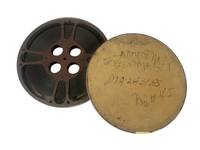
1945232061945. Capra Frank. Japanese-Americans a 1945 wartime military screen magazine segment film reel highlighting Japanese American service in the U.S. Army's information and morale boosting film distributions during the final year of World War II. Produced for exhibition to servicemen as part of Army-Navy Screen Magazine No. 45 the segment is also an example of the wartime contributions of legendary Italian-American filmmaker Frank Capra one of Hollywood's most influential directors best known for It Happened One Night Mr. Smith Goes to Washington and It's a Wonderful Life. During World War II Capra became a major figure in official U.S. military filmmaking directing or supervising films that translated government policy and Allied war aims into accessible emotionally forceful cinema for soldiers and civilians. Here his Army film work presents Nisei troops not as an isolated human-interest subject but as participants in a broader program joining military projection democratic rhetoric and controlled public acknowledgment of Japanese American loyalty after mass incarceration. The film's focus on the 100th Infantry Battalion the 442nd Regimental Combat Team battlefield casualties and a widow receiving the Silver Star shows how Capra's wartime production apparatus helped frame Japanese American military service for uniformed audiences in 1945.<br /> <br /> Capra Frank producer. Japanese-Americans. Segment from Army-Navy Screen Magazine No. 45. U.S. Army Signal Corps Army Pictorial Service 1945. Black and white sound film reel 16mm. Present on a large reel in metal can the lid handwritten in grease pencil "ARMY/NAVY SCREEN MAG." and "NO #45." The identified segment shows a spokesman in Hawaii praising Japanese Americans in the U.S. Army a war widow receiving a Silver Star scenes of Nisei troops in the Italian campaign the 100th Infantry Battalion entering Livorno wounded men being evacuated and General Mark Clark citing soldiers of the 34th Infantry Division. The physical reel remains tightly wound; the present housing and handwritten can notation directly support identification to issue no. 45.<br /> <br /> Issued at a time when Japanese Americans were serving in segregated units even as many of their families remained confined under wartime exclusion policy the segment shows how Capra's Army film production participated in reconciling racial tension and patriotic messaging to American servicemen. Japanese American servicemen are honored here as heroes and patriots. Light wear and dust to can; reel housed and tightly wound; surface inspection only. A strong piece of World War II military film notable both for its Japanese American subject matter and as a sample of Frank Capra's influential wartime propaganda work for the U.S. Army. unknown
194650501Baton Rouge Louisiana: Special Troops of the 4th Infantry Division. 1946. Hardcover. Good. 1946 first edition. Black hardback covers. Shelf wear and rubbing to the spine edges and corners. The corners are bumped. There are several small rubbed and stained spots on the covers. A very scarce World War II unit history. The 4th Infantry Division participated in the Normandy D-Day invasion and landed at H-Hour on D-Day at Utah Beach. An excellent unit history. ; 178 pages . Special Troops of the 4th Infantry Division hardcover
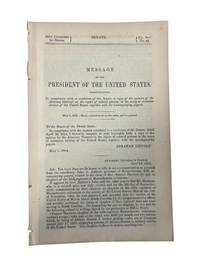
1864214721864. Lincoln Abraham. Message of the President of the United States. on the Rights of Colored Persons in the Army 1864 documents federal policy and legal interpretation concerning the status and compensation of African American soldiers and officers during the Civil War and provides direct evidence of how the U.S. government addressed racial inequality within the Union Army. Transmitting Attorney General Edward Bates' formal opinion the document centers on the case of Reverend Samuel Harrison chaplain of the 54th Massachusetts Volunteer Infantry and addresses the broader question of whether Black service members were entitled to the same recognition and pay as their white counterparts. Issued during active wartime mobilization of United States Colored Troops the pamphlet supports research into African American military service Civil War law and the evolving federal stance on racial equality within military institutions.<br /> <br /> Lincoln Abraham. Message of the President of the United States Communicating. a Copy of the Opinion of the Attorney General on the Rights of Colored Persons in the Army. Washington: Government Printing Office 1864. Disbound pamphlet 9 pages. The text includes the full opinion of Attorney General Edward Bates affirming that "Mr. Harrison was the lawfully appointed and qualified chaplain of the 54th Massachusetts regiment" and therefore entitled to full compensation. The case arose when Harrison despite his commissioned status was paid only ten dollars per month and one ration under interpretations of the July 17 1862 law governing Black enlistment. Bates rejects this limitation stating that denial of proper pay would constitute "a plain violation of the purpose of Congress." Accompanying documents include War Department orders issued by Secretary of War Edwin M. Stanton authorizing the recruitment of African American regiments under Governor John A. Andrew of Massachusetts as well as a muster-in roll confirming Harrison's official appointment.<br /> <br /> Issued at a moment when the Union relied increasingly on African American troops this document records the tension between discriminatory policy and federal efforts to formalize Black military service within established legal frameworks. The case of Samuel Harrison connected to the 54th Massachusetts one of the most prominent Black regiments of the war highlights both institutional inequities and the mechanisms through which they were contested at the highest levels of government. The inclusion of legislative interpretation executive transmission and military documentation within a single publication makes it a concentrated record of how civil rights questions were adjudicated during wartime illustrating the gradual expansion of legal recognition for African American service members. Light toning and minor edge wear from disbinding; overall condition very good. unknown
1890WRCAM52682Chicago: Kurz & Allison 1890. Color lithograph. Image size: 18 1/2 x 25 inches; sheet size: 22 x 28 1/4 inches. Matted to an overall size of 25 x 31 inches. Some moderate chipping and edge tears not affecting image. Reinforced with older tape along top edge. Lightly toned though colors are still strong and fresh. Good plus with wide margins. Suitable for framing. A dramatic rendering of the first major battle in the Civil War to involve African- American troops the attempted storming of a Confederate fort near Charleston South Carolina on July 18 1863. Colonel Robert Gould Shaw was killed along with fifteen other officers and nearly 300 of his men. The print shows the Union troops charging the ramparts of Fort Wagner charging into the oncoming Confederate rifle and cannon fire. A Union officer likely intended to be Shaw stands atop the first rampart sword held high the flag waving boldly next to him. Union ships float off the coast in the background shells bursting above them. <br> <br> Shaw 1837-63 came from a wealthy Massachusetts family noted for upholding reform and abolitionist causes. When the Civil War broke out in 1861 Shaw distinguished himself in combat surviving the bloody battles of Antietam and Cedar Mountain. After the Emancipation Proclamation was passed in 1863 Massachusetts governor John Andrew organized the army's first black volunteer unit the 54th Massachusetts. Despite his initial refusal Shaw was ultimately persuaded by his family to accept the command. Sent to fight in the Union effort to seize the border islands of the Carolina coast in the late spring of 1863 the regiment proved its valor that summer by holding off Confederate troops at James Island South Carolina. "Two days later July 18 1863 on Morris Island Shaw proudly volunteered his regiment to lead the assault on the impregnable Fort Wagner the first step in an offensive on the Confederate stronghold of Charleston South Carolina. When the Fifty-fourth charged the fort 272 were killed wounded or captured. One of those who fell was Shaw leading his African- American troops in battle. Although the assault failed the bravery of the Fifty- fourth proved the ability of black troops and in death the young Shaw was ennobled as a martyr to freedom and as a symbol of enlightened sacrifice" - ANB. The soldiers of the 54th impressed Shaw with their dedication and valor which they demonstrated during the Fort Wagner assault. Shaw was buried with his troops by the Confederates in a mass grave on the site of the assault. <br> <br> Shaw and his troops are the subject of one of the most celebrated works of public sculpture in the United States Augustus St.- Gaudens' Shaw Memorial on the corner of the Boston Common nearest the State House. Shaw's leadership of the regiment is best known to many people today through the film GLORY 1989 which culminates in the attack on Fort Wagner and Shaw's death. A dramatic portrayal of this important historical moment. BLOCKSON 111. Kurz & Allison unknown books
0259175153.Gpaperback. Good. Access codes and supplements are not guaranteed with used items. May be an ex-library book. paperback
73-00108Taylor Publishing Company. Hardcover. Good. Good condition. Cover shelf wear. Clean inside. Taylor Publishing Company hardcover
19485394H84107Philadephia PA: 6th Infantry Battalion USMCR. January 26 1948 Volume 1 Number 9 Circulation 430. stapled legal paper size. Looks to been used as a recruiting tool. . Very Good. No Binding. 1948. 6th Infantry Battalion, USMCR unknown
1985055554Fort Benning GA: Dept.of Army-Headquarters 75th Infantry Ranger Regiment 1985. Paper Back. Very Good/No Jacket. 8vo - over 7¾" - 9¾" tall. chapt.pag.; SC staple-bound; blue w/blk.-pic.cover; rubbed w/PON&inkcover; 1"tear @ top staple; corner-fold; cleantight pgs. "Purpose: a. To standardize the conduct of airborne operations within the 75th Infantry Ranger Regiment. b. To facilitate the planning and preparation for administrative tactical and combat airborne operations. <br/> <br/> Dept.of Army-Headquarters, 75th Infantry (Ranger) Regiment unknown
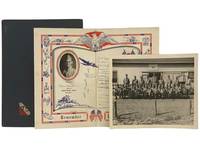
19462340808Baton Rouge: The 75th Infantry Division / Army & Navy Publishing Company 1946. First Edition. Large Hardcover. Very Good/No Jacket. 0x0x0. Rowe John S. Signed by author. Original platoon photograph signed by dozens of members of the 75th Infantry Division and noting their home towns laid in along with a Remember Pearl Harbor soldier 'diary' detailing the service of a soldier in the division. A couple faint spots to boards otherwise an excellent copy. Soldiers who signed included: Pearson C. Schiller; Sgt. Chitwood; Domenico J. Scatena; George T. Wingard Jr.; Mike Stirling Jr.; Paul Toman; Joe LaPointe; Lowell E. Murphy; 'myself' probably Nathan Hena who signed the Pearl Harbor sheet; Jack M. Reese; Robert N. Dugal; Joseph A. Buzogany; Robert T. Berkebile; Joseph W. Lasley; Grover E. Hardy; Douglas Huff; William C. Woodward; Ivan C. Else; Francis Quinn; G.L. Mae; Calvin W. Hood; Howard L. Marshall; Chester Kalm; Delwyn P. Goodyear; Sgt. Adams; Walter J. Clausius Jr.; John J. Long; Morton L. Plesser; Ridley W. Meek; Richard H. Phillips; Jerry H. Steward; Harry S. Singer; William H. Fleming; Platton Sgt. Smith the sergeants' names are all in pencil in the same hand so they were probably written in by the owner of the book. Some names are numbered to correspond with the photo others are marked as 'not present for picture'. 1946 Large Hardcover. Unpaginated. Black-and-white photographs throughout depicting the service of the 75th Infantry Division toward the end of World War II. The 75th Infantry Division / Army & Navy Publishing Company hardcover
19462296441The 75th Infantry Division / Army & Navy Publishing Company 1946. First Edition. Large Hardcover. Very Good/No Jacket. Rowe John S. Signed by author. Original platoon photograph signed by dozens of members of the 75th Infantry Division and noting their home towns laid in along with a Remember Pearl Harbor soldier 'diary' detailing the service of a soldier in the division. A couple faint spots to boards otherwise an excellent copy. Soldiers who signed included: Pearson C. Schiller; Sgt. Chitwood; Domenico J. Scatena; George T. Wingard Jr.; Mike Stirling Jr.; Paul Toman; Joe LaPointe; Lowell E. Murphy; 'myself' probably Nathan Hena who signed the Pearl Harbor sheet; Jack M. Reese; Robert N. Dugal; Joseph A. Buzogany; Robert T. Berkebile; Joseph W. Lasley; Grover E. Hardy; Douglas Huff; William C. Woodward; Ivan C. Else; Francis Quinn; G.L. Mae; Calvin W. Hood; Howard L. Marshall; Chester Kalm; Delwyn P. Goodyear; Sgt. Adams; Walter J. Clausius Jr.; John J. Long; Morton L. Plesser; Ridley W. Meek; Richard H. Phillips; Jerry H. Steward; Harry S. Singer; William H. Fleming; Platton Sgt. Smith the sergeants' names are all in pencil in the same hand so they were probably written in by the owner of the book. Some names are numbered to correspond with the photo others are marked as 'not present for picture'. 1946 Large Hardcover. Unpaginated. Black-and-white photographs throughout depicting the service of the 75th Infantry Division toward the end of World War II. The 75th Infantry Division / Army & Navy Publishing Company hardcover books
1919216951919. Victory: History of the 805th Pioneer Infantry by Paul S. Bliss published in 1919 documents the service of an African American regiment of the American Expeditionary Forces during the final year of World War I. The volume records the organization deployment and wartime duties of the 805th Pioneer Infantry a Black regiment formed during the rapid expansion of the United States Army in 1918. Composed of African American enlisted soldiers serving under white officers in a segregated military structure the regiment deployed to France during the closing phase of the war and performed engineering construction and logistical work in areas affected by active combat operations. Regimental histories such as this were produced soon after the war to preserve the institutional record of individual units and to commemorate the contributions of the soldiers who served within them.<br /> <br /> Bliss Paul S. Victory: History of the 805th Pioneer Infantry American Expeditionary Forces. St. Paul Minnesota: Paul S. Bliss 1919. First edition. The book presents rosters portraits and photographs documenting the regiment's organization and activities while serving in France. The 805th Pioneer Infantry was organized at Camp Funston Kansas in July 1918 and deployed overseas during the Meuse Argonne campaign. Although classified as a pioneer unit responsible for construction and engineering tasks the regiment often worked in forward operational areas exposed to enemy fire. Photographs in the volume depict companies of the regiment in formation including an image titled "Company C at Brieulles sur Meuse" along with scenes of soldiers repairing damaged structures posing with captured German artillery and assembling for inspection during a visit by General John J. Pershing. Portrait collages identify numerous enlisted men and officers of the regiment while an illustrated frontispiece portrays African American soldiers advancing with fixed bayonets across a shell damaged battlefield landscape.<br /> <br /> Regiments such as the 805th Pioneer Infantry formed part of the broader mobilization of African American soldiers during World War I when more than 350000 Black men served in the United States Army in segregated units. Pioneer infantry regiments were frequently assigned labor and engineering duties supporting front line operations including road construction trench repair and logistical supply work. Printed regimental histories produced after the war served as commemorative records preserving the service of these units and documenting the participation of African American soldiers in the American Expeditionary Forces. Volume bound in original embossed leather boards with gilt and blind stamped decoration and heavy card stock leaves printed on recto only. Includes color printed pages depicting regimental and national flags. Spine worn and partially split with rubbing to board edges and scattered foxing and toning to leaves; contents remain intact. Overall good condition. The book provides an extensive visual and documentary record of an African American regiment serving in the United States Army during World War I. unknown
19912298595Turner Publishing Company 1991. Limited Edition. Large Hardcover. Fine/No Jacket. Limited edition. 1991 Large Hardcover. 176 pp. Black-and-white photographs and maps throughout text. An account of the service of the 80th 'Blue Ridge' Infantry Division during World War II with sections on training 'over there' the Moselle Bridgehead the Battle of the Bulge the Rhine etc. Turner Publishing Company hardcover books
474The Infantry was organized on April 4 1864 from the 8th Corps de Afrique Infantry. It served the garrison at Port Hudson Louisiana until April 17 1864. The unit was transferred to 79th United States Colored Troops on July 6 1864. D. 1pp. 15 ½" x 10". July 1864. No place. A handwritten clothing return for the 80th Colored Infantry; at the top is written "Monthly Return of Clothing Camp & Garrison Equipage. in the Month of July 1864 by. Co B 80 USC Infty". The roster lists the number of sashes flannel shirts blankets shelter tents canteens etc. used by the regiment. Unlike most rosters this is not on pre-printed forms but completely handwritten including the red grid lines. There are three vertical fold lines but it is in fine condition overall hardcover books
0265612004.Ghardcover. Good. Access codes and supplements are not guaranteed with used items. May be an ex-library book. hardcover
194575454MTOUSA Mediterranean Theater of Operations United States Army Information and Education Section 1945. Presumed First Edition First printing. Pamphlet. Good. 95 1 pages. Illustrations. Maps including of Po Valley. Drawings. DORNBUSCH 1653. Approximately 4.75 inches by 6.75 inches. Cover has some wear and soiling. Cover says: We Were There: From Gruber to the Brenner Pass. Front Cover is illustrated. Rear Cover has a poem entitled Wotan's Call by Pfc. Frank Kennegot Headquarters Company 349th Infantry. Statement at bottom of title page "Material in this story has been passed by the U.S. censor and may be mailed home". This pamphlet was given to troops of the 88th. As is typical with such 'in theater' publications there are some pages which have some variation in printing but pages are legible. There are a couple of minor ink stains noted. The 88th Infantry Division was an infantry division of the United States Army that saw service in both World War I and World War II. It was one of the first of the Organized Reserve divisions to be called into federal service created nearly "from scratch" after the implementation of the draft in 1940. Previous divisions were composed of either Regular Army or National Guard personnel. Much of the experience in reactivating it was used in the subsequent expansion of the U.S. Army. By the end of World War II the 88th Infantry fought its way to the northernmost extreme of Italy. In early May 1945 troops of its 349th Infantry Regiment joined the 103d Infantry Division of the VI Corps of the U.S. Seventh Army part of the 6th Army Group which had raced south through Bavaria into Innsbruck Austria in Vipiteno in the Italian Alps. MTOUSA (Mediterranean Theater of Operations United States Army), Information and Education Section unknown