9 442 résultats
199885515Fort Detrick MD: US Army Medical Research Institute of Infectious Diseases Public Health Training Network Centers for Disease Control and Prevention and the Food and Drug Administration 1998. Presumed First Edition of this compilation. Box with participant materials included. Box is approximately 9 inches by 12 inches. Very good. Box has slight wear and soiling. Contents in very good condition. Unclear is some are reprints or produced for this satellite broadcast training. This includes a Dear Participant letter from the Office of the Commander US Army Medical Research Institute of Infectious Diseases Colonel Gerald W. Parker dated July 7 1998; Key Information sheet of Dates of Broadcasts and Taped Rebroadcast Dates and Time Telephone Call-in Instructions and Fax Instruction Forms; Optical Scan Forms Instruction Sheets; List of State and Territorial Health Departments; Student Booklet for Satellite Broadcasts on Tuesday September 22 1998 Wednesday September 23 1998 and Thursday September 24 1998; Student Booklet for Taped Rebroadcasts Saturday October 3 1998 and Sunday October 4 1998; Handout on Packaging and Shipping Infectious Materials; Case Definitions for Infectious Conditions Under Public Health Surveillance CDC Morbidity and Mortality Weekly Report May 2 1997 Vol. 46 No. RR-10 approximately 60 pages; NATO Handbook on the Medical Aspects of NBC Defensive Operations AMedP-6B Part II - Biological FM 8-9 NVMED-P-509 AFJMAN 44-151V1V2V3 February 1996 Approximately 100 pages; Medical Management of Biological Casualties Handbook Third Edition July 1998 approximately 150 pages plus fold-outs Format is approximately 4.5 inches by 6.25 inches; Defense Against Toxin Weapons by David Franz approximately 5.5 inches by 8.5 inches approximately 50 pages; Booklet at Open At Final Exam Time seal still intact--unopened. The United States Army Medical Research Institute of Infectious Diseases USAMRIID; pronounced: you-SAM-rid is the U.S Army's main institution and facility for defensive research into countermeasures against biological warfare. It is located on Fort Detrick Maryland near Washington D.C. and is a subordinate lab of the U.S. Army Medical Research and Development Command USAMRDC headquartered on the same installation. USAMRIID is the only U.S. Department of Defense DoD laboratory equipped to study highly hazardous viruses at Biosafety Level 4 within positive pressure personnel suits. USAMRIID employs both military and civilian scientists as well as highly specialized support personnel totaling around 800 people. In the 1950s and '60s USAMRIID and its predecessor unit pioneered unique state-of-the-art biocontainment facilities which it continues to maintain and upgrade. Investigators at its facilities frequently collaborate with the Centers for Disease Control and Prevention the World Health Organization and major biomedical and academic centers worldwide. USAMRIID was the first bio-facility of its type to research the Ames strain of anthrax determined through genetic analysis to be the bacterium used in the 2001 anthrax attacks. By U.S. Department of Defense DoD directive as well as additional U.S. Army guidance USAMRIID performs its "biological agent medical defense" research in support of the needs of the three military services. This mission and all work done at USAMRIID must remain within the spirit and letter of both President Richard Nixon's 1969 and 1970 Executive Orders renouncing the use of biological and toxin weapons and the U.N. Biological Weapons Convention of 1972. During the period of Desert Shield and Desert Storm 1990-91 USAMRIID provided the DoD with expert advice and products vaccines and drugs to ensure an effective medical response if a medical defense were required. USAMRIID scientists trained and equipped six special laboratory teams for rapid identification of potential BW agents which fortunately never appeared. Following the conflict USAMRIID physicians and engineers were key members of a United Nations Special Commission UNSCOM Inspection Team that evaluated the BW capabilities in Iraq during the 1990s. US Army Medical Research Institute of Infectious Diseases ,Public Health Training Network, Centers for Disease Control and Preve unknown
2080502106503439Not Available N.A. Soft Cover. Fine. Volume: 1 Not Available paperback
feb118764Used. For more details please contact me unknown
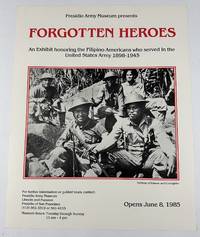
19855617San Francisco: Presidio Army Museum 1985. Three photographically-illustrated posters printed in red and black each 20 x 16 inches. Very minor edge wear and toning. Near fine. A visually appealing trio of posters celebrating the military service of Filipino Americans during World War II created for an exhibition at the Presidio Army Museum in San Francisco in the summer of 1985. The exhibition was titled "Forgotten Heroes: An Exhibit Honoring the Filipino Americans Who Served in the United States Army 1898-1945." Each poster pictures a different unit of Filipino U.S. Army soldiers with experience in the Second World War as follows: a group of infantry soldiers identified as part of the "Defense of Bataan and Corregidor;" eight members of Company E of the 57th U.S. Infantry Filipino Scouts; and the four soldiers comprising the Color Guard of the 1st Filipino U.S. Infantry Regiment in 1942. The first two posters cary the same title "Forgotten Heroes" while the latter poster is titled "'Bahala Na!' 'Come What May!' The Story of the 1st and 2nd Filipino Infantry Regiments in the United States Army" perhaps a smaller display within the larger exhibition. No copies in OCLC though we doubt the posters are unique perhaps residing in larger collections of Filipino American material. Presidio Army Museum unknown
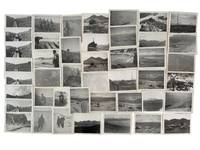
1945215781945. AArchive of 64 original black-and-white photographs documenting American military operations and engineering activities in the Aleutian Islands during World War II. Photographs measure approximately 4.5" x 3.5" and provide an extensive visual record of one of the most remote and environmentally challenging theaters of the war. The images chronicle the daily work of U.S. Army personnel and Army Engineers stationed across the Aleutian chain where military forces confronted not only the threat of enemy action but also some of the harshest conditions faced by American troops anywhere during the conflict. Soldiers appear throughout the archive wearing cold-weather gear field jackets heavy boots and M1 steel helmets while working patrolling and constructing infrastructure amid windswept volcanic landscapes.<br /> <br /> A significant portion of the collection documents the enormous logistical effort required to sustain military operations in the islands. Engineers are shown surveying terrain operating equipment cutting and processing timber and building facilities essential to maintaining isolated military outposts. Several striking photographs depict large timber-log chutes descending steep hillsides toward the shoreline apparently designed to move heavy equipment and supplies through terrain where conventional transportation proved difficult. Other images record lumber operations construction projects and the continual adaptation of military infrastructure to the rugged environment. The archive also contains numerous panoramic views of the Aleutian landscape itself. Snow-covered mountains barren volcanic ridges isolated coastlines glacial valleys and treeless tundra dominate many photographs illustrating why the campaign became as much a battle against geography and weather as against enemy forces. The Aleutian chain stretching deep into the North Pacific and containing dozens of active and dormant volcanoes represented one of the most isolated regions under American military control during the war.<br /> <br /> Naval and maritime operations are likewise represented. Several photographs show transport and supply vessels anchored offshore or approaching remote coastal installations highlighting the dependence of Aleutian bases upon sea-borne logistics. Military camps consisting of Quonset huts and tent encampments appear throughout the collection while one particularly notable image captures an aircraft flying above a military installation underscoring the importance of aerial reconnaissance and patrol operations in protecting the northern approaches to Alaska. Although often overshadowed by campaigns in Europe and the Central Pacific the Aleutian campaign held considerable strategic importance. Following the Japanese occupation of Attu and Kiska in 1942 American forces undertook a costly effort to secure the islands and maintain control of the northern Pacific. These photographs document the infrastructure manpower and determination required to operate in a theater where extreme weather isolation and difficult terrain shaped every aspect of military life. A substantial and visually compelling archive documenting the engineering logistical and environmental realities of America's northernmost front during World War II. Photographs remain in very good condition with minor surface wear and occasional light creasing. unknown
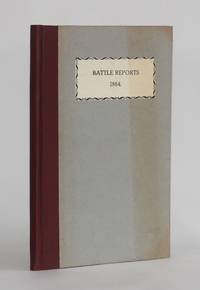
18646016Richmond: R. M. Smith Public Printer 1864. Hard Cover. Very Good binding. Octavo. 98 pp. Confederate imprint. Bound in later cloth-backed boards with printed paper label on the front cover. Lacking wrappers if so issued. Cover and contents toned; title page is missing the bottom corner affecting only the margin. Uncommon. Dornbusch outlines the contents: "Enemy attack on Fort McAllister Feb. 1 1863; reports engagements at Fayette Court House Cotton Hill Gauley Charleston and pursuit of the enemy to the Ohio; General Bragg's reports of the battles of Richmond Munfordsville & Perryville; report of Rhode's brigade at Seven Pines; capture of the gunboat J.P. Smith at Stone river" Dornbusch III 1429. Howes O-31; Parrish & Willingham 2348. R. M. Smith, Public Printer unknown
1908OVU8089Eckert Litho. Good with no dust jacket. 1908. Hardcover. 3/4 leather with black covers portfolio with black ribbons for tying three sides. Front cover is loose was hinged along side edge and has a red leather label with gilt lettering. Covers have some scuffing and leather spine has some wear and missing pieces at the ends. Title page has some markings from the flaps and some foxing. There are 127 total color plates originally had 144 numbered plates but 18 were removed for being obsolete and there is a Plate 93-A. Some plates have some small spots or slight foxing. Color images are in very good condition. Book is in good condition. 4.2 lb.; Oblong Small 4to 9" - 11" tall . Eckert Litho hardcover
191769073Washignton DC: Government Printing Office 1917. War Department Document No. 562. Hardcover. Good. Signed by previous owner. Cover has some wear and soiling. 2 volume set. Includes: illustrations diagrams. Volume I iii 1 803 p. Volume II 594. Change 1 and Change 2 laid in. This two volume set represents the state of the art state of knowledge and state of practice at the time of the entry of the United States into the First World War. From Wikipedia: "The United States Army Quartermaster Corps is a Sustainment formerly combat service support CSS branch of the United States Army. It is also one of three U.S. Army logistics branches the others being the Transportation Corps and the Ordnance Corps. The Quartermaster Corps is the U.S. Army's oldest logistics branch established 16 June 1775. On that date the Second Continental Congress passed a resolution providing for "one Quartermaster General of the grand army and a deputy under him for the separate army". From 1775 to 1912 this organization was known as the Quartermaster Department. In 1912 Congress consolidated the former Subsistence Pay and Quartermaster Departments to create the Quartermaster Corps. Quartermaster units and soldiers have served in every U.S. military operation from the Revolutionary War to current operations in Iraq Operation Iraqi Freedom and Afghanistan Operation Enduring Freedom." Government Printing Office hardcover
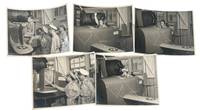
1942235381942. World War II U.S. Army Air Forces Link Trainer training photo archive of five large format silver gelatin prints circa 1942 to 1945 documenting simulator instruction during the wartime expansion of American military flight training using the first effective training device. The men wear Army Air Forces uniforms aviation badges officer caps and the winged star shoulder sleeve insignia commonly called the Hap Arnold emblem an insignia approved in 1942 for AAF personnel. The photographs place the pilot inside a ground based cockpit trainer while instructors and fellow cadets observe a visual record of how instrument procedure radio communication and cockpit discipline were taught before airborne practice. Invented by Edwin Albert Link in 1929 the Link Trainer was the world's first widely successful and effective mechanical flight simulator. Affectionately dubbed the "Blue Box" it revolutionized aviation by allowing pilots to safely train for blind instrument-only flying and poor weather conditions without leaving the ground.<br /> <br /> Photo archive of 5 silver gelatin photographs 8 x 10 inches United States circa 1942 to 1945. The photographs show Army Air Forces cadets and officers in a training room with a large cockpit simulator built with stub wings a tail round U.S. star insignia hinged canopy panels external bracing and a cockpit just large enough for one seated trainee. Several images show a trainee wearing headphones and working inside the enclosed trainer; another shows a man raising the canopy while holding a hand microphone; another shows three uniformed men observing a cadet seated at the controls. One image shows a pilot being congratulated or greeted at the simulator door by three officers with a placard on the fuselage reading "International flight." Visible uniform details include the AAF shoulder patch on a cadet's sleeve pilot or aircrew wings over shirt pockets aviation branch collar devices and officer cap insignia linking the group to the Army Air Forces rather than the postwar U.S. Air Force.<br /> <br /> The Link Trainer became one of the defining instruments of World War II flight instruction because it moved dangerous lessons in blind flying night navigation instrument reading and radio procedure into a controlled classroom setting. The U.S. Army Air Corps had adopted the device before the war and wartime mobilization turned simulator instruction into a standard component of pilot preparation as the Army Air Forces trained pilots at unprecedented scale for bomber fighter transport and liaison service. These photographs are strongest where they show the training process itself: the student isolated inside the cockpit the instructor watching from outside the headset and microphone linking simulated flight to communication procedure and the fuselage marked for an "International flight" exercise. Light curling and occasional creasing; some handling marks in the margins. Overall good condition. A focused visual record of World War II Army Air Forces simulator training and the classroom machinery that converted cadets into wartime pilots. unknown
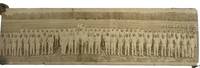
1942185261942. Panoramic photograph 1940s depicting an African American Quartermaster Corps unit during World War II with direct relevance to the study of segregated military organization logistical operations and the role of Black service troops in the war effort. The image shows three rows of Black soldiers in uniform assembled on a field with five white officers positioned in front reflecting the racial hierarchy characteristic of the U.S. Army during the period. A soldier at center holds a unit flag bearing an eagle insignia and the number "663" identifying the formation as part of a Quartermaster unit responsible for supply provisioning and support functions. During World War II the majority of African American soldiers were assigned to service branches rather than combat divisions and Quartermaster units played a central role in sustaining operations across multiple theaters. The photograph documents both the scale of military organization and the structural limitations placed on Black troops within the wartime army.<br /> <br /> Panoramic sepia photograph measuring approximately 8 x 16 inches showing the assembled unit in formation on a grassy field with additional soldiers visible in the background engaged in training or awaiting assembly. The composition emphasizes uniformed ranks command structure and the presence of the unit flag providing visual identification and context for the group.<br /> <br /> Photograph with creasing pinholes and tears consistent with handling; image remains clear; overall fair condition. A large-format visual record of African American service personnel in a logistical unit central to the operation of the U.S. Army during World War II. unknown
14336Without place or date. Circa 1844. 30pp. 4to. On seven bifoliums and one single leaf the bioliums stitched to one another. With several watermarks of J. Whatman Turkey Mill all dated to 1844. In good condition on lightly aged and worn paper. Sibbald is not named but the item is from his papers and in his hand. Sibbald was in Ceylon between 1818 and 1833. There is no indication that this item has been published. The story begins: 'There was a certain King who reigned over a Realm called Kulutasem who had long mourned having no heir to his throne - but after many years had elapsed to his great joy his Queen bore him a Son an infant of great beauty and promise and the happy Father in the fullness of his joy assembled all his Counsellors the Priests of the Temple and Soothsayers at the Palace - that fortunate Omens might be observed and that Prosperity and Happiness might be predicted for the royal Child - but vain were the sanguine hopes and wishes of the Monarch'. It concludes: '. but what was his dismay to find on the following day Santirakasem seated on the Throne and that the King had left all the Kingdom to him. With sad misgivings he proceeded to the Temple where he beheld the mutilated Body of his Son - struck with remorse and agony he dahsed his head against the Stones of the Temple and perished in the presence of the assembled People - They hailed King Santirahasem with loud acclamations who reigned long & prosperously over that Realm'. From the Papers of William Sibbald perhaps the translator. Without place or date. [Circa 1844?] unknown
20974Dun Eaglais Kippen Stirlingshire Scotland. 14 February 1947. Dempsey's note dated 10 August 1960. Dempsey's obituary in The Times explains how 'In April 1945 he was appointed Brigadier I/C Administration East Africa Command' holding the position into the following year and retiring in December 1947 on account of ill health. For a full account of Dempsey's military career see his entry in Catholic Who's Who vol.35 1952. In an eight-line Autograph Note Signed at the end of Anderson's letter Dempsey states that Anderson 'had been my personal & immediate superior as G.O.C. in C. East Africa Command when I was his Brigadier I/C Administration. He became Governor of Gibraltar and has been dead some time now having himself got a coronary thrombosis.' The present item is an Air Mail letter. 4pp. 12mo. Bifolium on blue paper. Addressed to 'Brigadier M. C. sic Demspey CBE No 87 General Hospital Nairobi Kenya Colony'. Anderson has confused Dempsey with the more illustrious General Sir Miles Christopher Dempsey 1896-1969.Anderson begins by condoling with Dempsey on 'a return of your thrombosis': 'it is no use going on kicking against the pricks and you must I fear face the need for a quiet life'. He next describes the weather in Scotland 'our 21st day of hard frost & snow'. A report on his wife's trip to the metropolis turns into an attack on the postwar Labour government: 'Kathleen is in London trying to buy clothes by candle & torch light and shivering in her hotel. I fear this country is in for a very severe crisis made worse by the theories & idealisms of the Govt which fiddles while Rome does not burn.' After more domestic news he reports: 'I saw Brown and also Fisher while in London at the end of last month. The War Office continues hopeful about all their grand schemes for Kenya: but it will be a miracle if they get 1/10th of the present estimated cost. And on the same lines I dont see how the country can carry a large Army and 18 months conscription. We are so hard pressed economically that I think it is fanstastic to try & carry such a Burden.' Dun Eaglais, Kippen, Stirlingshire [Scotland]. 14 February 1947. Dempsey's note dated 10 August 1960. hardcover
192177256Calcutta: Superintendent Government Printing 1921. First Edition. Hardcover Half Leather. Fair Condition. Marked confidential at the time of publication and produced in India. This copy has all the maps illustrations and panoramas as called-for including the 3 loose maps in the rear pocket. The book has been a little bashed about in its time with bumps and scuffs all over though structurally it is still absolutely solid. The maps and other plates that fold-out of the book are occasionally a little proud of the page edges and where this happens they can be a bit nicked at the leading edge. The pocket at the rear whilst still functional and containing its contents is a little saggy at the edges. A scarce item and important historically. Size: Octavo . Quantity Available: 1. Shipped Weight: Under 1 kilo. Category: Military & Warfare; History. Inventory No: 77256. . Superintendent Government Printing hardcover
189688343Paris: Librairie des Bibliophiles 1896. Paperback Octavo. Paperback. Good. wraps two volumes 240 266 pp first edition # 144/500 wraps are lightly worn <br /> <br /> <br /> <br /> <br /> Standard shipping no tracking / Priority with tracking / Custom quote for large or heavy orders. Librairie des Bibliophiles paperback
BN82004Softcover. The Russian Way of War: Force Structure Tactics and Modernization of the Russian Ground Forces <br/><br/> paperback
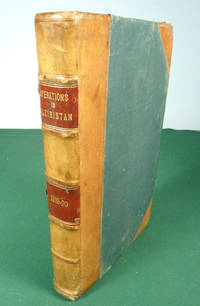
15062Calcutta Superintendent Government Printing India 1921. First Edition: Confidential Serial No 1656: Original green cloth boards with light brown leather spine and corners banded spine titles in gilt against maroon background riubbed and chipped to extremities generally firm and very good uncut page edges plain endpapers hinges strengthened with black cloth tape and stitching printed stamp to front endpaper Adjutants Office 10 Mar 1922 hand written inscription in Red 'Mess 48th Pioneers. ' Pagination x 187 pages map pocket to the rear substantially illustrated with 31 plates 8 panoramas and maps. A fold-out map 'sketch Camp Wana' is adjacent to page 23 there should be six other maps these are present with the exception of No.4 'General Map of Waziristan' which should be in the pocket at the back. The two other maps that are intended to be in the pocket are present. Size 10.00 x 6.5 x 1.5 inches approx. A heavy book to post. Many students and military connoisseurs will find it fascinating to look back at this conflict its sources and consequences. . Calcutta, Superintendent Government Printing , India 1921 hardcover
18872110502150902631Rikugun bunko 1887. Soft Cover. Fine. Number of books: 3 Rikugun bunko paperback
2080202102302506Nitto shoin N.A. Soft Cover. Fine. Page number: 469p Size: 20cm Nitto shoin paperback
1786AQ20615London: s.n. 1786. 2 22 25-136 135-213 300-376pp. Complete despite erratic pagination. Handsomely bound in contemporary gilt-tooled red morocco brown morocco lettering-piece A.E.G. Rubbed and a trifle marked. Marbled endpapers later armorial bookplate of Charles Bybie Lyster to FEP light toning to margins. A well preserved finely bound copy of this 1786 army list. Containing the names of all Officers of the British army in the lull between the American Revolutionary Wars and the Napoleonic conflict. ESTC T92001. Thirty-fourth edition. 8vo. [s.n.] unknown
1806AQ20613London: Printed by C. Roworth 1806. 4 337 337-338 338-846pp. Handsomely bound in contemporary gilt-tooled red morocco contrasting green morocco lettering-piece A.E.G. Lightly rubbed and a trifle marked. Marbled endpapers recent bookplate of Robert J. Hayhurst to FEP internally clean and crisp. A well preserved finely bound copy of this 1786 army list. Containing the names of all Officers of the British army in the lull between the American Revolutionary Wars and the Napoleonic conflict. Amongst the officers of the 33rd 1st Yorkshire W. Riding Regiment of Foot is listed the young Lieutenant colonel Hon. Arthur Wellesley later Duke of Wellington 1769-1852. . Fifty-fourth edition. 8vo. [Printed by C. Roworth] unknown
1808AQ22763London: Printed by George Eyre and Andrew Strahan 1808. In two parts. 2 5-221 1; 83pp 1. Contemporary gilt-ruled half-calf marbled paper boards contrasting red morocco lettering-piece. A trifle rubbed. Armorial bookplate and inked ownership inscription of George Gahagan to FEP sealing wax remnants to head of title page small hole to text of leaf M1 without loss of sense scattered spotting. An apparently unrecorded edition of the January 1808 public general act renewing the terms of the previous Mutiny Act as well as the articles relating to the quartering of British Army troops in foreign territories including in the East Indies. Unrecorded by COPAC and OCLC. . 8vo. Printed by George Eyre and Andrew Strahan hardcover
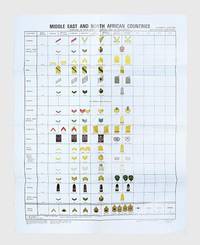
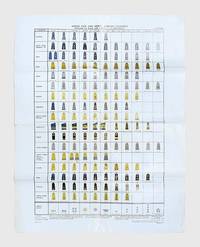
1982178862Washington DC: Defense Intelligence Agency January 1982. A poster comparing the enlisted ranks of US army to that of 17 Middle Eastern countries from basic private through to W-4 chief warrant officer. They were never distributed to the public and were marked to be destroyed after they became outdated. This was as part of a series featuring various militaries from around the world; other examples include the NATO countries and the Asian and Pacific countries. It covers Algeria The Arab Republic of Egypt Iran Iraq Israel Jordan Kuwait Lebanon The Libyan Arab Republic Morocco Oman Saudi Arabia South Yemen People's Democratic Republic of Yemen Sudan Syria Tunisia and the Yemen Arab Republic. Colour poster 555 x 430 mm folded as issued. Bright a few small creases two small pinholes: a very good example. unknown
1979178863Washington DC: Defense Intelligence Agency January 1979. A poster comparing the officer ranks of the US air force to that of 17 Middle Eastern countries from 2nd lieutenant through to general of the air force. They were never distributed to the public and were marked to be destroyed after they became outdated. This was issued as part of a series featuring various militaries from around the world; other examples include the NATO countries and the Asian and Pacific countries. It covers Algeria The Arab Republic of Egypt Iran Iraq Israel Jordan Kuwait Lebanon The Libyan Arab Republic Morocco Oman Saudi Arabia South Yemen People's Democratic Republic of Yemen Sudan Syria Tunisia and the Yemen Arab Republic. This is marked as chart 3 of 3 the other two possibly showing the comparative officer ranks of the army and navy. Colour poster 555 x 430 mm folded as issued. Bright a few small creases split along fold not touching printed area a few pinholes: a very good example. unknown
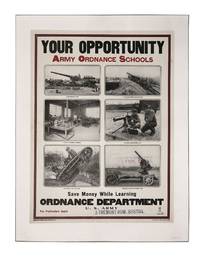
19194988USA: U. S. Army Ordnance 1919. Large photogravure poster backed with linen printed with red and black ink includes six black-and-white photographic images. Size of poster: 48 cm x 63.5 cm including small border; overall size of piece including linen backing: 58 cm x 74.5 cm. Some tears at edges one into text at tail edge which have been repaired; some minor creases and scuffing; two inks stamps on text and image one reading: "Room 20 Post Office Bldg. Lynn Mass" the other reading: "3 Tremont Row. Boston.". Overall a very good piece with clean and bright imagery. This large American propaganda poster was produced by the Adjutant General's Office of the U. S. Army in the years directly following World War One "A. G. O. No. 202-July 1919" is noted in the lower right-hand corner of the poster. It is No. 4 in a series and calls for new members to join Army Ordnance Schools and "save money while learning". Six evocative images show scenes of what prospective students could expect to see and learn during training. These depict a big railway gun a tractor-mounted Howitzer a class in gasoline engines machine gun instruction operating a tractor and sighting an anti-aircraft gun.</p> <p>The A. G. O. was and still is responsible for leadership and organisation of training and doctrine command military personnel support and recruiting and retention of personnel. U. S. Army Ordnance unknown
1913381615Washington: Government Printing Office 1913. Hardcover. Very Good. First edition. Multiple House Documents 63d Congress 1st Session 1913 bound in a three volume set. Thick octavos. Each volume contains numerous folding topographical maps and plates. Complete as issued in the original publisher's cloth. Moderate soiling to the boards very good or better. Contains extensive surveys of many important rivers and harbors throughout the country including the proposed Intracoastal Waterway along the Atlantic and Gulf coasts between Boston and the Rio Grande. Prepared under the direction of the Secretary of War by the US Army Corps of Engineers. A nice set scarce in the trade with all of the many folding maps in fine condition. Government Printing Office hardcover