[MOBILIZATION DIVISION OF PEOPLE'S LIBERATION ARMY GENERAL STAFF DEPARTMENT].中國人民解放軍總參謀部動員部.Biblio.com

9 442 résultats
1970158580北京.Beijing.: No publication details. circa1970. Coloured Chinese Air Defence poster incomplete set consisting of 9 posters each poster is numbered. The set includes poster numbers 4 8 10 11 12 13 14 15 and 16. These posters are in secondhand condition. The posters show some creasing with a number of small tears particularly at margins some mending on reverse with tape. Two posters are considerably torn at margin affecting the image slightly in one case. There is some browning and staining and there is considerable annotation on the reverse of poster number 8. Text in Chinese. Sheets measure appoximately 53.9 x 77.9cm. Poster no. 4 depicts 9 images of different types of simple air defence shelters trenches caves etc. Brief descriptions of each type of shelter are provided below the images. Three images in the lower section suggest that when selecting the site for air defence shelters one should not build too close to buildings flammables and electric wire. <br> <br>Poster no. 8 includes 9 images showing the alternative shelters when air raids happen and no nearby air defence shelter available. Alteratives suggested include basements beneath a bridge the corner of a wall and under solid staircases as good alternative shelters. <br> <br>Poster no. 10 shows 3 methods to use to fire at enemy aeroplanes each with detailed instructions. The speed and size of the aeroplane and shooting angles and distance are all taken into consideration. A chart in the centre gives the calculations required to be prepared in advance to successfully shoot down an aeroplane. The calculations require taking into account the plane's size and distance. <br> <br>Poster no. 11 includes 3 images to demonstrate methods to fire at enemy paratroopers with detailed instructions. A chart in the centre gives the calculations for advance preparation taking into account the person's height and distance from the invading paratroopers. <br> <br>Poster no. 12 depicts 5 images showing various anti-aircraft firing positions. They are: a position where a single person lifts and stabilises the rifle while the other person aims; position aided by fortification; position aided by tree branches; position aided by walls; and kneeling position. <br> <br>Poster no. 13 is illustrated with 5 images showing two squads rifle shooting squad and machine gun shooting squad who are in charge of the anti-aircraft placement and three main targeted aircrafts bomber military cargo aircraft and helicopter to shoot. <br> <br>Poster no. 14 shows 10 images of self-rescue and first aid for other people after air raids with detailed instructions. Self-rescue actions featured are emergency bleeding control and fire evacuation; first aid treatment introduced are treatment for bone rapture CPR and transport the wounded. <br> <br>Poster no. 15 depicts 5 images demonstrating methods to extinguish fire bombs. Methods include: burying or covering the burning objects with sand and soil; covering the burning objects with soaking wet quilts or sack bag; throwing the burning objects into water containers with iron shovel; and using a fire extinguisher extinguishing powder or carbon nitride. <br> <br>Poster no. 16 includes 6 images showing plans and actions of rescue urgent repair and maintance of law and order with detailed instructions. It suggests: to report to the relevant government agency and evacuate nearby civilians when unexploded bombs are discovered; during air strikes lay down perimeters around shops to prevent from looting; to restore transportation by clearing roads immediately after air raids; to urgently repair damaged electric wires and water pipes; it gives the major patrol sites as the factory shops warehouses dams bridges and power station and urges the viewer to arrest suspects if necessary; to put out fire immediately and to make sure the safety of the civilians is paramount. <br> <br>中國人民解放軍總參謀部動員部Mobilization Division of People's Liberation Army General Staff Department was first formed in 1954 and later joined with 中国人民解放军总参谋部军务部 Military Division of People's Liberation Army General Staff Department to form a joint division in 1969. The Division returned to its original name in 1975. . No publication details. unknown
1970158618北京.Beijing.: No publication details. circa1970. Coloured Chinese Air Defence broken run of 5 posters. Each poster in this small collection is numbered. The collection is made up of poster numbers 10 11 12 13 and 16. <br> <br>The posters are in secondhand condition. Two are poorer condition than the others as there is loss along a margin of each although this loss does not affecting the images themselves. There is creasing and wear and tear particularly at edges and one poster is damp stained. There are some tape repairs on the reverse one Text in Chinese. Poster sheets measure appoximately 54 x 77.5 cm. Poster no. 10 shows 3 images which demonstrate the methods which could be used to fire at enemy aeroplanes. The images are accompanied by detailed instructions. The speed and size of the aeroplane and the angle from which the shot is taken and the distance from the target are all taken into consideration. A chart in the centre gives details of how to prepare in advance for shooting an enemy aircraft. The chart gives details of how to calculate the plane's length taking into account its size and distance to make sure of an accurate shot. <br> <br>Poster no. 11 shows 3 images which demonstrate methods to fire at enemy paratroopers again with detailed instructions of how to do this. A chart in the centre gives details of how to prepare in advance for shooting an enemy aircraft. The chart gives details of how to calculate the plane's length taking into account its size and distance to make sure of an accurate shot. <br> <br>Poster no. 12 depicts 5 images showing various anti-aircraft firing positions. They are: position for one person to lift and stabilise the rifle while the other person aims; position aided by fortification; position aided by tree branches; position aided by walls; and kneeling position. <br> <br>Poster no. 13 includes 5 images showing two squads rifle shooting squad and machine gun shooting squad who are in charge of the anti-aircraft placement and the three main targeted aircraft bomber military cargo aircraft and helicopter which these squads wish to shoot. <br> <br>Poster no. 16 includes 6 images showing plans and the actions required to rescue perform urgent repairs and maintain law and order. Each with detailed instructions. It suggests: to report to the relevant government agency and evacuate nearby civilians unexploded bombs are discovered; during air strikes lay down perimeters around shops to prevent from looting; to restore transportation by clearing roads immediately after air raids; to urgently repair damaged electric wires and water pipes; the major patrol sites: factories shops warehouses dams bridges and the power station and to arrest suspects if necessary; to put out fire immediately and to make sure the safety of the civilians are the most important. <br> <br>中國人民解放軍總參謀部動員部Mobilization Division of People's Liberation Army General Staff Department was first formed in 1954 and later joined with 中国人民解放军总参谋部军务部 Military Division of People's Liberation Army General Staff Department to form a joint division in 1969. The Division returned to its original name in 1975. . No publication details. unknown
191934793Washington DC: Navy Department Commission on Training Camp Activities 1919. First Edition. Oblong 12mo 10x13.5cm.; publisher's dark blue staple-bound card wrappers; 298pp.; chiefly musical scores two full-page photographic illus. linocuts by John Held throughout. A hint of toning to wrapper extremities else Very Good to Near Fine. Collection of patriotic songs with illustrations by a young John Held signed in image either "JH" or "J. Held" but otherwise unattributed to him. The noted Jazz Age cartoonist had already had work published in Vanity Fair though after the United States entered World War I he worked for Naval Intelligence in Central America as an illustrator and cartographer. Navy Department Commission on Training Camp Activities unknown
18071711007London: War Office 1807. Thick folio a splendid copy with generous margins on large paper in a fine period binding of crimson straight-grained morocco all edges gilt sides panelled in gilt with greek key borders spine panelled in gilt with green leather label. <p><p>A magnificent copy of an officer's vade-mecum the who's who of the British army at a moment in time and as the entire list of British Army officers in 1807 the crucial bible for issues of promotion and preferment as well as location and secondment. This issue is of note for including a breakdown of the officers of the New South Wales Corps p. 311 serving under Colonel Francis Grose the roll call of familiar names beginning with Grose Paterson Foveaux and Johnstone spelled thus.</p> <p>Such publications were sometimes bound in magnificent style as here but do not often survive in this sort of perfect condition.</p> </p> . War Office unknown
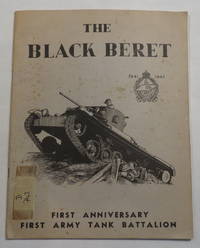
194221066Waiouru: New Zealand Army - 1st Tank Battalion. Good with no dust jacket. 1942. First Edition. Softcover. Ex libris of Frank G. Glen on inside of front cover. Paper label on front cover. Foxing to covers. Some wrinkles and ripples from old water damage to all leaves. ; Uncommon. Not found in Bagnall. 32 pages. Illustrated covers. Page dimensions: 286 x 225mm. Foreword by Lt.-Col. C. A. D'A Blackburn. Numerous black-and-white photographic illustrations. Printed in Auckland by Wilson & Horton. . [New Zealand Army - 1st Tank Battalion] paperback
19442990Fort Leavenworth Kansas: Command and General Staff School 1944. First Edition . Clasped binding. Very good. Tall quarto unpaginated made up of several smaller subsections which are paginated. Overall about 100pp. A very good minimally handled copy in the publisher's card covers with a clasped binding. Some scuffing and an "archive copy" stamp to the front wrap and some pencil underlining and many notes and responses to questions internally. Still a rare military handbook from the middle of the American involvement in the Second World War. Though scant bibliographic information exists we were unable to find a similar item in OCLC at the time of listing. Command and General Staff School unknown
CORV-BBP-13573Published by Author. Honolulu. Paperback. Good. Good. Softbound 4to. Report bound into illustrated cover with metal fastener. Describes a five year general plan to permit and authorize the construction of marina docks in Hawaii Kai Marina. 34pp. B/w map & figures. > Language: English > Size: 4to > Media/Binding: Soft cover Published by Author., Honolulu paperback
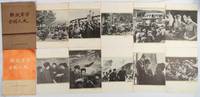
1970215493Circa1970. Set of 10 Revolutionary black and white photographs of PLA soldiers interacting with the people including a slightly browned title page all inserted in the original brown paper envelope. A collectable set in very good condition 26.5 x 19cm. This collection of black and white photographic illustrations show PLA soldiers in different contexts; being taught class consciousness studying Mao's little red book together learning from workers and farmers and so on provided for the use of military units. . unknown
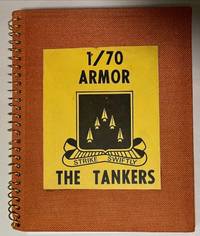
197335207Unknown: N/A 1973. Photograph Album. Very good. Photograph Album. Approx. 11.75" x 9.5". Metal ring binder with orange burlap cloth covered boards. Pasted down yellow and black insignia of the 1st Battalion 70th Armor on the front cover and also located on the first page in the album. <br /> <br /> Album consists of 41 black and white photographs and one color picture of the "Headquarters" sign. Photographs range in size with the majority of them measuring approximately 7" x 5". Pictures have typed and written cut and pasted down short descriptions. Photographs include pictures of Army personnel training exercises marching and casual soldier interactions. Inscription written inside the front cover reads "To the best Battalion Commander that we have served under. Signed C & M Griegs S P 4 Rogers and P F C Weber." On the rear paste down are two pictures showing a tank formation and the other titled "Striker Six Gives Up Command." <br /> <br /> The 70th Armor Regiment was first formed in 1940 and participated in several European and North Africa battles during World War II. According to the wikipedia entry the 70th Armor Battalion the most decorated armor unit in the United States Army was inactivated at Fort Riley Kansas in 1970 and not reactivated until 1975 at Fort Carson Colorado. The album compiled in 1973 shows that the unit was still active between 1970 and 1975. N/A unknown
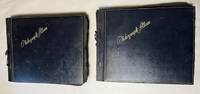
195635221Europe: n/a 1956. Photograph Album. Fair. Two oblong thick string tied photograph albums. Dark covers. Approx. 14" x 11". Both volumes have 50 black sheets of paper completely filled on both sides with numerous personal photographs souvenir photographs post cards ephemera and hand written narratives and notes in white pen. Both bindings are fragile with several loose pages in both volumes. Some of the pictures and cards are loose and laid inside the volumes. The black sheets are chipped on the edges with small pieces flaking off. Albums in fair condition only. <br /> <br /> Each volume has a one page hand written explanation note by Carl Wahle on service issued paper with color "Vienna" seal illustration and color flag illustrations of America United Kingdom. Russia and France top of the page. "7690 HQ. & SVC. CO. APO 777 US Army NY. NY." is printed in black at the center top edge of the paper. The title is taken from one of the first written title headings in volume 1. A very unique and detailed collection of photographs and ephemera detailing the personal life and service of Carl Wahle in Europe during the mid 1950's when the United States was at "Cold War" with Russia. Private First Class Wahle served with the Allied forces that controlled Vienna after World War II. There are many pictures of Carl inside the albums. He witnessed the historic departure of Allied forces from Vienna in July 1955 after the Austrian State Treaty was signed May 15 1955. Several up close pictures taken of the Russian French and British Armies during the this peace keeping mission are included. <br /> <br /> The first album contents include:<br /> <br /> Introductory note page to Volume 1 written by Carl<br /> colored embroidered shoulder patches pasted down on the inside of the front cover<br /> 186 personal and bought photographs of European places Military marches service people etc. <br /> 18 color photographs of Russian & American Changeover Ceremony Sept 1953 <br /> 23 photographs from November and December 1954 of service activities places misc.<br /> a note card by Carl to his folks dated December 19 1953<br /> a drawn white outlined map titled "My Trip to Berchtesgaden Germany Dec. '53 <br /> 4 souvenir cards <br /> 5 souvenir and 2 personal pictures of "Berchtes Jaden Salt Mines"<br /> 61 mostly souvenir photos of the Bavarian Alps Hitler's Eagle Nest and Berchtas Gaden Germany in Winter 1953; <br /> 9 mostly personal photographs taken in Paris with two photographs presumably of Carl<br /> a drawn map outlined in white titled "Trip to Paris Frankfurt Bad Ischle. - Dec. '53<br /> 2 pages of hand written narrative of Paris France Christmas 1953 including 2 maps and a small picture of the Eiffel tower pasted down<br /> color program from the Paris nightclub "Bal Du Moulin Rouge<br /> 18 pictures of Paris<br /> 1 page narrative of Bad Ischl Austria December 1953 with 6 pictures<br /> 21 more pictures Paris and Austria with a picture portrait of Carl subtitled "Student 137 March 1953; <br /> pasted down Certificate - "Tactical Command USFA NCO ACADEMY Honor Graduate signed by L. J. Chase Major Infantry and C. E. Hoy Brigadier General with Carl's note - "Graduated fourth in my class of 135 students"<br /> 25 pictures of NCO Academy<br /> 6 photographs of the 4th Recon Review April 1954; <br /> 24 training and bivouac area photographs <br /> 13 photographs of "Stiftskaserne May 1954 Honor Guard farewell ceremony for Commanding General of Vienna Command Brigadier General Fits" <br /> white drawn outlined map titled "Trip to Bavaria Ger. Switzerland Italy Monaco France & Austria. - June 54"<br /> approximately 193 photographs post cards views and ephemera of an extended trip in Europe. Carl writes several notes about this trip including "the marvelous journey I undertook accompanied by Miss Irene Nikenoay Mr. and Mrs. Kellman aunt & uncle through Austria Germany Switzerland Italy Monaco and France June 1954. There is a pasted down paper of travel orders and with 14 customs stamps. <br /> <br /> The second album includes<br /> <br /> Introductory note by Carl stating "This is Volumn Volume II of my overseas photographs and should not be examined until first reading Volume I. Please turn pages very very slowly and with extreme caution. I request this due to the fact I have written with white ink on every page and also because of the large amount of photographs therein. Thank you Carl."<br /> 6 photographs "Command Inspection by Brigadier Gen. Nutter<br /> 20 scenes within the Stiftskaserne<br /> 51 pictures of service in Europe including views of the former Nazi World War II headquarters Russian military zones and photographs of politicians Senator Estes and Congressman Daniel Reed<br /> 44 pictures of "Soviet - American change over ceremony Vienna dated 1 Sept 1951 should be later than 1951<br /> 26 photographs of Carl's parents arrival and travel in Vienna<br /> one page with one nice color illustrated note card pasted down<br /> 8 pictures "British - American change over Ceremony Heroes Square 1 Nov 1954" <br /> 19 service photographs taken October 1954 <br /> large photograph of the "Flak tower Stiftskaserne" made by the Nazis<br /> 86 views and cards from a trip made in October 1954 to Frankfurt London Rotterdam Brussels Luxembourg and Stuttgart<br /> 3 pictures of a newly wedded couple unnamed<br /> 61 more pictures of the October 1954 trip<br /> a small color embroidered note card dated May 15th with a note written inside "Belvedere Palace. this baroque structure which was constructed in the 18th century for Prince Eugene was the scene for the signing of the Austrian State Treaty. On this day a new era began for Austria."<br /> large photograph of the "Austrian Landscape" <br /> 56 pictures and views of places in Vienna a British Inspection at Schonbrunn Barracks Vienna Radio Station "International weapons match" a picnic an Austrian dance boxing match change over ceremonies involving American-British French-British American-Russian<br /> a nice holiday greeting card printed in German from Irene Nikenday<br /> 16 pictures cards ephemera from Austria<br /> 4 pictures Russian-American Changeover<br /> 4 pictures General Nutter farewell ceremony<br /> 5 misc pictures armed forces day inspection in 2 American Generals a miniature photograph of Carl "X-9" a wedding picture<br /> 41 pictures of French American Russian military units drill teams marches etc. dated 28 July 1955 "was the date the Austrian State Treaty came indo foree. and another note "Austria is Free! 28 July 1955 The Austrian State Treaty is now in force."<br /> a large mounted picture with the sun shining through a tree forest titled "Morning"<br /> a very large color picture of 3 cows<br /> 44 more pictures and cards of various unnamed places to complete the end of Volume 2. From the United States Department of State:<br /> <br /> Austrian State Treaty 1955<br /> On May 15 1955 representatives of the governments of the Soviet Union Great Britain the United States and France signed a treaty that granted Austria independence and arranged for the withdrawal of all occupation forces. These governments signed the agreement with the understanding that the newly independent state of Austria would declare its neutrality creating a buffer zone between the East and the West. The Austrian State Treaty was the only treaty signed by both the Soviet Union and United States in the decade after the 1947 Paris Peace Treaties and it marked the only Cold War era withdrawal by the Soviet Union from a territory it occupied.<br /> The Austrian situation was unique in postwar Europe. In 1938 it had been the only nation to be annexed in its entirety by Nazi Germany a fact that raised consistent questions during the war about the extent to which the country was a victim of Nazi aggression or whether it had been a collaborator. At the Potsdam Conference in 1945 the Allies agreed that they would jointly occupy Austria in the postwar period dividing the country and its capital Vienna into four zones as they planned to do with Germany and Berlin. The Soviets also demanded reparations from Austria a request that was dropped due to the country's non belligerent status but the United States did agree that the Soviet Union would be entitled to any German assets in the Soviet occupation zone. In contrast to Germany the Austrian government continued to exist in the postwar period and govern although the Four Powers could veto any new legislation if they unanimously agreed to do so. This arrangement was maintained until the withdrawal of the occupying powers upon the completion of the Austrian State Treaty.<br /> The breakdown of the wartime "Grand Alliance" and the emergence of the Cold War led to the Austrian occupation lasting far longer than anyone anticipated. Negotiations over the final status of Austria began in 1947 when half of fifty-nine proposed articles for a treaty were agreed upon. At the first meeting the foreign ministers agreed to name the agreement under negotiation the Austrian State Treaty not the Austrian Peace Treaty to acknowledge that Austria's involvement in the war had not been voluntary and that the treaty was therefore not to end a war but to reestablish an independent state. The principle sticking point during the 1947 negotiations was the issue of German assets: how they were defined and just how much compensation the Soviet Union was entitled to take. The Soviet occupation forces had seized control of factories railroads as well as oil and shipping concerns all of which had been under Nazi control at one point or another and only offered to sell them back to the struggling Austrian provisional government at exorbitant prices. As a solution to this situation France suggested a revenue-sharing plan in which some profits from the formerly German-held industries would be sold back to Austrians and some would operate independently with the Austrian State and occupying powers sharing their revenue but then the Soviet Union refused the treaty claiming some Austrian territories on behalf of the government of Yugoslavia. The parties finally reached an agreement in 1949 in which the West would offer economic concessions to the Soviet Union in exchange for the Soviet relinquishment of Yugoslav claims. Just when a deal appeared imminent the Soviet Union again opted not to sign; in fact at several points throughout the process the Soviet Union delayed completion of the treaty while it reconsidered what benefits it hoped to gain from the agreement.<br /> Between 1950 and 1953 tense Cold War relations and the existence of a hot war in Korea also contributed to stalling the talks on the Austrian situation. Then after the death of former premier Joseph Stalin in 1953 his successors in the Soviet Union launched a "peace offensive" to try to decrease international tensions. Although there were some concrete indications of the new policy such as relaxed controls in East Berlin and the newfound willingness of the Chinese to discuss Korean War POW exchanges after Chinese leaders visited Moscow U.S. President Dwight D. Eisenhower stated that he would only agree to holding a summit meeting with the Soviet Union if there were several clear indications that Soviet actions would match its rhetoric of peace. One of the examples he named was the completion of the Austrian State Treaty. Even before negotiations on the treaty restarted there were indications that Soviet policy toward Austria was liberalizing as it loosened restrictions on the press and travel in and out of its sector and also worked to establish formal diplomatic relations with the Austrian Government.<br /> With the German assets question all but settled in the last set of draft treaties the question holding up the negotiations at this stage was the issue of Austrian neutrality. The Austrian Foreign Minister went through the neutral government of India to inform the Soviet Union that if a treaty was signed independent Austria would also remain neutral staying out of NATO or other defensive arrangements. Eisenhower was against neutrality on principle and he was both angered by this maneuver and hopeful that Austrian neutrality could still be prevented. One particular danger was that West Germans anxious for their nation's own reunification would follow the Austrian example and offer their neutrality in an effort to expedite unification. German neutrality would have greater implications for American security plans in Europe than Austrian neutrality would. In late 1954 the West German Government and the Western powers at last reached an agreement under which Germans would rearm under the NATO command reassuring the United States.<br /> Finally in April of 1955 and after substantial debate on both sides representatives of the Austrian Government traveled to Moscow and returned just four days later with a complete treaty that outlined compensation to the Soviet Union for German assets and the nature of Austrian neutrality. U.S. officials demanded two changes in the treaty regarding the upper limit placed on Austrian armed forces and the removal of a clause on voluntary repatriation of displaced persons that they feared could be used by the Soviet Union to force anticommunist refugees to return to East Bloc countries. The Soviets conceded on both points. The overall terms of the treaty were less favorable to the Soviet Union than previous proposals but the timing was right for the USSR to initiate its withdrawal from Austria. On May 15 representatives from Britain France the United States and the Soviet Union signed the Austrian State Treaty ending seventeen years of occupation by foreign troops. As promised the newly-independent nation declared and maintained its neutrality for the remainder of the Cold War. n/a unknown
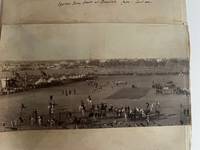
26620Abbassia 1906. Panoramic Photograph entitled "Egyptian Army Sports at Abbassia Cairo - April 1906" 28.5 x 15.7cms partly laid down on somewhat grubby album leaf 28 x 25cms. See Image for details. [Abbassia, 1906. unknown
1754AQ22977London: Printed for Paul Vaillant 1754. xv 1 423pp 1. With seven engraved folding plates and eight folding tables. Contemporary sprinkled calf tan morocco lettering-piece. A trifle rubbed and marked upper joint starting. Book-label of Sir John Dashwood King to FEP. Internally clean and crisp. The first edition in English of the Kingdom of Prussia's infantry guide: Reglement vor die königl. preussische Infanterie the first published work of army officer and much-admired military tactician Sir William Fawcett 1727- 1804. In 1781 having served with distinction in several campaigns in Germany Fawcett was appointed adjutant-general on the British establishment promoted to the rank of lieutenant-general and charged with reviewing the severely disrupted and outmoded drill system. He was well-suited to the task being widely considered to possess one of the finest strategic minds of his day and well versed in contemporary martial literature having translated inter alia Reveries or Memoirs upon the Art of War London 1757 Regulations for the Prussian Cavalry London 1759 and Regulations for the Exercise of Riflemen and Light Infantry London 1798. ESTC T115267. First. edition in English. 8vo. Printed for Paul Vaillant unknown
1919142221London: H.K. Lewis & Co. Ltd 1919. First Edition. Hardcover. Very Good. London H.K. Lewis & Co. Ltd. 1919. Octavo xx 182 pages with numerous tables plus a plate 2 folding maps and an errata slip tipped onto the contents page. Cloth lightly rubbed and flecked with a very small mark to the rear cover; spine lightly sunned; edges and endpapers foxed with slight foxing to the preliminaries; a very good copy. H.K. Lewis & Co. Ltd hardcover
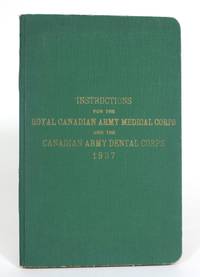
1937012486J.O. Patenaude 1937. Hardcover. Near Fine. 8vo. Green buckram 162pp incl. index with amendment slips. Owner name on front pastedown and a small rubber stamp at rear. Scarce and near fine example of pre World War Ii Canadian army manual with chapters on the management and control of hospital establishments sanitation surgical supplies the importance of vaccination and more. J.O. Patenaude hardcover
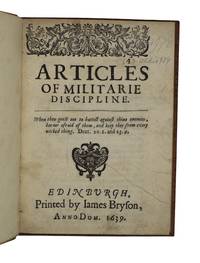
1639AQ22724Edinburgh: Printed by James Bryson 1639. 16pp. Modern blind-ruled tree-calf contrasting black morocco lettering-piece T.E.G. Marbled endpapers trimmed occasionally affecting pagination and signature. Recently dispersed from the Cottlesloe Military Library 'probably the most extensive private collection of early printed books focused on military matters' with the bookplate of Thomas Francis Fremantle 3rd Lord Cottesloe 1862-1965 to FEP. The sole edition of the articles of conduct for the army of 16000 men raised by the Covenanters and commanded by Alexander Leslie first Earl of Leven c. 1580-1661 at the outset of the First Bishops' Wars. The articles besides the expected regulations regarding behaviour towards superior officers and prohibitions concerning desertion reflect the religious reformation championed by the Covenanter authorities. The ecclesiastical social order of the army was structured to mirror the hierarchy of the Church. A 'Kirke Session' applied to each regiment in order to censure 'profainers of the sabbath swearers and drunkards especially such as shall be found drinking in time of prayers of divine service'. Infantrymen were expected to remain celibate whilst in service prostitutes were forbidden in camp and those found to have committed rape were to be executed. ESTC S100228 STC 21904.5. First edition. Quarto. Printed by James Bryson unknown
190646279Washington: G.P.O. 1906. 8vo. 112 pp. Tables diagrams. Embossed emerald-green cloth gilt lettering on front cover & spine embossed ruling on covers ex-lib spine label & stamps on front endpapers slight shelfwear very minor bumping to couple corners still G ex-lib copy w/ bookplate on front pastedown. First edition of this very scarce service manual for directing the operations of the U.S. Army Signal Corps at the beginning of the 20th century published just prior to the San Francisco earthquake & fire. This manual details the equipment and specifications for setting up and maintaining telegraph & telephone lines telegraph codes types of property all of the tools required for their systems and includes sections on wireless telegraphy balloons submarine-cable instruments fieldglasses and more. The Signal Corps was commanded by the famed polar explorer Adolphus Greely 1844-1935 who had been appointed to the post by President Grover Cleveland. Under his command the Signal Corps was vastly expanded and constructed operated and maintained telegraph lines during the Spanish-American War the Philippine Insurrection constructed a line of 4000 miles to Alaska and proved to be a vital lifeline during the aftermath of the San Francisco earthquake & fire in April 1906. In the burned out city the Signal Corps set up 42 telegraph offices and 79 telephone offices connecting all the military districts federal buildings railroad offices & depots city offices and other vital locations. G.P.O., hardcover
190746280Washington: G.P.O. 1907. 8vo. 163 1 pp. Tables diagrams 9 plates 8 large folding. Embossed emerald-green cloth gilt lettering on front cover & spine embossed ruling on covers ex-lib spine label & stamps on front endpapers slight shelfwear still VG ex-lib copy w/ bookplate on front pastedown. Second edition substantially revised & expanded of this very scarce service manual for directing the operations of the U.S. Army Signal Corps at the beginning of the 20th century published just after the San Francisco earthquake & fire. This manual details the equipment and specifications for setting up and maintaining telegraph & telephone lines telegraph codes types of property all of the tools required for their systems and includes sections on wireless telegraphy balloons submarine-cable instruments and fieldglasses. In addition this work includes a detailed section on setting up and operating Post Telephone Systems Telephone systems for Coast Artillery posts as well as the detailed large folding plates showing equipment and maps for establishing them. The Signal Corps was commanded by the famed polar explorer Adolphus Greely 1844-1935 who had been appointed to the post by President Grover Cleveland. Under his command the Signal Corps was vastly expanded and constructed operated and maintained telegraph lines during the Spanish-American War the Philippine Insurrection constructed a line of 4000 miles to Alaska and proved to be a vital lifeline during the aftermath of the San Francisco earthquake & fire in April 1906. In the burned out city the Signal Corps set up 42 telegraph offices and 79 telephone offices connecting all the military districts federal buildings railroad offices & depots city offices and other vital locations. G.P.O., hardcover
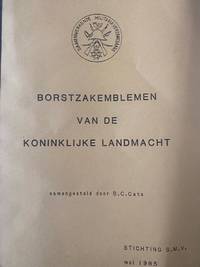
52066Original paper cover in good condition.Gestencilde publicatie van de Samenwerkende Militaria Verzamelaars met afbeeldingen van alle emblemen en de uitleg daarover. unknown
2008169215北京.Beijing.: 星球地图出版社.Xing qiu di tu chu ban she. May2008. Two large coloured maps printed on double sided on a single sheet folded issued shortly after the devastating 2008 Wenchuan Earthquake which was occurred on 12 May 2008. Small tears along folds mended by both non-acidic tape and cello tape some creasing generally good. Text in Chinese. Sheet measures 84.9 x 119.7cm. <br> <br>Map of Sichuan Province: scale 1: 1100000 inset map lower right corner showing the provincial capital city Chengdu a statistical chart lower section listing counties within Sichuan Province their population and territory size. <br> <br>Map of Wenchuan County and Its Vicinity: 1: 300000 various colour representing altitude differences inset map showing the position Wenchuan County within Sichuan Province a mileage chart listing the distance between Wenchuan County to nearby cities. A brief introduction of Wenchuan on left section accompanying the images of the rescue forces. The Great Wenchuan Earthquake was the biggest earthquake in Chinese history with a casualty over 69000 people. . 星球地图出版社.[Xing qiu di tu chu ban she]. unknown
13525Compiled by the Army Bureau of Current Affairs. Printed for H.M. Stationery Office by Fosh & Cross Ltd. 1943. Printed on both sides of a piece of paper. 75 x 102cm. In very good condition on lightly-aged and worn paper. Designed to be placed on a barrack wall but with no evidence of having been put up. A striking piece of graphic design with a boldly-coloured map beneath a thick green curving masthead on the front and another black and white map in the bottom left-hand corner. Headings to the text read: 'Churchill's Return' 'The Russian Tide' 'The Nazi Line' 'After Tunisia . . .' 'The Solomons' and 'The U-Boats' together with two photographs and an advertisement 'Britain Calls Her Armies' for 'Army Week' on the B.B.C. 28 February to 6 March 1943. The reverse carries 23 black and white photographic illustrations under the heading '25 Years of the Red Army' with sub-headings 'The Birth of the Red Army' 'Between Two Wars' 'Partners of the Red Army Man' 'The Red Army's A.B.C.A.' 'The Red Army of Liberation'. Central quotation from Stalin and table at foot giving the 'Percentage Increase of Red Army and Air Force'. Very few of these items survived the war: the only copies traced at the Imperial War Museum National Library of Scotland and University College London. Compiled by the Army Bureau of Current Affairs. Printed for H.M. Stationery Office by Fosh & Cross, Ltd. 1943 unknown
7471Anonymous and undated. Circa 1810. On one side of a piece of wove paper roughly 28.5 x 24 cm. On aged somewhat grubby paper with 6 cm closed tear repaired with tape on reverse. Full-length diagrammatic depiction of a British army officer in uniform of the Napoleonic period black boots with spurs tight white breeches green jacket with yellow trim and black hat with red plume holding his sword horizontally in front of his face. A set of thirteen numbered angles are projected from the tip of the blade some bracketed 'all these are strait in Front'. Others are described as 'flat'. Captioned at head 'Drill Motions.' The numbering and handwriting would appear to be in a hand contemporary with the plate but the item is either a forgery or it has been touched up in recent decades as the border plume and some highlighting would appear to be in red felt-tip pen. Docketed at the foot in a twentieth-century hand 'DRILL MOTIONS AT BUNHILL FIELDS.' The Honourable Artillery Company the oldest regiment in the British Army has its old parade ground abutting Bunhill Fields near the City of London. Anonymous and undated. [Circa 1810?] unknown
9984Circa 1810. Landscape folio leaf 32.5 x 40.5 cm 1 p. On paper watermarked 'JOHN HALL 1810'. Neatly ruled to make a complex detailed table in three columns of 31 rows each. The table has a central vertical fold with the left hand side of the reverse mounted on a leaf removed from an autograph album. In poor condition with around an eighth of the total area of the paper and text lacking mostly from the bottom right-hand corner. Despite the loss the table presumably prepared for the British War Office contains a mass of valuable information. The table begins under the heading 'Staff' with seven sections divisions including 'His Majesty's first Adjutant of Cavalry' and 'War Department'. Beneath this are the three columns each subdivided into 'Names' 'Brigades' 'Strong.' 'Year of form:' and 'Are formed out of'. The first column 'Cavalry' is complete with details of 'Cuirassiers' 'Dragoons' 'Hussars' 'Uhlans' and 'Horse Artillery'. First entry: 'Garde du Corps Brandenburgh 5 troops 1740. Formerly the 13th.' Second column 'Infantry with list of 27 'Regiments of the Line' followed by three rows of 'Riflem<en>'. Loss to text of all three of the latter and to 12 of the entries on the regiments. Third column headed 'Artillery' has four rows of details relating to the artillery followed by two rows of 'Brigade Adjutants' two rows of 'Officers of the Army' three rows of 'Additional Corps' and six rows of 'Formation of Grenadiers'. Beneath this a section beginning 'Recapitulation' has been almost entirely lost'. Perhaps relevant to Prussian efforts at Waterloo. See Image. [Circa 1810.] unknown
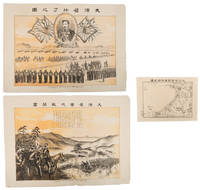
1898218770大阪. Osaka.: 山口新三. Yamaguchi Shinzo. Meiji 31 1898. Black and white map 20 x 27cm together with two colour photolithographic prints each with a light vertical central crease 39.2 x 54.5cm. Very good. This collection consists of three items — two colour prints and a map—related to the Army Training Exercise held in Osaka in 1898. They are titled: <br> <br>Daienshū jicchi sentōga 大演習実地戦闘画 <br>Daienshū shūryō no zu 大演習終了之図 and <br>Daienshū sentōga furoku chizu 大演習戦闘画附録地図. <br> <br>The Emperor attended the exercise in person an event that was regarded as a great honour for the local residents. The two prints depict scenes from the exercise — one showing the Emperor on horseback observing an attack and the other capturing the final parade. The supplementary map covers Osaka and its southern outskirts where the manoeuvres took place. . 山口新三. Yamaguchi, Shinzo. unknown
184731761Brazos Island Texas 1847. Document. Very good. 2 8" x 10" sheets of paper. The first document signed at the bottom by Capt. A B Eaton from Brazos Island is dated December 15th 1847 and is addressed to Major Thos. B Eastland q.m. The document reads "Major - I respectfully require of the Quartermaster's Department the necessary transportation receipts in bulk for the Subs Stores herewith invoiced as required by Par 1088 Army Regulations. - Respectfully Your Obt Servt A B Eaton Capt .sp" The second document signed by Eaton on December 17th 1847 is also addressed to Eastland and has the same exact content as the first letter not a copy as the date is different and the writing has variation. A collection of Thomas B. Eastland's papers is held by the California Historical Society. <br /> <br /> From the Confederate Veteran February 1911 "Eastland Family" "Thomas B. Eastland came to Nashville where he was engaged in business until about 1840 when he went to New Orleans to engage in the cotton brokerage business and where he continued until the breaking out of the Mexican War during which he served under General Zachary Taylor as major." Thomas B. Eastland's diary titled To California Through Texas and Mexico: The Diary of Thomas B. Eastland and Joseph G. Eastland His Son was published by the California Historical Society in 1939 and is 59 pages long.<br /> <br /> From wikipedia: in 1846 ".it Brazos Island was the first military objective of the US Navy in support of General Zachary Taylor's invasion of Mexico. Control over this important seaport was said by Harvard historian Leroy Graf to be the primary reason for the US invasion of Mexico. From Padre Island NS Historic Research Study Chapter 3 "After the outbreak of hostilities Brazos Island became the primary staging area for the continuing campaign. Volunteers from throughout Texas and the Mississippi Valley converged on the Island and headed inland for camps at Point Isabel and along the Rio Grande."<br /> <br /> Amos Beebe Eaton the signer of these documents 1806-1877 was a career officer in the United States Army. He was General Zachary Taylor's Chief Commissary of Subsidence during the Mexican War. He was a graduate of West Point in 1826 and was made Brevet Major General of the Union Army in 1865 appointed by Andrew Johnson. unknown
19462545San Antonio: C. Ekmark 1946. Very good. Panoramic photograph 8 x 52.25 inches. Very minor wear. A dramatic panoramic image capturing the 23rd Infantry Battalion of the Second Infantry Division while training at Camp Swift Texas in the wake of the Second World War. Four large groups of soldiers are ranged across the photograph with the officers in the middle-front of the image all standing in front of three long rows of jeeps and military transport trucks. Camp Swift located just west of Austin in Bastrop County can be seen in the far background.<br /> <br /> "During World War II Camp Swift reached a maximum strength of 90000 troops and included at different times the 95th 97th and 102d Infantry divisions the 10th Mountain Division the 116th and 120th Tank Destroyer battalions and the 5th Headquarters Special Troops of the Third Army. Swift was the largest army training and transshipment camp in Texas. It also housed 3865 German prisoners of war. After the war much of the site was returned to former owners. The government retained 11700 acres as a military reservation. That land housed parts of the Texas National Guard a medium-security federal prison and a University of Texas cancer research center" - Handbook of Texas online.<br /> <br /> The photographer Carl John Ekmark of San Antonio was a noted and somewhat prolific chronicler of military life throughout the Lone Star State. C. Ekmark unknown