[BRITISH ARMY]Biblio.com
9 442 résultats
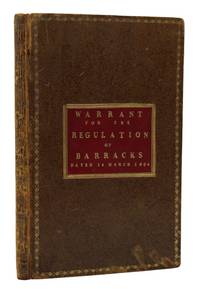
1824AQ30682London: Printed by J. Hartnell 1824. 2 68 vii pp 1. Contemporary gilt-tooled sprinkled calf contrasting red morocco lettering-piece to upper board. Rubbed some surface loss to bowed boards. Contemporary ink ownership inscription to head of title. A compendium of the rules and regulations governing British Army barracks in Great Britain Ireland and the colonies 'Ceylon and New South Wales excepted'. . 8vo. Printed by J. Hartnell hardcover
20970British Expeditionary Force France. Christmas 1939. A nice piece of Second World War ephemera of which no other copy has been traced. 1 British Corps formed part of the B.E.F. travelling to France in September 1939 and withdrawing from Dunkirk at the 'Darkest Hour' in May 1940. In good condition lightly aged and worn. Lithographed in black on the four sides of a 9.5 x 15 cm bifolium. Two parallel diagonal red lines printed at top left of front cover which also carries the Spearhead badge of 1 British Corps at centre above 'B.E.F.' in a scroll with 'Christmas – 1939' at bottom left. Printed on the verso of the first leaf are the words: 'â€A Merry Christmas and a Happy New Year!†FROM 'Gordon' here in manuscript'. The recto of the second leaf carries a full-page illustration with 'â€Christmas Greetings†at top left and the initials of the artist 'L.D.C.' in small letters at bottom left. The illustration is a simple line drawing depicting the White Cliffs of Dover at bottom left a French scene with moored warship at bottom right an army camp at top right a convoy of army trucks with planes above rising diagonally at centre. Printed in miniature on the back cover is the Grenade badge of the Grenadier Guards. The Imperial War Museum website states that the Spearhead design of the 1 British Corps badge was 'symbolic of the fact that First Corps at Aldershot was the only Corps in permanent existence before the War and was therefore the spearhead of the British Army'. British Expeditionary Force [France]. Christmas 1939. unknown
AQ30958Lucknow: G. W. Lawrie & Co. s.d. c. 1903 Four photographs two tipped-in to contemporary card folders. Clean and crisp. Four photographs; two taken by the Lucknow-based firm of G. W. Lawrie & Co. of an unidentified British Indian Army officer seemingly of the 27th Light Cavalry one in standard issue uniform the other in which the cap is replaced with a Sikh headdress; and two group shots featuring the same officer presumably with other members of the 27th Light Cavalry. . [G. W. Lawrie & Co.], [s.d., c. 1903] unknown
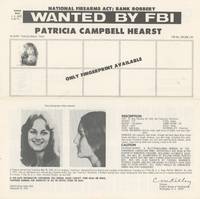
1974List3214Washington D.C.: Federal Bureau of Investigation 1974. Mailer measuring 8 x 15 ¾ inches folded in fours. Yellow tape to seal; else Fine. An FBI mailer soliciting information about Emily Harris and Patricia Hearst of the Symbionese Liberation Army SLA a left-wing militant group based in California and responsible for several killings and bank robberies between 1973 and 1975. Hearst the granddaughter of publishing tycoon William Randolph Hearst had been kidnapped by the SLA in February of 1974; in April she turned up on surveillance video robbing a San Francisco bank with other members of the SLA. Harris was involved in Hearst’s kidnapping and was at the time this mailer was distributed on the run with her husband William Harris and Hearst and wanted for firearms violations. The mailer describes the three as “armed and very dangerous.†<br /> <br /> The trio was arrested in San Francisco in 1975. The Harrises served eight years in prison but were re-arrested in 2002 for the murder of Myrna Opsahl during a 1975 bank robbery. Hearst served two years of a seven-year sentence; her sentence was commuted by Jimmy Carter and in 2001 she was pardoned by Bill Clinton. Federal Bureau of Investigation unknown
186333624Tullahoma Tennessee 1863. Document. Fair. Manuscript Document. Approx. 12.5" x 8". General Order No. 18 written on the front side and signed by the Assistant Adjutant General H. W. Walter. Also located on the lower left corner of the document is written "Maj Genl Wheeler a' g Wheeler's Cav Corps." On the verso is a handwritten summary of the order. The paper has dried water stains. The ink is light in spots. This handwritten General Order was reprinted in the Official Records of the War of the Rebellion War of the Rebellion Records Series I. Vol. XXIII Part II Correspondence Etc. Chapter XXXV pages 858 859. The signature at the bottom of the document is not legible but it is not in the hand of General Wheeler. The document reads:<br /> <br /> The enemy has seen fit to expel from his lines and send to our midst not only those supposed to be guilty of crimes but non-combatants found in their homes in the peaceful pursuits of life. In the perpetration of these outrages on humanity and these violations of civilized warfare he has prostituted the flag of truce to the base purpose of protecting the guards who drive forth these exiles. Hereafter that flag will not protect those guards but they will be seized and sent forward to be treated as spies or prisoners of war as the circumstances in each case may require. By Command of General Bragg. unknown
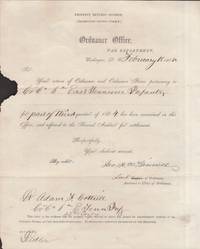
186535417Washington DC: War Department 1865. Paper. Good. Document. Approx. 10" x 8". 1 page. Document is dated February 18 1865. Contents relate to return of ordinance distributed in 1864. It is signed by Jno R. McGuiness. Below his order is the signature of Lt. Adam F. Cottrell Co "C" 6th E. Tenn Infty 23rd Corps. Document has a chip on the center left edge. War Department unknown
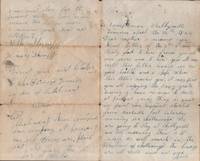
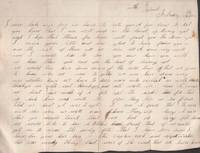
186435325Shelbyville Tennessee: n/a 1864. Letter. Good. Letter. Paper sheet measures 8" x 10". Folded three times. 4 pages of written content. A few spots and toning to the paper. Good condition. Transcription of contents is slightly difficult with several misspelled words. Letter reads:<br /> <br /> Camp Near Shelbyville Tennessee april the 14th 1864 <br /> Dear Mother i recived your kind letter of the 3th a was truly glad to here from you all once more and to here you all was well this letter leaves me in good health and i hope When this letter reachs you it may find you all enjoying the same grate Bessing i have no news to Write at present every thing is quiet in front our regiment started from nashville last Saturday morning for Chattanooga We are going to stay at Shelbyville un till morning then i supose we will march in the Direction of chattanooga the buoys are all well and in good spirits their is no rebel army nearer than richmond their will be the next big fight and i hope the last one during this war We have got one hundred thousand troops in front ready to march in the direction of richmond if our men should have luck to take richmond i think the War would close soon after words Whether it closes or not i am coming home just as soon as my time it out if uncle Sam give us our furlow time i will be at home some time in June if not i will be their in September if i have the luck to get out safe mother tell the old man to put in a good crop of corn and i will be their to help him gather it tell uncle nathan graves i have not forgoton him tell him i would like to here how he is geting a long also give my love to him mother i have received your minature at last Witch you sent by gery paddock i think it favers you very mutch tell nancy mays i have not herd from Will for some time i saw colonel Wharton at nashville a few days a go. he said the Buoys were all well and was campt near chattanooga tenn mother tell me haydon i think he is two work brickel slce i Would here oftener from him give all mr haydons my love and respets and keep a dieu family portion for your self give aunt lucy ana family my love and respets I now must close for the preasant this So no more i remain your son un till Death signed Stith Stumpff addressed To mary Stumpff Direct your next letter to chattanooga Tennesee in care of lieutenant Keen lieutenant keen commands our company at preasant our old officers are plaid out So fare the well for a while." Ancestry dot com record found for Stith Stumpff age 18 birth date about 1844 enlistment date into the Union Army October 4 1862. Stith Stumpff enlisted at Lebanon Kentucky as a Private in the Fifth Kentucky Cavalry other U.S. archive records indicate the Kentucky Fourth through Sixth Cavalry. The Fifth Kentucky Cavalry fought in the Atlanta Campaign summer of 1864. n/a unknown
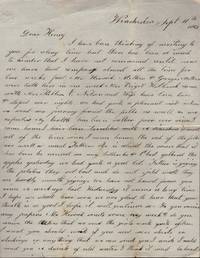
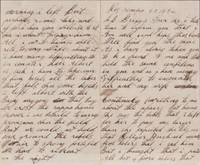
186331604Columbian College Hospital Washington DC; Winchester 1863. Letter. Very good. Two letters. Folded. Paper in very good condition. <br /> <br /> The first letter 2 pages is written on lined 8" x 10" paper dated September 11 1862 from "Winchester". The letter is addressed to "Dear Henry" and signed by "Mother." Mother discusses the latest news and health of the family. She is glad Henry's health is fine and hopes the letters written to him by a family friend and the "girls" reaches him. She also asks Henry if he needs more shirts and stockings. Mother states "I wish I could send you a drink of cold water I think it must be hard indeed to have such poor water. I hope this dreadful war will close soon but do not see any prospect of it." <br /> <br /> The second letter 4 pages long is dated March 9th 1863 is written on a sheet of 15" x 10" folded paper. The letter is addressed "Friend Henry" and was written from Columbian College Hospital Washington D.C. and signed at the end by Chas. Wilbur. The contents discuss rumors of the 9th Corps headed to the old Carolina State "but I do not take much stock in it". Wilbur remarks "I am feeling gay as a lark and there is but one thing that troubles me nights that is the fear of going to the Convalescent Camp." Most of the letter describes the day to day activities of Chas. Wilbur and hearing or not heraing from other acquaintance's. unknown
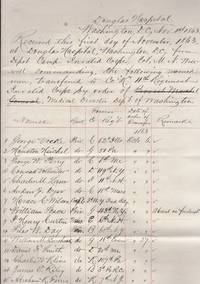
186333734Washington DC: Union Army 1863. Document. Very good. Hand Written Document. Folded. Approx. 11.5" x 8". 4 pages 1 page unused. Information written on lined paper with red columns. 22 numbered soldiers in the Invalid Corps are listed. Document is in very good condition. The Veteran Reserve Corps originally the Invalid Corps was a military reserve organization created within the Union Army during the American Civil War to allow partially disabled or otherwise infirm soldiers or former soldiers to perform light duty freeing able-bodied soldiers to serve on the front lines wikipedia. Transcribed as follows:<br /> <br /> Douglas Hospital<br /> Washington D.C. Nov. 1st 1863.<br /> <br /> Received this first day of November 1863 at Douglas Hospital Washington D.C. from Depot Camp Invalid Corps Col. M. N. Wisewell Commanding the following named men transferred to Co. "K" 11th Regiment Invalid Corps by order of Provost Marshal General is marked out Medical Director of Washington.<br /> <br /> The following names rank Co. Reg't are listed. Most of the ranks for the men are missing. The date of transfer and remarks are omitted<br /> <br /> 1. George Vock Priv. Co. C 82d Ill<br /> 2. Houston Heichel Co. G 57 PA<br /> 3. George W. Perry Co. C 6th ME<br /> 4. Conrad Vollweilor Co. D 119th N.Y.<br /> 5. Charles M. Lane Co. I 11th N.H.<br /> 6. Andrew J. Dyer Co. C 18th Mass<br /> 7. Horace C. Wilson Corp'l. 3d N.Y. Ind. Baty.<br /> 8. William Scace Priv. Co. G 43d N.Y.<br /> 9. P. Henry Curtin Co. E. 6th N.H.<br /> 10. Silas W. Day Priv. Co. B. 60th N.Y.<br /> 11. William M. Burchard Co. G. 16th Conn.<br /> 12. Daniel F. Smith Co. D. 20th ME<br /> 13. Charles W. Kline Co. K. 107th PA<br /> 14. James E. Riley Co. B. 3d PA R.C.<br /> 15. Abraham K. Ferris Co. K. 7th N.J.<br /> 16. Abraham W. Rose Co. E. 9th N.J.<br /> 17. William Roggenstein Co. H. 146th N.Y.<br /> 18. Levi I Dorr Co. B. 13th Mass<br /> 19. Z. M. Raymond Corp'l Co. B. 144th N.Y.<br /> 20. Andrew S. Mason Priv. Co. D. 6th MD<br /> 21 James Cox Co. F. 1st PA Cav.<br /> 22. Julian Lasche Co. K. 26th Wis. <br /> <br /> Nineteen of the above are present for duty one sick and two absent on furlough.<br /> signed Hannibal D. Norton 1st Lieut. Comd'g C. K. 11th Reg't late 22d Co 2d Batte Invalid Corps.<br /> <br /> written on page 4<br /> Original List of men transferred to Co. K. 11th Regt I.C. Nov. 1 '63 sent copy Nov. 1st - 63 to Col. M N Wisewell. Union Army unknown
186235710Somewhere in Virginia: n/a 1862. n/a. Letter. Good. Paper. Approximately 9" x 75.". Folded. 3 pages of manuscript. Letter reads with spelling not corrected - December 22 1862 H. B. Briggs: Dear Sir I take time to inform you that I am well and hope these lines will find you the same. As I have always taken you to be a friend to me and still hold the same confidence in you. And As I have many difficulties to incounter here and my wife continues writing to me about the affairs at home. She says the debts that I left her to pay was larger than she expected. She tells me that Cliger Bushnell wants five dollars that I ow'd him. But I thought That I paid all but 4 more dollars that morning I left. But perhaps I mistake and if so I hope you will see to it for I want to pay him all I owe to him. I will write my wife about it. I have many difficulties to incounter here. Albert is sick. I have to take care of him besides all the labor that falls upon me. Besides I left Albert with the baggage wagons that day we cross the Rappahannock River. I was detailed to carry provisions upon the field but we could not hold our ground. The rebels were too strong fortified. We had to retreat in the night. I hope you will write Let me know what the prospects is for our country. You have the chance to be informed better than I do. I have to write upon my knapsak so excuse it. respectfully yours David Downs. These 3 page letter includes the stamped envelope with stamp and Washington D.C. postmark. The envelope is addressed "Mr. H. B. Briggs Westville Green Co. Ny York." Soldier record included with letter indicated David Downs was 38 when enlisted 8/27/1862 at Lexington NY as a Private. On 9/6/1862 he mustered into Company G Co. He was dishcharged on disability 3/16/1864. n/a unknown
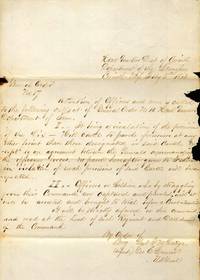
186331612Corinth Mississippi 1863. Document. Fair. Manuscript document. Approx. 12.5" x 8." Folded. 1 page. A few edge chips and small splits at the folds to the paper. Very slight loss of content. <br /> <br /> Contents of the order include rules to parole prisoners and the arrest of "Officers or Soldiers who by straggling from their Commands are captured and paroled will at once be arrested and brought to trial before a court-martial. It will be strictly enforced in this command and read at the head of Each Regiment and Detachment of Command. By Order of Brig. Genl G M Dodge signed Geo E Spencer A A Genl." Spencer also signed the verso of this document. unknown
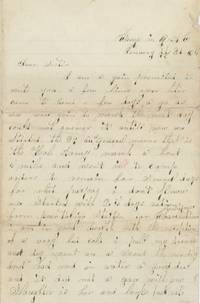
1865List2724South Carolina 1865. Single letter measuring 7.5 x 10 inches folded one double-sided sheet with stampless envelope. Near fine with light normal wear. George Harpole Vannada 1844–1928 was a private promoted to corporal in Company I of the 25th Indiana Infantry Regiment during the Civil War. The 25th Infantry was a volunteer regiment mustered in August 1861 and mustered out in July 1865. At the time of Vannada’s writing the Regiment was involved in the Campaign of the Carolinas – led by General Sherman this campaign would culminate in the Army of the South’s unconditional surrender and effectively end the war.<br /> <br /> Vannada writes that his regiment had “started with 25 days rations from pocotaligo staton for i supose Charleston.†On the way they had encountered:<br /> <br /> “a few Johneys i.e. Confederates not far off i have heard sevrel cannons to day we will be botherd with them all the way to Charleston between here and Buford they had a fort a bout evry 3 miles they wood stop and fire a few shots and then get up a bug for the next fortâ€.<br /> By “Buford†Vannada probably means Beaufort South Carolina which had been occupied by Union forces since November 1861. At this point the Savannah area had been essentially a refugee camp for freed people for several years and Sherman’s Special Field Orders No. 15 which settled them in the nearby South Carolina Sea Islands—the “forty acres and a mule†order—came in response to their request for stewardship over the land. Vannada remarks on Sherman’s order:<br /> <br /> “Gen Foster has been on Buford Iland for 2 years and now Sherman has comand of his troops i think they will get off now this Iland they have to give to the Niggars to setle on that is all that have famlies 40 acre to the manâ€.<br /> <br /> Vannada also accurately forecasts despite the fact that “we don’t often get any papers here to see what is goin on†that there “is some talk of peace down here but i think it is sevrel months off yetâ€. unknown
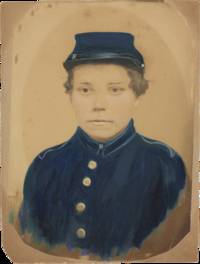
List3122United States N.d. Overpainted albumen photograph measuring approximately 6 ¾ x 8 ½ inches mounted on heavy cardstock. Slight marginal wear; excellent to Near Fine. An overpainted albumen photograph portrait of an unknown Union Army soldier who appears to be quite young dressed in Union fatigues. Though boys under 18 were not supposed to be able to enlist many did so anyway with some estimating that around 200000 underage boys joined the Union Army all told.1 Despite General Order 73 which ordered that “no discharges will be granted to volunteers . on the grounds of minority†so many families tried to get their underaged sons back from the Army that the New York Times called it an “epidemicâ€2. Nonetheless the brave child drummer boy or soldier became an iconic image of the Union cause.1<br /> <br /> 1 Frances M. Clarke and Rebecca Jo Plante “Why the Union Army Had So Many Boy Soldiers†Smithsonian Magazine January 17 2023 https://www.smithsonianmag.com/history/why-the-union-army-had-so-many-boy-soldiers-180981458/.<br /> 2 “The Plea of Infancy an Epidemic†The New York Times August 27 1861 3. unknown
198258191Norwalk Connecticut:: The Easton Press 1982. Collector's Edition . publisher's gilt full leather a.e.g.; in the publisher's shrinkwrap. A fine copy. Folio. Illustrated. The Easton Press, hardcover
189846374Washington D.C. May 7th 1898. 8vo mounted on a folio album leaf. On the verso of the album leaf are mounted four 1898 newspaper clippings relating to Paymaster General Stanton unknown
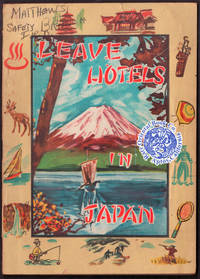
96140101Tokyo ca 1950 JLC Special Services. Stiff color wrappers 15.7 x 21.3 cm. 48p. Englislh text many b.w. photoslists a large number of Officer's & Enlisted men's hotels for R&R issued by SCAP Japan very good. OBSCURE EXAMPLE . . . A LIST OF HOTELS SANCTIONED BY THE U.S. MILITARY JAPAN . . . FOR OFFICERS & ENLISTED MEN ON R & R . . . WHILE STATIONED IN JAPAN . This is an unusual book listing a large number of hotels resorts golf courses cities and seasonal facilities available to U.S. civilian workers as well as U.S. active military personnel. . These hotels have been inspected and certified as clean and safe for the occupation forces of Japan. . With comprehensive index of enlisted & officers hotels . This booklet was compiled by the Commanding General Eighth Army 8248th Army Unit Special Services Hotel Detachment Japan Logistical Command. . Contains a 24 of b.w. photos of each of the twenty-four hotel listed. . With access to swimming hot springs mountain climbing skiiing golf sailing sight seeing scenic places waterfalls fishing hunting tennis &c. . The book was printed by the Yamagata Press Yokohama for SCAP Supreme Command Allied Powers. . CONDITION: This book belonged to "Matthews Safety Branch Field" and bears his penned name on the front top left corner in pen. . Inside the front cover is some penned notes again referring to hotels meals with "21 Feb 52" included. . The third page is a color map of Japan with a list of each of the hotels. There are several penned annotations dates &c on this map indicating useful notes to "Matthews" am American civilian worker in Japan. . On the index page are several notes red lines & details as to the status of the hotels officer vs. enlisted and costs of breakfast lunch & dinner. Room rates were from $1.50-$3.50. . Otherwise the contents are free from marks or issues. . RARE EXAMPLE: This book is seldom found most were merely tossed away after being used. . Color photos are posted to our website. . . unknown
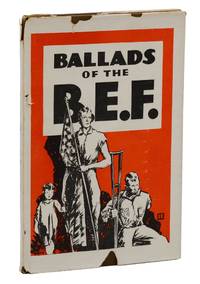
1932140947479New York: Coventry House 1932. First edition. First edition. 47 pp. Bound in publisher's brown cloth with paper title label. Near Fine with slight lean to spine in a Good example of the rare dust jacket with some chips to edges and along gutters and wear. Seldom seen in jacket. <p>A collection of music for the Bonus Army AKA the Bonus Expeditionary Force as they called themselves a group of World War I veterans who marched on Washington seeking the bonuses the government had promised them for their services but had never paid. It didn't end well: in 1932 President Hoover would have them gassed shot at and charged by the military under MacArthur. This particular collection of songs was produced anonymously by the Communist Party USA looking to piggyback on the cause of the Bonus Army whose exact politics remain the subject of debate amongst historians to this day. Similar to IWW songbooks these are parodies of well-known songs with political sometimes bitterly humorous lyrics. Illustrated. Coventry House unknown
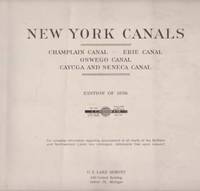
195617143Detroit: U. S. Lake Survey. 1956. Flexible covers. Very Good. Boards creased and darkened and with light rubbing to extremities. ; 8vo; Sheet 1700-1848 pages . U. S. Lake Survey unknown
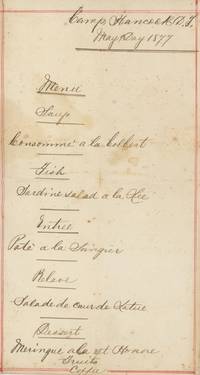
1877List2842Bismarck Dakota Territory 1877. 4 x 8 inches. Folded some stains and foxing excellent. Camp Hancock in what is now Bismarck North Dakota was built in 1872 as facilities for US troops. The troops were stationed there to guard supplies equipment and crews as the Northern Pacific Railway was constructed through the area. In 1877 it became a quartermaster depot and signal office. Offered here is a menu for the Camp’s May Day celebration in 1877 presenting five courses of French-style fare. unknown
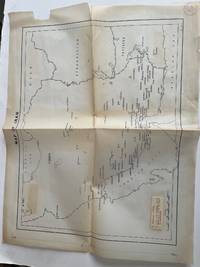
26977No date given. Map of Iran on thick "tracing paper" 62 x 49cms closed tear of fold minor damage ow good condition with stamp "Graphics" and label c.8 x 2.5cm stating "symbol used for Principal Cities symbol used for Towns and Villages which have date palms in their neighbourhood". From the Papers of V.H.W. Dowson expert on date production and Intelligence Officer. Author of Key Publications: Dates and Date Cultivation of Iraq 1921 and Dates: Handling Processing and Packing FAO 1962. See Image. No date given unknown
19561585031st Edition 2nd Printing. 1956. 1950s Chinese Nuclear Science Poster set incomplete 15 posters of 30 in colour. Each poster is numbered and depicts a detailed image for example a variety of types of nuclear weapons and defence construction with explanative notes. <br> <br>This broken set comprises poster numbers 6 8 9 10 11 12 13 14 15 21 22 23 24 25 and 26 of the 30 issued in this set. The posters in this group vary from being in reasonable secondhand condition to poor condition. Each shows signs of wear creasing closed tears and some with loss mainly on edges and corners. Most posters are torn with considerable loss at one corner and in two cases this has caused loss to the image. Many have been mended with tape on the reverse along some edges there is some marking mainly on reverse though in one case on the poster itself. On the reverse of poster 23 there is an amateur painting and some painted text. Text in Chinese. The poster sizes vary ranging approximately from approximately 55 x 77 to and 77 x 53cm. An interesting collection of posters which clearly shows that China was as deeply concerned about nuclear war during the Cold War as it's neighbours Russia and the United States across the Pacific. <br> <br>Poster no. 6 shows details of the lethality and destruction factors of the atomic explosion including shock weaves radiation and radioactive contamination. <br> <br>Poster no. 8 shows the materials to be used to build nuclear protection trenches as well as the construction methods. <br> <br>Poster no. 9 displays the images of the type of bomb shelter known "below chest-level bulletproof shelter" giving its floor plans with information on an estimated time to build and materials to use. <br> <br>Poster no. 10 shows images of the type of bomb shelter known "light bomb shelter" and a floor plan with information about its accommodation capacity 8-10 people estimated time to build 15 days and materials to use. Also it suggests every infantry platoon should install one of these shelters. <br> <br>Poster no. 11 shows images of the type of bomb shelter known "heavy bomb shelter" and a floor plan with information about an estimate time to build 35 days and materials to use. The heavy bomb shelter is used as a command office when needed. <br> <br>Poster no. 12 includes 9 images showing different nuclear protection bunkers built for various weapons and equipment such as 57 x 85cm cannon 122 x 152cm howitzer rocket artillery tank self-propelled artillery trucks and communication equipment. The poster also shows floor plans for each type of the bunkers an estimate time to build and materials to use. <br> <br>Poster no. 13 includes 8 images showing different nuclear protection field war warehouses to store materials and equipment such as ammunition mines explosives fuel barrels PT-10 and PT-25 fuel tanks and army provisions. The poster also shows floor plans with information about an estimate time to build and material to use. <br> <br>Poster no. 14 includes two images showing special squads for detecting radition levels on the upper section of the poster together with action plans below the images. A legend on the lower section shows correspondent names for the coloured routes. Detailed plans designed for searching nuclear contamination source and safe routes to take within the contamination zone. The routes are shown and numbered. Each squad consists of one squad leader. <br> <br>Poster no. 15 features an image of the special squad for detecting radiation level and very detailed information on their responsibility and action plans. An inset includes three images showing how to extract contaminated soil and a legend showing correspondent names for the coloured routes lower right section. <br> <br>Poster no. 21 includes 9 images showing different ways to remove radiative contamination on the roads and on battle field. Two blue charts in the middle section one chart showing different types of vehicles to remove contamination on the roads the other various warning signs according to radiation levels. <br> <br>Poster no. 22 shows images of different types of water supply wells cistern etc. and ways to protect the water supply from radioactive contamination. An image featured in the centre shows the layout of a water plant and how it processes contaminated water. The instruction above the image suggests that processed water shall be consumed only when no clean water is available. Four images with detailed instruction lower section show various water purifying methods distilling filtering and ion exchanging <br> <br>Poster no. 23 displays images of soldiers disinfecting radiation contaminated food with package or without and containers for food storage. <br> <br>Poster no. 24 features a Soviet Union made AN-1-A radiac set left section and two images right section of soldier measuring radiation level and soldier carrying the set. <br> <br>Poster no. 25 shows a circuit diagram of the AN-1-A radiac set with a legend showing different coloured current circuits. <br> <br>Poster no. 26 features another Soviet Union made AN-11-A radiac set. The parts of the set are highlighted upper section. Front view and back view of the set are shown lower section. A small image of the set in use upper right section. . unknown
186233733Otter Island South Carolina 1862. Letter. Very good. Oblong sheet of form paper. Approx. 10.75" x 8.75." 2 pages. Spelling and grammar are poor. A few small closed tears at the folds and upper edge. Quality of the paper and its condition is good. Eli Smith writes to family possibly friends back home:<br /> <br /> "I now take my pen in hand to rite you a few lines to let you know that I am well and in the land of living yet and I hope that these few lines will find you the same. He remarks the weather is very fine and that the "hardes fite that had hear was with the flees thay bite us soo bade that we hent got over it yet." Smith hoping to fight remarks "the ounly fite that I have seen since I have ben gone has ben is the Captain cook and nigar." Smith asks the receiver of the letter to "rite as often as you can." From Military Genealogy Trials - Records indicate Eli Smith from Tioga County enlisted September 18th 1861 as a Private in Company G 45th Pennsylvania Regiment. He was wounded with loss of leg at Cold Harbor June 3 1864 - absent at muster out. unknown
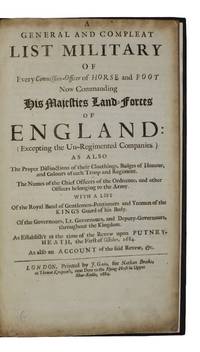
1684AQ22744London: Printed by J. Gain for Nathan Brooks 1684. 4 19pp 1. Modern gilt-tooled calf contrasting red morocco lettering-piece. Minor Shelf-wear. Leaves browned and spotted leaf D1 cropped at foot with some loss of text and sense. The first edition of a Restoration list of officers in the English Army including 'The Proper Distinctions of their Cloathings Badges of Honour and Colours of each Troop and Regiment' and an account of the review upon Putney Heath 1st October 1684. ESTC R14469. Wing G407. First edition. Folio. Printed by J. Gain, for Nathan Brooks unknown
AQ22662London: Sold by J. Oliver.and J. Sellar junior s.d. c.1686 Single engraved sheet folded vertically and housed in modern blue paper wrappers. Some old folds with occasional minor tearing offsetting and browning - especially to gutter. Short tear to the head of spine of the enclosing wrappers. A rare survival of a choice engraved plan of the annual military review of King James II's troops at Hounslow Heath in July 1686. The Restoration settlement of Charles II provided the King with just a small defensive military; a standing army in name only. This was expanded greatly during the 1660s and 1670s largely as a result of the Anglo-Dutch - and Franco-Dutch - wars. But the accession of his brother James II himself intent on expanding his armed presence in part out of necessity given the threat of rebellion as demonstrated by the efforts of the Duke of Monmouth in 1685 led to significant expansion of the English armed forces. Annual military manoeuvres and reviews were hosted at Hounslow Heath each summer between 1685 and 1688 in order to train this enlarged and increasingly professional force and in no small part to demonstrate the substantial military support that the King - always in a politically precarious position in relation to the Church Parliament and landed gentry despite apparent popularity amongst his subjects - could muster. The English puritan minister and journalist Roger Morrice noted in his diaries that several thousand visited the camp - the early-modern equivalent of the earlier chivalric tournament - represented by this engraving. It is perhaps therefore unsurprising that a number of commercial opportunities from prostitution to printing arose from the impressive and novel gathering. Whilst ESTC locates a single copy Oxford of this plan finely engraved for English print and map-seller's John Seller 1668–1698 and John Oliver OCLC adds a further example at Cambridge and reproductions have supposedly been made from an 'original in the Huntington Library' which we have been unable to locate other editions of the same view are also known. A broadside version of this prospect 'printed for and sold by Richard Palmer' - with letterpress titling and woodcut illustration - was also issued. Another also in broadside format and with a variant title with an exact date specified An exact prospect of his Majesty's forces as they are encamped on Hounslow Heath 19 July 1686 London 1686 bears the imprint of 'Walter Davis in Amen-Corner' is recorded by ESTC at three location Ashmolean BL and Oxford. ESTC R25579. Wing R25579. Dimensions: Sheet - 490 x 310 mm; Engraved area - 462 x 230 mm. Sold by J. Oliver...and J. Sellar junior, [s.d., c.1686?] unknown
1685AQ22730London: Printed by the Assigns of John Bill deceas'd: And by Henry Hills and Thomas Newcomb 1685. 271pp 1. ESTC R7189 Wing A105. Bound with: Rules and articles For the better Government of His Majesties Land-Forces In Pay during this present rebellion. London. Printed by Printed by the Assigns of John Bill deceas'd: And by Henry Hills and Thomas Newcomb. 1685 36pp. ESTC R28828 Wing R2239. 8vo. Contemporary gilt-tooled speckled calf later rebacked preserving contemporary backstrip. Rubbed head-cap perished. Early manuscript shelf-marks to FEP early inscription of Hugh Scott to title page of first mentioned work dampstaining primarily confined to margins of first work more extensive in second. A scarce late seventeenth-century martial manual on the English army line infantry formations. First printed in 1676 the work is primarily devoted to the correct battlefield positioning of pikes and muskets; detailed instruction is provided for the efficient command of personnel in order to maximise damage inflicted and minimise friendly losses. The information is presented in an efficient and remarkably accessible manner the directions for the 'exercise of the musquet' for example are arranged as a list of succinct stages easily comprehended: 'Handle you Charger / Open it with your Teeth / Charge with Powder.' Successive editions each a revision on the last accommodated advances in military technology such as the introduction of flintlock firing mechanisms and the wide-spread employment of the bayonet. This copy is paired with a reissue of the regulations for the conduct of the infantry occasioned by the onset of the Monmouth Rebellion during which the ranks of the English Army swelled in response to the threat of the deposition of James II. . Printed by the Assigns of John Bill deceas'd: And by Henry Hills, and Thomas Newcomb unknown