United States ArmyBiblio.com

30 332 résultats
B9781288235247Paperback / softback. New. paperback
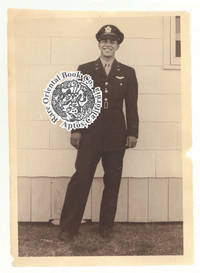
38044501San Antonio ca 1942-1943. Single black and white photograph large size:12.5 x 17.6 cm. very clear no fading excellent image Pfeil poses with a large smile in his dress uniform wearing his new Pilot Wings. RARE ORIGINAL GRADUATION PHOTO . . . EARLY WORLD WAR II AVIATION CADET TRAINING . . . FIGHTER PILOT GRADUATION PHOTOGRAPH OF EDWARD F. PFEIL Jr. . . . USAACTC DUNCAN FIELD SAN ANTONIO TEXAS CA. 1942-1943 . . This is a an original early 1940's photograph of a very happy young officer Army Air Force fighter pilot E.F. PFEIL Jr. He graduated from the The U.S. Army Air Corps Training Center USAACTC San Antonio Texas. . He wears his dress U.S. Army Air Force uniform sporting his new gold aviator's wings. He happily smiles for the camera. . Pilots like Pfeil were immediately pressed into air combat duty in Asia fighting the Japanese. . There are several pencil notes on the verso back including: "Edward F. Pfeil San Antonio Texas." With: "Duncan Field Aviation Cadet Training Center USAAF 1942-1943 USAACTC." . Color photos are posted to our webstie. . CONDITION: . This is an original period photograph excellent strong image no fading. There is small chip on the right & lower left margins which do not affect the photograph at all. By and large a very fine example. . REFERENCE: . www.fold3.com/page/84900529-edward-f-pfeil-jr/stories en-wikipedia-org/wiki/Aviation_Cadet_Training_Progra m_USAAF . . unknown
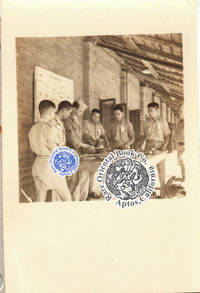
38043601Kunming 192-1944. A black & white photograph very clean & excellent image no fading sheet size: 6.5 x 10.2 cm.image size: 5.4 x 5.4 cm. glossy paper strong image. VERY RARE ORIGINAL PERIOD PHOTOGRAPH . . . . A VERY RARE ORIGINAL 1942-1944 PHOTOGRAPH . . . SHOWING AN AMERICAN TECHNICAL SERGEANT TRAINING . . . CHINESE AIR FORCE MECHANICS . . . ON CURTISS P-40 TOMAHAWK PROPELLER MAINTENANCE . . The "A.V.G." "AMERICAN VOLUNTEER GROUP" later well known as the "FLYING TIGERS" were created and commanded by Major General Clarie L. Chennault headquarters in Kunming Yunnan China. . The "A.V.G." and "FLYING TIGERS" were part of the "C.B.I." "CHINA BURMA & INDIA" theater of World War 2 in Asia. Their personnel in the early years was limited to 300 volunteers. Aircraft maintenance was critical and American mechanics were less than what was needed. . Chennault requested of Mme. and Generalissimo Chiang Kai-shek the assistance of Chinese Air Force mechanics to service the CURTISS P-40 TOMAHAWK fighter plane used to prosecute the air war against the Japanese air force. . To that end Chinese mechanics came to Kunming for training and aircraft service assistance. Under Chennault the GSS GENERAL STAFF SCHOOL a training course designed for Chinese Air Force mechanics was undertaken. . This photograph is a very rare original example of an American technical sergeant training five Chinese mechanics. They are under a make-shift roof against the barracks at the Kunming airport headquarters of the "FLYING TIGERS." . This exact brick structure appears in several other period photographs of this and other similar buildings used to house and feed Army Air Force personnel. A Chinese officer at the immediate far right looks on as the class progresses. . The technical sergeant holds a P-40 propeller part with other related parts and tools on the training table. There is another aircraft part resting on the floor near the table leg. . In the background tacked to the brick wall is a training chart showing a blow-up of other P-40 parts. . The five Chinese Air Force students wear khaki shirt shorts with a name tag on each. Most wear wrist watches a symbol of some affluence during the sparse years of the 1937 Sino-Japanese war. They wear no rank or other identifying military badges. . CONDITION: The photograph is very clean with excellent focus and registry no fading or other blemishes on glossy paper. . RARITY: Photographs of American soldiers training Chinese soldiers are RARE. This excellent example shows the actual process of the training class. . REFERENCES: . PISTOLE Larry M.: PICTORIAL HISTORY OF THE FLYING TIGERS. JOHNSON Wayne G. et al.: CHENNAULT'S FLYING TIGERS: A Commemorative History of the American Volunteer Group The Original Flying Tigers China Air Task Force 14th Air Force 1941-1945. . . unknown
38043401Kunming circa 1943-1944. Large glossy photograph of U.S.A. A.F. "FLYING TIGERS" at chow in Kunming 19.4 x 24 cm. with red grease pencil:"CHOW DELUXE" in lower left corner shows U.S. personnel in the chow hall. ORIGINAL PERIOD PHOTOGRAPH . . . . A RARE ORIGINAL 1942-1944 ERA BLACK & WHITE PHOTOGRAPH . . . SHOWS "FLYING TIGER" PERSONNEL AT CHOW . . . IN KUNMING YUNNAN CHINA . The "A.V.G." AMERICAN VOLUNTEER GROUP" later known as the famous "FLYING TIGERS" were conceived of and commanded by Major General Claire L. Chennault. This group was part of the "C.B.I." 'CHINA BURMA & INDIA' theater of World War 2 in Asia. . After July 1942 the command was renamed the Tenth Army Air Force A.A.F. Their headquarters were in Kunming Yunnan province western China. . The Kunming chow hall was basic: with Chinese-made rough wood tables chairs porcelain covered tin plates with many dings and broken edges per the photograph and U.S. Army utensils. . The superb and early photograph shows several "FLYING TIGERS" at chow. The food was simple but plentiful: local fried chicken rice bread brown & white walnuts green vegetables peanuts bananas grapes apples salt pepper & rice gruel soup. This "Chow Deluxe" was a later development in Kunming after the barracks and mess hall were built by the Chinese. . The personnel wear the typical "U.S. ARMY AIR FORCE" gold wings against a blue back ground round right-shoulder patch. On the left shoulder is the "C.B.I." unit patch in blue white & red. See photos posted to our website especially for the soldier in illus01.jpg who wears the above two patches. . Several personnel wear olive drab shirt and trousers khaki shirt and trousers and officer's khaki tunics. Mechanics clerks aircraft maintenance and other support people populate the mess hall. . Seldom found genuine original period photographs of the "FLYING TIGERS" are RARE. This example appears to be a newspaper press photograph typically they used red grease pencil to highlight titles subjects or important images for pre-publication emphasis by editors. . . unknown
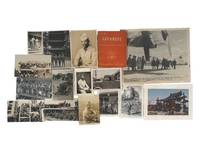
1943215491943. Photo archive documents the experiences of African American and white soldiers during and after World War II with a particular focus on the postwar occupation of Japan and the Philippines. African American and white United States Army soldiers in occupied Japan and the Philippines appear throughout this World War II and immediate postwar photograph archive of 16 original photographs documenting the military presence established in Asia following Japan's surrender in 1945. United States occupation forces entered Japan under the authority of the Allied command led by Douglas MacArthur overseeing demilitarization economic stabilization and reconstruction of Japanese infrastructure. The photographs document American servicemen returning from deployment in the Pacific and participating in the early occupation environment including logistical operations military transport and everyday life among U.S. troops stationed abroad. Several images specifically depict African American soldiers providing visual evidence of Black military service during a transitional moment when the U.S. armed forces remained segregated yet were increasingly dependent on specialized technical personnel and logistical units supporting large occupation forces across Asia.<br /> <br /> Archive of 16 items consisting of 15 black and white silver gelatin photographs and one language manual documenting American military personnel in Japan the Philippines and the United States during and immediately after World War II. Photographs range in size from approximately 3.5 x 2 inches to 10 x 8 inches and include formal portraits group images of soldiers disembarking from a military transport ship in San Francisco after returning from Asia scenes of military activity in Japan and documentation of damaged wartime infrastructure. One portrait shows an African American soldier in full uniform wearing a shoulder patch for the Japan Logistical Command a unit responsible for supply distribution transportation networks and infrastructure support for American occupation forces in Japan. Another photograph depicts an African American soldier with technician rank insignia on his sleeve chevron indicating a specialized technical role within the Army's wartime ranking system. Informal photographs provide glimpses of daily life including a soldier seated in a rickshaw with an inscription on the reverse reading "This is what is used for a taxi over here it's called a RICKSHAW. The guy in the seat is sometimes called a sgt. when they can think of nothing worse Ha Ha." Another image captures soldiers gathered outside a military barracks while a photograph captioned "Shadow of C-54 falls upon Sons of the Rising Sun on arrival at Ie Shima 20 August 1945 enroute to Manila" records the arrival of a U.S. transport aircraft shortly after the end of the Pacific war.<br /> <br /> Japanese: A Guide to the Spoken Language. Washington: War Department 1943. Issued to American military personnel preparing for operations in the Pacific the manual reflects the practical linguistic training provided to soldiers expected to interact with Japanese civilians and local labor forces during military operations and the occupation period. The guide includes phonetic instruction and dialogues designed for rapid language acquisition. One instructional passage advises soldiers: "To learn to imitate the sounds of Japanese you should listen to the records at least six or seven times. The English will be given first followed by the Japanese. Then repeat the Japanese out loud and say it good and loud. Remember! Repeat every Japanese phrase right after you hear it." Illustrated dialogue exercises show soldiers asking for directions in Japanese while another voice interjects "Hey! Anybody here speak any English" The photographs and language manual together illustrate everyday realities of U.S. military life in Asia during the transition from wartime operations to occupation governance following Japan's surrender. Photographs exhibit minor edge wear and light creasing consistent with period handling. The language guide shows moderate handling wear with slight staining and creased pages but remains fully legible. Overall condition very good. unknown
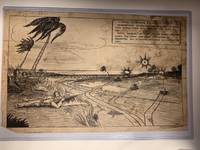
194484881Virginia: U.S. ARMY 64TH ENGINEER TOPOGRAPHIC BATTALION USAFICPA 1944. Poster. Good Plus. Three informational propaganda posters in a series comprising 4009-1; 4009-2; and 4009-7 each measuring approximately 17 1/2" x 11 1/2". Each of the three shows a central fold crease and one shows considerable smudging or perhaps dry mold; each is now protected in a stiff archival sleeve. Bottom corner of each reads "Reproduced by 64th Engr. Top. Bn USAFICPA" followed by the graphic number. We're guessing that these posters did not come out of the far larger mapping divisions in the Topographic Battalion but were from the "Graphic Arts and Distribution" division domiciled in Virginia. The artist for each is "BRAD". <br /> <br /> 4009-1 depicts a tank surrounded by attacking Japanese soldiers who are attemptng to overrun the tank lobbing grenades etc. but who are repelled ostensibly because well it's a tank and the fact that the soldiers in the tank are prepared. The caption in the top right corner reads: "'STOP THE JAP"/Infantry Troops Should Always be Ready and Able/ to Stop the Enemy from/ Swarming over Our Tanks!" <br /> <br /> 4009-2 diagrams relative positions of squad placement whose job is to accompany the tank. The caption below reads: "PROTECTING YOUR TANK" In Thick Country with No Enemy Contact -- about Half a Squad should Accompany the Tank Very Closely 5 Yds. and the Remainder Following Close Support You Must Be His Eyes Thru the Jungle and the Spotter for His Fire.Ancillary note follows at bottom reminding that these spotter scouts are guiding the movement of the tanks through the undergrowth.<br /> <br /> 4009-7 shows "TANKS OVERRUNNING ENEMY POSITION": Infantrymen Advancing for the Mop-Up while their Buddies Cover Both Them and the Tanks by Fire. Notice Air Burst Artillery on the Enemy Position Giving the Tanks Additional Protection by Preventing Any Effective Anti-Tank Activity by the Japs.". USAFICPA US Army Forces in the Central Pacific Area. BECAME USAFPOA United States Army Forces Pacific Ocean Areas on AUGUST 1 1944. USAFICPA US Army Forces in the Central Pacific Area. Became USAFPOA United States Army Forces Pacific Ocean Areas on AUGUST 1 1944. U.S. ARMY 64TH ENGINEER TOPOGRAPHIC BATTALION (USAFICPA) unknown
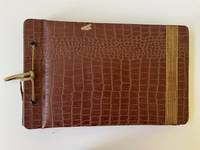
17320WWII-era photographs measuring 11.5" x 7.25" Multiple locations undated Ca. 1940s. With 67 photographs ranging in size from 3.5" x 2.5" to 5" x 4" of a serviceman and multiple generations of his family. Photo Album. U.S. Army Training Camp and Domestic Life in the American South circa 1940s. Oblong photograph album containing approximately estimate based on images shown original black-and-white vernacular photographs most snapshot size corner-mounted to black paper leaves. Circa 1940-1945.<br /> This photo album documents the intertwined military and domestic life of a white American serviceman during the World War II era combining images of U.S. Army training facilities with scenes of rural Southern family life. The military photographs depict a cantonment landscape of low wooden barracks dirt roads telephone poles and regimented formations of soldiers assembled outdoors. One sequence shows uniformed men standing in formation across an open parade ground while others capture military transport vehicles-open troop carriers filled with soldiers-moving through base streets lined with identical wood-frame buildings. Individual portraits show a soldier in full uniform posed formally in front of barracks and beside mid-1940s automobiles suggesting pride in service and upward mobility through military affiliation. A small chapel with a steeple appears prominently underscoring the role of religion in wartime military culture. Another building features an exterior metal slide descending from a second-story opening-likely part of a training or emergency drill structure-emphasizing the regimented preparedness of wartime camps.<br /> Interwoven with these military scenes are intimate images of domestic life: a woman and uniformed soldier standing together on the steps of a clapboard house; a couple tending a vegetable garden beside a brick home; a man seated in a wooden rocking chair reading a newspaper on a brick porch; and several rural outdoor scenes including hunting practice cooking over an open fire and resting beside a parked automobile in a wooded clearing. One photograph shows a small brick utility structure with a cupola and central doorway possibly a pump house or guard building with a suited man posed formally in its doorway-an image that contrasts sharply with the utilitarian wooden barracks of the training camp. A sequence labeled "Camp" partially visible in the images depicts a married couple posing with a wooden sign in a wooded recreational setting indicating leisure travel or stateside furlough during wartime. The album thus captures the dual identity of the mid-century American serviceman: disciplined soldier within the expanding military-industrial system and family member rooted in agrarian and small-town America. Historically the photographs reflect the rapid expansion of U.S. Army training installations in the early 1940s following mobilization after 1940 and especially after the United States' entry into World War II in December 1941. Temporary wooden cantonments-often constructed quickly and economically-became defining features of Southern and Southwestern landscapes. The imagery of standardized housing blocks troop transports and parade formations corresponds with this wartime infrastructure boom. Simultaneously the domestic photographs illustrate gender roles and social norms of the era: women appear primarily in domestic or garden settings while men are shown in uniform hunting or performing outdoor labor. The album therefore offers institutional collectors insight into the lived experience of wartime mobilization rural domestic culture and the social fabric of white middle- and working-class America during the WWII home-front era. As a cohesive vernacular record rather than an official military archive the album provides valuable visual evidence of how national service reshaped everyday landscapes and identities. Condition: Photographs are corner-mounted to black paper leaves; overall clean with minor silvering and light surface wear typical of mid-century snapshots. Album binding shows expected handling wear along edges but remains intact. Very good overall condition. unknown
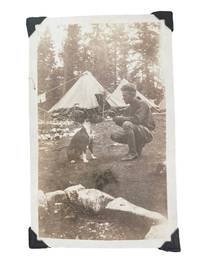
1918232501918. World War I Fort Bliss soldier training and camp life photo album from El Paso ca. 1918 recording the rapid wartime expansion of a border post into a large World War I training environment through tent rows drill formations truck convoys gas-mask instruction and group portraits of enlisted men in uniform. The album grounds that setting in specific internal evidence including the handwritten caption "Thanksgiving Ft. Bliss Texas 1918" beneath a group portrait the tent sign "Ambulance Company No. 10 / Men Wanted" and a large camp scene captioned "Ready for Business / W.H. Horse Co / El Paso Tex." Additional photographs follow soldiers through inspection lines recreational and theatrical moments camp interiors and exteriors and transport scenes giving the album a broad documentary range centered on military routine rather than formal ceremony alone.<br /> World War I era training album at Fort Bliss El Paso Texas. Circa 1917-1918. Photograph album containing 49 original black-and-white photographs mounted on black cardstock photographs ranging approximately from 2 x 3 inches to 3.5 x 5 inches. Images include extensive camp views including long rows of tents men standing in formation a soldier posed before camp quarters and a large gathering identified in manuscript as "Ready for Business." One image shows a woman in military-style uniform saluting the camera possibly a YWCA servicewoman. A substantial section documents motor transport and field organization through ambulance and truck lines crowded vehicle scenes and the recruiting sign for Ambulance Company No. 10 but these sit within a wider record of ordinary post life that includes mess and tent arrangements wooded camp settings dogs and mascots informal portraits a gas-mask training portrait stage performance views beneath an American flag rail lines and trestles mountain roads canyon routes and several personal portraits among them a woman in military dress and another street portrait with a uniformed soldier. The sequence suggests a soldier-assembled working album built from service experience at Fort Bliss and nearby western travel rather than a commercially produced souvenir.<br /> The album places Fort Bliss within the wartime transformation of the U.S. Army on the Mexican border and in the Southwest when posts such as El Paso functioned as training transport and staging environments for newly mobilized troops. Its strongest documentary value lies in the accumulation of ordinary but specific military details: tent architecture vehicle organization gas defense drill troop formations mess arrangements rail infrastructure and the handwritten Thanksgiving 1918 notation that fixes part of the sequence to the closing months of the war. Black paper album with spiral binding; photographs corner-mounted throughout; several prints with creases abrasions or edge losses but images in overall very good condition; album itself sound and complete. Overall very good condition. A photographic record of Fort Bliss that preserves how soldiers organized camp life training movement and leisure in El Paso during the World War I years. unknown
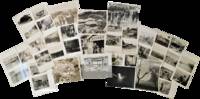
1945189141945. U.S. Army and Navy photographs of Okinawa 1945 document the immediate aftermath of the Battle of Okinawa and the establishment of American control over a strategically critical island at the close of the Pacific War. The images place American troops within the Okinawan interior and along coastal installations following the April 1945 landings including the secured Yontan airfield a primary objective of the invasion. The archive records the physical destruction resulting from one of the war's most intensive campaigns alongside scenes of civilian movement and return situating the photographs within the transition from active combat to military occupation.<br /> <br /> Archive of 37 black and white silver gelatin photographs. Okinawa Japan circa 1945. Photographs measure approximately 3.75 x 4.5 inches to 7 x 10.5 inches with brief handwritten captions on verso. Images depict American troops in villages farmland and near shrines as well as at Yontan airfield. Several photographs show destroyed aircraft including a crashed Japanese plane and associated debris along with damaged infrastructure and equipment. Naval activity is represented through images of American ships in harbor and offshore including a landing ship dock LSD transport vessel. An aerial photograph shows a harbor with multiple wrecked ships and flattened industrial areas. One image documents a column of civilians carrying belongings captioned "civilians returning to homes."<br /> <br /> The Battle of Okinawa fought from April to June 1945 resulted in extensive military and civilian casualties and widespread destruction of the island's infrastructure. The subsequent American occupation transformed Okinawa into a major U.S. military base in the western Pacific a status it retained even after reversion to Japanese administration in 1972. These photographs document both the operational objectives of the invasion and the conditions encountered in its aftermath including the displacement and return of local populations. The archive provides material for examining military strategy occupation practices and the impact of large-scale warfare on civilian landscapes in the Pacific theater. Light wear consistent with handling; overall very good condition. unknown
1976MILI1114Poole, Dorset, Blandford Press (1976). 188 S., mit zahlr., meist farb. Taf. u. Abb. von Michael Chappell, im Text, OPp. m. farb. ill. OU., geringe Gebrauchsspuren.
200128939Augsburg : Bechtermünz, 2001. 167 S. : Ill. Gr. 8°. Ill. OPpbd.
1997299642PN. New. 1997. . Soft Cover. Date is original print. This is a reprint edition . PN paperback
1986777386PN. New. 1986. Soft Cover. Date is original print. This is a reprint edition. . PN paperback
1980761483PN. New. 1980. Soft Cover. Date is original print. This is a reprint edition. . PN paperback
1976752741PN. New. 1976. Soft Cover. Date is original print. This is a reprint edition. . PN paperback
19432111902154602815Haruna shobo 1943. Soft Cover. Fine. The book is in fine condition. Haruna shobo paperback
194346514Washington DC: Army Service Forces 1943. First Edition. First Printing. good. 78 wraps illus. covers somewhat worn and soiled a few ink and pencil marks to text. The Second World War drove a series of management and organizational innovations including statistical process control. This is one of the as yet under-evaluated aspects of how the Second World War positioned the United States for the significant industrial and economic growth that followed victory. Army Service Forces paperback
0340908963.Gpaperback. Good. Access codes and supplements are not guaranteed with used items. May be an ex-library book. paperback
0340995408.Gpaperback. Good. Access codes and supplements are not guaranteed with used items. May be an ex-library book. paperback
0340995416.Gpaperback. Good. Access codes and supplements are not guaranteed with used items. May be an ex-library book. paperback
4324880Hodder & Stoughton. Paperback. Used; Very Good. Simply Brit welcome to our online used book store where affordability meets great quality. Dive into a world of captivating reads without breaking the bank. We take pride in offering a wide selection of used books from classics to hidden gems ensuring theres something for every literary palate. All orders are shipped within 24 hours and our lightning fast-delivery within 48 hours coupled with our prompt customer service ensures a smooth journey from ordering to delivery. Discover the joy of reading with us your trusted source for affordable books that do not compromise on quality. 03/17/2011 Hodder & Stoughton paperback
40690Rotterdam, Universitaire pers., 1974 Softcover, 309pp, 22x15cm., goede staat.
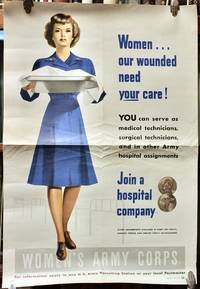
194516951WashingtonD.C. United States Army Recruiting Publicity Bureau 1945 First edition. Full text as follows: "Women…our wounded need your care! You can serve as medical technicians surgical technicians and other Army hospital assignments. Join a hospital company. Other assignments available at Army Air Forces Ground Forces and Service Forces installations. Text printed in blue black and gray. Some creasing. A very good bright and clean copy of this uncommon item encouraging women to serve in Army hospital assignments. Broadside 17" x 25". . With full-color printed illustration of a woman medical technician in uniform carrying a tray of medical instruments. Also with two medals printed in bronze bearing the emblems of the U.S. Army Medical Corps. The Women's Army Corps evolved from the Women's Auxiliary Army Corps a civilian organization of women working with the United States Army when Congress granted military status to its members in 1943. Forty percent of WAC members were assigned to positions as weather observers radio and control tower operators and aerial photograph analysts. Many other women worked as cryptographers medical technicians and mechanics. As the war entered its last two years and as the WAC fought for further inclusion in the ranks of the Army more women were enlisted in roles previously reserved for men Yellin Our Mothers' War pp. 114-116. United States Army Recruiting Publicity Bureau
16439George Railton. Women's Social Work. Talks with Rescuers: Being a Review of the Work During 1898 under the Direction of Mrs. Bramwell Booth. With Statements of Accounts. London: The Salvation Army 1898. In self wrappers 47 pages. Black/white photo-illustration of Mrs. Bramwell Booth and her Chief Secretary. This pamphlet recounts the charitable work under the leadership of Bramwell Booth as well as the founder of The Salvation Army William Booth. Stamp and pen markings in half title pencil markings in title page. Very good. unknown books
8vo., First Edition, with photographs in the text; brown cloth, gilt back, a fine copy in unclipped dustwrapper.