224 résultats
2090202120405485Taiyo-do shoten N.A. Soft Cover. Fine. Number of books: 1 Taiyo-do shoten paperback
ria9798351707327_inpPaperback. New. New Book; Fast Shipping from UK; Not signed; Not First Edition; N/A paperback

B9798351707327Paperback / softback. New. paperback
20111352930PN. New. 2011. Soft Cover. Date is original print. This is a reprint edition. . PN paperback
1166309428.Gpaperback. Good. Access codes and supplements are not guaranteed with used items. May be an ex-library book. paperback
1120033004.Gpaperback. Good. Access codes and supplements are not guaranteed with used items. May be an ex-library book. paperback
0548173176.Ghardcover. Good. Access codes and supplements are not guaranteed with used items. May be an ex-library book. hardcover
1528535642.Gpaperback. Good. Access codes and supplements are not guaranteed with used items. May be an ex-library book. paperback
1333486065.Gpaperback. Good. Access codes and supplements are not guaranteed with used items. May be an ex-library book. paperback
1104371774.Gpaperback. Good. Access codes and supplements are not guaranteed with used items. May be an ex-library book. paperback
1165686244.Gpaperback. Good. Access codes and supplements are not guaranteed with used items. May be an ex-library book. paperback
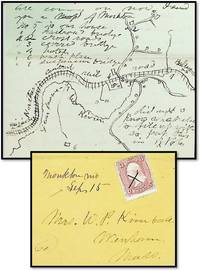
21451Very Good. HAND-DRAWN MAP OF MONKTON MD - UNION SOLDIER DESCRIBES GUARDING THE NORTHERN CENTRAL RAILROAD AND A CHAOTIC 'CHICKEN RAID' DURING THE FINAL YEAR OF THE CIVIL WAR.<br /> <br /> An original Civil War manuscript letter dated September 14 1864 written by a Union soldier stationed in Monkton Maryland. The letter features a remarkable hand-drawn map of the town and military outposts documenting the regiment's duty guarding the vital Northern Central Railroad bridges and a humorous incident involving a 'liberated' flock of chickens.<br /> <br /> Key Features:<br /> Visuals: The final page features a detailed pen-and-ink hand-drawn map of Monkton MD. It identifies the 'Northern Central Rail' 'River' Gunpowder Falls 'Covered Bridge' 'Hotel' and 'Our House' Barracks.<br /> Content: The soldier details life on guard duty at the 'Covered Bridge' building a brick stove for warmth and sleeping on straw. He recounts a a vivid and informal account of an improvised 'chicken raid' following a rail stop illustrating camp life food scarcity and soldierly opportunism late in the war. where a train passed carrying chickens; eight chickens "got off" escaped or were pulled off leading to a chaotic chase by the soldiers and the Captain to secure 'soup for dinner.' Full transcription available<br /> Postal History: Includes the original envelope addressed to Mrs. W.P. Kimball in Wenham Mass featuring a 3-cent George Washington stamp 1861 issue and a Monkton MD postmark.<br /> The envelope features a 3-cent George Washington stamp 1861 Issue tied by a Monkton MD postmark. Please Note: A previous owner noted this as a 'Scott #64' on the protective sleeve; however it has not been expertized and is sold as the more common Scott #65 Rose variety. We leave the final determination of the shade to the buyer.<br /> Transcription: A previous owner has handwritten the letter onto one page in attractive cursive. We also has a typed transcript available.<br /> <br /> Physical Specs:<br /> Date: September 14 1864<br /> Dimensions: Standard bi-fold letter sheet approx. 5x8 inches folded; Envelope included.<br /> Format: Handwritten ink on period writing paper.<br /> <br /> Condition: Very Good - The handwriting is legible and ink remains dark. Paper shows standard age-toning and fold lines consistent with mailing. The map is clean and sharp. This letter offers a specific window into the defense of the Northern Central Railroad NCR a critical supply line for the Union Army connecting Baltimore to Harrisburg. In 1864 regiments like the 8th Massachusetts Infantry were stationed along this line to protect bridges from Confederate raiders Gilmor's Raid had struck this area just months prior in July 1864. <br /> <br /> The mention of the 'Covered Bridge' at Monkton is historically significant as this was a key infrastructure point. The soldier's map provides a rare first-hand topographical view of the encampment layout relative to the rail line.<br /> <br /> Keywords: Civil War Letter Monkton MD Northern Central Railroad Hand Drawn Map Soldier Art 8th Massachusetts Infantry Wenham MA Covered Bridge Military Correspondence 1864. unknown
100968The full-length albumen paper studio portrait 92 × 55 mm is mounted as issued on the printed card of W.H. Schroeder 649 George Street Haymarket 'and at Princes Street Grafton'. The firm was definitely active at that address from 1867 to 1879 but the image appears to be earlier rather than later in this period. The uniform is that of the NSW Volunteer Artillery from the 1860s. Very similar caps are also to be found in a Tasmanian photograph in the collection of the Australian War Memorial A04784 'ten men of the Hobart Town Volunteers Artillery and ten men from the First Rifles' dated October 1863. unknown
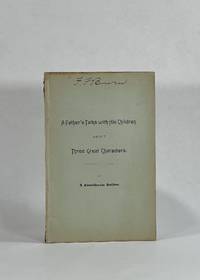
189210676Lynchburg VA: J. P. Bell Company Book and Job Printer 1892. Original Wrappers. Very Good binding. Octavo. 36 pp. First edition. As issued in printed wrappers. Wrappers a trifled toned some light abrasion to the top edge of the rear wrappers; contemporary previous owner name at the top of the front wrapper; similarly early editorial correction in the margin of one page. <br /> <br /> The three parts each are presented as a dialog between young children and the author and discuss Robert E. Lee Stonewall Jackson and J.E.B. Stuart in turn. Uncommon. Dornbusch III 50. J. P. Bell Company, Book and Job Printer unknown
197579194Frankfurt: Soldat & Technik 1975-79. 1st edition. As New. small folio. pictorial wrappers c.600pp. b/w plates text ills. diags. Editorial supplement to Soldat & Technik the German Army journal. Copiously illustrated with photos & diagrams primarily of armour & missiles Soldat & Technik unknown
1917050554Istanbul: Erkân-i Harbiye-i Umûmiye Matbaasi. H.: 1333 1917. Soft cover. Very Good. Atlas Folio - over 23 - 25" tall. Original color map. Folded. Oblong atlas folio. 50 x 60 cm. In Ottoman script. Shows Southeastern parts of Asia Minor and Syria; Siverek Sard Iraq and Ras Al-Ayn Rasulayn - Resualyn in Syria. Hegira: 1333 = Gregorian: 1917. Not description on map-maker. Scale: 1: 200.000. This is one the serie of the Bonn projection maps which are the first map series in modern techniques in Turkey and the Ottoman Empire. In order to produce these maps covering Turkish territory Reconnaissance Branch was incorporated into The Mapping Commission. The maps were produced in the datum based on the latitude and longitude of Ayasofya Mosque in equal area Bonn Projection. The field works for the 123 sheets covering the country were conducted by 76 staff. The production was completed in 18 years starting from east west. Field works continued without stopping except in years 1914 and 1920. This map series called also reconnaissance maps contributed a lot to producing 1:25.000 scale maps. According to Türkezer & Çobanoglu: History of Mapping in Turkey-1:200.000 Scale Maps last cartographer of Diyarbakir regio is M. Sait Malatyali. No his biographic material and info in 'Savaslarda Haritacilar'. Rare. <br/> <br/> Erkân-i Harbiye-i Umûmiye Matbaasi., [H.: 1333] paperback
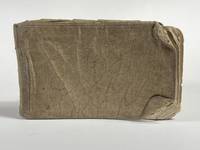
19154227France Belgium England 1915. Good. Oblong 8vo. Small "Walker's Service Notebook" 154 x 94 mm lined 26 pages filled with neat entries in pencil and pen final page of diary loose the remaining portion of the notebook i.e. about 2/3 blank. Original limp cloth covers worn. § Extraordinary manuscript diary of an anonymous British soldier beginning April 12th 1915 and ENDING ABRUPTLY IN THE TRENCHES AFTER A GAS ATTACK. The final entry was dated December 19th 1915 which was THE FIRST DAY PHOSGENE GAS WAS USED AGAINST BRITISH SOLDIERS. The short diary is rich in detail of life at the front. The anonymous soldier belonged to the 49th West Riding Division which had a large number of gas casualties when soldiers in reserve lines did not receive a warning in time to put on their helmets. A study by British medical authorities arrived at a figure of 1069 gas casualties 120 of which were fatal. It is very possible that the present manuscript was written by one of those men. It seems probable that with access to the right regimental records the identity and fate of the soldier could be learned and his story told in full; however even as an anonymous diary the interest and poignancy of this personal record is clear.<br /> <br /> The events recorded span just nine months. On April 12th the soldier leaves Edenthorpe near Doncaster and crosses the channel to Le Havre that evening "packed like herrings" and accompanying horses and wagons. Over the next few months he records laying lines opening signal offices handling horses towns and villages visited billets and meals injuries regiments encountered names of comrades and O.C.s shelling rain and mud. He sees the Northumberland Hussars the Indian Corps and Royal Horse Artillery. On May 9th he records the Battle of Aubers Ridge: "Off duty at 7am. Attack began at 5am by Artillery. Signal thro' during day showed heavy losses in E. Lancs Lincolns. 13th London and other Batts. Had coffee in Fleurbaix and then to bed in barn. Off duty 3pm. Attack still proceeding without much impression on our line. French said to be doing well. At night we have the two windows in our Signal Office made up with corrugated iron & sandbags."<br /> <br /> For the entry dated May 12th our author notes that the name of the Division has been "altered to the 49th" thereby confirming the identity of his Division. On May 24th: "The Allamands dropped about 6 shrapnel in our vicinity."<br /> <br /> From a period of steady work and periodic pleasures "had tea & cakes at a patisserie & and then back after buying some books" "glorious day" the situation deteriorates with the weather "torrential rain dugouts leaking & 18" water on my floor".<br /> <br /> They move to Chateau de Trois Tours and on July 13th there is "rather an exciting night" with a bombardment from 7.30 to 10.30. On the 14th "The whole place is being encircled by barbed wire & trenches & the furniture is being moved out of the chateau." On the 15th "At 12.45pm about 12 shells fell round the chateau made a dive for the Signal Office Billy Edwards & Gus Harris wounded in thigh and ankle." They were shelled again on the 16th.<br /> <br /> On December 1st he travels back to Sheffield on leave returning on December 8th. The company are now holed up near Ypres at Hospital Farm the name given to a farm building used as a dressing station. The final entry reads "Dec 19th 'S.O.S.' Gas attack 5.30 am things lively until 8.30am. 146 & 148 des. 148 soon repaired from chateau". The cemetery at Hospital Farm contains 115 Commonwealth burials of the First World War.<br /> <br /> On the significance of the 19 Dec. 1915 battle at Wieltje Belgium northeast of Ypres see the long Wikipedia entry "German Phosgene Attack of 19 December 1915." <br /> <br /> The diary contains many clues that could help identify our writer in military records. It is not certain that he was one of the first British casualties to Phosgene gas but it seems tragically likely. As it stands the final entry in the diary marks an important milestone in the war: phosgene gas would eventually be responsible for about 85% of the 90000 deaths caused by chemical weapons during World War I. unknown
63-9505London UK: Edward Stanford 1854. 8vo. Bound Section 15 pp. Good with Boards & Spine Missing. Scarce.PROVENANCE: Collection of Books from the Library of Hugh Small author of Florence Nightingale: Avenging Angel.Hugh Small as a child lived above his surgeon father's consulting rooms in Harley Street almost opposite Florence Nightingale's first hospital. He graduated from Durham University in 1966 with honors in physics and psychology and worked in the US Chile and France before becoming a partner in a multinational management consultancy based in London. He is also the author of The Crimean War Tempus 2007. Hugh is widowed with two daughters and four grandchildren. London, UK: Edward Stanford, 1854. hardcover
5365Date and place not stated. On piece of paper roughly half an inch by one and a half wide. Poor and untidily laid down on slip of paper one inch by six wide. Tear across signature. Docketed in pencil 'author of book on Reformation'. Extraneous matter adhering to reverse. Date and place not stated. unknown
4823624like new. unknown
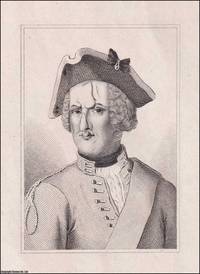
1809373329Robert Graves London Undated c.1809. Unframed Print. Very Good Condition. Robert Graves was renowned for his historical engravings which often depicted military figures and events. This particular illustration portrays Corporal Thomas Brown in 18th-century military attire. He is dressed in a distinguished uniform featuring a buttoned coat a sash across his chest and a striking tricorn hat an iconic piece of both military and civilian fashion of the time. His rank is indicated by the cord on his right shoulder. The tricorn was not just a stylish accessory; it served a practical purpose shedding rain and providing an unobstructed field of vision.Corporal Thomas Brown gained fame for his remarkable bravery during the Battle of Dettingen in 1743 a conflict within the War of the Austrian Succession. As a member of Kings Own Regiment Dragoons Blands Dragoons Brown demonstrated extraordinary courage by reclaiming his regiments standard after it had fallen into enemy hands. In the heat of battle he lost two horses beneath him and sustained grievous injuries including the loss of two fingers and most of his nose. Despite these wounds he fought his way through enemy lines recovered the standard and returned it to his regiment earning enthusiastic cheers from his fellow soldiers.His heroism was later recognized by King George II who awarded him a gold-topped walking stick a silver prosthetic nose and a pension. After retiring from military service Brown settled in Yarm where he ran an inn named after himself. He passed away in 1746 and was laid to rest in St Mary Magdalenes Church where his marked grave remains today. This unmounted image is approx 10 x 15 cms the sheet overall is 20 x 28 cms. Mildly creased in the outer margins which will simply disappear from view when mounted and framed. Category: PRINTS : Antiquarian Interest; PRINTS : Historic Interest; This item may require more postage than the rates shown for delivery outside the UK. If extra postage is required we will contact you before processing your order and you will be given the details and option to decline the extra cost. Robert Graves unknown
5101WORLD WAR II IN JAPAN. ALS. 2pgs. October 1 1945. Hirosaki Japan. An autograph letter signed Dale Christensen written home by an Allied serviceman stationed in Japan shortly after the official end of World War II. Well I havent had a chance to write for some time. We made it up here O.K. but the ship sure was loaded. We landed at Aomori and this place is inland about 30 miles. We have had no trouble at all. We spent the first night at an airport and then moved to another Army camp the next day then the third bn came up and took over here. I was in on the big thing at this camp I came up with the first gen jeeps and saw the Jap General sign the camp over to us then to top it all off I was picked to take the Jap General to his home. He talked to me all the way but I didnt know a thing he said. When he got out he saluted me. He seemed happy about the whole thing. The climate here is good and cool. We have a big mt right afore us and it looks just like Mt Fugiama sic. They say it sure gets cold here in the winter. The rice is just headed out and it is very pretty here but I hope I can soon come homeWe are cleaning this camp up now it sure needed it. I dont see how the Japs lived in it. Bugs and dirt all over. We sure are making a change in the looks of it. They say they might give each one of us a Jap Rifle and bayonet to take home I dont think there is any thing to it. I sure would like to have one. They sure can grow the fruit and garden stuff here but they sure are way behind in the way to live. I think even behind the PhilippinesThe papulation sic of this place in 97000 and Aomori 57000. Aomori was bombed and it sure was smashed and burned. Well we have a few Japs working in this camp and I think as a whole they will like better from now on that ever before. There clothes are all patches but they look healthy and happy. Well I will write more later. I hope we soon get a mail call. Tell Ann and the rest Hello. Everything is fine here. Write soon. Dale. The letter is in fine condition. hardcover
6252EDWARD ALLEN GOODWIN unknown-1862. Goodwin was the Sergeant in Company K of the 23rd Regular Massachusetts Volunteers. This is the diary of Edward A. Goodwin Co. K 23rd Regt. M. of. M. This diary is THE AMERICAN UNION DIARY FOR 1862 an annual published diary accessible and likely provided to Union soldiers during the Civil War. After a few pages that include a calendar and interest tables the diary provides space for each day of the year 1862. Goodwin wrote entries every day from January 1st to April 7th and none thereafter. At the time Goodwin was serving in the 23rd Massachusetts Infantry Regiment which was a part of the Coast Division under General Ambrose Burnside. Entries are handwritten in either pencil or black ink. Notable entries include: aFriday 7: Naval engagementplace lasting from noon till sunset. Troops were landedin the afternoon and evening. Bivouacked on Roanoke Island in the rain. b Saturday 8: Captured a rebel battery in a swamp. Took 3000 rebel provisions and the whole island wasSergt. Howard hurt his foot. W.S. Clark missing. Both entries describe the Battle of Roanoke Island fought February 7th and 8th 1862. Part of General Ambrose Burnsides expedition to capture key ports in the Outer Banks the battle first saw Union gunboats first firing on Confederate forts under the command of Henry Wise until Burnsides soldiers could land ashore unopposed. and the forts on shore engaged in a gun battle with occasional contributions from the Mosquito Fleet. The next day the Union soldiers successfully flanked the Confederate artillery and infantry defenders on both sides forcing a retreat into the Confederate forts. The forts were then individually taken with the Union suffering only 264 casualties and capturing 2500 Confederate defenders. c Friday 14: Fought the battle of New Bern. Took over 100 pieces of artillery ammunitioncamp equipment &c. I arrived at night in the tents of the enemy. This entry describes the Battle of New Bern fought on March 14th 1862. After first advancing up the Trent River General Burnside had his soldiers exploit the weakened center of the line of the defending Confederates under Lawrence O'B. Branch. This allowed the Union Navy to shell Fort Thompson forcing its abandonment and shortly thereafter the city of New Bern too. 90 Union soldiers were killed and 64 Confederates were killed and 413 were captured. d Monday 31: Sick all day. Took horses.e Monday 7: Saw Amoat the hospital. DeceasedRain in the afternoon. These two entries foreshadow Goodwins ultimate fate including his last entry on April 7th 1862. Goodwin would pass away in New Bern on April 16th. Having survived two major battles unscathed at least according to his diary Goodwin most likely succumbed to disease. It is estimated that 2/3 of Civil War soldiers who died during the war died of disease not in battle. His body was ultimately returned to Massachusetts and is buried in Mansfield. The pages of the journal are in good condition but the exterior of black leather is frayed and partially torn. It should be handled very delicately but its value as a lens into the mindset of a Civil War soldier is immense. hardcover
19582091202133001873Yomiuri Shimbun 1958. Soft Cover. Fine. Number of books: 1 Yomiuri Shimbun paperback