224 résultats
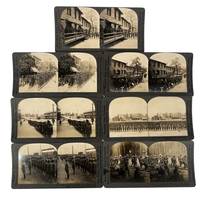
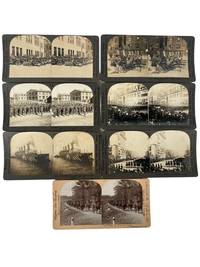
1918205021918. Buffalo Soldier regiments depicted in stereoview photographs from the World War I era document African American cavalrymen and infantry units serving in segregated formations of the United States Army during the early twentieth century. These images record soldiers from several historically significant Black military units including the 9th U.S. Cavalry the 10th Cavalry and the 369th Infantry Regiment. African American soldiers served in large numbers during World War I despite segregation in the armed forces and the war marked a turning point in public recognition of Black military service. The photographs capture cavalry movement machine gun training and celebratory returns from the European front preserving visual evidence of the military presence and public visibility of Buffalo Soldiers during the conflict.<br /> <br /> Archive consists of seven stereoview photographs published by the Keystone View Company during the World War I period. The views depict soldiers from the 9th U.S. Cavalry the 8th Regiment of Colored Troops the 10th Cavalry the Chicago Regiment of Colored Troops and the 15th Regiment of the 369th Infantry. Two stereoviews show Black machine gun companies operating Lewis guns one of the principal light machine guns used on the Western Front during the war. Another view shows Troop K of the 10th Cavalry moving on horseback at Camp Chickamauga in Georgia. Additional stereoviews depict African American soldiers returning from European service and marching in public celebrations including scenes of troops parading along major boulevards such as Fifth Avenue in New York.<br /> <br /> The Buffalo Soldier regiments had already established a long military record before the First World War. Units such as the 10th Cavalry formed part of the segregated Regular Army created after the Civil War and served in campaigns across the western United States during the Indian Wars later participating in the Spanish American War the Philippine American War and operations during the Mexican Revolution. World War I marked one of the final periods in which cavalry units remained visible in American military organization as mechanized armor and motorized vehicles soon replaced mounted troops. At the same time Black soldiers who returned from service were celebrated in wartime parades yet continued to face segregation and racial discrimination within American society. Stereoview cards remain well preserved with light age wear typical of early twentieth century photographic prints. Very good condition overall and a visually compelling record of Buffalo Soldiers during the World War I era. unknown
1918205031918. Keystone View Company. Buffalo Soldiers stereoview photographs World War I era document African American military service in the American Expeditionary Forces and place segregated Black troops within the broader Allied war effort in Europe. The images identify units of "Colored Troops" including engineers of the Signal Corps and depict formations logistical organization and moments of assembly such as soldiers "lined up for democracy." These photographs situate African American soldiers-many of whom descended from the Buffalo Soldier regiments established after the Civil War-within a transnational military environment that included French British and colonial forces. Scenes showing interaction with Moroccan and Indian troops on French roads reflect the multinational composition of Allied armies during the final phases of the war while the presence of Black American troops underscores their continued participation in major military operations despite segregation within the U.S. Army.<br /> <br /> France and possibly other European locations circa 1917-1919. Archive of seven stereoview photographs published by the Keystone View Company. Images depict African American soldiers in formation including lines for mess and organized ranks as well as mixed Allied groupings on roadways and near encampments. Stereographic format intended for three-dimensional viewing with printed captions identifying subjects and units. Photographs emphasize both structured military order and the varied roles occupied by Black troops particularly in engineering and support divisions.<br /> <br /> Produced during the final years of World War I these stereographs align with the expanded deployment of African American soldiers overseas and the broader visibility of Black troops within global conflict. While their service contributed to Allied operations these soldiers returned to a United States that maintained racial segregation and limited civil rights situating the archive within the larger history of African American military participation and postwar inequality. As visual records the images support research into race military organization and the international dimensions of the war. Light handling wear; overall very good condition. unknown
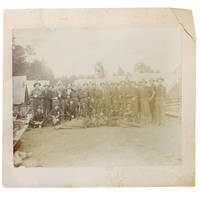
1890187391890. African American soldier photographed among members of a United States Army camp unit in the American West during the late nineteenth century providing visual documentation of Black participation within the military environment during the era of segregated service. African American soldiers served in the United States Army throughout the nineteenth century most prominently in units known as the Buffalo Soldiers which were formally organized after the Civil War. While Black soldiers were typically assigned to segregated regiments images occasionally record their presence in mixed military environments such as camps labor details or logistical units. The photograph captures a group of soldiers gathered in a temporary camp setting and includes a seated Black soldier identified by a contemporary handwritten note on the verso reading "Notice 'Black Soldier.'"<br /> <br /> Albumen sepia tone photograph mounted on photographer's board showing a group of American soldiers posed within a military encampment. Photograph measuring approximately 8.5 x 10 inches mounted on a photographer's board measuring approximately 10.75 x 10 inches. The men are dressed in clothing typical of western military and frontier settings of the late nineteenth century including dark buttoned shirts trousers supported by suspenders and boots. The African American soldier appears seated among the group with a cigarette in his mouth. The soldiers are gathered in a clearing surrounded by trees where rows of tents are arranged on raised wooden platforms suggesting an organized encampment. Cooking equipment stacked blankets plates and tankards are visible indicating a communal meal or informal gathering. One soldier holds what appears to be a long rifle with a visible barrel and wooden stock. Several soldiers sit or recline on the ground in the foreground while others stand behind them creating the appearance of an informal group portrait taken during daily camp life rather than a formal military arrangement. Handwritten note on the verso reads "Notice 'Black Soldier.'" Top right corner of the board cracked with tape repairs on the verso; slight water staining at the top left corner and damp staining at the lower left corner with partial cracking at the lower right corner. Image itself remains clear and largely unaffected. Overall condition good. The photograph preserves a visual record of African American presence within the late nineteenth century U.S. Army camp environment during a period when the armed forces remained formally segregated. unknown
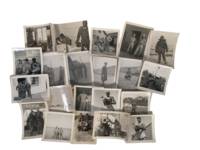
1957193551957. Vernacular photograph archive of African American soldiers in integrated U.S. Army units circa 1950s documents the early implementation of military desegregation following Executive Order 9981 and provides visual evidence of Black and white soldiers serving together during and after World War II including the Korean War. The photographs place African American servicemen within the first generation of formally integrated military units preceding broader civil rights gains in civilian society. Scenes of joint training transport and daily life show Black soldiers operating alongside white counterparts in contexts ranging from shipboard movement to antiaircraft defense positions indicating the practical realities of integration in active and post-conflict environments. The archive captures both structured military activity and informal moments offering a record of service that contrasts with the segregated conditions that had defined earlier periods of U.S. military history.<br /> <br /> United States and Korea circa 1950s. Archive of 21 silver gelatin vernacular photographs with several images bearing manuscript captions on the verso identifying individuals and locations including one noting Korea 1957-1958. Photographs depict a range of settings including military bases in Korea stateside camps shipboard scenes and antiaircraft gun emplacements in snowy terrain. Multiple images show interracial groups of soldiers posing with rifles and submachine guns while others capture informal activities including one sequence featuring a soldier holding an inflated puffer fish aboard a ship. One photograph includes a note written in Italian on the verso indicating cross-cultural contact or circulation. Composition and subject matter vary from posed group portraits to candid operational and leisure scenes.<br /> <br /> Created during the first decade of enforced military integration these photographs align with the transitional period in which desegregation policies were implemented unevenly across the armed forces with fuller integration not realized until the mid-1950s. The Korean War served as a critical testing ground for integrated units accelerating changes in military structure and social dynamics within the ranks. This archive provides a ground-level view of those developments documenting both the normalization of interracial military service and the persistence of shared routines duties and environments across racial lines. Light wear from handling with minor surface marks and occasional verso annotations; overall very good condition. unknown
19942091502135413109Hebei Science and Technology Publishing House 1994. Soft Cover. Fine. Number of books: 4 Hebei Science and Technology Publishing House paperback
665331 July 1851; London. 12mo 3 pp. Good. Folded twice and with the blank verso of the second leaf of the bifolium a little grubby. A formal letter in the third person declining to present a petition to the House of Lords on the grounds that 'The Duke has no relation whatever with Honiton'. The date and the words 'Mr Aberdein' 'Honiton' ' which he retains' and 'Robert Aberdein Esq' are in Wellington's hand. 31 July 1851; London. unknown
13427Both on letterhead of Old Quarries Avening Gloucestershire. 20 and 24 October 1940. Both items 2pp. 12mo. Both in good condition on lightly-aged paper with slight evidence of previous mounting. The first letter addressed to 'The Editor Cambridge Daily News' begins: 'When I received my L.L.D Degree from the University in June 1931 you published in your issue of June 6 some photographs of the procession to the Senate House on that occasion.' He is writing 'on the off chance' that 'original prints' survive 'as I am most anxious to obtain one for my Autobiography if it is in any way possible to do so'. In the second letter to 'Mr. Stuart' he thanks the editor for the trouble he has taken: 'The photograph is excellent and exactly what I wanted.' He is also 'much amused' by Stuart's 'reminiscence of the Hastings Election 1906 I assume but shocked to learn what I had entirely forgotten that I could ever have spoken against my old friend Freeman Willingdon!' Fareham was a Conservative and Willingdon a Liberal. He recalls that he has stayed with Willingdon 'in India & elsewhere so often since; and was his Sponsor when he took his seat as a "Viscount" in the House of Lords; some 15 years ago.' To prove that there is 'no permanent breach' he is sending a photograph taken when Willingdon 'gave away the Prizes at Cheltenham College - of which I was President'. Both on letterhead of Old Quarries, Avening, Gloucestershire. 20 and 24 October 1940. unknown
1987778157PN. New. 1987. Soft Cover. Date is original print. This is a reprint edition. . PN paperback
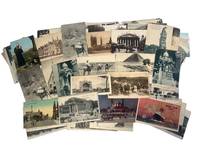
1915207331915. Australian Imperial Force soldiers postcard correspondence Archive 1915 to 1916 documents ANZAC service during the Gallipoli campaign and subsequent deployments across the Mediterranean theater through sustained communication with a civilian recipient in Sydney. The archive centers on letters addressed to a woman identified as Olga written by multiple soldiers including her brother Eric and another correspondent George. The material records trench conditions troop movement and the transmission of news from the front including the report of Eric's death. The correspondence situates individual experience within the Gallipoli campaign where Allied forces sustained heavy casualties in operations against Ottoman defenses and traces the continuation of service across France Egypt and Greece following the withdrawal.<br /> <br /> Archive of 54 handwritten postcard letters. Europe North Africa and the Mediterranean 1915 to 1916. Each message is written on the verso of a period postcard most measuring approximately 5.5 x 3.5 inches with photographic views of cities and towns including London French villages Cairo and locations in Greece. Several images depict damaged urban environments. One postcard bears a censorship marking with portions of text obscured. The correspondence includes multiple authors primarily Eric and George. In one letter from France George writes "Thank you for the pose.We are having beautiful weather at present. Just like an Australian spring. Love from George." Eric writing from Egypt on April 16 notes "We are once again in the trenches where we have had a very lovely time for a few days." A later letter reports Eric's death stating "You need have no fear that he was decently buried" while subsequent correspondence reflects diminished communication and shifting personal relationships including George's inquiry "Do you ever write to me Olga. I wish a few letters from you would turn up."<br /> <br /> The Gallipoli campaign fought from April 1915 to January 1916 resulted in extensive casualties and became central to the development of ANZAC identity commemorated annually as Anzac Day. Following the evacuation of Gallipoli Australian forces were redeployed across multiple theaters including the Western Front and Middle Eastern campaigns reflected in the geographic range of these postcards. The archive documents the function of wartime correspondence under censorship and the role of letters in conveying both military experience and personal loss to the home front. Light wear consistent with handling; overall very good condition. unknown
22285'A Anteuil ce 25 floreal an 11'. i.e. 15 May 1803. An interesting letter casting light on bibliographic and book trade practices in Consulate Paris. 2pp 12mo. Forty-two lines of closely-written text on the first leaf of a bifolium the recto of the second leaf being addressed 'Au Citoyen Firmin Didot Rue du Regard A Paris'. In good condition lightly aged with white paper stub of mount adhering to second leaf. 'L'Aristote' is written in the left-hand margin of the first page and he begins by giving the results of the collation of the various editions of du Val's Aristotle finding that 'l'edition de 1619 et celle de 1629 sont la meme et la plus belle; et que celle de 1639 inferieure pour l'execution est la Seule qui contienne les dernieres additions de du Val – dont je suis curieux'. He notes the printers of the three editions. In the light of his discoveries he discusses the purchases of the 1639 edition from 'la personne que vous charges de ces commission' asking him 'de vouloir bien recompenser pour moi cet agent car voila bien des peines que je luie donne et bien des emplettes difficiles et qu'il fait pour moi et si bon marche qu'il est impossible qu'il y ait le moindre benefice ce qu n'est pas juste'. A long postscript concerns 'notre bon ami Cabani' and his 'pauvre camarade Heimebart' In a second postscript he states that he has had to abandon his intention of calling on Didot for 'l'exemplaire en question' as he is 'un peu souffrant'. 'A Anteuil ce 25 floreal an 11'. [i.e. 15 May 1803] unknown
19486818Madrid: La Arcadia 1948 Imp. en Gráficas Ultra.- XIII65 p. 4 h.: Va ilustrado con la reproducción facsímil de la portada de la obra original; 4º 255 x 175 cm; Portada a dos tintas; Intonso; Fina impresión sobre excelente papel ahuesado verjurado con todas sus barbas; Enc. original en Cartulina Ed.- Publs. de La Arcadia. 6.- Tirada de 110 ejemplares numerados. En excelente estado de conservación. Reimpresión de la rarísima edición de: "Zaragoza en las prensas de Jorge Coci hacia 1504". La obras nos relata de un modo directo y popular la conquista de Nápoles por el Gran Capitán Don Gonzalo Fernández de Córdoba. RARA EDICION DE BIBLIOFILO. HISTORIA DEL SIGLO DE ORO ESPAÑOL Libro en español La Arcadia paperback
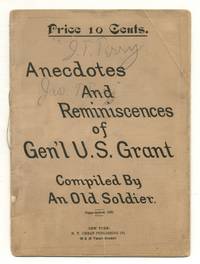
1885558564New York: N. Y. Cheap Publishing Co 1885. Softcover. Good. First edition. 16mo. Stitched printed buff wrappers. Early owner name "Jas. T. Terry" vertical crease with a bit of splitting some old penciling on front wrap a good copy. OCLC locates only six copies. N. Y. Cheap Publishing Co unknown
1855004467London: H.G. Collins 22 Paternoster Row 1855. 12mo pp 25 3 4pp publisher's adverts. Double-page map of Sebastopol Harbour double page map showing the Crimea relative to the seat of war 9 engraved plates of which three are double page showing the exterior of a casemated battery plan of a modern fortress with siege works profile view of a bastion 24 pounder siege gun an embrasure a 15 inch french mortar shell case-shot grape-shot & round shot a fascine & a gabion Minie rifle & patent revolver. All the plates are waterstained the contents are very slightly weak neat stamp of a former owner T.W. Pickard who was the estate manager at Glynde in three places including the title page and very faintly on the upper cover large inscription of original owner Frederick Prodger on verso of front endpaper original orange glazed and printed boards rubbed and slightly worn original blue cloth spine a little worn. EXTREMELY RARE. First Edition. Boards. Good. H.G. Collins, 22 Paternoster Row Hardcover
18771210020027George Bell and Sons 1877. Hardcover. Acceptable. Fair hardcover. No DJ. ORIGINAL 1877 EDITION. WITH MANY BEAUTIFUL STEEL ENGRAVING ILLUSTRATIONS. Ex-Library with usual markings. Text unmarked. Slightly tanned. Covers show edge wear with rubbing. bumped corners. LIbrary support tape on back strip. Hinges supported with library tape. Still very readable.; 100% Satisfaction Guaranteed! Ships same or next business day! George Bell and Sons hardcover
2010DADAX1164511270Kessinger Publishing 2010-09-10. hardcover. New. 6.00x1.06x9.00. Buy with confidence. Excellent Customer Service & Return policy. Kessinger Publishing hardcover
0704OVSF7TPHardcover. Very Good. First Edition. Signed and Inscribed by the author to John R. Steelman after the war and signed by Mr. Steelman. Beige hardcover w/black lettering. 415 pages. Previous owner's stamp on title page. This copy establishes Art ARTHUR as the anon. author. His hand and signature appear below 'A VETERAN' in the dedication to Steelman. Same hand appears in online version of copy Arthur sent to FORD>Written in 1942 it expresses the author's hopes for America after the end of WWII. Mr. Steelman was White House chief of staff under President Truman. ; 8vo; 415 pages; Signed by Author Very Good with no dust jacketSIGNED by the author on second blank exuberantly "To John R. Steelman." Steelman's own signature inside front cover with check marks of his own next to his name at pps 211 and 234. Commissioner of conciliation U.S. Conciliation Service 1934-36 director" Black cloth hardcover brief edgewear in no djacket. No other reader remainder or ex-library marks. hardcover
B9781494107291Paperback / softback. New. paperback
1163193151.Gpaperback. Good. Access codes and supplements are not guaranteed with used items. May be an ex-library book. paperback
1164511270.Ghardcover. Good. Access codes and supplements are not guaranteed with used items. May be an ex-library book. hardcover
1432595415.Gpaperback. Good. Access codes and supplements are not guaranteed with used items. May be an ex-library book. paperback
1494107295.Gpaperback. Good. Access codes and supplements are not guaranteed with used items. May be an ex-library book. paperback
194218480Los Angeles CA: Circle-V Press 1942. fair to good. 23 cm 415 illus. bds & spine stained & discolored. Inscribed by the author to Drew Pearson; 1942 Drew Pearson traffic ticket laid in. Some damp lines at the edge of some pages. Circle-V Press unknown
1331157854.Gpaperback. Good. Access codes and supplements are not guaranteed with used items. May be an ex-library book. paperback
194544498Okayama: Photographed in many Japanese Locations with most of the loose photographs taken in Okayama Japan n. d. ca 1945. 1945. WORLD WAR II JAPAN. First edition. Blue cloth photograph album 124 silver gelatin photographs mostly 2 1/4" x 3 1/4" with 106 of them in corner mounts. A fascinating vernacular photograph album capturing scenes in American-occupied Japan just after the Second World War. Most of the photographs are captioned in white ink on the black album pages and organized in sections such as "Landmarks" "The People" "The Cities" “The Military” and “Personalities.” “Landmarks” include views of sites in Kokura Yakata Okayma Prefecture picturing shrines country homes water works the "International Military Tribunal Far East" and more. "The People" shows Japanese residents of all ages some in Western dress others in traditional Japanese garb standing in front of structures on the streets at a military checkpoint playing "yakkyu national game" baseball swimming and other activities. The section on the cities comprises street views in Okayama Kokura Fukuoka Hiroshima Yakata Tokyo Kyoto and Yokohama. Surprisingly the four shots of Hiroshima do not contain much evidence of destruction and provide a rare contemporary glimpse of areas of the city not leveled by Little Boy. Views of Tokyo include the Dai Ichi Building the Imperial Museum and an image of an American soldier "on the Ginza." The various views in the other cities show Japan's largest steel works a partially-demolished department store temples and the Yokohama wharf. The military section includes photographs of Okayama Post the "A.G. Office" barracks headquarters of the 24th Division in Kokura Kyushu the Kokura Arsenal and Post Exchange Fukuoka's 118 Station Hospital and more. The "Personalities" section is comprised of shots of American soldiers in and out of uniform almost all of them identified by their first names or nicknames. This section also includes photographs of "A.G. Girls" a few Japanese people identified by name American soldiers at the War Ministry Hotel in Tokyo U.S. soldiers at the "4th Repl. Depot" in Sobudai" and more. A handful of the captions and some of the loose photographs are captioned in Japanese. Some of the loose photographs are stamped on the verso "Jack Woytych" with his Wisconsin address though it is unclear whether this refers to the owner/photographer of the album or the printer of the photographs. Most of the loose photographs emanate from Okayama. A noteworthy collection of personal images from an American serving in Japan at the end of World War II. Moderate wear to the spine ends and spine panel light edge wear and rubbing to the extremities else a very good copy. Photographed in many Japanese Locations, with most of the loose photographs taken in Okayama, Japan, n. d. (ca 1945). hardcover
1912052625Autograph Letter Signed ALS Letterhead 'Çatalca Ordusu Menzil Müfettisligi'. AH 1328 1912. Soft cover. Very Good. Original autograph letter signed by Ali Hikmet Ayerdem. 38x23 cm. In Ottoman script. 1 p. Three long lines. Dated 22 Kanunisani 81328 AD 1912. Written to Ayastefanos High Commands for the assignment of cavalry major 'Mustafa Resid Bey'. Ali Hikmet Ayerdem 1877; Larissa - March 21 1939; Istanbul was an officer of the Ottoman Army and a general of the Turkish Army. Rare. <br/> <br/> Autograph Letter Signed (ALS) Letterhead 'Çatalca Ordusu Menzil Müfettisligi'., [AH 1328] paperback