617 résultats
9772Annales de l'Extrême-Orient et de l'Afrique, n° 95. Paris, Challamel, mai 1886. In-4, broché.
4690Saint-dizier, 1946. In-8° broché de 68 pages.
80222Louvain, Xaveriana, 1931. 10 x 16, 27 pp., broché, bon état (1 cachet sur la couverture).
80230Louvain, Xaveriana, 1931. 10 x 16, 30 pp., broché, bon état (1 cachet sur la couverture).
176 pages. Black and white photographic plates. Map endpapers. The powerful store of two missionaries of the Mennonite Brethren Church who served in Columbia. Clean and unmarked with light wear. Binding tight. Nice copy. Book
61218Bruxelles, Société Socialiste et Centre Guillaume Jacquemyns, 1986. 14 x 21, 310 pp., broché, bon état (couverture légèrement défraîchie).
80227Louvain, Xaveriana, 1929. 10 x 16, 32 pp., broché, bon état (1 cachet sur la couverture).
80224Louvain, Xaveriana, 1928. 10 x 16, 32 pp., broché, bon état (1 cachet sur la couverture).
80225Louvain, Xaveriana, 1930. 10 x 16, 30 pp., broché, bon état (1 cachet sur la couverture).
80229Louvain, Xaveriana, 1928. 10 x 16, 31 pp., broché, bon état (1 cachet sur la couverture).
80216Louvain, Xaveriana, 1927. 10 x 16, 32 pp., broché, bon état (1 cachet sur la couverture).
80217Louvain, Xaveriana, 1927. 10 x 16, 32 pp., broché, bon état (1 cachet sur la couverture).
80223Louvain, Xaveriana, 1928. 10 x 16, 32 pp., broché, bon état (1 cachet sur la couverture).
80221Louvain, Xaveriana, 1939. 10 x 16, 27 pp., broché, bon état (1 cachet sur la couverture).
44372Toulouse, Editions de l'Apostolat de la Prière, 1946. 14 x 22, 127 pp., nombreuses illustrations en sépia, 2 cartes, broché, bon état (petit manque au dos).
80218Louvain, Xaveriana, 1932. 10 x 16, 32 pp., broché, bon état (1 cachet sur la couverture).
80226Louvain, Xaveriana, 1929. 10 x 16, 30 pp., broché, bon état (1 cachet sur la couverture).
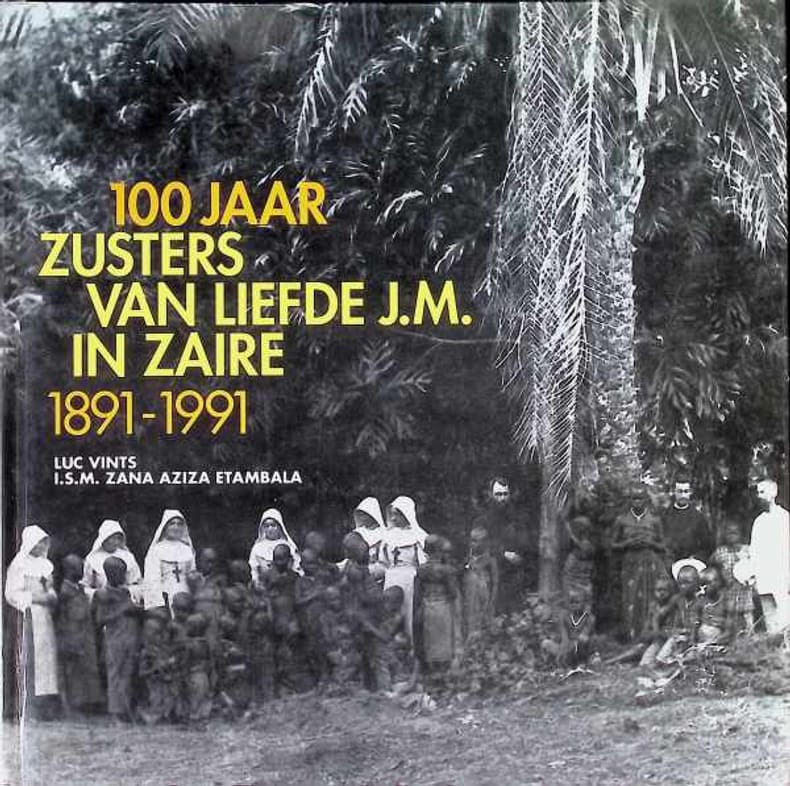
1992028011Brussel / Leuven 1992 Congregatie van zusters van Liefde van Jezus en Maria, Madoc Hardcover 1st Edition
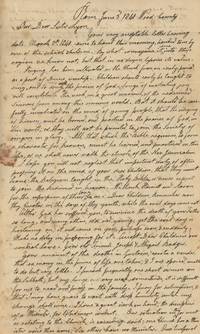
1840List2979Perrysburg Ohio 1840. Single three-page letter measuring 7 ½ x 12 ½ inches. Some stains folded with small tears at folds and tear at seal; overall near fine. Joseph Badger 1757–1846 was the first missionary to be sent to the Connecticut Western Reserve.1 He served in the Continental Army received a degree from Yale and was sent to Ashtabula County by the Connecticut Missionary Society in 1802. He retired in about 1833 after many years of organizing schools and churches around the Western Reserve plus a stint as a brigade chaplain during the War of 1812.<br /> <br /> Abigail Ely was Badger’s second wife; they married in 1819. The two write here to a widowed friend Harriet Lyon and her children in Gustavus Ohio. They discuss the importance of singing to religious work and of teaching children to sing and describe their living situation—on a farm nearby to some of their children who help them out. They also briefly complain about the quality of ministry in the area writing that the situation:<br /> <br /> “is exceedingly dark; one Church has a Minister worse than none; Six others have no Minister. . Much of the preaching that comes along occationally is calculated to excite the super-ficial affections of the mind without reaching the heart or enlightening the understanding.â€<br /> <br /> Of interest to historians of Ohio and religion in the Western Reserve.<br /> <br /> 1 “Badger Joseph†in Encyclopedia of Cleveland History accessed March 20 2025 https://case.edu/ech/articles/b/badger-joseph. unknown
020766[Vichy] Pose de la première pierre de la maison du Missionnaire en 1931. 2 cartes postales photographiques, 1931. Photographies originales au moment de la pose de la première pierre de cette maison religieuse, existant toujours, avec de nombreux religieux apparaissant sur les photos. Il est fortement probable que l'évêque sur les deux photos soit Augustin Gonon, alors évêque de Moulins. [500]
89634Louvain, Xaveriana, 1939. 10 x 16, 28 pp., broché, bon état (1 cachet du Collège jésuite Saint Stanislas à Mons).
1935R320071286ARLAUD G.L.. vers 1935. In-8. Broché. Bon état, Couv. convenable, Dos satisfaisant, Intérieur frais. 188 pages augmentées de nombreuses photos en noir et blanc dans et hors texte - Des points de rousseur sur la page de titre et les 1er et 2e plats -. . . . Classification Dewey : 904-Recueils de récits d'événements
500264787Edition O.L. Arlaud Sans date.
Very Good Turkish, Ottoman (1500-1928) Contemporary handsome petrol green quarter leather, five raised bands to spine with decorative gilt edges, marbled boards. Roy. 8vo. (24 x 17 cm). In Ottoman script (Old Turkish with Arabic letters. 118 p., 14 unnumbered woodcut plates (one is full of two pages). Hegira: 1314 = Gregorian: 1896. Extremely rare first and illustrated edition of the journey of civil servant Ali Bey, who went from Istanbul to Baghdad and to India through his duty in Düyûn-u Umûmiye [i.e. Ottoman Public Debt Administration] covering the years 1885-1888, vividly describing Baghdad, Musul; and India. In 1884 Ali Bey started his journey as an ex-governor of Trabzon city and a new OPDA officer from Constantinople (Istanbul), and he arrived in Baghdad through Lesbos, Ayvalik, Smyrna (Izmir), Mersin, and Alexandretta (Iskenderun). On their way to Baghdad, they cross the Tigris River on rafts that local people call "Kelek". His descriptions of Baghdad city are very important and first-hand accounts of the region including the details of the walls of the city, hospitals, health organizations, industry, a transportation company on the river, a new settlement near the center of Kadhimiya with a tram line to through the city built. Ali Bey landed on the Indian continent in Karachi (today's Pakistan). He made a detailed description of the big cities that were the British Colony and states that he was influenced by these cities as a Reform period Turkish intellectual. He also describes Islamic India, Parsi traditions, costumes and funerals, Portuguese culture in India, Victoria Garden Zoo, silk weaving factories founded by David Sossoon, who came from Baghdad, architecture, music, theater, etc. List of ills.: General view from Ayvalik, the port of Smyrna (Izmir), the port of Mersin, two panoramas of Diyarbakir and Aleppo cities, the bridge of Musul, "Keleks" on the Tigris, a local woman of Aleppo, Famous water mill of Aleppo, Fortress of Aleppo, Eagles of Parsi people in Bombay, A Parsi family from Bombay, Arcadia ship in Bombay, Straight of Hormuz in Basra. Ali Bey was a playwright originally. He learned French in private lessons and firstly he worked at the Babiâli (The Sublime Port) Translation Office as a clerk, then he became a member of the Health Council and the first secretary of the Directorate of Quarantine. He went to Eastern Anatolia, Iraq, and Japan as an inspector of public debts (1855-88). After his duty as the Governor of Trabzon (1890-93) he became the director of the Office of Public Debts (1890-93), which would last until the end of his life. It is for this reason that he was called Direktör Ali Bey. His first work was published in Diyojen (1869-72), the first humorous review, published by Teodor Kasap. Ali Bey, who was one of the regular writers of this review, wrote plays for the Gedik Pasa Theater, which was founded by the Armenian Güllü Agop and his friends, and wrote scripts adapted from French plays. He gave Turkish diction lessons to the Armenian actors and participated in theater activities. His plays were performed under the authorship 'A Person' to hide his official identity. He explained the meanings of words satirically in his dictionary Lehçetü'l Hakayik (Language of Realities) which he wrote in 1897 and was the first work of its field; the faults of the 19th-century Ottoman Empire were also criticized in this dictionary. Özege 17900.; TBTK 3068.; OCLC 218189547 (One copy in Bayerische Staatsbibliothek), 602878049 (one copy in Universitatbibliothek), 879555766 (Four copies), 56944884.
Very Good Turkish, Ottoman (1500-1928) Original wrappers. Uncut and untrimmed copy. Demy 8vo. (21 x 14 cm). In Ottoman script (Turkish with Arabic letters). 31 p. Ali Bey was a playwright originally. He learned French in private lessons and firstly he worked at the Babiâli (The Sublime Port) Translation Office as a clerk, then he became a member of the Health Council and the first secretary of the Directorate of Quarantine. He went to Eastern Anatolia, Iraq, and Japan as an inspector of public debts (1855-88). After his duty as the Governor of Trabzon (1890-93), he became the director of the Office of Public Debts (1890-93), which would last to the end of his life. It is for this reason that he was called Direktör Ali Bey. His first work was published in Diyojen (1869-72), the first humorous review, published by Teodor Kasap. Ali Bey, who was one of the regular writers of this review, wrote plays for the Gedik Pasa Theater, which was founded by the Armenian Güllü Agop and his friends, and wrote scripts adapted from French plays. He gave Turkish diction lessons to the Armenian actors and participated in theater activities. His plays were performed under the authorship 'A Person' to hide his official identity. He explained the meanings of words satirically in his dictionary Lehçetü'l Hakayik (Language of Realities) which he wrote in 1897 and was the first work of its field; the faults of the 19th century Ottoman Empire were also criticized in this dictionary. He wrote his travel memoirs titled 'Seyahât jurnâli' including his voyages from Istanbul to India. This book includes his humorous short stories printed in Cairo. Özege 17946.; TBTK 3399.; Only one printed copy in OCLC 1030931636 (Orient Institut of Istanbul). Scarce. First and Only Edition.