811 résultats
15527417Granada 1552. Hardcover Tapa dura. 274x193mm. 10¾x7½". Granada 1552. En folio 274 x 193mm. Tipografía gótica. 8 321 i.e. 323 1 folios. Portada con escudo imperial grabado en madera. Pergamino a la romana del siglo XIX. Primera edición rarísima sólo localizamos ejemplares en la Biblioteca Nacional. Las <em>Ordenanzas</em> dictadas para el gobierno de una institución fueron publicadas frecuentemente de manera independiente o formando colección. Son de especial interés las dictadas para chancillerías audiencias consejos e instituciones locales. Ejemplar suavemente lavado de antiguo por lo demás perfecto. hardcover
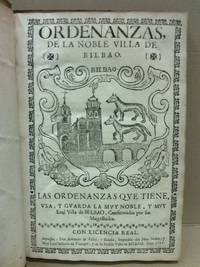
171136030Con licencia real. Bilbao: Impressas por Antonio de Zafra y Rueda Impresor del muy Noble y Muy Leal Señorío de Vizcaya y de su Noble Villa de Bilbao Año 1711.- 2 h. 82 folios 6 h.: Portada orlada y escudo de Bilbao en el centro con la iglesia de San Antón el puente y dos lobos todo grabado en madera artísticas letras capitulares grabadas en madera. SIGUE: Reglamento de las cargas y gastos que se deberán satisfacer de los caudales de proprios y arbitrios de la Noble Villa de Bilbao con consideración al producto anual que tienen y consta al Consejo por los Documentos que se le han remitido. A que le sigue: la Carta-Orden del Consejo escrita por D. Manuel Bezerra para su entero y debido cumplimiento y lo demàs que en ella se expresa.- Impreso en Bilbao: Por Antonio de Egusquiza. Año de M. DCC. LXXVIII 1778.- 2 h. 35 p.: La portada con un escudo de Bilbao justo encima del pie de imprenta. Ambos libros en un mismo volumen encuadernado en Pergamino de la época de 286 x 20 cm. en 4º mayor.- En esta rara edición de las Ordenanzas de 1711 se incluyen los cinco anexos que se imprimieron y encuadernaron con la edición anterior de 1682 formando los capítulos 123 a 128 y además va añadida la Real provisión de 1685 capitulo 129. SE ENCUENTRA EN PERFECTO ESTADO. SIGLO XVIII ESPAÑOL Libro en español Impressas por Antonio de Zafra y Rueda paperback
17263094Paris, Rollain, Quillau, Desaint, 1726 ; quatre tomes in-4 ; plein maroquin rouge cerise à grain long, dos à nerfs ornés, titre doré, triple filet doré d'encadrement des plats, filet doré et fleurons décoratifs en écoinçons, roulette décorative dorée sur les coupes et en intérieur, toutes tranches dorées (Thouvenin, relieur de 1813 à 1834) ; (6) ff., 696 pp. ; (1) f., 719 pp. ; (1) f., 552, 4 pp., (1) f. ; (1) f., 240, 408, 221, XX pp. et en tout, portrait gravé de l'auteur en frontispice, 6 cartes et plans et 70 portraits gravés blasonnés hors-texte et 4 vignettes.
1611WRCAM40080Spain 1611. 12pp. leaves numbered 1-6. In Spanish. Folio. Dbd. Early folds mild foxing. Very good. An early and evidently unrecorded 17th- century Spanish petition to the King on behalf of mendicant and monastic communities in the Spanish Americas. The authors argue that the churches attempting to tax their incomes and force them to pay tithes are hurting religious efforts in the Americas and infringing upon the historical independence of the religious orders from the churches. The document is signed in print by eleven monks each representing a different order: the Benedictines Hieronymites Franciscans Cistercians Mercedarians Dominicans Augustinians Trinitarians Jesuits Premonstratensians and Carmelites. The Jesuit signer is Pedro de Caruajal presumably Pedro de Carbajal former magistrate and judge of the Vilcas Huamán province of Peru and author of DESCRIPCION FECHA DE LA PROVINCIA DE VILCAS GUAMAN.EN EL AÑO 1586. unknown books
In-8°; cc.(8), pp. 81-244(1). Caratteri rossi e neri sul front. e nel testo, capilettera xilografati. Marca al front. e vignetta xilografata, rappresentante s. Benedetto, all’ottava carta. Estratto del Breviarium monasticum dello stesso anno con conforme numerazione delle carte. Legatura in cartonato. Presenti ancuni fori di tarli.
1st edition. Original paper wrappers. 8vo, 151 pages. Tables in back. Singerman S028, listing only 3 holdings of this volume in 2019 (Bnai Brith Archives, NYPL, HUC), none at any Ivy League Institution nor at the AJHS.. The exchanges and reports are surprisingly critical of decisions made by others in the lodge, perhaps emphasizing the internal nature of this report and therefore the lack of surviving copies. Includes reports on all aspects of life in and decisions by the organization and its many chapters from across the country. A few examples would include the IOBB's Maimonides Library; documents detailing charges against people in the Lodge; members charging other members with "riotous and unbecoming conduct in the lodge-room, and in using profane, scurrilous and insulting language, both in writing and in speech, toward the Lodge and members thereof;" appeals of decisions to seize the books belonging to various branches; financial and statistical information etc. This was definitely not a publication meant for public consumption. B'nai B'rith is the oldest Jewish service organization in the world. Its mission is the security and continuity of the Jewish people and the State of Israel and combating antisemitism and bigotry. The organization has historic roots stem to the system of fraternal lodges, like the Freemasons (Wikipedia, 2018) . Structurally, the B'nai B'rith is organized on three levels: international, regional, and local. The international operation has since 1935 been known as the "Supreme Lodge." Prior to that time, it was the "Constitutional Grand Lodge. " Julius Bien (1826-1909) was an American lithographer originally from Germany, as well as president of Bnai Brith for more than three decades. He also produced a lithographed edition of John James Audubon's The Birds of America. In Germany, Bien had fought on the side of the liberals in the 1848 Revolution, and fled to New York in 1848 or 1849 .[where he] began a lithography studio . Bien's studio produced work in different qualities, indicating he was willing to take on any jobcity views and maps, mechanical and architectural drawings and advertisementsbut on the whole his work was distinguished by its technical superiority and flexible manipulation of print media. He worked for the federal government as well after the American Civil War, and was noted as a skilled printer of maps with a new level of scientific accuracy (a 1902 map of Connecticut was praised as all that could be desired), winning many awards, and becoming a prominent citizen of New York as well as the first president of the National Lithographers Association. From 1854 to 1857, and again from 1868 to 1900, he was president of B'nai B'rith, contributing substantially to its internationalization. In the late 1850s, Bien was sought out by John James Audubon's youngest son, John Woodhouse Audubon, to produce a new full-size edition of The Birds of America, an edition to be sold via subscription .the Bien edition remains an important publication: his illustrations represent the highest standard chromolithography had achieved, and even now they stand as a landmark to the medium. Bien pushed against the limits of available technology with intuitive artistry in an effort to provide information and aesthetic pleasure to the mass audience of a democratic society (Wikipedia). SUBJECTS: Jews -- Periodicals. Jews -- United States -- Periodicals. Wear to spine,lacking bottom 1/4 of title page (which is an exact reproduction of the cover, which is fully intact) with loss only of publication info: "New York 1883." Good Condition Overall. Exceedingly rare and important. (AMR-57-5-D)
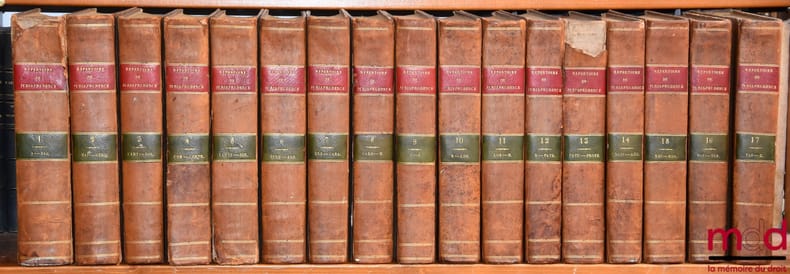
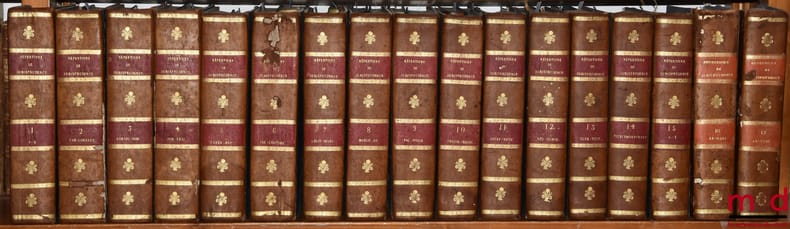
53038, Paris, Visse 1784-1785, 17 vol. in-4, demi-veau jaspé brun, tit. et tom. sur pc. de maroquin bordeaux et olive, double filets encadrants dorés sur dos lisse, tr. mouchetées, bandeaux, imp. en double colonne, (coiffes frottées dont quelques-unes accidentées, qq. fines épidermures sur certains vol., coins lég. émoussés, légères rousseurs et mouillures dans qq. vol., rares piqûres, t.IV, V, XIII et XVII: mors fendus, t.IV et XIV: très léger mq. de cuir au niveau de la coiffe de tête, t.I et XIII: mq. de cuir plus significatif au niveau de la coiffe de tête), bon état général, int. très frais, [~ 12500p.].
240267Lisbonne, monastère de S. Vincent hors les murs, 1749 2 vol. in-folio, [3] ff. n. ch. (titre avec belles armes des Bragance, avertissement, autorisations), 326 pp., un f. vierge, 80 pp. d'index, texte sur deux colonnes ; [4] ff. n. ch. (titre, avertissement, approbations), 498 pp., un f. n. ch. d'errata, avec une belle vignette en-tête gravée par O. Cor d'après Debrie, demi-basane fauve à coins, dos à nerfs ornés de fleurons et guirlandes dorés, pièces de titre cerise, tranches rouges (reliure de l'époque). Une coiffe rognée, coins abîmés.
17489887Madrid: Juan de Zúñiga 1748. First Edition — Primera edición. Hardcover — Tapa dura. 267x195mm. 10½x7¾". Madrid Juan de Zúñiga 1748. 2 volúmenes. En 4º mayor 267 x 195mm. -I: 4 453 3 pp. -II: 4 469 pp. 4 h. Portadas con grabado calcográfico en el centro con alegorÃa de Neptuno y Marte otros grabados calcográficos por la obra a modo de cabeceras. Encuadernación de la época en piel rueda dorada en los planos lomera con dos tejuelos en marroquén y letrerÃa dorada. Primera edición de esta magnÃfica impresión en papel de hilo bien completa de sus dos volúmenes. Las <em>Ordenanzas</em> de 1748 de Fernando VI establecÃan el gobierno militar polÃtico y económico de su Armada Naval. Fueron redactadas por Juan de Aguirre y Oquendo y están consideradas como las primeras ordenanzas de la marina española; además de las reglas de comportamiento fijaban criterios en materia de régimen interior para el funcionamiento de las unidades ceremoniales régimen disciplinario reclutamiento sanciones o justicia. Las ordenanzas relativas a los viajes a América ocupan las páginas 386-418 del primer volumen con 78 artÃculos. Estas <em>Ordenanzas</em> establecieron además el núcleo del derecho penal militar de la marina de guerra. Referencias: Palau 202620 Juan de Zúñiga hardcover
17828291Madrid: Imprenta Real 1782. First Edition Primera edición. Hardcover Tapa dura. Madrid Imprenta Real s.a. 1782. En folio. 31 h. 326 136 24 pp. 1 lámina. Encuadernación en pergamino a la romana de finales del siglo diecinueve planos con rueda gofrada y flor en los vértices lomera con tejuelo en marroquén y letrería también dorada. Primera edición de las Ordenanzas de Intendentes para el virreinato del Río de la Plata posiblemente las ordenanzas más importantes que se dictaron para América. Las primeras ordenanzas se dieron para los cuerpos de intendentes en España en 1718 que después sirvieron de ejemplo para las de América. Las Ordenanzas definen a los Intendentes en América como magistrados puestos para fomentar la agricultura promover el comercio estimular la industria y favorecer la minería; la legislación general para los intendentes se fue configurando a medida que se iban solventando las deficiencias que aparecían en el ejercicio diario de sus funciones. La primeras ordenanzas en América se establecieron en Cuba en 1764. Las presentes Ordenanzas para el virreinato de Buenos Aires o Río de la Plata fueron las primeras que se realizaron para el continente americano y son la base de las leyes relativas al comercio y la hacienda en América durante el reinado de Carlos III hasta el fin de la dominación española en América. La premura en este virreinato fue producto de la situación de crisis y conflicto que la sublevación indígena había conseguido establecer en gran parte de su jurisdicción especialmente en el Alto Perú. Este levantamiento indígena que se dio de manera simultánea en distintos lugares tuvo uno de sus focos en Chayanta Potosí liderado por los hermanos Kataris el cual extendiéndose por el altiplano terminó contactando con el movimiento de Tupac Amaru y alcanzando un importante impacto en ciudades como Oruro o La Paz. Una de las quejas de los indígenas sublevados fue la extorsión y abusos de los corregidores. La reforma administrativa a partir de la aplicación del régimen de intendencias contemplaba entre uno de sus objetivos acabar con la odiosa figura del corregidor de indios y sustituirla por los subdelegados. Ejemplar con extensas anotaciones contemporáneas en los márgenes y con dos folios manuscritos adicionales. La primera hoja que contiene la lámina con el escudo está restaurada en el margen interior pero sin afectar al grabado por lo demás es un magnífico ejemplar con muy amplios márgenes. Imprenta Real hardcover
1684AQ27793London: Printed for Benjamin Tooke 1684. 14pp. ESTC R16301 Wing K495. Bound with: An exact relation of the Grand Ceremony of the marriage of charles the II.As it was performed at Fontainbleau by Cardinal Bouillon the Prince of Conti being Proxey in behalf of the most Catholick King. By an Eye-witness as it was Printed at Paris and faithfully Translated. London. Printed for Dorman Newman 1679. 2 10pp. ESTC R31470 Wing E3690. And: The Princess Anne of Denmark's letter To the Queen. London. s.n. 1688. 1pp. Single sheet printed on one side only. In this edition line 11 of text ends 'o-'; line 19 ends 'per-'. ESTC R210012 Wing A3224. And: The humble petition and advice Presented unto His Highness the lord protector by The Knights Citizens and Burgesses assembled At the Parliament begun and held at Westminster the 17th day of September 1656. London. Printed by Henry Hills and John Field 1657. 2 20pp. Defective without final five leaves of text. Later ownership inscription to title small worm-track to lower margin. ESTC R213592 Wing E1566A. And: Drop-head title: An Act for the Attainder of the Pretended Prince of Wales of High Treason. London. Printed by Charles Bill 1701 i.e. 1702. 2 35-36pp. Imprint from general title page. ESTC N53555. ESTC records copies at two locations in the British Isles BL and Oxford and one further location in North America Texas. And: Drop-head title: An Act to Declare the Alterations in the Oath appointed to be Taken by the Act intituled An Act for the further Security of His Majesties Person and the Succession of the Crown in the Protestant Line and for Extinguishing the Hopes of the Pretended Prince of Wales and all other Pretenders and their Open and Secret Abettors and for Declaring the Association to be Determined. London. Printed by Charles Bill 1702. 2 403-411pp 1. Imprint from general title page. ESTC N53578. ESTC records copies at locations in the British Isles Longleat and Oxford and a further three in North America McGill Texas and Yale. And: Drop-head title: An Act for Explaining a Clause in an Act made at the Parliament begun and holden at Westminster the Two and twentieth of November in the Seventh Year of the Reign of our Sovereign Lord King William the Third Intituled An Act for the better Security of His Majesties Royal Person and Government. London. Printed by Charles Bill 1702. 2 119-124pp. Imprint from general title page. ESTC N53560. ESTC records copies at three locations in the British Isles Cambridge Longleat and Oxford and a further three in North America Columbia Cornell and Kansas. And: Drop-head title: An Act for naturalizing her Royal Highness the Princess of Wales. London. Printed by John Baskett 1736. 2 427-428pp. Imprint from general title page. ESTC N51428. ESTC records copies at two locations in the British Isles House of Lords and National Museums Scotland and two further in North America California and Texas. And: The Humble address Of the Right Honourable the Lords Spiritual and Temporal In Parliament assembled presented to his majesty On Wednesday the Fifteenth Day of January 1745. London. Printed by Thomas Baskett 1745. 4pp. ESTC N17336. ESTC record copies at two locations in the British Isles BL and Oxford and two further in North America Brown and Duke. And: The humble address Of the Right Honourable the Lords Spiritual and Temporal In Parliament assembled presented to his majesty On Tuesday the Twenty ninth Day of April 1746. London. Printed by Thomas Baskett 1746. 4pp. ESTC T63816. ESTC records copies at two locations in the British Isles BL and Sion College and three further in North America Brown Duke and Huntington. And: His Majesty's most gracious speech To both houses of parliament On Tuesday the Eighteenth Day of November 1746. London. Printed by Thomas Baskett 1746. 4pp. ESTC N17589. ESTC records a single copy in the British Isles BL and three further copies worldwide Brown Göttingen and Yale. And: The humble address Of the Right Honourable the Lords Spiritual and Temporal In Parliament assembled presented to his majesty On Wednesday the Nineteenth Day of November 1746. With hHis Majesty's most gracious answer. London. Printed by Thomas Baskett 1746. 4pp. ESTC N17325. ESTC records a single copy in the British Isles BL and four further copies worldwide Boston Brown Göttingen and Yale. And: His Majesty's most gracious speech To both houses of parliament On Tuesday the Eighteenth Day of November 1760. London. Printed by Thomas Baskett 1760. 4pp. Not in ESTC. An apparently unrecorded variant - in this edition press figures on pp. 3 and 4 are 1 and 3 respectively. And: Drop-head title: An Act for settling and securing a certain Annuity on Horatio Nelson Lord Nelson and the Two next Persons to whom the Title of Baron Nelson of the Nile and of Burnham Thorpe in the County of Norfolk shall descend in Consideration of the eminent Service performed by the said Horatio Nelson Lord Nelson to HIs Majesty and the Public. London. Printed by George Eyre and Andrew Strahan 1798 i.e. 1799. 1 4-6pp. ESTC N60209. ESTC records a single copy Lincoln's Inn. And: Drop-head title: An Act for settling and securing a certain Annuity on William Lord Amherst.in Consideration of the eminent Services performed by him during his Command in America. London. Printed by George Eyre and Andrew Strahan 1803. 1 1594-1596pp. OCLC and COPAC together record copies at six locations Amherst Brown IHS Library and Archives Canada Society of the Cincinnati and Toronto. And: Drop-head title: An Act to enable His Majesty to grant a certain Annuity to Rear Admiral Sir Richard Strachan Baronet in Consideration of the eminent Services which he has rendered to His Majesty and the publick. London. Printed by George Eyre and Andrew Strahan 1806. 53-54pp. OCLC and COPAC together locate copies at two locations Illinois and NMM. And: Drop-head title: An Act to enable His Majesty to grant a certain Annuity to Vice Admiral Sir John Thomas Duckworth. London. Printed by George Eyre and Andrew Strahan 1806. 301-302pp. Apparently unrecorded. And: Drop-head title: An Act for extending the Annuity granted to Earl of St. Vincent to the Two next Persons to whom the Title of Viscount St. Vincent is limited. London. Printed by George Eyre and Andrew Strahan 1806. 357-358pp. OCLC and COPAC together records copies at two locations NMM and Queen's University Belfast. And: Drop-head title: An Act for settling and securing a certain Annuity on Earl Wellington.in consideration of his eminent services. London. Printed by George Eyre and Andrew Strahan 1812. 1 306-308pp. OCLC records a single copy Illinois. And: The speech of his royal highness the prince of wales regent in the name and on behalf of his majesty to both houses of parliament On Wednesday July 12 1815. London. Printed by George Eyre and Andrew Strahan 1815. 4pp. OCLC and COPAC together record copies at two locations Birmingham and KB. And: Drop-head title: An Act to enable His Majesty to grant an annual Sum to Her Royal Highness Victoria Maria Louisa Duchess of Kent. London. Printed by George Eyre and Andrew Spottiswoode 1831. 105-106pp. Apparently unrecorded. And: Drop-head title: An Act to repeal Part of an Act intituled An Act to provide for the Administration of the Government in case the Crown should descend to Her Royal Highness the Princess Alexandria Victoria. London. Printed by George Eyre and Andrew Spottiswoode 1838. 133-134pp. Apparently unrecorded. And: Drop-head title: An Act for exhibiting a Bill in this present Parliament for naturalizing His Serene Highness Prince Albert of Saxe Coburg and Gotha. London. Printed by George Eyre and Andrew Spottiswoode 1840. 3-4pp. Apparently unrecorded. And: Drop-head title: An Act for the Naturalization of His Serene Highness Prince Albert of Saxe Coburg and Gotha. London. Printed by George E. Eyre and Andrew Spottiswoode 1840. 5-6pp. Apparently unrecorded. And: Drop-head title: An Act for enabling Her Majesty to grant an Annuity to His Serene Highness Prince Albert of Saxe Coburg and Gotha. London. Printed by George E. Eyre and Andrew Spottiswoode 1840. 9-10pp. Apparently unrecorded. And: Drop-head title: An Act for providing for the further Security and Protection of Her Majesty's Person. London. Printed by George E. Eyre and Andrew Spottiswoode 1842. 673-675pp 1. Apparently unrecorded. And: Drop-head title: An Act to enable Her Majesty to settle an Annuity on Her Royal Highness the Princess Augustus Caroline eldest Daughter of His Royal Highness the Duke of Cambridge. London. Printed by George E. Eyre and Andrew Spottiswoode 1843. 305-306pp 1. Apparently unrecorded. And: Drop-head title: An Act to enable the Council of His Royal Highness Albert Edward Prince of Wales to sell and exchange Lands and enfranchise Copyholds Parcel of the Possessions of the Duchy of Cornwall to purchase other Lands; and for other Purposes. London. Printed by George E. Eyre and Andrew Spottiswoode 1844. 509-532pp. Apparently unrecorded. And: Drop-head title: An Act to enable Her Majesty to settle an Annuity on Her Royal Highness the Princess Royal. London. Printed by George Edward Eyre and William Spottiswoode 1857. 5-6pp. Apparently unrecorded. And: Drop-head title: An Act to enable Her Majesty to provide for the Establishment of HIs Royal Highness the Prince of Wales and Her Royal Highness the Princess Alexandra of Denmark and to settle certain Annuities on Her Royal Highness. London. Printed by George Edward Eyre and William Spottiswoode 1863. 3-4pp. Apparently unrecorded. And: Drop-head title: An Act to make Provision concerning Bills of Exchange and Promissory Notes payable in the Metropolis on the Day appointed for the Passage through the Metropolis of Her Royal Highness the Princess Alexandra of Denmark. London. Printed by George Edward Eyre and William Spottiswoode 1863. 5-6pp. Apparently unrecorded. Folio. Modern gilt-tooled half-calf marbled boards. A trifle rubbed. Very occasional spotting. An impressively extensive coherent sammelband of thirty-one Royal acts orders and addresses the majority remarkably scarce or entirely unrecorded ranging from the penultimate year of the reign of Charles II to the mid nineteenth-century including speeches delivered by George II before Parliament concerning the Jacobite Rebellion of 1745; acts granting annuities to William Amherst Lord Nelson and the Duke of Wellington for services to the Crown during the Seven Years' War French Revolutionary Wars and Peninsular War respectively; and articles relating to the naturalisation and financial provision of Prince Albert. . Printed for Benjamin Tooke hardcover
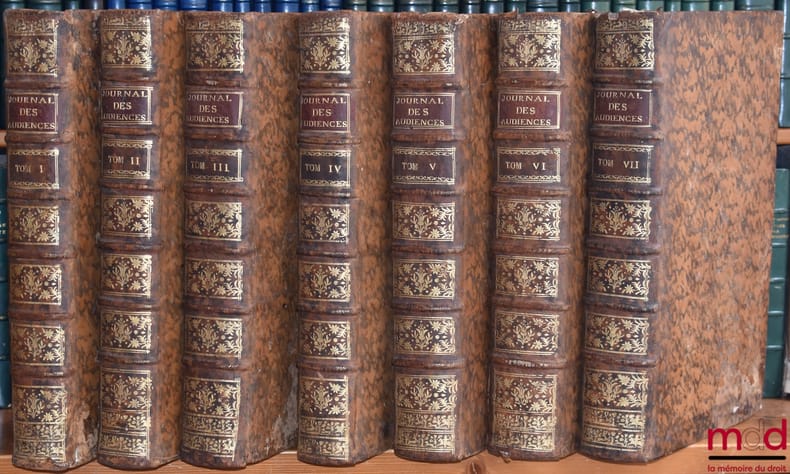
49941, Paris, La Compagnie des Libraires/ Bordelet/ Ganeau 1757/ 1751/ 1754, 7 vol. in-folio, plein-veau brun, tit. & tom. dorés sur pc. bordeaux, dos à 6 nerfs richement ornés de dentelles, frises et doubles filets encadrants dorés, tr. rouges, (coiffes émoussées avec qq. accidents, nerfs et coins frottés, coupes lég. fatiguées avec qq. petites épidermures, qq. rousseurs et piqures).
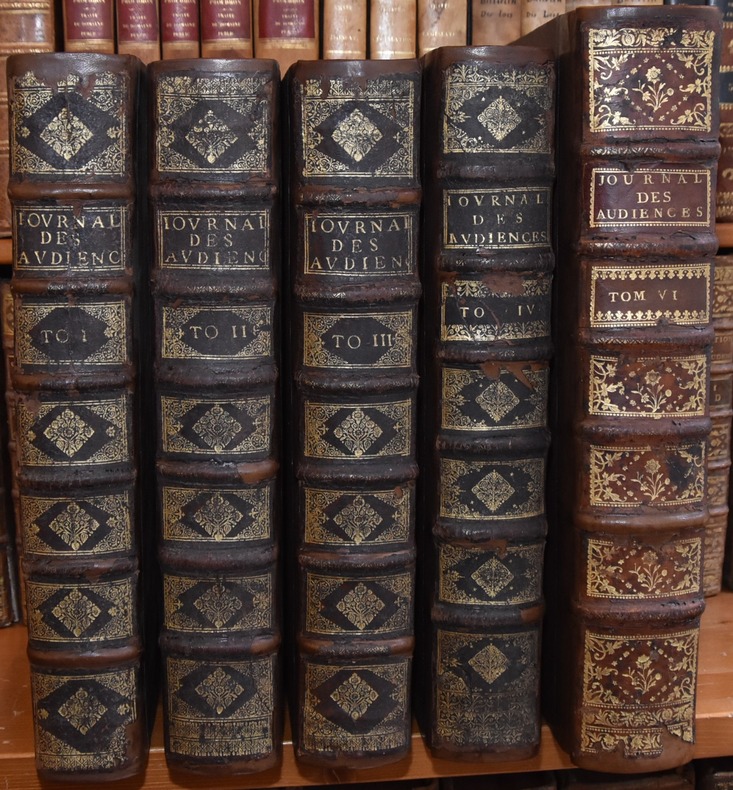
plein-veau brun, tit. & tom. dorés sur pc. bordeaux, dos à 6 nerfs richement ornés de dentelles, frises et doubles filets encadrants dorés, tr. rouges, (coiffes émoussées avec qq. accidents, nerfs et coins frottés, coupes lég. fatiguées avec qq. petites épidermures, qq. rousseurs et piqures) Dupin n° 1325 annonce la première édition de ce journal en 1680, alors qu’elle parut en 1646 (v. BNF F1266) nous présentons ici un exemplaire tiré de la dernière édition des cinq premiers tomes et de la première (et unique) pour les deux derniers. « Initialement placée sous le patronage du président Mathieu Molé (une dédicace en latin lui est adressée), la collection est l’œuvre d’une succession d’avocats du Parlement de Paris. Acceptant de vaincre sa modestie à la demande de certains de ses amis (l’imprimeur au lecteur, T. III, 1652), J. Du Fresne, seigneur de Preaulx, publie, en 1646 (D.B.F., notice « Du Fresne »), un premier tome qui reçoit un accueil favorable. C’est qu’il s’agit là du premier recueil d’arrêts du Parlement de Paris, du moins en français ; car deux recueils latins avaient précédemment paru, l’un en 1559 (Poenis Lucii placita summae apud Gallos Curiae, Lutetiae), l’autre en 1604 (Annaei Roberti res judicatae) traduit, il est vrai en français en 1622 ; mais ils n’avaient ni l’ampleur ni l’ambition du Journal que lance J. Du Fresne. Celui-ci, en effet (et ses successeurs suivront la même démarche), entend non seulement rassembler une foule de décisions, mais les éclairer sur le plan des faits et des moyens, les reproduire textuellement ainsi que les plaidoiries des avocats. Fruit d’un immense travail qui explique le relatif écart entre la tranche chronologique étudiée et la date de publication du volume correspondant. Du Fresne disparu (1675), Jamet de La Guessière, qui a en sa possession les manuscrits de ce dernier (le Libraire au lecteur, T. I, 1757), poursuit la compilation, selon d’ailleurs le souhait empressé du public, avec le même souci d’exactitude et de fidélité et avec le même succès, comme en témoignent les fréquentes rééditions des premiers tomes. Ces rééditions sont soigneusement revues, corrigées (qu’il s’agisse des dates ou du contenu des arrêts), augmentées des nouveaux règlements et des questions nouvelles jugées depuis la publication antérieure. » (Robert Granderoute) L’intérêt de ce texte est d’être moins touffu qu’un recueil d’arrêts au sens strict que de donner une vue synthétique des solutions juridictionnelles. Il est clair et suivi d’un index substantiel. Très rare de l’édition de référence, complète des sept tomes, et présentée ici dans une reliure bien conservée.
175861510Venice: Typis Antonii Zattae 1758-1762. Three vols. Folio. 11.5 x 15.5 in. xxxii 600; v 1 618; 8 579 1 xl pp. Title of vol. I in red & black woodcut-engraved vignettes historiated initials couple text copper plate engravings in vol. II splendid woodblock-engraved printer’s device tailpiece in Vol. III. Uniformly bound in contemporary vellum raised bands on spines brown morocco & gilt spine labels marbled fore-edges heads of a couple spines expertly repaired minor bumping to corners some soiling to back cover of final vol minor rippling to textblocks still VG set w/former armorial ownership stamps on titles old bookseller notes & pricing on endpapers typescript translation title on red ruled paper laid-in to vol. II. Second edition substantially revised and corrected of this sweeping history of the Hieronymites monastic orders of monks and nuns of the Poor Hermits of Saint Jerome Pisa first established near Pisa in 1377 and would eventually grow to fifty houses of which two still survive in Rome and Viterbo Italy. Sajanelli was a general director of the Hieronymite Poor Hermits of Blessed Saint Jerome Pisa and doctor of theology of Padua who has carefully assembled all of the related documents along with detailed indices and chronologies together with Papal Bulls and monastic orders chronicling the origins and ongoing mission of the this order. Convents with extensive documentation included by Sajanelli include those of the Convent of the Most Holy Trinity founded in 1380 near Montebellum the Convent of Saint Jerome outside of Ariminum and that of Saint Mary of the Annunciation in the town of Saint Anthimum founded originally in 1490. Originating in Spain the monastic order was recognized by Pope Gregory XI in his Papal Bull dated Oct. 18 1373 recognizing the religious order to operate under the Rule of St. Augustine and both monks and nuns adopted the religious order habits of white tunics with brown scapulars similar to the Carmelites. The first nunnery convent began in Toledo Spain led by Maria Garcia near Toledo and perhaps the most revered and well known was Sor Juana Ines de la Cruz of the convent of San Jeronimo y Stanta Paula in Mexico City considered the “Tenth Muse.†See: Perennes Dicionnaire de Bibliographie Catholique Vol. III 1839 p. 933-934; Besse Hieronymites Catholic Encyclopedia 1910. Typis Antonii Zattae, hardcover
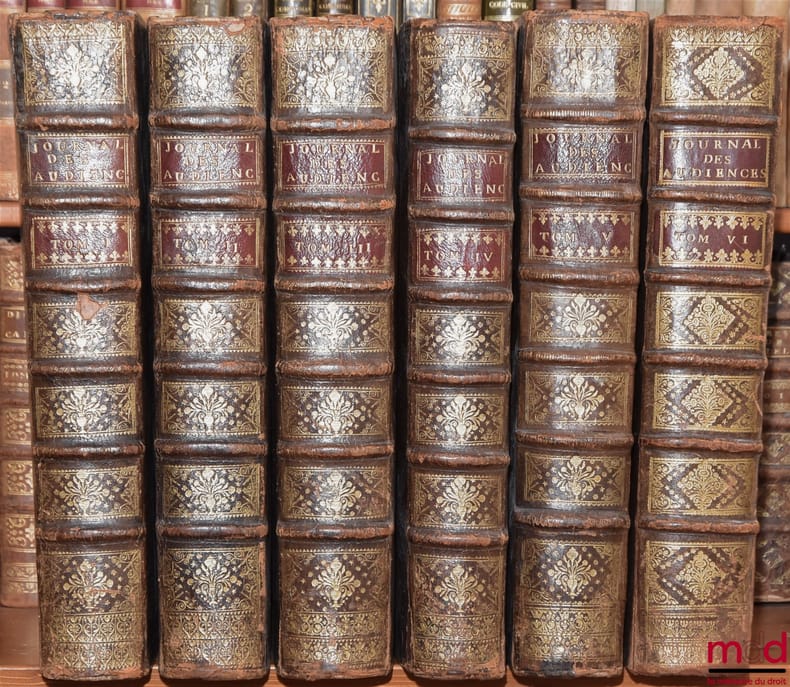
42578, Paris, Paulus-du-Mesnil / Rollin 1733 à 1751, 6 vol. in-folio, plein-veau brun, tit. & tom. dorés sur pc. bordeaux, dos à 6 nerfs richement ornés de dentelles, frises et doubles filets encadrants dorés, tr. rouges, (coiffes émoussées avec qq. accidents, nerfs et coins frottés, coupes lég. fatiguées avec qq. petites épidermures, qq. rousseurs et piqures), [1 f.]-XXVIII-952 p. / [8 ff.]-925-[14 ff.] / [8 ff.]-1080 p.-[1 f.] / XXXVIII-896 p. / [16 ff.]-680-388 p. / XXXVI-522-536 p.
plein-veau brun, tit. & tom. dorés sur pc. bordeaux, dos à 6 nerfs richement ornés de dentelles, frises et doubles filets encadrants dorés, tr. rouges, (coiffes émoussées avec qq. accidents, nerfs et coins frottés, coupes lég. fatiguées avec qq. petites épidermures, qq. rousseurs et piqures) Dupin n° 1325 annonce la première édition de ce journal en 1680, alors qu’elle parut en 1646 (v. BNF F1266) nous présentons ici un exemplaire tiré de la dernière édition pour les quatre premiers tomes. « Initialement placée sous le patronage du président Mathieu Molé (une dédicace en latin lui est adressée), la collection est l’œuvre d’une succession d’avocats du Parlement de Paris. Acceptant de vaincre sa modestie à la demande de certains de ses amis (l’imprimeur au lecteur, T. III, 1652), J. Du Fresne, seigneur de Preaulx, publie, en 1646 (D.B.F., notice «Du Fresne»), un premier tome qui reçoit un accueil favorable. C’est qu’il s’agit là du premier recueil d’arrêts du Parlement de Paris, du moins en français ; car deux recueils latins avaient précédemment paru, l’un en 1559 (Poenis Lucii placita summae apud Gallos Curiae, Lutetiae), l’autre en 1604 (Annaei Roberti res judicatae) traduit, il est vrai en français en 1622 ; mais ils n’avaient ni l’ampleur ni l’ambition du Journal que lance J. Du Fresne. Celui-ci, en effet (et ses successeurs suivront la même démarche), entend non seulement rassembler une foule de décisions, mais les éclairer sur le plan des faits et des moyens, les reproduire textuellement ainsi que les plaidoiries des avocats. Fruit d’un immense travail qui explique le relatif écart entre la tranche chronologique étudiée et la date de publication du volume correspondant. Du Fresne disparu (1675), Jamet de La Guessière, qui a en sa possession les manuscrits de ce dernier (le Libraire au lecteur, T. I, 1757), poursuit la compilation, selon d’ailleurs le souhait empressé du public, avec le même souci d’exactitude et de fidélité et avec le même succès, comme en témoignent les fréquentes rééditions des premiers tomes. Ces rééditions sont soigneusement revues, corrigées (qu’il s’agisse des dates ou du contenu des arrêts), augmentées des nouveaux règlements et des questions nouvelles jugées depuis la publication antérieure. » (Robert Granderoute) L’intérêt de ce texte est d’être moins touffu qu’un recueil d’arrêts au sens strict que de donner une vue synthétique des solutions juridictionnelles. Il est clair et suivi d’un index substantiel. Édition recherchée présentée ici dans une reliure bien conservée.
40576, Paris, Jean Guignard / Theodore Girard / Rollin fils 1678/ 1678/ 1678/ 1685/ 1751, 5 vol. in-folio, demi-veau brun restauré, tit. doré sur pc. bordeaux, dos à 6 nerfs orné de dentelles et filets encadrants dorés, plats en percaline brune, tr. mouchetées et rouges pour le t. VI, (le reliure est entièrement reprise mais le dos d’origine est conservé, t. VI plus grand que les autres, qq. rousseurs.).
demi-veau brun restauré, tit. doré sur pc. bordeaux, dos à 6 nerfs orné de dentelles et filets encadrants dorés, plats en percaline brune, tr. mouchetées et rouges pour le t. VI, (le reliure est entièrement reprise mais le dos d’origine est conservé, t. VI plus grand que les autres, qq. rousseurs.) Dupin n° 887 annonce la première édition de ce journal en 1680, alors qu’elle parut en 1646 (v. BNF F1266) nous présentons ici un exemplaire tiré de la troisième édition. L’intérêt de ce texte est d’être moins touffu qu’un recueil d’arrêts au sens strict que de donner une vue synthétique des solutions juridictionnelles. Il est clair et suivi d’un index substantiel. Très rare.
54527, Paris, Garnery 1812-1825, 17 vol. in-4, demi-veau fauve, tit. et tom. doré sur pc. de cuir grenat, dos lisse orné de frises et fleurons dorés, tr. mouchetées, imp. en double colonne, (plats frottés avec mq. de papier sur certains vol., coins émoussés, rares et légères rousseurs, t.XV: important mq. de papier sur le plat sup., t.II, IV, VI, XVI et XVII : assez importantes épidermures et mq. de cuir, t.II et IV: mors partielt fendus, t.XIV: mouillures sur qq. pages), int. frais.
34163, Paris, Huart /Nyon / Savoye / Durand / Moreau / Robustel / Knapen 1756, 2 vol. in-folio, pl. veau brun raciné, tit. et tom. dorés sur pc. ocre, dos à 6 nerfs ornés de dentelles, fleurons et filets dorés dans les caissons, roulettes dorées sur les coupes, tr. rouges, culs-de-lampe, bandeaux et lettrines, impression en double colonne, (épidermures aux plats avec taches au t. II, déchirure du cuir en haut du dos du t. II, galerie de vers traversant le dos du t. I, coiffes accidentées, coupes et coins émoussés et lég. rongés sans atteinte du texte, tr. sup. rongée sur qq. mm du t. II, très rares piqûres, qq. mouillures très claires sur qq. dizaines de ff. en marge sup. du t. I), bon état malgré les défauts mentionnés, [4ff.]-940-XV/ [3ff.]-980p.
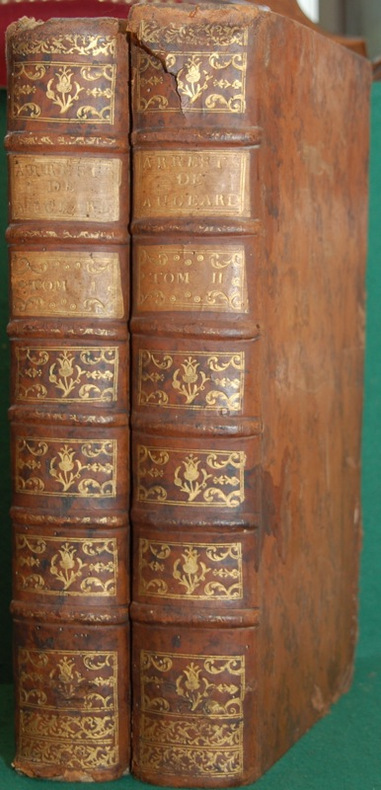
pl. veau brun raciné, tit. et tom. dorés sur pc. ocre, dos à 6 nerfs ornés de dentelles, fleurons et filets dorés dans les caissons, roulettes dorées sur les coupes, tr. rouges, culs-de-lampe, bandeaux et lettrines, impression en double colonne, (épidermures aux plats avec taches au t. II, déchirure du cuir en haut du dos du t. II, galerie de vers traversant le dos du t. I, coiffes accidentées, coupes et coins émoussés et lég. rongés sans atteinte du texte, tr. sup. rongée sur qq. mm du t. II, très rares piqûres, qq. mouillures très claires sur qq. dizaines de ff. en marge sup. du t. I), bon état malgré les défauts mentionnés “L’édition in-folio qui a été rédigée par Richer, avocat au parlement, est beaucoup plus ample. On y trouve des arrêts jusqu’à l’époque du commencement de l’année 1736. Ce recueil est le fruit de conférences établies chez l’Abbé Bignon. I a été fait et examiné avec grand soin.” (Dupin, réf. 1331). Augeard est très souvent considéré comme un des plus grand et fiables arrêtistes. Il s’inscrit dans le mouvement du comparatisme interne, en vogue au XVIIIème siècle. Dernière et meilleur édition.
pl. veau brun raciné, tit. et tom. dorés sur pc. bordeaux, dos à 6 nerfs ornés de dentelles, fleurons et filets encadrant dorés, double filet doré sur les coupes, tr. rouges, culs-de-lampe, bandeaux et lettrines, impression en double colonne, (lég. rayures sur les plats, coiffes accidentées, mors fendu, coupes et coins lég. frottés, qq. épidermures et mq. sur la coupe de queue, rares rousseurs) int. très frais “L’édition in-folio qui a été rédigée par Richer, avocat au parlement, est beaucoup plus ample. On y trouve des arrêts jusqu’à l’époque du commencement de l’année 1736. Ce recueil est le fruit de conférences établies chez l’Abbé Bignon. I a été fait et examiné avec grand soin.” (Dupin, réf. 1331). Augeard est très souvent considéré comme un des plus grand et fiables arrêtistes. Il s’inscrit dans le mouvement du comparatisme interne, en vogue au XVIIIème siècle. Dernière et meilleur édition.
183412981Reimpresas en dicha ciudad Sevilla: En la Oficina de D. Mariano Caro Año de 1834.- 142 p. 2 h. 9 h.: Frontis grabado al cobre por Moreno Texada sobre diseño pintado por Paret; 4° 255 x 18 cm.; Magistralmente impreso sobre gran papel de hilo; Media Piel lomo cuajado en oro planchas en seco en las tapas o planos cortes dorados.- SIGUE al final -ocupando 9 hojas- añadida la "Lista de los Caballeros que componen la Real Maestranza de Caballeros de Sevilla en 1° de enero de 1863" impresa también en Sevilla en la Imp. de Francisco Alvarez 1863. La encuadernación con pequeñas señales de fatiga la tapa posterior ligeramente desgajada de su junta con el lomo y la tapa anterior sin un pequeño trocito de tela. EL INTERIOR IMPECABLE. ANDALUCÃA Libro en español En la Oficina de D. Mariano Caro hardcover
25787, Paris, Robert Foüet 1607, fort in-4, veau brun marbré, dos à nerfs orné, p. de tit. rouge et noire, vignettes, lettrines, (épidermures sur les plats et surtout au dos, ors passés, mors fendus, manques au niveau des nerfs, coiffes trop courtes dégageant les tranchefiles, manques aux coins et à une coupe, rousseurs), 12 f.-1367p. - 44 f.
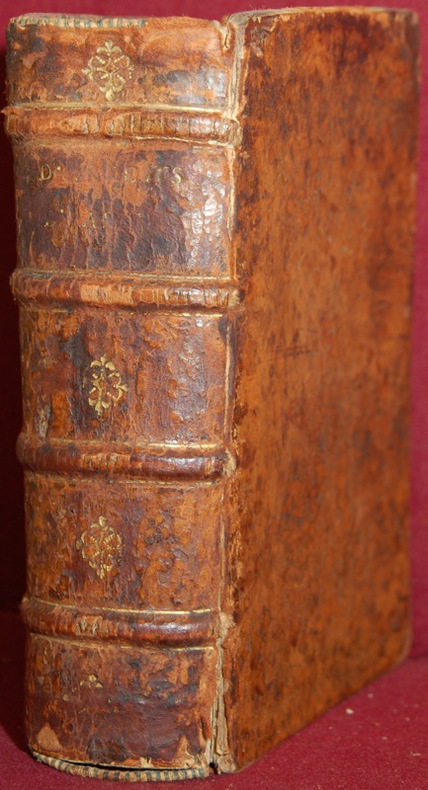
veau brun marbré, dos à nerfs orné, p. de tit. rouge et noire, vignettes, lettrines, (épidermures sur les plats et surtout au dos, ors passés, mors fendus, manques au niveau des nerfs, coiffes trop courtes dégageant les tranchefiles, manques aux coins et à une coupe, rousseurs) Le recueil d’arrêts de Papon est un des plus connus sinon même le plus connu. Cela tient à son ancienneté et surtout au fait qu’il s’agissait en réalité d’un digeste, Papon ayant synthétisé les traités de le Maistre, de le Coq, d’Imbert, de Boyer et de Guidon Pape. Naturellement, ce travail réalisé sur la base d’arrêts auxquels l’auteur n’avait pas eu accès directement souffrait d’un certain nombre d’approximations, ce qui fit par exemple dire à Coquille qu’il ne s’était pas référé à Papon car dans certains points celui-ci rapportait les choses exactes mais dans d’autres se trompait absolument. Au début du XVIIème siècle, commencèrent à paraître des éditions plus scientifiques des recueils de Papon, modifiées et augmentées d’arrêts récents. Édition augmentée par J. Chenu (Dupin, réf. 1311).