Arms, John TaylorBiblio.com
4 867 résultats
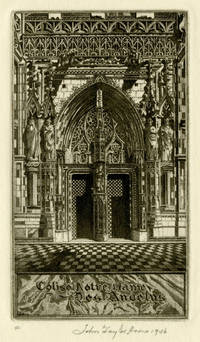
194612651946. Etching on cream wove paper 3 5/16 x 1 7/8 inches 84 x 49 mm full margins. Signed dated and inscribed "II" in pencil lower margin. Likely one of eight trial proof impressions from the second state of 2. From a total edition of 305; 260 of which were published by the Miniature Print Society Kansas City MO. Printed by David Strang. <br /> Miniature Series No. 37.<br /> <br /> Fletcher 398. unknown
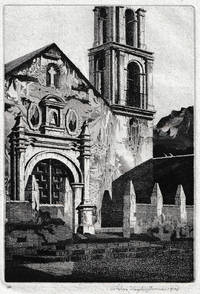
13105Arms John Taylor. PUERTA DEL OBISPO ZAMORA THE BISHOP'S DOOR ZAMORA. Fletcher 266. Etching 1933. Edition 160 of which this is likely one of the 25 printed by Rigal in 1933 135 were printed in 1937-38 by Strang. Listed by Flether as one of Arms' "Preferred Plates." Spanish Church Series #9. 12 1/2 x 7 1/8 inches 318 x 183 mm. plate framed to 23 x 17 1/4 inches. In excellent condition. unknown
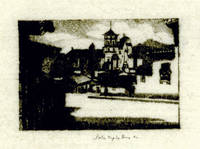
19418161941. Etching on fine cream laid paper 7/16 x 5/8 inches 11 x 17 mm full margins. Signed dated and inscribed illegibly in pencil below the image and titled in pencil lower margin. A proof impression aside from the total regular edition of 635 signed impressions. A wonderful impression of this miniature work with minor toning. <br /> <br /> Fletcher 363. Fletcher states that there is no effort made to distinguish between the various signed and unsigned prints and editions of this work because of the discrepency between practice and the notes of Arms. <br /> <br /> Minature Series No. 29<br /> Christmas Card Series No. 21<br /> Mexican Series No. 2<br /> Brooch Series No. 6<br /> <br /> Paper: Arms was typical of the artists of this period - he was obsessed with paper a mania for collecting paper that could/would improve an edition. The quantity he left after his death distributed by his wife to fellow artists witnesses his love for finely made paper -paper interesting because of texture color distinctive weave.<br /> <br /> The earliest paper known to have been used by Arms came from a Baptismal Register Kirchen Ordnung The Reformed Church Middletown Dauphin County Pennsylvania 1708 bought in a bookshop in Philadelphia.<br /> <br /> His early prints 1915-1919 evidence paper taken from old books with gilded edges. Some prints appear on stationary from the Cisalpine Napoleonic Italy still bearing the estampe of the office or department; others carry penned ink page numbers taken from old ledgers of the Eighteenth Century-all beautiful shades of grey blue and green handmade ribbed and otherwise. Some of his color aquatints were printed on full sheets of heavy chine or Japanese vellum giving a sense of luxury in the richness of the stock and the width of the margins. There was a myriad of modern papers gleaned in England France Italy and the United States. -William Dolan Fletcher A Man For All Times p. 15. unknown
1927103341927. Arms John Taylor. Arms John Taylor. ROCAMADOUR. Etching 1927; Fletcher 186; 13 3/4 x 9 5/8; signed titled and annotated "II" for Second State;" edition 100 in this state of a total edition of 150. This is #10 of the French Church Series. In excellent condition and nicely framed. The Calvary church at Rocamadour in the Auvergne was "perhaps the greatest pilgrimage spot of the twelfth cantury." The town is built vertically into the hillside. When John and Dorothy Arms visited the church "it was first necessary to go into our hotel by the front door climb three flights of stairs and go out by the roof.past a little garden.then on to the winding path which leads from one Station of the Cross to another." Dorothy Noyes Arms Churches of France Macmillan 1929 Pp 103-106. unknown
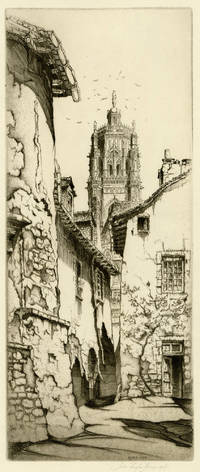
192620491926. Etching on extremely delicate antique Japon laid paper 12 x 5 305 x 127 mm; sheet 15 3/4 x 7 1/8 inches 400 x 178 mm full margins. In very good condition. A magnificently detailed and rich impression with rich burr and good inking on rare paper. Fletcher states that even though the plate was completed in 1926 it was not published until 1927.<br /> <br /> Fletcher 189. Born in 1887 in Washington DC John Taylor Arms studied at Princeton University and ultimately earned a degree in architecture at the Massachusetts Institute of Technology in 1912. With the outbreak of W.W.I Arms served as an officer in the United States Navy and it was during this time that he turned his focus to printmaking having published his first etching in 1919. His first subjects were the Brooklyn Bridge near the Navy Yard and it was during his wartime travel that Arms created a series of extraordinarily detailed etchings based on gothic cathedrals and churches he visited in France and Italy the plate for Guardians of the Spire was created in 1921. He used what was available to him namely sewing needles and a magnifying glass to create the incredibly rich and fine detail that his etchings are known for. Upon his return to New York after the war Arms enjoyed a successful career as a graphic artist created a series of etchings of American cities and published Handbook of Print Making and Print Makers Macmillan 1934. He served as President of the Society of American Graphic Artists and in 1933 was made a full member of the National Academy of Design. Arms died in Fairfield Connecticut in 1953. unknown
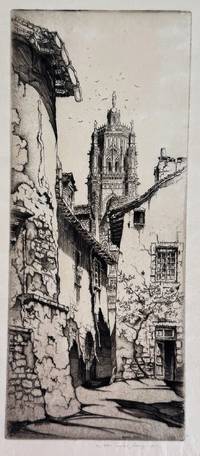
192710441927. Etching on antique wove Catalunya-Spain watermarked paper 12 x 5 inches 305 x 127 mm full margins. Signed and dated in pencil lower margin. In excellent condition with light toning along the left margin outside of the image area. An impression from the regular edition of 120 printed by Frederick Reynolds. <br /> <br /> Fletcher 189. Paper: Arms was typical of the artists of this period - he was obsessed with paper a mania for collecting paper that could/would improve an edition. The quantity he left after his death distributed by his wife to fellow artists witnesses his love for finely made paper -paper interesting because of texture color distinctive weave. The earliest paper known to have been used by Arms came from a Baptismal Register Kirchen Ordnung The Reformed Church Middletown Dauphin County Pennsylvania 1708 bought in a bookshop in Philadelphia. His early prints 1915-1919 evidence paper taken from old books with gilded edges. Some prints appear on stationary from the Cisalpine Napoleonic Italy still bearing the estampe of the office or department; others carry penned ink page numbers taken from old ledgers of the Eighteenth Century-all beautiful shades of grey blue and green handmade ribbed and otherwise. Some of his color aquatints were printed on full sheets of heavy chine or Japanese vellum giving a sense of luxury in the richness of the stock and the width of the margins. There was a myriad of modern papers gleaned in England France Italy and the United States. <br /> <br /> -William Dolan Fletcher A Man For All Times p. 15. unknown
19262701926. Etching on F.J. Head & Co. watermarked cream laid paper 8 1/8 x 7 5/8 205 x 184 mm full margins. Edition of 150. Signed and dated in pencil lower margin. Illustrated in Dorothy Noyes Arms Churches of France p. 50; Fine Prints of the Year 1925.<br /> <br /> Fletcher 162. Born in 1887 in Washington DC John Taylor Arms studied at Princeton University and ultimately earned a degree in architecture at the Massachusetts Institute of Technology in 1912. With the outbreak of W.W.I Arms served as an officer in the United States Navy and it was during this time that he turned his focus to printmaking having published his first etching in 1919. His first subjects were the Brooklyn Bridge near the Navy Yard and it was during his wartime travel that Arms created a series of extraordinarily detailed etchings based on gothic cathedrals and churches he visited in France and Italy the plate for Guardians of the Spire was created in 1921. He used what was available to him namely sewing needles and a magnifying glass to create the incredibly rich and fine detail that his etchings are known for. Upon his return to New York after the war Arms enjoyed a successful career as a graphic artist created a series of etchings of American cities and published Handbook of Print Making and Print Makers Macmillan 1934. He served as President of the Society of American Graphic Artists and in 1933 was made a full member of the National Academy of Design. Arms died in Fairfield Connecticut in 1953. unknown
192720451927. Etching on antique blueish-gray antique laid paper with an unknown crown watermark 10 1/2 x 6 7/8 inches 268 x 175 mm; sheet 13 3/8 x 8 5/8 inches 349 x 224 mm full margins. Signed and dated in pencil in the lower right margin. From the published edition of 110 impressions printed by Frederick Reynolds. In superb condition with excellent detail and inking. Minor light toning at the extreme sheet edges and printing creases in the lower margin. A fine impression. French Church Series No. 15. Illustrated on p.136 Dorothy Noyes Arms Churches of France<br /> <br /> Fletcher 195. Born in 1887 in Washington DC John Taylor Arms studied at Princeton University and ultimately earned a degree in architecture at the Massachusetts Institute of Technology in 1912. With the outbreak of W.W.I Arms served as an officer in the United States Navy and it was during this time that he turned his focus to printmaking having published his first etching in 1919. His first subjects were the Brooklyn Bridge near the Navy Yard and it was during his wartime travel that Arms created a series of extraordinarily detailed etchings based on gothic cathedrals and churches he visited in France and Italy the plate for Guardians of the Spire was created in 1921. He used what was available to him namely sewing needles and a magnifying glass to create the incredibly rich and fine detail that his etchings are known for. Upon his return to New York after the war Arms enjoyed a successful career as a graphic artist created a series of etchings of American cities and published Handbook of Print Making and Print Makers Macmillan 1934. He served as President of the Society of American Graphic Artists and in 1933 was made a full member of the National Academy of Design. Arms died in Fairfield Connecticut in 1953. unknown
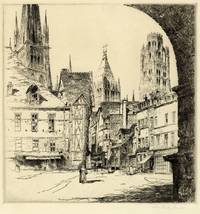
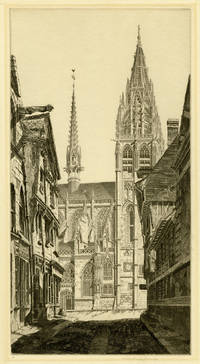
193210421932. Etching on elaborately watermarked antique cream laid Dard Hunter paper 13 5/8 x 7 1/78 inches 347 x 181 mm full margins. Signed titled dated and inscribed "Ed. 100 II." From the edition of a total of 162 impressions printed by Henry Carling in 1932. In excellent condition with natural toning and no visible defects. A fine impression with all of the fine lines printing cleary.<br /> <br /> Fletcher 248; French Church Series No. 34. Born in 1887 in Washington DC John Taylor Arms studied at Princeton University and ultimately earned a degree in architecture at the Massachusetts Institute of Technology in 1912. With the outbreak of W.W.I Arms served as an officer in the United States Navy and it was during this time that he turned his focus to printmaking having published his first etching in 1919. His first subjects were the Brooklyn Bridge near the Navy Yard and it was during his wartime travel that Arms created a series of extraordinarily detailed etchings based on Gothic cathedrals and churches he visited in France and Italy. He used what was available to him namely sewing needles and a magnifying glass to create the incredibly rich and fine detail that his etchings are known for. Upon his return to New York after the war Arms enjoyed a successful career as a graphic artist created a series of etchings of American cities and published Handbook of Print Making and Print Makers Macmillan 1934. He served as President of the Society of American Graphic Artists and in 1933 was made a full member of the National Academy of Design. unknown
193323431933. Etching on cream laid paper 6 7/8 x 4 7/8 inches 178 x 127 mm; sheet 11 7/8 x 8 3/16 inches 302 x 213 mm full margins. From Demonstration Series #32. Printed on January 14 1933 at The University of New York City and inscribed in pencil "To Mr. and Mrs. Kennedy with my compliments John Taylor Arms 1933 Demonstration." In excellent condition. A very scarce work from an edition of less than 20 impressions. <br /> <br /> Fletcher 255. Born in 1887 in Washington DC John Taylor Arms studied at Princeton University and ultimately earned a degree in architecture at the Massachusetts Institute of Technology in 1912. With the outbreak of W.W.I Arms served as an officer in the United States Navy and it was during this time that he turned his focus to printmaking having published his first etching in 1919. His first subjects were the Brooklyn Bridge near the Navy Yard and it was during his wartime travel that Arms created a series of extraordinarily detailed etchings based on gothic cathedrals and churches he visited in France and Italy the plate for Guardians of the Spire was created in 1921. He used what was available to him namely sewing needles and a magnifying glass to create the incredibly rich and fine detail that his etchings are known for. Upon his return to New York after the war Arms enjoyed a successful career as a graphic artist created a series of etchings of American cities and published Handbook of Print Making and Print Makers Macmillan 1934. He served as President of the Society of American Graphic Artists and in 1933 was made a full member of the National Academy of Design. Arms died in Fairfield Connecticut in 1953. unknown
19336141933. Ecthing in black ink on cream laid paper with a partial watermark 6 7/8 x 4 7/8 inches 174 x 125 mm full margins. In excellent condition. A very scarce work from an edition of less than 20 impressions. Signed dated and inscribed in pencil lower margin. From the Demonstration Series. <br /> <br /> Fletcher 255. Born in 1887 in Washington DC John Taylor Arms studied at Princeton University and ultimately earned a degree in architecture at the Massachusetts Institute of Technology in 1912. With the outbreak of W.W.I Arms served as an officer in the United States Navy and it was during this time that he turned his focus to printmaking having published his first etching in 1919. His first subjects were the Brooklyn Bridge near the Navy Yard and it was during his wartime travel that Arms created a series of extraordinarily detailed etchings based on gothic cathedrals and churches he visited in France and Italy the plate for Guardians of the Spire was created in 1921. He used what was available to him namely sewing needles and a magnifying glass to create the incredibly rich and fine detail that his etchings are known for. Upon his return to New York after the war Arms enjoyed a successful career as a graphic artist created a series of etchings of American cities and published Handbook of Print Making and Print Makers Macmillan 1934. He served as President of the Society of American Graphic Artists and in 1933 was made a full member of the National Academy of Design. Arms died in Fairfield Connecticut in 1953. unknown
194410151944. Etching on bluish-grey antique laid paper 5 x 3 5/8 inches 127 x 93 mm signed dated and inscribed "III" in pencil lower margin. A proof impression from the third state of 3 after the reduction of the plate and before the regular edition of 72. Printed by David Strang. In very good condition with some minor reddish toning around the extreme sheet edges and in a stripe occurring diagonally across the top sheet area all well outside of image area.<br /> <br /> Fletcher 340B. Demonstration Series No. 93<br /> Mexican Series No. 1 3rd state<br /> <br /> Note: Fletcher states that there is confusion regarding the third state in its edition. On prints in the Arms family collection the size is 3 proofs plus an edition of 36 however Fletcher reports that in 1949 Arms told him there were only two proofs and an edition of 72. Fletcher states to own an impression of this work which is annotated "III Ed. 72."<br /> <br /> Paper: Arms was typical of the artists of this period - he was obsessed with paper a mania for collecting paper that could/would improve an edition. The quantity he left after his death distributed by his wife to fellow artists witnesses his love for finely made paper -paper interesting because of texture color distinctive weave.<br /> <br /> The earliest paper known to have been used by Arms came from a Baptismal Register Kirchen Ordnung The Reformed Church Middletown Dauphin County Pennsylvania 1708 bought in a bookshop in Philadelphia.<br /> <br /> His early prints 1915-1919 evidence paper taken from old books with gilded edges. Some prints appear on stationary from the Cisalpine Napoleonic Italy still bearing the estampe of the office or department; others carry penned ink page numbers taken from old ledgers of the Eighteenth Century-all beautiful shades of grey blue and green handmade ribbed and otherwise. Some of his color aquatints were printed on full sheets of heavy chine or Japanese vellum giving a sense of luxury in the richness of the stock and the width of the margins. There was a myriad of modern papers gleaned in England France Italy and the United States. -William Dolan Fletcher A Man For All Times p. 15. unknown
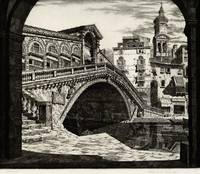
1926142571926. Arms John Taylor. Arms John Taylor American 1887-1953. SHADOWS OF VENICE - IL PONTE DI RIALTO VENEZIA. Etching 1930. Edition of 140 14 Artist's Proofs. 10 x 12 inches Plate 11 3/8 x 157/8 inches sheet. Signed in pencil and inscribed "Edition 100." Fletcher 229. Printed by Henry E. Carling on green laid paper. In excellent condition. This is Number 16 of Arms' Italian Series. It is illustrated: Dorothy Noyes Arms Hill Towns and Cities of Northern Italy p. 208; The Print Collector's Quarterly 21 1934 at page 136; Fine Prints of the Year 1931 and Eric Denker Reflections & Undercurrents: Ernest Roth and Printmaking in Venice 1900-1940. This print. was the Arms submission for his application toThe Royal Society of Painter-Etchers in 1934. unknown
19304981930. Etching and aquatint on antique laid paper 10 1/4 x 12 1/8 inches 262 x 308 mm wide margins. Signed dated and inscribed "Edition of 100" in pencil lower margin. Second state of 2. A rich and inky impression of this extraordinary image. Bottom edge is irregularly trimmed with the Conseil Départemental de la Haute-Garonne's tarriff stamp on the verso in two places. Areas of minor toning paper tape hinges at the top sheet edge some minor scattered surface soiling.<br /> <br /> Fletcher 229ii/II <br /> Illustrated: Page 208 Arms Dorothy Noyes "Hilltowns and Cities of Northern Italy". Born in 1887 in Washington DC John Taylor Arms studied at Princeton University and ultimately earned a degree in architecture at the Massachusetts Institute of Technology in 1912. With the outbreak of W.W.I Arms served as an officer in the United States Navy and it was during this time that he turned his focus to printmaking having published his first etching in 1919. His first subjects were the Brooklyn Bridge near the Navy Yard and it was during his wartime travel that Arms created a series of extraordinarily detailed etchings based on gothic cathedrals and churches he visited in France and Italy the plate for Guardians of the Spire was created in 1921. He used what was available to him namely sewing needles and a magnifying glass to create the incredibly rich and fine detail that his etchings are known for. Upon his return to New York after the war Arms enjoyed a successful career as a graphic artist created a series of etchings of American cities and published Handbook of Print Making and Print Makers Macmillan 1934. He served as President of the Society of American Graphic Artists and in 1933 was made a full member of the National Academy of Design. Arms died in Fairfield Connecticut in 1953. unknown
191910351919. Etching on antique cream laid paper with a partial watermark likely Arches 12 1/8 x 6 1/8 inches 308 x 156 mm full margins. Signed and dated in pencil in the lower right margin. First state of 6. One of only approximately 23 impressions before steel facing printed by Frederick Reynolds. Minor area of rubbing in the top right corner of the image area along with some general age tone and a few inscriptions in pencil in the lower margin well outside of the image area. The impression itself is rich and extremely detailed with excellent inking and rich burr. <br /> <br /> Fletcher 32. Born in 1887 in Washington DC John Taylor Arms studied at Princeton University and ultimately earned a degree in architecture at the Massachusetts Institute of Technology in 1912. With the outbreak of W.W.I Arms served as an officer in the United States Navy and it was during this time that he turned his focus to printmaking having published his first etching in 1919. His first subjects were the Brooklyn Bridge near the Navy Yard and it was during his wartime travel that Arms created a series of extraordinarily detailed etchings based on gothic cathedrals and churches he visited in France and Italy. He used what was available to him namely sewing needles and a magnifying glass to create the incredibly rich and fine detail that his etchings are known for. Upon his return to New York after the war Arms enjoyed a successful career as a graphic artist created a series of etchings of American cities and published Handbook of Print Making and Print Makers Macmillan 1934. He served as President of the Society of American Graphic Artists and in 1933 was made a full member of the National Academy of Design. Arms died in Fairfield Connecticut in 1953. An impression of this work may be viewed in the permanent collection of the Smithsonian Museum of American Art. unknown
193920361939. Etching on blue laid watermarked "Hand Made" paper 7 3/8 x 3/14 inches 188 x 83 mm; sheet 11 1/2 x 8 1/4 inches 292 x 209 mm full margins. Signed dated and inscribed "II" in pencil in the lower margin. From a small unknown number of second state of 3 proof impressions aside from the regular 3rd state edition of 210. Printed by David Strang. A truly superb impression with no visible defects. According to Fletcher this image is based on a drawing done by Arms on October 4 1936. <br /> <br /> Fletcher 323. Born in 1887 in Washington DC John Taylor Arms studied at Princeton University and ultimately earned a degree in architecture at the Massachusetts Institute of Technology in 1912. With the outbreak of W.W.I Arms served as an officer in the United States Navy and it was during this time that he turned his focus to printmaking having published his first etching in 1919. His first subjects were the Brooklyn Bridge near the Navy Yard and it was during his wartime travel that Arms created a series of extraordinarily detailed etchings based on gothic cathedrals and churches he visited in France and Italy the plate for Guardians of the Spire was created in 1921. He used what was available to him namely sewing needles and a magnifying glass to create the incredibly rich and fine detail that his etchings are known for. Upon his return to New York after the war Arms enjoyed a successful career as a graphic artist created a series of etchings of American cities and published Handbook of Print Making and Print Makers Macmillan 1934. He served as President of the Society of American Graphic Artists and in 1933 was made a full member of the National Academy of Design. Arms died in Fairfield Connecticut in 1953. unknown
193922841939. Etching on cream wove paper 2 3/8 x 3/14 inches 61 x 83 full margins. Signed dated and inscribed "IV" in the artist's hand. In superb condition with the numerals "365" written in pencil in the lower right corner well outside of the image area. Fletcher states only two trial proofs this is perhaps an unrecorded proof aside from the additional edition of 101 printed by David Strang. <br /> <br /> Fletcher 324. This plate was the section cut from Stanwick becoming a separate plate after the additional work had been done on it edges beveled. William Dolan Fletcher p 206. unknown
193912691939. Etching on cream wove paper 2 3/8 x 3 1/4 inches 61 x 83 mm full margins. Signed dated and inscribed "IV" in the artist's hand. In very good condition. Fletcher states only two trial proofs this is perhaps an unrecorded proof aside from the additional edition of 101 printed by David Strang. <br /> <br /> Fletcher 324. This plate was the section cut from Stanwick becoming a separate plate after the additional work had been done on it edges beveled. William Dolan Fletcher p 206. unknown
19421259The Minature Print Society of Kansas City Mo 1942. Etching on cream colored Japon wove paper 2 1/4 x 2 15/16 inches 58 x 75 mm full margins. Signed dated and inscribed "II" in pencil in the lower margin. In excellent condition. <br /> One of nine trial proof impressions of the second state of 2 printed by Charles S. White aside from the regular edition of 365 signed impressions and 250 unsigned impressions. <br /> <br /> Fletcher 369. Comission of Alfred Fowler The Miniature Print Society of Kansas City MO. Ed.; 200. No. 30 from the Minature Series; No. 9 European Series. The Minature Print Society of Kansas City, Mo unknown
19428231942. Etching on fine light cream laid paper 2 1/4 x 2 15/16 inches 58 x 75 mm full margins. Signed and inscribed "II" in pencil lower margin. A trial proof impression of the second state of 2. Aside from the signed and numbered edition of 365 impressions plus an edition of 250 unsigned unnumbered impressions which were discovered after Arms's death. <br /> <br /> Fletcher 369. English Series No. 9<br /> Miniature Series No. 30<br /> <br /> Paper: Arms was typical of the artists of this period - he was obsessed with paper a mania for collecting paper that could/would improve an edition. The quantity he left after his death distributed by his wife to fellow artists witnesses his love for finely made paper -paper interesting because of texture color distinctive weave. <br /> <br /> The earliest paper known to have been used by Arms came from a Baptismal Register Kirchen Ordnung The Reformed Church Middletown Dauphin County Pennsylvania 1708 bought in a bookshop in Philadelphia. <br /> <br /> His early prints 1915-1919 evidence paper taken from old books with gilded edges. Some prints appear on stationary from the Cisalpine Napoleonic Italy still bearing the estampe of the office or department; others carry penned ink page numbers taken from old ledgers of the Eighteenth Century-all beautiful shades of grey blue and green handmade ribbed and otherwise. Some of his color aquatints were printed on full sheets of heavy chine or Japanese vellum giving a sense of luxury in the richness of the stock and the width of the margins. There was a myriad of modern papers gleaned in England France Italy and the United States. -William Dolan Fletcher A Man For All Times p. 15. unknown
194012701940. Etching on cream wove paper 5 9/16 x 2 3/4 inches 142 x 70 mm full margins. Signed titled numbered "III" and inscribed in pencil by the artist in the lower margin recto. In very good condition with some pencil inscriptions in the margins adhesive residue and canvas tape tabs at the top corners and a small loss in the lower left corner from a natural paper defect all well outside of image area. With the John Taylor Arms collector's stamp in black ink in the lower left margin on the recto not in Lugt. The third impression of 3 from the third trial state of 3 before the regular edition of 443. Printed by the artist. <br /> Fletcher 336<br /> English Series No. 8; Miniature Series No. 25. This image was used in part to illustrate David Strang Etching: The Printer Proves the Plate Print II: 3 4 October December 1941. unknown
19278751927. Etching with drypoint on fine F.J. Head Japon laid paper 6 7/8 x 4 15/16 inches 175 x 126 mm full margins. Edition 96. In excellent condition with paper tape remnants at the top right and left corners verso. <br /> <br /> Fletcher 204; Demonstration series #18. Born in 1887 in Washington DC John Taylor Arms studied at Princeton University and ultimately earned a degree in architecture at the Massachusetts Institute of Technology in 1912. With the outbreak of W.W.I Arms served as an officer in the United States Navy and it was during this time that he turned his focus to printmaking having published his first etching in 1919. His first subjects were the Brooklyn Bridge near the Navy Yard and it was during his wartime travel that Arms created a series of extraordinarily detailed etchings based on gothic cathedrals and churches he visited in France and Italy the plate for Guardians of the Spire was created in 1921. He used what was available to him namely sewing needles and a magnifying glass to create the incredibly rich and fine detail that his etchings are known for. Upon his return to New York after the war Arms enjoyed a successful career as a graphic artist created a series of etchings of American cities and published Handbook of Print Making and Print Makers Macmillan 1934. He served as President of the Society of American Graphic Artists and in 1933 was made a full member of the National Academy of Design. Arms died in Fairfield Connecticut in 1953. unknown
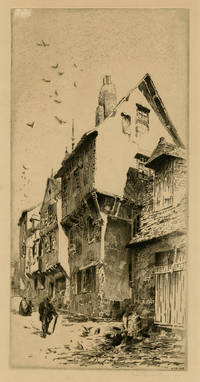
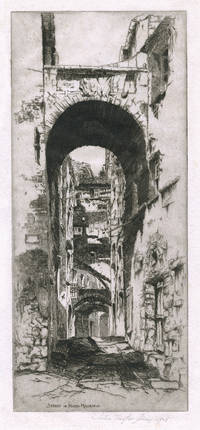
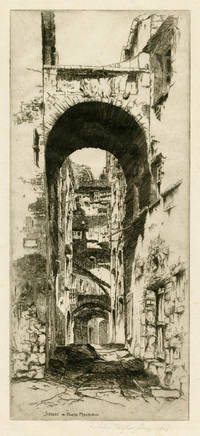
19274961927. Etching on antique cream laid paper with a partial watermark 9 5/8 x 4 1/4 inches 246 x 109 mm; full margins. Siged and dated "1928" in pencil lower margin. Inscribed "Street in Porto Maurizio" in the plate. Edition of 100. Printed by Frederick Reynolds. Minor toning at sheet edges and at corners with paper tape remnants from a former mount. Number 13 from the Italian Series. <br /> <br /> Fletcher 207<br /> Illustrated: Page 4 Arms Dorothy Noyes "Hilltowns and Cities of Northern Italy.". Born in 1887 in Washington DC John Taylor Arms studied at Princeton University and ultimately earned a degree in architecture at the Massachusetts Institute of Technology in 1912. With the outbreak of W.W.I Arms served as an officer in the United States Navy and it was during this time that he turned his focus to printmaking having published his first etching in 1919. His first subjects were the Brooklyn Bridge near the Navy Yard and it was during his wartime travel that Arms created a series of extraordinarily detailed etchings based on gothic cathedrals and churches he visited in France and Italy the plate for Guardians of the Spire was created in 1921. He used what was available to him namely sewing needles and a magnifying glass to create the incredibly rich and fine detail that his etchings are known for. Upon his return to New York after the war Arms enjoyed a successful career as a graphic artist created a series of etchings of American cities and published Handbook of Print Making and Print Makers Macmillan 1934. He served as President of the Society of American Graphic Artists and in 1933 was made a full member of the National Academy of Design. Arms died in Fairfield Connecticut in 1953. unknown
19279731927. Etching on antique handmade laid paper 9 5/8 x 4 1/4 inches 246 x 109 mm full margins. Signed and dated 1928 in pencil lower margin. Printed by Frederick Reynolds. In very good condition with some marginal toning around the extreme sheet edges. An excellent inky impression. <br /> <br /> Fletcher 207. Italian Series No. 13<br /> Illustrated on p. 4 in Dorothy Noyes Arms Hill Towns and Cities of Northern Italy. unknown
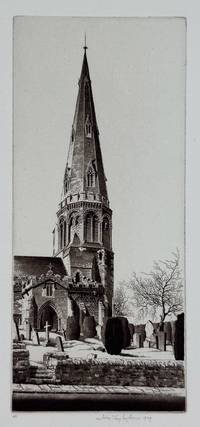
193110361931. Etching on watermarked antique laid J Whatman Japon paper 14 1/2 x 7 5/8 inches 368 x 195 mm full margins. Signed dated and inscribed "II" in pencil in the lower margin. One of only 26 impressions of the second state of 2 printed in 1931. With the John Taylor Arms ink stamp in black ink in the lower-center margin. <br /> <br /> Fletcher 241 II; French Church Series No. 31. This magnificent etching was awarded the Mrs. Henry F. Noyes Prize Society of American Etchers 1931; the Carle Blenner Best Entry Prize New Haven Paint and Clay Club 1950; and the Best Print Annual Exhibition Arts and Crafts Association Meridan Connecticut 1952.<br /> <br /> Paper: Arms was typical of the artists of this period - he was obsessed with paper a mania for collecting paper that could/would improve an edition. The quantity he left after his death distributed by his wife to fellow artists witnesses his love for finely made paper -paper interesting because of texture color distinctive weave. The earliest paper known to have been used by Arms came from a Baptismal Register Kirchen Ordnung The Reformed Church Middletown Dauphin County Pennsylvania 1708 bought in a bookshop in Philadelphia. His early prints 1915-1919 evidence paper taken from old books with gilded edges. Some prints appear on stationary from the Cisalpine Napoleonic Italy still bearing the estampe of the office or department; others carry penned ink page numbers taken from old ledgers of the Eighteenth Century-all beautiful shades of grey blue and green handmade ribbed and otherwise. Some of his color aquatints were printed on full sheets of heavy chine or Japanese vellum giving a sense of luxury in the richness of the stock and the width of the margins. There was a myriad of modern papers gleaned in England France Italy and the United States. <br /> <br /> - William Dolan Fletcher A Man For All Times p. 15. unknown