Arms, John TaylorBiblio.com
4 867 résultats
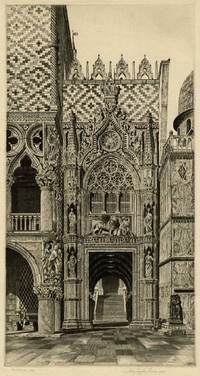
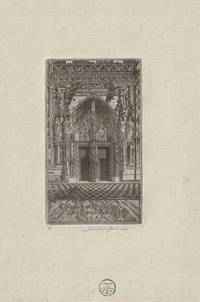
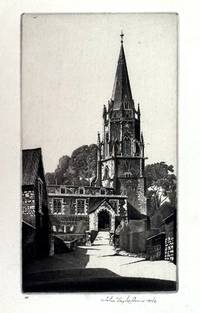
193119021931. Etching on antique laid Japon paper 14 1/2 x 7 5/8 inches 368 x 195 mm full margins. Signed dated and inscribed "Ed. 100 II" in pencil in the lower margin. One of 100 impressions of the second state of 2 printed in 1931.<br /> <br /> Fletcher 241 II; French Church Series No. 31. This magnificent etching was awarded the Mrs. Henry F. Noyes Prize Society of American Etchers 1931; the Carle Blenner Best Entry Prize New Haven Paint and Clay Club 1950; and the Best Print Annual Exhibition Arts and Crafts Association Meridan Connecticut 1952. <br /> <br /> Paper: Arms was typical of the artists of this period: he was obsessed with paper a mania for collecting paper that could/would improve an edition. The quantity he left after his death distributed by his wife to fellow artists witnesses his love for finely made paper -paper interesting because of texture color distinctive weave. The earliest paper known to have been used by Arms came from a Baptismal Register Kirchen Ordnung The Reformed Church Middletown Dauphin County Pennsylvania 1708 bought in a bookshop in Philadelphia. His early prints 1915-1919 evidence paper taken from old books with gilded edges. Some prints appear on stationary from the Cisalpine Napoleonic Italy still bearing the estampe of the office or department; others carry penned ink page numbers taken from old ledgers of the Eighteenth Century-all beautiful shades of grey blue and green handmade ribbed and otherwise. Some of his color aquatints were printed on full sheets of heavy chine or Japanese vellum giving a sense of luxury in the richness of the stock and the width of the margins. There was a myriad of modern papers gleaned in England France Italy and the United States. - William Dolan Fletcher A Man For All Times p. 15. unknown
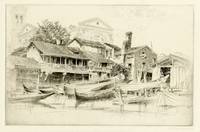
19264991926. Etching on watermarked antique handmade FJ Head paper 9 1/2 x 14 3/4 inches 240 x 373 mm; sheet 14 x 18 1/4 inches 355 x 463 mm full margins. Signed and dated in pencil lower margin. Edition of 97. A magnificent silvery impression with extremely minor almost invisible mat tone. <br /> Fletcher 177 <br /> Illustrated: Page 160 Arms Dorothy Noyes "Hilltowns and Cities of Northern Italy". The Boat Builders Yard in San Trovaso is a historic 17th-century gondola repair and building yard in Venice Italy. It's one of the few remaining such workshops in Venice where skilled artisans traditionally craft and maintain the iconic black gondolas used on the city's canals. The yard is a significant landmark located next to the Church of San Trovaso. <br /> <br /> Born in 1887 in Washington DC John Taylor Arms studied at Princeton University and ultimately earned a degree in architecture at the Massachusetts Institute of Technology in 1912. With the outbreak of W.W.I Arms served as an officer in the United States Navy and it was during this time that he turned his focus to printmaking having published his first etching in 1919. His first subjects were the Brooklyn Bridge near the Navy Yard and it was during his wartime travel that Arms created a series of extraordinarily detailed etchings based on gothic cathedrals and churches he visited in France and Italy the plate for Guardians of the Spire was created in 1921. He used what was available to him namely sewing needles and a magnifying glass to create the incredibly rich and fine detail that his etchings are known for. Upon his return to New York after the war Arms enjoyed a successful career as a graphic artist created a series of etchings of American cities and published Handbook of Print Making and Print Makers Macmillan 1934. He served as President of the Society of American Graphic Artists and in 1933 was made a full member of the National Academy of Design. Arms died in Fairfield Connecticut in 1953. unknown
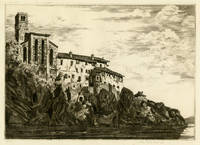
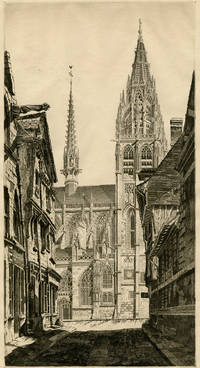
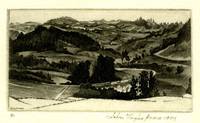
193110331931. Etching on antique laid Japon paper 10 x 14 13/16 inches 254 x 377 mm full margins. Signed in pencil and inscribed "Ed. 100" from a total edition of 128. Third state of three. Number 22 from the Italian Series. In good condition with scattered light surface soiling and archival paper tape hinges at the top right and left corners verso. A beautiful impression of this extremely scarce image. <br /> <br /> Fletcher 238iii/III <br /> Illustrated: Page 138 Arms Dorothy Noyes "Hilltowns and Cities of Northern Italy.". Born in 1887 in Washington DC John Taylor Arms studied at Princeton University and ultimately earned a degree in architecture at the Massachusetts Institute of Technology in 1912. With the outbreak of W.W.I Arms served as an officer in the United States Navy and it was during this time that he turned his focus to printmaking having published his first etching in 1919. His first subjects were the Brooklyn Bridge near the Navy Yard and it was during his wartime travel that Arms created a series of extraordinarily detailed etchings based on gothic cathedrals and churches he visited in France and Italy the plate for Guardians of the Spire was created in 1921. He used what was available to him namely sewing needles and a magnifying glass to create the incredibly rich and fine detail that his etchings are known for. Upon his return to New York after the war Arms enjoyed a successful career as a graphic artist created a series of etchings of American cities and published Handbook of Print Making and Print Makers Macmillan 1934. He served as President of the Society of American Graphic Artists and in 1933 was made a full member of the National Academy of Design. Arms died in Fairfield Connecticut in 1953.<br /> <br /> Paper: <br /> <br /> Arms was typical of the artists of this period - he was obsessed with paper a mania for collecting paper that could/would improve an edition. The quantity he left after his death distributed by his wife to fellow artists witnesses his love for finely made paper -paper interesting because of texture color distinctive weave. The earliest paper known to have been used by Arms came from a Baptismal Register Kirchen Ordnung The Reformed Church Middletown Dauphin County Pennsylvania 1708 bought in a bookshop in Philadelphia. His early prints 1915-1919 evidence paper taken from old books with gilded edges. Some prints appear on stationary from the Cisalpine Napoleonic Italy still bearing the estampe of the office or department; others carry penned ink page numbers taken from old ledgers of the Eighteenth Century-all beautiful shades of grey blue and green handmade ribbed and otherwise. Some of his color aquatints were printed on full sheets of heavy chine or Japanese vellum giving a sense of luxury in the richness of the stock and the width of the margins. There was a myriad of modern papers gleaned in England France Italy and the United States. <br /> <br /> -William Dolan Fletcher A Man For All Times p. 15. unknown
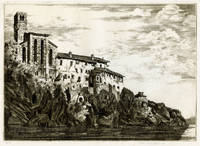
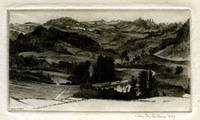
19315001931. Etching on antique cream laid paper 10 x 14 13/16 inches 254 x 377 mm full margins. Signed in pencil and inscribed "Ed. 100" from a total edition of 128. Third state of three. Number 22 from the Italian Series. In good condition with scattered light surface soiling and archival paper tape hinges at the top right and left corners verso. A beautiful impression of this extremely scarce image. <br /> <br /> Fletcher 238iii/III<br /> Illustrated: Page 138 Arms Dorothy Noyes "Hilltowns and Cities of Northern Italy.". Born in 1887 in Washington DC John Taylor Arms studied at Princeton University and ultimately earned a degree in architecture at the Massachusetts Institute of Technology in 1912. With the outbreak of W.W.I Arms served as an officer in the United States Navy and it was during this time that he turned his focus to printmaking having published his first etching in 1919. His first subjects were the Brooklyn Bridge near the Navy Yard and it was during his wartime travel that Arms created a series of extraordinarily detailed etchings based on gothic cathedrals and churches he visited in France and Italy the plate for Guardians of the Spire was created in 1921. He used what was available to him namely sewing needles and a magnifying glass to create the incredibly rich and fine detail that his etchings are known for. Upon his return to New York after the war Arms enjoyed a successful career as a graphic artist created a series of etchings of American cities and published Handbook of Print Making and Print Makers Macmillan 1934. He served as President of the Society of American Graphic Artists and in 1933 was made a full member of the National Academy of Design. Arms died in Fairfield Connecticut in 1953. unknown
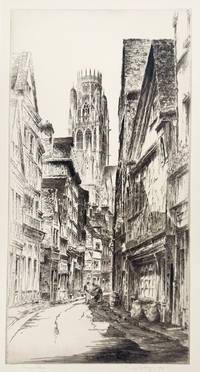
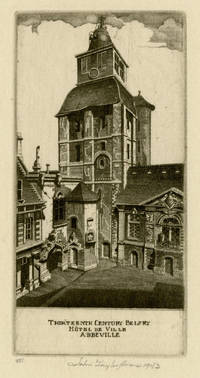
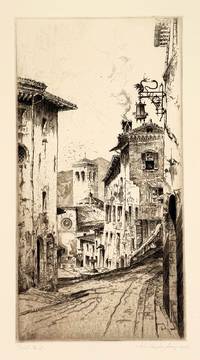
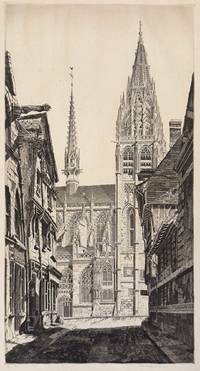
192823301928. Etching on Japon paper 13 1/4 x 6 3/4 inches 337 x 171 mm; sheet 16 1/8 x 8 3/4 inches 410 x 222 mm full margins. Signed dated and inscribed "second state" in pencil in the lower margin. From the regular published edition of 100 impressions printed by Frederick Reynolds aside from only two 2 recorded first state impressions. In excellent condition with some minor mat tone.<br /> <br /> Fletcher 211. unknown
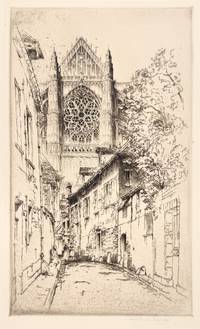
19307841930. Etching and drypoint on antique cream laid paper 12 3/8 x 6 9/16 inches 315 x 167 mm full margins. Signed dated and inscribed "Edition 100" in pencil lower margin. In very good condition with minor marginal toning and several very small edge losses along the left sheet edge including a loss at the extreme top-right corner well outside of image area. An excellent impression with good inking on 19th century paper which was hand-chosen by the artist.<br /> <br /> Fletcher 227<br /> <br /> Italian Series #15<br /> Illustrated p. 170 in Dorothy Noyes Arms Hill Towns and Cities of Northern Italy. Born in 1887 in Washington DC John Taylor Arms studied at Princeton University and ultimately earned a degree in architecture at the Massachusetts Institute of Technology in 1912. With the outbreak of W.W.I Arms served as an officer in the United States Navy and it was during this time that he turned his focus to printmaking having published his first etching in 1919. His first subjects were the Brooklyn Bridge near the Navy Yard and it was during his wartime travel that Arms created a series of extraordinarily detailed etchings based on gothic cathedrals and churches he visited in France and Italy the plate for Guardians of the Spire was created in 1921. He used what was available to him namely sewing needles and a magnifying glass to create the incredibly rich and fine detail that his etchings are known for. Upon his return to New York after the war Arms enjoyed a successful career as a graphic artist created a series of etchings of American cities and published Handbook of Print Making and Print Makers Macmillan 1934. He served as President of the Society of American Graphic Artists and in 1933 was made a full member of the National Academy of Design. Arms died in Fairfield Connecticut in 1953.<br /> <br /> Paper: Arms was typical of the artists of this period - he was obsessed with paper a mania for collecting paper that could/would improve an edition. The quantity he left after his death distributed by his wife to fellow artists witnesses his love for finely made paper -paper interesting because of texture color distinctive weave. The earliest paper known to have been used by Arms came from a Baptismal Register Kirchen Ordnung The Reformed Church Middletown Dauphin County Pennsylvania 1708 bought in a bookshop in Philadelphia. His early prints 1915-1919 evidence paper taken from old books with gilded edges. Some prints appear on stationary from the Cisalpine Napoleonic Italy still bearing the estampe of the office or department; others carry penned ink page numbers taken from old ledgers of the Eighteenth Century-all beautiful shades of grey blue and green handmade ribbed and otherwise. Some of his color aquatints were printed on full sheets of heavy chine or Japanese vellum giving a sense of luxury in the richness of the stock and the width of the margins. There was a myriad of modern papers gleaned in England France Italy and the United States. -William Dolan Fletcher A Man For All Times p. 15. unknown
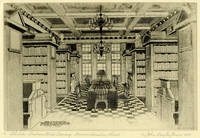
194112681941. Etching on cream laid paper 3 7/8 x 5 7/8 inches 99 x 150 mm full margins. Signed dated and inscribed "Sketch Grolier Club Library Demonstration Print" and numbered "I" in pencil in lower margin in the artist's hand. In very good condition with good inking. From the edition of only 3 impressions printed by the artist. <br /> <br /> Demonstration Series No. 105.<br /> <br /> Fletcher 353. Plate Inscription: <br /> Library of the Grolier Club Demonstration Plate Drawn Etched and Printed in a little over two hours at the Grolier Club New York City on the evening of March 9 1941 John Taylor Arms. unknown
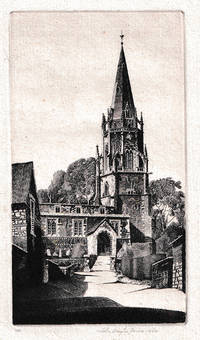
13844Arms John Taylor. THE OLD ORDER Or THE CHURCH OF ST. MARY AND ARLINGTON ROW or BRIDGE OVER COLNRIVER AT BIBURY. Etching 1948. Fletcher 412. Signed and dated in pencil lower right and inscribed "ii" lower left. Apparently one of 6 Trial proofs in the Second State printed by David Strang before the edition of 200 published by The Print Club of Albany in its original mat and folder and with the Accompanying Artist's Statement by Arms. In very good condition except for adhesive residue top recto. unknown
2135101934: Knoedler & Co. VG: Wear to the edges and corners of the slipcase. Wear to the edges and corners of the wraps. Fading to the wraps. Clean bright body pages and solid binding. Clean images. Four books with heavy gray paper wraps in a gray slipcase. The slipcase has a tan plate with black text on its spine with the title. The books all have black text on the spine. Book one has twenty-eight pages; book two has twenty-eight pages; book three has forty-six pages; number six has 132 pages. Each book is illustrated in black-and-white. Includes 'Seventy-Five Masterpieces of Graphic Art' 'The Complate Etched Portrait Work of Anthony van Dyck' 'One Hundred Etchings Dry-Points Engravings Woodcuts and Lithographs Illustrative of John Taylor Arms' Handbook of Print Making and Print Makers' and 'Dry Points by Muirhead Bone.'. Knoedler & Co paperback
192523191925. Etching on laid hand made FJ Head paper with a partial watermark 12 1/8 x 7 1/4 inches 308 x 185 mm; sheet 17 3/8 x 11 1/2 inches 441 x 292 mm full margins. Signed and dated in pencil in the lower margin. From the edition of 100 impressions printed by Frederick Reynolds. In excellent condition with superb inking. <br /> <br /> Fletcher 161. Born in 1887 in Washington DC John Taylor Arms studied at Princeton University and ultimately earned a degree in architecture at the Massachusetts Institute of Technology in 1912. With the outbreak of W.W.I Arms served as an officer in the United States Navy and it was during this time that he turned his focus to printmaking having published his first etching in 1919. His first subjects were the Brooklyn Bridge near the Navy Yard and it was during his wartime travel that Arms created a series of extraordinarily detailed etchings based on gothic cathedrals and churches he visited in France and Italy the plate for Guardians of the Spire was created in 1921. He used what was available to him namely sewing needles and a magnifying glass to create the incredibly rich and fine detail that his etchings are known for. Upon his return to New York after the war Arms enjoyed a successful career as a graphic artist created a series of etchings of American cities and published Handbook of Print Making and Print Makers Macmillan 1934. He served as President of the Society of American Graphic Artists and in 1933 was made a full member of the National Academy of Design. Arms died in Fairfield Connecticut in 1953. unknown
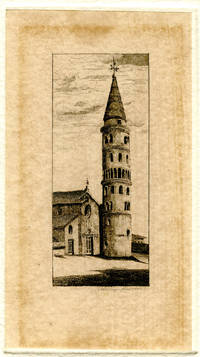
193210191932. Etching on chine collé mounted to buff wove paper 3 9/16 x 2 91 x 51 mm full margins. Signed and dated in pencil lower margin. From the edition of 244. Moderate natural uniform toning on the tissue thin paper not on the support otherwise in very good condition.<br /> <br /> Fletcher 251. Chrismas Card Series No. 16<br /> Italian Series No. 25<br /> Miniature Series No. 17. unknown
19436311943. Etching on cream laid paper 3 1/2 × 1 3/4 inches 89 × 44 mm full margins. Signed in pencil and inscribed "Trial State III." No visible defects with an unevenly trimmed sheet. A beautifully inked impression with all of the fine details printing clearly. Born in 1887 in Washington DC John Taylor Arms studied at Princeton University and ultimately earned a degree in architecture at the Massachusetts Institute of Technology in 1912. With the outbreak of W.W.I Arms served as an officer in the United States Navy and it was during this time that he turned his focus to printmaking having published his first etching in 1919. His first subjects were the Brooklyn Bridge near the Navy Yard and it was during his wartime travel that Arms created a series of extraordinarily detailed etchings based on gothic cathedrals and churches he visited in France and Italy the plate for Guardians of the Spire was created in 1921. He used what was available to him namely sewing needles and a magnifying glass to create the incredibly rich and fine detail that his etchings are known for. Upon his return to New York after the war Arms enjoyed a successful career as a graphic artist created a series of etchings of American cities and published Handbook of Print Making and Print Makers Macmillan 1934. He served as President of the Society of American Graphic Artists and in 1933 was made a full member of the National Academy of Design. Arms died in Fairfield Connecticut in 1953. unknown
194212621942. Etching on Japon paper 3 1/2 x 1 3/4 inches 89 x 44 mm full margins. Signed in pencil and inscribed "III" in the lower margin. Likely an unrecorded trial proof impression from the first state of 3 before the trimming of the plate Fletcher states only two trial proof impressions of the first state before the trimming of the plate. Printed by the artist. No visible defects. A beautifully inked impression with all of the fine details printing clearly. <br /> <br /> Miniature Series No. 31<br /> <br /> Fletcher 378. Awards: Special Jury Award National Prints and Drawing Exhibition Laguna Beach Art Association Laguna Beach CA 1944. unknown
194211411942. Etching on buff wove J Whatman handmade paper with a partial watermark 3 1/2 x 1 3/4 inches 89 x 44 mm full margins. Signed in pencil and inscribed "III" in the lower margin. A proof impression before the trimming of the plate Fletcher states only two trial proof impressions of the first state before the trimming of the plate. Printed by the artist. No visible defects. A beautifully inked impression with all of the fine details printing clearly. <br /> <br /> Fletcher 378. Miniature Series No. 31<br /> Paper: Arms was typical of the artists of this period - he was obsessed with paper a mania for collecting paper that could/would improve an edition. The quantity he left after his death distributed by his wife to fellow artists witnesses his love for finely made paper -paper interesting because of texture color distinctive weave.<br /> <br /> The earliest paper known to have been used by Arms came from a Baptismal Register Kirchen Ordnung The Reformed Church Middletown Dauphin County Pennsylvania 1708 bought in a bookshop in Philadelphia.<br /> <br /> His early prints 1915-1919 evidence paper taken from old books with gilded edges. Some prints appear on stationary from the Cisalpine Napoleonic Italy still bearing the estampe of the office or department; others carry penned ink page numbers taken from old ledgers of the Eighteenth Century-all beautiful shades of grey blue and green handmade ribbed and otherwise. Some of his color aquatints were printed on full sheets of heavy chine or Japanese vellum giving a sense of luxury in the richness of the stock and the width of the margins. There was a myriad of modern papers gleaned in England France Italy and the United States. -William Dolan Fletcher A Man For All Times p. 15. unknown
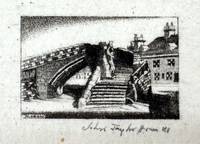
194124961941. Etching on delicate antique laid paper image 5/16 x 1/2 inches 8 x 13 mm; plate 2 3/4 x 5 70 x 127 mm; sheet 4 x 5 inches 101 x 128 mm full margins. Signed in pencil in the lower margin. In good condition with minor mat tone inside the platemark. An astonishing work in miniature. <br /> <br /> Fletcher 362. The print depicts the Trinity Bridge in Crowland Lincolnshire-a unique 14th-century fourteenth-century triangular bridge that formerly spanned the confluence of the River Welland and a tributary. Arms was famously obsessive about architectural detail often using sewing needles and magnifying glasses to achieve the minute textures seen in the stonework and the neighboring buildings. This piece is occasionally found on a single sheet alongside another 1941 etching Pátzcuaro Michoacán Mexico Fletcher 361 as Arms sometimes printed smaller subjects together before cutting the plates. <br /> <br /> Born in 1887 in Washington DC John Taylor Arms studied at Princeton University and ultimately earned a degree in architecture at the Massachusetts Institute of Technology in 1912. With the outbreak of W.W.I Arms served as an officer in the United States Navy and it was during this time that he turned his focus to printmaking having published his first etching in 1919. His first subjects were the Brooklyn Bridge near the Navy Yard and it was during his wartime travel that Arms created a series of extraordinarily detailed etchings based on gothic cathedrals and churches he visited in France and Italy the plate for Guardians of the Spire was created in 1921. He used what was available to him namely sewing needles and a magnifying glass to create the incredibly rich and fine detail that his etchings are known for. Upon his return to New York after the war Arms enjoyed a successful career as a graphic artist created a series of etchings of American cities and published Handbook of Print Making and Print Makers Macmillan 1934. He served as President of the Society of American Graphic Artists and in 1933 was made a full member of the National Academy of Design. Arms died in Fairfield Connecticut in 1953. unknown
12956Arms John Taylor. U.S.S. COLUMBIA UNDER CONSTRUCTION AT THE NEW YORK SHIPBUILDING CORPORATION CAMDEN N.J. 1942. F.390. Etching and drypoint 1945. Second State Edition of 766. Inscribed "II" lower left and signed and dated 1945 lower right. A small repaired tear in the margin lower left else in very good condition. unknown
192520431925. Etching on cream laid watermarked FJ Head paper with a deckle edge 10 1/4 x 5 3/8 inches 262 x 137 mm; sheet 18 1/8 x 10 1/4 inches 457 x 260 mm full margins. Signed titled dated and inscribed "Trial No. 3" in pencil in the lower margin. One of only 3 trial proof impressions before the regular edition of 150. In superb condition with no visible defects. Printed by Frederick Reynolds. Commissioned by The Northshore Arts Association Gloucester MA March 1925. The plate was canceled in May 1925.<br /> <br /> Fletcher 168. Born in 1887 in Washington DC John Taylor Arms studied at Princeton University and ultimately earned a degree in architecture at the Massachusetts Institute of Technology in 1912. With the outbreak of W.W.I Arms served as an officer in the United States Navy and it was during this time that he turned his focus to printmaking having published his first etching in 1919. His first subjects were the Brooklyn Bridge near the Navy Yard and it was during his wartime travel that Arms created a series of extraordinarily detailed etchings based on gothic cathedrals and churches he visited in France and Italy the plate for Guardians of the Spire was created in 1921. He used what was available to him namely sewing needles and a magnifying glass to create the incredibly rich and fine detail that his etchings are known for. Upon his return to New York after the war Arms enjoyed a successful career as a graphic artist created a series of etchings of American cities and published Handbook of Print Making and Print Makers Macmillan 1934. He served as President of the Society of American Graphic Artists and in 1933 was made a full member of the National Academy of Design. Arms died in Fairfield Connecticut in 1953. unknown
19448201944. Etching on fine antique laid paper with a partial "Catalunya Spain" watermark 1 5/16 x 2 3/8 inches 34 x 61 mm full margins. Signed dated and inscribed "III" in pencil lower margin. A proof impression of the third state of 3 after the trimming of the plate before the regular edition of 90 impressions. Fletcher states 5 proof impressions of the third state 5 proof impressions of the second state and an unkown number of first state impressions. Printed by David Strang. In superb condition. <br /> <br /> Fletcher 384. Christmas Card Series No. 22<br /> Miniature Series No. 33<br /> <br /> Note: "Vermont" and "Normandy" were etched on the same plate 6 x 5; 153 x 127. The "Vermont" section of the plate was damaged during the process of etching which made it necessary to reduce the size. The plate was cut in half after the second state. <br /> <br /> Paper: Arms was typical of the artists of this period - he was obsessed with paper a mania for collecting paper that could/would improve an edition. The quantity he left after his death distributed by his wife to fellow artists witnesses his love for finely made paper -paper interesting because of texture color distinctive weave.<br /> <br /> The earliest paper known to have been used by Arms came from a Baptismal Register Kirchen Ordnung The Reformed Church Middletown Dauphin County Pennsylvania 1708 bought in a bookshop in Philadelphia.<br /> <br /> His early prints 1915-1919 evidence paper taken from old books with gilded edges. Some prints appear on stationary from the Cisalpine Napoleonic Italy still bearing the estampe of the office or department; others carry penned ink page numbers taken from old ledgers of the Eighteenth Century-all beautiful shades of grey blue and green handmade ribbed and otherwise. Some of his color aquatints were printed on full sheets of heavy chine or Japanese vellum giving a sense of luxury in the richness of the stock and the width of the margins. There was a myriad of modern papers gleaned in England France Italy and the United States. -William Dolan Fletcher A Man For All Times p. 15. unknown
19448181944. Etching on fine antique laid paper 1 5/16 x 2 3/8 inches 34 x 61 mm full margins. Signed and dated in pencil lower margin. A Christmas card from Dorothy and John Taylor Arms from the year 1944; presented in the original handmade paper folder inscribed with the title God's Mirror" and an excerpt from Psalm CXXI as issued by the couple. Printed by David Strang from an edition of 90. In superb condition. <br /> <br /> Fletcher 384. Christmas Card Series No. 22 <br /> Miniature Series No. 33 <br /> <br /> Note: "Vermont" and "Normandy" were etched on the same plate 6 x 5; 153 x 127. The "Vermont" section of the plate was damaged during the process of etching which made it necessary to reduce the size. The plate was cut in half after the second state. <br /> <br /> Paper: Arms was typical of the artists of this period - he was obsessed with paper a mania for collecting paper that could/would improve an edition. The quantity he left after his death distributed by his wife to fellow artists witnesses his love for finely made paper -paper interesting because of texture color distinctive weave. The earliest paper known to have been used by Arms came from a Baptismal Register Kirchen Ordnung The Reformed Church Middletown Dauphin County Pennsylvania 1708 bought in a bookshop in Philadelphia. His early prints 1915-1919 evidence paper taken from old books with gilded edges. Some prints appear on stationary from the Cisalpine Napoleonic Italy still bearing the estampe of the office or department; others carry penned ink page numbers taken from old ledgers of the Eighteenth Century-all beautiful shades of grey blue and green handmade ribbed and otherwise. Some of his color aquatints were printed on full sheets of heavy chine or Japanese vellum giving a sense of luxury in the richness of the stock and the width of the margins. There was a myriad of modern papers gleaned in England France Italy and the United States. -William Dolan Fletcher A Man For All Times p. 15. unknown
194020521940. Etching on cream laid antique J Whatman paper with a watermark 4 1/2 x 2 3/8 inches 109 x 61 mm; sheet 8 1/2 x 6 1/8 inches 216 x 153 mm full margins. A proof impression from the 2nd state of 3 aside from the regular edition of 432. Printed by David Strang. In excellent condition with no visible defects. <br /> <br /> Fletcher 335. Born in 1887 in Washington DC John Taylor Arms studied at Princeton University and ultimately earned a degree in architecture at the Massachusetts Institute of Technology in 1912. With the outbreak of W.W.I Arms served as an officer in the United States Navy and it was during this time that he turned his focus to printmaking having published his first etching in 1919. His first subjects were the Brooklyn Bridge near the Navy Yard and it was during his wartime travel that Arms created a series of extraordinarily detailed etchings based on gothic cathedrals and churches he visited in France and Italy the plate for Guardians of the Spire was created in 1921. He used what was available to him namely sewing needles and a magnifying glass to create the incredibly rich and fine detail that his etchings are known for. Upon his return to New York after the war Arms enjoyed a successful career as a graphic artist created a series of etchings of American cities and published Handbook of Print Making and Print Makers Macmillan 1934. He served as President of the Society of American Graphic Artists and in 1933 was made a full member of the National Academy of Design. Arms died in Fairfield Connecticut in 1953. unknown
19408221940. Etching on antique laid paper with a large heraldic watermark. 4 1/4 x 2 3/8 inches 109 x 61mm full margins. Signed dated and inscribed "III" in pencil lower margin. The nature of the rare and special paper this impression is printed on leads us to believe that it is an unrecorded trial proof impression of the third state of 3. Fletcher states only one impression of the third state and an unknown number of first and second state impressions aside from the regular edition of 342 signed and dated impressions. In superb condition. Fletcher 335. English Series No. 7 <br /> Miniature Series No. 24 <br /> Based on a drawing made at Wilby on May 14 1936. <br /> <br /> Paper: Arms was typical of the artists of this period - he was obsessed with paper a mania for collecting paper that could/would improve an edition. The quantity he left after his death distributed by his wife to fellow artists witnesses his love for finely made paper -paper interesting because of texture color distinctive weave. The earliest paper known to have been used by Arms came from a Baptismal Register Kirchen Ordnung The Reformed Church Middletown Dauphin County Pennsylvania 1708 bought in a bookshop in Philadelphia. His early prints 1915-1919 evidence paper taken from old books with gilded edges. Some prints appear on stationary from the Cisalpine Napoleonic Italy still bearing the estampe of the office or department; others carry penned ink page numbers taken from old ledgers of the Eighteenth Century-all beautiful shades of grey blue and green handmade ribbed and otherwise. Some of his color aquatints were printed on full sheets of heavy chine or Japanese vellum giving a sense of luxury in the richness of the stock and the width of the margins. There was a myriad of modern papers gleaned in England France Italy and the United States. -William Dolan Fletcher A Man For All Times p. 15. unknown
192420471924. Etching on delicate fibrous Japon paper with a deckle edge 8 7/8 x 4 1/8 227 x 105 mm; sheet 12 x 7 7/8 inches 304 x 100 mm full margins. Signed and dated in pencil in the lower margin. Potentially one of two proof impressions on antique paper aside from the regular edition of 100 printed by Frederick Reynolds. In good condition with some minor toning and some very light scattered spots of discoloration throughout. <br /> <br /> Fletcher 187. Born in 1887 in Washington DC John Taylor Arms studied at Princeton University and ultimately earned a degree in architecture at the Massachusetts Institute of Technology in 1912. With the outbreak of W.W.I Arms served as an officer in the United States Navy and it was during this time that he turned his focus to printmaking having published his first etching in 1919. His first subjects were the Brooklyn Bridge near the Navy Yard and it was during his wartime travel that Arms created a series of extraordinarily detailed etchings based on gothic cathedrals and churches he visited in France and Italy the plate for Guardians of the Spire was created in 1921. He used what was available to him namely sewing needles and a magnifying glass to create the incredibly rich and fine detail that his etchings are known for. Upon his return to New York after the war Arms enjoyed a successful career as a graphic artist created a series of etchings of American cities and published Handbook of Print Making and Print Makers Macmillan 1934. He served as President of the Society of American Graphic Artists and in 1933 was made a full member of the National Academy of Design. Arms died in Fairfield Connecticut in 1953. unknown
36 pages. Features: Eliot O'Hara Paints a Watercolor - article with illustrations; John Taylor Arms - how he makes an etching (part 2 of 3); The Technic of the Airbrush; Interview with Stevan Dohanos; Tempera; Pencil Drawing; When an artist goes gunning with a camera; and more. Average wear. A sound copy. Book
1995ABE447408780Saunders College Publishing Philadelphia PA 1995. 4th Edition. Hardcover. As New. One corner bumped. All pages are clean. Virtually new. Quantity Available: 1. Category: Science & Technology; Biology; ISBN: 0030500036. ISBN/EAN: 9780030500039. Pictures of this item not already displayed here available upon request. Inventory No: ABE447408780. . 9780030500039 Saunders College Publishing hardcover
1991DADAX0030726174Brand: Harcourt Brace College Publishers 1991-11-01. 2nd. hardcover. New. 11.29x8.70x1.29. Buy with confidence. Excellent Customer Service & Return policy. Brand: Harcourt Brace College Publishers hardcover