8 059 résultats
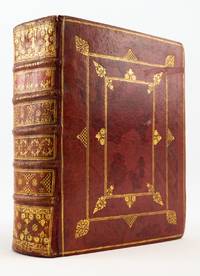
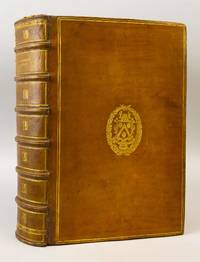
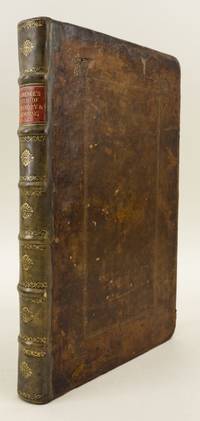
1726ST15736cLondon: Printed for Tho. Woodward by William Bowyer 1726. FIRST EDITION. One of 1000 copies according to Bowyer's ledgers per ESTC. 360 x 222 mm. 14 x 8 3/4". 12 p.l. 456 i.e. 452 pp. 4L2v is numbered 316-320. <br/> Contemporary calf covers with gilt roll frame oblique floral cornerpieces rebacked in olive-brown calf raised bands flanked by scrolling gilt rolls panels with decorative gilt centerpiece red morocco label marbled endpapers and edges neat repairs to head edge and to corners. With engraved frontispiece five small engravings in the text and two engraved plates of plants. Front pastedown with armorial bookplate of Charles Gresley; pp. 286 288-290 with contemporary ink annotations to folded fore margins. Henrey 945; ESTC T146573. ◆Boards with a number of small abrasions but the restored binding sound and perfectly agreeable; isolated faint dust-soiling to head margins other trivial imperfections but the text in very fine condition especially clean crisp and bright and with ample margins.<br/> <br/> Very fresh and bright internally especially for a book expected to incur use in an unprotected context this practical and comprehensive work would have been an indispensable resource for any 18th century husbandman interested in raising livestock and cultivating trees vegetables and fruit. Although the frontispiece depicts the stately Richmond home of the Prince of Wales with its manicured grounds and rows of neatly spaced trees the contents are just as useful to the everyman including "Husbandman Grazier Planter Gardener and Florist." John Laurence 1668-1752 was a fellow at Cambridge before becoming rector of Yelvertoft Northamptonshire where he developed a passion for horticulture while renewing a dilapidated garden there DNB tells us he was especially skilled at growing pears. Laurence wrote three books on the pleasures of gardening while living in Yelvertoft; he later moved to Bishopwearmouth Durham where he wrote the present work--his last and according to Henrey "most ambitious literary project." The author explains how to improve and maintain the land in book I with advice on planting crops and raising different kinds of livestock from cattle to silkworms. He even devotes a few chapters to using land for mines and quarries revealing the "hidden Treasures which lie couched in Nature's Bowels." Book II is devoted to forest and timber trees and books III-V offer a catalogue of fruit trees vegetables and decorative plants to grow in the Fruit Garden Kitchen Garden and Flower-Garden respectively. This is a pleasurable book to leaf through being wonderfully clean throughout and accessible to the modern reader with familiar plants that might be growing in one's backyard today. Printed for Tho. Woodward [by William Bowyer] unknown
1848ST20861London: G. Berger 1848. FIRST EDITION. 180 x 110 mm. 7 x 4 1/4". 2-62 pp. 6 blank leaves. <br/> The original printed paper wrappers bound in early 20th century green crushed half calf over marbled paper boards monogrammed "F. O. L." in gilt on leather corner at lower right of upper board raised bands spine compartments gilt with floral sprig gilt lettering marbled endpapers. Engraved bookplate of Frank O. Lowden on front pastedown. Howes B-992; Sabin 97133. Spine evenly sunned to a medium brown small early repair to upper edge of paper wrapper but a fine copy the binding with virtually no wear and the contents extremely clean and fresh with only trivial defects.<br/> <br/> This is an excellent copy from the library of an important Illinois politician of the scarce memoir of a female Illinois homesteader. Our author Rebecca Burlend 1793-1872 and her husband John a farmer and schoolteacher made the choice in August of 1831 to leave their Yorkshire home and travel with five of their children to Illinois. They arrived in New Orleans two months later and began an arduous journey up the Mississippi to their land claim in Pike County across the river from Hannibal Missouri. The author's description of the trip and their subsequent difficult first few years in the United States provides an unvarnished picture of frontier life. Burlend candidly recounts hardships caused by such things as weather fire and squatters and critically discusses the people she met many of whom she disliked--writing that "ignorance was the predominant feature of Western character." While she apparently felt the adversity had been largely worthwhile she intended the present narrative as a realistic guide for other prospective British emigrants. The book concludes with the practical sentiment that "if the account I have given of our proceedings adverse and successful does not allure the reader's fancy with ideas of visionary prosperity as the invariable result of crossing the seas it may perchance tend to make him a little better satisfied with his present condition though it should only be a snug little cottage in the land where his childhood was reared." Her memoir was published anonymously in London in 1848 after she had composed it on a return visit to England with the help of her son. She was not formally identified as the author of the piece until 1936. The present copy is distinguished by its connection to another figure in Illinois history: Frank Orren Lowden the "F. O. L." on the front cover 1861-1943 represented Illinois' 13th district in the U.S. House of Representatives and later served as governor of Illinois from 1917-21. G. Berger unknown
53484Mainz. Hardcover. Good. Three works bound in one volume 48mo: an amulet and two devotional manuals printed in the late 17th/early 18th century. Contemporary calf. Well-thumbed with two clean horizontal tears at leaves B6 and B7 in the third work affecting one of the woodcuts. A good complete set of scarce ephemeral works:<br /> <br /> 1 A-B12 = 24 leaves. 48pp. Geistlicher Schild gegen geist- und leibliche Gefährlichkeiten allzeit bey sich zu tragen darin sehr kräftige Segen und Gebethe so theils von Gott geoffenbaret von der Kirchen und h. h. Vätern gemacht und von Urbano VIII. Röm. Papst approbiret worden: zum Trost aller Christglaubigen sonderlich deren so zu Wasser oder Land reisen damit sie durch die Kraft dieses bey sich tragenden Schilds vor vielen Gefahren erhalten werden. Cum licentia Ord. Cens. Trevir ibidem An. 1647. impressum. Gedruckt zu Maynz. A note on the final page suggests this was printed in 1674 or later: "Ex libello de effectu Numismat. S. Bened. Fuldae impress. A. 1674." This work is plainly advertised to offer protection by means of "powerful blessings and prayers" against mental and physical dangers especially for travelers.<br /> <br /> 2 A-B12 = 24 leaves. 48pp. Andächtige Weis dem Amt der H. Mess nützlich beyzuwohnen. In Betrachtung des bittern Leidens und Sterbens unsers Herrn und Seeligmachers Jesu Christi. Samt beygefügten Morgen- und Abend-Gebetlein. Das thut zu meiner Gebächtnus Luc. 22. no place or name of publisher; undated. Contemplation of the Passion of Christ with morning and evening prayers.<br /> <br /> 3 A-C12 = 36 leaves. 72pp; 24 woodcut vignettes including the first title-page Main title: Geistliche Schild-Wacht darinnen der Mensch ihm für eine jegliche Stund sowohl des Tags als bey der Nacht einen besonderen besondern Patron aus den Heiligen Gottes auserwehlet. Welchen er mit einem Gebetlein anruffet daß er in der Stund seines Absterbens gleich aufstehen und wachen wolle damit er nicht von den arglistigen Anfechtungen des bösen Feindes überwunden werde. Gedruckt im Jahr Christi 1705 no place or name of publisher. A briefer title precedes with a large woodcut vignette in a format similar to the illustrations appearing throughout the rest of the work. The 24 woodcut illustrations of saints provide the chance for prayer at each hour of the day.<br /> <br /> The first work has been attributed to Martin of Cochem 1630-1712 who was a professor of theology and priest in the Archdiocese of Trier who worked with plague victirms and wrote many popular religious books in German on church history the lives of saints and contemplation during the mass. A discussion appears on A11v and A12r of the first part in which the Blessing of Saint Zacharias in the form of symbols cross and letters which represent the lines of the blessing is said to prevent the plague when worn on the body. hardcover
1739ST12883Leyden: Johann Arnold Langerak 1739. First Edition in Latin. 540 x 380 mm. 21 1/4 x 15". 70 leaves of text.Translated by William Dundass. <br/> Original red quarter vellum over marbled boards raised bands UNTRIMMED EDGES. Engraved printer's device on title large decorative initials and tailpieces EXTRA ENGRAVED TITLE AND 114 STRIKING PLATES OF ANATOMICAL FIGURES three folding. Wellcome II 401; Heirs of Hippocrates 468; Choulant-Frank pp. 252-3; Russell 213. ◆Vellum on spine rather worn with three one-and-one-half-inch pieces broken away revealing structure underneath paper boards quite chafed other minor problems externally but an entirely solid unrestored binding. A couple of plates with short closed marginal tears one folding plate with one-inch closed tear into image no loss untrimmed edges a little browned and brittle with isolated small chips occasional minor foxing or insignificant stains three plates lightly browned but still AN UNUSUALLY ATTRACTIVE COPY INTERNALLY with the broadest of margins with especially clean and fresh leaves and with rich impressions of the plates.<br/> <br/> With plates of notable visual impressiveness this was the finest anatomy book in England during the first half of the 18th century; it also was largely a plagiarism borrowing most of its engraved content from a work by the Dutch physician Govert Bidloo published in 1685. Bidloo's work was the first large-scale anatomical atlas to appear after Vesalius' epoch-making "De Humani Corporis Fabrica" and the plates which are highly praised by Norman and Garrison-Morton are characterized by startlingly detailed life-size depictions of the human body both adult and infant with figures flayed to reveal muscles opened to show organs and unfleshed to exhibit bones. According to Choulant-Frank Bidloo's publishers sold 300 impressions of these plates to Cowper probably to recoup some of their money after disappointing sales. Cowper took Bidloo's original 105 plates added nine of his own and produced an English translation of the original Latin text to accompany them. Discussing the original plates produced by Gerard de Lairesse 1641-1711 Norman says that the figures are displayed "in an emotional almost tender manner contrasting the raw dissected parts with the full soft surfaces of uncut flesh placing flayed bound figures in ordinary nightclothes or bedding setting ordinary household objects such as books jars or cabinets in the same scene as cut-up torsos or limbs. His illustrations brought the qualities of Dutch still-life painting into anatomical illustration and gave a new darker spiritual expression to the significance of the act of dissection." When Cowper's version of the atlas first appeared as "The Anatomy of Humane Bodies" in London in 1698 there was also a 1737 Leyden printing in English before our more scholarly Latin edition Bidloo complained to the Royal Society and accused Cowper of plagiarism and fraud resulting in much acrimony and heated pamphleteering between the two physicians. Notwithstanding this scandal Cowper's achievements and discoveries--including the pair of glands that bear his name--were considerable and his text improved significantly upon the original work. Unfortunately as the DNB notes "the notoriety of this case has served to obscure a true appreciation of Cowper and of his many original contributions to anatomical illustration." The atlases of Bidloo and Cowper appear on the market regularly but at 540 x 380 mm. the present copy is distinguished by its size which is significantly larger than what is typically seen with this edition--we have not been able to trace a copy larger than ours from marketplace or institutional records. Johann Arnold Langerak unknown
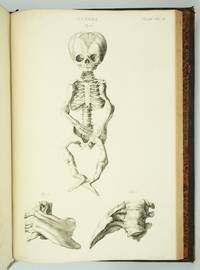
1793ST20586Lugduni Batavorum Leyden: S. & J. Luchtmans 1793 1827 1835. FIRST EDITION A COMPLETE SET. 525 x 350 mm. 20 3/4 x 14". Four volumes. <br/> First two volumes in contemporary cat's paw calf volumes III and IV in contemporary flamed calf raised bands spines gilt in compartments with central fleuron one red and one black morocco label. WITH 206 ENGRAVED ANATOMICAL PLATES all with guards. Front pastedowns with bookplate of Harvard Medical School Library; library shelf markings in white at bottom of spines; bookseller's ticket of Schönhof & Mueller Foreign Books Boston. Bibliotheca Walleriana 8549; Choulant pp. 312-13; Larousse XIX vol. 14 p. 171. Lucas L. Boer Peter L. J. Boek Andries J. van Dam and Roelof-Jan Oostra "History and highlights of the teratological collection in the Museum Anatomicum of Leiden University The Netherlands " American Journal of Medical Genetics Part A Volume 176 no. 3 2018 pp. 618-37.<br /> Shallow chips across the tail of first two volumes covers variably abraded one noticeably so corners somewhat worn partially with boards showing through vague additional signs of wear but the bindings solid and retaining much of their original appeal; plates in first two volumes with faint overall browning either because of paper stock or because of contact with guards a handful of trivial tears but all in all an extremely pleasing set the plates in volume IV very clean and bright and the plates elsewhere and the wide-margined text clean and fresh throughout.<br/> <br/> This is an extremely scarce complete set of a very substantially proportioned anatomical work with more than 200 striking giant folio engravings that emphasize birth defects and that range from clinically cheerless to heartbreaking. A physician and professor of anatomy at Leyden Eduard Sandifort 1742-1814 was commissioned by the University and the city council to publish this account of the school's anatomical collections with a focus on pathological anatomy including especially congenital abnormalities. After the publication of the first two volumes in 1793 the third and fourth were issued following Sandifort's death by his son Gerard 1779-1848 who followed in his father's professorial footsteps in Leyden. The first second and fourth volume are illustrated with copperplate engravings which Larousse tell us make this book "one of the most beautiful works of this genre" though "beautiful" needs to be understood here to mean "convincing" or "compelling" rather than aesthetically appealing. The first volume concludes with nine full-size depictions of skulls; the illustrations in the second and fourth are of a more affecting nature consisting of malformed bodies and body parts damaged or destroyed by disease and birth defects. The engravings of the conjoined twins in these volumes are especially powerful--consisting of poignant even haunting images showing undeserving victims of pronounced congenital defects though some are softened with a touch of the fanciful in their presentation. The thoroughness and accuracy of the work is so great that it remains of scholarly value even today. A recent study by Dutch curators and anatomical scholars Lucas L. Boer Peter L. J. Boek Andries J. van Dam and Roelof-Jan Oostra used "Museum Anatomicum" as a guide to identify and re-diagnose the University's historic teratological collections noting that "many historically made diagnoses could not be improved upon after re-diagnosing the specimens with contemporary dysmorphological knowledge actually confirming that these old collectors were perhaps the first dysmorphologists and can be seen as true pioneers in the field of teratology." Although single volumes and incomplete sets of this work come on the market with some regularity we have been able to trace only five complete sets at auction since 1872. And ours especially fresh and wide-margined in pleasing contemporary calf is a particularly attractive specimen. S. & J. Luchtmans unknown
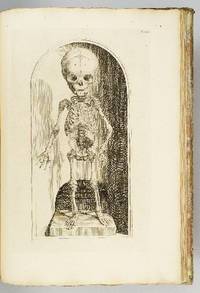
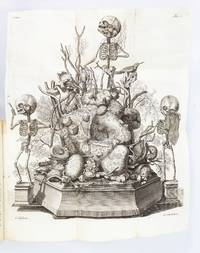
1417ST20185Amsterdam: Joannes Wolters then Jansson-Waesberg 1701-14; 1715-16. FIRST EDITIONS. 224 x 168 mm. 8 3/4 x 6 1/2". 4 p.l. 62 pp. 1 leaf errata; 2 p.l. 98 pp.; 2 p.l. 70 pp.; 1 p.l. 55 pp.; 1 p.l. 54 pp. 2 p.l. 30 pp. 1 leaf 92 pp. 2 leaves 44 pp. 4 leaves 68 pp. 8 leaves 72 pp. 1 leaf errata 12 leaves 78 pp. 10 parts in one volume. <br/> Contemporary stiff vellum smooth spine with ink titling yapp edges. WITH 42 ENGRAVED PLATES as called for by Norman six of these folding. Text in Latin and Dutch. Blake 395; Garrison-Morton 389; Heirs of Hippocrates 627; Jeremy Norman's HistoryofMedicine.com 623; Norman 1875. Vellum lightly soiled front pastedown slightly defective but the original unsophisticated binding in perfect order. Final plate with small hole due to adhesion to facing page minor damage done to image a few other trivial imperfections a couple of negligible marginal tears a faint ink stain across the top inch of text a tiny burn hole but AN UNUSUALLY BRIGHT CLEAN COPY INTERNALLY with all the important plates in exceptionally fine condition.<br/> <br/> Scarce when seen bound from its original 10 parts as here this work describes the memorable "Anatomical Treasure" of Dutch physician and anatomist Frederick Ruysch being illustrated by surrealistic charmingly macabre engravings depicting "fantastic dream-like concoctions constructed of human anatomical parts." History of Medicine Described by Norman as "probably the most original artist in the history of anatomical preparations" Ruysch 1638-1731 "enjoyed making up elaborate three-dimensional emblems of mortality from his specimens" which included fetal skeletons and preserved organs. Heirs to Hippocrates says that "the engraved illustrations deserve special mention for their whimsical almost surrealistic quality: quaintly posed skeletons surrounded by stuffed monsters strange reptiles dried plants and sea creatures." According to Norman "Ruysch's methods allowed him to prepare organs such as the liver and kidneys and keep entire corpses for years. He used a mixture of talc white wax and cinnabar for injecting vessels and an embalming fluid of alcohol made from wine or corn with black pepper added. Using his injection methods Ruysch was the first to demonstrate the occurrence of blood vessels in almost all tissues of the human body thereby destroying the Galenic belief that certain areas of the body had no vascular supply. He was also the first to show that blood vessels display diverse organ-specific patterns." Ruysch's dioramas were displayed in his home museum in Amsterdam which was open to the public; visitors included Tsar Peter the Great of Russia who purchased the collection in 1717 for the foundation of Russia's first public museum the St. Petersburg Kunstkammer. Unfortunately the Russian climate was not kind to the fragile constructions and all deteriorated over time; the dramatic plates here are the best record we have of this unique collection. Joannes Wolters, then Jansson-Waesberg unknown
1860535891860. Softcover. Good- to good condition. 1. Discrimination in Switzerland. Washington D.C. House of Representatives. 1860. Octavo. 101pp. Original tan wraps with black lettering on cover. Collection of correspondence between US officials and Theodore S. Fay among others at the time secretary of the US legation in Bern Switzerland. In 1859 Fay had delivered a report to the Swiss Federal Council Memorandum concerning the admission of North American Israelites to settle in Switzerland that was important in the struggle for emancipation of Jews in Switzerland. It had provided an overview of discriminatory Swiss laws against Jews in Switzerland while going to great depth to refute arguments that supported these laws. As a result small steps were taken in the Swiss cantons contributing to the eventual emancipation of Jews in Switzerland in 1866. Missing wraps but for most of spine. Very lightly age-toned.<br /> <br /> 2. Address "To the President of the United States." Single light blue printed leaf. Not dated. Memorial of Subscribers of the commonwealth of Pennsylvania protesting against the Swiss laws discriminating against Jews in Switzerland. An attempt to influence the President to take steps to abolish the discrimination against Jews in Switzerland. Light wear along edges of leaf small chips and folded several times. Undated.<br /> <br /> 3. This Memorial. 1857. Printed Octavo circular 4pp. Protest addressed to the President of the United States against the Swiss for their restrictive laws against American Jews. Vigorous protest to President James Buchanan against blatant anti-Semitism in Switzerland. "It so happens that certain Cantons of the Swiss Confederation among which Basle and others have laws prohibiting Israelites from sojourning temporarily domiciliating or establishing themselves permanently. The treat. has clearly failed. for we are met by a dark age prescriptive law declaring us unworthy of participating in the rights of our fellow citizens on account of our professing the Israelitisch religion." This demand illustrates the disparity between the United States Constitution which protects freedom of religion and yet is not doing enough to protect these same freedoms for its citizens when they travel abroad. Signed by various Jewish petitioners including Isaac M. Wise of Ohio. Scarce: Singerman 1515 cites two other known copies of this pamphlet. With some wear along edges small chips and folded three times. Lightly age-toned. unknown
1772ST17890aBirminghamiae: Typis Johannis Baskerville 1772. 300 x 240 mm. 11 3/4 x 9 1/4". 1 p.l. 364 pp. <br/> ELEGANT CONTEMPORARY RED MOROCCO GILT covers with French fillet border and intricate frame of volutes and floral tools raised bands spine compartments with central lozenge radiating lancets from each corner surrounded with small flowers and leaves oblique leafy branch at each corner gilt lettering turn-ins with floral roll marbled endpapers all edges gilt. Front pastedown with armorial bookplate of V. H. Wilmot Esq.; front free endpaper with armorial Glenconner bookplate. Gaskell 46. Lower corner of front board with scarcely noticeable small patch of lost patina and gilt from insect activity just a hint of wear to joints and extremities but still A VERY FINE CONTEMPORARY COPY virtually perfect internally--very clean and fresh with generous margins and in a refined binding with no significant signs of use.<br/> <br/> This is typographically a lovely printing as well as a distinguished edition of Terence in a very handsome contemporary binding. The second century B.C. playwright Terence is believed to have been a native of North Africa enslaved during the Punic Wars. Brought to Rome and given his freedom he joined the cultivated circle of Scipio the Younger. His six extant plays the ancestors of drawing room and modern situation comedies feature crusty fathers rebellious sons and smart aleck slaves whose machinations solve the playwright's intricate complications of plot. The plays were popular throughout the Middle Ages and the Renaissance and still retain their appeal. Dibdin notes that this edition is "printed in the usually beautiful style of the impressions of ancient classical authors" issued by Baskerville. That series known as the Baskerville Quarto Latin Classics began with the first book to be issued by his press: the renowned Virgil praised by Renouard Gaskell Dibdin and other critics for its beauty. In a sheet dated 1760 which Baskerville issued appended to a specimen of his folio Bible the printer discusses his proposed "Baskerville Classics": "Many gentlemen" he says "have wished to see a sett of the Classicks . . . in the Manner Letter and Paper of the 'Virgil' already published" and he vows to print the same with the poetical classics first. These volumes says Reed would "suffice had Baskerville printed nothing else to distinguish him as the first typographer of his time." The beautiful typography the luxurious paper looking and feeling much like vellum and the spacious design combine to give the reader a particularly gratifying feeling of strength and serenity. The stately binding though similar to the French style of the period was likely done in England for 18th century owner V. H. Wilmot. Our copy was later in the collection of Edward Priaulx Tennant 1st Baron Glenconner 1859-1920. Typis Johannis Baskerville unknown
1710ST19567-052Cantabrigiae Cambridge: Cornelius Crownfield 1710. THE DEDICATION COPY ONE OF 150 ON LARGE PAPER per Mackenzie. 248 x 192 mm. 9 3/4 x 7 1/2". 4 p.l. xxiv 532 2 318 283-304 pp. 84 leaves.Edited by Rev. Joseph Wasse. <br/> FINE CONTEMPORARY RED MOROCCO GILT covers panelled with gilt fillets accented with fleuron acorn and scallop tools raised bands spine compartments densely gilt with similar tools red morocco label marbled endpapers all edges gilt probably with some very facile repairs to top and bottom of joints and spine. Front pastedown with the armorial bookplate of the dedicatee Henry Grey Duke of Kent dated 1713 and with the armorial ex-libris of Robert Offley Ashburton Crewe-Milnes Marquess of Crewe; front free endpaper with engraved armorial bookplate of Thomas Philip Earl de Grey see below for all. Dibdin II 385; Mackenzie "The Cambridge University Press 1696-1712" I 273-76. ◆Front joint with thin crack at head and tail covers with darkish splotches obvious but somehow not overly offending with antique morocco like this other very minor signs of use but the binding still extremely pleasing as a grand specimen for an important dedicatee. A MOST ATTRACTIVE COPY INTERNALLY especially clean and fresh with only negligible imperfections.<br/> <br/> This is the stately dedication copy of Wasse's monumental edition of Sallust in its original handsome unrestored binding. Described by Dibdin as "an excellent edition . . . the merits of which have long been acknowledged by the literary world" our version was prepared by Wasse after consulting nearly 80 manuscripts including "some very ancient editions." A huge undertaking it spent five years in the press. Oxford Antiquary Thomas Hearne mentioned it in his "Remarks" amazed that "Mr. Wasse . . . has so swell'd his Salust sic . . . with Notes" that "his Index will be upwards of 20 sheets"; in fact the Index consumes 84 leaves 21 quires. The text of the present volume contains the only two extant historical works of Sallust 86-34 B.C. which are his history of the conspiracy of Catiline against the senate in the year Cicero was consul and his history of the Roman war against the Numidian Algerian chieftain Jugurtha brought to its conclusion by the great soldier and populist politician Marius. As a stylist Sallust has enjoyed great fame for his artistic and epigrammatic speeches with their vividly delineated characters. A fellow of Queen's College Cambridge Joseph Wasse 1672-1738 served as chaplain to the Marquess later Duke of Kent Henry Grey 1671-1740 to whom he dedicated this work. The handsome binding is of very high quality and is decorated in the Cambridge style by an unknown binder of that city. Grey was a courtier who held a number of prominent positions: under Queen Anne he served as Lord Chamberlain of the Household and Knight of the Garter and as one of the Lords Justices Regents of the Realm upon her death; under George I he was Lord of the Bedchamber Lord Steward of the Household and Lord Keeper of the Privy Seal. Our volume was passed down in his family through the line of his granddaughter Jemima Campbell Marchioness Grey to Thomas Philip de Grey 2nd Earl de Grey 1781-1859 an amateur architect who rebuilt the family seat Wrest Park in Bedfordshire. He became the first president of the Royal Institute of British Architects. It was later in the 24000-volume library of the politician Robert Crewe-Milnes 1858-1945 Marquess of Crewe. Cornelius Crownfield unknown
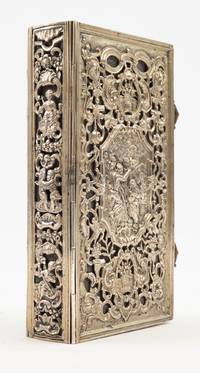
1885ST20549cOxford: Printed at the University Press for Peacock Mansfield and Britton London ca. 1885. 146 x 80 mm. 5 3/4 x 3 1/8". 536 pp. <br/> IN A LOVELY 18TH CENTURY SILVER BINDING over contemporary brown morocco DONE IN THE FRENCH RÉGENCE STYLE combining piercing with repoussé ornamentation the covers with central cartouche depicting a scene from the life of Christ in repoussé that on the front cover showing the Baptism of Christ with two hallmarks at the upper left an "A" and a rooster that on the lower cover showing the Ascension this surrounded by a pierced frame of rocaille drawer handles vases of flowers swans a leafy fronds spine pierced with rocaille and flowers separating three allegorical putti ornaments representing Faith Hope and Charity two openwork rocaille clasps. Endpapers rather worn at fore edge isolated very faint foxing otherwise A FINE COPY the text clean and fresh and THE SILVER BINDING SPARKLING AND UNMARRED.<br/> <br/> This glittering binding is a lovely example of 18th century silverwork in nearly flawless condition. While we have been unable to identify the maker the binding is probably French. A silver binding on a 1686 copy of a Rotterdam "Speculum Poenitentiae" catalogued by Antiquariat Roo is identical to ours in size and design except for the content in the large central frames and is identified by them as French. They find a master's mark of "T. G" beneath the front scene not present on our binding. In any case the delicate symmetrical ornamentation featured on our binding is typical of French Régence decorative arts with scrolls studded with naturalistic embellishments that reward close inspection. Many charming details are hidden within the sea of volutes such as the swans stealing treats from overflowing baskets of fruit. The central scenes from the life of Christ come to life through meticulous execution as our silversmith has taken great care with the details: water trickles from John the Baptist's outstretched arm and voluminous curls of cloud frame Christ's Ascension. The later Book of Common Prayer the binding now contains is a testament to the binding's enduring appeal as a precious devotional object. Printed at the University Press for Peacock, Mansfield, and Britton, London unknown
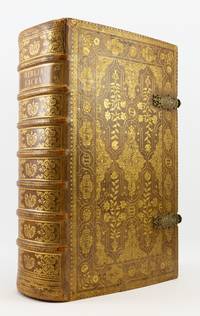
1768ST19422Nuremberg: Johann Andrea Endterischen 1768. 460 x 295 mm. 18 1/4 x 11 1/2". 17 p.l. 11 48 2 2 3-8 3 9-190 2 191-740 pp.; 512 pp.; 2 2 3-190 2 191-480 18 pp. Three parts bound in one volume. <br/> STRIKING CONTEMPORARY SMOOTH CALF LAVISHLY GILT in the entrelac style covers with frame and compartments formed by gilt-ruled strapwork and filled with floral designs and lace-like ornaments of massed volutes and small tools raised bands spine compartments with central bouquet of pomegranate and flowers with massed floral tools on either side gilt lettering brass clasps featuring images of King David and St. Paul gilt-tooled turn-ins marbled endpapers all edges gilt and gauffered with pomegranates and flowers older repair to front joint alongside top compartment. Extra engraved title page woodcut headpieces and historiated initials 47 engraved plates comprised of: copperplate portraits of Luther and 11 Electors; 11 section titles each with 11 vignettes; nine full-page engraved depictions of Moses the Prophets and the Evangelists; seven full-page plates engraved with 12 vignettes six double-page maps and two double-page engravings. Front pastedown with ornate heart-shaped bookplate of Adam Melchior Dæumer dated 1784. ◆Two-inch crack to head of rear joint a bit of rubbing to joints and extremities a handful of quite minor dark spots to boards isolated trivial smudges or stains internally other insignificant imperfections but still a fine specimen--THE CONTENTS EXCEPTIONALLY CLEAN BRIGHT AND FRESH and the remarkable binding entirely solid and bright with gilt.<br/> <br/> This is an especially pleasing copy of the last and most extensive edition of the very popular and sumptuously illustrated Weimar Electors' Bible offered here in an impressive contemporary binding. Known as the "Kurfürstenbibel" because of its portraits of the Electoral Princes called "Kurfürsten" in German it was originally prepared for Ernst I Duke of Saxe-Gotha and Altenburg as a celebration of Martin Luther's Bible translation. Editions were issued by the Endters one of the prominent German printing families beginning in 1641. In addition to portraits of Luther and the Protestant princes of Germany the present edition contains the maps views and illustrated half-titles by Jacob van Sandrart and others first used in the edition of 1686. Our copy contains four maps and views not found in other copies of this edition showing the eastern Mediterranean and Palestine as well as both a map and a view of Jerusalem. The size of our volume puts a great strain on the binding which has nevertheless stood the test of time remarkably well. The overall decoration is exuberant the delicate gauffering lovely and the original straps remarkably well preserved. Johann Andrea Endterischen unknown
1572ST14214bBasileae: Ex officina Heruagiana per Eusebium Episcopium 1572. 385 x 250 mm. 15 1/4 x 10". 18 p.l. 744 pp. 16 leaves; 368 pp.; 218 pp. 13 leaves.Edited by Hieronymus Wolf and Vincentius Opsopäus. <br/> IMPOSING CONTEMPORARY CALF COVERS WITH GILT FRENCH FILLET BORDER CENTRAL COAT OF ARMS OF JACQUES AUGUSTE DE THOU as a bachelor within a laurel wreath raised bands spine gilt in double-ruled compartments with de Thou's cipher at center older repairs to front joint and to two-inch tear on front cover. Printer's device on title and final pages. Dibdin I 478. ◆Front joint with three-inch crack at tail a little fraying at head of spine a few minor marks to cover but the binding still sturdy the leather lustrous and the gilt bright. Leaves a shade less than bright due to paper quality with a dozen or so quires a little browned isolated paper defects to margins additional trivial imperfections otherwise a fine copy internally clean and fresh with comfortable margins.<br/> <br/> This Latin and Greek edition of the works of Demosthenes and Aeschines fourth century B.C. Greek orators and rivals comes from the illustrious collection of French historian bibliophile and statesman Jacques-Auguste de Thou who assembled one of the greatest libraries of his day. Our binding bears the arms and cipher used by de Thou as a bachelor; after his marriage in 1587 he combined his arms with those of his wife in his supralibros and incorporated her initials in the cipher. Demosthenes 384-322 B.C. was as famous an orator in the ancient world as Homer was a poet and though he wrote no books his many speeches had considerable political importance in his time were recorded and collected and have been much analyzed by generations of students of language and rhetoric. Often printed as here with the works of Demosthenes were the three extant orations of Aeschines ca. 390-314 B.C. He was the arch-enemy of Demosthenes and one can see in Aeschines' public life and orations a concerted attempt to discomfit his rival. In his oration "Against Ctesiphon" for example Aeschines argues that a crown intended for Demosthenes to honor his services to Athens ought not to be awarded. As an orator he was possessed of a learned and impassioned eloquence but in comparison with Demosthenes he lacked taste judgment and moral authority. A pupil of Melanchthon and a major scholar of the period Hieronymus Wolf 1516-80 came to prominence according to Sandys with his editions of Suidas of Isocrates beginning in 1570 and of Demosthenes. For the text here he relied on a manuscript in the Augsburg Library the codex Augustanus primus. Jacques-Auguste de Thou 1553-1617 served French kings Henri III and Henri IV negotiated the Edict of Nantes one of the earliest decrees of religious tolerance in Europe and produced a history of contemporary France noted by modern historians for its scientific and detached approach but condemned in his day for its objective view of Protestantism. A devoted bibliophile and scholar he amassed a library of more than 9000 volumes by the time of his death. Bindings from his collection continue to be very actively sought after. Ex officina Heruagiana, per Eusebium Episcopium unknown
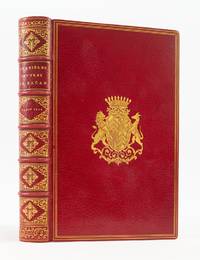
1660ST19567-160Paris: Chez Pierre Lamy 1660. FIRST EDITION. 179 x 120 mm. 7 x 4 3/4". 10 p.l. 496 35 1 pp. <br/> EXTREMELY FINE 19TH CENTURY RED MOROCCO BY HARDY stamp-signed in gilt on front turn-in covers with gilt coat of arms and French fillet border raised bands compartments ruled in gilt and with elegant gilt floral and foliate tooling gilt lettering gilt dentelles all edges gilt. Front free endpaper with bookplate of poet Auguste P. Garnier 1885-1966. Tchemerzine IX 332. ◆Trivial imperfections only: A VERY FINE COPY INSIDE AND OUT.<br/> <br/> In a very handsome binding by one of the most widely sought-after binders of the turn of the 20th century this is a beautifully preserved volume of verse by a founding member of the Académie française. A protégé of Malherbe Honorat de Bueil Seigneur de Racan 1589-1670 is primarily known for his elegant pastoral and religious poetry which as Britannica notes succeeds at "preserving the elegiac lyricism of an earlier age and foreshadowing the gentle melancholy of Alphonse de Lamartine." According to Tchemerzine the present work is "the most complete edition of Racan's religious works" and is in large part composed of his verse interpretations of the Psalms. The Hardy atelier produced luxurious volumes many of them armorial for a range of 19th century connoisseurs. Although we have not been able to identify the coat of arms on the covers the crown with pearls indicates that the owner bore the title of "Comte." Among other connections in the bibliopegic world Henri Hardy employed Jean Marius Michel as a gilder near the start of his career; he also worked with Charles Meunier and Émile Mercier before meeting Robert Hoe in Paris and agreeing to come to New York in early 1896 to serve as foreman of the newly established Club Bindery. In 1917 Hardy along with his compatriots Leon Maillard and Gaston Pilon formed the French Binders with the stated intention of "bringing together distinguished members of the craft to afford them opportunity to work under the most advantageous conditions." The present item is an excellent example of Hardy's earlier work is in outstanding condition inside and out and makes an excellent impression on the shelf. The bookplate on the flyleaf indicates that it was once owned by the French poet Auguste P. Garnier 1885-1966 who later ran the Garnier publishing house established by his family in 1833. Chez Pierre Lamy unknown
1819ST15731bLondon: Printed for F. C. and J. Rivington and others 1819. 216 x 136 mm. 8 1/2 x 5 3/8". viii 9-223 1 pp.Translated from the Greek by William Smith. <br/> Attractive contemporary oxblood calf decorated in gilt and blind covers with a wide gilt palmette frame enclosing an intricately blind-stamped panel with additional gilt decoration raised bands spine heavily gilt in compartments black morocco label gilt turn-ins marbled endpapers and edges. Front free endpaper inscribed in ink: "Miss Filliter obtained this Book as a Prize by her uniform attention to the Study of Latin during the Half-year. / June 1828." Lower corners lightly bumped a little rubbing at extremities flyleaves faintly browned occasional trivial internal imperfections but still quite a fine copy the contents extremely clean and unusually bright and in a well-preserved binding with a great deal of aesthetic appeal.<br/> <br/> In a handsomely decorated binding this is an excellent translation of one of the most important treatises of literary criticism to come out of the ancient world. First published in 1737 our translation established the reputation of William Smith 1711-87 as a "talented classical scholar." DNB A later William Smith the lexicographer said of "On the Sublime" "there is scarcely any work in the range of ancient literature which independent of its excellence of style contains so many exquisite remarks upon oratory poetry and good taste in general." Although generally attributed to the third century Greek philosopher and critic Longinus the work probably preceded him. After unsuccessful attempts to determine if Dionysius of Halicarnassus Cassius Longinus Plutarch or another was the author scholars arrived at the solution of calling the creator "Pseudo-Longinus." Our pretty though unsigned binding combines gilt and blind decoration in a particularly pleasant way. Volumes of classics in ornamental bindings were popular school prizes in the 19th century but ours is distinguished by being presented to a young lady who excelled in Latin at a time when most women received little formal education and 40 percent of the women in England were illiterate. The condition here suggests Miss Filliter and her successors treasured and cared for the present volume. Printed for F. C. and J. Rivington (and others) unknown
1622ST20888Munich: N. Henricus 1622. First Edition in German. 160 x 100 mm. 6 1/4 x 4". 16 p.l. 699 3 pp. Translated from the Latin by Sebastian Äntzenhover. <br/> UNUSUAL AND QUITE BEAUTIFUL CONTEMPORARY GERMAN DARK RED MOROCCO GILT covers with gilt fillet border central panel with onlaid corner pieces and centerpiece of black morocco stamped in relief to an Ottoman-inspired design of flowering vines raised bands spine panels with gilt centerpiece two leather straps with silver clasps and catches all edges gilt. Title page with engraving of the Tower of Babel. Top half inch of title page cut away to remove owner inscription. VD17 12:103845E; USTC 2019170. A touch of bowing to boards spine a little crackled joints and extremities a bit rubbed occasional small round marginal marks apparently made with wax! and presumably meant to indicate textual importance other trivial imperfections but an excellent copy clean and fresh in an unrestored binding with lustrous boards glistening with gilt.<br/> <br/> This rare work on sinning through the use of wicked words is offered here in a lovely binding that is quite out of the ordinary for its time and place and that may well have a very noble provenance. "Spiritual Tongues: That is a Salutary Treatise Concerning the Poisonous Tongue of Man--How to Guard Against and Remedy It" is an examination of the sins committed through speaking written by Munich Jesuit Johannes Pelecyus 1545–1623 and first printed in Latin in 1620. Pelecyus addresses the evils of gossip slander indiscretion cursing mocking and other injurious speech. The first part of the work is a general overview of the topic from a theological standpoint while the second part is a more practical guide to types of harmful speech and specific remedies for avoiding and correcting these offenses. Pelecyus concludes with a poem "The Devil's Disease and its Remedy." The binding here is remarkable in terms of its material makeup and the conjectural origin of its design. In the first part of the 17th century morocco was not commonly used by German binders who preferred sturdier pigskin particularly for treatises like this which could be expected to see much use poisonous tongues have long been a fact of life and in need of being frequently read about. Morocco was generally reserved for presentation copies or ceremonial liturgical works. In addition to the material the decoration here is unusually lavish for a text of this sort with onlays gilt adornment and silver clasps that required time and skill from the artisan and considerable expense for the patron. Significantly the lovely relief centerpiece design on the boards here also appears on the covers of a Book of Hours originally created for Holy Roman Emperor Maximilian I 1459-1519. That volume was later acquired by another similarly named owner Duke Maximilian I of Bavaria and is now to be found in the Bavarian State Library: shelfmark BSB 2 L.impr.membr. 64. It is certainly well within the realm of possibility that our later Maximilian 1573-1651 could have owned the present poisoned tongue volume and had it dressed in its elaborate morocco attire in imitation of the original binding design on the emperor’s prayer book. Whoever was responsible for the binding they surely did extremely fine work and no doubt for an elite clientele. One other curious feature of this volume is the series of round wax dollops made in the margins which an owner the fastidious second Maximilian has used to mark passages of interest in the text. While they don't materially affect the value of the volume they are intriguing in that they inevitably call up images for us of a careful early reader systematically marking with some kind of unknown implement the parts of the text that seemed important. "Spiritual Tongues" is a rare work: USTC and OCLC find just four copies outside Germany none of them in North America and we could trace just one copy sold at auction. N. Henricus unknown
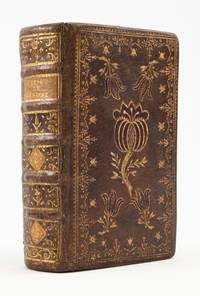
1743ST20461-4Paris: Chez Grange 1743. 136 x 85 mm. 5 5/8 x 3 1/4". 6 p.l. 592 8 pp. <br/> VERY PRETTY CONTEMPORARY PARISIAN BROWN MOROCCO GILT AND INLAID BY THE "ATELIER À LA TULIPE" covers with floral frame accented with heart tool pierced by two arrows a large pomegranate of gilt-tooled inlaid dark red morocco at center four inlaid red morocco tulips at each corner raised bands spine compartments with small gilt botanical tool at center two of these on inlaid tan morocco lozenges tan morocco label marbled endpapers all edges gilt. Text in French and Latin in parallel columns. Front pastedown with ex-libris of Jean Fürstenberg; verso of front free endpaper with early ink inscription: "Bibl. Schol." With a handwritten note once tipped onto the final page of daily prayers with handwritten Latin prayers in a contemporary hand. For the binding: Foot "Henry Davis Gift" III 179 Davis 561; Michon "Les Reliures Mosaiquées du XVIIIe siècle" pp. 51-2 and no. 223. Corners a little rubbed front free endpaper creased one leaf with old thin marginal glue stain from once tipped-in manuscript prayers that are now laid in one lower corner torn away costing a few letters at the ends of seven lines on each side other minor defects from devoted use but an excellent specimen nevertheless the text generally clean and with nothing approaching a major defect and the unsophisticated binding very well preserved.<br/> <br/> This prayer book in French and Latin comes in a charming binding by a workshop Michon dubbed "Atelier à la tulipe" after the distinctive three-petalled flower that appears on the covers here. Foot records a 1752 edition of "Heures Nouvelles" in a binding nearly identical to ours: a large central pomegranate on the covers with a tulip in each corner a delicate gilt frame and a spine in six compartments with a gilt flower or fruit at center in two cases as here on inlaid citron morocco. According to Michon the "tulipe" workshop active from 1740 to 1785 was closer in style to Derome than to Padeloup though it had its own distinctive style one which emphasized harmonious mosaic designs. The pomegranate that dominates the boards is a Catholic symbol of the Passion of Christ and is often featured in Renaissance paintings of the Madonna and Child. This symbolism was no doubt meaningful to the early owner given the signs here of devoted use: in addition to text neatly marked with "" signs at the places where one should make the sign of the cross this person also tipped in a leaf with seven neatly written short prayers in Latin for protection and purification to be said while one is washing getting dressed and preparing for the day ahead. Even dedicated use could not dim the beauty of our binding which attracted the eye of collector and connoisseur Jean or Hans Fürstenberg 1890-1982 a discriminating bibliophile of refined taste who assembled one of the great collections of the 20th century especially rich in fine and historic bookbindings and noted for its outstanding condition. Although not common bindings from this atelier nevertheless appear at auction from time to time invariably in small format like the present book and generally commanding significant sums of money as a typical example and good comparable a 1761 "Heures Royales" of precisely the same size and basic decoration as ours sold in 2017 at Alde for €2375. Chez Grange unknown
1583ST15026Paris: Arnold Sittart 1584; Heidelberg: Peter Santandrea 1583. 178 x 111 mm. 7 x 4 3/8". 14 p.l. cccix pp. 13 leaves last blank; lxxv 10 ccxvi 22 pp.; 2 leaves 84 pp.; 1 1-196 18 pp.; 62 pp. Two works in several parts bound in one volume. With annotations and commentary by Antonio Augustin Joseph Scaliger and Fulvio Orsini. <br/> Pleasing contemporary calf covers with central gilt wreath of olive branches raised bands spine panels gilt with cipher "D C G" at center flanked by a palmette and a vegetal trefoil gilt titling bottom panel with "OD" and "I8" on either side of the cipher. Printers' devices on the title pages decorative woodcut initials and headpieces. Front pastedown with what appear to be early library shelf markings; one page with neat early marginalia. Adams V-590 and F-390. Covers slightly marked spine with a bit of superficial crackling and with one short crack in the middle of bottom panel the text with faint browning and isolated minor soiling a few leaves with long shallow creases not affecting legibility otherwise in excellent condition the binding solid and without significant wear and the leaves generally clean fresh and smooth.<br/> <br/> This glossary of recondite Latin words and phrases was no doubt bound for a contemporary bibliophile with an extensive library. The "OD" and "I8" at the bottom of the spine appear to be the indication of a shelf location--not something frequently encountered on spines of this period. This designation and the location notation on the front pastedown that clearly relates to it "Arm. 0. Tab 4. Loc. 18" suggest a library of some complexity and an educated owner who believed in careful organization. While we have not been able to identify "D C G" she would seem also to have been a person of taste and good sense. The binding is attractively decorated while still being practical for scholarly use. The work itself has gone through a number of changes of fortune. The story begins when Verrius who lived in the time of Augustus compiled a valuable work full of information on everything from grammar to mythology. Unfortunately his text has been largely lost; the authentic fragments fill only the first few leaves of our volume. His work was epitomized by Festus a ca. third century scholar but Festus was not a very good epitomizer and to make matters worse all of his entries have been lost up to the letter "M." Luckily an epitome of the epitome from "A" to "Z" had been made by Paul the Deacon in the eighth century. Valuing the handbook for its information on the writing of correct Latin Renaissance scholars went to work on this puzzle in the 15th century and a first version of Paul was published by Zarotus in Milan in 1471. Later scholars published Festus and the great French classicist Joseph Scaliger 1540-1609 was largely responsible for bringing definitive order out of chaos. His scholarly edition reconstructs the work of Festus as far as one can filling in the gaps caused by missing pages in the manuscript with conjectures and rectified material from Paul. Peter Santandrea unknown
1683ST20461-2Paris: Pierre le Petit 1683. 203 x 127 mm. 8 x 5". 4 p.l. first blank xxxii 629 3 pp. <br/> REGAL CONTEMPORARY RED MOROCCO GILT covers with French fillet border central field semé with alternating fleur-de-lys and Louis XIV's stylized "L" topped with a crown raised bands spine compartments with crowned "L" at center oblique fleur-de-lys at corners marbled endpapers olive green morocco label all edges gilt. Printer's device on title page and four engraved plates depicting the Entry into Jerusalem the Crucifixion the Descent into Hell and the Resurrection. Front pastedown with morocco bookplate of Hans Fürstenberg; verso of front free endpaper with book label of the Fondation Fürstenberg. USTC 6098649. For the binding: Olivier Pl. 2493 Fer no. 8. Top inner corner of covers a shade darker but apparently not from moisture boards tending to splay slightly corners a bit bumped endpapers with offsetting from binder's glue but the binding lustrous with very little wear to the joints and generally pleasing. About a quarter of the leaves with small faint dampstain at upper gutter intermittent minor browning and foxing more pronounced on a couple of quires other unserious signs of devout use but the text with nothing approaching a fatal defect.<br/> <br/> Bound for a distinguished library--and perhaps for a member of the French royal household--and with an illustrious modern provenance this is a pleasing copy of a 17th century Parisian edition of the Office of Holy Week. The attractive engravings that accompany these paschal hours demonstrate the lush graceful style that distinguished the fine late baroque printmakers. The scenes of the Crucifixion and Resurrection were engraved by Jean Morin ca. 1605-50 whose innovation of combining engraving and etching on the same plate ushered in a new popular style of printmaking and the depiction of the Entry into Jerusalem by Flemish artist Peter Paul Bouche fl. ca. 1685-1702 is especially pleasing. But the story of this volume is its period binding. The owner who commissioned the binding may well have been a member of the noted Lamoignon family whose celebrated library was built over several generations but particularly by Chrétien-François de Lamoignon I 1644-1709 a cultivated man of letters and friend to writers such as Boileau and Racine. The "L" surmounted by a crown appears typically on the family bindings though normally accompanied by the same cypher stamped in the margin of the third leaf of text a stamp that is not present here. The impressive library was sold to bookseller Thomas Payne and auctioned off in 1791-92. Equally or really unequally the repeating motif of Louis XIV's crowned "L" monogram could well indicate that this was the property of royalty. We have not been able to identify its specific owner but this style of semis was not uncommon for royal bindings; the Russian National Library has two late 17th century examples with Louis XIV's own arms over an identical ground. According to Olivier the semis repetition alternating the monarch's initial with a fleur-de-lys or with a specific royal's cipher became popular during the reign of Louis XIII and continued under his successors; "the result for royal bindings is a sort of uniformity in the ornamentation which seems to reflect in the field of art the unification and centralization of France." Our binding's crisp precise tooling has survived beautifully despite apparent dedicated devotional use by its early owner. Our copy is further distinguished by coming from the collection of Hans or Jean Fürstenberg 1890-1982 a bibliophile of refined discrimination who assembled one of the great collections of the 20th century and whose books were noted for their outstanding condition. He put together one of the finest collections of 18th century French books ever assembled and his library contained a discriminating selection of bindings from other periods such as the present example. Pierre le Petit unknown
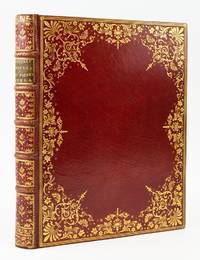
1772ST18628bBirminghamiae: Typis Joannis Baskerville 1772. First Baskerville Edition. 310 x 260 mm. 11 7/8 x 9 3/4". 1 p.l. 200 221-372 pp. but complete. <br/> SUPERB CONTEMPORARY RED MOROCCO LAVISHLY GILT IN THE STYLE OF DEROME covers with wide dentelle frame composed of botanical elements and many small tools raised bands spines gilt in compartments with central floral sprig surrounded by acorns flowers stars and dots volute cornerpieces green morocco labels gilt turn-ins marbled endpapers all edges gilt. Front pastedowns with engraved bookplate of P. Dupont and with morocco heraldic book label. Gaskell 44. ◆A breath of rubbing to extremities title page a little browned final page a bit foxed other trivial imperfections but AN EXCEPTIONALLY FINE COPY internally clean smooth and bright and in a sparkling binding.<br/> <br/> This is the impressive quarto edition of a trio of great Roman love poets in a premier binding befitting the elegant printing. In a sheet dated 1760 which Baskerville issued appended to a specimen of his folio Bible the printer discusses his proposed "Baskerville Classics": "Many gentlemen" he says "have wished to see a sett of the Classicks . . . in the Manner Letter and Paper of the 'Virgil' already published" and he vows to print the same with the poetical classics first. The present items are from what turned out to be seven Baskerville quarto printings of the classics mostly done late in the printer's career but according to Reed bearing "the marks of unabated genius." These volumes says Reed would "suffice had Baskerville printed nothing else to distinguish him as the first typographer of his time." In the present works the stately typography the luxurious paper textured but feeling rather like vellum and the spacious design combine to give the reader a particularly gratifying feeling of strength and serenity. The extraordinarily smooth surface of our leaves provides a tactile experience not available from any other 18th century printer Bodoni included. The beautiful binding here is unsigned but is clearly the product of a first-rate workshop; while it is not uncommon to see a volume from the Baskerville quartos in a decorative contemporary binding the present one would have a place in the front row of any assemblage. Typis Joannis Baskerville unknown
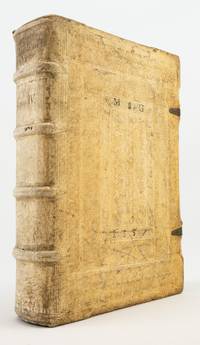
1556ST20472Basel: Hieronymus Froben 1556. First Edition of this Latin Translation. 343 x 235 mm. 13 1/2 x 9 1/4". 4 p.l. 730 142 2 blank pp. 12 leaves. Translated from the Greek by Petrus Nannius and Wolfgang Musculus. <br/> Contemporary blind-stamped pigskin over bevelled wooden boards by Balthasar Wernher of Lauingen covers framed by palmette rolls and a roll signed with the initials B. W. that features half-figures of Christ as Salvator Mundi St. Paul St. John the Baptist and King David central panel of upper cover with vertical palmette rolls the blank frame around it with the letters "M G" above the panel separated by turnip tool the date 1557 below the panel central panel on the lower cover with the same tooling but surrounded by a frame with a roll of medallions of the Reformers raised bands ink lettering to a couple of panels two original brass catches and catchplates one catchplate defective. Printer's woodcut device to title page and final page numerous decorative woodcut initials. Title page with three early ink owner inscriptions; occasional early ink marginalia and underlining. VD16 A 3980; Adams A-2083; Hoffmann I 415. For the binding: Haebler I 475 3; EBDB roll r003786 and workshop w004477. Binding somewhat soiled and chafed pigskin at one corner rubbed away one-inch circular hole on back board a contemporary issue with tooling impressed on the wood beneath isolated minor marginal stains or mild foxing other trivial imperfections but an extremely pleasing copy very fresh internally with excellent margins in a completely satisfying unrestored contemporary binding.<br/> <br/> This collected edition of the writings of the Church Father and leading advocate of the doctrine of the Trinity comes in a lovely binding by a known German workshop. The Einbanddatenbank "Bookbinding Database" or EBDB of the German Research Foundation attributes the Salvator Mundi/St. Paul/King David/John the Baptist roll to Lauingen binder Balthazar Wernher ca. 1525-74/75 whose initials appear in the panel featuring Christ. His workshop was active ca. 1555-75; the date on our binding indicates it was produced near the beginning of his career. One of the four great Eastern Doctors of the Church and the Patriarch of Alexandria St. Athanasius ca. 297 - 373 led the fight against the Arian doctrine which held that Christ was a creation of God the Father rather than consubstantial with Him. Athansius’ writings on the Incarnation and the Trinity which make up most of the text here were enormously influential. According to Catholic historian Cornelius Clifford "Athanasius was the greatest champion of Catholic belief on the subject of the Incarnation that the Church has ever known and in his lifetime earned the characteristic title of 'Father of Orthodoxy' by which he has been distinguished ever since." The English theologian and Cardinal John Henry Newman declared Athanasius a "principal instrument after the Apostles by which the sacred truths of Christianity have been conveyed and secured to the world." This translation of his writings was one of the final works by the Dutch humanist Petrus Nannius Pieter Nannick 1496-1557 a contemporary of Erasmus. The printer here was Hieronymus Froben who took over the family business from his father Johann Froben 1460-1527 a central figure in the printing history of the 15th and early 16th centuries who played a key role both in the intellectual ferment of the northern Renaissance and the theological turmoil of the Reformation. Our substantial large folio binding with its thick boards and four sets of muscular double bands provides an appropriate reflection of the weightiness of the works it contains. [Hieronymus] Froben unknown
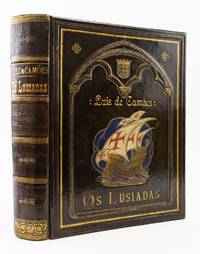
1880ST17890eLeipzig: Typographia Giesecke & Devrient for Emilio Biel Portugal 1880. 400 x 305 mm. 15 3/4 x 12". 2 p.l. LVI 375 1 XCII pp. <br/> IMPOSING CONTEMPORARY BLACK CALF upper cover with sunken central panel framed by gilt and blind rules raised gothic window frame with gilt tooling large ship embossed and painted at center gilt lettering above and below lower cover gilt-stamped "Companhia Portugueza Editora / Porto" raised bands spine panels with blind-stamped floral frames gilt lettering patterned endpapers apparently later hinges all edges gilt and elaborately gauffered. In a later green felt-lined cloth slipcase. Illustrated half title engraved portrait frontispiece dedication and portrait of the dedicatee engraved decorative half frames at beginning of each Canto and tailpiece at the end 10 section titles printed in colors and 19 plates all with original tissue guards. Front pastedown with modern color-printed bookplate dated 1980. ◆Spine slightly sunned leather with a few minor scrapes scratches and other small signs of wear plates variously foxed because of paper used usually mildly or moderately though occasionally more noticeably; nevertheless a striking volume with its main attractions the front cover and shimmering gauffered edges retaining all of their appeal.<br/> <br/> This is an impressive commemorative edition of the masterpiece of the Portuguese language's greatest poet in a binding that celebrates that country's history of exploration. First published in 1572 the epic poem "Os Lusíadas" relates the adventures of Portuguese explorer Vasco da Gama ca. 1460s - 1524 the first European to reach India by sea. Sailing via the Cape of Good Hope in 1497 he established the first ocean route from Europe to India landing in Calicut in 1498. His navigation skills provided Portugal with more than bragging rights for accomplishing a feat attempted for decades at the cost of hundreds of sailors' lives: the Portuguese now had unprecedented access to the spices of the East and came to dominate that market. A master of verse whose skills have been compared to those of Shakespeare Milton and Dante Luís de Camões ca. 1524/25 - 1580 also had firsthand experience of the voyage: he travelled to India on the carrack São Bento in 1553. He composed parts of this work while dwelling in a cave in Macau and managed to save the manuscript when he was shipwrecked in the Mekong delta. After 17 years in the East Camões returned to Portugal and completed "Os Lusíadas." When it was published two years later he was rewarded with a royal pension. The binding here depicts a Portuguese caravel--the small very maneuverable ship Portugal's explorers used in the Age of Discovery--at full sail on choppy seas in a sunken space framed within a Moorish-style arch bearing the Portuguese Coat of Arms. Dedicated to Dom Pedro II Emperor of Brazil this luxurious production was issued to commemorate the 300th anniversary of Camões' death. Typographia Giesecke & Devrient [for] Emilio Biel, Portugal unknown
1552ST12878Parisiis: Apud Ioannem de Roigny 1552. 325 x 210 mm. 12 3/4 x 8 1/4". 1 p.l. title 776 pp. 20 leaves last blank. Collates as in Adams and Schweiger. <br/> Attractive contemporary calf over thick pasteboards covers with painted black and gilt rule frame center of both boards with large elaborate rectangular strapwork ornament in black and gilt flat spine divided into panels by gilt rules and cresting roll three spine panels with black and gilt ornament similar to those on the covers one panel with gilt titling inside an escutcheon all edges gilt the joints edges and portions of the spine at top and bottom very expertly renewed. Numerous fine "criblé" and other decorative initials and 145 WOODCUT SCENES measuring approximately 2 x 3" some of the cuts repeated. Front pastedown with "HB" book label of Heribert Boeder; title page with ink inscription of Johann Adolph Freitag dated 1653 and with library stamp of the College of Notre Dame Villefranche sur Saone. Adams E-1033; Dibdin II 470; Hoffman II 68-69; Mortimer 512; Schweiger II 1060. ◆Spine slightly faded and discolored in spots color of the cover leather a bit uneven two pages with ink stain touching but not obscuring a word of text isolated rust spots but a very pleasing copy the text unusually fresh clean and bright and the carefully restored binding completely solid and certainly pleasing.<br/> <br/> This is a large-format illustrated printing of the "Comedies" bound in a more restrained version of the painted entrelac bindings in vogue in 16th century a binding tall and dignified enough to suit its contents. Dibdin describes this as "a most excellent edition" that contains "almost all the valuable treatises upon the author up to the period of its publication" and notes that "it is of rare occurrence." There were two issues of this 1552 edition; our colophon dated to 17 Calendas Decembris Anno 1551 indicates that we have the first. Terence's six extant plays the ancestors of drawing room and modern situation comedies feature crusty fathers rebellious sons and impertinent slaves whose machinations solve the playwright's intricate complications of plot. The plays were popular throughout the Middle Ages and the Renaissance and still retain their appeal. The text of the plays in large and attractive italic type is surrounded here by the commentary in smaller italic of Donatus fourth century A.D. and others. Each scene is preceded by a woodcut depicting the actors on a curtained stage. While very simple in composition these are animated and frequently amusing. According to Mortimer our text and scholarly apparatus are mostly reprinted from Girolamo Scoto's Venice edition of 1545 and the scene cuts "are extremely close copies of the Italian blocks used by Scoto.". Apud Ioannem de Roigny unknown
1585ST20050Leipzig: Georgius Desner 1585. FIRST EDITION. 170 x 110 mm. 6 3/4 x 4 1/4". 28 p.l. 494 pp. 1 leaf blank; 3 p.l. 463 pp. <br/> FINE CONTEMPORARY BLIND-STAMPED PIGSKIN over bevelled wooden boards covers framed by decorative lattice roll upper cover with central panel depicting Judith a sword in her right hand the head of Holofernes in her left signed "M R" above the caption; lower cover with a panel showing Jael in the act of killing Sisera her left hand holding a chisel to his temple her right hand holding a hammer raised to strike a blow the plate signed "M R" at the end of the caption raised bands ink titling at head of spine and on fore edge edges stained red two original brass clasps. Title page with 17th century ownership inscription of Georg Laurence Seydenbecher; verso of title with round blue ink armorial stamp; occasional neat ink marginalia in an early hand. VD16 N 413; USTC 684027. For the binding: Haebler I 381-82. ◆Text slightly and uniformly toned because of paper quality half a dozen quires a bit more browned isolated small ink stains or foxing pigskin with minor soiling to edges just a hint of wear to lower corners but A FINE COPY the contents thoroughly fresh and the unsophisticated binding with beautifully distinct stamps.<br/> <br/> This is a very rarely seen copy of an outline of the essentials elements for a humanist education written by a noted German pedagogue and offered here in a wonderful blind-stamped binding featuring two fierce biblical heroines. Symbols of courage embraced by the Reformation Jael and Judith appeared on front and back covers of a number of 16th century bindings and both are shown here in elegant Renaissance garb clutching the weapons they used against enemies of Israel. Jael offered the Canaanite general Sisera refuge in her tent following a battle and having lulled him to sleep with warm milk is shown on the rear cover here in the act of striking a stake through his temple. Beneath the image is the text "Sic pereant omnes inimici tui Domine" "So perish all of your enemies Lord" Judges 5:31. Judith pretended to seduce the Assyrian Holofernes then got him drunk and cut his head off; here on our front cover she triumphantly displays his head brandishing his sword. Below her is a verse from Psalms: "Voluntatem timentium es faciet dominus" "He will do the will of them that fear him" Psalm 144. We did not find these plates in EBDB or any of the usual reference works but they are likely the work of bookbinder Matthias Radmann who became a master binder in Leipzig in 1546 and who signed his work "M R" often at the end of a caption as on the Jael plate. A student of Melanchthon Michael Neander 1525-95 became director of the college of Ilefeld where he developed an influential curriculum with a heavy emphasis on Latin and Greek classics rhetoric philosophy history theology physical science and geography; the school attracted students from all over Europe. In our volume he collects excerpts of important authors on these and associated subjects beginning with the Greek Fathers on theology and continuing through philosophy mathematics medicine chemistry history natural sciences geography rhetoric poetry and grammar. Our 1585 edition seems to be the sole printing and is very rare. Bindings of this sort are almost never found now so clean and with their elaborate blind decoration so extraordinarily sharp. Georgius Desner unknown
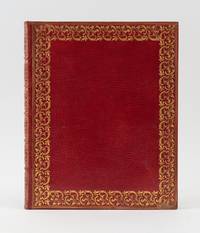
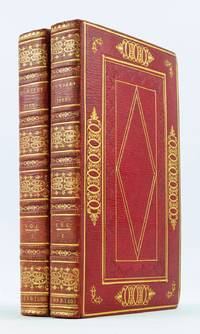
1808ST15731cLondon: J. Johnson 1808. New Edition. 220 x 135 mm. 8 5/8 x 5 3/8". Two volumes. <br/> VERY PRETTY CONTEMPORARY SCARLET STRAIGHT-GRAIN MOROCCO covers with gilt-ruled frame decorated with multiple overlapping gilt door handle tools and floral cornerpieces central panel with gilt-ruled lozenge enclosed by gilt rules and blind floral rolls raised bands compartments gilt wide turn-ins ruled in gilt and with repeating flower motif in blind and small gilt circles in the centers green inlaid cornerpieces with gilt tooling blue watered silk endpapers all edges gilt. With eight plates after Henry Fuseli including frontispiece to each volume. Verso of front free endpaper with armorial bookplate of Lewis Way. ◆Spines a little sunned corners a bit worn and tending to turn inward light scuffing to extremities plates lightly foxed but the text extremely clean and the pleasing bindings with minor issues only.<br/> <br/> This is an attractively illustrated and handsomely bound edition of the finely crafted poetry of William Cowper 1731-1800 the most notable English poet before the Romantics in terms of a tendency to be confessional in one's verse. Given the fact that he was institutionalized and that he several times attempted suicide these self-revelatory poems can easily be seen as a kind of therapeutic experience and it is testimony to the complexity of his personality that so much of Cowper's verse is light conversational and epigrammatic. His poems range widely from religious reflections to translations of Homer to poetry inspired by a lady's suggestion that he could write on any topic including a sofa see vol. II p. 1. The plates here were designed by Henry Fuseli 1741-1825 a Swiss-born painter who lived mainly in England. He was best known for his paintings exploring the supernatural as well as his influence on the young William Blake. DNB calls him "A superb and intensely dramatic draughtsman . . . notorious for his sensational demonic irrational and bizarre subjects" leading "the surrealists to claim him as a forerunner." Though unsigned the bindings here are extremely attractive with tasteful gilding and luxurious touches such as wide decorative turn-ins and watered silk endleaves. This copy was previously owned by Lewis Way an Evangelical reverend who made it his mission to promote Christianity among the Jews. It was his particular belief that returning Jews to the Holy Land would fulfill a biblical prophecy and to this end he secured several audiences with Tsar Alexander I in the attempt to persuade him to the cause. His home at Stansted Park reportedly contained a library that included rare Judaica and Hebraica. J. Johnson unknown
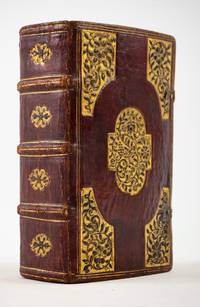
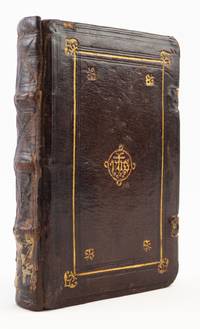
1538ST19567-018Venetiis Venice: in officina heredum Luceantonii Junte hiers of Lucantonio Giunta 1538. 149 x 104 mm. 5 7/8 x 4". 8 143 of 144 leaves lacking leaf p6. <br/> Contemporary Venetian morocco rebacked preserving original blind-ruled spine and corners rounded off and renewed covers each with blind-ruled borders and a gilt- and blind-ruled panel with gilt fleurons in each inner and outer corner central gilt IHS monogram raised bands brass clasps renewed all edges gilt and gauffered lacking final endleaf. Printer's device on title numerous historiated woodcut initials first page of text with woodcut border two full-page woodcut illustrations. Printed in red and black. Essling 181; Sander 5970 under "autres éditions"; EDIT 16 CNCE 11880. Original spine somewhat crackled bottom compartment with slight surface loss perhaps from removal of a label covers with several but insignificant small dings very minor dampstain at extreme top edge of a few leaves other trivial imperfections but a clean fresh and bright copy in an attractive early binding.<br/> <br/> Offered in what is probably its original binding this is a very rare edition of a Psalter done by one of the leading Venetian printing families of the 15th and 16th centuries. A major figure in the Italian book trade Lucantonio Giunta 1457-1538 began his career as a bookseller in Venice in 1477 and became a printer there in 1489. Together with family members and carefully arranged partnerships Giunta expanded his printing empire into numerous cities in Europe including Lyon Lisbon Antwerp Frankfurt and Salamanca. The present book was printed just after the death of Lucantonio whose heirs would continue to run the family business which grew prosperous in part because of its specialty in producing liturgical works such as this. The contents here are routine but the well-preserved decorative period binding makes the volume definitely worth having. in officina heredum Luceantonii Junte [hiers of Lucantonio Giunta] unknown