8 059 résultats
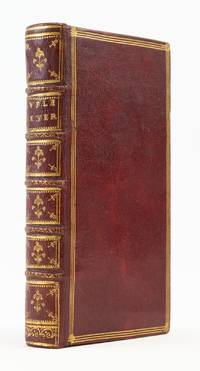
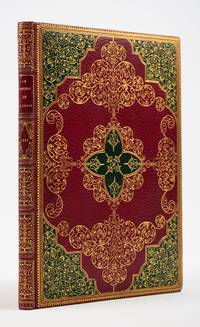
1651ST20278Paris: Chez F. Mazot 1651. 172 x 118 mm. 6 3/4 x 4 3/4". 3 34 leaves 35-39 1 pp. 2 leaves. <br/> LOVELY CRIMSON CRUSHED MOROCCO GILT AND ONLAID BY CAPÉ stamp-signed on front turn-in covers with onlaid green morocco cornerpieces and central quatrefoil all filled and surrounded by delicate pointillé tooling in floral and paisley designs raised bands spine compartments tooled in pointillé gilt lettering richly gilt turn-ins marbled endpapers all edges gilt. In a felt-lined morocco-lipped marbled paper slipcase. ENGRAVED THROUGHOUT WITH 38 FULL-PAGE ILLUSTRATIONS consisting of one portrait two allegorical religious scenes including title and 35 illustrations of the Holy Eucharist 40 pages of engraved text 37 of these with text flanked by full-length figures of saints accompanied by other religious symbols at head and foot of page two framed with vignettes of angels or the Madonna one page with text only. Front pastedown with "A W F" book label of bookseller Adrian Fluhmann. Duportal "Étude sur les livres à figures" pp. 244-45; Brunet V 624; Graesse VI 4; Leaves perhaps very lightly washed and pressed but an extremely fresh clean copy IN A SPARKLING BINDING.<br/> <br/> Covered by a luxurious binding by Capé this is a particularly attractive copy of a sumptuously illustrated prayer book composed entirely of engraved plates. According to Duportal it is "One of three important publications whose engravings reveal the trend characteristic of religious illustrations in France between 1601 and 1660." The work opens with a dedication to Charles d'Aubespine Marquis de Châteauneuf 1580-1653 with a full-page portrait by Guillame de Gheyn b. 1610. The bulk of the book is made up of two groups of plates. Those in the first group appearing primarily on the rectos contain prayers in Latin and French flanked by pairs of saints; gaps in the prayers are filled by naturalistic flowers insects and birds. Many of these plates also include a scene or two in miniature depicting the life of one or both of the saints or a vignette of angels. While just two of these engravings are signed "J. Collin" they all appear to be in the same hand which demonstrates an impressive level of finesse and delicacy depicting graceful figures with sure light lines. Duportal notes that this artist had a "talent charmant" and that well-executed dry-points of this type are quite rare in French books of the period. The second group of engravings appear strictly on the versos and depict the performance of a part of the Mass beneath a cloud in which appears a relevant scene from the life of Christ. They are all unsigned and clearly by a different hand with more rustic features--possibly "copies of originals published abroad" according to Duportal. The book concludes with two leaves of text framed by gamboling putti and the Virgin. Copies of this work can be found with varying numbers of leaves and engravings apparently the result of multiple reprintings with added material produced between 1651-53 but the present item can be distinguished as an early if not the very first edition as it does not contain "Privilege du Roy" dated 1652 or 1653. Furthermore our copy also contains the earliest state of the plates without the "I N R I" initials on the cross found on the title page and with the earlier state of the verso engravings before they were substantially reworked. Our edition seems to be quite rare with OCLC finding just one other copy with the same sequence of contents at the Bibliothèque Sainte-Genevieve. The stunning binding by Capé looks just as fresh and lustrous as the day it left its workshop. One of the most distinguished binders in France in the middle years of the 19th century Capé d. 1867 was especially well known for the delicacy of his work--which can be appreciated to full effect in the present example. He was the binder to the Empress Eugénie and Béraldi calls him "the Bozérian of the second Empire." This is precisely the kind of book our former owner the discriminating connoisseur-bookseller Fluhmann would have owned. Chez F. Mazot unknown
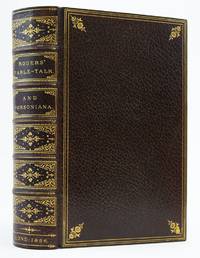
1856ST17640sLondon: Edward Moxon 1856. Apparently the FIRST EDITION. 200 x 130 mm. 7 7/8 x 5 1/8". viii 355 pp. bound with the half title and with an inserted plate as frontispiece.Edited by Alexander Dyce. <br/> VERY PLEASING SLIGHTLY LATER DARK BROWN CRUSHED MOROCCO ATTRACTIVELY GILT covers with French fillet border and elegant botanical cornerpieces raised bands heavily gilt spine in compartments featuring elaborate scrolling cornerpieces an intricate fleuron centerpiece and tiny circlets turn-ins with plain and stippled rules and filigree gilt decoration at corners and midpoints of two sides textured silk brown and cream millefleur-patterned endpapers all edges gilt. EXTRA-ILLUSTRATED WITH 55 PORTRAIT PLATES five in color all with tissue guards. Verso of the front free endpaper with the engraved bookplate of Robert B. Lawrence. A hint of browning to some of the inserted plates but A FINE AND HANDSOMELY BOUND COPY the text especially fresh clean and smooth and the binding bright and virtually unworn.<br/> <br/> This is a tastefully bound collection of anecdotes and witty banter recorded by poet Samuel Rogers whose private means made his gracious home in Westminster a gathering place for the poets and artists of the age. Scion of a wealthy banking family Rogers 1763-1855 achieved fame with the publication of "The Pleasures of Memory" in 1792. His friend Alexander Dyce who compiled the present work tells us in the preface that Rogers "was in the habit of writing down in all their minutiae the anecdotes &c. with which his conversation abounded." These records provide us with an intriguing glimpse of literary society in London in the first half of the 19th century. Our second work "Porsoniana" contains anecdotes about the "very eminent Greek scholar" Richard Porson 1759-1808 related to Dyce by that individual's close friend William Morby. This edition is one of at least three printings that were issued by Moxon in the initial publication year and it would seem to be the first appearance of the text. In any case our volume has the added feature of 55 inserted engravings of the persons discussed in the book. Although the binding is apparently unsigned the owner's bookplate on the front flyleaf is placed near enough to the top edge that it may be obscuring a stamped binder's signature. The work displayed here is certainly of high enough caliber to have been produced by Riviere or Zaehnsdorf. Edward Moxon unknown
1643ST19567-147Lvgd. Batavorvm Leyden: Ex Officina Elzeviriana 1643. Second Elzevier Edition. 132 x 75 mm. 5 1/4 x 3". 1 p.l. 3-312 315-329 9 pp. <br/> FINE CONTEMPORARY BURGUNDY MOROCCO covers with gilt triple ruled border spine gilt in compartments with broad and stippled bands fleuron cornerpieces and floral centerpiece marbled endpapers turn-ins and all edges gilt. Woodcut initials headpieces and tailpiece engraved title page depicting St. Martin slicing his cloak in two with his sword to share with the beggar. Front pastedown with a cardinal's large 17th century engraved armorial bookplate rotated and trimmed to fit. Front pastedown and free endpaper with the morocco bookplates of Mortimer L. Schiff and of H. V. Ingram respectively. Initial blank and last leaf each with small ownership stamp that at rear of C. H. F. Curnillon that at front hard to decipher though perhaps reading "EBH." Willems 560; Rahir 552. ◆A few instances of light foxing and other trivial imperfections internally but A REMARKABLY WELL-PRESERVED COPY the binding bright and scarcely worn and the text very fresh and clean with virtually no signs of use.<br/> <br/> This is a most appealing little book containing the works of Severus the fourth century ecclesiastical historian who gave up great wealth in exchange for Christian seclusion and holy exercises and who became an ardent follower of St. Martin of Tours. Our volume includes Severus' most famous work his "Life of St. Martin" with its unforgettable pictures of this much venerated saint whose compassionate life includes the famous episode in which Martin cuts his cloak in half to share it with a beggar. Along with the "Life" are the "Dialogi Duo" which contains a reasoned review of the then prevailing bitter ecclesiastical feuds and provides information about these controversies not supplied from any other source. Also included is Severus' "Sacred History" a less original work summarizing events from creation to his own day but one much used in the Middle Ages when the author's correct and limpid Latin was greatly admired. Willems says this is the second Elzevier edition containing the same material as the 1638 edition but with the added continuation of the sacred history by Johannes Sleidanus 1506-56; Willems adds that the printing is "beautifully executed." This is a particularly lovely copy with distinguished provenance: it was previously in the library of the distinguished American bibliophile Mortimer Schiff 1877-1931 whose collection included works by great printers important illustrated books works printed on vellum and fine and historic bindings; it was later owned by H. V. Ingram a collector of fine bindings in the mold of Schiff a large number of whose books Ingram subsequently possessed. Ex Officina Elzeviriana unknown
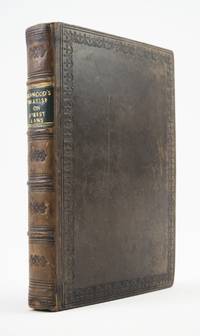
1598ST20689London: Printed by Thomas Wight and Bonham Norton 1598. FIRST PUBLISHED EDITION and First Edition under this Title. 192 x 139 mm. 7 5/8 x 5 1/2". 8 p.l. 154 162-65 159-67 1 blank 6 leaves. Errors in pagination but text complete. <br/> Late 19th century dark brown calf covers tooled in blind with plain rules and fleur-de-lys roll raised bands spine panels with small blind-stamped ornament black morocco label marbled endpapers neat repairs to ends of both joints. Front pastedown with engraved armorial bookplate of Godfrey Wentworth Woolley Park. Beale T-413; Mellon/Podeschi 15; Schwerdt II 7; STC 17291; ESTC S111993.<br /> Extremities slightly rubbed boards a little chafed in spots text lightly pressed but not washed a bit of browning to edges and occasional minor marginal foxing or traces of corner creases but quite an excellent copy the text clean and still fresh throughout and the perfectly suitable binding with no significant wear.<br/> <br/> This is a pleasing country gentleman's copy of the first published treatise on the laws governing English forests. Our author the fittingly named woodsman John Manwood d. 1610 served as gamekeeper of Waltham Forest as well as a justice of the New Forest. DNB tells us that he was possibly a barrister at Lincoln's Inn which would explain his interest in and knowledge of the law. Manwood tells us in the dedicatory epistle that he composed the present work in response to the precarious state of forest preservation stating that "so many do daily so contemptuously commit such heynous spoiles and trespasses" against the country's woodlands but "verie little or nothing as yet is extant concerning the Lawes of the Forrest" to help manage such behaviors. Our copy comes from the first published edition following only the 1592 pamphlet entitled "A Brefe Collection of the Lawes of the Forest" issued for private circulation and now extraordinarily rare. According to DNB the present treatise is "the only substantial work on the subject ever to reach the press" making it an enduringly useful source for those interested in the topics contained which include laws about hunting and perambulation in forests. It remained the standard work on the subject until the 19th century and Schwerdt writes that it has been "invaluable to students and lovers of ancient sport." Our copy is from the library of Yorkshire landowner Godfrey Wentworth 1773-1834 who served as High Sheriff of Yorkshire from 1796-97 and in the House of Commons from 1806-08. He probably had no need for a later printing of the work. Printed by Thomas Wight and Bonham Norton unknown
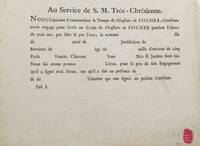
176028380France 1760. 1 vols. ca. 10 1/2 x 16 inches unfolded. Broadside. Folded some discoloration and marginal spotting else very good. 1 vols. ca. 10 1/2 x 16 inches unfolded. An unaccomplished form giving pertinent information including name son of native of jurisdiction of province of age that size is in the area of 5 feet hair eyes and that not and legs are well-made and the salary promised. unknown
1780ST17950Caprées i.e. Nancy: Chez Sabellus 1780 1784. FIRST EDITIONS FIRST PRINTINGS 11 lines on title page and long "s" in text with these Illustrations. 256 x 190 mm. 10 x 7 1/2". Two volumes. <br/> BEAUTIFUL 19TH CENTURY RED MOROCCO GILT IN THE ROCOCO STYLE BY CUZIN stamp-signed in gilt on front turn-ins covers with a gilt-ruled border featuring rocaille motifs at the sides and a floral spray at each corner elaborate inner frame of strapwork interwoven with scrolling acanthus drawer-handle tools flower garlands and several special tools including satyrs mountain goats insects and large vases of flowers raised bands compartments with gilt lettering or a central floral sprig surrounded by a frame of leaves and flowers turn-ins with intricate gilt lace roll-tooling all edges gilt. WITH A TOTAL OF 102 EROTIC PLATES by Denon each volume with a frontispiece and 50 plates plus an engraved title in volume II. Front pastedowns with ex-libris of Léon Gambetta. Cohen-de Ricci 474-75. ◆Light offsetting from illustrations paper in both volumes perhaps lightly pressed but not washed FIRST VOLUME with the faint stain from a ribbon marker now gone one plate slightly toned and with two very small repairs to margin otherwise IN FINE CONDITION; paper in volume II slightly toned and with occasional small spots and light stains but still excellent. None of this significant because THE GLORIOUS BINDINGS LUSTROUS AND UNWORN.<br/> <br/> Despite their scholarly titles which promise scenes from the private lives of the 12 Caesars and secrets from an ancient Roman cult these are among the most famous erotic books of the 18th century. In the first volume the 12 Roman emperors from Julius Caesar to Domitian are depicted engaged in a panoply of intimate acts beginning with Julius Caesar's liaison with King Nicomedes IV of Bithynia which led his enemies to dub him "Queen of Bithynia." We see what Caesar's heir Augustus was willing to do in order to succeed his great-uncle and his later sexual excesses as emperor including incest. Antony and Cleopatra are relatively demure compared to the orgies of Caligula Nero and Claudius' wife Messalina. The "Secret Cult of Roman Women" examined in the companion work is devoted to the fertility god Priapus and his phallic symbols with guest appearances by assorted satyrs nymphs and Bacchantes. The images are white-on-black to resemble sculptured wall medallions and claim to be based on ancient carvings; however Cohen-de Ricci informs us that while the text is evidence of d'Hancarville's erudition the illustrations are entirely the result of his libertine imagination. Art historian Pierre-François Hugues Baron d'Hancarville 1719-1805 established himself in the world of antiquarians when he helped William Hamilton acquire the impressive Porcinari collection of Etruscan Greek and Roman antiquities that would subsequently be purchased by the British Museum. He then supervised the production of four sumptuous volumes of engravings documenting the collection. He seems to have undertaken the present work for his own amusement. A later issue of the second title facetiously attributed publication to the Imprimerie de Vatican the Church had of course put it on the Index of Prohibited Books. According to Cohen-de Ricci this is the first and most desirable printing identifiable by 11 rather than 10 lines of text on the title page of the first work and by the use of the f-like "long s" in both volumes. The especially splendid bindings by Francisque Cuzin 1836-90 nod to the Rococo bindings of the 18th century and to the risqué subject matter with satyrs cavorting about the elegant frame. Cuzin opened his Paris workshop in 1855 and soon made his name among bibliophiles of that city with his exquisite bindings establishing what was called the "Cuzin style." Devauchelle says that this style was copied by Cuzin's colleagues but was never equalled. Cuzin was not a gilder but employed some of the best in the trade to execute his graceful designs among them Marius Michel père Wampflug Maillard and Cuzin's eventual successor Émile Mercier. Our copy was once in the library of the distinguished French statesman Léon Gambetta 1838-82 one of the founders of the Third Republic who served as president of the Chamber of Deputies. Chez Sabellus unknown
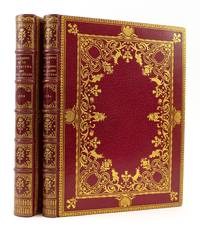
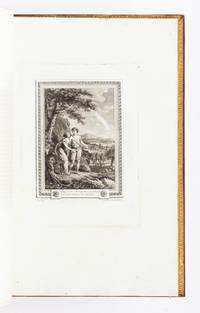
1786ST19671Paris: Chez l'Auteur Veuve Hérissant et Barrois l'aîne 1786-93. First Edition with these Illustrations. 485 x 340 mm. 19 x 13 1/2". Three volumes. <br/> ELEGANT RED STRAIGHT-GRAIN MOROCCO BY BOZERIAN signed in gilt on front free endpaper covers framed by gilt fillets double raised bands separated by a strip of black morocco tooled with gilt chain spine gilt in compartments with a rose or a musical instrument at center turn-ins with gilt arches roll Culot 18 green endpapers all edges gilt. 147 FINE ILLUSTRATIONS AFTER DESIGNS BY JEAN-JACQUES-FRANÇOIS LE BARBIER: three engraved title pages four vignettes 66 tailpieces and 74 leaves of plates including frontispiece portrait of Gessner engraved by Alix Baquoy Dambrun de Longueil et al. ALL IN FIRST STATE those in volumes I and III with original tissue guards. A Large Paper Copy. Cohen-de Ricci 433; Ray 39. For the binding: Culot "Jean Claude Bozerian" roulette #18. ◆Just a hint of rubbing to upper joint of first volume small indent to front cover of volume II occasional mostly marginal mild foxing more frequent in volume II but QUITE A FINE SET clean and fresh internally with beautiful impressions of the engravings and enormous margins in lustrous bindings with few signs of wear.<br/> <br/> This is a sumptuous set approaching 20 inches tall that epitomizes the best in 18th century French book arts: a Large Paper Copy of a book that in Ray's opinion "represents one of the happiest of all collaborations between artist and writer"--all of this in a graceful binding by the preeminent Paris atelier of the day. Gessner 1730-88 was a painter and poet from Zurich who hoped to renew the ancient genre of the eclogue. In his imagined neoclassical world all the shepherdesses are beautiful virtuous and sensitive and the shepherds are always honest and respectful. This struck a chord with illustrator Jean-Jacques-François Le Barbier 1738-1826 who wrote in the dedication "the charm of Gessner's poems filled my imagination and transported it to the happy centuries of the world's innocence." It also inspired him to collaborate with Gessner on this present work. Le Barbier 1738-1826 was one of the first great French neoclassical illustrators and this work is both an important early success in that style and in Ray's words the "most sustained and accomplished series of illustrations" by the artist. Most of Le Barbier's designs for this work are set in the classical world--the exception being "Le Mort d'Abel" based on the story of Cain and Abel in the Bible. There are nymphs fauns and other fantastical creatures mingling with humans in bucolic settings. While Le Barbier illustrates many love scenes they are romantic and wistful rather than passionate; he was a master of nudes but those depicted here seem innocent rather than erotic. As Ray says "Le Barbier's emphasis is on simplicity and naturalness. We are in a different world from the witty gallantry and sophisticated sentiment of the rococo pastoral illustrations." The engravings are characterized by the clarifying use of softly radiant light and by a restrained animation and the book as a whole is "a work of harmonious distinction which admirably realizes the ideals of its author and illustrator." Ray The elegant binding by Bozerian is notable for its refinement and it continues the motif of noble simplicity set by author and illustrator. Jean-Claude Bozerian 1762-1840 was the elder of the Bozerian brothers François is referred to as "le jeune" and was active in Paris from 1795 to about 1810. He began his career in Lyon as an apprentice bookseller printer and bookbinder eventually deciding to focus on the latter craft. Marriage to the widow of binder Pierre Boulier allowed him to establish a binding workshop in Paris where he was joined by his brother. His bindings were soon much in demand by French bibliophiles who appreciated their superior materials tasteful design and flawless execution. A rich man by age 50 he decided to retire and enjoy his leisure turning his business over to his nephew Lefebvre. Gessner's "Oeuvres" typically appears in quarto; Large Paper Copies like this one are very rare especially with all of the plates in first state which according to Cohen-de Ricci is recognizable by the lack of numbering to the plates and their appearance on bluish paper. It would seem next to impossible to imagine a book with margins as wide as are seen here. Chez l'Auteur, V[eu]ve Hérissant et Barrois, l'aîne unknown
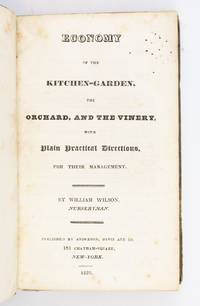
1828ST19567-013New-York: Anderson Davis and Co 1828. FIRST EDITION. 182 x 112 mm. 7 1/8 x 4 1/2". xii 13-206 pp. <br/> Publisher's gray boards backed with black roan flat spine divided into panels by double gilt rules gilt lettering. With an engraved plate depicting the recommended pruning and training of a grape vine. Front flyleaf with pencilled signature of Addie Gratacap and blue crayon signature of John Fields. Occasional neatly pencilled underlinings or marginalia in a 19th century hand. ◆Joints rubbed and cracked rear board with the tiniest bit of give spine with general wear including small losses at top and bottom boards somewhat soiled text with persistent foxing as usual in American imprints of this period; with obvious defects but what one would expect for an American book on this subject at this date.<br/> <br/> This practical guide to gardening in the United States was written in part as a rebuff to English agricultural writer William Cobbett who had cast aspersions on the type and quality of vegetables that could be grown in American kitchen gardens. After defending the honor of such American crops as lima beans Indian corn and winter squash Wilson offers advice arranged by planting season for growing asparagus peas root vegetables tender and hardy greens and varieties of squash. He doesn't quite see a central place for tomatoes in the vegetable garden finding it "the most forbidding-looking plant" and does admit that eggplant cultivation is impossible without a hothouse. Vegetables are followed by herbs for culinary and medicinal use and then by orchard fruits with apples for eating and cider leading the way. Wilson finishes with detailed instructions for grape cultivation illustrated by a plate depicting proper pruning and trellising practices. In addition to underlining key information on planting times and spacing distances in rows of vegetables a previous owner perhaps Addie Gratacap judging by her use of pencil found it amusing to count Wilson's digs at Cobbett which total 32. This work is rare in institutions and in the marketplace and is always found in unpleasant condition. RBH records just three copies at auction. Anderson, Davis and Co unknown
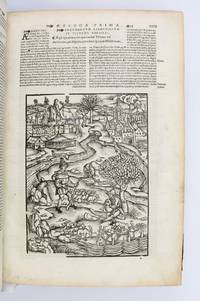
1529ST20181Lugduni Lyon: Jean Crespin 1529. 326 x 215 mm. 13 x 8 1/2". 6 leaves 12-268 pp.; 1-95 1 pp.; 1-600 pp. 8 leaves. Three sections in one. Edited by Josse Badius Ascensius. <br/> Restrained 17th century mottled calf covers triple ruled in blind with oblique gilt fleurons in each corner raised bands neatly rebacked and recornered with modern deep brown morocco marbled endpapers edges sprinkled. WITH 203 TOTAL ILLUSTRATIONS comprised of 190 different woodcuts 11 of which repeat once and one repeating twice. The first title printed in black and red with an elaborate woodcut border; the second title with a fleur-de-lys device. With criblé initials throughout in three sizes many historiated. Handwritten book label of Tobias Gutberleth on title see below title additionally with ink ownership inscription of G. van Olden Junior dated 1860. Front flyleaf with pasted-in manuscript inscriptions of "Francis" and "R. E. Hattiule". Line numbers in ink in a contemporary hand through much of the volume. Mortimer 538; Renouard "Badius Ascensius" III 377; Adams V 474; Brunet V 1282; Graesse VI 336. Binding yawning a bit edges somewhat rubbed but a solidly restored and perfectly acceptable binding. Light smudges of no consequence here and there other trivial defects but internally very clean fresh and bright.<br/> <br/> This is a well-preserved copy of a 16th century printing of Virgil's "Opera" profusely illustrated with wonderfully detailed woodcuts replete with charm and drama. Initially produced in Strassburg for Johann Grüninger’s 1502 Vergil our striking set of illustrations was reused in the 1515 German translation of the Aeneid and then in Sacon’s 1517 Lyon printing which bears many similarities to the present edition. While the plates do show some of the wear expected with this level of reuse—Mortimer notes that several had split by the time of the 1517 printing—the impressions here are nevertheless quite good and the illustrations are no less compelling than befoe. The anonymous artist whom Mortimer describes as having "a skilled hand and lively imagination" has provided animated scenes that perfectly match the content of the text. They range from the charming pastoral images that accompany the Eclogues and Georgics full of cheerful farmers and leaping stags to the dramatic battle scenes of the Aeneid with their fierce heroes in full 15th century armor grotesque monsters and elaborately rendered cities engulfed by leaping flames all overlooked by the pantheon of unconcerned gods. The text here is framed by the commentary of French scholar and printer Josse Badius Ascensius as well as by the commentaries of Filippo Beroaldo Giovanni Pierio Valeriano Bolzani and others. The present copy was owned early in its history by Tobias Guberleth 1609-62 poet and head of the Leeuwarden Latin school. Jean Crespin unknown
1839ST20302-03London: Published for the Proprietor by Charles Tilt 1839-40. FIRST EDITION. 198 x 122 mm. 7 1/2 x 4 7/8". Two volumes. <br/> Extremely pleasing contemporary crimson pebble-grain morocco covers with a double gilt rule surrounding a large scrolling central frame raised bands spine gilt in compartments with elaborate small tools radiating from floral centerpieces turn-ins gilt patterned endpapers all edges gilt. WITH A TOTAL OF 36 ENGRAVED PLATES 18 in each volume by William and Edward Finden and others as called for after sketches by Bacon and Captain Meadows Taylor. Joints just a bit rubbed at head and tail two small scratches to one cover corners with just a whisper of wear occasional faint offsetting from plates the faintest foxing or stains to a very few plates a bit of thumbing otherwise beautiful copies with only the most trivial of imperfections.<br/> <br/> These are handsomely bound and extraordinarily well-preserved copies of the final two volumes of a series inspired by the author's time on the Indian subcontinent. The son of a noted sculptor Thomas Bacon 1813-92 was a talented artist whose service in the Bengal Horse Artillery furnished him with endless fascinating and "exotic" subjects for his sketches and drawings. In 1837 he published "First Impressions and studies from nature in Hindostan" which found an appreciative audience at a time when illustrated travelogues were much in vogue. He produced illustrations for Wilson's "Oriental Portfolio" and for the present "Oriental Annual" which had brought stories and views of the Far East to the British public beginning in 1834. In the 1839 edition Bacon and his very able engravers the Finden brothers present dramatic scenes of the seas around Tenerife and of the peaks of the Himalayas along with wonderfully detailed depictions of "monumental architecture" including temples tombs and military installations. For the 1840 volume Bacon collaborated with his friend Captain Philip Meadows Taylor 1808-76 a longtime British administrator with extensive knowledge of the region. There is more focus on cities in this volume and the authors recount both legends and historical facts to set the scene. The plates include a portrait of the emperor of Delhi but focus on city views and fine architecture. Produced when William 1787-1852 and Edward 1791-1857 Finden were in an extended period at the top of their craft the plates here are characterized by the great delicacy of detail sophisticated gradation of light and rich texture of surface for which they were known. While volumes from this periodical series appear on the market regularly they are rarely so finely bound and in such remarkable condition as the present pair. Published for the Proprietor, by Charles Tilt unknown
190491632NY:: Century Co. Good. 1904. Hardcover. Contains parts of Jack London's THE SEA-WOLF and the concluding parts of Edith Wharton's ITALIAN VILLAS AND THEIR GARDENS which includes five color plates by Maxfield Parrish among many other illustrations. First edition thus. Large thick octavo half bound in burgundy leather raised bands and gilt lettering on the spine marbled boards and endpapers. Shelf worn repaired at the hinges else good. ; 980 pages . Century Co., hardcover
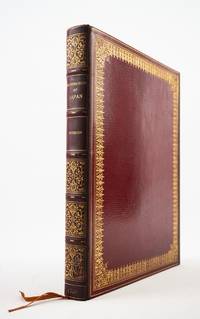
1822ST20877London: Printed for R. Ackermann 1822. First English Edition. 300 x 235 mm. 11 3/4 x 9 1/2". xvi 325 1 pp.Translated by Frederic Shoberl. <br/> Imposing contemporary crimson straight-grain morocco gilt covers with filigree frame with densely massed scrolling fleurons raised bands spine gilt in compartments with radiating viny scrolls surrounded by leaves and annular dots marbled endleaves all edges gilt. WITH 13 HAND-COLORED PLATES in etching and aquatint many after Japanese artworks one folding. Bookplate removed from front flyleaf. Bookseller's ticket of J. L. Thompson & Co Kobe Japan on front pastedown. Abbey Travel 557; Tooley 489; Martin Hardie "English Coloured Books" pp. 113-14. See also E. F. Strange "Japanese Illustration" pp. xxiii-xxiv. Spine and fore-edge of upper board slightly darkened a few minute flakes to lowest spine compartment but the binding extremely well preserved with very lustrous boards. Final 10 leaves slightly creased one repaired marginal tear but still A FINE COPY INTERNALLY exceptionally bright smooth and entirely fresh and clean.<br/> <br/> This generously proportioned production illustrated with 13 vibrant colored plates is a rare European account of Japan during the period in which the country was "closed" to the west offered here in its first English edition. Originally published in French in 1820 "Illustrations of Japan" is comprised of a history and description of the Tokugawa shogunate which Titsingh had translated from the Japanese plus Titsingh's own observations on the language customs and ceremonies of the Japanese people. The present English edition is accompanied by plates in etching and aquatint enhanced with hand coloring. Our author Dutch diplomat Isaac Titsingh 1745-1812 spent 14 years in Nagasaki for the Dutch East India company and between 1779-84 he served as trade director-cum-ambassador travelling to Edo now Tokyo for audiences with the shogun and other high officials in the shogunate. Unlike most of his Western contemporaries Titsingh was open-minded and curious about the people he encountered engaging with their art and culture; in fact art historian and Victoria & Albert Museum keeper Edward F. Strange tells us that Titsingh is the earliest known European collector of Japanese prints of which a number appear in the present volume. Our publisher Rudolph Ackermann 1764-1834 made his living issuing sumptuously illustrated books such as the present volume and was an early adopter of color aquatint and lithography technologies; Hardie writes that he was "the great presiding genius before whose magic wand so many pictorial books sprang into existence." In very attractive period morocco this is a particularly appealing copy of the work free of the foxing and offsetting that often plague copies of this and other large-format color illustrated books. Printed for R. Ackermann unknown
003103New York: Between Books c. 1977. 20 pages. Modified photos drawings notes commentary Arts Magazine article. . Pictorial Wrapper softcover. Very Good. 4to. Between Books Paperback
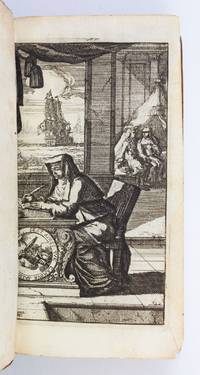
1693ST19567-153La Haye: Abraham de Hondt & Jacob van Ellinkhuysen 1693. Translated by Guilleragues. 140 x 75 mm. 5 1/2 x 3". 346 pp. <br/> Attractive contemporary speckled calf raised bands spine gilt in compartments with central gilt tool surrounded by gilt rules and tendrils gilt lettering all edges speckled red expert repairs to spine ends and perhaps to corners. With woodcut initials tailpieces and frontispiece of a nun at a writing desk. Front pastedown with ink signature of Martin Bowes. Brunet III 1031; see also: Barbier II 1286. Joints and corners a little worn but the binding otherwise in excellent condition; just a hint of browning along a couple edges but A REMARKABLY BRIGHT FRESH AND CLEAN COPY INTERNALLY.<br/> <br/> This is a collection of passionate love letters purportedly written by a Portuguese nun Mariana Alcoforado to her French lover Noël Bouton de Chamilly. First published in 1669 the letters express profound longing heartbreak and emotional intensity. Although the work originally included just five letters the racy content raised quite a sensation and the book proved so popular that it went through several expanded editions that included newly "discovered" missives. The present edition includes a total of 12 epistles by our nun and 11 responses from her lover as well as another series of "tender and passionate" love letters between a couple referred to only as "la présidente F. à M. Le baron de B." Though the original work is now widely believed to be a piece of fiction written by the supposed translator French diplomat Gabriel Joseph de Lavergne viscomte de Guilleragues 1628-84 it is still considered to be a very important epistolary novel providing insight into the emotional landscape of the time and influencing numerous adaptations and imitations in literature. Some importance of the work can be seen in the fact that copies of the first edition consistently bring substantial prices at auction more than $25000 three times since 2010. The early ownership inscription on the pastedown belongs to Martin Bowes 1670-1726 a barrister and fellow of the Royal Society. Abraham de Hondt & Jacob van Ellinkhuysen unknown
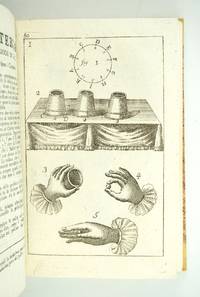
1795ST20614Venice: Giuseppe Orlandelli 1795. Fourth Edition. 180 x 114 mm. 7 x 4 5/8". 154 pp 1 leaf. <br/> Pedestrian 19th century half vellum over pink marbled paper boards smooth spine with old ink lettering. WITH 16 ENGRAVED PLATES SHOWING MAGIC TRICKS and numerous diagrams in the text. Tomash & Williams A56; Riccardi I 15. Marbled paper a little chafed title washed first and last leaf a bit soiled and with repairs at inner and outer margins but no text affected half a dozen other leaves with minor repairs or mounted isolated small smudges or corner creases but still an acceptable copy of a book expected to be found in poor shape--the text clean the impression of the engravings crisp and the binding solid.<br/> <br/> This is a pleasing copy of a rather scarce collection of mathematical puzzles magic tricks and illusions abounding with illustrations and diagrams. Our author Bolognese architect and engineer Giuseppe Antonio Alberti 1712-68 had a varied career which is reflected in his literary output: his publications discuss civil engineering pyrotechnics mathematics and factories among other topics. Described by Tomash and Williams as "the type of book that mischievous uncles like to own" the present work begins with a study of amusing and unusual arithmetic equations and puzzles before discussing magic tricks and illusions including card tricks dice games and even complex stage illusions involving specialized equipment. These are illustrated with a series of delightful copper engravings with labelled mechanisms sometimes operated by lively little figures or disembodied hands with ruffled sleeves. "Giuochi" was first published in Bologna in 1747 and remained in print for a further 20 years after the present edition. Because this is the kind of book that would have been subjected to uncareful use early editions are difficult to find in the attractive condition seen here. Giuseppe Orlandelli unknown
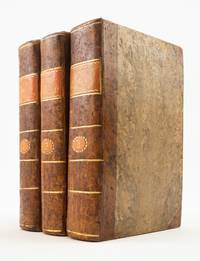
1717ST20754Lyon: Chez Anisson et Posuel 1717. Second Edition. 197 x 125 mm. 7 3/4 x 5". Three volumes. <br/> Pleasing contemporary half calf over paper boards painted to resemble tree calf smooth spines with gilt rules and two citron morocco labels. Attractive woodcut head- and tailpieces throughout WITH 153 ENGRAVED PLATES depicting the scenery flora fauna dress and architecture of locations described. Contemporary ink ownership inscription of De St. George on title page. Brunet V 903; Graesse VII 180. Corners slightly bumped and rubbed joints with just a hint of flaking but the period bindings solid and still extremely attractive survivals. Internally with a handful of quires faintly browned other trivial defects BUT AN UNUSUALLY WELL-PRESERVED SET inside and out.<br/> <br/> This lively narrative of travel at the turn of the 18th century includes a wealth of illustrations and a pleasing period bindings. A professor at the Jardin des Plantes in Paris Joseph Pitton de Tournefort 1656-1708 developed a system of botanical classification that became the standard method until it was superseded by Linnaeus in 1753. He made numerous collecting trips throughout his career; the present work is the record of his most significant voyage through Greece Turkey and along the Black Sea to Armenia and Georgia. The expedition which took place between 1700-02 had been proposed by the Comte du Pontchartrain then Secretary of State in 1699 as both a botanical and commercial endeavor. Tournefort's observations include a wealth of botanical detail but are also a rich source of information about the landscapes and peoples he encountered. He was accompanied on this voyage by German botanist Andreas Gundelsheimer and by the painter Claude Aubriet ca. 1665-1742 who had collaborated with Tournefort on his previous work "Eléments de Botanique." The work of Aubriet a botanical illustrator at the Jardin des Plantes was long appreciated by botanists and laypeople alike for its beauty and accuracy. The detailed depictions of plants here are accompanied by illustrated maps and engravings depicting zoological specimens archaeological sites and the costumes and cultures of the areas visited. The account was published posthumously in 1717 first in Paris and then shortly afterward in the present Lyon edition. The bindings here were never meant to be showy but they have come down to us in a remarkable state of preservation given their pedestrian construction and expected use. Chez Anisson et Posuel unknown
1597ST15850London: Printed by the Widow Orwin for Thomas Man 1597. FIRST EDITION. PRESENTATION COPY. 187 x 130 mm. 7 3/8 x 5 1/8". 5 p.l. 93 pp. <br/> 20th century gray paper boards. Printer's device on title page. Title page inscribed "Gyven to name inked through but perhaps "Thomas Langham" by the aucthor Jo. Norden"; tail margin of title inscribed "Constantin Adyn his booke"; 19th century ink signature of Benjamin Hynam on recto and verso of title. Front pastedown with early 20th century bookseller's description pasted on. STC 18614; ESTC S113322. ◆Boards a bit soiled but otherwise unworn minor dust-soiling or browning to head margins one quire a little browned occasional trivial smudges or tiny rust spots but an excellent copy generally clean and fresh.<br/> <br/> Written during a fallow period in the author's regular career as a cartographer this work emphasizing the importance of service to God for all leaders and common soldiers in the sovereign's army was inscribed by the author to a friend or patron. One of several works Norden dedicated to the earl of Essex it got our author into professional difficulties when Essex's enemy Robert Cecil rose to power and was in a position to impede Norden's career as a mapmaker. Norden quickly tried to push responsibility onto a "false Norden" from Kent he was from Somerset but biographer Frank Kitchen has established that the shared "interests backgrounds written expression everyday circumstances and style" indicate there was but one author. Though best known for his surveys and maps--including the first county maps of England to include roads--the pious Norden ca. 1547-1625 also produced numerous works of devotion and prayer among them the enormously popular "A Pensive Mans Practice" which went to 40 editions in his lifetime. While his sincere religious sentiments are not to be doubted it must be acknowledged that Norden was most moved to write these manuals when he was between surveying jobs and short of money. Aimed at soldiers of every rank the present work urges the "necessity of the fear and service of God" and "the use of all divine virtues both in commanding and obeying practicing and proceeding in the most honorable affairs of war." Norden also encourages civilians to support and respect the military and to pray for men-at-arms. This is an especially rare work: OCLC and ESTC find five copies in U.S. libraries and except for the two copies in the Cottesloe Library there seems to have been only one other--defective--copy at auction listed by RBH and ABPC. The present item is even more desirable as an extremely uncommon presentation copy signed by a 16th century English author. The Constantin Adyn who owned our copy is likely the early seventeenth-century schoolmaster otherwise known as Constantine or Constantinus Adyn fl. 1605-25 whose school was situated in Brighton according to Church of England records. The latest owner is likely the Anglo-Russian writer bibliophile and watchmaker Benjamin Hynam 1769-1859 a prominent figure in the distinguished Hynam family imperial watchmakers to Russian royalty. In the late eighteenth century the Hynams maintained a presence in both St Petersburg and London. Printed by the Widow Orwin for Thomas Man unknown
1593ST15853London: Deputies of Christopher Barker 1593. FIRST EDITION. 185 x 140 mm. 7 1/4 x 5 1/2". 12 p.l. 328 327-342 pp. <br/> Contemporary limp vellum yapp edges flat spine with later red morocco label. Inside front cover with ink owner's inscription of George Wilson dated November 1 1854; front flyleaf with engraved armorial bookplate of Thomas Francis Fremantle; early pen trials to title page old mathematical calculations on rear endpaper. Cockle 57; STC 23468; ESTC S117986; Heuser Beatrice "Strategy Before Clausewitz: Linking Warfare and Statecraft 1400-1830" 2017 chapter 5: "A National Security Strategy for England: Matthew Sutcliffe the Earl of Essex and the Cadiz Expedition of 1596." ◆Vellum a bit soiled half-inch chip to head of spine two-inch crack to fore edge of front cover title page with small ink stain and light soiling other trivial imperfections in the text but still an excellent copy clean and fresh internally and in a sound binding.<br/> <br/> This rare treatise addressing all aspects of war has been cited by military historian Beatrice Heuser as perhaps a unique example of a case "in which a civilian an 'armchair strategist' published a book containing a comprehensive concept for how to conduct a war with a specific enemy that was applied in practice." According to Heuser Sutcliffe penned "a national security strategy for England" and one that Robert Devereux Earl of Essex to whom the work is dedicated put into practice in the country's ongoing conflicts with Spain leading to the operation that resulted in the successful capture of Cadiz in 1596. Sutcliffe had met Essex at Trinity College Cambridge where he had likely served as one of the young earl's tutors. DNB observes that Sutcliffe who studied law before becoming a doctor of divinity applied his legal training to this work in which he examines not only fortifications aggressive and defensive tactics and the practical considerations of recruiting paying feeding and housing armed forces but also discusses laws and regulations governing the military. Cockle notes that the work "was well known both at home and abroad" and that it "urged the importance of military studies." Following this consequential work Sutcliffe restricted his writings to theological subjects and enjoyed a 40-year career as dean of Exeter Cathedral. This work is rare in the marketplace: ABPC and RBH find just three other copies at auction in the past 40 years. Deputies of Christopher Barker unknown
06478Overbrook Press 1935. First edition one of 450 copies. Hardcover. Fine. Quarto full blue English buckram over boards vi 3 33 2 pp. one illustration. Attractively printed by John MacNamara in black and blue with decorative initials by Anna Simons and a decorative border by Valenti Angelo. Composition and Typography by Margaret B. Evans. The Overbrook Press is generally considered to be one of the greatest private presses in operation during the 1930's. Zamorano Club bookplate on endpaper slight fading at spine else a fine copy. Walsdorf 146. <br/> <br/> Overbrook Press, (1935). First edition, one of 450 copies. hardcover
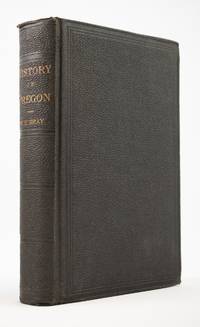
1870ST20532Portland Oregon: Harris & Holman 1870. FIRST EDITION in Book Form. 235 x 150 mm. 9 1/4 x 6". 624 pp. <br/> Publisher's black cloth flat spine with gilt lettering. With a frontispiece etching depicting Astoria in 1811. Errata slip tipped onto final page. A 1980 newspaper article from The Springfield News about William H. Gray's descendants. Graff 1630; Howes G-342; Sabin 28416. Head of spine with minute fraying slight soiling to back cover isolated minor foxing chosen paper stock not as bright as it could be but still a really excellent copy the text clean and fresh and the binding with few signs of use.<br/> <br/> Originally published as a series of articles in the "Astoria Marine Gazette" between 1865-66 the contents of this volume include chapters on religious proselytizing encounters often of a violent nature with indigenous peoples mountain men the formation of an early government and commercial interests in the area. Originally a carpenter from Utica William Henry Gray 1810-89 joined the party of fellow missionaries Marcus Whitman 1802-1847 and Henry Spalding 1803-1874 and their respective wives Narcissa 1808-1847 and Eliza 1807-1851 on a seven-month 3000-mile journey overland from their homes in upstate New York to Fort Vancouver. Narcissa and Eliza were the first white women to cross the Rocky Mountains. Gray gives a long absorbing account of that trip in the text here. He was later involved with efforts to create a provisional government among settlers of the area. As an historian Gray was widely censured even as he was acknowledged as an important source: Howes says the present work is "undependable and biased but as the product of a pioneer of 1838 it cannot be ignored." This book is easy enough to find but it is normally encountered in rough shape. Harris & Holman unknown
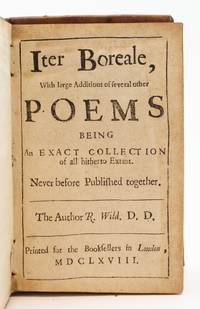
1668ST19030London: Printed for the Booksellers in London 1668. First Complete Edition Fourth Edition overall. 145 x 90 mm. 5 3/4 x 3 1/2". 1 p.l. blank 3-122 pp. 3 leaves table and final blank. <br/> Contemporary sheep covers ruled in blind smooth spine early paper label with gilt titling. Front blank with the ink ownership inscription of John Drinkwater; inside lower board with the book label of Michael Curtis Phillips. Hayward "English Poetry" 121 this copy; Grolier Club "Wither to Prior" 976; Wing W2136; ESTC R7135. ◆Covers with light scuffing bottom leather thong of two broken but the text block quite secure at the top pastedowns lifted but the insubstantial binding still in remarkably good original condition; internally A VERY FINE COPY especially clean fresh and bright.<br/> <br/> From the library of Richard Jennings noted for the outstanding condition of his books this is an especially fresh and extraordinarily well-preserved copy of poems by a Puritan divine known for his surprisingly biting wit. Dryden dubbed Robert Wild 1609-79 "the Wither of the City" after hearing the Financial District's workers' enthusiastic reception of the title poem here which celebrates General Monck's successful campaign to restore Charles II to the throne: "I have seen them reading it in the midst of 'Change so vehemently that they lost their bargains by their candles' ends." Our collection contains several of Wild's most notable works including "The Recantation of a Penitent Proteus" satirizing Puritan clergy who had conformed to the Anglican Church; "The Loyal Nonconformist" professing his loyalty to the monarchy but maintaining his Puritan religious views; and "The Fair Quarrel" an attack on the 1665 Five Mile Act designed to drive nonconformist ministers out of their parishes. Wild was something of a paradox: he could preach a hellfire Puritan sermon but also write verse sufficiently scandalous to be mistakenly attributed to the notorious libertine John Wilmot Earl of Rochester. Our volume was loaned by Richard Jennings for the celebrated 1947 London Exhibition of First and Early Editions of English Poetry catalogued by John Hayward. It would not be reasonable to expect to find a finer unrestored contemporaneous copy of this imprint. Printed for the Booksellers in London unknown
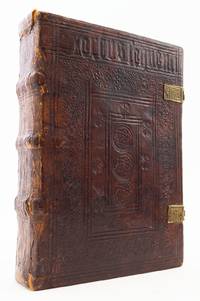
1504ST18751Basel: Michael Furter 1504. 220 x 138 mm. 8 x 5 1/2". CXXII 10 LXX 1 leaves. <br/> EXCELLENT CONTEMPORARY BLIND-TOOLED CALF covers panelled in blind title stamped in gothic letters at head of upper cover central panel with vertical row of three large rosettes EBDB tool s013635 this enclosed by a frame with eight carnation stamps EBDB tool s013643 then by a roll-tooled frame filled with circles containing flowers fruit and stars EBDB tool r000675; Kyriss 84 Roll 6 lower cover similarly framed but with central panel divided by diagonal blind rules into four compartments each containing a large rosette raised bands spine panels with one or two floral medallion stamps upper cover with original brass catches stamped "IVIII" newer clasps and leather straps probably newer pastedowns fore edge with the number "75" in ink subtle repairs to head and tail of spine as well as lower corner on back cover. Title and opening page with decorative woodcut initials main title and sectional title each with woodcut vignette and full-page woodcut on verso. VD16 T-653; VD16 H-6510; Adams L-1124 L-1123. For the binding: Kyriss 84 Tafel 171 Rolle 6; EinbandDatenbank EBDB tools s013635 and r000675 workshop w002075. An ink stain touching text on one leaf and slightly affecting four adjacent leaves but the vast majority of the contents clean fresh and in fine condition. Quarter-inch crack at top of each joint with leather across the spine consequently becoming a small flap light signs of wear to leather hinges mostly open--but the binding entirely sound with almost no wear at all to the joints. An extremely attractive volume THE REMARKABLY WELL-PRESERVED BINDING FEATURING FINE DEEP IMPRESSIONS OF ITS STAMPS.<br/> <br/> This is a rare early compilation of Medieval liturgical chants in an appealing binding by an Augsburg workshop. Kyriss dubbed this bindery Hirsch-Rolle I for its distinctive deer i.e. "hirsch" roll tool and noted it was active 1483-1532. EBDB the bindings database of the Berlin State Library has identified 26 bindings in German libraries from this workshop. The wide attractive floral roll here is most unusual among the binding's wide array of design elements from flowers and plants to stars all contained in tightly packed circles that bring bubbles to mind. Our two texts contain "sequences"--words sung between the Gradual and the Gospel on festival occasions--written by among others Gregory the Great the fourth century bishops Hilarius of Poitiers and Ambrose of Milan and fifth century Latin Christian poet Coelius Sedulius. They were printed by Michael Furter d. ca. 1516-17 who operated a press in Basel from 1489 into the second decade of the 16th century. He was especially known for the decorative nature of his volumes. Haebler's "Typenrepertorium" counted 12 sets of embellished woodcut initials Furter employed; examples from two of these sets may be seen here on the title page of the first work and at the opening of the text in both. The woodcut illustrations here are also notable. The title woodcut Schramm XXII 1263 on the first work is a depiction of the Magi presenting gifts to the Christ Child and his mother done early in the career of Albrecht Dürer 1471-1528. It was one of the "Basel Prayer Book Woodcuts" 25 illustrations likely meant for a "Hortulus Animae" Johann Bergmann von Olpe intended to print in 1494 but never issued. A large striking woodcut depicting the Christ Child at the center of a sunburst surrounded by medallions with the devices of the four Evangelists appears on the verso of the title in the first work and on the title page of the second. On the verso of the second title page is a woodcut of the Crucifixion from the "Postilla" by Guillelmus Parisiensis Basel 1491 Schramm XXII 336. This is an especially affecting and detailed scene: Mary Magdalene clings to the foot of the cross while Jesus looks serenely down at the Virgin Mary who is collapsing in the arms of another woman as several soldiers jeer. On either side of Christ the souls of the thieves crucified with him are being taken one--who had asked to be remembered when Jesus came into his Kingdom--by angels the other by demons. A banner marked with the SPQR of the Roman Empire flutters in the background. All in all this is a very pleasing exemplar of post-incunabular book-making. Michael Furter unknown
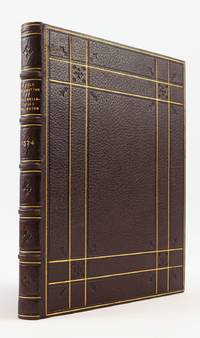
1574ST19871Heidelberg: Imprinted by Michael Schirat 1574. First Edition in English. 194 x 151 mm. 6 5/8 x 6". 6 p.l. last blank 193 pp. 2 leaves final blank. <br/> Very nice late 19th century dark maroon morocco by Lloyd of London stamp-signed on front turn-in covers framed by gilt and blind rules blind ruling at corners raised bands spine panels with blind-stamped quatrefoil gilt lettering gilt-ruled turn-ins quatrefoil cornerpieces all edges gilt. Lacking the folding "Table of Discipline" called for in ESTC. Front pastedown with armorial bookplate of Albert Ehrman; rear pastedown with Ehrman's faded ink stamp bookplate of "Bibliotheca Broxbourniana / J. P. W. E. / 17 March 1949 / ex dono A. & R. E." STC 24184; ESTC S118505; USTC 507892. Text washed and pressed but except for the first and last few leaves without the typical resultant darkening and fading otherwise an extremely attractive copy still fresh the margins especially wide and the binding lustrous and scarcely worn.<br/> <br/> First issued in Latin in the same year as our edition this is the major work of English puritan Walter Travers 1548 - 1625 applying the Calvinist presbyterian system of ecclesiastical government to the episcopal Church of England. According to DNB for Calvin and Travers alike "the duty of the theologian was merely to identify the church's structure and apply it to contemporary circumstances. It was in this last respect that Travers's originality lay for he subtly adapted Calvin's biblical model to an English context. In order to undermine the diocesan episcopate of the English church Travers started off with an examination of the role of bishops in the New Testament showing that they were not part of a separate hierarchy with authority over other clergy but merely ministers of local congregations. He also differed from Calvin in identifying elders as a type of deacon rather than a separate kind of minister." Our book was written during Travers' 1570-76 sojourn in Geneva where he became a friend of Calvin's successor Theodore Beza. Afterwards he ministered to English merchant marines in Antwerp where he refused to use the Book of Common Prayer for worship. Despite this when Travers returned to England he became chaplain to Elizabeth's chief minister William Cecil and tutor to his son. As DNB notes "his close ties to influential courtiers of a Calvinist inclination" would be key to Travers' career keeping him out of serious trouble despite his strongly presbyterian views. Our volume has a distinguished provenance coming from the celebrated Broxbourne library of Albert Ehrman 1890-1969 a diamond merchant who gathered a fine collection of books at his home at Broxbourne in Hertfordshire. He spent half a century collecting books specializing in incunabula and early bindings as well as early type specimens and bibliographies. Feather says that "his collecting was intelligent and scholarly for he sought to illustrate the history of printing and the book trade and the early development of trade binding." Ehrman also authored learned articles on fine bindings and the history of printing. The present work is uncommon: we could trace just five copies at auction since 1979; only the 1979 copy contained the folding "Table" and that one was noted as "slightly defective and mounted on linen.". Imprinted [by Michael Schirat] unknown
1578ST15632London: Printed by John Kingston for Andrew Maunsell 1578. First Edition in English. 189 x 134 mm. 7 3/8 x 5 1/4". 4 87 1 leaves with foliation errors but complete.Translated from the Latin by Thomas Twyne. <br/> Retrospective half pigskin over marbled boards raised bands red morocco label. Title with woodcut ornament head- and tailpieces many decorative initials. Printed in black letter. Front pastedown with Macclesfield bookplate for the South library; title with inscription in ink "Dulcius ex ipso fonte bibuntur aquae" "Sweetly the waters have been drunk from the fountain itself" and with the initials "D. Fl." see below; a couple of contemporary annotations in ink one slightly shaved; numerous marginal readers' marks in ink and pencil. STC 6231; ESTC S105155. Paper a shade or two less than bright title somewhat soiled a dark stain affecting the upper corner of ff. 24-28 touching text but all is legible; still an overall very good clean copy in a pleasing new binding.<br/> <br/> This is the first appearance in English of Daneau's 1576 "Physica Christiana" the foundational work of "Mosaic physics" which attempted to reconcile the account of creation in Genesis with scientific knowledge of the natural world in order to create a "Christian natural philosophy." Though obviously theological in origin "Christian Physics" is nevertheless substantially a work of natural history generally adopting the Aristotelian worldview then prevalent. The first of two parts is a disquisition on creation a long Socratic dialogue on the meaning of the opening chapters of Genesis. The second part which occupies a good deal more than two-thirds of the volume is a broader treatise on nature including discussion of such things as light and shadow meteors the rainbow thunder precious stones glass gold various trees stars and planets fish birds elephants foxes and many more topics. A Calvinist theologian forced into itinerancy because of his incautiously expressed opinions Daneau 1530-95 produced a considerable number of books mostly commentaries on the Bible and controversial works written against Lutherans and Catholics alike. Our copy has a couple of curious contemporary marginal annotations. On the verso of fo. 2 at the beginning of the second chapter someone noted "Five / speciall / copies of na- / turall phi- / losophye." And at the head of fo. 39 mis-numbered 40 recto is the inscription "Sr. Walter Rawley Laureatus poeta May 4 anno reg. Eliz. 39 anno dom. 1598." There is nothing in Raleigh's biography that can account for his being mentioned as poet laureate in 1598; in that period he was occupied in naval pursuits against the Spanish armada. It has been suggested that our copy was once owned by scholar and translator Andrew Hartwell 1553-1606 a bibliophile who sometimes used the Latin motto which appears on the title page here and who marked passages in his books with the floret-like squiggle seen here on ff. 3-12. At the same time the "D. Fl." inscription on the title page resembles the ownership mark used by the celebrated 17th century bibliophile antiquary politician and magistrate Sir Daniel Fleming 1633-1701. Later the book was securely located in the great library of the earls of Macclesfield which was sold in 12 sales at Sotheby's from 16 March 2004 to 2 October 2008 for some £22 million at the time approximately $40 million. The library was dispersed when the 9th Earl Macclesfield Richard Timothy George Mansfield Parker b. 1943 who was described by the "Independent" as leading an "unconventional lifestyle" was forced to leave his 14th century Shirburn Castle after a protracted family dispute. Called by the paper "a sleeping beauty" his crenellated home had a moat a drawbridge and at the time of the Earl's departure a repair bill of approximately £2.6 million. Despite the building's dilapidation the books in the very large library were distinguished for being uniformly well preserved were almost always in their original bindings and were a sensation at auction for more than four years. The present work is rare: ABPC and RBH locate just one other copy at auction in the past 40 years. [Printed by John Kingston] for Andrew Maunsell unknown
a87138Paris 1649 first edition Cardin Besongne. Octavo 15p. later wraps. Good. . paperback