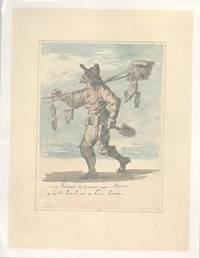
19th Century French ArtistBiblio.com

8 059 résultats
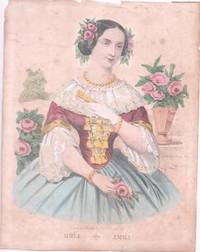
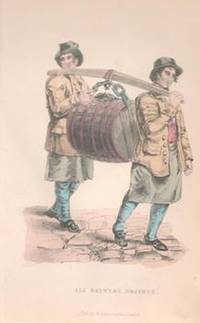
18-2338Epinal France: Ch. Pellerin 1870s. Large format hand-colored broadside lithograph 15†x 12â€. Very Good. Printed in France.Originally conceived in 1796 by Jean-Charles Pellerin in his native village of Épinal Vosges the images d'Épinal were inexpensive woodcuts and lithographs of religious and historical content intended for the commonconsumer. During the Napoleonic wars these images became extremely popular as Pellerin's printing house Imagerie d'Épinal cornered the market on commemorative historical prints. During the Great War the traditional style of these prints appealed to French artists looking to show their patriotism as in the eyes of an increasingly anti-German public the image d'Épinal came to represent a distinctly French product unmarred by foreign influence. The prints had a further appeal in that their minimalist form allowed many artists to stay true to the modernist ideals of their time. Epinal, France: Ch. Pellerin, [1870s]. unknown
18-2337Epinal France: Ch. Pellerin 1870s. Large format hand-colored broadside lithograph 15†x 12â€. Very Good. Minor loss on top left corner not affecting image. Reinforced with tape on verso. Printed in France.Originally conceived in 1796 by Jean-Charles Pellerin in his native village of Épinal Vosges the images d'Épinal were inexpensive woodcuts and lithographs of religious and historical content intended for the commonconsumer. During the Napoleonic wars these images became extremely popular as Pellerin's printing house Imagerie d'Épinal cornered the market on commemorative historical prints. During the Great War the traditional style of these prints appealed to French artists looking to show their patriotism as in the eyes of an increasingly anti-German public the image d'Épinal came to represent a distinctly French product unmarred by foreign influence. The prints had a further appeal in that their minimalist form allowed many artists to stay true to the modernist ideals of their time. Epinal, France: Ch. Pellerin, [1870s]. unknown
18-2334Epinal France: Ch. Pellerin 1870s. Large format hand-colored broadside lithograph 16.5†x 12â€. Very Good. Reinforced with tape on verso. Printed in France.Originally conceived in 1796 by Jean-Charles Pellerin in his native village of Épinal Vosges the images d'Épinal were inexpensive woodcuts and lithographs of religious and historical content intended for the commonconsumer. During the Napoleonic wars these images became extremely popular as Pellerin's printing house Imagerie d'Épinal cornered the market on commemorative historical prints. During the Great War the traditional style of these prints appealed to French artists looking to show their patriotism as in the eyes of an increasingly anti-German public the image d'Épinal came to represent a distinctly French product unmarred by foreign influence. The prints had a further appeal in that their minimalist form allowed many artists to stay true to the modernist ideals of their time. Epinal, France: Ch. Pellerin, [1870s]. unknown
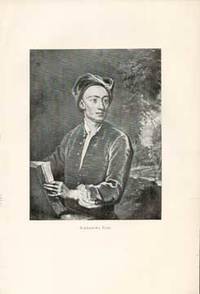
63-1940London: ca. 1820. Engraving 8.5 x 11 cm. Good with image rubbed loss at upper right corner. Clarke was an Irish Methodist Theologian. [London: ca. 1820]. unknown
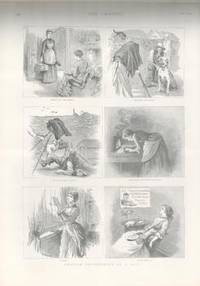
71-7501London: The Illustrated London News July 5 1902. Wood engraving. 40 x 28.5 cm sheet. Very Good light toning and tears along sheet edges none extending into image. London: The Illustrated London News, July 5, 1902. unknown
71-7505London: The Illustrated London News July 5 1902. Wood engraving. 40 x 28.5 cm sheet. Very Good light toning and tears along sheet edges none extending into image; brown staining at top sheet margin extending into image. London: The Illustrated London News, July 5, 1902. unknown
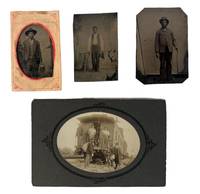
1870202721870. Early photographs of African Americans produced during the decades following emancipation provide important visual documentation of Black life during the Reconstruction and early Jim Crow eras. Portrait photographs and vernacular images from the late nineteenth century capture African Americans navigating newly won freedoms while confronting the economic and social constraints that defined the post slavery United States. Such photographs often record moments of labor travel and self presentation reflecting both the aspirations and realities of African American life during a period of profound social transformation. This small photographic archive dating from the 1870s through the 1890s preserves rare images of African American men during the generation immediately following the end of slavery.<br /> <br /> Archive of four original photographs including two tintypes and one albumen print measuring approximately 2.25 x 3.25 inches to 4.5 x 6.5 inches. The most visually complex image an albumen photograph dating from the late 1890s depicts a Black man and a young boy standing on railroad tracks behind a caboose where four white men are also present. The African American man wears a hat and carries a large sack across his back while the boy holds a basket filled with produce suggesting a scene connected to travel commerce or railroad labor in the expanding transportation networks of the late nineteenth century. The presence of the caboose and railroad workers situates the photograph within the rapidly developing rail infrastructure that reshaped the American economy during the post Civil War period. The remaining photographs consist of tintype portraits of African American men dressed in the formal attire of the late nineteenth century including bowler hats vests and tailored suits. One sitter is photographed wearing a three piece suit and holding a cane while another poses beside a table while holding his hat in hand.<br /> <br /> Portrait photography played an important role in African American communities during the decades after emancipation as newly freed individuals asserted dignity respectability and personal identity through formal portraiture. At the same time vernacular photographs such as the railroad scene record the economic realities and labor environments in which many African Americans worked during the late nineteenth century. Together these photographs document African American presence within both public labor landscapes and private studio portraiture during a formative period in the history of Black life in the United States. Four original photographs including tintypes and an albumen print measuring approximately 2.25 x 3.25 inches to 4.5 x 6.5 inches. One photograph with clipped corners; otherwise images clear and well preserved. Overall condition very good. unknown
39131Sudbury: 24th July 1823 . 1823 - Sudbury - Agreement for purchase of messuage & garden by Thomas Smith of Sudbury Suffolk Cordwainer from William Moulton No.5 Portland St. London carpenter and joiner. The property; Cornard End Cornard Street Parish of Saint Peter was formerly occupied by James Webb then Thomas Moulton then Charlotte his widow. Folded sheet of paper watermarked 1816 - folded in 2 written on 2 sides. Signed by William Moulton & Thomas Smith witnessed by Wm Dowman. Sudbury: 24th July, 1823 . unknown
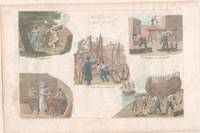
18-2385Pont-à -Mousson: Haguenthal 1870-1900. Large format color broadside Bilderbogen 16†x 11â€. Good. Some loss in left margin not affecting image. Bottom row of images detached from top two rows. Mounted on paper. Text in French.Originally conceived in 1796 by Jean-Charles Pellerin in his native village of Épinal Vosges the images d'Épinal were inexpensive woodcuts and lithographs of religious and historical content intended for the commonconsumer. During the Napoleonic wars these images became extremely popular as Pellerin's printing house Imagerie d'Épinal cornered the market on commemorative historical prints. During the Great War the traditional style of these prints appealed to French artists looking to show their patriotism as in the eyes of an increasingly anti-German public the image d'Épinal came to represent a distinctly French product unmarred by foreign influence. The prints had a further appeal in that their minimalist form allowed many artists to stay true to the modernist ideals of their time. Pont-à-Mousson: Haguenthal, [1870-1900]. unknown
71-6856Paris: Chez Marotte circa 1830. Hand-colored lithograph. 34.5 x 27 cm sheet. Good foxing throughout sheet toned small tears along sheet edges.Provenance: ancienne galerie Vandevoorde 22 rue Vignon Paris. Paris: Chez Marotte, circa 1830. unknown
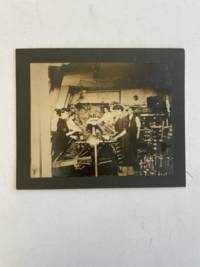
18258Albumen photo of women doing factory work. C. 1890s. Measures 9 x 7 inches. Photo shows 4 women working over a large industrial machine two on either side so they face one another. 2 wear dark smocks over their dresses sleeves rolled to the elbows as their hands work the machine. Their hair is tied back and eyes turned downward focused on the work. A man in vest and shirtsleeves stands behind them presumably supervising their progress. The 1800s saw new job opportunities for women on factory floors providing independence previously unavailable. The working conditions were often harsh with women receiving one half to two-third of male wages and working up to sixteen hours a day six days a week. The women in this image appear to be in a basement room a small gas light hanging from the ceiling and stone walls visible behind them lined with a jumble of boxes. The Female Protective Union was established in 1850s in order to improve workplace conditions for women. Sunning to image but details and expressions still clear. Small 1-inch surface tear to side of image does not affect subjects or important details. Overall very good condition. unknown
71-3134London: R. Ackermann 1824. Hand colored etching. 130 x 80 mm. sheet. Very Good.Provenance: From the collection of the Late Frederick G. Ruffner Jr. founder of Gale Research Detroit. London: R. Ackermann, 1824. unknown
73-4203London: 19th Century British Publisher circa 1800s. 22x15 cm. Black and white engraving. Very Good.Provenance: From the collection of the late Frederick G. Ruffner Jr. founder of Gale Research Detroit. [London?: 19th Century British Publisher, circa 1800s] unknown
63-1161Germany: 1837. . Steel Engraving. 10 x 8 cm. Good with some staining. Text in German. [Germany: 1837]. unknown
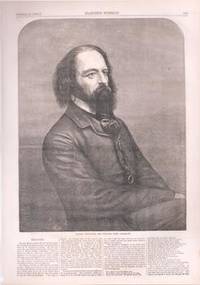
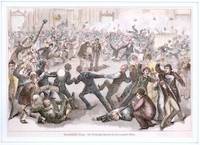
71-8984New York: Harper’s Weekly October 14 1865. Wood engraving. 39 x 28 cm sheet. Text in English on verso. Very Good a few brown spots along sheet edge. New York: Harper’s Weekly, October 14, 1865. unknown
71-4378London: The Graphic February 6 1886. Wood engraving. 40.3 x 29 cm. sheet. Very Good. London: The Graphic, February 6, 1886. unknown
71-3186Paris: Galerie Industrielle circa 1822. Hand colored engraving. 155 x 236 mm. sheet. Good a speck of foxing.Provenance: From the collection of the Late Frederick G. Ruffner Jr. founder of Gale Research Detroit. [Paris: Galerie Industrielle, circa 1822]. unknown
17-6758Gemany: German publisher circa 1856. Hand-colored wood engraving on newsprint. Text in German. 15.5 x 23 cm image. 17.5 x 25.5 cm sheet. Very Good. Gemany: German publisher, circa 1856. unknown
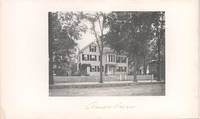
71-3182Boston: Houghton Mifflin & Co. 1855. Photogravure. 125 x 202 mm. sheet. Very Good toning along sheet edges.John Greenleaf Whittier was an American Quaker poet and advocate of the abolition of slavery in the United States. Provenance: From the collection of the Late Frederick G. Ruffner Jr. founder of Gale Research Detroit. [Boston: Houghton, Mifflin & Co., 1855]. unknown
18-2389Pont-à -Mousson: Haguenthal 1870-1900. Color broadside Bilderbogen 8.5†x 11.5â€. Good. Some loss on bottom right corner repaired with tape on verso. Some wrinkling. Text in French.Originally conceived in 1796 by Jean-Charles Pellerin in his native village of Épinal Vosges the images d'Épinal were inexpensive woodcuts and lithographs of religious and historical content intended for the commonconsumer. During the Napoleonic wars these images became extremely popular as Pellerin's printing house Imagerie d'Épinal cornered the market on commemorative historical prints. During the Great War the traditional style of these prints appealed to French artists looking to show their patriotism as in the eyes of an increasingly anti-German public the image d'Épinal came to represent a distinctly French product unmarred by foreign influence. The prints had a further appeal in that their minimalist form allowed many artists to stay true to the modernist ideals of their time. Pont-à-Mousson: Haguenthal, [1870-1900]. unknown
63-9780Paris: ca. 1850. Engraving. 12.5 x 20 cm. Very Good. [Paris: ca. 1850?] unknown
71-1542Paris: Lemaitre direxit circa 1846. Hand-colored engraving. 3 5/8 x 5 3/8 in. image; 5 3/8 x 8 1/4 in. sheet. Very Good light toning and foxing in the margins tape along top sheet edge. [Paris: Lemaitre, direxit, circa 1846]. unknown
71-4270London: The Illustrated London News 1869. Wood engraving. 20 x 28 cm. sheet. Very Good. Masking tape remains showing through at top and bottom sheet edges. London: The Illustrated London News, 1869. unknown
71-9279London: British Publisher circa 1800. Engraving on laid paper with the initials ‘G.R.’ watermark. 31.5 x 20 cm sheet. Very Good age toning along sheet edges. [London: British Publisher, circa 1800]. unknown
71-3221Williamsburg VA.: Williamsburg Print Replica circa 1990. Color offset lithograph of an original watercolor. 340 x 265 mm. sheet. Very Good.Provenance: From the collection of the Late Frederick G. Ruffner Jr. founder of Gale Research Detroit. Williamsburg, VA.: Williamsburg Print Replica, circa 1990. unknown