[19TH CENTURY CIRCUS POSTER].Biblio.com

2 166 résultats
1862165540Munich.: Deschler's Book Brotherhood. 1862. Circus Suhr & Huttermann Poster: Circus Suhr & Hüttemann verbunden mit Theater. Heute Samstag den 2. August 1862: grosse ausserordentliche Vorstellung in der höheren Reitkunst noch nie gesehen Gymnastik und Vorführung der ausgezeichnetsten Schulpferde. Zum Zweitenmale. Black and white poster with engraving. One-sheet. Leaf size: 43.5 x 23.5cm. Top edge slightly browned and small piece 8 x 1cm missing from lower left hand corner An extraordinary presentation in the Higher art of horsemanship never before seen gymnastics and demonstrations of excellent equestrian arts. The extensive program included - two Chinese - August and Henry executing their brave and bold display. . Deschler's Book Brotherhood unknown
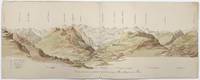
184023481840. Watercolor graphite and grayish ink on two sheets of cream laid paper with an 1836 M and smiling sun watermark 10 1/4 x 25 7/8 inches 260 x 658 mm the full sheet. Titled in ink in French on the recto. In very good condition with minor edge wear including creasing and nicks. A splendid panorama with each of the major peaks and point of interest labeled and identified in French. The iconic symbol of the Swiss resort the "Sun of St. Moritz" was adopted from early European heraldic marks and rebranded around 1930 by graphic designer Walter Herdeg. The image was patented in 1937 by spa director Walter Amstutz becoming the world's first visual trademark for a tourist destination. unknown
18761708040618xbvkLondon - Cambridge; Bell & Sons - Deighton, Bell & Co.; 1876. xxxv, 410 / 566, vi pages. - Publisher's gilt titled green cloth-bindings; 8vo.(ca. 23 x 17 x 7 cm; ca. 1,7 kg.).
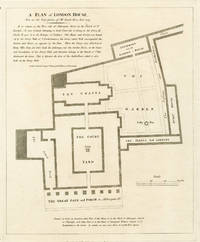
1814948London: Robert Wilkinson 1814. Copperplate engraving on watermarked Smith wove paper 12 1/4 x 9 3/4 inches 310 x 245 mm full margins. There is some minor marginal toning and handling wear that is consistent with age otherwise in very good condition. Robert Wilkinson unknown
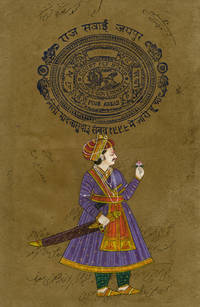
189013401890. Ink and gouache with gold heightening on fibrous brown laid paper with a Jaipur Court Fee tax stamp in purple ink on the recto 12 1/2 x 9 inches 318 x 230 mm. Toning handling creases and minor scattered surface soiling throughout. There are scattered coeval inscriptions in ink on the recto and verso. The first revenue stamps in India were issued in the mid-nineteenth century during the Raj and they are still being issued to this day. Apart from issues for the whole of India many princely states provinces and other states also had or still have their own revenue stamp issues. Before independence Indian revenue stamps were closely modeled on similar designs from Great Britain as is the case with this carriage motif stamp from Jaipur. <br /> <br /> The stamps were issued to denote various denominations including rupees and annas. An anna or Änna was a currency unit formerly used in British India equal to 1â„16 of a rupee. It was subdivided into four old Paisa or twelve pies thus there were 192 pies in a rupee. When the rupee was decimalized and subdivided into 100 new paise one anna was therefore equivalent to 6.25 paise. This particular stamp was used as evidence of court taxes remitted for property dealings. unknown
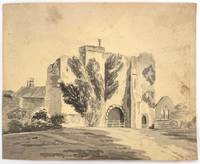
184025111840. Ink and wash on wove paper 5 1/8 x 6 1/2 inches 130 x 165 mm the full sheet. In very good condition with uniform toning some minor surface soiling and with the right sheet edge creased. unknown
1847DEMO014070INew York & Philadelphia: D. Appleton 1847. First edition. Hardcover. Very Good. 12mo 208 pages original brown cloth nicked at joints & tips of spine lacks 1 leaf of front adverts light tidal spots on top edge of the first 36 pages. <br/><br/>". recounts events on a trip from St.Louis to Nauvoo Chapter 4 Prairie du Chien the Falls of St. Anthony Lake Superior Sault St. Marie and Mackinac -Hubach p.92." "These letters . tell of a journey up the Mississippi from St. Louis with descriptions of scenery legends of the Illinois Indians and accounts of Nauvoo and the lead region. The description of Nauvoo shortly after the Mormon exodus is especially quite interesting --Buck 403." Includes quite an amusing story about the ferryman at Galena Illinois. Howes L90; Flake 4745. D. Appleton hardcover
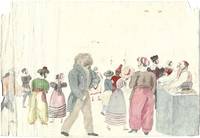
186018931860. Watercolor and pencil on cream wove J Whatman 1827 paper with a partial watermark 7 x 10 1/8 inches 176 x 256 mm the full sheet. The left sheet edge has significant wear; the result of its removal from a page in an album to which the sheet was tipped in. There is also a horizontal tear in the center left sheet edge which extends approximately one inch into the image through the image of the figure with outstretched arms. Small corner losses at the the top right and left sheet as well as a small 1/4 inch at the lower left corner. Colors are extensive and saturated. unknown
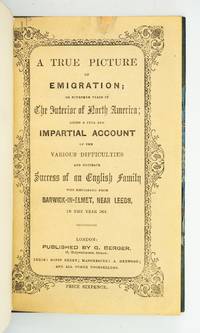
1848ST20861London: G. Berger 1848. FIRST EDITION. 180 x 110 mm. 7 x 4 1/4". 2-62 pp. 6 blank leaves. <br/> The original printed paper wrappers bound in early 20th century green crushed half calf over marbled paper boards monogrammed "F. O. L." in gilt on leather corner at lower right of upper board raised bands spine compartments gilt with floral sprig gilt lettering marbled endpapers. Engraved bookplate of Frank O. Lowden on front pastedown. Howes B-992; Sabin 97133. Spine evenly sunned to a medium brown small early repair to upper edge of paper wrapper but a fine copy the binding with virtually no wear and the contents extremely clean and fresh with only trivial defects.<br/> <br/> This is an excellent copy from the library of an important Illinois politician of the scarce memoir of a female Illinois homesteader. Our author Rebecca Burlend 1793-1872 and her husband John a farmer and schoolteacher made the choice in August of 1831 to leave their Yorkshire home and travel with five of their children to Illinois. They arrived in New Orleans two months later and began an arduous journey up the Mississippi to their land claim in Pike County across the river from Hannibal Missouri. The author's description of the trip and their subsequent difficult first few years in the United States provides an unvarnished picture of frontier life. Burlend candidly recounts hardships caused by such things as weather fire and squatters and critically discusses the people she met many of whom she disliked--writing that "ignorance was the predominant feature of Western character." While she apparently felt the adversity had been largely worthwhile she intended the present narrative as a realistic guide for other prospective British emigrants. The book concludes with the practical sentiment that "if the account I have given of our proceedings adverse and successful does not allure the reader's fancy with ideas of visionary prosperity as the invariable result of crossing the seas it may perchance tend to make him a little better satisfied with his present condition though it should only be a snug little cottage in the land where his childhood was reared." Her memoir was published anonymously in London in 1848 after she had composed it on a return visit to England with the help of her son. She was not formally identified as the author of the piece until 1936. The present copy is distinguished by its connection to another figure in Illinois history: Frank Orren Lowden the "F. O. L." on the front cover 1861-1943 represented Illinois' 13th district in the U.S. House of Representatives and later served as governor of Illinois from 1917-21. G. Berger unknown
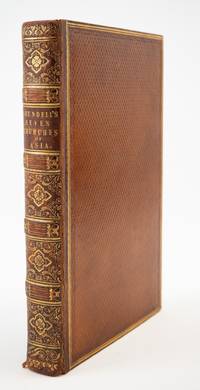
1828ST20535-01London: John Rodwell 1828. FIRST EDITON. 217 x 138 mm. 8 1/2 x 5 1/4". iv 339 1 pp. <br/> Contemporary diced russia raised bands spine attractively gilt in an arabesque style gilt-rolled turn-ins pink moiré endpapers all edges gilt. With a folding map of the travel routes and 23 pages reproducing inscriptions three of these folding. Front flyleaf inscribed in ink: "Juliana Calvert / from A. C. / 1838." Blackmer 48; Weber I 159. Joints and extremities a little rubbed tiny crack just beginning at top of front joint two tiny chips to foot of spine very minor offsetting and foxing to map a couple of patches of marginal foxing but INTERNALLY AN ESPECIALLY FINE COPY--unusually clean fresh and surprisingly bright--in a good-looking well-preserved binding.<br/> <br/> In especially desirable condition this is quite a scarce travel account by the English antiquary explorer and clergyman Francis Vyvyan Jago Arundell 1780-1846 who visited the so-called Seven Churches of Asia also called the Seven Churches of the Apocalypse and the Seven Churches of Revelation locations in present-day Turkey of central importance to St. John and the Book of Revelation. In that book John who was a threat to Roman officials as leader of the new Christian religion in Asia had been banished to Patmos where he was visited by an apocalyptic vision directing him to write to the churches at Ephesus Smyrna Pergamum Thyatira Sardis Philadelphia and Laodicea commending their successes pointing out their failures and prevailing upon them to repent. These seven Turkish churches reflect a surprisingly significant role in the region's early Christian history with some scholars maintaining that as many as 18 of the 27 New Testament books were written there--and Arundell's narrative would have helped to raise the popular understanding of this importance. Following his marriage to the daughter of the British consul-general at the Levant Company in Constantinople Arundell became chaplain to the company's trading center in Smyrna now Izmir in 1822. From there he embarked on a series of tours through Asia Minor including places that according to DNB "until then had for the most part not been described by any European traveller." The present work is the product of the author's first tour which included two separate excursions between March and September of 1826. Despite being a clergyman Arundell's interest in these sites was primarily archaeological and historical and this work includes his firsthand descriptions of the ruins he encountered facsimiles of Greek inscriptions found there and narratives of the arduous journeys between sites that were well off the beaten path. This work is surprisingly scarce in commerce suggesting that copies were often read with avidity. John Rodwell unknown
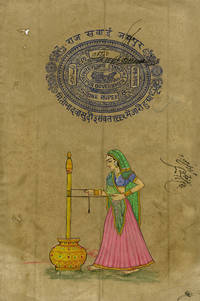
189013411890. Ink and gouache with gold heightening on fibrous brown laid paper with a Jaipur Court Fee tax stamp in purple ink on the recto 13 1/4 x 8 7/8 inches 336 x 226 mm. Toning handling creases and minor scattered surface soiling throughout. There are scattered coeval inscriptions in ink on the recto and verso. A traditional Indian butter churn is operated by rapidly pulling a rope which turns a paddled spindle. The paddles churn cows milk inside a large jar until milk solids form. Ghee is made from cow milk butter which is treated with low heat until the water evaporates leaving behind milk solids. The solids are skimmed off or strained if needed. Ghee is a staple food on the Indian subcontinent and as a cooking oil it is the most widely used food in India apart from wheat and rice. Because of its exalted status at Hindu weddings ghee is expensive and in high demand. Male wedding guests are expected to compete with each other to see who can eat the most of it; consuming two pounds or more at a sitting is considered a proof of virility. <br /> <br /> On the stamp:<br /> <br /> The first revenue stamps in India were issued in the mid-nineteenth century during the Raj and they are still being issued to this day. Apart from issues for the whole of India many princely states provinces and other states also had or still have their own revenue stamp issues. Before independence Indian revenue stamps were closely modeled on similar designs from Great Britain as is the case with this carriage motif stamp from Jaipur. The stamps were issued to denote various denominations including rupees and annas. An anna or Änna was a currency unit formerly used in British India equal to 1â„16 of a rupee. It was subdivided into four old Paisa or twelve pies thus there were 192 pies in a rupee. When the rupee was decimalized and subdivided into 100 new paise one anna was therefore equivalent to 6.25 paise. This particular stamp was used as evidence of court taxes remitted for property dealings. unknown
185424078Leipzig, G. J. Göschen, 1853-1854. Kl.-8vo. 15 cm. Schwarzes OHLdr mit RVergold.
184099100Stuttgart, Rieger, ( 1840. X, [2], 482 S. 16 cm. OHLdr m. dekorativer Rückenvergoldung.
185094448Hildburghausen, Bibliographisches Institut, [ca. 1850]. 1 Stahlstichporträt, 173; 150 S. (= National-Bibliothek der deutschen Classiker, Band 10). Kl.-8vo. 15,5 cm. OLn. mit Blind- und Goldprägung und dunkelsilbrigem Schnitt.
185193884Hamburg, Perthes - Besser & Mauke, 1850/1851. XVI, 409 S., VI Bl.; XVI, 453 S. Mit 6 lithograph. Falt-Tafeln. 22 cm. HLdr d. Zeit mit goldgepr. Rückentitel.
183759158Stuttgart, J. G. Cotta, [ 1837]. 8 S. Text, 8 Tafeln. Quer-4to. OPp.
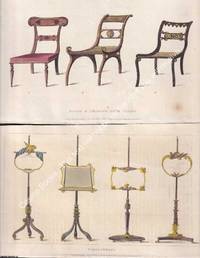
1810373757c.1810-1820. Unframed Print. Good Condition. Spanning at least 70 pages with a few duplicates and measuring approximately 13 20 cm. Condition varies but none are torn some are bright others a little browned a number have a small piece of paper attached from the rear at the edge. A useful and large collection of plates showcasing hand-coloured designs and furnishings published in the early 19th century. Each engraving offers a vivid glimpse into Regency England an era defined by elegance invention and visual harmony these images reflect a world where utility was shaped by style and everyday life was framed in refinement. Originally issued in Ackermanns Repository of Arts a renowned periodical devoted to design fashion and domestic culture the plates exemplify the taste and innovation of the period. Their hand-applied colouring enhances both their decorative charm and their documentary value capturing the rhythm and sophistication of a society in transition. Size: 13 x 20 cms. Category: Antiquarian & Rare; PRINTS : Historic Interest; This item may require more postage than the rates shown for delivery outside the UK. If extra postage is required we will contact you before processing your order and you will be given the details and option to decline the extra cost. unknown
18059587Berlin. (Ohne Verlag u. Jahr) (1805). Titelblatt, 208 Seiten. Halbleder-Einband der Zeit. (Einband am Rücken stark beschädigt u. mit Fehlstellen; Einband-Deckel berieben; Papier teils fleckig) 18x11 cm
183296363Hamburg, Auf Kosten des Verfassers, 1832. Illustr. Kupfertitel, 242 S. 17 cm. HLdr d .Zeit m. Rückenvergold.
186590994Wien, Chromo-Typographie & Kunstverlag von Ludwig Lott, [ca. 1865]. Goldgehöhte Chromotypographie auf starkem Papier. 7,3 x 11,7 cm. (Blattgröße 23 x 16 cm). Unter Flachpassepartout.