93 488 résultats
186889327Lithographia do Instituto philomathico | Rio de Janeiro 1868 | 34.7 x 46.4 cm | Reliure de l'éditeur
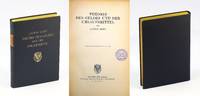
xv, [1], 124, 3 [ads] pp. Index. Text in German. "Beitrage zur Konjunkturforschung - Herausgegeben vom Osterreichischen Institut Fur Konjunkturforschung Nr. 3" - front cover. "A collection of four lectures covering theories of the influence of money on prices, the conditions of equilibrium between the production of consumers' goods, the working of the price mechanism in the course of the credit cycle, and the case for and against an 'elastic' currency." - Jacob Cohen. Unread as most pages uncut. Average wear to original brown wrappers which are partially separated from textblock. Bit of writing at base of spine. 1939 New York Times Book Review of Schumpeter's 'Business Cycles' laid in. A sound copy of this, Hayek's second book. Machlup B-2, Cody & Osrem B-2, Hutchinson 912, Cohen 183. Book
...Precedée de tous les Discours et Ouvrages du meme Auteur, prononcés ou publiés en Provence, pendant le cours des élections. Par M. Etienne Méjan. - 5 volumi (12,5x21 cm) in mezza pelle coeva, dorso liscio ornato e dorato con tassello di titolo rosso (fenditura alla cerniera del vol 1) e in coda la dizione Bibliothèque de Michel Chevalier. Ex libris di Chevalier anche all'interno di ognuno dei 5 volumi. Piatti con carta marmorizzata (usure), tagli gialli -Paginazioni: Vol 1: (4)-396-IV pagine; ritratto di Mirabeau in antiporta. Una tavola ripiegata di tabelle fuori testo (che si riferisce però al tomo 5). Vol 2: (4)-514-IV pagine. Vol 3: (4)-436-VII pagine. Vol 4: (4)-362-II pagine. Vol 5: 538 pagine. –Ricercata raccolta -sconosciuta all’Einaudi e al Kress- degli interventi di Mirabeau all’Assemblea Nazionale, dal 1789 al 1791, pubblicata subito dopo la sua morte. Contiene numerosi pezzi di soggetto economico e finanziario, per esempio: "Sur la proposition faite par M. Necker d’ouvrir un emprunt de 30 millions"; "Sur le nouveau imprunt de 80 million proposé par M. Necker"; Discours sur la caisse d’escompte (in polemica con Necker); Sur le papier monnoie; Motion pour l’établissement d’une caisse nationale; Discours sur le projet de banque nationale présenté par M. Necker; Discours sur le retour des Indes; numerosi interventi, soprattutto nel IV vol. , sulla emissione di assignats. Ma i discorsi potevano toccare naturalmente altri argomenti come "Sur les droits à donner aux Juifs et aux comediens" (sic); "Discours sur le droit de paix et de guerre"; Eloge funebre de Franklin". Il 5° volume contiene per la prima volta in edizione completa uno dei più importanti lavori economici di M., le Observations préliminaires sur le premier rapport du comité des monnoies, presentate il 12 dicembre 1790. Pp.11-224. Un errore del rilegatore ha spostato le pagg. 209-224 (quaderno O) dopo pag. 368. Inoltre la tabella fuori testo sui saggi dell’oro è stata per errore inserita all’inizio del tomo 1. Proprio il saggio di Mirabeau venne poi ripreso e ripubblicato da Michel Chevalier nel suo "De la baisse probable de l’or...", Paris, Capelle, 1859 (Einaudi 1050). Esemplare, quindi, di straordinaria provenienza. “Mirabeau avait à cette date 41 ans. Il avait en finances des connaissances etendues mai sourtout d’excellents conseillers qui lui preparaient ses papiers. Ses idées en matière monétaire mériteraient une étude trés attentive: on sait che sa volumineuse Constitution monetarire a passé longtemps pour un classique de la littérature monetaire et Michel Chevalier la publiait encore en 1859”: Guy Thuillier, Les idées monetaires au debut de la Révolution: Mirabeau et la réforme monetaire de 1785, Roma, Accademia dei Lincei, 1979, pp.7.
1595715481 registre in-8 (27 x 20 cm) reliure plein vélin de remploi, rédigé tête-bêche, Mention de titre en couverture: «Memoyre : [… ] testamens, mariage [… ] Declaration d’actes, d’achapts et autres mémoires» et sur l’autre couverture: «Memoyre des quitances Dachpts [ Mémoire des Quittances d’Achat ], 1 f. blanc, 17 ff. manuscrits, 53 ff. blancs, 55 ff. manuscrits. On joints quelques actes de même provenance (dont une transaction immobilière à Saint-Astier).Passionnant «Livre de Raison» de la famille de Paul de Lacoste, époux de Fr. de la Grace (marié en 1659), ayant passé son testament devant notaire royal à Sainte-Foy-la-Grande. La généalogie remonte à Mathieu de Lacoste, né en 1560, puis à Jean, fils de Mathieu, né en 1595, Etienne (né en 1597) et Suzanne (née en 1599). Jean est baptisé par Mollay, ministre de Fauillet, Etienne par le ministre Danglade, Suzanne par Desparats, «ministre de cette ville», juste après la promulgation de l’Edit de Nantes. Parmi d’autres documents joints, un acte daté d’octobre 1709 fait mention de «Noble Alexandre de Lacoste, Escuyer seigneur de Lussac», manifestant l’ascension sociale de la famille de Lacoste. Comme dans tout livre de raison, on y trouve non seulement mention des actes d’état civil, mais également de tous les achats, échanges de terre et de consolidation parcellaire révélatrice de l’accroissement de la fortune des Lacoste. On y découvre surtout un remarquable «Estar du Raport du bled de la ville & iurysdicion de St foy En Ajenois sur dordogne despuis lannee 1577. iusques a lannee 1642 et suyvantes ainsy quil a communement valeu au marche dicelle annee par annee, Ledict Raport S'estrant au vray des livres de monsieur Proizeau S. de [masse]... & de Faure. Et afin que le raport iuste puisse servir a ceux de Montravel faut scavoir que la mesure dud. montravel Est plus grande que Celle de St foy dune neufviesme. ainsy quand Le bled a valu dans st Foy huit solz il faut conter neuf pour Montravel. Et lorsquil a bally [valu] vingt & quattro solz faut conter vint & sis Et un quart ou quan pour sept de plus. la forée se fait du prix du bled d'ung St martyn a lautre St Mich. la l’autre.» [ Transcriptionrapide : État du rapport du blé de la ville et juridiction de Sainte-Foy-en-Agenois sur Dordogne [Sainte-Foy-la-Grande], depuis l'année 1577 jusqu'à l'année 1642 et suivantes, tel qu'il a couramment valu, année après année, sur le marché de ladite ville. Ce rapport est extrait fidèlement des livres de monsieur Proizeau, seigneur de Masse, et de Faure. Et afin que ce rapport exact puisse également servir pour Montravel, il faut savoir que la mesure dudit Montravel est plus grande d'un neuvième que celle de Sainte-Foy. Ainsi, lorsque le blé vaut huit sols à Sainte-Foy, il faut compter neuf sols pour Montravel. Et lorsqu'il a valu vingt-quatre sols, il faut compter vingt-six sols et un quart (ou un quarton) en plus. La forée [i.e. le prix moyen officiel] s'établit d'une Saint-Martin à l'autre (ou d'une Saint-Michel à l'autre) ]. Le document est en réalité plus complet, car il contient les relevés systématiques du prix des grains à Sainte-Foy-la-Grande de 1577 jusqu’à 1699 (liste de 1577 à 1676 puis de 1677 à 1699), pour le froment, le seigle et l’avoine, mesuré par quart (l’unité locale de mesure des grains)! On y relève l’explosion des prix certaines années, comme en l’année 1595, en 1598 ou en 1694, fameuse année de famine... La seconde partie rédigée tête-bêche s’ouvre sur une longue description(une page et demie) de l’inondation d'une cité (sans doute Sainte-Foy) par la Dordogne, survenue le 15 mars 1615. On y évoque la place du Foirat, le lieu dit La Crabière, la porte du chay appelée la Libournaise (ou Libournette), la fonte subite des «neiges des montagnes» qui surpris la plaine. Suit une brève description d’un autre tempêtedu 20 février 1617 «fust un sy grand vent qui dura presque tout le jour» qu’il abattit «grand quantité de grands noyers et autres grands arbres» [ … ]
"Ranks with Smith's Wealth of Nations, Ricardo's Principles, Marx's Capital, Marshall's Principles, and Keynes' General Theory, as one of the six most important books ever written in its influence upon the development of modern economic theory. Menger's influence was not, however, confined to theoretical economics. The Austrian School of which he was the founder, was a fountainhead of classical liberalism in the European continent. The ideas of the school and its founder are, therefore, relevant to the modern debate between socialism and liberalism. Since many of the staunchest modern advocates of laissez faire, such as L.M. Mises and F.A.V. Hayek, find their intellectual roots in Menger's Principles, the translation of his work is of interest to those concerned about the relations between government and business as well as to economic theorists." - dust jacket. The long overdue first English edition of the 1871 German first edition. Menger [1840-1921] "attacked the half-decayed fabric of economics and is to be ranked among those who have torn down the structure of a science and placed it upon entirely new foundations." - Joseph Schumpeter. "Menger's Principles are the best introduction to the understanding of the theory of value which we possess." - F.A. Hayek. Former library copy with usual markings and moderate wear to original black cloth lettered in silver. Above-average wear to undulating dust jacket which is patched on spine and now preserved in archival-grade Brodart. A sound copy of this economic tour de force. Fundaburk 9739, Hutchinson 347, Hazlitt p.115, Blaug p.160-162, Pressman p.89-94. Book
153189758In Officina Frobeniana per Hieronymum Frobenium et Nicolaum Episcopium | Basilae [Bâle] 1531 | 15.2 x 21.8 cm | Relié
[9], 10-320 pages. Name Index. Subject index. Dedicated to Arthur Kitson, "the British pioneer of the new economics, to whose writings the author owes his initial interest in the fascinating problems of wealth and currency." - dedication page. Soddy [1877-1956] was awarded the 1921 Nobel Prize for Chemistry for his work related to isotopes and the transmutation of elements resulting from radiation. Inspired by Kitson, he began writing about economics in 1921, focussing on monetary policy and the role of energy in economic systems. "Soddy's economic writings were largely ignored in his time, but would later be applied to the development of ecological economics in the late 20th century." - E. Zencey. On page 289 Soddy footnotes the Protocols of the Learned Elders of Zion, stating "It is very widely believed that there has been something akin to an actual financial conspiracy to enslave the world." "But of the existence of a real conspiracy - a conspiracy of silence - on all monetary problems, in the Press and on political platforms, among editors, publishers and economists, who more than any others ought to be alive and awake to their infinite importance - there can be no question whatever." - p.291. "It was indeed a revelation to the author, accustomed to think of the battle for liberty of thought in scientific matters as having been fought and won centuries ago at the time of Galileo and the Inquisition, to find that in economics, as distinct from physics, it has not yet been won at all. If economics were really a science it would not need to protect itself from criticism by a conspiracy of silence." - p.292. Relatively minor marginal ink markings to thirteen pages. Front free endpaper removed. Ink stamp of "Technocracy Inc., Continental Headquarters, New York City" upon half-title. Front hinge starting. Above-average wear to publisher's green cloth. Dust jacket not included. A worthy reading copy of this fascinating study. Fundaburk 2119, Masui p.244. Book
1 vol. 8vo. softcover, H. J. Paris, Amsterdam, MCMXXIX ( 1929 ), 65 pp. Text in Dutch, only. With a handwritten note, in French, on the front cover : "Hommage de l'auteur" (i.e. “Tribute from the author”). This ex libris is not signed but there is no doubt that it was written by J. Tingerben (due to striking similarities with other handwritten letters from the author). Very Good copy (rubbed cover, otherwise a nice an clean copy) for this first edition of this important thesis, written by a young scholar, who was awarded the very first Nobel Prize in Economics, and with autograph : “hommage de l’auteur” (”tribute from the author”). It can be noticed that his younger brother Nikolaas got the Nobel Prize, as well... in Physiology / Medicine (in 1973) ! Jan Tinbergen is seen as one of the founding fathers of econometrics. This thesis was a significant step in the history of economics, as it introduced the idea of mathematical modelling into economics. Very scarce, nowadays. ( Uitermate zeldzaam ) This copy belonged to a French academic, prof. Georges-Henri Bousquet (1903-1978). G.-H. Bousquet, a lawyer as well as an economist, was a disciple of Pareto and a friend of Joseph Schumpeter. He became fond of islamic studies, too, when he was a leading Professor at the University of Algier, from the late 30s to the early 60s. Prof. G.-H. Bousquet spoke both French and Dutch as mother tongues, and was fluent in an amazing number of foreign languages. Néerlandais
191356002Berlin, 1913. Royal 8vo. Uncut and partly unopened in original printed wrappers. Soiling to spine, vaguely affecting first and last leaf. Overall in a very fine condition. (8), 446, (2) pp.
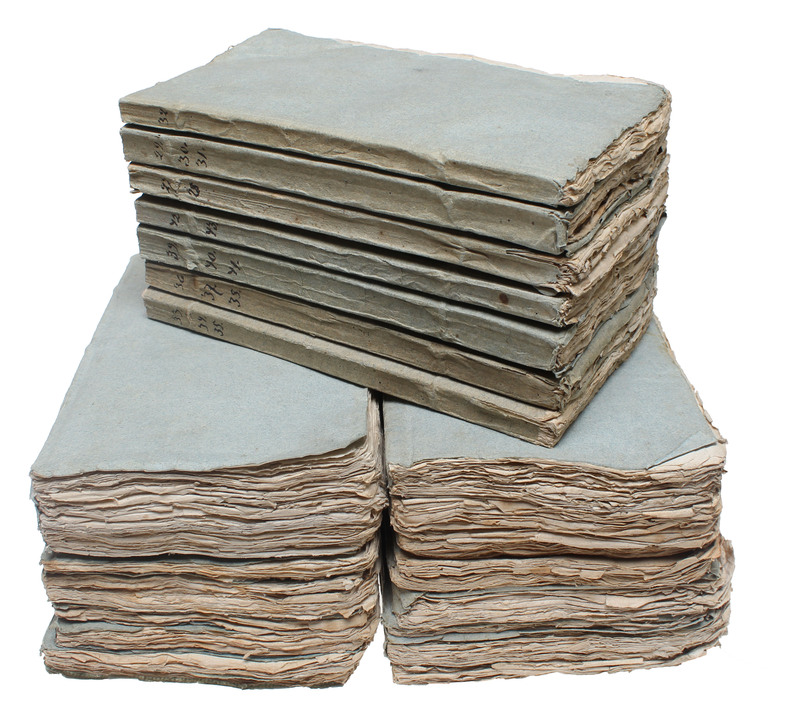
179753615Stockholm, Henrik A. Nordström, 1797-1801. 8vo. Uncut, partly unopened in the original wrappers. In 22 volumes as issued. Last volume name written on title-page, otherwise an exceptionally fine, clean and untouched set rarely seen in this condition. (4),102 pp." (2),182 pp. (2),107 pp. (2),157,(1) pp. (2),176,(4) pp. (4),138,(2) pp. (2),205,(1) pp. + 1 folded table (2),188 pp (2),190 pp. (2),89,(4) pp. (4),135,(1) pp. (2),116,(1) pp. (2),157 pp. (2),120 pp. (2),151,(1 blank,10) pp. + 1 folded map (2),215 pp. + 1 folded table (2),131,(5) pp. (4),207 pp. (2),183,(1) pp. + 1 folded table (2),218 pp. (2),144,(4) pp." (6),449,(1) pp. + 5 folded plates.""Om Beskatning"", Part: 36, 37, 38:Pp. 145-177""Om Jordbrukets förfall i Europa, efter Romerska Väldets undergäng"", Part: 27, 28. Pp. 93-120""Om Handelsbalancen"", Part: 25,26. Pp. 92-114""Om Jordbruks-systemet I en Rikshushållning, samt om Economisterne I Frankrike"", Part: 25-26. Pp. 43-92""Om Pappers-myntet I Norr-Amerika Kolonierne, före Revolutionen"". Part: 27-28. Pp.57-62""Om Krono-jord"". Part: 29,30,31. Pp 139-146.""Theorien för statsskulder"". Part: 44, 45, 46, 47, 48, 49 & 50. Pp. 151-161.
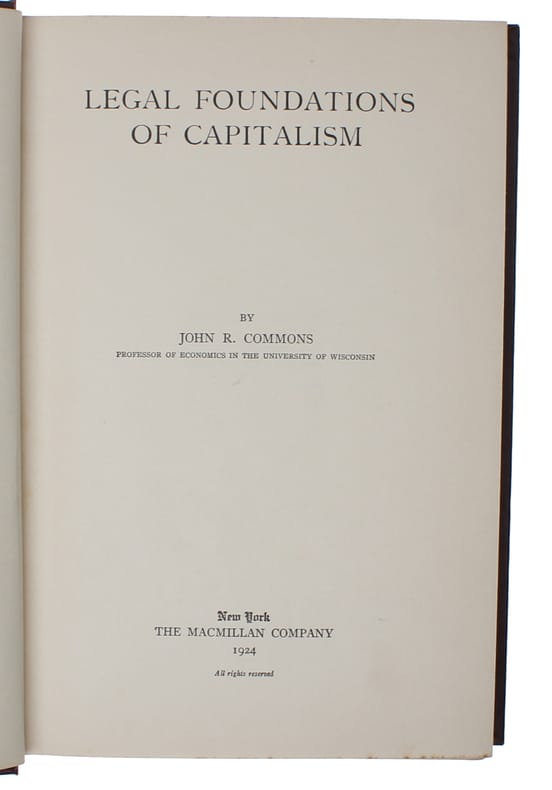
192460155New York, Macmillan, 1924. 8vo. In the original cloth with gilt lettering to spine. Minor wear to extremities and hinges a bit weak, otherwise a very fine copy. (blank), X, (1), 394, (blank) pp.
Beograd, Izdavacka Knjizarnica Gece Kona, 1924. 8vo. In the original printed wrappers. Spine renewed, preserving most of the original spine. Ink stain to front wrapper. Previous ower's name to top of title-page. First leaves with a few underlignings, otherwise internally fine and clean. 198, (4) pp.
Berlin, 1913. Royal 8vo. Uncut and partly unopened in original printed wrappers. Soiling to spine, vaguely affecting first and last leaf. Overall in a very fine condition. (8), 446, (2) pp.
Istanbul, Sirketi Mürettibye Matbaasi, 1933. 8vo. In a recent full black leather binding with four raised bands and gilt lettering to spine and front board. Blindtooled frames to front and back board. A fine and clean copy. (7), (1), (5)-305, (1), [errata-leaf] pp.
Istanbul, Sirketi Mürettibye Matbaasi, 1933. 8vo. In contemporary full black cloth binding with gilt lettering to spine. Blindtooled frames to front and back board. Previous owner's name ""Hüsnû Hizlan"" in gilt lettering to front board. A fine and clean copy. (7), (1), (5)-305, (1), [errata-leaf] pp.
Stara Sagora, 1910. 8vo. Contemporary half cloth with gilt lettering to spine. Spine with wear. Upper inner corner of title-page with repair, missing the 'K' in 'Karl'. Two last leaves with marginal repairs, not affecting text. Light occassional brownspots throughtout. XXX, (2), 598, (2) pp. + frontiespiece of Marx.
Stockholm, Henrik A. Nordström, 1797-1801. 8vo. Uncut, partly unopened in the original wrappers. In 22 volumes as issued. Last volume name written on title-page, otherwise an exceptionally fine, clean and untouched set rarely seen in this condition. (4),102 pp." (2),182 pp. (2),107 pp. (2),157,(1) pp. (2),176,(4) pp. (4),138,(2) pp. (2),205,(1) pp. + 1 folded table (2),188 pp (2),190 pp. (2),89,(4) pp. (4),135,(1) pp. (2),116,(1) pp. (2),157 pp. (2),120 pp. (2),151,(1 blank,10) pp. + 1 folded map (2),215 pp. + 1 folded table (2),131,(5) pp. (4),207 pp. (2),183,(1) pp. + 1 folded table (2),218 pp. (2),144,(4) pp. " (6),449,(1) pp. + 5 folded plates.""Om Beskatning"", Part: 36, 37, 38:Pp. 145-177""Om Jordbrukets förfall i Europa, efter Romerska Väldets undergäng"", Part: 27, 28. Pp. 93-120""Om Handelsbalancen"", Part: 25,26. Pp. 92-114""Om Jordbruks-systemet I en Rikshushållning, samt om Economisterne I Frankrike"", Part: 25-26. Pp. 43-92""Om Pappers-myntet I Norr-Amerika Kolonierne, före Revolutionen"". Part: 27-28. Pp.57-62""Om Krono-jord"". Part: 29,30,31. Pp 139-146.""Theorien för statsskulder"". Part: 44, 45, 46, 47, 48, 49 & 50. Pp. 151-161.
New York, Macmillan, 1924. 8vo. In the original cloth with gilt lettering to spine. Minor wear to extremities and hinges a bit weak, otherwise a very fine copy. (blank), X, (1), 394, (blank) pp.
1923227j0885Philadelphia: Dorrance Publishers. Good with no dust jacket. 1923. First Edition. Hardcover. "We are too much under the influence of others - just a few - some of whom we are taught to worship while still others whom we seldom even know control the things that control us." - page 9. "Provides more of the same information as was provided in Lindbergh's 1913 'Banking and Currency and the Money Trust' with added facts about the state of affairs ten years after the adoption of the Fed." - A Populist Bibliography p.163. 8-249 pp. Index. Unmarked. Binding intact. Moderate wear to original dark maroon cloth lettered in black. No dust jacket if one was issued. A sound and rare first edition example of this classic work by Charles A. Lindbergh 1859-1924 father of the famous aviator of the same name. Weems p. 163 ; Sm 8vo . Dorrance Publishers hardcover
1924324j1569Munich: Verlag Von Duncher & Humblot. Good with No dust jacket as issued. 1924. Zweite Neubearbeitete Auflage. Hardcover. "A detailed sophisticated explanation of the quantity theory of money based on the subjective marginal utility theory. Explains money's origin the development and nature of banking the cause and consequences of inflation and credit expansion the differences in the value of different moneys as well as the reason for 'cyclical' economic fluctuations. Includes a new introduction." - Greaves & McGee B2. Text in German. xv 420 p. Handsome gilt decoration and lettering upon original navy buckram. Binding tight. New full front endpaper. Small bookseller label inside front board. Faint writing to foot of backstrip. Library stamp to title page otherwise contents clean and unmarked. An attractive and well-preserved example. Rist p.322 Batson p.194 Masui p.955.; 8vo . Verlag Von Duncher & Humblot hardcover
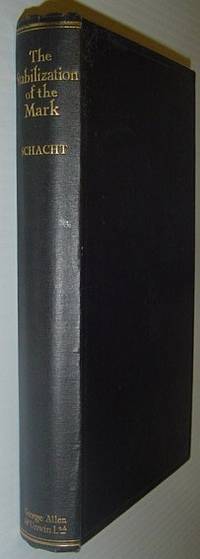
1927313a1752London: George Allen & Unwin Ltd. Good. 1927. First English Edition. Hardcover. "This is a book written by a German after a war which brought defeat to his country and a great civilized people to a condition of dependence and subordination. The German Inflation can only be understood as part of the general history of the time. May we all learn from the past and emerge from the destructive era of reciprocal hostility into a new constructive period of international well-being." - Foreward. Chapters include: The Inflation of the War Period; From the Armistice to the Invasion of the Ruhr; From the Invasion of the Ruhr to the Stabilization of the Mark; The Stabilization of the Mark; From Rentenbank to Golddiskontbank; From Currency Crisis to Economic Crisis; The Dawes Plan; The Reconstruction of German Money and Capital Markets; Foreign Credits; International Co-operation. "Schacht became one of the directors of the Reichsbank in 1916 and in 1923 became currency commissioner for the Reich. After his economic policies helped reduce German inflation and stabilize the German mark Schacht was appointed president of the Reichsbank. He collaborated with other prominent figures in economics to form the Young Plan to modify the way that war reparations were paid after Germany's economy was destabilizing under the Dawes Plan. Though on March 7 1930 six months after the beginning of the Great Depression he stepped down from the position of Reichsbank Chairman but returned on March 17 1933 after Hitler's rise to power." - Wikipedia. 247 pages. Black and white photographic frontis portrait of author. Binding intact. Unmarked with average wear. Bright gilt lettering upon black cloth backstrip. Mild foxing to endpapers. A sound copy. Aldcroft & Rodger p.83 Peterson p.367.; 8vo - over 7¾" - 9¾" tall; Schacht Dr. Hjalmar Deutsch Mark Germany Currency Inflation Weimar Republic Weimar Devaluation Debasement World War One 1 Reichsbank The Inflation of the War Period; From the Armistice to the Invasion of the Ruhr; From the Invasion of the Ruhr to the S . George Allen & Unwin Ltd. hardcover
in-folio, ff. CCXXIV, (12, l'ult. b.), preziosa legatura d'inizio XVIII sec. In p. vitello biondo marmorizz., alle armi di Le Roux d'Esneval, stemma in oro al centro dei piatti, dorso liscio con tit. e fregi oro, tagli rossi. Testo in car. rom. con passi in greco, note a stampa nei margini, bellissime iniz. ornate silogr. Magnifica edizione (prima 1514), aumentata e rivista dall'autore stesso, del primo e il più importante studio antico sulle monete e sulla metrologia dei Greci e dei Romani. Guillaume Budé (Paris 1467-1540) fu il primo dei grandi umanisti francesi, allievo di Lascaris, profondo ellenista, preposto dei mercanti, iniziatore con i suoi libri e legature della Bibliothèque Nationale. Superbo esempl.. Renouard, Les Estienne, p. 53-4. BMC, French, 85. Adams B-3106. Olivier-Hermal-Roton, Reliures armoiriées II, 196..
Prima edizione italiana. Bell’esemplare con grandi margini stampato su carta forte. Prima non comune edizione italiana eseguita da Angelo Tavanti e Giovanni Francesco Pagnini che è anche autore del saggio contenuto nel secondo vol. Saggio sopra il giusto pregio delle cose, la giusta valuta della moneta e sopra il commercio dei Romani. Einaudi 3476. Higgs 115. Kress, Italian, I, 275. 2 voll.
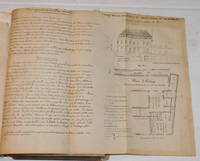
182897115Paris: impr. Dezanche and impr. Pihan Delaforest and Delangle Freres 1828-1835. 1828-1835. Fair. - Octavo 8-1/4 inches high by 5-1/4 inches wide. Four pamphlets bound into early brown calf with an elaborate floral device embossed in blind at the center of both the front and rear covers within an elaborate outer gilt ruled frame with formal decorations. All edges are marbled. The rubbed & worn covers are detached and the spine has perished and thus lacking. The pagination is as follows: i-xii 1-96 pp.; 5 6-45 1 pp.; 5 folding plates; 5 6-66 pp.; 4 pp. 1-82. There is foxing throughout.<p>The ownership name of James Stewart and the faded date of "1881" is penned on the front blank. In what appears to be his hand the statement "From Pierre Soule" is penned along the top of the verso of the front endpaper. Additionally the attractive sienna-toned ex-libris bookplate of "R.G.S." is mounted on the front pastedown. <p>Stated to be from the library of Pierre Soule with his name signature at the head of the first pamphlet. Soule 1801-1870 was the French-born New Orleans attorney and Louisiana Senator.<p>The lawyer involved in these 4 cases Gustave Louis Chaix d'Est-Ange 1800 - 1876 was the son of the attorney general at the court of criminal justice of Reims. As a lawyer his oratorical talent was noted at the Paris bar where he practiced. He was entrusted with a number of important cases and from 1842-1844 was president of the Paris Bar Association.<p>1 Plaidoyer et réplique de Me Chaix-d'Est-Ange dans le procès d'Émile de La Roncière précédés d'une Note de M. le lieutenant-général Clément de la Roncière d'Esquisse préliminaire de M. Eugène Roch et d'une lettre de M. Émile de La Roncière adressée à "l'Observateur des tribunaux". Paris: De L'Imprimerie De Dezauche 1835. The sensational trial of Emile de La Ronciere 1803 - 1874 was most recently memorialized by John Fowles in his novel "The French Lieutenant's Woman". In chapter 28 of the novel he discusses the trial of the young cavalry officer who was accused of raping Marie the sixteen-year-old daughter of his commanding General Baron de Morell. The trial itself revolved around a series of anonymous letters threatening the Morell family and signed "E. de La R.". La Ronciere was found guilty and sentenced to ten years in prison. The verdict was controversial and has been debated for many years. In the pamphlet at hand is included the text of a letter to the l'Observateur des Tribunaux written by La Ronciere's father Clement de La Ronciere on August 25 1835 and one written by the imprisoned La Ronciere himself on September 10 1835. These are followed by a preliminary outline by Eugene Roch. The text from the trial is based on reporting in l'Observateur des Tribunaux journal des documens judiciaires. It begins with the plea of La Ronciere's attorney Chaix d'Est-Ange. Although misbound later in this collection of pamphlets facsimiles of items used as evidence in the trial are included. These include 4 folding facsimiles on which are printed 8 samples of handwriting of La Ronciere and of Marie de Morell. Also included on a fifth folding plate is a remarkable plan of the home of the Morells with a view of the floor where Marie's room was located.<p>2 Plaidoyer de Me Chaix-d'Est-Ange pour M. le ministre du Commerce et des Travaux publics intervenant contre M. Victor Hugo. Paris: Imprimerie De Pihan Delaforest 1832. Victor Hugo's play "Le Roi s'amuse" was the basis for the libretto of Verdi's opera Rigoletto. The opening of the play on November 22 1832 was highly anticipated. The opening night box office receipts were an enormous success but the play was not. Both the audience and the critic's responses were negative. However the most devastating response came from the Minister of the Interior. He saw the play as an attack on the royal family and ordered it suspended i.e. banned. In the Charter of 1830 censorship was stipulated to "never be re-established". This conflict led to a trial on December 19 1832. Odilon Barrot represented Hugo and Chaix d'Est-Ange represented the Ministry of Commerce. He took the unpopular stand that the State had the authority to examine dramatic works before production. His plea is published here. Hugo lost this free-speech debate and the play was banned for 50 years.<p>3 Plaidoyer de M. Chaix d'Est-Ange pour le sieur Auguste Labauve et les sieur et dame Formage plaignans et parties civiles contre Frédéric Benoît accusé. Paris: Imprimerie De Pihan Delaforest Morinval 1832. A VIVID ACCOUNT OF MATRICIDE! Frederic Benoit 1810 - 1832 known as "Le Parricide" was executed by the guillotine at the Place St. Jaques in the 14th arrondisement of Paris on August 30 1832. The story of Benoit's killing of his mother in November 1829 and that of his male lover seventeen-year-old Joseph Formage on July 22 1831 is well documented and need not be repeated here. In this civil plea of June 14 1832 on behalf of the butcher Auguste Labauve and also on behalf of Joseph Formage's parents Chaix d'Est-Ange outdoes himself in painting with vibrant colors the slaughter by Benoit of his own mother. Labauve was the second victim of this crime. In January of 1830 an anonymous letter was found threatening Benoit's father a justice of the peace as well as Labauve with the same fate as that of Madame Benoit. The letter was said to be in the hand of Labauve. He was brought to trial for murder and was acquitted by a divided jury. However he was sentenced to a 5 year prison term for having written the threatening letter.<p>4 Procès fait à la lettre adressée au duc d'Orléans par Cauchois-Lemaire. Paris: Delangle Freres Libraires 1828. In December 1827 the editor of the Constitutionnel Louis Francois Auguste Cauchois-Lemaire 1789 - 1861 published a notorious 69 page pamphlet "Sur la crise actuelle lettre a S.A.R. le duc d'Orleans". The pamphlet addressed to Louis-Philippe the Duke of Orleans was a powerful attack on the ultra-royalist government of Joseph de Villele and a denunciation of the so-called "massacre" that took place on the rue Saint-Denis on July 27 1827. Cauchois-Lemaire concludes his essay paraphrasing the French "Thus liberty awaits the day which should let it emerge from its prison. And we who are tired of the long wait together we call for a favorable star to hasten it." The result was that Cauchois-Lemaire was accused of trying to persuade the duc d'Orleans the "favorable star" to lead the opposition to the government and have it overthrown. He and the two publishers Ponthieu and Schubart were brought to trial on January 12 1828. Cauchois-Lemaire was sentenced to 15 months in La Force prison in addition to a fine. In defense of Cauchois-Lemaire Chaix d'Est-Ange given that the facts of the matter were difficult to vindicate delivered a brilliant thesis on constitutional law. The press at the time praised his eloquence. Cauchois-Lemaire himself was so impressed that he wrote Delangle Freres from prison on January 28 1828 requesting that they publish a transcript of the trial. That letter together with the proceedings of the trial are published here. Paris: impr. Dezanche, and impr. Pihan Delaforest, and Delangle Freres, 1828-1835. unknown
Tre parti in due volumi di cm. 28, pp. xxxiii (1) 189; xxiii (1) 316 + (1) di tabelle; 116 che contengono il "Saggio sopra il giusto pregio delle cose la giusta valuta della moneta e sopra il commercio dei Romani" del Pagnini. Nel primo volume è presente la grande tabella molte volte ripiegata: "Tavola della bontà peso e valuta della maggior parte delle Monete correnti d'Oro, e d'Argento del Mondo, formata dal Cavaliere Isacco Newton verso il principio del presente Secolo...". Frontespizi in rosso e in nero (al primo, riproduzione del recto e del verso di una moneta romana). Dedica a stampa dei curatori a Emanuel de Richecourt. Legatura d'attesa strettamente coeva in cart. alla rustica con titoli manoscritti ai dorsi. Solo un paio di alconi limitati a poche carte e qualche segno d'uso ai dorsi, ma complessivamente esemplare genuino e molto marginoso (in barbe) e stampato su carta di ottima qualità. Rara prima edizione in volgare dei "Several Papers Relating to Money, Interest and Trade" lockiani, nascenti dalla fusione di "Some Considerations of the Consequences of the Lowering of Interest and Raising of the value of Money" (1692) e delle "Further Considerations concerning Raising of the Value of Money" (1695). L'edizione, pubblicata a Firenze e curata da Giovan Francesco Pagnini e da Angelo Tavanti (la traduzione si fonda sulla raccolta in-folio dei "Works" lockiani del 1710), si situa nel fertile terreno del movimento riformatore toscano. "Locke is one of the economists who have been able to apply their principles to practical politics during their own lifetime. The influence of his political and educational writings.. on economics, though indirect, is very important" (Palgrave, II, pp. 631-636). Il "Saggio sopra il giusto pregio delle cose" del Pagnini figura in edizione originale. In esso l'economista toscano "dimostra che la moneta è soggetta alle stesse leggi del prezzo a cui vanno soggette le altre merci"; "il suo valore è indipendente dall'arbitrio degli uomini. La fatica per produrla, la quantità, l'offerta, e la domanda, sono gli elementi del suo prezzo" (Pecchio). Nel saggio sono utilizzati come fonti, oltre a Locke, Petty, Montesquieu, Saint-Pierre, Mably, Mirabeau, Cantillon. Palgrave, cit. Cossa, p. 41, n. 116. Higgs, p. 115. Einaudi, 3476. Attig, 507. Kress Italian, 275. Yolton, 164. Sul saggio del Pagnini: Dal Pane, La questione del commercio dei grani nel Settecento in Italia, I, n. 228. Graziani, Storia critica della teoria del valore in Italia, pp. 120-121.