[TRADE CATALOGUE - STEEL GOODS]Biblio.com
943 résultats
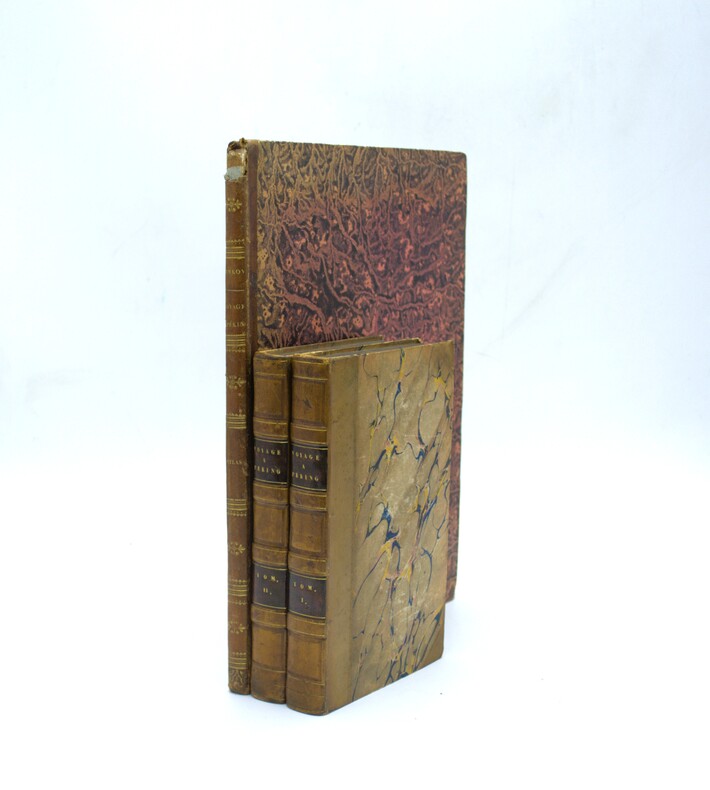
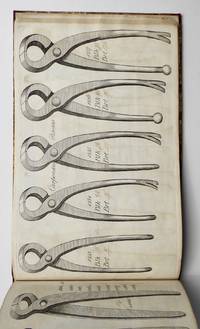
18124628<p>TRADE CATALOGUE - STEEL GOODS. Book of Steel Toys. Birmingham n.p. c.1812. </p><p>A remarkable trade catalogue of steel goods for the household ladies and gentlemen's personal effects gardening tools and instruments for trades and professions. This is a treasure trove of visual information about a vast range of now obsolete tools and the objects required for daily life in the age of Jane Austen: spinet tuning keys muffin toasters cheese tasters sugar hatchets teeth cleaning sets netting vices boot hooks and so on. Particularly fascinating is the distinction between tradesmen's tools and those specifically marketed for amateurs. These are described in the individual engravings as well as in the engraved and letterpress leaf after the index leaf where the contents of 9 oak chests of tools for gentlemen are itemised as well as chests of garden tools turners tools and mahogany chests of tools for cleaning gentlemen's guns. Among the articles listed in the index are 'Lady's hammers' and 'Lady's sets of garden tools' but these do not seem to be the articles engraved on the corresponding plates. </p><p>Engraved trade catalogues of this sort were used by salesmen to solicit orders from retailers. The prices entered in manuscript are selling prices on which the retailer received a discount probably 25% see below. Stamped brass and silverware catalogues turn up from time to time but catalogues of steel goods are much rarer. Unusually too this catalogue is provided with a letterpress index. Normally the engraved leaves would be gathered up in different combinations for individual salesmen hence the plates are numbered in manuscript. In this example they do not exactly follow the printed index so the 'missing' engravings 49 and 50 may never have been present but the presence of stubs suggests that pls. 35–40 which from the index showed corkscrews were once present and have been removed from the volume.</p><p>There is a similar volume in the Public Library of Cincinnati and Hamilton County also with a printed index and 51 leaves of plates. There is a printer's imprint W. Tolley and Son on the first plate. This may be the William Tolley engraver and copperplate printer active in Birmingham from before 1790 to 1830. The name of the agent is on a label on the upper cover: 'Muntz & Purden Book no. 29 discount 25%' indicating that the MS prices are retail prices.</p><p><i>Oblong folio 235 x 375mm; letterpress 'Index to book of steel toys' folding letterpress and engraved leaf 'Gentlemen's Tool Chests' and 46 leaves of plates many printed recto and verso from 80 engraved plates. There is a gap in the pagination and stubs between 34 and 41 and these leaves have presumably been removed; pls 49 and 50 are also missing but there are no stubs so may never have been present.</i></p><p><i>Manuscript additions. The index leaf is annotated 'Livre 64456 W&L' this has been varnished over; every item is neatly priced and in some cases additional products are described for example the ice skates 48 shillings plain or 60 shillings hollow ground could be had with leather straps and buckles for another 18 shillings per dozen pl. 70; small marginal tears in first two and last leaf strengthened with tissue on verso; recent half morocco and marbled boards; from the Forschungsinstitut für Geschichte der Zahnheilkunde with stamp on index leaf and several plates. </i></p> n.p. hardcover
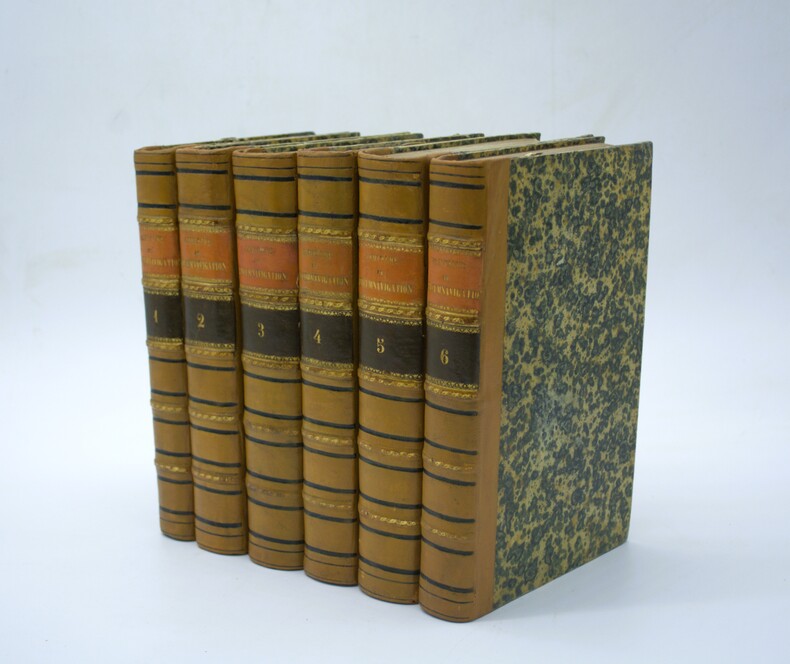
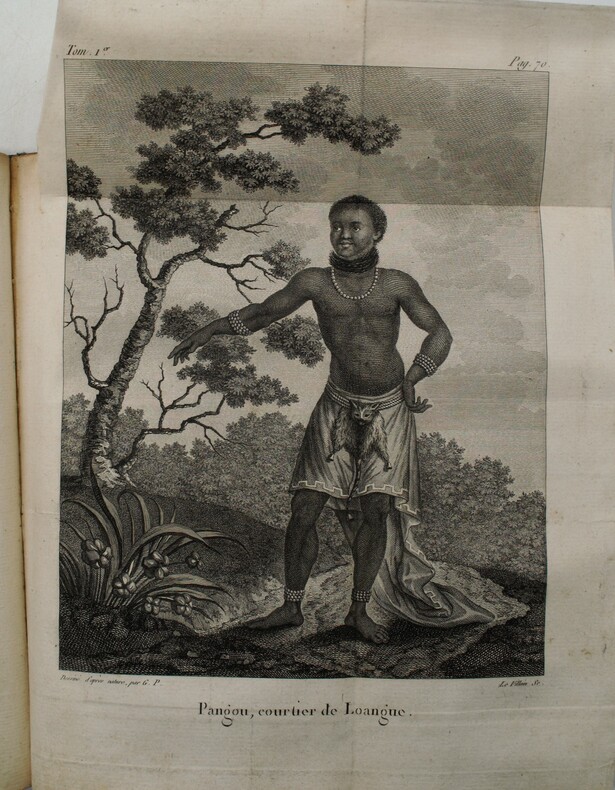
1841PHO-2262Paris, Arthus Bertrand, 1841-1842-1844-1848-1853-1854. 6 vol. in-8° de XXIX, 1 bl., 343 pp., [2] ff., Front., 6 pl. h.-t. et 1 carte dé pl. ; 467 pp., [2] ff. Font., 4 pl. h.-t. et 1 carte ; 548 pp., [1] f. Front. et 5 pl. h.-t. ; 464 pp., [2] ff. 4 pl. h.-t. ; III, 1 bl., 542, [2] pp. 4 pl. h.-t. ; 400 pp. Font. et 5 pl. h.-t. demi-basane fauve, dos à 5 faux-nerfs, p ; de t. en maroquin orange, p. de tomaison en maroquin brun, tranches mouchetées (Reliure du temps). Édition originale, bien complète du sixième volume consacré à la Californie qui manque souvent. 31 pl. gravées sur acier (complet) et 2 cartes dépliante, au Tome IV, la pl. du « Fort de Cornouailles » est reliée en frontispice du tome VI. Des rousseurs et quelques planches brunies.
1837ABC_47982London 1837. Folio 32 x 20.5 cm. William Clowes 1837-1845; T. R. Harrison 1848-1872. Later stiff blue paper wrappers with white title-label on the front cover blue sprinkled edges. Ad. 11 in beige paper wrappers. With several tables of data. 14 volumes. Rare collection of 14 volumes containing transcriptions of British diplomatic correspondence with other countries relating to the slave trade in the 19th century printed for the British government. Although slavery in the British Empire was abolished in 1807 enslaved people in the colonies were not freed until 1838. In the present volumes which mostly date from 1837-1846 directly after slavery was abolished in most British colonies the British government urges other countries to help put a halt to the now illegal slave trade. The present collection contains the correspondence between Britain and numerous countries in Europe the Americas and North Africa especially France Spain the United States and Austria. The letters describe the ships carrying enslaved people in detail also mentioning their ports of call so they could be more easily found and stopped. Of particular interest are the transcriptions of slave trade acts from various countries as well as the treaties between France and chiefs in African colonies which are difficult to find in print anywhere else.The letters reveal the profound change in attitude towards slavery in the middle of the 19th century. The tone of the correspondence with countries that were quick in abolishing slavery like Denmark is very different than that of the countries that were much slower like the Netherlands and various countries in Latin America. However the letters especially make clear how difficult it must have been to find and stop the ships that were illegally carrying enslaved people. The owners of the vessels often hid their illegal practices behind obscure transactions and renamings which made finding them arduous and sometimes dangerous. It was the task of British commissioners and naval officers to try to uncover the network behind the Atlantic slave traders and bring them to justice. By collaborating with other countries the courts succeeded in the condemnation of over 600 vessels engaged in the slave trade and the liberation of nearly 80000 enslaved people.Ad 11 with blue library stamp on the title-page "Bibliothèque du palais de la paix". All volumes in good to very good condition some very slight browning and foxing some marginal notes in most volumes. unknown
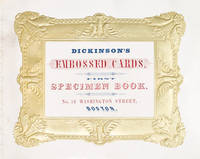
1842232013Boston: Samuel N. Dickinson 1842. Printed title in blue and red within an embossed gilt ornamental frame one printed "Notice" from the publisher dated June 1842 49 specimens of embossed cards many tinted some printed all mounted to stiff card stock; and 7 sheets of "Embossed Specimens of Printed Billets" sewn to a stiff printed card. Oblong 4to. Bound in an album of contemporary half calf and marbled paper boards with red leather label on upper cover stamped in gilt "Dickinson's Embossed Cards" calf shows much deterioration and corrosion although the sewing is still intact 28 specimen cards have been removed and are no longer present some minor soiling and foxing but generally vey clean and sound internally custom morocco backed folding box. Printed title in blue and red within an embossed gilt ornamental frame one printed "Notice" from the publisher dated June 1842 49 specimens of embossed cards many tinted some printed all mounted to stiff card stock; and 7 sheets of "Embossed Specimens of Printed Billets" sewn to a stiff printed card. Oblong 4to. With a very interesting presentation note from a previous Philadelphia owner Alfred Darrach dated 1928 affixed to the front pastedown identifying the original owner his grandfather as Christian Gobrecht 1785-1844 artist engraver embosser inventor engraver to the U.S. Mint and from 1840-1844 the 4th United States Engraver of the Mint where he was responsible for the creation of several new models and designs including the famous Seated Liberty design which appeared on a variety of American coins from 1836 through 1890. <br /> Gobrecht designed many notable medals coins and dies during his career but he also "invented a speaking doll and later a camera lucida. He also produced engravings for calico printers and dies for bookbinders. He engraved the brass dies for embossing the Morocco covers of the Boston Token from 1831 - 1836 as well as the eagle cover of the Philadelphia Token. Among the medals he engraved were the Charles Willson Peale medal the Franklin Institute medal etc ." - DAB.<br /> A remarkable specimen album in and of itself all the more so for having belonged to one of America's most important engravers. We cannot say for sure but it is entirely likely that if Gobrecht himself did not design many of the dies for this embosser he may have used the album for his own work and possibly removed the cards which are no longer present. Samuel N. Dickinson unknown
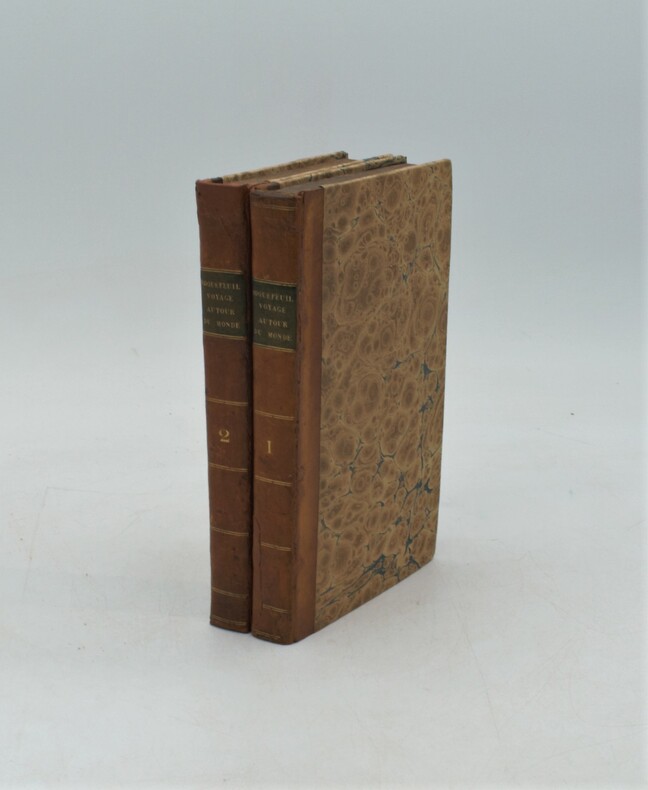
1823PHO-2006Paris, Ponthieu, Lesage, Gide fils, 1823. 2 volumes in-8, xlix, [1]. 344 ; [4], 407 pp., relié demi basane époque, dos lisse orné avec pièce de titre olive et tomaison, ex-libris Jacob Fagel, réparations, quelques rousseurs. Chadenat, n°1196. - Forbes, n°569. - Sabin, n°73149.
1821PHO-2480Paris, Imprimerie Royale,1821, in-folio (47x31cm), XVII-120pp., 24 planches sous serpentes dont 2 cartes et une planche en couleur d’époque. Basane racinée époque, dos lisse orné avec pièce de titre verte, frises aux plats et aux champs, tranches marbrées. Frottements, quelques épidermures et griffures, petits trous au dos en pied, rares rousseurs
1818127276London: J. M. Richardson 1818. One of the outstanding exponents of the theory of international trade in the nineteenth century First separate edition of this anonymous tract originally published in The Pamphleteer Volume XII number 23. Arnold Plant declared that "the anonymous author of this tract should take his place with Ricardo J. S. Mill Longfield Mangoldt and Edgeworth as one of the outstanding exponents of the theory of international trade in the nineteenth century. His use of algebraic symbols in setting out the ratios between the quantities of commodities his method of ascertaining from these ratios which of a number of commodities can be most advantageously exported and imported his demonstration that the ratios used may be either those of quantities of different commodities within the same countries or of the same commodities in different countries will bear comparison with for instance Professor Viner's own lucid exposition well over a century later" Plant introduction to 1933 reprinting pp. 40-41. Although the tract was reprinted in the Pamphleteer in the same year it has otherwise left little trace. Octavo 197 x 120 mm. Recent quarter cloth paper label to spine marbled paper sides. Light marking to cloth some very faint scattered foxing else an excellent copy. See Goldsmiths' 22070 for The Pamphleteer. hardcover
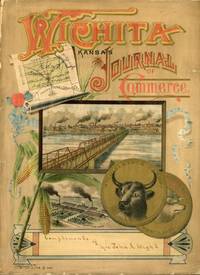
188854232Wichita Kansas: Eagle Printing House 1888. 1888. KANSAS. First edition.4to. Original color pictorial wrappers 92 pp. introduction numerous illustrations numerous advertisements mostly printed in double column. This promotional publication by the Wichita Board of Trade was published to counter the "malignant attacks" conducted by "powerful newspapers all over the country" who have "deliberately leveled their batteries at Wichita." The promotional contains an historical overview of Wichita in the cattle trade information on crops and capabilities of Kansas and calls Wichita "The Southwestern Metropolis." Illustrations include street cars telegrams churches private residences and schools. Containing also a directory of wholesale business information on Wichita's railroads and railway connections lists of industrial enterprises the meat packing centers the livestock market and information on taxes and building enterprises. In addition there are numerous advertisements for various businesses in Wichita. Light cosmetic touch-up to the spine and extremities by a master paper conservator else an attractive informational and scarce promotional for Wichita. Housed in a quarter leather and color decorated boards with raised bands and titles stamped in gilt on the spine. Not in Adams Herd. Not in Graff Eberstadt or Howes. OCLC locating only three copies. Considered to be very scarce with only a few known surviving copies. Eagle Printing House, 1888. hardcover
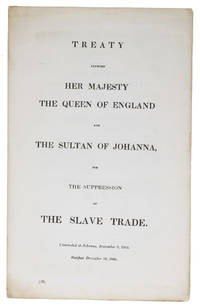
1845ABC_48495Johanna Anjouan 1845. Ca. 32.5 x 20.5 cm. Original paper wrappers. 5 1 blank pp. Historically important treaty between Queen Victoria of the United Kingdom of Great Britain and Ireland 1819-1901 and Sultan Selim dates unknown of Johanna present-day Anjouan for the suppression of the slave trade. The treaty was concluded in November 1844. The present work is the ratified version from 10 December 1845 signed by Sultan Selim and Christopher Wyvill 1792-1863 captain of the HMS Cleopatra and formation commander of the British Royal Navy in Africa between 1849-1853. The publication is exceptionally rare. We have not been able to find any printed copies anywhere else either in sales records or libraries. The archives of the UK parliament make mention of the treaty but it appears to be otherwise unknown.In the present work the Sultan of Anjouan states that: "There shall be no dealing in slaves in our territory and no slaves shall be imported to be sold in our country". He further allows the British to inspect Anjouan ships and take them to an English port if they are found engaging in slave trade. The present treaty which is of significant historical importance is an excellent example of the measures that were undertaken across the world to stop the slave trade.The leaves are slightly creased and browned around the edges. Otherwise in good condition. unknown
184324188St. Louis: John B. Sarpy 1843. Folio. 2 pp. 12 1/2 x 7 1/2 inches. Docketed on verso fold lines with some separation a few repaired. A manuscript affidavit written by fur magnate John Baptiste Sarpy of Pierre Chouteau & Co. that gives one a granular sense of the difficulities of running a frontier business dependent on mountain men like Jim Bridger and Frapp.<br/> <br/> A remarkable window onto the business dealings of famed mountain man Jim Bridger this signed manuscript affidavit of John B. Sarpy testifies to his actions on behalf of the estate of fellow fur trader Henry Fraeb also known as Frapp who was killed by Indians in the Rocky Mountains. Sarpy who was a partner in the major fur firm Pierre Chouteau &. Co. had worked closely with Frapp and knew him well. In his affidavit he writes about the Chouteau Company's concerns about Jim Bridger Frapp's partner at the time of his demise and the difficulty of getting Bridger to pay his debts. Written in St. Louis Sarpy's affidavit states: "On the 8th day of August last he was appointed . . . administrator of the estate of Henry Fraeb then lately deceased. Said Fraeb had been a trader in the mountains & was at the time of his death in partnership with a man of the name of James Bridger & said Bridger & Fraeb were indebted to the firm of Pierre Chouteau Jr. & Co. & it was feared by the members of said firm that unless some one became the administrator of the said Fraeb the said Bridger might interpose difficulties in the settlement of the accounts existing between them & Bridger & Fraeb & for the purpose of doing justice to themselves as well as to the said Fraeb the said Sarpy applied for letters of administration which were granted to him as above mentioned. The said Bridger has however since this time been here & has settled in full the accounts existing between the firm of Pierre Chouteau Jr. & Co. & the said Bridger & Fraeb. And the said Sarpy says that no property has come into his hands as the administrator of the said Fraeb although it may be that the said Fraeb has property in the mountain country or in the hands of James Bridger his former partner." Though he may have been one of the greatest and most beloved mountain men of all time Jim Bridger was not the best debtor in the world nor did Pierre Chouteau & Co. forget business. John B. Sarpy unknown
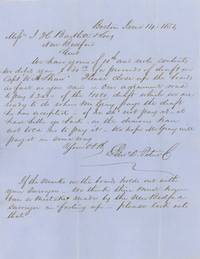
1855List3333Massachusetts New York Maine Pennsylvania and others 1855. Fifty letters with four empty envelopes or covers. Forty-four letters addressed to I.H. Bartlett & Sons: two from the 1830s eight from the 1840s and thirty-four from the 1850s. With five letters addressed to Capt. John C. Blanchard 1838 1839 1844 and 1849 and one to Cumston & Hatch N.d. Overall excellent to Near Fine. Ivory Hovey Bartlett 1794–1871 was a merchant and whale oil seller based in New Bedford Massachusetts. Bartlett moved to New Bedford from Plymouth in 1819 first dealing in grain and later transitioning to general merchandise and whaling.1 Whale oil and spermaceti were widely used in lamps and as lubricant and whalebone baleen was used for structure in items like umbrellas and corsets. In the nineteenth century whaling was the basis of New Bedford’s economy—supporting shipbuilding refineries toolworks and more—making it the wealthiest city in North America at the peak of the industry in the midcentury. Whaling declined in the 1860s with the rise of petroleum which could be both used as a lubricant and distilled into kerosene for lighting.<br /> <br /> Offered here is a collection of letters mainly to Bartlett’s company I.H. Bartlett & Sons with five to Captain John C. Blanchard of Searsport Maine and one to Cumston & Hatch. The latter is unknown; Blanchard was in the cotton and sugar trades sailing between the US Europe and West Indies.<br /> <br /> Letters to Bartlett are mainly from other mercantile firms; they pay bills make purchases discuss oil prices and occasionally complain. For instance Robert Robinson of Portland Maine writes:<br /> <br /> “I have just got 4 Casks of my oil 3 of the last and 1 of the invoice of 30th ult. I cannot understand why my oil should be keep back in this way. Hyde had seven casks by yesterdays Boat the same boat which mine came by it seem’s as if the fates where against this Oil as yesterday boat did not arrive untill late yesterday afternoon and this mornings boat has arrived without the balance there must be something wrong somewhere . I must say I think such neglect should be made known but perhaps it would be better to suffer for fear of the future. I shall not be able to get off any oil untill tomorrow as the oil was not out of the boat untill this morning. it is not thirteen days since that one cask left New Bedford .â€. October 13 1852<br /> <br /> Most of Bartlett’s customers buy whale oil though beef molasses and coal are also discussed but some are interested in whalebone; as are Wright Bros & Co a Philadelphian umbrella manufacturer who write to complain about market speculation:<br /> <br /> “The fact appears to us that speculation and the calculation of holders put the price kept it so high that it considerably lessened consumption – so much so of late that some have been disposed to slide it off below New Bedford rates very quietly.†October 23 1852<br /> <br /> The letters to all parties are generally all business except for two of the five to John Blanchard: one from his wife Caroline Houston and one from fellow Searsport captain David Nickels Jr. 1823–1888 who writes from Bangor:<br /> <br /> “I see by to day’s Mercantile gazette that you are in trouble I can sympathize with you God knows I have had a good share of it since I left the land of Gospel light and liberty as the good people say in their prayers I have been in this place fifteen days you doubtless knew I was chartered by Capt Pendleton to go from Leith to Bangor for a cargo of slates and from here to Boston I sailed from Leith on the 27th of November last for this place I got as far as the Orkney Islands on the 30th of November the wind blowing heavy from the westward and having a pilot belonging to the Orkneys on board I concluded to take the harbour of Longhope and lay till a shift of wind or till it moderated . in spite of all our endeavouring we were driven on shore broke the keel out of her filled as high as the lower deck which was on the 3d of December and on the 22d of March we left the Orkney Islands after having been near four months there When I got here I found the man who was to freight the Barque from here to Boston had neglected to place funds in the hands of the slate agent of this place consequently he refuses to put slates on board of the vessel till he receives funds from Boston .â€. May 13 1849<br /> <br /> Overall a look at the dealings of maritime merchants in the mid-nineteenth century particularly in the critical east coast whaling industry.<br /> <br /> 1 “Death of a Well-Known Merchant†The Standard-Times February 6 1871 2. unknown
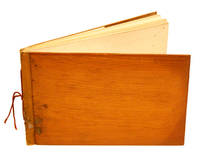
1893607017Lowman & Hanford 1893. First Edition. Wraps. Very Good. A Rare Northwest imprint; this was from the library of noted historian Edmond S. Meaney with his signature to the front pastedown and further inscribed 'From C. T. Conover Seattle Wash.' This copy has been specially bound with a leather spine and two bevelled and varnished wooden boards. 38pp. with 10 b/w plates one panorama shot of the waterfront and one map. Issued as a souvenir for Seattle's guests on the occasion of the celebration commemorating the completion of the Great Northern Railway to its Pacific terminus at Seattle and the inauguration of through traffic June 1893. WorldCat only located 3 copies. [Lowman & Hanford] unknown
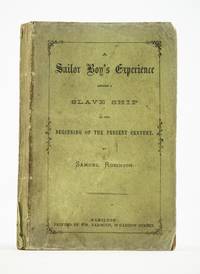
1867ST20572Hamilton Scotland: W. Naismith 1867. FIRST EDITION. 168 x 106 mm. 6 1/2 x 4 1/4". vii 183 pp. <br/> In the very rare original green paper wrappers. Spine cocked wrappers somewhat soiled spine with paper beginning to lift along the bottom inch of the rear joint other minor exterior defects but the volume solid and internally in excellent condition. QUITE A GOOD COPY of a fragile inexpensively produced volume one would expect to find in shambles.<br/> <br/> Told in the form of letters drawn from the author's actual correspondence as well as his contemporary journals this first-hand account by a young sailor of the transatlantic slave trade in the years 1800-04 brings those horrific voyages vividly to life. At the same time the author writing in direct unvarnished prose makes it clear he is at least as much an observer of difficult sea life in general as he is concerned with the abolition of a great evil. In the preface Robinson 1786-1875 explains his reasons for publishing this record of his time aboard a slave ship: "I have heard so many gross misstatements respecting West Indian slavery and the horrors of the 'Middle Passage' that I formed the resolution should time be allowed me to give the result of my own experience . . . in order to disabuse the minds of many well-meaning people." He is rightly aware that some readers may be offended by unconvincing apology in an account encumbered with naïveté : "It is doubtless the opinion of many that I put myself into a wrong position and incurred blame and obloquy by entering into this obnoxious trade at all. It may be so; I will not dispute the matter. I certainly did not feel myself comfortable or at home in the service. But let it be remembered in my favour that the trade was then a lawful one; whilst at the same time I was induced to enter it by what is called an accidental circumstance . . . and an irresistible desire for a seafaring life so completely carried me away that it became a matter of perfect indifference to me where the ship went if not to the bottom provided I was aboard of her--or in what trade engaged if not a pirate." As indicated the letters originating in various ports in England West Africa and the West Indies depict a harsh life at sea for all involved but most especially for the wretches who made up the ship's cargo. An accident on board nearly cost Robinson his foot and ended his career at sea just a year before in his words "the united voice of a generous and philanthropic people" passed the Emancipation Bill into law ending British participation in the slave trade. The phrasing here makes it clear our narrator had his heart mostly in the right place. This is a very rare book which is not surprising for a pocket-sized work from a provincial press near Glasgow issued in insubstantial paper wrappers. OCLC records just two copies in libraries both in the UK while RBH and ABSA seem to list no copies at auction except the present one. W. Naismith unknown
1823PHO-2335Paris, Ponthieu, Lesage, Gide fils, 1823. 2 volumes in-8, xlix, [1]. 344 ; [4], 407 pp., relié demi basane époque, dos lisse orné avec pièce de titre et tomaison, coiffes abimées, petits manques au dos, coins usés, frottements, manque la mappemonde Chadenat, n°1196. - Forbes, n°569. - Sabin, n°73149.
184433797London: William Clowes and Sons 14 Charing Cross For Her Majesty's Stationery Office 1844. Folio. 13 1/8 x 7 7/8 inches. First edition. a-b2 B-Z4. i-x 1-176. 186 pp. Diplomatic messages with the USA on pages 19-144. One full-page engraved map titled "Route of the Egyptian Army under Ahmed Pasha on a Slaving Expedition February 1843" by Standidge and Co. p. 169. Later black half morocco binding over black cloth with five raised bands forming six compartments on spine with gilt-lettered title in second and fourth compartments and date in sixth with the binder's ticker of Monastery Hill Bindery on back pastedown<br/> <br/> Important documents letters and reports regarding Great Britain's efforts to curtail the African slave trade across the globe including over 100 pages of diplomatic cables with the USA.<br/> <br/> "Class D. Correspondence" referred to diplomatic letters between the Foreign Office and nations that had not signed treaties with Great Britain regarding the slave trade. Every year from 1830 to 1859 this correspondence was presented to both Houses of Parliament and published: this is the annual compendium covering the year 1843. And though the importation of slaves was illegal in the United States at that time there is a considerable amount of American-British interaction. Great Britain had abolished slavery in toto throughout its colonies in 1834 after the passage of the Abolition Act of 1833. It had been home to a powerful abolition movement that held influence in government for some time prior. Great Britain's economy had grew less dependent on slavery than its rivals like the US were and slave revolts on its far-flung colonies had been costly to put down. Those reasons coupled with domestic religious and social sentiment had led the British Empire to take action. Insistent British diplomatic correspondence is included here with other key major powers who had not yet signed on to trying to halt the slave trade. The present work covers contacts with Central America Equator New Granada Peru various consulates in the United States the Barbary States Egypt Turkey Crete Albania and Muscat. Much detail is provided about individual ships involved in the trade. William Clowes and Sons, 14, Charing Cross, For Her Majesty's Stationery Office unknown
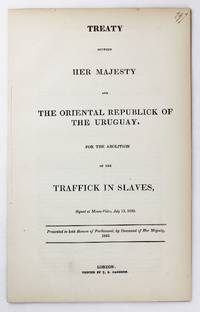
18426316London: T.R. Harrison 1842. Near fine. 38pp. stitched. Very minor bumps to top edge of first leaf light dust-soiling to outer leaves. A very rare treaty between Queen Victoria’s Britain and the “Oriental Republick of the Uruguay†printed in both English and Spanish in two parallel columns throughout. According to the text the parties were “mutually animated by a sincere desire to co-operate for the utter extinction of the barbarous Traffick in Slaves.for the special purpose of immediately attaining this object so far as relates to the total and final abolition of the Slave Trade of the Oriental Republick of the Uruguay.†The treaty is comprised of fourteen original articles plus three annexes totaling forty-six additional articles and four additional articles at the end covering a host of issues pertaining to the suppression of the slave trade. These issues included enforcement procedures the establishment of “Mixed Courts of Justice†“Regulations in respect to treatments of liberated negroes†and much more. With regard to slaves found on international vessels the two nations hoped for “permanent good treatment and a full and complete emancipation according to the humane intentions of the Parties of the Treaty.â€<br /> <br /> The present treaty was part of a larger effort by the British Crown to put an end to the transatlantic slave trade in the first half of the 19th century; at this same time Britain had reached terms on a similar treaty with the Republic of Texas and other nations. The document is signed at the end in type by J.H. Mandeville and Jose Ellauri representatives of the two countries who originally signed the treaty at Montevideo on July 13 1839; the present work was “Presented to both Houses of Parliament by Command of Her Majesty†in 1842 likely due to bureaucratic delays. Uruguay would have been an important ally for Great Britain in monitoring the seas against the transatlantic slave trade given its position opposite the South Atlantic Ocean from West Africa. OCLC records just a single physical copy of this treaty at the University of Arizona.<br /> <br /> Cundall 2854. T.R. Harrison unknown
1900263502Lyon France: J. Bouvard & Cie 20 Rue Lafont 1900. 14 thick card sheets with samples centrally mounted vertically to recto and verso some sheets quite thick to accommodate larger epaulets each with manuscript notations of name size etc. 11-3/4 x 6-3/4 inches. Black cloth album with the printed label of "J. Bouvard et Cie Fabrique de Dorures Soireries Ornaments d'Eglise" to front paste-down. Some wear commensurate with age and use spotting and thumbsoiling apparently complete with all samples backing possibly restored at an early date. 14 thick card sheets with samples centrally mounted vertically to recto and verso some sheets quite thick to accommodate larger epaulets each with manuscript notations of name size etc. 11-3/4 x 6-3/4 inches. This very unusual French sample book contains a large range of epaulets and sequin samples with a few lettering and star samples. J. Bouvard & Cie 20, Rue Lafont unknown
1801PHO-1139Paris, Dentu, 1801. 2 vol. in-8, (2) ff., 226 pp. ; (2) ff., 320 pp., 2 cartes, un plan et 8 pl. dépl., mouillures claires, relié demi-veau à coins de l'époque , dos lisse avec pièce d’auteur et titre , mouillure au 1er tome sur les 10 premiers feuillets , déchirures aux plis de 2 gravures.
1850c2206270149xbvkLondon, William Pickering (Chiswick, C. Wittingham), 1850. 1 blank sheet; xii pages (incl. foretitle-sheet, title-sheet, printed dedication-sheet, 'Contents' and 'Introduction to Eidolon'), 240 pages; 1 blank sheet. - Richly gilt handbound green chagrin-leather binding over 5 raised bands with gilt title at spine (stamp-signed ''Bound by Hayday'' at inner frontpanel), all edges gilt, silken marker-ribbon; 8vo.(ca. 18 x 11,5 cm).
182128571Nantes 1821-1824 2 cahier brochés (débrochés) manuscrits à l'encre brune sur papier vergé crème , ligné et filigrané : " au cornet (cor de postillon) avec courroie simple en pendentif surmonté d'une couronne Royale" pour le cahier : Année 1821 et filigrané "GIRARD FRERES A TIFFAUGES" pour le cahier 1824, de 66 pages (pour 1824) et 48 pages pour (1821), format : 37 x 25 cm, l'année est notée a la main à l'encre brune, en haut de la page de couverture avec la mention "1821 Echeances Nantes", il n'y a pas de couverture pour l'Année 1824, l'année est juste notée en haut de 1ère page à droite , le mois est noté sur chaque en haut de page, DE GAUCHE A DROITE : une colonne avec le jour ou la lettre a été acceptée, une colonne avec la somme notée en livres, une colonne avec le genre de l'effet de commerce, une colonne avec le nom pour le compte de qui elles ont été tirées, une colonne pour le jour du mois ou échouent les traites et une colonne pour le nom du porteur qui la fait accepter ( l'année 1921 s'achève fin octobre le reste des pages de l'année est manquant - l'année 1824 est complète), quelques trace d'acidité du papier en marge, mais l'ensemble est bien lisible,
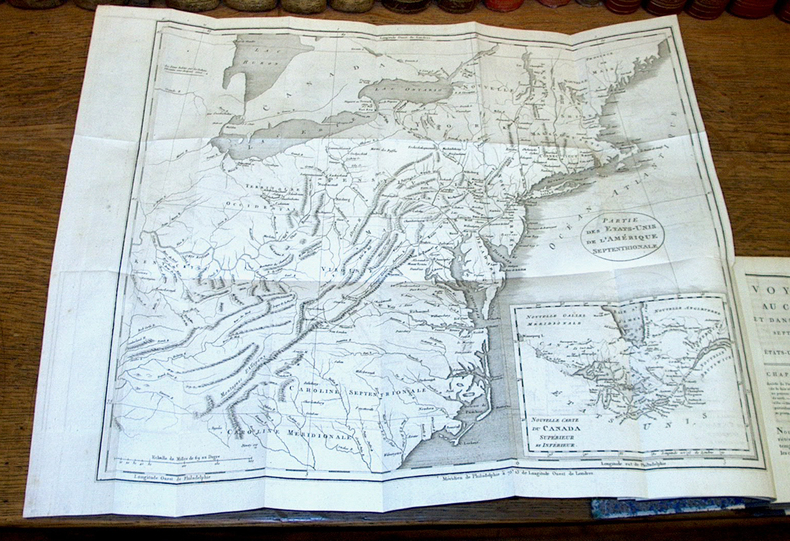
1803001778Paris Chez Gérard, Imprimerie de Munier 1803. Trois volumes in-8 (205 x 130 mm), demi-veau glacé bleu marine, dos lisse orné or et à froid, tranches mouchetées (reliure milieu 19e s.). Seconde édition française, ornée d'une carte dépliante et de 11 planches gravées sur acier d'après les dessins de l'auteur, représentant le Mont Vernon et la maison du Général Washington, les Chutes du Niagara, le Cap-Diamant, etc. Ex-libris Mr de Gaudechart. (dos très légèrement passé, quelques défauts, frottements sur les plats, quelques manques de cuir tome 1, quelques petites déchirures marginales, t. 3 sur les 30 premières pages mouillure angulaire, rousseurs). // Three octavo volumes (205 x 130 mm), dark blue glazed half calf, smooth spine tooled in gilt and blind, sprinkled edges (middle of 19th-cent. binding). Second french edition, illustrated with a folding map and 11 plates engraved on steel after the author's drawings, depicting Mont Vernon and General Washington's house, Niagara Falls, Cap-Diamant, etc. Bookplate Mr de Gaudechart. (spine a little bit faded, some defects, rubbings on covers, some lack of leather vol. 1, some little tears, vol. 3 water-stain on top corner of the 30 first pages, spots).
180718918Ce dernier pris dans une année moyenne, depuis 1702 jusqu'en 1770, époque de la suppression du privilège de l'ancienne compagnie des indes orientales, par Mr Legoux de Flaix, avec 1 atlas comprenant 1 carte dépliante et 14 planches.Edition originale. A Paris, Chez Pougin, libraire - 1807 - (T1 : xvi pp + 459 pp + errata du T1), (T2 : 447 pp + errata du T2).Reliure plein veau de l'époque. Dos lisses ornés de fleurons dorés avec titre et tomaison. Pièce de titre maroquin rouge. Filet doré encadrant les plats. Tranches marbrés. Pas de rousseur. Très bon état. Format in-8°(21x13).Le premier tome traite du commerce intérieur et des importations, et le second volume est entièrement voué aux exportations et dont il passe en revue les différentes marchandises, principalement des tissus et des épices.
1827PHO-2282Paris, Dondey-Dupré, 1826-1827. Texte : 3 volumes in-8, demi veau et coins époque, dos lisse avec titre et tomaison, tranches marbrées, ex-libris armorié (Hugh Grosvenor, 1st Duke of Westminster), frottements aux coiffes et aux plats. Atlas : Grand in-4 (33x25cm), 32 pp. + [1] f., pl., demi-basane fauve, dos lisse orné de filets et de petits fers dorés, auteur et titre dorés, coiffe de tête manquante, quelques rousseurs sur les planches, fente au pli de la carte). Provenance : A. de Sibeud de Ferriol (Grenoble, 1817-1880 ; ex-libris gravé).
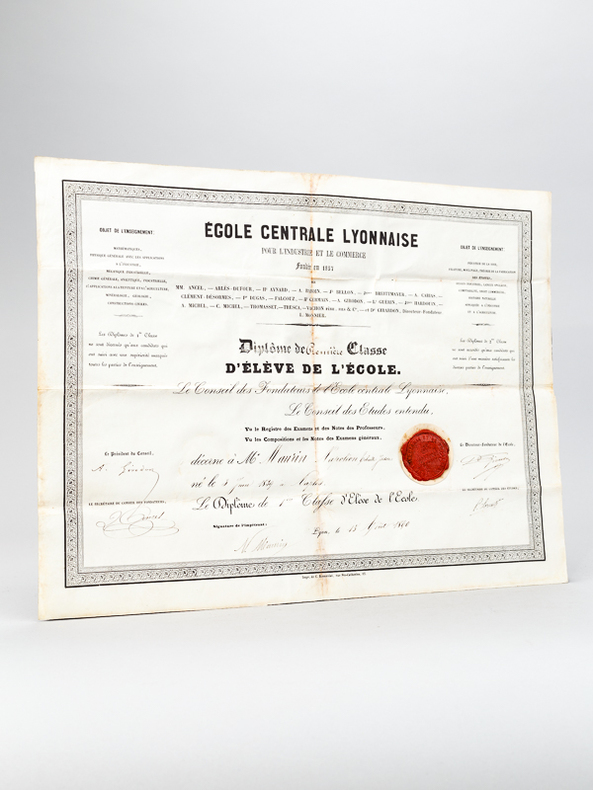
1860567491 diplôme sur vélin préimprimé format 42 x 31,5 cm avec beau sceau de cire, signé par l'impétrant, par le directeur-fondateur de l'école Désiré Girardon, par le Président du Conseil A. Girodon, et par le secrétaire du Conseil des Fondateurs Ancel, daté de Lyon, ke 15 août 1860. Rappel du titre complet : Ecole Centrale Lyonnaise pour l'Industrie et le Commerce fondée en 1857. Diplôme de Première Classe d'Elève de l'Ecole décerné à M. Maurin Napoléon Tibulle Isidore, né le 3 juin 1839 à Naples. [ Diplôme ancien de la première promotion de l'Ecole Centrale de Lyon, attribué le 15 août 1860 ]
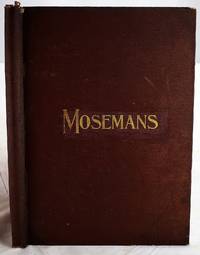
18801807220002New York: C. M. Moseman and Brother 1880. First Edition. Hardcover. Very Good. Bound in publisher's burgundy cloth. Folio 38 x 27 cm. 304 p. Chromolithographed title and six chromolithographed plates numerous illustrations throughout. Faint damp stain to bottom margin not overly noticeable. Pages stamped "M. Hancher 128 Chambers St. New York City." Michael Hancher. Copiously illustrated trade catalogue of horse tack and related furnishings depicting an incredible selection of harnesses saddles brushes blankets dressings bridles bits gloves and other horse-related accoutrements. The Moseman shop depicted on the first page following the title was located on Chambers Street between Church and West Broadway in New York. <br> This book sold at Christie's Sale 2456 Fine Printed Books and Manuscripts 2011 Lot 176. <br> This is an oversized or heavy book which requires additional postage for international delivery outside the US. New York: C. M. Moseman and Brother hardcover