MARCO POLO. Société de Géographie.Livre Rare Book
1 162 résultats
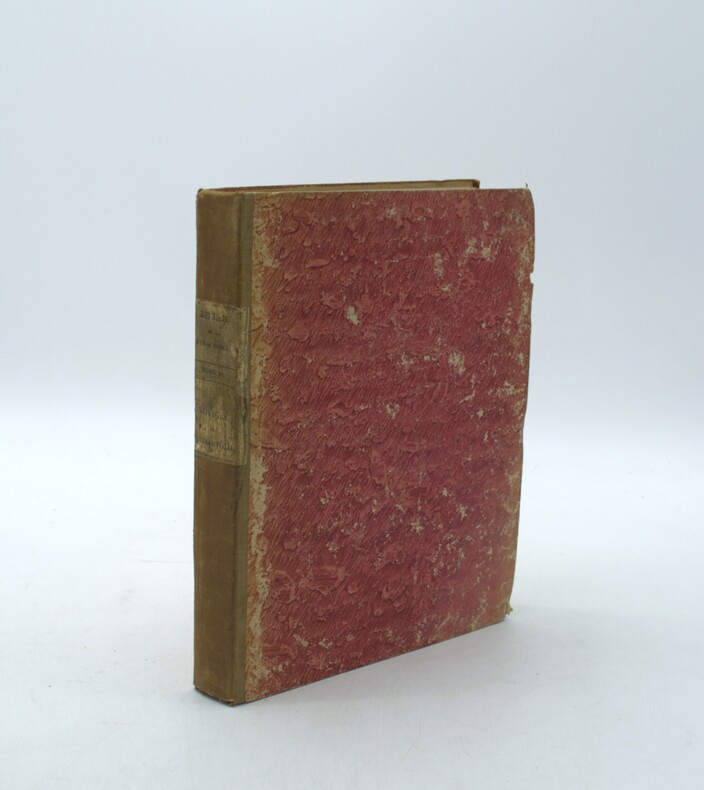
1824PHO-2191Paris, Everat, 1824, in-4 (260x210mm), 2ff-LIV-568pp-1ff , avec en fin d’ouvrage la liste des membres de la Société de Géographie, relié demi toile, dos lisse avec étiquette de titre, éditeur et tomaison, frottements aux plats et étiquette usée, vieille mouillure claire en coin, piqures.
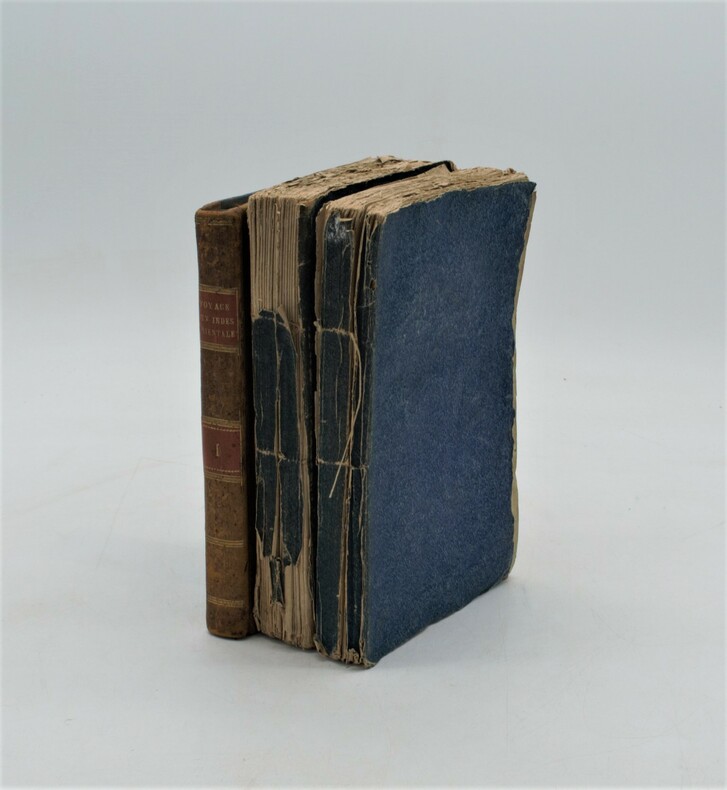
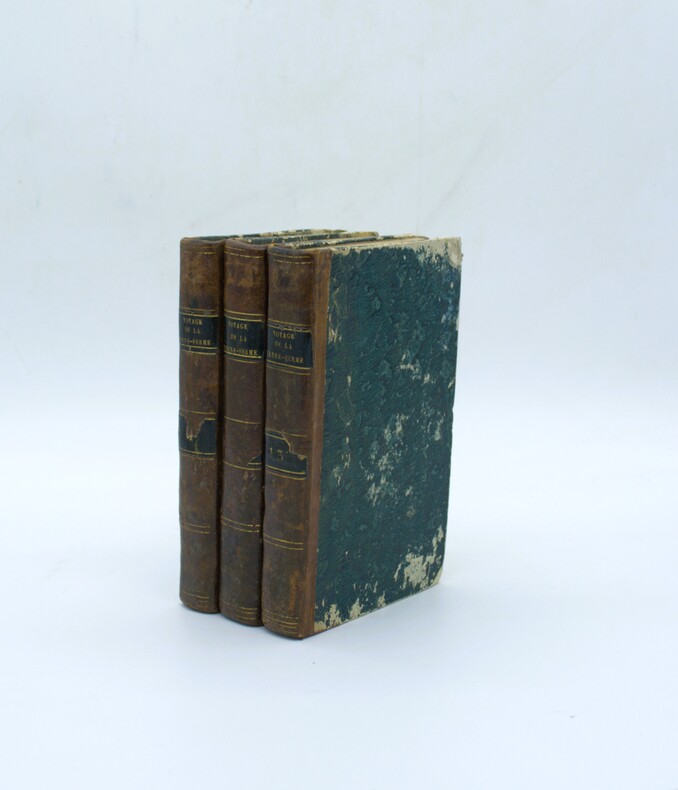
1810PHO-1272Paris, Clament, 1810. 3 vol. In-8° (202 x 136 mm) TOME 1:301pp TOME 2 : [2], 390 pp. ; TOME 3 : 291 pp., avec 4 tableaux et 1 (2) carte dépliante de Mentelle and Chanlaire (Inde) sur papier bleuté , contours coloriés , Tome 1 , relié, demi cuir , dos lisse avec pièce de titre et tomaison, tome 2 et 3 en brochage d’attente papier bleu (non rogné , manque au dos , dos cassé tome 2)
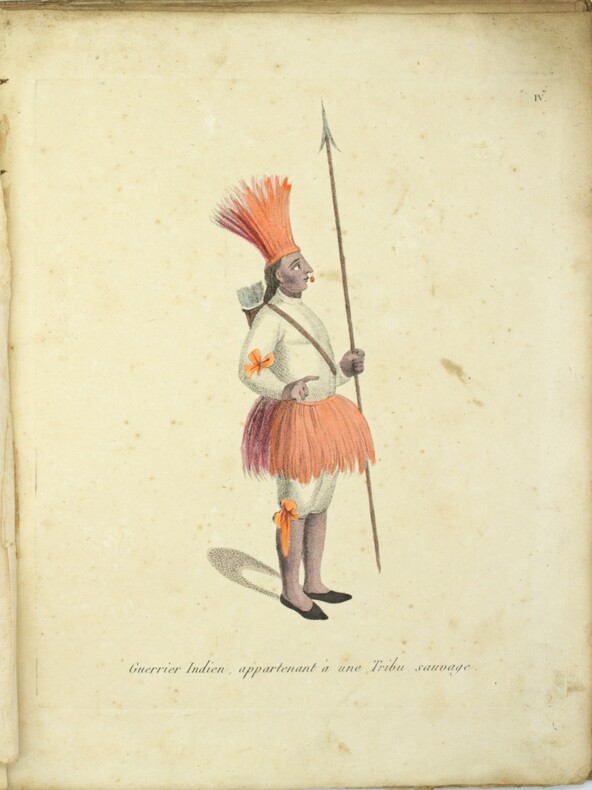
1809PHO-1737Paris, J.G. Dentu, 1809. 3 volumes TEXTE, 2 vol. in-8°,[2]-xii-385, [2]-427 pp. , brochage d’attente orange, étiquette avec titre au dos, quelques frottement. ATLAS, 1 vol. in-4° (290x225),12 planches sous serpente en couleurs et une carte de Lapie, reliure d’attente, titre sur le plat, dos manquant, coutures apparentes, la carte est volante et datée de 1829, elle provient d’un autre ouvrage
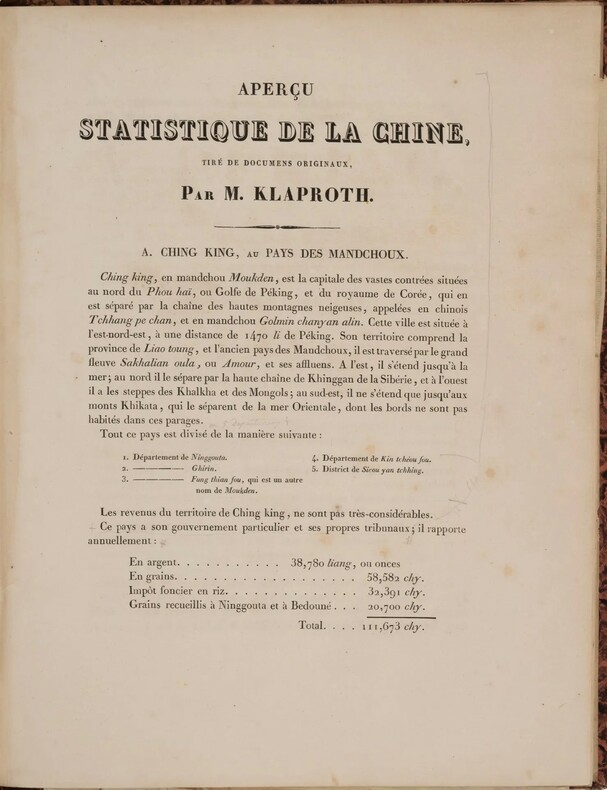
1826PHO-1888Paris, Dondey-Dupré, 1826-1827. Grand in-4 (33x25cm), 32 pp. + [1] f., pl., demi-basane fauve, dos lisse orné de filets et de petits fers dorés, auteur et titre dorés, coiffe de tête manquante, quelques rousseurs sur les planches, fente au pli de la carte). Provenance : A. de Sibeud de Ferriol (Grenoble, 1817-1880 ; ex-libris gravé).
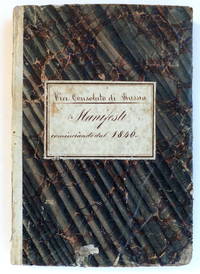
18403417<p><i>Through Russian Waters</i></p><p>RUSSIA - TRADE FORMS. Vice Consolato di Russia. Manifesti cominciando dal 1840. Trapani 1840-49.</p><p>Small folio pp. 196 of pre-printed shipping manifest forms of which 137 completed in ink; contemporary flexible vellum-backed marbled paper boards with ink-lettered label to upper board; corners bumped and spine a little chipped.</p><p>Fine documentation of the maritime trade from the harbour of Trapani in Sicily. The manifest gives bills of lading from January 1840 to March 1849. The pre-printed manifests are completed in ink giving the name of the freight ship and its captain the destination and then details of its freight i.e. type and quantity of merchandise names of senders and recipients.</p><p>Trapani boasts some of Europe's oldest salt marshes and salt extraction has been a major business for centuries which still flourishes to the present day. By the nineteenth century Sicilian sea salt was exported to European countries as far away as Norway and Russia. These shipping manifests document that it was sent to destinations as far afield as Constantinople Abo Stavanger Carlscrona Stockholm Bergen Odessa Reval and Riga.</p><p>Clearly some of the shippers acted on their own account being both captains of the ship and shipper whereas others acted on commission. The shipping routes went through Russian waters which explains the accounts kept by the Russian Vice Consulate.</p>
1806PHO-2337A Paris, Colnet, 1806. 3 vol. in-8, 558pp., 469pp., 362pp., demi-basane fauve à coins parchemin ivoire, dos lisse, pièce de titre brune, dos frottés, coins et coupes usés, pièces de tomaisons incomplètes, défauts dont rousseurs, mouillure claire au début de t.3 et fin t.2, petites taches d’encre et fentes sans manque sur la carte). Ouvrage illustré d'une carte dépliante et de 3 plans illustrant la ville de Caracas, le port de la Goayre, la rade et la ville de Porto Cabello.
18343173Exposition de 1834. Mit gest. Titel u. 38 gest. Tafeln. Paris, [L. Tenré, H. Dupuy], 1834. Kl.-4to. (27,4 x 18,4 cm). 160 S. Marmorierter Halblederband mit reicher Rückenvergoldung.
18435870Im Auftrag des Großherzoglich Hessischen Gewerbvereins verfaßt. Darmstadt, Gedruckt bei C. W. Leske. In Commission bei Gustav Jonghaus, 1843. Kl.-4to. (26,2 x 21,2 cm). Titel, 336 S. Halbleinwandband d. Zt. mit Rückenschild.
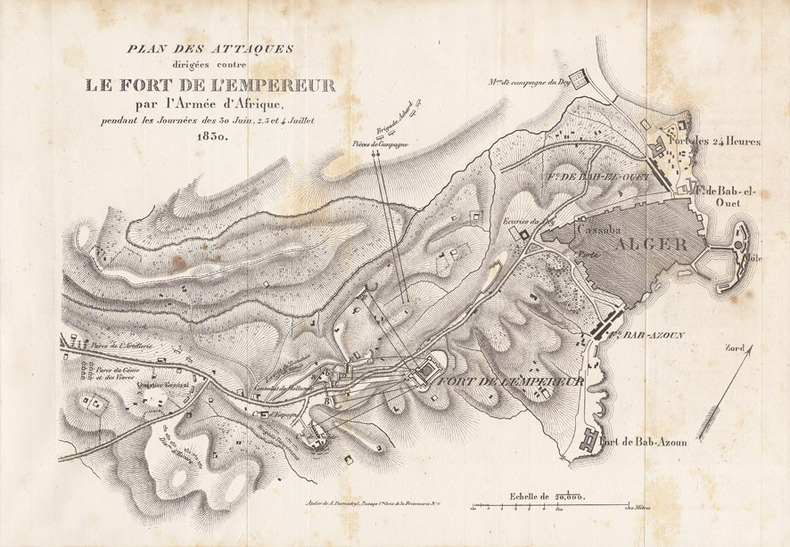
183017233Paris, Ladvocat ; Marseille, Camoin ; Toulon, Laurent, 1830 ; (4), II pp. , (1) f. blanc, 406 pp. , (1) f. errata, très grand plan dépliant lithographié de Alger, Djezair, avec le port, les fortifications, etc.suivi de : [Fernel, commandant] Campagne d'Afrique en 1830, avec le portrait du Dey d'Alger, le tableau de l'organisation de l'armée, et d'un plan des travaux du siège. Paris, Théophile Barrois et Benjamin Duprat, 1831 ; (4), VII, 133 pp. , (1) f. , 5 pp. soit 10 tableaux dépliants, plus dépliant des attaques.Reliés en un volume in-8, demi veau glacé fauve, dos lisse à faux nerfs dorés, titre et fleurons dorés (reliure de l'époque).
1891001528Paris Hennuyer 1891
18521338Original manuscript. 1852-1854. Folio 38 x 27cm. Full contemporary reverse calf with gilt morocco titles labels to the spine "Rough Sales Book / S & L / B". Marbling to page edges. Marbled endpapers with engraved label for "Baily Brothers Booksellers Stationers Account Book Manufacturers" London to the front pastedown. 172pp. of manuscript text in ink on red-ruled laid paper watermarked "W. King / 1850" followed by c.160pp. blank with a handful of pages torn out following the conclusion of the manuscript text section and another within the text. The majority of entries are in English with some in Spanish mostly written in the same hand. Condition is very good the binding firm with marking to the boards chipping to the head of the spine and a little wear to the extremities. The contents with a 3cm tear to the head of the first text page and two pages partially cut/torn away at the bottom are otherwise in good order. The ledger of a British sales agents operating in Panama during the mid-nineteenth century detailing the importation and sale of a wide variety European and South American goods into the country.</p><p>The manuscript meticulously records the origin city/country importer ship the goods received and sold and the charges entailed for each shipment. A typical entry for example records the arrival of "gunpowder received per "Alexander" and sold on behalf of the Kames Gunpowder Company Glasgow" followed by details of the subsequent purchasers "J. D. Cordova" etc. and the charges/commissions taken by the agent including fees for landing expenses and "carriage to arsenal". </p><p>Many of the entries describe large diverse cargoes combining both essential and luxury goods including: alpacas; chocolate pots; "41 cases of pickles and mustard"; lavender water; rocking chairs; a "copying machine"; cinnamon; scissors razors; bone buttons; horse brushes; compasses; gin; hatchets; bedsteads; looking glasses; children's toys; cloves; muslins; kegs of shot; cups and saucers; tobacco; machetes; claret; playing cards rat traps; "Aqua de Colonia" cologne; silk gloves; saddles; blunderbusses; padlocks; lace; pantaloons; "Jamaica rum"; almonds; vinegar; bonnets; sausages; gold frames; water closets; wash stands; champagne; mosquito nets; and much else besides.</p><p>The origin ports include major European trade centres such as Liverpool and Glasgow but also include many South American ports such as Guayaquil Equador carrying beans cocoa coffee sugar and quinoa amongst other things; Buenaventura Colombia; Callao Peru carrying candlesticks coffee mills and bayonets; Lima Peru "bottled fruits" and cherry cordial; and Valparaiso Chile; as well as San Francisco and New York to the north. The importers themselves are also a mixture of British and Panamanian companies.</p><p>A fascinating detailed insight into Panama's transatlantic and South American trade during the mid-nineteenth century. [Original manuscript]. hardcover
186238544Paris Auguste Durand 1862 in-8 demi-veau havane, dos lisse orné or et à froid, tranches mouchetées [Rel. de l'époque], lég. frottée, qqs menues rousseurs
181232795Quebec Printed at the New Printing-Office / Imprimé a la Nouvelle Imprimerie 1812 In-8 illustré de planches hors-texte, 6f. (titre en anglais, titre en français, Circular, Circulaire, Introduction et Discours préliminaire, par F. Vassal de Monviel), 248p., 1f. blanc, 15 planches dont 2 grands tableaux repliés, et 2f. (Index). Couvrure de l'époque, papier gris, avec pièce de titre manuscrite au dos (étiquette en queue).
180255719New York: Printed and Sold by G. F. Hopkins 1802. First American edition. Leather bound. Very good. 296pp. Octavo 22 cm In a later 3/4 leather binding with brown cloth over boards. New endsheets and flyleaves. The boards are a bit warped. Repair to title and dedication pages. With map present at the front. Wright-Howes M 133. "First crossing of the continent from ocean to ocean by a white man. The narrative portion was prepared for publication by William Combe from Makenzie's notes." - Wright-Howes p. 362. Printed and Sold by G. F. Hopkins unknown
1873002874Washington DC: Published by Order of the Secretary of War 1873. First Edition. Good. Six maps for: Monday February 17 1873 - 11 P. M.; Tuesday February 18 1873 - 7:35 A. M.; Tuesday February 18 1873 - 4:35 P. M.; Wednesday February 19 1873 - 7:35 A. M.; Wednesday February 19 1873 - 4:35 P. M.; Wednesday February 19 1873 - 11 P. M.; 8 3/4 x 11 1/2; relief shown by hachures and gradient tints; small reference table in the lower half of the image; edges brittle with small chips and cuts; overall in good to very good condition. A scarce collection of maps their publication began in January of 1871 with no less than 3 maps being published every day. Samuel Morse's invention of the telegraph had made it possible to easily observe gather and transmit data from different points over the entire country. A small note at the head read: "All observations made at the same moment of actual not local time." Released by the US Army's Signal Service the maps were intented to be primarily used by farmers and merchants. They were published in at least three different sizes and formats the current being one of the smaller ones. These particular maps showed precipitation and wind velocity at various elevation points. Published by Order of the Secretary of War unknown
1873002874Washington DC: Published by Order of the Secretary of War 1873. First Edition. Good. Six maps for: Monday February 17 1873 - 11 P. M.; Tuesday February 18 1873 - 7:35 A. M.; Tuesday February 18 1873 - 4:35 P. M.; Wednesday February 19 1873 - 7:35 A. M.; Wednesday February 19 1873 - 4:35 P. M.; Wednesday February 19 1873 - 11 P. M.; 8 3/4 x 11 1/2; relief shown by hachures and gradient tints; small reference table in the lower half of the image; edges brittle with small chips and cuts; overall in good to very good condition. A scarce collection of maps their publication began in January of 1871 with no less than 3 maps being published every day. Samuel Morse's invention of the telegraph had made it possible to easily observe gather and transmit data from different points over the entire country. A small note at the head read: "All observations made at the same moment of actual not local time." Released by the US Army's Signal Service the maps were intented to be primarily used by farmers and merchants. They were published in at least three different sizes and formats the current being one of the smaller ones. These particular maps showed precipitation and wind velocity at various elevation points. Published by Order of the Secretary of War unknown books
189021055New York: C. M. Moseman and Brothers ca:1890. 4th Edition. hard cover. Good/No jacket. http://www.parnassusbooks.com/image/data/books/2019/03/0_img_2256.jpg. New York: C. M. Moseman and Brothers. ND. ca:1890. Fifth edition. 303pp. Folio. Hardcover. Illustrated with thousands of black and white illustrations depicting everything that could have anything to do with horses as well as 11 chromolithographs; The title page 4 double sided advertisements and 6 single sided with tissue guard. The 4 double sided ads have 2 with color only on one side and 2 with color to both sides. Externally the brown cloth boards are worn faded and soiled. The cloth is separating from the boards at the front lower right hand corner and on the rear lower left hand corner. The top spine edge is torn on the right side and the bottom spine edge is frayed and worn. Internally the book is in wonderful condition. The pages are fresh and the color plates are in very good condition. A couple of the tissue guards are torn but still present. There are several pages with very small edge tears to the outside edge as if from turning the pages as the book is folio sized. The binding is tight and the front hinge is fine but the rear hinge has cracked. New York: C. M. Moseman and Brothers hardcover
187421611874. Softcover. Near Fine/No Dust Jacket. Stockton CA. 1874; Indepent Print Pub. near fine condition bound in paperback; 64 pages; cover lightly soiled; Stockton California Local History paperback
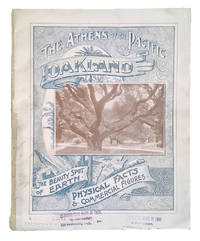
1896002571Oakland CA: Calderwood G. W. and Loofbourow G. T. 1897 Copyrighted 1896. First Edition. Very good. First edition; 11 3/4 x 9 1/4; pp. iii-v 3 9-99 1; pink wraps printed in blue with a sepia-tone photograph; illustrated with numerous maps and b & w photographs; two stamps of the Calfironia State Board of Trade to lower margin of front wrap; small antiques shop label to front wrap verso; a thin strip of clear tape to spine cover; a few spots to margins; overall bright and well-preserved; in about very good- condition. Intented to be "mailed free to prospective home seekers on application to Secretary of Merchants' Exchange or Board of Trade Oakland Cal." the book was pronounced by then former Mayor William R. Davis to be: ".the best and most accurate presentation of our resources and local attractive features and as an advertising medium yet published in the interest of Alameda County." It began with an aptly-titled chapter - "Deadly Parallel" - listing specific statistics and numbers from August 1896 of people dying of heat-stroke in cities around the country while in Oakland the temperature is balmy 65 degrees. It proceeds to describe Alameda County and the City of Oakland their climate resources modern ammenities notable businesses often with flowery and/or bombastic statements e.g. "One does not need to sniff the odor of the Chicago River or of its immense piggeries as a New Yorker contemptuously styled its huge pork-packing establishments to realize that he is in the Garden City." Several copies at institutions most e-publications; none other in the trade as of December 2019. Calderwood, G. W. and Loofbourow, G. T. paperback
18773656Erstattet von der Centralcommission des Deutschen Reiches für die Wiener Weltausstellung. 3 Bände in 21 Heften. Mit 92 Abb. im Text. Braunschweig, F. Vieweg u. Sohn, 1874-1877. Gr.-8vo. (ca. 23,0 x 14,5 cm). I: V, 89 S.; XI, 808 S. II: XII, 912 S. III/1: XIII, 1045; VIII, 526 S. III/2: VIII, 686 S. Orig.-Umschläge.
18335872Kundgemacht vom Vereine zur Ermunterung des Gewerbsgeistes in Böhmen am 4. Oktober 1833, dem Tage des Prämienfestes. (Redaktion: K[arl] J[oseph} Kreutzberg). Prag, Druck u. Papier von G. Haase Söhne, 1833. 8vo. (19,8 x 12,4 cm). 197 S.; 1 Bl., 88 S. Anhang. Marmorierter Halblederband d. Zt. mit reicher Rückenvergoldung.
1843PHO-2377Paris, L. Passard et Lavigne, 1843 4 volumes in-8° (21x13,5cm), demi maroquin vert, dos à nerfs orné avec titre et tomaison. Frottements, petit accroc au dos t1, coiffe usée t4, charnière fragile t2 & 4. Carte dépliante entoilée rangée dans son étui de toile noire (facsimilé). Peu courant.
1830PHO-1108Paris, Pillet aîné, 1830. 2 volumes in-8 (210x130), LX-294-1ff , 2ff-361pp-1ff , brochage éditeur , L'ouvrage est orné de deux frontispices dépliants , la planche de pirogue qui manque souvent et la carte de manniloco , petits défauts à la reliure , petites rousseurs mais bel exemplaire avec en fin du tome 2 le catalogue de Pillet avec l’annonce de la parution du voyage de Freyssinet Hill, n°481 ,Sabin, n°20176 ,Chadenat, n°561.
1803AMO-4482A Paris, chez Treuttel et Würtz, An XI - 1803 3 volumes in-8 brochés (22 x 14 cm) de (8)-XXII-316-(3), (4)-342-(2) et (4)-354-(1) pages. Couverture d'origine en papier gris. Etiquettes de titre imprimées aux dos (avec manques). Petits manques de papier en tête et en queue de couverture, dos légèrement fendus mais néanmoins brochage encore solide. Intérieur très frais, en grande partie non coupé, imprimé sur beau papier vergé chiffon resté bien blanc. Edition originale. L'auteur écrit en tête de son avant-propos : "Un nouvel ordre vient de naître ; la paix succède à la guerre; le calme à l'orage; les lois à l'anarchie, et la stabilité aux incertitudes [...] Honneur au Gouvernement réparateur qui vient de resusciter l'empire des lois protectrices et des institutions saintes, de réconcilier les hommes avec les principes, et de triompher des erreurs dangereuses que les passions révolutionnaires avaient inoculées dans toutes les classes de la société. La France enfin respire, et les jours de bonheur commencent. [...]". Cet élan d'optimisme sera bientôt démenti par les faits, la paix ne sera pas comme annoncé, les temps de bonheur encore lointains. Sans doute Blanc de Volx avait-il envie d'y croire. Jean Blanc de Volx, né à Lyon, fonctionnaire de l'Empire, est l'auteur d'ouvrages intéressants et estimés sur la révolution française et ses suites, le commerce et la politique (Biographie universelle des contemporains, III, p. 50). Outre celui-ci, on lui doit Des causes des révolutions et de leurs effets (1801) et Du commerce de l'Inde (1802).. Blanc de Volx était receveur des douanes à Naples sous l'Empire sous le gouvernement de Murat. Il soutenait les théories mercantiles quant au commerce des Indes. Il est le père de l'historien de la peinture Charles Blanc et de l'historien républicain membre du gouvernement provisoire de 1848, Louis Blanc. A propos de son Etat commercial de la France (1803), l'économiste Adolphe Blanqui aîné écrit : "Ce livre est fortement empreint des idées exclusives qui ont prévalu dans nos assemblées délibérantes pendant la durée des hostilités révolutionnaires. Il faut le lire, ne fut-ce que pour se convaincre du danger des préjugés qui peuvent égarer un honnête homme, même quand il rêve le bien de son pays." (Histoire de l'économie politique en Europe, A. Blanqui, Paris, Guillaumin, 1837, tome I, p. 400). L'état commercial de la France est dédié au citoyen Joseph Bonaparte, Conseiller d'état, ministre de la république, frère aîné de Bonaparte futur empereur des français (1804). Dans le premier volume Blanc de Volx traite des généralités sur le commerce : l'argent, les banques, le luxe, les impôts, les manufactures et l'agriculture. Dans le deuxième volume il aborde les questions de commerce extérieur entre la France et l'étranger, ave les colonies. Il aborde les questions de l'esclavage et du système colonial. Enfin dans le troisième et dernier volume il traite de la question de la législation commerciale (douanes, chambres de commerces, faillites et banqueroutes, etc.). Avec l'exposition de ses théories mercantiles qui plaçaient le commerce au dessus de tout comme source de richesse des états, Blanc de Volx s'opposait ainsi à la majorités des économistes de son temps. Son livre conserve par ce fait un très grand intérêt documentaire et doit faire partie de toute bibliothèque renfermant les principaux ouvrages sur le sujet du commerce de la France. Références : INED, 526 ; Einaudi, I, 520. Très bon exemplaire à l'état de parution.
1870315110New York: George Blackie & Co 1870. Woodcut illustrations throughout. 12mo. Publishers pink pictorial wrappers. Woodcut illustrations throughout. 12mo. Includes marked playing cards gambling and magic books magic tricks novelties and all sorts of curiosities and miscellany such as "False Moustaches that cannot be detected when worn" offered by New York wholesale agents George Blackie & Co. George Blackie & Co unknown