STENDHALLivre Rare Book

17 087 résultats
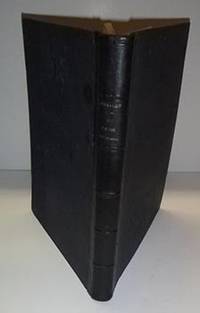
5198in 8 reliure postérieure cartonnée à la bradel pièce de titre manuscrite contrecollée.Faux-titre avec tampon de papeterie,titre avec tampon identique,329 pages,TRES RARE catalogue de 12 pages en fin de volume.non rogné,Paris Dumont éditeur 1839.Imprimerie E.Dépée à Sceaux. Deuxième plat de couverture conservé.Premier plat en fac-similé.Emboitage.Bon exemplaire à très grandes marges. EDITION ORIGINALE DE CET OUVRAGE RARE ET RECHERCHE.Elle est composée de trois nouvelles:L'Abbesse de Castro,Vittoria Accoramboni,duchesse de Bracciano et Les Cenci.TROIS CHRONIQUES ITALIENNES,ETAPES CAPITALES DANS LA GENESE DE LA CHARTREUSE DE PARME.Stendhal consacra plusieurs œuvres à cette Italie tant aimée.Quand,en 1833,il acquit à Rome des manuscrits de chroniques du XVIe siècle,il s'enthousiasma pour sa trouvaille et en tira six œuvres, dont les trois éditées ici.Déterminé à respecter strictement la vérité historique,il traduisit ses sources, strictement pour Les Cenci(écrite en avril 1837),plus librement avec Vittoria Accoramboni(écrite de mars-avril 1833 à août 1836),et de manière beaucoup plus romancée avec L'Abbesse de Castro(écrite en septembre 1838 et février 1839
18121156521812. Rare military commission boldly signed by French Emperor Napoleon Bonaparte. One page dated April 19 1812 the document contains a request for 17861 francs to replace uniforms and shoes that were destroyed in a fire in the city of Aurich on July 18 1811. Additionally signed by Napoleon's Minister of War "Duc de Feltre." Accompanied by several additional military documents in French and German including an autograph letter signed by Michel Ney four days prior to the battle of Guttstadt-Deppen two reports of the inspector of engineering pertaining to fortifications and many others. With a first edition auction catalog from Sotheby's Napoleon & Berthier Auction on Tuesday March 1 1938. In near fine to fine condition. An exceptional collection. Napoleon Bonaparte was a French military and political leader who rose to prominence during the French Revolution and led several successful campaigns during the Revolutionary Wars. As Napoleon I he was Emperor of the French from 1804 until 1814 and again in 1815. Napoleon dominated European and global affairs for more than a decade while leading France against a series of coalitions in the Napoleonic Wars. He won most of these wars and the vast majority of his battles building a large empire that ruled over continental Europe before its final collapse in 1815. One of the greatest commanders in history his wars and campaigns are studied at military schools worldwide. He also remains one of the most celebrated and controversial political figures in human history. unknown books
16-4077Paris : Perrotin 1853. Large folio. 51 x 40 cm. Original qtr. roan and percaline restored.16pp. and 45 color lithograph plates. most lightly foxed and a few more heavily foxed. Provenance: Collector's mark of Gaston Courtois Costumier Paris. His collection sold at auction in Paris Décembre 1894.OCLC Number: 457516951 Paris : Perrotin, 1853. unknown
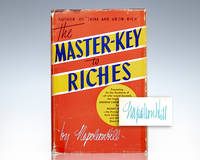
1945145872Los Angeles: The Willing Publishing Company 1945. First edition of Napoleon Hill's classic work. Octavo original cloth. Boldly signed by Napoleon Hill on a half-title page. Very good in a good dust jacket name to the half-title page. Rare and desirable signed. Based on the Andrew Carnegie's formula for money-making The Master Key To Riches describes in step-by-step detail today's greatest practical philosophy of success. This philosophy culled from the success experiences of hundreds of the world's most powerful and wealthy men will show you how to succeed in any walk of life. The Willing Publishing Company hardcover
18113323101811. framed. near fine. NAPOLEON I. Letter Signed Nap one page quarto Paris March 20 1811. To the minister of war General Henri Jacques Guillaume Clarke the Duke of Feltre. The text in the hand o Meneval. Napoleon orders the purchase of arms in preparation for his Russian campaign: "I approve that you purchase the 18000 weapons belonging to private parties in Holland. I want you to send them to Wesel with the 76000 others. This will come to 94000 arms assembled at Wesel. I approve the seizure of 3000 rifles which Prince d'Eckmiihl Davout carried out in Hamburg. Give him the order to send these 3000 rifles via Mecklenburg to Stettin as well as all those which may be in Bremen Lubeck Osnabrock & other cities of his government belonging to the English military rifles that is. Gen Molitor speaks in one of his letters of 35000 rifles which he says are in one of the bad sections of Amsterdam. I take it that these 35000 rifles do not include the 18000. If that is so have them also sent to Wesel which will bring the number of rifles we will have in Wesel to 133000. " A note indicates that this letter was "Received March 20 and sent the 21st to M. Gassendy. " From 1810 to 1813 Marshal Gabriel Jean Joseph Molitor held commands in the Hanseatic towns Hamburg and Holland. Matted in red and cream and framed in a gold gilt frame with scroll detail dimensions measure 17 3/4 inches wide by 15 1/4 inches high.<br/> <br/> Napoleon Bonaparte born Napoleone di Buonaparte later known by his regal name Napoleon I was a French general and statesman who rose to prominence during the French Revolution and led a series of military campaigns across Europe during the French Revolutionary and Napoleonic Wars from 1796 to 1815. He led the French Republic as First Consul from 1799 to 1804 then ruled the French Empire as Emperor of the French from 1804 to 1814 and briefly again in 1815. He was King of Italy from 1805 to 1814 Protector of the Confederation of the Rhine from 1806 to 1813 and Mediator of the Swiss Confederation from 1803 to 1813.<br/> <br/> unknown
18233596128/05/1823. <blockquote><p>“I beg you to have them copied for me as diligently as possible.I desire that the departure of Mr. Jay Peter Augustus be deferred until next Wednesday…â€</p></blockquote><p>The French ratification of the Louisiana Purchase treaty and conventions was dated May 22nd and signed by Bonaparte Foreign Minister Talleyrand Minister of the Treasury Barbé de Marbois and Hugues Bernard Maret who as the secretary of state was responsible for promulgating laws and decrees. It was delivered to the representatives of the United States Robert R. Livingston and James Monroe who acknowledged receipt of the paperwork to be sent to President Thomas Jefferson ""without delay.""</p><p>It is interesting to note that Barbé de Marbois who played a key role in negotiating the Louisiana Purchase Treaty and delivered the signed ratification was former ambassador to the United States who had lived in the U.S. for years spoke English and married an American. He was well connected in the U.S. and was elected a Foreign Honorary Member to both the American Academy of Arts and Sciences John Hancock and John Adams were also members and the American Philosophical Society Thomas Jefferson was also a member and the two dealt extensively. He was a logical choice to negotiate the treaty.</p><p>Five days after delivery of the signed ratified treaty Marbois contacted the U.S. ministers to ask for the return of copies of the treaty or even the treaty itself so that official copies could be made.</p><p><strong>Letter signed</strong> by Marbois on French Public Treasury letterhead Paris May 28 1803 to <em>""the Ministers of the United Statesâ€</em> in which he asks Livingston and Monroe to either send him copies of the First Consul's ratifications or else lend their own official copy to his office so that additional record copies could be made from it. He requested further that Peter Augustus Jay the son of John Jay who was assigned to carry the treaty back to President Jefferson delay his voyage by a few days to give time for Talleyrand to prepare official instructions for Louis A. Pichon the French minister in Washington D.C. <em>""I am in need of the ratifications given by the First Consul to the Treaty and the two conventions. I beg you to have them copied for me as diligently as possible or to have sent to me the acts themselves so that I might have them copied. I desire that the departure of Mr. Jay Peter Augustus be deferred until next Wednesday and if you might also notify Talleyrand he will thereby request you to deliver the packages to Mr. Pichon.""</em></p><p>On June 2 Livingston sheds some light on the request. ""You know that the ratifications have been delivered & that we were to send them directly to you we have accordingly applied for a passport for Mr Jay the bearer. To our note on this subject we received no answer. I called this day on Mr Talleyrand to accelerate it; he was at St Cloud I called on the Minister of the Treasury. They have been these two days past in Council and principally basting Mr. Marbois on the subject of the Treaty for it seems that the Consul is less pleased with it since the ratification than before and I am persuaded that if he could conveniently get off he would.""</p><p>Livingston further explains that Napoleon felt it was not proper that Marbois delivered the ratifications that it ought to have been Pichon and that Marbois in a fit to try to appease the Consul was throwing in objections and slowing the process of allowing Jay to leave with the Treaty.</p><p>Jay's trip was indeed postponed resulting in not merely in the brief delay requested by Marbois but additional delays mainly resulting from the fact that war had again broken out between Great Britain and France and Jay’s ship was repeatedly stopped by British frigates. Jefferson did not see the treaty and conventions until early July. Jefferson was then in a quandary. He had always advocated strict adherence to the letter of the Constitution yet there was no provision empowering him to purchase territory. Given the public support for the purchase and the obvious value of Louisiana to the future growth of the United States however Jefferson decided to ignore the legalistic interpretation of the Constitution and forgo the passage of a Constitutional amendment to validate the purchase. This decision contributed to the principle of implied powers of the federal government.</p><p>Because the treaty stipulated that the American ratification must be concluded by October 30th Jefferson hurriedly convened a special session of Congress on October 17th. The United States Senate consented to ratification of the treaty with a vote of 24 to 7 on October 20th. On the following day October 21 1803 the Senate authorized Jefferson to take possession of the territory and establish a temporary military government.</p><p><img class=""alignnone wp-image-25018 size-post-window"" src=""https://cdn.raabcollection.com/wp-content/uploads/20231204144051/Folder-site-11-1600x1327.jpg"" alt="""" width=""1600"" height=""1327"" /></p> unknown
1854241271854 Format 58 x 94 cm sous vitre et cadre doré ancien. (Petite restauration dans le ciel).
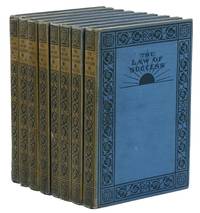
1928140940868Meriden CT: The Ralston University Press 1928. First Edition. Very Good. First edition. Complete eight volume set bound in light blue variant cloth stamped in dark blue. First edition. Very Good with sunning to spines light mottling to cloth heads and tails a little worn and frayed. Scratch to spine of Vol. 1 binding error with front free endpaper pasted onto paste down penciled gift inscription on page facing copyright page another to Vol. VIII front hinge a little over-opened. A classic of the self-improvement genre. The Ralston University Press unknown books
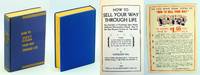
1939448h6114Meriden Conn.: The Ralston Society. Very Good with no dust jacket. 1939. First Edition. Hardcover. Rare first edition copy of this magnificient Napoleon Hill title. "Includes a complete analysis of the stupendous achievements of the man who has 'sold his way' into more millions of dollars than any other man who ever lived." - subtitle. One-page black and white photo of Hill's famous "Castle-On-The-Hill" overlooking Lake Dora Florida. p. 4 2-371 1 2 ads. Bright gilt lettering and decoration upon publisher's blue cloth. Clean tight and unmarked with light external wear. No dust jacket. Bonus: Laid-in is an original 7.5" x 5.3" two-color promotional advertising slip for this book. A superior copy.; 8vo . The Ralston Society hardcover
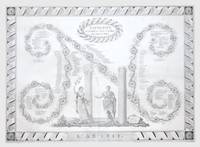
1824133273Leipzig: lithographed by William Herz for Leopold Voss 1824. Napoleon in the garb of Caesar A superb lithograph depicting Napoleon in the costume of a Roman emperor crowned with laurel wreath and with the globe in his hand between the pillars of Hercules. Napoleon is surrounded by his titles and names of his family members with the border listing the names of his senate generals and council of state. Opposite him the goddess of peace holds out an olive branch while at his feet his peace treaties are carved on a stone. An overarching passion-flower and banner thread to form a large "N". A wonderfully evocative image highlighting Napoleon's pretensions to the Roman Empire and his place in history alongside emphasizing his centrality to the state. The lithograph bears the date of 1812 the height of Napoleon's empire but was produced in Leipzig as a memorial in 1824 a few years after Napoleon's death. The print was perhaps aimed at old German members of his army or administration - Napoleon had elevated Saxony to a kingdom and members of its army served in his campaigns including the invasion of Russia in 1812. It is curious to note that the publisher Leopold Voss had fought against Napoleon in the German Wars of Liberation. The print was advertised for 1 thaler 12 groschen see Intelligenzblatt der Zeitung für Die elegante Welt 12 October 1824. Lithograph broadside 79 x 58 cm presented in wooden and gilt frame with conservation glazing. Neat Leipzig blindstamp at foot. Very faint foxing minor peripheral short closed tears repaired on verso but not visible on recto. In very good condition. unknown
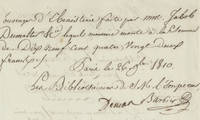
18102472226/10/1810. <p>In 1808 Napoleon formed the idea of having a traveling library in order to make his hours of intellectual recreation independent of the exigencies of a campaign or the delays of a courier. More importantly during times of battle he ordered books that taught him the topography of the countries he was invading and gave him other information to help toward victory. Obviously such a collection of books would have to be selected with great care that the library might be a portable one; and consequently the minute instructions as to its care are as it were a picture of his mind.</p><p>To create this library he turned principally to three men.</p><p>Abbe Denina: In 1782 he had served as historian under Frederick the Great; he became under Napoleon the imperial librarian.</p><p>Antoine-Alexandre Barbier: It was in 1808 that he was put in charge of Napoleon's personal libraries at Compiègne Rambouillet and Trianon and given the primary role in managing the travel libraries that Napoleon took with him whilst on campaign. Barbier was also expected to keep the French Emperor constantly supplied with reading material along with reports analyses and commentaries regarding each publication.</p><p><img class=""alignnone size-post-window wp-image-29132"" src=""https://cdn.raabcollection.com/wp-content/uploads/20231204110006/nt-1600x677.jpg"" alt="""" width=""1600"" height=""677"" /></p><p>Jacob Desmalter: He was responsible for the creation of the library itself the boxes into which the books went along with the decorations worthy of an imperial library.</p><p>This is the first known travel library of a head of state and general. Napoleon seems to have looked forward with expectation to the use of this traveling library while in the field; and when he was preparing for the great campaign which culminated at Wagram he wrote somewhat impatiently from Malmaison March 20 1809 through Méneval his private secretary “The Emperor wants to know if his traveling library is ready. I advised M. Barbier to choose it with care and to put some excellent books in it.†Then the secretary adds: “His Majesty wishes to have something very distinguished and has a preference for books characterized by the beauty of the printed page and by elegance of binding.†Finally comes the admonition “If you have not found the epics do not lose a moment of time in getting them.â€</p><p>His first portable library was ordered in 1808 and reached him in 1809 but was soon replaced by one that suited his interests more and that would last him longer. In replacing the 1809 delivery a second mahogany library of 6 boxes was ordered from Desmalter along with two of oak lined with blue silk. The cost from Desmalter was 1982 francs. These were likely used by Napoleon for the first time in 1810 during visits to Normandy and Holland.</p><p>As tensions with Russia heated however Napoleon supplemented this portable library with books on Russian geography and topography to prepare for his Russian invasion.</p><p>The fate of this traveling library was the fate of his entire army of 1812: it was lost. The books and boxes of the Emperor became firewood for a faltering army in the snow drifts of Russia.</p><p><strong>Document signed</strong> Paris October 26 1810 the original order for one of the most famous travel libraries in history the very library that heated the dying French outside Moscow signed by all three men that created it.</p><p><em>""Memo for his Majesty the Emperor and King executed by the order of Mr. Barbie librarian of his Majesty by Jacob Desmalter.</em></p><p><em>""Six boxes of pure mahogany to serve as portable libraries the top opening and hinged the interior being fitted with copper such that it can remain open the back decorated with a copper hinge. 1440.</em></p><p><em>""One box made of oak from the Vosges mountain range lined with wool. 150</em></p><p><em>""One box of oak. 140</em></p><p><em>""Restore and repair three mahogany boxes and refit the interiors with blue silk. 234</em></p><p><em>""Repair and polish one mahogany box. 18</em></p><p><em>TOTAL 1982.""</em></p><p>This account is verified at the bottom by Jacob Desmalter the builder of the boxes.</p><p>It is witnessed on the verso by Barbier and Denina who write ""Verified the present memo of the woodworkers Jacob Desmalter.""</p><p><img class=""alignnone wp-image-24670 size-post-window"" src=""https://cdn.raabcollection.com/wp-content/uploads/20231204145810/Folder-site-9-1600x1327.jpg"" alt="""" width=""1600"" height=""1327"" /></p> unknown
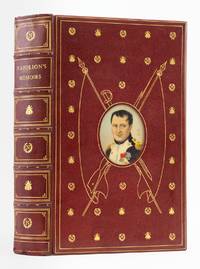
1945ST17640qWaltham St. Lawrence: Golden Cockerel Press 1945. No. 412 OF 500 NUMBERED COPIES. 317 x 190 mm. 12 1/2 x 7 1/2". 422 2; 78 2 pp. Two volumes bound in one. Translated and edited by Somerset de Chair. <br/> HANDSOME RED MOROCCO BY BAYNTUN RIVIERE stamp-signed in gilt on rear turn-in covers with double gilt rule surrounding a field of alternating gilt tools a bee and the letter "N" encircled by a wreath upper board with inset WATERCOLOR OVAL PORTRAIT OF NAPOLEON with two flags a gun and a saber outlined in gilt appearing to cross behind it lower cover with large gilt armorial device raised bands compartments ruled in gilt with bee or "N" tool at the center gilt lettering thick turn-ins with gilt rules and decorative cornerpieces blue watered silk endleaves top edge gilt others untrimmed original map endpapers bound in. Volume I with a frontispiece portrait of Napoleon volume II with a black and white photograph of a modern sculpture of the general title page of each volume with a woodcut design of an eagle clutching a flag among other accoutrements of war. Title page of volume one SIGNED BY THE EDITOR in ink. Chanticleer 167; Cave & Manson 167. Small nick to head of spine and some minor damage along the tail two small stains and a couple of dings to covers but still a beautiful binding in very pleasing condition. Small repair to edge of one of the map endpapers one or two isolated trivial smudges elsewhere but the contents nearly pristine.<br/> <br/> This is a finely bound copy of an innovative version of the memoirs that were based on conversations between Napoleon and Emmanuel-Augustin-Dieudonné-Joseph Comte de Las Cases 1766-1842. The count accompanied the defeated emperor into exile on Saint Helena as an informal secretary took a great many notes about Napoleon's life inserted his own impressions colored his account to the point of favorable misrepresentation and published the work as the celebrated "Mémorial de Ste. Hélène" from which he made a substantial amount of money. Our translator and editor Somerset de Chair has turned the text into a first-person narrative and rearranged the pieces so that events are recalled in chronological order. The first volume covers the general's career from Corsica to Marengo and the second is devoted to Waterloo. The so-called "Cosway" binding featuring handsome morocco inset with one or more painted miniatures apparently originated with the London bookselling firm of Henry Sotheran about 1909. It was in that year that G. C. Williamson's book entitled "Richard Cosway" dealing with the British miniature painter of that name 1742-1821 was remaindered by Sotheran and presumably given this special decorative treatment. The name "Cosway" was then used to describe any book so treated whoever its author. Other prominent binderies chiefly Sangorski & Sutcliffe and Bayntun produced their own versions of the popular style. The Bayntun firm founded in Bath in 1894 is now the last of the great Victorian trade binderies still in family ownership. Among the great English workshops of the Edwardian "golden age" of lavish bindings Bayntun has the distinction of being the only one located outside London's West End to be sought after by bibliophiles. In 1939 Bayntun took over the esteemed Riviere firm founded in 1829. The oval portrait on the present work is especially pleasing because it communicates something of Napoleon's character: he appears smug and in control yet expressing some of the famous charisma that contributed to his success. The miniature bears the monogram "WMB" quite likely the initials of William Mineard Bennet 1778-1858 a painter and miniaturist who studied under Thomas Lawrence. According to Benezit he went to Paris in 1835 "where he was extremely well received enjoying the patronage of both the Duke de Berry and King Louis-Philippe.". Golden Cockerel Press unknown
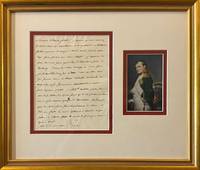
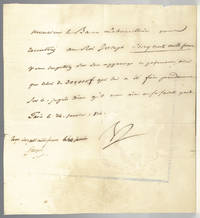
18141195371814. Rare original manuscript letter in French signed by brothers and co-monarchs Napoleon Bonaparte and Joseph Bonaparte. Napoleon in his role as French Emperor has signed as "Np" near the center of the letter while Joseph in his role as King of Spain and the Indies has signed as "Joseph" at lower left. Napoleon's original command was directed from Paris on January 24 1814 while the docket indicates that Joseph received the sum in question the same day. Ex-Good Speeds per pencil notation from October 14 1964 at top verso. Napoleon instructed Francois Roullet Baron de la Bouillerie 1764-1833 to give 500000 francs to his older brother Joseph. De la Bouillerie had served in various financial capacities dating from Napoleon's earliest days as First Consul including General Treasurer of the French crown after 1811. Translated in full with unchanged spelling and punctuation: "Monsieur Baron Labouillerie you will give to King Joseph five hundred thousand francs. You will attribute this payment to his appanage as well as the one of 300000 francs that was made to him previously. On this I pray God keeps you in his holy care. Paris the 24 January 1814. In very good condition. The piece measures 7.25 inches by 7.875 inches. Napoleon Bonaparte was a French military and political leader who rose to prominence during the French Revolution and led several successful campaigns during the Revolutionary Wars. As Napoleon I he was Emperor of the French from 1804 until 1814 and again in 1815. Napoleon dominated European and global affairs for more than a decade while leading France against a series of coalitions in the Napoleonic Wars. He won most of these wars and the vast majority of his battles building a large empire that ruled over continental Europe before its final collapse in 1815. One of the greatest commanders in history his wars and campaigns are studied at military schools worldwide. He also remains one of the most celebrated and controversial political figures in human history. unknown books
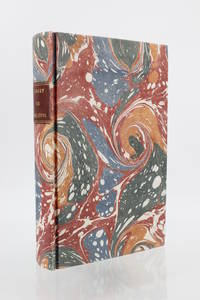
180187628Paris: Chez Fauvelle imprimeur des Tribunaux place circulaire du Palais de justice à ParisEt Patris imprimeur-libraire quai Malaquais près le pavillon des Quatre-Nations n° 2 1801. Fine. ""The French nation having conquered liberty by the sword shall preserve and strengthen it through the law"" Preliminary Address Chez Fauvelle imprimeur des Tribunaux place circulaire du Palais de justice à Paris Et Patris imprimeur-libraire quai Malaquais près le pavillon des Quatre-Nations n° 2 Paris s. d. 1801 20.4 x 13.2 cm relié Extremely rare printing by Fauvelle official printer for the Tribunaux de la Seine contemporary and textually identical to the octavo and quarto editions by the Imprimerie de la République. Only four copies with Fauvelle's imprint in OCLC BnF National Library of Spain Royal Danish Library Stadtbibliothek Worms. Bradel-style binding in full marbled paper boards flat spine with red roan label light foxing to the first three leaves. First version of the Napoleonic Code presented by the four members of Bonaparte's commission appointed to draft the civil code. Also contains the important Preliminary Address to the First Draft of the Civil Code outlining the influences and objectives behind this landmark work - the first modern legal code to be widely adopted in Europe which influenced the codes of jurisdictions all over the world. Under Bonapartes authority the legislative commission led by Tronchet president Portalis Bigot de Préameneu and Maleville completed this draft civil code in just four months presented in Frimaire Year IX of the Republican Calendar January 1801. The structure of the text mirrors that of the Civil Code which came into effect in 21 March 1804. There are however both technical and philosophical differences: this project contains a Preliminary Book On Rights and Laws comprising six titles which would later be reduced in the Code to a single introductory article. Most sections in this version begin with explanatory comments many of which were later removed particularly in the first half of the code. As the Allgemeine Literatur Zeitung observed ""It can often be very useful to consult both the draft and the final code even in matters of legal dogmatics for the general principles and explanations provided by the commission are typically still valid for the code not because they were rejected as incorrect but rather deemed unsuitable for inclusion in the final version"" 25 March 1810. This first version of the Code was published for the Court of Cassation and appellate courts to collect their amendments. Fauvelle printer of this edition likely intended for Parisian magistrates was among the publishers of judicial commentaries submitted in response to the government's request. The courts delivered their remarks within six months of this editions release. After three years of debate and some one hundred sessionshalf chaired by Bonaparte himselfthe Civil Code was adopted in the form of 36 legislative bills and soon became known as the Napoleonic Code. This edition also includes the only appearance at the time of a Preliminary Address in essence the statement of purpose for the draft Civil Code by the four-member governmental commission between August 1800 and January 1801. . The Preliminary Address is in fact the work of Portalis whose spirit of moderation guided the drafters of the code. The legislator must remain modest Portalis maintained: a code should not seek to say everything; it must leave room for interpretation by the courts and jurists which leads to the famous phrase: The codes of nations evolve with time; properly speaking they are not made. The Preliminary Address is also a brilliant piece of propaganda outlining pacification by the Consulate after the Revolution and presenting the future code as a synthesis of the legal tradition from the French monarchy and new revolutionary principles. Canadian Ministry of Justice May 2004. This rare speech would not appear again until 1836 in Fenets Recueil complet des travaux préparatoires du Code civil vol. I p. 436. Rare copy of the only published Chez Fauvelle, imprimeur des Tribunaux, place circulaire du Palais de justice à ParisEt Patris, imprimeur-libraire, quai Malaqu hardcover
1830000655Paris Levavasseur 1830
19529122St Helena: Unpublished 1952. An extensive collection of diaries photographs blueprints letters and documents - and even a painted sample sheet of Longwood's famous wallpaper from the 1920s - which together record the rescue and rebuilding of Napoleon Bonaparte's dilapidated home on St Helena. Longwood housed Napoleon from December 1815 to his death in 1821 was bought by the French government but fell into disastrous disrepair by the time Basil Lennox Hart took charge of its renovation in the 1950s. His - this - archive includes his St Helena personal diaries blueprints and plans for the building works and a large number of his photographs of Longwood before during and after its semi-demolition and rebuilding. Informing this process is a series of otherwise unknown copy photographs from the 1850s which were given to Hart by a grandson of his predecessor as Commissioner on St Helena John Charles Mellis. These otherwise unknown images add significantly to the visual record of Longwood. The decision to rebuild Napoleon's last home was prompted by the visit of King George VI to the island; he summoned the French Ambassador on his return to London prompting a joint effort by Britain which controlled St. Helena as a Crown Colony and France which had owned the French Domains of Saint-Helena since 1858 to restore the buildings. The archive includes reports on the disastrous state of Longwood House with further plans made for reconditioning the residence of the French Consul and the area around Napoleon's Tomb. Hart's pocket diaries from 1952 1953 and early 1954 c10000 words record his arrival in St Helena in February 1952 and the process of surveying producing plans hiring workmen and the minutiae of the reconstructive works: 'Longwood started stripping Old House Roof Library & dining R.' 'Longwood all day men cutting concrete curb away around rafters Library & Dining R. & concrete gutters & East Dormer down had consul up about concrete trusses' 'Longwood pulling down N. wall Library completed & new concrete foundations to be put in.' Hart records delays to wages endless rain and the liberal application of Rentokil to combat termites. Most revealing are Hart's photographs of the process which have been mounted on sheets as if for display purposes; alongside these is a small group of photographs from a century earlier which were submitted to him by John Charles Mellis's grandson. One final evocative item is a painted replica of the wallpaper inside Longwood reproduced by a French official in the 1920s and submitted to Hart to help inform his restoration project. Are we looking at an image of the wallpaper that killed Napoleon Alongside these items are copies of monthly accounts with tabulated material costs rates of pay and day-to-day expenses towards final reopening in 1955. The archive comprises: 1. Application and Acceptance Letters 1951: Correspondence between Hart and the Crown Agents for the Colonies. 2. Collection of 10 Government Publications 1951- 1952: Documents on passport application inoculation insurance and living conditions in St. Helena. 3 Diaries 1952-1954: Written on an almost daily basis documenting his work on the project detailing the progress incidents visits and problems as the work progressed. 4 Employment Agreement 1952: Copy of the employment agreement between Hart and the ViceConsul of St. Helena. 5 Reconstruction Report April 1952: Report on the work necessary for the reconstruction of Longwood 'Old House. 6 Letter from H.J. Melliss 1952: Enclosing copies of photographs taken of Longwood House in 1858 when his father as consul handed the site over to the French government. 7 RSVP Group 1952-1954: A collection of RSVP responses from various islanders tickets to events press cuttings and releases. 8 Brochures and Documents on Termites 1953 and later: A collection of brochures and advice documents on killing and preventing termites. 9 7 Extensive Typed Copies 1954: Addressed to Mons G.E. Peugent the French Vice-Consul at St. Helena detailing the progress of ongoing work payments for materials subsistence costs weekly employment of local workmen together with their names and countersignatures on receipt of their wages. 10 2 Blueprints 1952: Blueprints of the 'French Domain St. Helena Island New House adjacent to Emperor Napoleon's tomb 11. Sample Sheet of Wallpaper: Reproduced from fragments of the original by the French Government in the 1920s. 12. Collection of 11 Income Tax Documents 1952-1954: Related to St. Helena and the United Kingdom. 13. 56 Postcard-Size Photographs 1952-1954: Mounted on album sheets depicting various views of the work being carried out on the site captioned in French. These were possibly produced for official and important visitors to the site to help explain the ongoing work. Please contact Christian White Rare Books Ltd for more information or images of this item 1952 Unpublished unknown
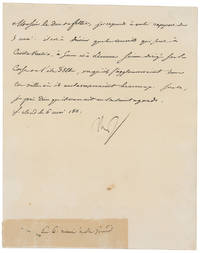
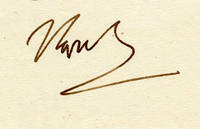
14904Emperor of France and great military leader. 1 page Letter Signed in French and dated May 6 1811. Writing to his Minister of War the Duke of Feltre Napoleon writes translated: "I am answering your report of the fifth of May. It is desired that the conscripts who are at Civita Vendina Genoa and Livorno are directed on to Corsica or the Isle of Elba see that they are gathered in the cities where they are much needed." An additional slip with a notation in another hand is pinned to the lower left. He signs in his hand "N.p."<br/><br/>This is a very unique letter as it mentions two small islands on the globe that were crucial to Napoleon's destiny. He was born in 1769 on the small island of Corsica in the year that Corsica was transferred to France from Italy. After his defeat by the Alliance and his adieu at Fontainebleau in 1814 he was exiled to the tiny island of Elba off the coast of Italy. At the time of writing this letter Napoleon was at the height of his power and his empire was at its zenith; he could not have imagined that he would end on the small island of Elba mentioned here. Given the remoteness of both these locations and their sizes in the huge empire that Napoleon built it seems unlikely that we would find another document mentioning both the island of his birth and the island of his exile together on one piece making this a very special letter. An especially clean attractive example from Napoleon at the height of his power. Central vertical and horizontal folds and trivial soiling. In fine condition. unknown books
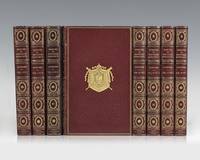
1836109608London: Richard Bentley 1836. Finely bound extra-illustrated edition set of de Bourrienne's Memoirs of Napoleon Bonaparte. Octavos eight volumes bound in full 19th century crimson morocco by Riviere and Son with gilt titles and tooling to the spines in six compartments within raised gilt bands central gilt Napoleonic coats of arms and double gilt ruling to the front panels gilt turn-ins and inner dentelles all edges gilt illustrated with engravings including frontispieces to each volume. In near fine condition. Based on years of intimate friendship and professional association with Napoleon Bonaparte Louis Antoine Fauvelet de Bourrienne's Memoirs of Napoleon gained the author fame upon publication for its vivid and detailed account of his interactions with Napoleon and his extended family. Invigorated by many dialogues not only in which the author participated but even of conversations that he was only told about by others the narration offers an intimate portrait of its subject: his brilliance skill at governance and military prowess. Richard Bentley unknown
1836109608London: Richard Bentley 1836. Finely bound extra-illustrated edition set of de Bourrienne's Memoirs of Napoleon Bonaparte. Octavos eight volumes bound in full 19th century crimson morocco by Riviere and Son with gilt titles and tooling to the spines in six compartments within raised gilt bands central gilt Napoleonic coats of arms and double gilt ruling to the front panels gilt turn-ins and inner dentelles all edges gilt illustrated with engravings including frontispieces to each volume. In near fine condition. Based on years of intimate friendship and professional association with Napoleon Bonaparte Louis Antoine Fauvelet de Bourrienne's Memoirs of Napoleon gained the author fame upon publication for its vivid and detailed account of his interactions with Napoleon and his extended family. Invigorated by many dialogues not only in which the author participated but even of conversations that he was only told about by others the narration offers an intimate portrait of its subject: his brilliance skill at governance and military prowess. Richard Bentley unknown books
1937140946381Meriden CT: The Ralston Society 1937. First Edition. Near Fine. First edition first printing. Bound in publisher's maroon cloth stamped in gilt lacking the dust jacket. Near Fine with trivial wear and light soiling to cloth. Light foxing to all edges contents tanned minor offsetting to endsheets and a small pinhole to the front free endpaper. A great copy of this hugely popular self-help book. The Ralston Society unknown
1937140947305Meriden CT: The Ralston Society 1937. First Edition. Near Fine. First edition first printing. ii 381 pp. Bound in publisher's maroon cloth stamped in gilt. Near Fine with light wear to cover extremities and light soiling foxing and shallow nicks to textblock edges. Contents tanned endsheets foxed. A scarce first printing of a book Hill claimed was inspired by a suggestion from Andrew Carnegie with unusually bright and clean covers. The Ralston Society unknown
180725997<p><b>NAPOLEON BONAPARTE.</b>Letter Signed in French signed as "<i>Napol</i>" at the top of the third page. Written at Osterode Germany March 11 1807. 7.25 x 8.875 inches. </p><br /><p><b>Translation from the French</b></p><p>"<i>Monsieur General Clarke my intention is that the 2nd Italian regiment reports at Kolobrzeg until the entire Italian division is present; that will permit us to return the 19th of the Line here. Marshall Kellermann writes me that the 5th 6th 7th and 8th provisional regiments have left. The 5th has been at Kassel a long time. Write to Kassel requesting that they send you the 5th it will be replaced by the 9th. The 6th must be at Magdeburg the 7th must have returned by the 5th. The 8th will arrive there the 17th. My intention is that we leave no one at Magdeburg and that you direct everyone to Szczecin or to Kostrzyn.</i>"</p><p>"<i>Maral Kellermann assures me that they are well armed and dressed. My managerial staff needs reinforcements for these eight provisional regts; I have thus ordered Mal Kellermann to have the last four regiments that is the 9th 10th 11th and 12th depart as soon as they are organized. My intention is that once they arrive in Berlin you review them let them rest several days and give them coats and shoes. You will do the same thing at Kostrzyn. The 31st Light Infantry must arrive at Berlin. Direct them towards Szczecin after giving them a little rest and reviewing them. I prefer that regiments pass by Szczecin rather than by Kostrzyn because circumstances can render them exposed and that they clear a passage from Marienberg to Torun.</i>"</p><p>"<i>The 45th of the Line arrives the 14th at Mainz and will proceed directly to Magdeburg. The 3rd Battalion of the 17th of the Line will begin marching March 2nd for Magdeburg. You will review them. If there are 800 mn dash them off to this regiment without leaving them any time at Magdeburg. The 3rd Battalion of the 21st of the Line will have arrived at Mainz. Ask Marshall Kellermann when he arrives. On this I pray that God keeps you in his holy care. At Osterode March 11 1807.</i>"</p><p>"<i>Napol.</i>"</p><p><b>Historic Background</b></p><p>Napoleon Bonaparte—emperor military commander and master geopolitical strategist—addressed this lengthy missive to his Minister of War Henri Jacques Guillaume Clarke 1765-1818 in early March 1807 from the last months of the War of the 4th Coalition October 1806-July 1807 when Napoleon's forces were marching east conquering modern day Poland. Napoleon won the war after forcing the surrender of Polish strongholds Szczecin in October 1806 Gdansk in May 1807 and Kolobrzeg in July 1807.</p><p>Napoleon personally commanded his Grande Armee of up to 1000000 soldiers. In this Polish campaign Napoleon's French forces joined German Italian and Polish troops against the coalition of Prussia Russia Great Britain and Sweden.</p><p>As this letter shows Napoleon was intimately involved in the minutest details; Napoleon berated subordinates if they did not report everything to him. This letter mentions the movements of 15 regiments to and from nine German and Polish cities.</p><p>Napoleon relied on General Clarke for inspection and provisioning conscription and internal discipline. General Clarke was recognized with the title of Duc of Feltre in August 1809.</p><p>Marshall Francois-Christophe de Kellermann 1735-1820 was a career soldier whose resistance against the Prussians at the Battle of Valmy 1792 earned him Napoleon's great respect.</p><p><b>Napoleon Bonaparte</b> 1769-1821. Born at Ajaccio Corsica. He quickly rose through the ranks of the French Army to become Commander of the Army of Italy. After he defeated the Austrian army and conquered Italy in 1796 he was given command of the Army of England. Rather than attacking directly he planned to wipe out her trade in the Indian subcontinent. Sailing from Toulon he captured Malta and in early July 1798 he captured Alexandria and advanced into Cairo. However at the Battle of the Nile on August 1 1798 the French fleet was practically annihilated by Admiral Nelson's Royal Navy. Napoleon secretly returned to Paris in 1799 in time to join in the coup d'état that overthrew the Revolutionary government. He arranged a new constitution and was to a ten-year term as First Consul. But having secured peace with Austria and the Pope he arranged an election that voted him Consul for life. On December 2 1804 Napoleon crowned himself Emperor of France.</p><p>In 1805 he found himself at war with Prussia Saxony and soon Austria in addition to England causing the fall of The Holy Roman Empire. He later set off the Peninsular War by sending armies into Portugal and Spain. Napoleon's "Continental System" was undermined by Russia which opened her ports to neutral shipping. In June of 1812 Napoleon invaded and attempted to conquer the Russian Empire. He defeated the Russian army at Borodino in September. However Napoleon miscalculated the Russian winter the strength and nationalism of the Russian people and the determination of Czar Alexander I to protect his empire at all costs; to deprive Napoleon's troops of shelter and supplies the Czar had Moscow burned. The disastrous defeat and retreat cost Napoleon more than 500000 men of the army of 600000 he had set out with.</p><p>In 1813 Wellington routed the French and forced them out of Spain. Prussia Saxony and Austria had allied with Russia and invaded France and stripped away much of her conquests. Napoleon was forced to abdicate in April 1814; he was given sovereignty over the island of Elba and allowed to retain the title of Emperor. Within a year Napoleon returned to Paris supported by his army and his people. Europe declared war. Wellington's army in Belgium and Blucher's on the Rhine joined forces to overwhelm Napoleon at Waterloo. Napoleon fled to Paris and surrendered in July 1815. Exiled a second time the man who ruled Europe spent his last six years on the small island of St. Helena in the South Atlantic. He died there six years later. His body wasn't allowed to be repatriated until 1840.</p><p>Napoleon instituted political and social reforms that reined in the excesses of the French Revolution pulled the nation out of bankruptcy created a fair tax scheme reorganized the French educational system and instituted the Napoleonic Code which provides the precedent for modern French law combined the basic tenants of old Roman law with ideas from the Enlightenment. He thus planted the seeds of the modern middle class and created institutions that continue to shape our world.</p><p><b>Condition</b></p><p>On watermarked cream bifold paper in near fine condition with light paper folds.</p><p><b>Provenance</b></p><p>Ex-Marc-Arthur Kohn "The Empire in Paris" December 2 2013 Paris France part of lot 38.</p> books
1811000851Paris Imprimerie de Bossange et Masson 1811
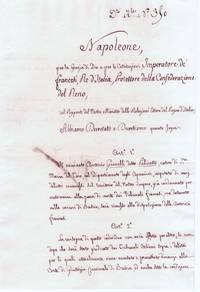
55524as Emperor of the French King of Italy and Protector of the Confederation of the Rhine in Italian with translation saying that "on the Report of Our Minister of Foreign Relations of the Kingdom of Italy" Ferdinando Marescalchi 1754-1816 Foreign Minister of the Republic of Italy 1802-1805 of the Napoleonic Kingdom 1805-1814 Count 1809 "Antonio Granelli called Palinetto native of Santa Maria del Taro in the Department of the Appennines accused of various crimes committed in the territory of Our Empire previously condemned for contempt of court to the penalty of death by the French Tribunals and now detained in the prison of Brescia shall be placed at the disposal of the French Authorities" but only after being tried by the Italian "Court of Criminal Justice at Brescia" any non-capital punishment by the French not to exceed what the Italian courts would have stipulated headed Royal Decree No. 350 2 sides folio and conjugate blank Imperial Palace of the Tuileries 12th April crisp Marescalchi was an early supporter of Napoleon. As Foreign Minister he resided in Paris and in 1803 supported by the Bishop of Orléans drew up a concordat for the Kingdom of Italy parallel to that between France and Pius VII of July 1801. After Napoleon's fall in 1814 Empress Marie-Louise was given the Duchies of Parma and Piacenza and chose Marescalchi as Governor 1814-1816. unknown
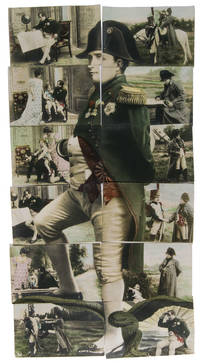
1910ABC_487091910. All postcards ca. 9 x 14 cm. In a 20th-century ring binder with the title "Postzegelmapje van Nederland" lettered in gold on the spine and the front underneath a gold embossed coat-of-arms of the Netherlands. The postcards are loosely inserted in 21 translucent plastic covers. With 81 hand-coloured or black-and-white photographic picture postcards including 9 duplicates. Three remarkable sets of early 20th-century French picture postcards which form a large image of French Emperor Napoleon Bonaparte 1769-1821 when laid side-by-side. This type of photographic collage is known as "instalment puzzle postcards". The three sets consist of 12 10 and 12 postcards respectively and are partly coloured by hand. They show Napoleon Bonaparte in a classic pose with bicorne hat and one hand in his waistcoat surrounded by various scenes from his domestic and military life. Also included are nearly 40 postcards composed of scenes with actors and montaged reproductions of historical engravings relating to Napoleon.Two of the puzzle postcard sets are published in the series "Croissant" referring to the address "Rue du Croissant" in Paris where the publisher Charles Fontane was located at the beginning of the 20th century. Fontane is also known as director of the French magazine "Le Cartophile" and president of the "Cartophile-Club".Two sets with "carte postale" printed on the verso the third set with "made in France" printed on the verso. A fourth set of Napoleon puzzle postcards is incomplete missing one postcard. All postcards are unused with only signs of minor wear. Overall in very good condition. unknown