9 266 résultats
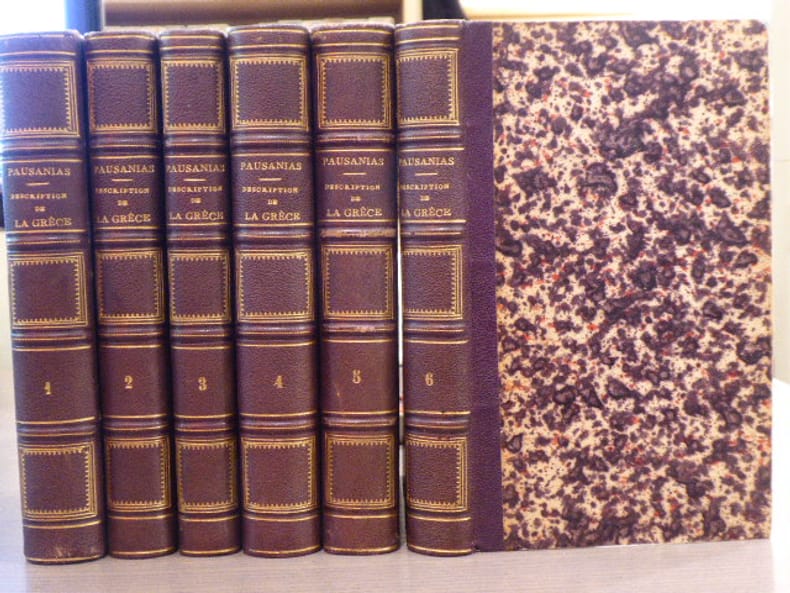
1821100751821 30 volumes, demi-reliure havane clair (half binding) in-octavo, dos 4 nerfs (spine with raised bands) - roulettes sur les nerfs (fillets on the raised bands) - entre-nerfs à fleuron mate (matt floweret) et 2 entre-nerfs teintés havane foncé pour le titre et pour la tomaison (volume numbering), papier marbré aux plats (cover with marbled paper), tranches peignées (painting edges), texte 2 colonnes (text - 2 coloumns), sans illustration (no illustration), entre 401 et 582 pages par volume (between 401 pages and 582 pages by volume), 1821 à Paris Chez Ménard et Desenne Libraires,
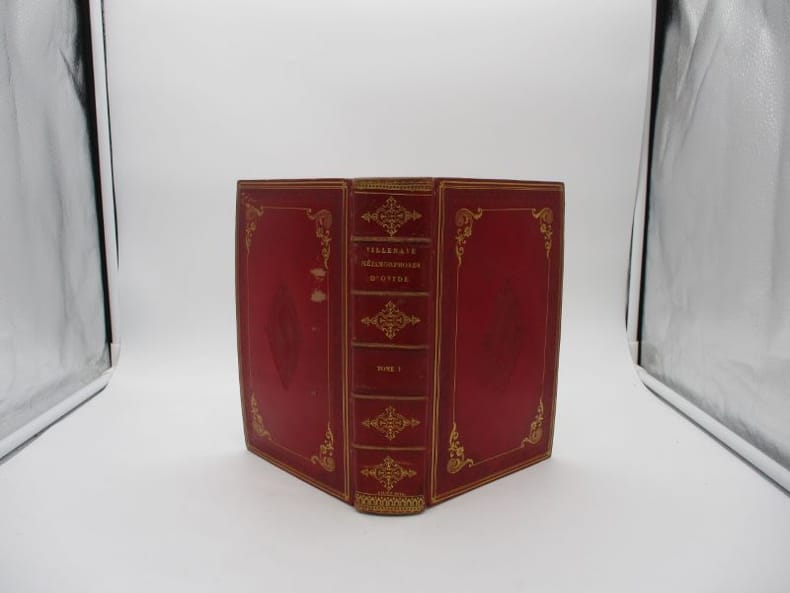
16915Paris, F. Gay, Ch. Guestard, P. Didot l'Aîné, 1806-1807. 4 vol. in-8, CII-464 pp. 37pl. + 582 pp. 37 pl. + 626 pp. 33 pl. + 758 pp. 37 pl., maroquin rouge à long grain de P. Doll, filets en encadrement sur les plats cantonnés d'arabesques, frise de palmettes à froid en encadrement sur les plats, un losange estampé à froid en leur centre, dos à nerfs orné de frises et fleurons dorés, dentelle dorée intérieure, tranches dorées (épidermures, petites taches et rousseurs).
338021J.-M. Eberhart, Imprimeur Du Collège Royal De France, Rue Du Foin Saint-Jacques, Nº 12 Paris 1814-1823 7 tomes reliés en 6 volumes in-8 ( 215 X 130 mm ) de XV-599, 497, VII-429, 585-VI, 551-XXIII, 258 et 246 pages ( le volume 6 publié en 1821, comprend le supplément renfermant les notes de CLAVIER qui sera publié en 1823 ). Bel ensemble relié en demi-chagrin chocolat, dos à nerfs orné de filets dorés droits et perlés et de caissons en "dents de rats" ( Reliures de l'époque ). Texte grec avec la traduction française en regard, celle-ci est luvre dÉtienne CLAVIER, helléniste et professeur dhistoire et de morale au Collège de France. Celui-ci mourut en 1817, alors que seuls les deux premiers volumes avaient paru son ami Adamance CORAY se chargea alors de revoir le texte grec et y ajouta des notes, qui se trouvent dans le tome VI. Il semble que lédition nait pas été revue par Paul-Louis COURIER mais par LERAMBERT, comme lindique Brunet. Rares rousseurs, bel exemplaire en reliure uniforme, très rare complet de ses 7 parties.A partir du volume 3, l'éditeur change, l'édition sera continuée par A. Bobée, imprimeur de la Société royale académique des sciences, rue de la Tabletterie, Nº 9.Brunet, IV, 456.- T.1, Attique. Laconie T.2, Laconie. Messénie T.3, Elide T.4, Achaïe T.5, Boétie. Phocide T.6, Tables T.7, Supplément de notes.
In-32°, pp.540, legatura in tela, buone condizioni. Marco Girolamo Vida (Cremona, 1470-Alba, 1566), teologo ed ecclesiastico protetto da Leone X e da Clemente VII, nel 1533 fu eletto Vescovo di Alba e partecipò nei suoi ultimi anni al Concilio di Trento (dalla sua partecipazione al Concilio nacquero le "Constitutiones Synodales", aspra condanna della corruzione del clero). La sua produzione poetica latina, è uno dei migliori frutti del tentativo rinascimentale di coniugare l'istanza religiosa con la cultura umanistica. Celebre il suo Scacchia Ludus poema scritto da Marco Gerolamo Vida intorno al 1513, pubblicato nel 1525 in forma anonima e due anni dopo in edizione autorizzata. L'oggetto del poema è una mitica partita di scacchi disputata tra Apollo e Mercurio e arbitrata da Giove, alla presenza degli altri dei olimpici. Il gioco è caratterizzato da mosse d'ingegno ma anche da trucchi e aiuti esterni ai contendenti, e si conclude con la vittoria di Mercurio in un finale di re e donna contro re che termina con lo scacco matto. Dopo la vittoria, Mercurio fa dono della scacchiera alla ninfa Scacchide per sedurla e le insegna le regole del gioco e dal suo nome deriverebbe, secondo l'autore, quello del gioco. Il poema ha raggiunto un grande successo, venendo pubblicato in oltre trecento edizioni sia in latino sia tradotto nelle principali lingue europee. Il testo mira ad evidenziare le elevate doti morali del gioco, in contrapposizione agli altri giochi dell'epoca, come le carte e i dadi. In-32°, pp.540, canvas binding, good condition. Marco Girolamo Vida (Cremona, 1470-Alba, 1566), theologian and ecclesiastical protected by Leo X and Clement VII, was elected Bishop of Alba in 1533 and participated in the last years in the Council of Trent (from his participation in the Council the "Constitutiones Synodales", bitter condemnation of the corruption of the clergy). His Latin poetic production, is one of the best fruits of the Renaissance attempt to combine religious instances with humanistic culture. Famous is his Scacchia Ludus poem written by Marco Gerolamo Vida around 1513, published in 1525 anonymously and two years later in an authorized edition. The object of the poem is a mythical chess game played between Apollo and Mercury and arbitrated by Jupiter in the presence of the other Olympic gods. The game is characterized by ingenious moves but also by tricks and external help to the contenders, and ends with the victory of Mercury in a final of King and Queen against King that ends with checkmate. After the victory, Mercury donates the chessboard to the nymph Scacchide to seduce her and teaches her the rules of the game and according to the author, the name of the game would derive. The poem has achieved great success, being published in over three hundred editions both in Latin and translated into the main European languages. The text aims to highlight the game's high moral qualities, as opposed to other games of the time, such as cards and dice.
0820-Co.J. Kupferstich, um 1925, auf cremefarbenem Kupferdruckpapier. 21,8:13,4 cm. Mit der Adresse der Grafpresse München.- Mit kleinen Kratzern innerhalb der Darstellung, vollrandiger Abdruck.
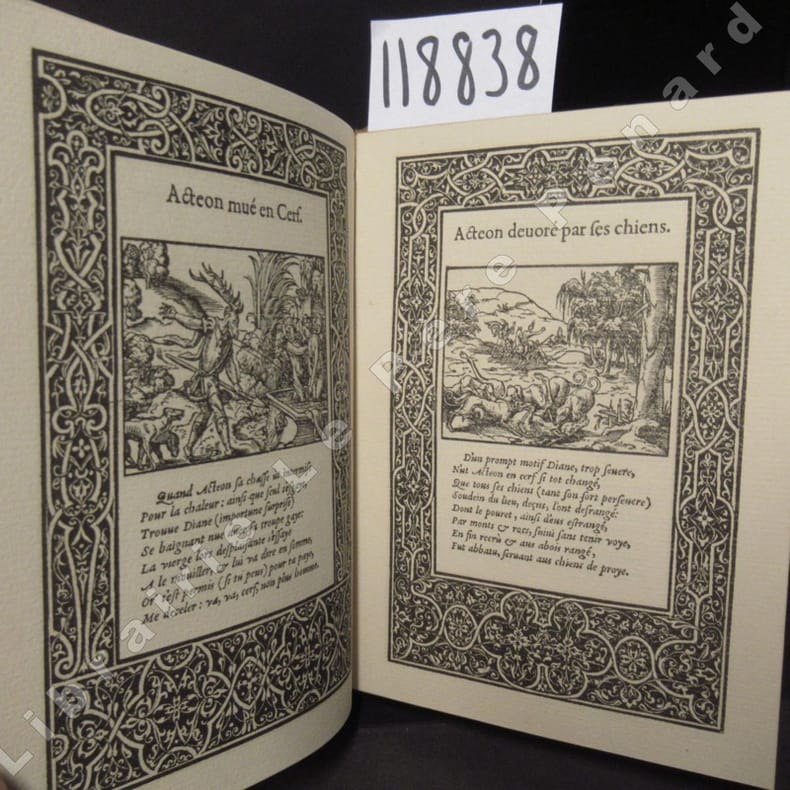
19331188381933 Editions des Bibliothèques Nationales de France, Collection d'Unica et de livres rares - 1933 - Edition limitée à 440 exemplaires, l'un des 425 numérotés de 1 à 425, exemplaire n° 8 - Fac-similé de l'édition de 1557 éditée à Lyon par Ian de Tournes - In-16, pleine basane brune avec riche décor à froid et en doré sur les plats; frise florale en doré au dos, dans son étui rigide - Sans pagination - Complet de son livret non relié de présentation signé Robert Brun
0552-Bo.J. Federlithographie, um 1830, auf Velin. 26,4:41,5 cm. - Papier leicht vergilbt und etwas fleckig, im Rand fingerspurig.
<p>in 4°, 20 cm rilegatura novecentesca in piena pergamena con unghie. C. (10), (132). Due incisioni xilografiche al frontespizio, San Giorgio e il drago e San Lorenzo. Alcuni capilettera silografici e ornati. Forellini di tarlo che non disturbano la lettura nella prima parte del libro; sottile leggero alone al margine esterno e lontano dal testo. Timbretto privato (1 cm) al frontespizio. Assai raro</p>
043-Ao.J. Radierung, 1695, auf Bütten. 29,6:40,2 cm. Provenienz: Mit Tilgungstempel der Großherzogl. Graph. Sammlung, Schwerin, Lugt 2273. Literatur: Bartsch 25; Hollstein 25, I. Aus der Serie der ?Klassischen Landschaften?. - Hervorragender, gleichmäßiger Abdruck mit viel Grat, etwas Plattenschmutz im Rand, mit ca. 1 cm breitem Rand um die Plattenkante. Vertikale Mittelfalte geglättet, dort etwas vergilbt.
19006388Oder Vater Treuwalds Abendunterhaltungen mit seinen Kindern über die Mythologie. Mit 12 Darstellungen auf 3 gest. Tafeln. Quedlinburg, G. Basse, [1812]. 8vo. (15,2 x 9,4 cm). Titel, 4 Bl., 238 S., 1 Bl. Anzeigen. Halbleinwandband um 1900 mit goldgeprägtem Rückentitel.
0226-Co.J. Algraphie mit blaugrüner Tonplatte, 1897, auf sehr festem bräunlichem Bütten, mit Rotstift signiert. 35,8:45,2 cm. Literatur: Beringer, Griffelkunst 92.
10623gravure, eau-forte sur papier vergé par J PESNE d’après Nicolas POUSSIN. 1678. 282 x 287mm à la cuvette. 286x293mm. De la suite Herculis Labores ex archetypis N. Poussin avec privilège du roi. Par J PESNE (Rouen 1623-Paris 1700) ; Epreuve légèrement poussiéreuse
0227-Co.J. Algraphie mit blaugrüner Tonplatte, 1897, auf sehr festem bräunlichem Bütten, mit Rotstift signiert. 35,8:45,2 cm. Literatur: Beringer, Griffelkunst 92.
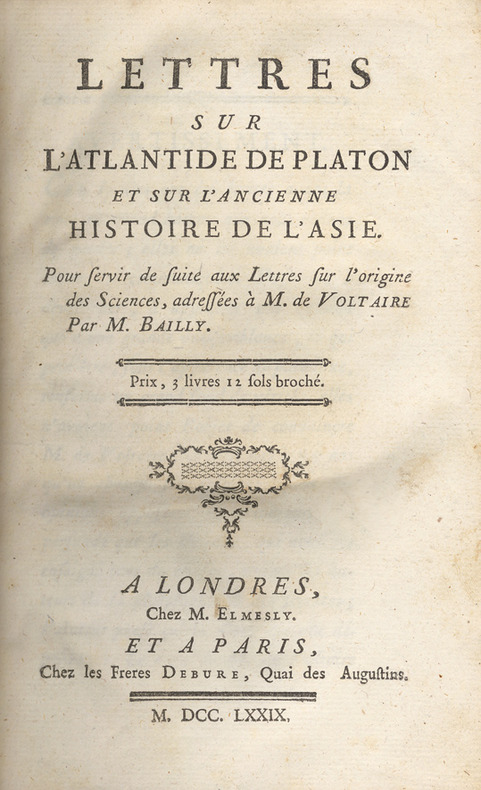
177917625Londres, chez M. Elmesly et Paris, Debure, 1779 ; in-8, demi veau marbré, dos à nerfs décoré et doré, titre doré, tranches rouges (reliure de l'époque) ; (4), 480 pp. , carte dépliante de l'Europe, Asie et l'Afrique du Nord, gravée sur cuivre par De la Gardette.
18287562BBWeimar, Landes-Industrie-Comptoir, 1828. 8°. X, 386 S.; IV, 388 S., (2) Bl. Verlagsanzeige. Mit Holzstich-Vignette und 12 Umrissradierungen von W. H. Brooke. Pappbde. d. Zt. + Wichtig: Für unsere Kunden in der EU erfolgt der Versand alle 14 Tage verzollt ab Deutschland / Postbank-Konto in Deutschland vorhanden +, Einband und Titel 2 Bde.
Alexander Palma di Cesnola, Salaminia (Cyprus) The history, treasures, and antiquities of Salamis, in the island of Cyprus by Alexander Palma Di Cesnola, F.S.A. with an introduction by Samuel Birch and with upwards of seven hundred illustrations and map of ancient Cyprus Trubner and Co., London 1882, cm 26x18, XLVIII-330, con numerose belle ill. in b/n nel t. e tavole fuori t., per un totale di 700 ill. in b/n, antiporta con bella tavola cromolitografica. Bell'occhiello figurato. Legatura d'epoca in mezza pelle (dorso e angoli), con titolo e fregi impressi in oro al dorso, piatti e tagli marmorizzati. Dedica autografa dell'autore alla prima bianca. Testo in inglese. Condizioni di conservazione Esemplare complessivamente ben conservato con tracce d'uso, coperta con alcune piccole lievi abrasioni al dorso e agli angoli, margini dei piatti con qualche minima mancanza. Interni buoni con alcune piccole lievi bruniture, cerniere interne fessurate con conseguente parziale distacco del corpo del testo dalla legatura, interni compatti, margini delle pagine minimamente rifilati. Probabile mancanza delle carte di guardia marmorizzate. Rara, prima edizione 1882. Le numerosissime illustrazioni riproducono i reperti e materiali della collezione Lawrence - Cesnola, inclusi gioielli in oro, oggetti in avorio, statuette in terracotta ecc. Dedica autografa dell'autore alla prima bianca. Testo in inglese. SETT184.L17281 N
19282111080487xbvkParis, Éditions des Chroniques du Jour - Grande Librairie Universelle, 1928. XXXIX (I) pages of text with 5 intercalated wholepage self-portraits on singleside printed plates; 1 sheet 'Planches', 30 singels. printed plates depicting the artist's works from 1925 to 1928, 1 per plate; text and plates printed on this paper resp. thing cardboard-sheets. - Slightly later 'jeans-like' blue cloth binding, both panels completely covered with the tipped-on green-titled front- and blank rear cover of the original creme-colour paper-bound original, the olive-grey endpapers decoratively marbled in green-red-black- and silver; 4to.(ca. 28 x 23 cm).
0900-Bo.J. Kupferstich nach Joh. Heinr. Wilh.Tischbein, sogen. ?Goethe-Tischbein? (1751-1829), im Gegensinn, auf chamoisfarbenem Papier mit undeutl. Wasserzeichen, in der Platte rechtsw signiert ?Riep. fec.?. 7,7:14 cm. ? Mit Druckstelle im Papierrand rechts. Vergleichsliteratur (Tischbein): Andresen 25; Griffiths/Carey, German Printmaking in the Age of Goethe. London, 1994, S. 135, Nr. 85. Vorzüglicher Abdruck!
1930008099Cambridge MA: Folk - Song Society of the Northeast 1930. Book. Near Fine. Cloth. First Printing. 4to - over 9¾" - 12" tall. RARE Worldcat shows 3 holdings worldwide all in Europe and no individual numbers found in any commercial database. The complete 12 issue run of this seminal folksong journal published 1930-1937 from the collection of noted folklorist Frank A. Hoffmann his folk music-inspired bookplate front paste down. Bound in green cloth with two black leather labels at spine lettered in gilt Near Fine staining to rear board and rear paste down the bulletins are all Fine. The Folk-Song Society was founded by Phillips Barry American academic and collector of traditional folk ballads in New England in 1930 and he edited this journal until his death in 1937. Folk - Song Society of the Northeast Hardcover
1927009657Garden City N.Y.: Doubleday Page and Co. 1927. Book. Near Fine. Decorative Cloth. SIGNED AND INSCRIBED BY AUTHOR. First Trade Edition. 8vo - over 7¾" - 9¾" tall. Presentation Copy SIGNED AND INSCRIBED BY AUTHOR at dedication page in blue ink -"And now Margaret here's another of those books so gaily planned." CJF" . Tipped in at rear end page is the author's original manuscript in black ink of his recording of the songs Doo Me Ama and The Female Smuggler which is printed in facsimile in the book at page 4 where Finger states at bottom page 3 and top of p. 4 "Such notes as I made were made furtively and as this book aims to set forth things correctly by way of showing how I made my notes in places where blank paper was scarce here is a facsimile." And indeed the music for those two songs was written on the back of a letter 6' x 7 3/4" with ragged edges dated 10 Mars. March '90 1890 presumably sent to Finger by an unknown writer which includes part of the lyrics for the French folksong Les Trois Hussards. Additionally laid in is a publisher's 3 1/4' x 5 1/2' advertising card for the book The Incredible Marquis : Alexander Dumas by Herbert Goodman. In 1889 at age twenty Finger began to travel extensively visiting first Tierra del Fuego and Patagonia. In Chapter One at ps. 15-20 he starts the book with his description of recording these two songs - "Aboard the three-master "The Fairy Queen" .Bill Curzon who was a sailor of the old school sang a song called Doo Me Ama a ballad with a faint Rabelaisian flavour about it ". Bound in black cloth with gilt lettering and decorations front cover and spine Near Fine small rubs at corners in a Very Good dust jacket spine sunned small chips at edges. A remarkable Presentation Copy of the First Trade Edition. While Finger is best remembered for his 1925 Newberry Medal Winner "Tales From Silver Lands" his contributions to folklore were also considerable and he numbered Carl Sandburg among his friends and supporters. . Doubleday, Page and Co. Hardcover
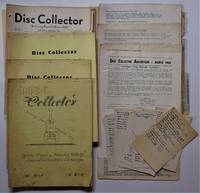
1951008276Palmer Michigan: National Hillbilly Record Collectorss Exchange 1951. RARE. 16 issues of Disc Collecto; Official Organ of National Hillbilly Record Collectors' Exchange later renamed Disc Collector: "The Country Record Collectors Bible". This mimeographed country and folk music journal which has been called a veritable "research discography". Published quarterly starting in 1951 the 16 issues are Vol. 1 Nos.1-4 1951; Vol. 2 Nos. 1-3 1952; and Nos. 10 12-19 1957-1961. With a hand-written artist index on 4" x 6" index cards giving artist name issue number and page number no indication of author but from the collection of noted folklorist Frank Hoffman. Additionally Disc Collectors New Letter Nos. 1-5 Jan.-Sept. 1964 along with 2 pages of New Releases and a blank application for membership to Disc Collectors Record Club. Very Good or better overall slight musty smell assorted small corner creases. A remarkable and RARE treasure trove for the collector of early country and folk music. . First Printing. Stapled. Very Good/No Jacket As Issued. 4to - over 9¾" - 12" tall. National Hillbilly Record Collectorss Exchange Paperback books
Foglio inciso a bulino, mm 172x230, I stato/III. Prova, nitida e contrastata, nel I stato-3 avanti lettera, prima dell'edizione del Salamanca. Impressa su carta con filigrana Ancora nel cerchio con stella a sei punte databile alla prima metà del Cinquecento. Piccoli restauri visibili al verso negli angoli superiori ed inferiore destro. L'opera, tratta da un'invenzione di Raffaello e ispirata alla serie della Favola di Amore e Psiche, mostra la fanciulla alle prese con la sua ultima e terribile prova, necessaria al conseguimento dell'immortalità. Inviata nell'oltretomba da Venere al cospetto di Proserpina, la fanciulla è ripresa mentre implora la regina degli Inferi di cederle un po' della sua bellezza. Bernardo Daddi (nato intorno al 1512 – morto a Roma nel 1570) è il nome attribuito al Maestro del Dado riconoscibile per una B segnata su un dado presente in diverse sue opere. . Bartsch, n. 65; Raphaeil invenit, p. 256-257 (cita soltanto il III stato, n. 27a riprodotto a pag 822); Bertelà, n. 151; Filigrana: Briquet, n. 493.
1543ALDR0325Venetiis, ex officina Farrea [Giovanni de Farri] 1543. Kl.-8°. 143 nn. Bll., letztes Blatt (Colophon) fehlt. Mit Druckermarke auf Titelbl. Halbpergamentband (18. Jhdt.) m. goldgepr. Titel auf mont. Rüschi. u. Streicheisenverz. an den Kapitalen; Deckelbezug u. Spiegel aus Marmorpapier sowie m. umseit. Sprenschnitt. Buchdeckel an der Vorderkante etw. lädiert, Einbd.abgerieben, Kanten abgewetzt, Namenseintrag v. alter Hd. auf flieg. Vorsatz u. späterer Eignerstempel auf Titelblatt, durchgeh. etw. stockfl., vereinz. m. Anmerk. in griechischer Schrift. Adams H 472; Brunet III, 140; Dibdin II, 32; Ebert 9593; Hoffmann II, 389; Schweiger I, 143; STC 327; nicht bei Graesse. - Seltener Nachdruck der Ausgabe von 1540. In griechischen Lettern gedruckt. Enthält neben der Werke Hesiods auch Schriften von Theognis von Megara, Musaios und Milesius Phocylides. [3 Warenabbildungen]
1864009973London and Cambridge: Macmillan & Co. 1864. Book. Near Fine. Cloth. First Edition. 12mo - over 6¾" - 7¾" tall. lvi 190 pages. In original brick cloth gilt lettering back Near Fine faint name in ink front end page tiny rubs to corners the small bookseller's ticket of Gustav E. Stechert of New York verso front end paper. SCARCE and important edition and study of the Stanzaic or Harleian Le Morte Arthur. Collectible copies uncommon in current market. Macmillan & Co. Hardcover