A Tale of ConstantinopleBiblio.com
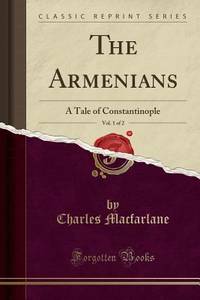
The Armenians Vol. 1 of 2
0259510521.Gpaperback. Good. Access codes and supplements are not guaranteed with used items. May be an ex-library book. paperback
Bonita · États-Unis50,38 $US≈ 42,63 €
2 100 résultats
New English Original bdg. HC. 4to. (30 x 24 cm). Edition in English. 325 p., b/w and color ills. The Constantinople years. February 07 - May 10 2020, Istanbul, Mesher. [Exhibition catalogue]. Prep. by Aysenur Güler, Vita Susak. Edited by Nilüfer Sasmazer. Alexis Gritchenko, (1883-1977) was part of the modern art scene and exhibited with avant-garde artists including Kazimir Malevich, Wassily Kandinsky, Vladimir Tatlin and many others. Gritchenko was also an art critic and published articles, books; delivered public lectures, and taught in an art school. He decided to escape the civil war which followed the Russian Revolution of 1917. Leaving Moscow, he arrived in Istanbul in November 1919. Although the two years Gritchenko spent in Istanbul coincided with the occupation of the city, the Ottoman capital provided the artist with a relatively safe refuge until he left in 1921. On his arrival, he was instantly attracted by the colors and dynamism of Istanbul. He recorded his impressions of the vibrant ports, markets, sacred spaces, and majestic monuments while wandering through the streets, notepad, pen and brush in hand. Looking at his vast corpus of Istanbul works, one can retrace the cultural and social imprint of those turbulent years through the eyes of a visitor. Now, 100 years after the visit of Gritchenko to Istanbul, a great part of the works the artist created in the city, a collection of watercolors, gouaches, sketches, and oil paintings have been compiled into the book Alexis Gritchenko - The Constantinople Years. More than 150 works have been included in the publication alongside articles by art historians Vita Susak and Aysenur Gu?ler, detailing the artist's life and technique, as well as the connections and friendships he formed during his stay in Istanbul, including those between him, Ibrahim Çalli, and Namik Ismail.
Fine English Paperback. 4to. (25 x 23 cm). In English. 122 p., color and b/w ills. The conservation of the Dolmabahçe Palace Clock Tower from the study project to the work site school. 6 copies in OCLC. OCLC no.: 896872444.
(Mediaeval Academy Reprints for Teaching) Edited by Edgar Holmes McNeal . 'Among the many remarkable episodes of the crusading age, perhaps the most astounding was the exploit of those French knights and Venetian seamen who set out to rescue the Holy Land and ended by capturing Constantinople. This expedition, known to modern historians as the Fourth Crusade, is memorable also for the number of contemporary accounts which it inspired. One of these is the story dictated by Robert of Clari, a simple, obscure knight of Picardy, who was a member of the crusading host and shared its experiences.' 150p. bibliography index Book
New New English In original binding with original dust wrapper. DJ. In publisher's special slip-case. 336 p. In English. Color and b/w ills. Oblong 4to. The colorful treasures of Istanbul from Byzantine mosaics to Ottoman ceramic tiles. Foreword, Arda Sayil.; Byzantine mosaics and ceramics, Enis Karakaya.; Ceramic tiles in Istanbul mosques, Ahmet Vefa Çobanoglu, Ismail Duman.; Ceramic tiles in Istanbul tombs, Ismail Duman.; Ceramic tiles in Topkapi Palace, Ahmet Vefa Çobanoglu.; Ceramic tiles in public world, Ebru Karakaya.
New New English Original bdg. Dust wrapper. 4to. (30 x 24 cm). In English and Turkish. 343 p., color ills. The civilization engraved on the stones in Eyüpsultan.= Eyüpsultan'da tasa islenen medeniyet. TURKISH AND ISLAMIC ARTS History of art Ottoman culture Ottoman calligraphic art Calligrahy Tombstone Istanbul Constantinople Eyup - The Golden Horn Cemetery. 343 p.
As New English Paperback. Pbo. Mint. Roy. 8vo. (23 x 16 cm). Color ills. 172 p. In English. The city of emperors. Discover the land of civilizations: Istanbul visitors guide. In the city of past, today and tomorrow. Museums, palaces, mosques, bazaars, architectural masterworks, castles, parks, hotels, restaurants.
Laminate slightly lifting along DJ spine. Dustjacket has minor shelfwear with a couple of small tears and edgewear to corners as well as light rubbing. DJ is price-clipped. ; 67 Photographs, 22 Line Drawings, 1 map. Discusses the city of Constantinople from the first colonization of the site by the Greeks to about the year 1700, when it was the center of the Ottoman Empire with special emphasis between AD 330 and 1453.; Ancient Peoples and Places; 198 pages
New New English Original bdg. Dust wrapper. 4to. (30 x 24 cm). In English and Turkish. 143, [1] p., color and b/w ills., 1 folding b/w panorama of Constantinople. The city gates of Istanbul.= Dersaadet'in sur kapilari. Photographs by Halit Ömer Camci. Prep. by Fatih Güldal.
New English Paperback. Large demy 8vo. (22 x 16 cm). In English. 320 p. The Church of Sancta Sophia Constantinople. Sancta Sophia is the most interesting building on the world's surface. Like Karnak in Egypt, or the Athenian Parthenon, it is one of the four great pinnacles of architecture, but unlike them this is no ruin, nor does it belong to a past world of constructive ideas although it precedes by seven hundred years the fourth culmination of the building art in Chartres, Amiens, or Bourges, and thus must ever stand as the supreme monument of the Christian cycle. Our first object has been to attempt some disentanglement of the history of the Church and an analysis of its design and construction; on the one hand, we have been led a step or two into the labyrinth of Constantinopolitan topography, on the other, we have thought that the great Church offers the best point of view for the observation of the Byzantine theory of building.
Former owner's bookplate on inner cover. Appears to be bound upside down (as published? ) otherwise Fine. ; The armies of the Fourth Crusade that left Western Europe at the beginning of the thirteenth century never reached the Holy Land to fight the Infidel; they stopped instead at Byzantium and sacked that capital of eastern Christendom. Much of what we know today of those events comes from contemporary accounts by secular writers; their perspective is balanced by a document written from a monastic point of view and now available for the first time in English. The Hystoria Constantinopolitana relates the adventures of Martin of Pairis, an abbot of the Cistercian Order who participated in the plunder of the city, as recorded by his monk Gunther. Written to justify the abbot's pious pilferage of scared relics and his transporting them back to his monastery in Alsace, it is a work of Christian metahistory that shows how the sack of Constantinople fits into God's plan for humanity, and that deeds done under divine guidance are themselves holy and righteous. The Hystoria Constantinopolitana is one of the most complex and sophisticated historiographical work of its time, deftly interweaving moods and motifs, themes and scenes. In producing the first English translation and analysis of this work, Alfred Andrea has captured the full flavor of the original with its alternating section of prose and poetry. His introduction to the text provides background on Gunther's life and work and explores the monk's purpose in writing the Hystoria Constantinopolitana—not the least of which was extolling the virtues of Abbott Martin, who was sometimes accuse of laxity by his superiors in the Order. Gunther's work is significant for its effort to deal with problems raised by the participation of monks in the Crusades, making it a valuable contribution to both crusading and monastic history. The Capture of Constantinople adds to our knowledge of the Fourth Crusade and provides unusual insight into the attitudes of the participants and the cultural-intellectual history of the early thirteenth century. ; Middle Ages Series; 194 pages
History of the Byzantine Empire, from its beginning to the fall of Constantinople in 1453. Includes a chronological chart of the Byzantine Empire and world events. Vintage school textbook, Grades 7 and up.126p. illus, maps, index.Crisp neat copy except for library bookplate and stamp. Book
Fine English Paperback. Pbo. Cr. 8vo. (20 x 14 cm). In English. [xvi], 182 p., b/w plts. The Bosphorus. Photos by Anthony E. Baker.
New New English Original bdg. Dust wrapper. Oblong folio. (23 x 33 cm). In English and Turkish. 207 p., B / w and color ills. The Bosphorus steamers of the Sirket-i Hayriye. = Sirket-i Hayriye'nin Bogaziçi vapurlari. The Bosphorus has always been a subject that occupied an extraordinary place both in the Turkish and in the World literatures. With its natural...
New English Original bdg. Dust wrapper. Oblong large 8vo. (23 x 23 cm). In English. 64 p., 60 color plates. "This small mosque, which was completed in 1561 for Rüstem Pasa, a grand vizier of Süleyman the Magnificent, houses one of the richest collection of underglaze polychrome Iznik tile revetments in Istanbul. The revetment tiles in the Mosque of Rüstem Pasa are generally acknowledged as an outstanding example of the unique richness and superb artistic achievement characteristic of the era of Süleyman the Magnificent. Representing an ostentatious culmination of centuries of evolution in the art of ceramics and tiles, the Rüstem Pasa tile revetments also reflect the perfection of ceramic art at a particular stage of its development. Their lavish employment in this monument may show that Sinan, Sultan Süleyman's chief architect who built the mosque, had not yet decided how to use this new medium in architecture. In his other monuments, he appeared to use underglaze polychrome tiles more economically. The unusual number of motifs encountered in the mosque also points out that neither the decorators nor the architect had decided what designs to favor.".
New English Paperback. Pbo. Mint. 4to. (28 x 23 cm). In English and Turkish. 159 p. Color ills. The blue book: The sea and its artists in Turkish art.= Mavi kitap: Türk resminde deniz ve ressamlari.
New English Paperback. Pbo. Mint. 4to. (32 x 24 cm). 210 p. In Turkish and English. B/w photos. The birds of Istanbul.= Istanbul'un kuslari. Translator: Amy Spangler; Edited by Ali Berktay. PHOTOGRAPHY TUrkish art of photography Photographic art Photographer Istanbul Bird.
New English Original decorative blue cloth bdg. In special publisher's box. 4to. (29 x 23 cm). Edition in English. [xii], 178 p., 88 b/w plates. The beauties of the Bosphorus: Illustrated in a series of views of Constantinople and its environs, from original drawings by W. H. Bartlett. Reprint of the 1836 edition. 1000 copies were printed.
New New English Original bdg. Dust wrapper. 4to. (30 x 21 cm). In English. 295 p., richly color and b/w ills. The bank, the money lenders, the usurers and the jewellers of Pera & Beyoglu. Several factors play a part in the development of culture, of a civilization. In other words, the emergence and development of several elements one after another creates a civilization.
New English Original cloth bdg. Folio. (31 x 26 cm). Edition in English. 352 p., color and b/w ills. Printed to 600 copies. FOREWORD Looking into the Balyan Architecture Archive / Arsen Yarman With Respect to the Balyan Family and Imperial Architects HAYCAR Solidarity Association of Architects and Engineers for the Revitalization and Research of Cultural Assets Remembering the Balyans / Kevork Özkaragöz PROLOGUE Chapter 1 BALYAN ARCHITECTURE ARCHIVE Beyond Function: Balyan Architecture with Myths and Prejudices Balyan Archive: Pile of Memories and Journey of Classification Architect Balyans Chapter 2 BALYAN FAMILY: PERSONAL HISTORIES Balyan Family and Its Origins Krikor Bal(i)yan (1764-1831) and the Birth of a Family Practice Senekerim Balyan (1768-1833) The Last Amira Architect Garabed Balyan (1800-1866) Education of Garabed Balyan's Children A Young Genius: Nigogos Balyan (1826-1858) Architect, Engineer and Versatile Tanzimat Elite Sarkis Balyan (1831-1899) Death of the Great Patron, Stroke of Fate and Final Period of Balyan Practice Sarkis Balyan as an Engineer-Mechanician and Inventor Art Patron and Intellectual Architect: Hagop Balyan (1837-1875) A Drawing Master and Imperial Draughtsman: Simon Balyan (1846-1894) Last Architect of the Balyan Practice: Levon Balyan (1855-1925) Chapter 3 BALYAN ARCHITECTURE AND ITS REPRESENTATIONS Imperial Palaces and Organization of Large Scale Construction Sites: Silence of the Construction Sites A Pledge of Progress and a Visual Negotiation: Photography in the Representation of Sarkis Balyan's Architecture Portrait of the Architect Chapter 4 BALYAN ARCHITECTURE IN THE TANZIMAT [REFORM] ERA Beyond Time and Geography: Multiple Sources of Balyan Eclecticism Balyan Practice as a Pioneer of Neo-Gothic Elements in Tanzimat Architecture History as an Encyclopedic Source An Egalitarian Demand: Influences on Çiragan and Beylerbeyi Palaces New Methodologies in the Search of a National Style and Ottoman Renaissance From Imperial Architect to Imperial Palace Master Builder: The Position of Architect in the Architectural Organization of Tanzimat Period Chapter 5 BALYAN ARCHIVE CATALOGUE Ottoman Palace and Residential Architecture in the Tanzimat Era Imperial Palaces on the Banks of Bosphorus The Çiragan Palace of Sultan Mahmud II Dolmabahçe: The Absolute Model of Tanzimat Palaces The Design Model Integrating the Old Palace into the New Complex: Beylerbeyi Nigogos Balyan's Facade Proposal for the New Çiragan Palace and Horror Vacui Sarkis and Hagop Balyan's Eastern, Polychrome Facade Proposals for the New Çiragan Palace The New Çiragan Palace Monumental Coastal Line from Çiragan to Fer'iye Palaces Sarkis Balyan's Expansion Project for Yildiz Palace Büyük Mabeyn Kiosk The Balyans and Imperial Feasts in the Tanzimat Period A Project by Antoine Bourgeois in the Balyan Archive In the Pursuit of an Ideal Plan: Kiosk and Pavilion Designs Kabatas Esma Sultan Mansion An Exception of Balyan Architecture: Middle Class Housing Designs Decoration for the Empire Decoration of the 19th Century Ottoman Palaces Perspective Drawings by "Serkis Bey" in the Nubar Library, Paris Parisian Furniture, Chandelier and Furniture Designs in the Balyan Archive A Conceptual Spolia: Re-use of Çiragan Palace's Mother-of-Pearl Inlaid Doors in Yildiz Sale Kiosk's Dining Hall New Spaces of the Ottoman Diplomacy Sarkis Balyan's Reorganization for Chamber of Deputies Sarkis Balyan's Bâb-i Âli Building Plan Proposals After the 1878 Fire Religious Buildings Tanzimat Period Mosques and Contributions of the Balyans Sarkis Balyan's Four-Minaret Selâtin Mosque Design: Aziziye Mosque The Second Set of Mosque Drawings in the Balyan Archive Church Designs Between the Imperial Capital and the East New Spaces of the Public Life Sarkis Balyan's Display Plan for the Collection of Antique Weapons at Hagia Irene Education Buildings Sarkis Balyan's Galatasaray Imperial High School Plan The Hospital Project in the Balyan Arc.
Fine English Paperback. Pbo. 4to. (30 x 24 cm). In English and Turkish. 67, [2] p., color and b/w ills. The Artist, The Sultan and his portrait: Mehmed the Conqueror according to Gentile Bellini.= Ressam, Sultan ve portresi: Gentile Bellini'ye göre Fatih Sultan Mehmet. [Exhition catalogue]. Edited by Münevver Eminoglu. Consultant: Günsel Renda. This exhibition consists of a single painting: the famous portrait that the Ottoman Sultan Mehmed the Conqueror had painted by the Italian artist Gentile Bellini about five hundred years ago and is now in the collection of the National Gallery of London. The painting is a magnificent souvenir of a brief 'golden age' in a reminder that, as early as the Renaissance and under the leadership of a strong and foresighted ruler, Ottoman society, which always looked wetward, hd the chance to grasp universal civilization.
New English Paperback. Pbo. 4to. (30 x 24 cm). In English and Turkish. 67, [2] p., color and b/w ills. The Artist, The Sultan and his portrait: Mehmed the Conqueror according to Gentile Bellini.= Ressam, Sultan ve portresi: Gentile Bellini'ye göre Fatih Sultan Mehmet. [Exhition catalogue]. Edited by Münevver Eminoglu. Consultant: Günsel Renda. This exhibition consists of a single painting: the famous portrait that the Ottoman Sultan Mehmed the Conqueror had painted by the Italian artist Gentile Bellini about five hundred years ago and is now in the collection of the National Gallery of London. The painting is a magnificent souvenir of a brief 'golden age' in a reminder that, as early as the Renaissance and under the leadership of a strong and foresighted ruler, Ottoman society, which always looked wetward, hd the chance to grasp universal civilization.
New New English Original bdg. Dust wrapper. 4to. (30 x 24 cm). In English and Turkish. 159, [8] p. Color and b/w ills. The Book of Minarets Ridges is a comprehensive collection of texts and visual content aiming at demonstrating the art of minarets ridge (mahya) with a history of 400 years to ornament the city especially during Ramadan, religious holidays and other national memorial days. The book comprising of articles written by specialists on the art of minarets ridge throughout our cultural history will also contain about 100 images of minaret ridges (mahya) both old and new. Along with the book an announcement will be made for a minarets ridge competition as the second step of the Project.
This is a very good hardcover copy in a very good dust jacket with only light wear. Very clean inside and out. 203 black & white illustrations. Glossary. Chronological table. 10" high X 7" wide, 184 pages. This book will be securely packed and shipped with tracking.
New English Paperback. Large 8vo. In English, Armenian, and Turkish. 108 p., fully color photos. The Armenians of Istanbul.= Istanbuli Hayeri.= Istanbul Ermenileri. [Photographic exhibition catalogue].
0259510521.Gpaperback. Good. Access codes and supplements are not guaranteed with used items. May be an ex-library book. paperback