Welch DavidMareMagnum

7 089 résultats
In 8, cart., sovracc., pp. 252.Lievi segni del tempo, buone condizioni.Luogo di pubblicazione Roma Editore Newton & Compton Collana I volti della storia 121Anno pubblicazione 2002Materia/Argomento Storia, Nazismo
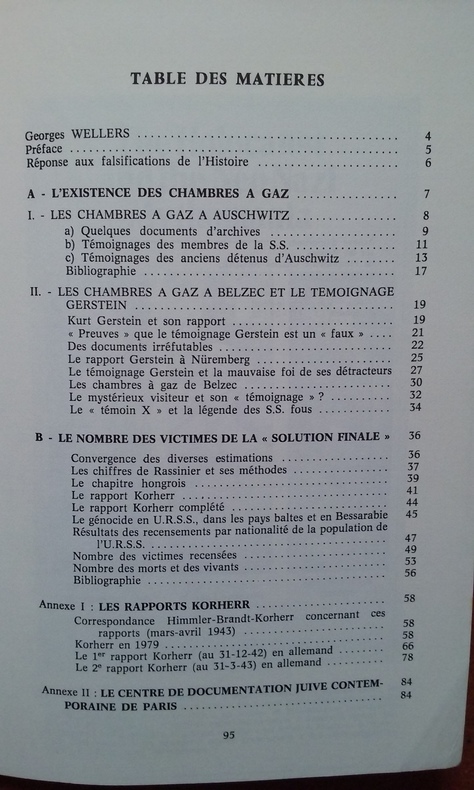
QWA-4214Edité par Serge et Beate Klasfeld, 1979, 95 p., in-8 br., Centre de documentation juive contemporaine, bon état
8vo; 95 pages; Original Softcover. 8vo. 95 pages. illus. 23 cm. Slick, glossy, official German state publication with it's "spin" on Jews in today's Germany. Nicely done and certainly interesting on its surface as well as at deeper levels. Sections include: Jewish Roots of German Culture, The History of the Jews in Germany, Remembrance [of the Holocaust], The Relationship between Germany and Israel, Jewish Life in Germany Today, and Jewish Children in Germany. Very good condition. (HOLO2-65-23).xxxxx
Cloth; 8vo. 404 pages. With index and bibliographical acknowledgements. "The past decade has marked two cataclysmic events which have completely changed the Jewish situation: the annihilation of one third of the Jewish people-together with what had been the center of Jewish gravity for the past three centuries-and the birth of the Jewish State. The multifaceted problems implicit in these profound changes are examined and analyzed in 'Jewish Survival. '" Author explains Jewish survival as the combination of Jewish ideals with Jewish life. Ex-library copy. Very good condition in good dust jacket. (H-32-7)
Softcover, xii, 427 pages, 8vo, 24 cm. SUBJECT (S) : Antisemitism -- Germany -- History. Antisemitism -- Austria -- History. Christianity and antisemitism. Holocaust, Jewish (1939-1945) --Germany -- Causes. Antisemitisme. Holocaust. Antisemitisme -- Allemagne -- Histoire. Antisemitisme -- Autriche -- Histoire. Christianisme et antisemitisme. Holocauste, 1939-1945 -- Allemagne -- Causes. Includes bibliographical references on pages 399-412 and index. Wear to edges. Some underlining in book. Otherwise, Very Good Condition. (Holo2-18-33)
(FT) Paper Wraps. 8vo. 47 pages. Ill. 23 cm. In English and Hebrew. A collection of prayers to be read on Yom HaShoah, or Holocaust Remembrance Day. ISBN: 0615115195. SUBJECT: Holocaust Remembrance Day -- Prayers and devotions -- English. A seder conducted on Holocaust Remembrance day at the Hebrew Institute of Riverdale--page 5. OCLC lists 13 copies worldwide. Very good condition. (HAG-8-23)
16° carton. edit. sovrac. figur. pp. 330, una cartina. Prima edizione italiana. "Il Cammeo". Buon es. con fascetta edit.
Torino, Einaudi, 1966, 8vo tutta tela editoriale con sovraccopertina illustrata , pp. 325.
in-8, 79 pages, broche, couverture illustree. Peu courant. Bon état. [SO-5] Publication de propagande pro nazie.
8vo; 95 pages; 23 cm. Includes "List of [Antisemitic] legal acts enacted since 1933, mentioned, cited or published in this work" on pages 89-95. American Jewish Committee. Research Institute on Peace and Post-War Problems. Pamphlet series: Jews and the post-war world, no.2 (AMR-41-12)
(FT) Hardcover, 8vo, 309, viii pages, 35 cm. In Yiddish. The way to our youth; elements, methods, and problems of Jewish youth research. Nazi-era imprint, looking at Jewish youth in 1930s Poland. Series: Bibliotek fun Yivo; Nom. 1 (7) ; Variation: Bibliotek fun Yivo. SUBJECT(S) : Jewish youth -- Psychological aspects. Personality and culture -- Methodology. Added title page: The way to our youth; elements, methods, and problems of Jewish youth research. Added title page also in Lithuanian: Keliasimusu javnuomene. Bibliographical footnotes and index. Other Titles: Way to our youth. ; Keliasimusu jaunuomene. Weinreich (1894-1969) was a Yiddish linguist, historian, editor. Born in Kuldiga (Latvia) , Weinreich made his debut as a Yiddish writer at the age of 13, and became a contributor to various Yiddish, Russian, German, and later English publications. After studying at the universities of St. Petersburg and Berlin, he completed a doctoral thesis on the history of Yiddish philology at the University of Marburg. Early in his career Weinreich became a prominent educator in various capacities, ranging from the teaching of Yiddish literature at the Vilna Yiddish Teachers Seminary to serving as leader of a Yiddish scouting movement, Di Bin. He was instrumental in giving Yiddish linguistics a solid, scholarly footing. Co-founder with Nokhem Shtif, Elias Tcherikover, and Zalmen Rejzen of the YIVO Institute, and YIVOs guiding spirit, he was largely responsible for its achieving a worldwide reputation. As director of YIVOs Research Training Division and organizer of its graduate school, Weinreich successfully educated young Yiddish scholars, among them, his son, Uriel Weinreich. At the World Congress of Linguistics in Copenhagen, he lectured on Yiddish as an Object of General Linguistics, and in 1940, he immigrated with his son Uriel to the U. S. , where he became the countrys first university professor of Yiddish, teaching Yiddish language, literature, and folklore at the College of the City of New York and Columbia University, while serving as the scholarly director of YIVO. Weinreichs wide array of books and studies include his magnum opus, Geshikhte fun der Yidisher Shprakh, the culmination of a half century of research on Yiddish sociolinguistics, tracing the thousand-year development of Ashkenazi culture and the Yiddish language as integral to the Jewish way of life. He studied the development of Yiddish from its origins in Germany, through Eastern Europe and into the second diaspora, creating the basic concepts and theoretical tools of the linguistic study of Jewish languages. Prominent among his other works are Hitlers Profesorn- probably the best documented indictment of German scholarship during the Nazi regime; Shturemvint, sketches on 17th-century Jewish history; Bilder fun der Yidisher Literatur-Geshikhte; Der Veg tsu Undzer Yugnt, a socio-psychological study of Jewish youth in Eastern Europe; and Di Shvartse Pintelekh, a history of alphabets. Weinreich translated Homer, Freud, and Ernst Toller into Yiddish and edited the periodicals Yidishe Filologye, Filologishe Shriftn, Yivo-Bleter, and the critical edition of S. Ettingers works, N. Stutchkoffs Oytser fun der Yidisher Shprakh, Y. L. Cahans Shtudyes vegn Yidisher Folkshafung, and Yidishe Folkslider mit Melodyes (Schaechter and Baumgarten in EJ, 2007) . OCLC lists 4 copies worldwide (U of Melbourne, Paris-Cujas-Bu Droit, Staatsbibliothek zu Berlin, Bayersiche Staatsbibliothek) . Browning to pages. Bumped cover corners. Otherwise, very good condition. (Holo2-74-6)
(FT) Hardcover, 8vo, 309, viii pages, 35 cm. In Yiddish. The way to our youth; elements, methods, and problems of Jewish youth research. Nazi-era imprint, looking at Jewish youth in 1930s Poland. Series: Bibliotek fun Yivo; Nom. 1 (7) ; Variation: Bibliotek fun Yivo. SUBJECT(S) : Jewish youth -- Psychological aspects. Personality and culture -- Methodology. Added title page: The way to our youth; elements, methods, and problems of Jewish youth research. Added title page also in Lithuanian: Keliasimusu javnuomene. Bibliographical footnotes and index. Other Titles: Way to our youth. ; Keliasimusu jaunuomene. Weinreich (1894-1969) was a Yiddish linguist, historian, editor. Born in Kuldiga (Latvia) , Weinreich made his debut as a Yiddish writer at the age of 13, and became a contributor to various Yiddish, Russian, German, and later English publications. After studying at the universities of St. Petersburg and Berlin, he completed a doctoral thesis on the history of Yiddish philology at the University of Marburg. Early in his career Weinreich became a prominent educator in various capacities, ranging from the teaching of Yiddish literature at the Vilna Yiddish Teachers Seminary to serving as leader of a Yiddish scouting movement, Di Bin. He was instrumental in giving Yiddish linguistics a solid, scholarly footing. Co-founder with Nokhem Shtif, Elias Tcherikover, and Zalmen Rejzen of the YIVO Institute, and YIVOs guiding spirit, he was largely responsible for its achieving a worldwide reputation. As director of YIVOs Research Training Division and organizer of its graduate school, Weinreich successfully educated young Yiddish scholars, among them, his son, Uriel Weinreich. At the World Congress of Linguistics in Copenhagen, he lectured on Yiddish as an Object of General Linguistics, and in 1940, he immigrated with his son Uriel to the U. S. , where he became the countrys first university professor of Yiddish, teaching Yiddish language, literature, and folklore at the College of the City of New York and Columbia University, while serving as the scholarly director of YIVO. Weinreichs wide array of books and studies include his magnum opus, Geshikhte fun der Yidisher Shprakh, the culmination of a half century of research on Yiddish sociolinguistics, tracing the thousand-year development of Ashkenazi culture and the Yiddish language as integral to the Jewish way of life. He studied the development of Yiddish from its origins in Germany, through Eastern Europe and into the second diaspora, creating the basic concepts and theoretical tools of the linguistic study of Jewish languages. Prominent among his other works are Hitlers Profesorn- probably the best documented indictment of German scholarship during the Nazi regime; Shturemvint, sketches on 17th-century Jewish history; Bilder fun der Yidisher Literatur-Geshikhte; Der Veg tsu Undzer Yugnt, a socio-psychological study of Jewish youth in Eastern Europe; and Di Shvartse Pintelekh, a history of alphabets. Weinreich translated Homer, Freud, and Ernst Toller into Yiddish and edited the periodicals Yidishe Filologye, Filologishe Shriftn, Yivo-Bleter, and the critical edition of S. Ettingers works, N. Stutchkoffs Oytser fun der Yidisher Shprakh, Y. L. Cahans Shtudyes vegn Yidisher Folkshafung, and Yidishe Folkslider mit Melodyes (Schaechter and Baumgarten in EJ, 2007) . OCLC lists 4 copies worldwide (U of Melbourne, Paris-Cujas-Bu Droit, Staatsbibliothek zu Berlin, Bayersiche Staatsbibliothek). SPine repair with black cloth tape. Title page torn and repaired with tape. Browning to pages. Good condition. (Holo2-74-6A)
8vo. 240 pages. In Yiddish. Illustrated. First edition. Title translates as, "A World in Flames: War Survival." SUBJECT (S) : World War, 1939-1945 personal narratives, Jewish. OCLC lists 21 copies worldwide. Covers and front and top edges of some pages water stained, top of spine has a small tear, good condition. (HOLO2-6-16)
brossura Questo libro, basato su una vasta ricerca portata avanti su una grande quantità di fonti, mette in luce pratiche, obiettivi, logiche, estensione e luoghi degli esperimenti nazisti. Gli esperimenti non furono soltanto atti di crudeltà occasionale o monopolio di pochi medici SS, di cui Mengele resta la figura iconica, ma parte integrante del processo di distruzione razziale. La ricerca nazista sugli esseri umani non era priva di etica; era l'etica a essere stata plasmata dall'ideologia nazista: il dovere del medico non era più verso il singolo paziente, ma verso la nazione e la razza. La sperimentazione medica coercitiva nazista viene descritta come fenomeno a sé stante, con una sua evoluzione, che non si esaurisce all'interno dei campi di concentramento. Nuova è anche l'attenzione riservata non ai soli perpetratori, ma anche e soprattutto alle vittime di cui si va a ricostruire, per quanto possibile, l'identità e l'esperienza.
Paper Wraps. 8vo. 92 Pages. 19 Cm. In French. Title Translates To English As: Cries of Alarm: Epistles to the Jews of France, England, Germany and America. Weill trained for the rabbinate in Frankfurt, where he also studied languages and literature. Abandoning rabbinics in 1836, he went to Paris where he gained admittance to literary salons. SUBJECT (S) : Judaism -- Apologetic works. OCLC lists 7 copies. Lacks back cover and backstrip. Front cover stained and brittle with some ripping. Internal binding and pages are in good condition with all text clear. (HOLO2-33-15)
Cloth; 8vo. 120 pages. Limited edition no. 96 with printed dedication and signature of author. In German. Illustrated with photographic plates. Verres, Gaius, 1st cent. B. C. -- Fiction. OCLC lists 19 copies worldwide. Pages brown. Very good condition in good dust jacket. (H-34-5)
Cloth; 8vo. 120 pages. Limited edition no. 471 with printed dedication and signature of author. In German. Illustrated with photographic plates. Verres, Gaius, 1st cent. B. C. -- Fiction. OCLC lists 19 copies worldwide. Pages brown. Crease in front cover, good condition. (H-34)
br. Hitler è tornato. Hitler non se n'è mai andato. Era Silla, era Cesare, era Carlo V, era Luigi XIV e ancora Napoleone. L'Impero dei Romani definito dai suoi ideologi "pace", la Grandeur della Francia, il Destino dei Tedeschi: non esiste differenza e l'atteggiamento sbagliato di sempre è quello di accreditare una presunta eternità a dei caratteri che esistono solo nella retorica dei vincitori di turno. Ecco perché di eterno c'è solo Hitler, cioè l'hitlerismo, inteso come idolo, la brama spasmodica del potere per il potere, l'asservimento alla macchina dello Stato e della produzione: non un'invenzione necessariamente tedesca. Non c'è una riga di questo lucidissimo saggio di Simone Weil che non imponga una scelta a noi uomini, l'unica scelta di sempre, la più drammatica: il culto del potere o la sua critica. Non c'è una riga che non possa essere ritrascritta oggi, pensando alla presunta eterna minaccia dell'Islam, del pericolo cinese, dei popoli minacciati dal terrore e dalle guerre. Questo libro interroga tutti gli europei, gli occidentali, e li costringe a guardare alle loro origini, all'Hitler che è in loro e che proiettano sul nemico.
br. Hitler è tornato. Hitler non se n'è mai andato. Era Silla, era Cesare, era Carlo V, era Luigi XIV e ancora Napoleone. L'Impero dei Romani definito dai suoi ideologi "pace", la Grandeur della Francia, il Destino dei Tedeschi: non esiste differenza e l'atteggiamento sbagliato di sempre è quello di accreditare una presunta eternità a dei caratteri che esistono solo nella retorica dei vincitori di turno. Ecco perché di eterno c'è solo Hitler, cioè l'hitlerismo, inteso come idolo, la brama spasmodica del potere per il potere, l'asservimento alla macchina dello Stato e della produzione: non un'invenzione necessariamente tedesca. Non c'è una riga di questo lucidissimo saggio di Simone Weil che non imponga una scelta a noi uomini, l'unica scelta di sempre, la più drammatica: il culto del potere o la sua critica. Non c'è una riga che non possa essere ritrascritta oggi, pensando alla presunta eterna minaccia dell'Islam, del pericolo cinese, dei popoli minacciati dal terrore e dalle guerre. Questo libro interroga tutti gli europei, gli occidentali, e li costringe a guardare alle loro origini, all'Hitler che è in loro e che proiettano sul nemico.
br. Difficile sottovalutare l'importanza delle riflessioni di Simone Weil per pensare il presente. Testimone di avvenimenti della nostra epoca crudeli e cruciali, li ha sofferti, elaborati e descritti, proprio mentre accadevano, con una lucidità e una sensibilità, forse, inarrivabili. Per questo motivo, a due terzi di secolo dalla sua prematura scomparsa, si continua a leggere, studiare, ammirare il pensiero della giovane parigina e a trarne ispirazione. La sua analisi delle origini del totalitarismo e della sua affermazione in Germania mette in luce le straordinarie affinità tra il nazismo e l'Impero romano, che Weil considera la vera e propria scuola del totalitarismo. Una scuola che ha nutrito tutte le successive esperienze, incluso il bolscevismo. Oltre al saggio di Weil sulla situazione tedesca, scritto alla vigilia della guerra e adattato da Gagliano per il lettore italiano, questo volume passa in rassegna le più importanti teorie sul totalitarismo, compreso il contributo decisivo di Hannah Arendt sullo Stato totalitario. In un tempo come il nostro, queste letture possono contribuire a comprendere ciò che sta accadendo intorno a noi. Prefazione di Luciano Pellicani e saggi di Giuseppe Gagliano, Luigi Iannone, Hannah Arendt.
in 8°, t.t. edit. ill., pp. (4),176, 136 tavv. f.t., 3 cart. Idrogr. in fine (136 Bilder)
Mm 210x280 Brossura editoriale, 394 pagine di puro testo e 94 pagine di testo/foto. Lingua inglese - English text. Esemplare in ottime condizioni, pari al nuovo. SPEDIZIONE IN 24 ORE DALLA CONFERMA DELL'ORDINE.
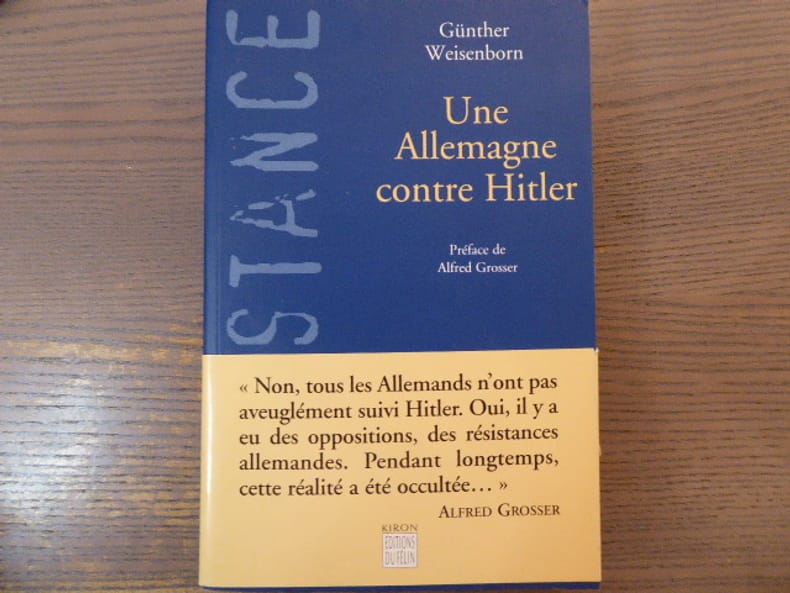
44208Paris, Editions du Félin, 2000. 15 x 23, 392 pp., broché, très bon état.
816628Editions Du Félin Paris 2000 In-8 ( 235 X 160 mm ) de 392 pages, broché sous couverture imprimée. "Non, tous les Allemands n'ont pas aveuglément suivi Hitler. Oui, il y'a eu des oppositions, des résistances allemandes. Pendant longtemps, cette réalité à été occultée...". Bel exemplaire.