Ballet Theatre FoundationBiblio.com

21 719 résultats
1954231274New York.: Ballet Theatre Foundation. 1954. Stapled wrap. Very light soiling and light wear to covers otherwise a very good copy. 4to. Signed by Igor Youskevich Alicia Alonso John Kriza Melissa Hayden Roy Fitzell and Job Sanders on their respective photographs. Program for 1954 series at the San Francisco War Memorial Opera House laid in. Numerous photographs of the performers. Ballet Theatre Foundation. unknown
cm 25 x 32, 148 pp. Carus-Verlag GmbH - ISBN 9783899483130 The organ is the instrument on which the young Giacomo Puccini began his career as a musician. Through the rediscovery of a considerable number of hand-written pieces, which he composed after 1870 as part of his duties as organist in the churches of Lucca, several primary sources are now available. These give an insight into the beginnings of his musical activities which have only been known about from anecdotes from his first biographers until now. Puccini?s organ repertoire includes works which were typical for liturgical organ music at that time: sonatas for the main sections of the mass, versets which were substituted for Gregorian chant, marches, which were played after the mass (exceptionally even waltzes), and even a pastorale for Christmas time. This music was written with the sound of instruments made in Tuscany in mind. These have just one manual, a 8 foot Principale register and a small pedalboard always coupled to the manual. In addition there were several solo stops divided into "bass" and "soprano".Puccini contributed with originality to the renewal of Italian organ practice, which began in his day to discard its operatic style in favor of a style more suited to the liturgy. The organ is the instrument on which the young Giacomo Puccini began his career as a musician. Through the rediscovery of a considerable number of hand-written pieces, which he composed after 1870 as part of his duties as organist in the churches of Lucca, several primary sources are now available. These give an insight into the beginnings of his musical activities which have only been known about from anecdotes from his first biographers until now. Puccini?s organ repertoire includes works which were typical for liturgical organ music at that time: sonatas for the main sections of the mass, versets which were substituted for Gregorian chant, marches, which were played after the mass (exceptionally even waltzes), and even a pastorale for Christmas time. This music was written with the sound of instruments made in Tuscany in mind. These have just one manual, a 8 foot Principale register and a small pedalboard always coupled to the manual. In addition there were several solo stops divided into "bass" and "soprano".Puccini contributed with originality to the renewal of Italian organ practice, which began in his day to discard its operatic style in favor of a style more suited to the liturgy. Ed. Nat. OperePuccini 2.Instr. 2.1.Organ 782
Fromonot, FrançoiseIn near perfect condition. unknown
2518810 January 1993 with address label of ‘ERIC CROZIER OBE / 4 THE TIMBERYARD / GREAT GLEMHAM / SAXMUNDHAM / SUFFOLK’. See his entry in the Oxford DNB. 1p foolscap 8vo. In fair condition lightly aged and creased. Folded twice for postage. The address is printed on a small golden label affixed at the top left corner. Addressed to ‘Dear Mr. Catry’ and signed ‘With all best wishes - and thank you for writing! / Sincerely / Eric Crozier.’ He asks him to forgive a typed letter as he is ‘convalescing from a heart-attack and still not very good at hand-writing. / The opera I must enjoyed producing was I suppose my very first - Smetana’s THE BARTERED BRIDE in 1943 in a new English version made by Joan Cross and myself which stayed in the repertoire at Sadler’s Wells and Covent Garden for twenty years.’ He recalls that it was first staged ‘during the black-out to audiences starved of colour and gaiety: our first audience included the Czech government in exile - President Benes Jan Masaryk and others - and on the second night they took the whole theatre for their fellow-countrymen to see what all Czechs regarded as their national opera’. The rest of the letter concerns his next production Britten’s ‘Peter Grimes’ ‘a world-wide event’ premiered at Sadler’s Wells in 1945 ‘and one year later I staged the American premiere with Leonard Bernstein as conductor at Tanglewood. I worked with Britten and Montagu Slater the librettist throughout the writing and composition of that great work which has had I would guess a greater international success than any other English opera all through the past fifty years. It is still being staged - Rostropovich will conduct performances of it at the Barbican this March.’ 10 January 1993, with address label of ‘ERIC CROZIER, OBE / 4 THE TIMBERYARD / GREAT GLEMHAM / SAXMUNDHAM / SUFFOLK’. unknown
2439115 July 1859. London. Meyerbeer is said to have been the most frequently performed opera composer during the nineteenth century. He encouraged and supported the young Wagner who turned on him viciously later in life. Lady Molesworth née Andalusia Carstairs d.1888 had herself been a professional singer. She was the widow of Sir William Molesworth 1810-55 founder of the London Review and owner under the editorship of John Stuart Mill of the Westminster Review. Regarding the present item Meyerbeer notes in his diary for Sunday 17 July ‘Big dinner and musical soiree at Lady Molesworth’s.’ Sir Charles Santley recalls in his reminiscences ‘singing for Meyerbeer at a party at Lady Molesworth’s house’ in order to reassure him that he was up to the part of Hoel in Chorley’s English version of ‘Dinorah’. 1p 12mo. On recto of first leaf of a bifolium. In fair condition lightly aged and folded four times for postage. Blot at top right-hand corner in same ink as note. Reads: ‘Meyerbeer présente ses respectueux hommages à Mylady Molesworth & se rendra avec autant d’empressement que de plaisir à l’aimable invitation de Mylady pour dimanche prochain / Londres 14 Juillet 59.’ See image. 15 July 1859. London. unknown
20494No place. Dated 1942. There has been a recent resurgence of interest in Mona Inglesby and her International Ballet 1942-1951. In 2008 Kay Hunter published a study of the troupe titled 'Ballet in the Blitz'; then in 2012 BBC Radio 4 aired a documentary about Mona Inglesby and International Ballet titled 'Black-Out Ballet: The Invisible Woman of British Ballet'. The writer of the documentary Ismene Brown gave the following explanation of her motives: 'In 2006 an elderly dancer died in Bexhill-on-Sea Sussex. She was 88 and had once been one of Britain's most recognised ballerinas. Why did she die in obscurity Why is the great ballet company that she ran now a forgotten name This was what I set out to explore in a BBC Radio 4 documentary which aired yesterday. Inglesby's story has the improbability of an epic. As a very young woman she defied wartime conditions to launch a major ballet company which introduced the British public en masse to grand ballet. She was also nothing less than the saviour of the most precious texts in all classical ballet. A mounting sense of injustice caused the last remaining dancers of her company now in their eighties and nineties to try to get some amends for Inglesby before they too were gone.' The scenery and costume designs of International Ballet are at Harvard. The present item is on one side of a 12mo piece of paper. It is in good condition lightly aged and spotted. Half way down the page slightly to the right of centre is the large firm signature in red ink of 'Mona Inglesby 1942.' Arranged above and below this in two loose columns and in a variety of different-oloured inks are the other 23 signatures: 'Thelma Fabian Anne Negus Joan Harris later ballet director for The Norwegian National Opera and Ballet and founder and first director of The Norwegian National Ballet School Anglela Bayley <Eileen> Ward. Harold Turner. Nina Tarakanova c.1911-1994; Russian see obituary Independent 16 June 1994 Joyce Graeme. 1918-1991; later director of the National Theatre Ballet in Australia and assistant director of the Ballet Rambert Claudie Léonard b.1924; later Claudie Algeranova; French Muriel Harding. Jean Beazley Moira Shearer. 1926-2006; later a celebrated film actress Patricia Lynne. Barbara Barrie Anna Marinova 1917-1982; English born Daphne Marie Tietgen <Peter Yard> Raymond Farrell Maria Balinska. Rex Reid 1921-2000; Australian dancer and teacher David Kerral <Harold Baring> Ronald <Bracie>'. No place. Dated 1942. unknown
Very Good Very Good English Paperback. Pbo. Folio. (40 x 29 cm). In English, French, German and Turkish. [4], [16] p., full page color ills. Mengü. Posters.= Affiches.= Afisler.= Plakate. Text by Alexandre Alexandre. After graduating from the Istanbul State Academy of Fine Arts, he began to design theatre posters with the support of Muhsin Ertugrul. He participated in international poster exhibitions and biennales 1966 and held his first personal exhibition in Istanbul in 1969. He has posters in Munich, Amsterdam and Warsaw. Ertel is the winner of various awards, including the Grand Prize at the International Paris Cinema Posters Competition, and the Achievement Award at the Graphics 83 Exhibition Ihap Hulusi Poster Competition in 1983. He, as a graphic artist, uses communicative features and original aesthetic values in his theatre and cinema posters. Following on from Ihap Hulusi, he created a new era in cinema and theatre posters which reflect his discipline and ambition. Extremely rare.
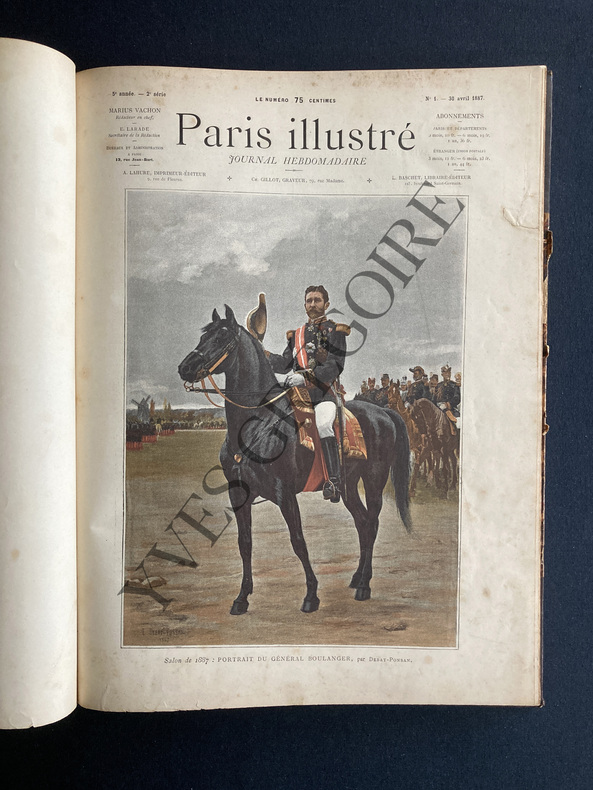
ABE-1418244602IN PLANO-RELIURE DEMI CHAGRIN EDITEUR-DU N°1 (30 04 1887) AU N°12 (16 07 1887)-ILLUSTRATIONS DE GRASSET ("LES FONDATIONS D'UN PILIER DE LA TOUR EIFFEL",COULEURS PLEINE PAGE), GORGUET (COUVERTURE N°2 COULEURS "LE VERNISSAGE AU SALON")(COUVERTURE N°12 "LA FETE DU 14 JUILLET:LES ILLUMINATIONS DU PONT DE L'ALMA ET DU TROCADERO",PLEINE PAGE COULEURS), JEANNIOT ("LE RETOUR DES TERRITORIAUX NOUVELLE GARE SAINT LAZARE",COULEURS PLEINE PAGE)("LE CONCERT MILITAIRE AUX TUILERIES",PLEINE PAGE COULEURS), F DE HAENEN ("L'EXPOSITION DES DIAMANTS DE LA COURONNE",COULEURS PLEINE PAGE), BRUN (COUVERTURE N°3 "L'EXPOSITION MARITIME DU HAVRE",COULEURS PLEINE PAGE)(5 DESSINS NOIR ET BLANC SUR 1P)("LA NAVIGATION DE PLAISANCE ARGENTEUIL",PLEINE PAGE COULEURS), FRAIPONT ("LES BORDS DE LA MARNE DE CHARENTON A NOGENT",4 DESSINS COULEURS SUR 1P)("L'EXPOSITION DES AZALEES DANS LES SERRES DE LA VILLE DE PARIS",COUVERTURE N°5,PLEINE PAGE COULEURS)(7 DESSINS NOIR ET BLANC SUR 1P INCENDIE DE L'OPERA COMIQUE)("LES OBSEQUES A NOTRE DAME",DESSIN NOIR ET BLANC PLEINE PAGE)("L'INCENDIE DE L'OPERA COMIQUE:LES RUINES DE LA SALLE",PLEINE PAGE COULEURS)("LA PECHE A PARIS",8 DESSINS NOIR ET BLANC SUR 1P)("LA FETE DU 14 JUILLET:LES PONTS ET LES QUAIS DE PARIS",COULEURS SUR 2P), MONTENARD (COUVERTURE N°4 "LE LANCEMENT DU MARCEAU A LA SEYNE",PLEINE PAGE COULEURS), COURBOIN ("LE SALON DE 1887",12 DESSINS SUR 2P)("LE SALON DE 1887",12 DESSINS COULEURS SUR 2P)(COUVERTURE N°6,"L'INCENDIE DE L'OPERA COMIQUE",PLEINE PAGE COULEURS), DEROY, ADRIEN MARIE ("LE PREMIER JOUR A LA CAMPAGNE",COULEURS PLEINE PAGE)(COUVERTURE N°7 "LA FETE DES FLEURS",PLEINE PAGE COULEURS),DEROY ("LA BOURSE DE COMMERCE DE PARIS",5 DESSINS COULEURS SUR 1P),GORGUET ("LES FETES DE FLORENCE:LE BAL HISTORIQUE AZU PALAZZO VECCHIO",DESSIN COULEURS SUR 2P)("LES FETES DE FLORENCE:ILLUMINATIONS",DESSINS COULEURS SUR 1P), JOB ("LA CHRONIQUE PARISIENNE",DESSINS NOIR ET BLANC SUR 1P)("EN ROUTE POUR LONGCHAMP GRAND PRIX DE PARIS",COULEURS PLEINE PAGE), HABERT DYS (SCENE HIPPIQUE),GUELDRY ("LA NOUVELLE SALLE DU MUSEE DE CLUNY",PLEINE PAGE COULEURS)
CARTOLINA FOTOGRAFICA DEL TENORE IN POSA SULLA RAMBLA ANIMATA E CON CARRI, , BARCELLONA 1901. INTERAMENTE AUTOGRAFA SPEDITA AL PADRE ALESSANDRO
AMA-214 clichés Bouté à Bruxelles, environ 100 x 145 mm, 2 petites épreuves d'amateurs.
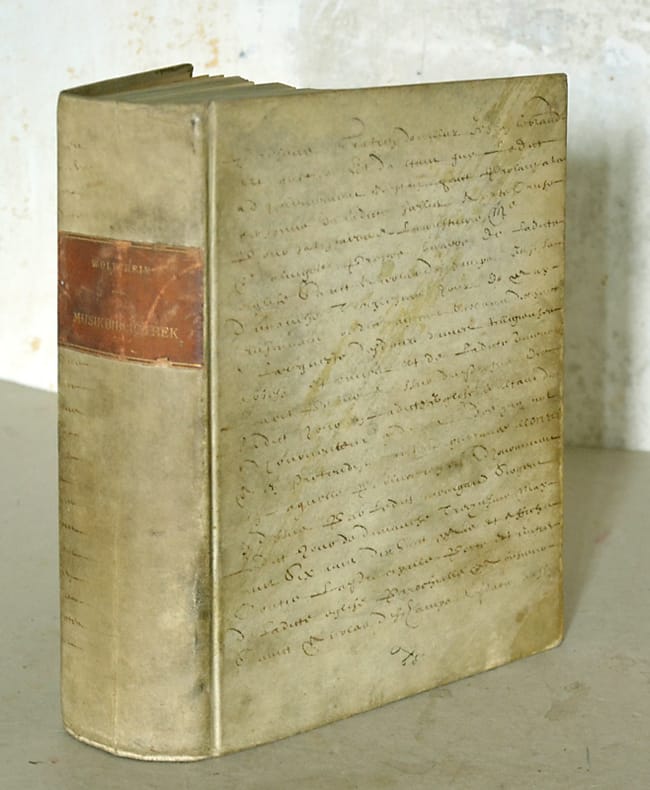
567967Berlin, Breslauer & Liepmannssohn, 1928. 4 parties reliées en un fort et grand in-8, bradel plein vélin (ancien), pièce de titre rouge, tranches bleues, couvertures sup. conservées, [5]ff.-287 (catalogue de 1541 notices) et [5]ff.-576 pp. (catalogue de 2491 notices), liste des prix d’estimations, bibliographie, et 2 vol. de 48 et 41 planches. Texte en allemand.
FOTO CM. 17X26 CON FIRMA E DEDICA AUTOGRAFE "AL MIO GENTILISSIMO COMPAGNO E SIMPATICO AMICO DANTE ZUCCHI", BARCELLONA ENERO 1902.
In 8°, br. edit. ill., pp. 509,(3), con 10 tavv. di ill. f.t. in fine ; bell’es. dell’opera prima di Bozzano, nella sua prima ed. impreziosita dall’invio autografo dell’autore «all’amico più caro» della sua «adolescenza» (cat. 12)
In folio (39×58 cm). Croquis par Ciardi, Dessinè sur pierre pad A. Lebedeff. Una mano coeva ha scritto con matita rossa il nome di Nápravník al margine basso della tavola. Bellissima caricatura del celebre compositore e direttore d’orchestra ceco Eduard Francevic Napravnik (Býšt, 24 agosto 1839 – San Pietroburgo, 23 novembre 1916). Napravnik, naturalizzato russo, fu una delle figure centrali della scena musicale russa dell’ottocento. Fu il direttore d’orchestra principale del teatro Mariinskij di San Pietroburgo per decenni. Diresse le prime di numerose opere russe, fra cui quelle di Musorgskij, Cajkovskij e Rimskij-Korsakov. “Nel 1854 entrò nella Scuola organistica di Praga, dove ebbe come professori Jan Bedrich Kittl ed altri, divenendo assistente professore. La generosità del suo insegnante gli permise di continuare gli studi. Nel 1861 ricevete un’offerta dalla Russia: il posto di direttore dell’orchestra privata del principe Jusupov a San Pietroburgo. Nápravník divenne organista e direttore assistente dei Teatri Imperiali nel 1863, secondo direttore nel 1867 e primo direttore, succedendo a Ljadov, nel 1869: mantenne il posto fino alla morte. Diresse le prime rappresentazioni di Boris Godunov di Musorgskij nel 1874, di cinque opere di Cajkovskij, fra cui La Pulzella di Orléans, Mazeppa e La dama di picche e cinque di Rimskij-Korsakov, fra cui Notte di maggio, La fanciulla delle nevi e La notte prima di Natale. Diresse anche i concerti della Società musicale russa. Nel 1914, dopo una fruttuosa carriera al servizio dell’opera russa, fu costretto ad interrompere la sua attività per motivi di salute. Nápravník è anche noto per aver diretto la seconda — ed assolutamente convincente — rappresentazione della Sinfonia n. 6 di Cajkovskij, il 15 novembre 1893, nove giorni dopo la morte del compositore. La prima, diretta dallo stesso compositore, non aveva avuto tanto successo, e per la mancanza di familiarità con una composizione tanto ricca di novità da parte del pubblico e dell’orchestra, e per la stessa direzione di Cajkovskij. Sotto la bacchetta di Nápravník e nell’emozione per la recente scomparsa del compositore, la sinfonia fu accolta come un capolavoro. Comprendeva anche alcune piccole correzioni apportate da Cajkovskij dopo la prima e quindi quella di Nápravník fu la prima rappresentazione della sinfonia nella forma in cui oggi la conosciamo”. La caricatura è opera del celebre compositore, flautista e caricaturista fiorentino Cesare Ciardi (Firenze, 28 giugno 1818 – Strel’na, 13 giugno 1877). Dopo una grande carriera in Italia ed in Francia nel “…1853 Ciardi partì per l’estero: Parigi e poi Pietroburgo dove resterà per anni come flautista dello Zar, direttori dei Teatri Imperiali e successivamente docente di flauto al neonato Conservatorio di Pietroburgo creato da Anton Grigorevic Rubinštejn; lì, per due anni (come scrive Fabbri, 1999), Pëtr Il’ic Cajkovskij studia flauto con Ciardi diventandone sincero amico; anche il celebre clarinettista Ernesto Cavallini lavorava nella stessa città entrando spesso in contatto con Ciardi. L’ultimo rimpatrio di Ciardi è del 1867 documentato dal programma di un ‘Gran Concerto Vocale e Strumentale’ a Prato dove Ciardi si esibì trionfalmente”. Esemplare in buone-ottime condizioni di conservazione. Rara.
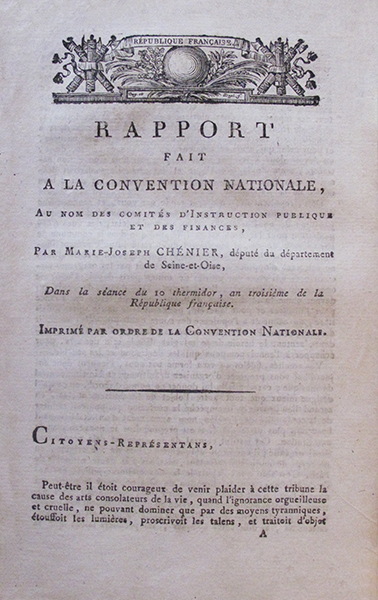
35055In-8, broché, couverture de papier moucheté moderne, 8 p. (qqs. rouss.) Paris, Imprimerie Nationale, Thermidor an III [1795].
In-8, broché, couverture de papier moucheté moderne, 8 p. (qqs. rouss.) Edition originale de ce rapport historique. Chénier propose à la Convention deux décrets qui seront votés le 16 thermidor suivant (3 août 1795). Il établit un Conservatoire de musique "dans la commune de Paris pour exécuter et enseigner la musique" composé de 115 artistes, détaille son organisation, ses institutions, sa bibliothèque et les conditions de recrutement des professeurs et des élèves. Le conservatoire est investi d’une double mission: participer à la célébration des fêtes nationales et former gratuitement des élèves des deux sexes dans "toutes les parties de l’art musical". Ce rapport est à l’origine de l’institution telle que nous la connaissons : l’Institut réorganisé prit le nom de Conservatoire national de musique, devenu le CNSMDP. (Martin & Walter, I, 7303). Bon exemplaire.
2021101660Paris Editions de Minuit 2021 1 vol. Broché in-12, broché, non coupé, 90 pp. Edition originale de ce "drame joyeux" en quatre actes, adaptation pour l'Opéra comique de la vie imaginaire consacrée à l'inventeur Nikola Tesla. Un des 73 exemplaires numérotés sur vergé de Schleipen, seul grand papier. En parfait état.
2021101660Paris Editions de Minuit 2021 1 vol. Broché in-12, broché, non coupé, 90 pp. Edition originale de ce "drame joyeux" en quatre actes, adaptation pour l'Opéra comique de la vie imaginaire consacrée à l'inventeur Nikola Tesla. Un des 73 exemplaires numérotés sur vergé de Schleipen, seul grand papier. En parfait état.
1882383501882 In-12 (170 x 120 mm), demi-percaline sable de l'époque, dos lisse orné d'un fleuron doré, titre doré, 190 p., portrait photographique de Wagner en frontispice et fac-similé de partition autographe dépliante. Paris, Charavay frères, 1882.
In-12 (170 x 120 mm), demi-percaline sable de l'époque, dos lisse orné d'un fleuron doré, titre doré, 190 p., portrait photographique de Wagner en frontispice et fac-similé de partition autographe dépliante. Edition originale. "Que le lecteur veuille bien ne considérer les premières pages de ce livre que comme un fragment des mémoires que je publierai peut-être un jour, non que ma vie vaille la peine d'être racontée, mais parce qu'elle a côtoyé souvent celle d'artistes très illustres. - Car il ne s'agit ici que de souvenirs, écrits comme pour moi-même, souvenirs recueillis en plusieurs années de relations suivies avec Richard Wagner" (avant-propos de l'autrice, p. 9). Judith Gautier et son mari Catulle Mendès avaient rencontré Wagner dès 1869. Fille de Théophile Gautier, actrice majeure du monde culturel de son temps, écrivaine, journaliste, et grande amie de Victor Hugo, Judith Gautier (1845-1917) est première femme entrée à l’Académie Goncourt en 1910. Elle a été une figure centrale de la cause wagnérienne en France. (Silège, 'Bibliographie wagnérienne française', p. 20). Rousseurs. Le feuillet de portrait est détaché.
P., Morihien, 1949. In-8 broché, couverture à rabats, 50 pp. Edition Originale. Ex. n°28/50 sur Marais Crève-Coeur, seul grand papier. Dos très légèrement insolé. Bel exemplaire. L'Enfant criminel, "discours pour être entendu" fut refusé à la radio. 'Adame miroir, seul ballet de Genet, sur une musique de D. Milhaud, dansé par Roland Peti, Serge Perrault et Skouratoff fut joué au Marigny.
1373638Paris: E. Dentu, 1892 in-12, 259 pages, frontispice dessiné et aquafortisé par Lalauze en 2 états, encadrements dessinés par Pallandre et gravés par Méaulle, tête de page et cul-de-lampe gravé à l'eau-forte par Henriot, fac-similé d'une lettre de la cantatrice. Demi maroquin havane, dos à nerfs, tête dorée (Marot-Rodde), infime éraflure au dos, couv. conservée, autrement superbe exemplaire de cette charmante édition originale. Tiré à petit nombre, un des 100 exemplaire sur papier de Hollande avec le frontispice en 2 états dont un avant la lettre sur Chine. (Vicaire III, 1062).
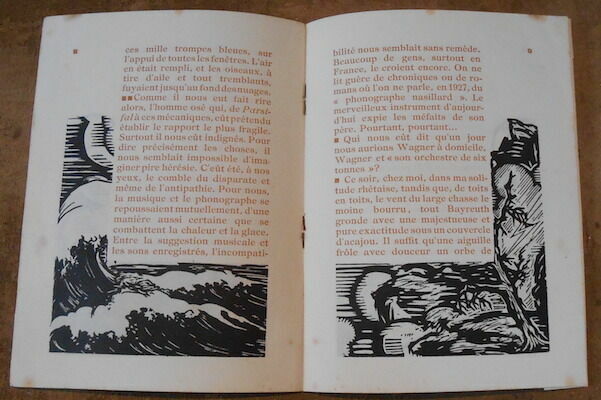
1927178961927. Paris Chez Couesnon et Cie 1927 e.o. tirée à 220 ex ex. non justifié sur vergé - Agrafé 13 5 cm x 18 cm 12 pages + 4 pages non num. de présentation des disques de Wagner ills in-texte - Texte de Henri Béraud bois dessinés et gravés au canif par Marcel Arthaud - Rousseurs sinon bon état ; plaquette éditée pour les disques Columbia à l'occasion du Festival de Bayreuth en 1927 ; on joint un programme de Tannhäuser pour le festival 1976
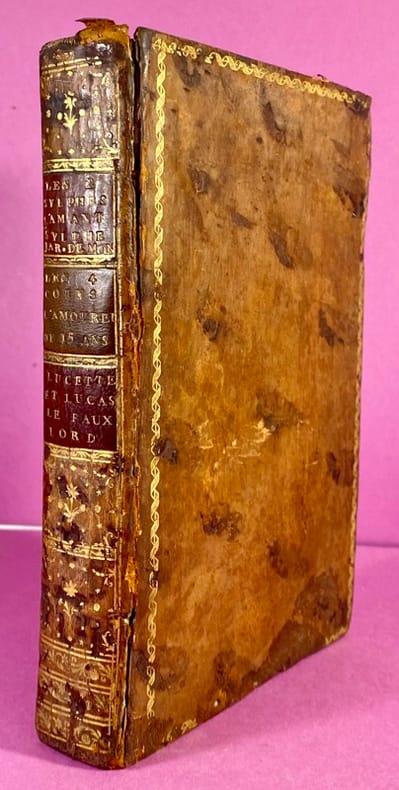
178318731783 Couverture rigide Paris, Ballard, Bastien, Brunet, Veuve Duchesne, 1771-1783. Un volume in-8 (19,5 x 12,5 cm), reliure plein veau fauve de l'époque, dos lisse orné de fleurons dorés, pièces de titre en maroquin rouge et brun, roulette dorée d'encadrement sur les plats, épidermures, charnière supérieure fendue, coiffe supérieure avec accroc, coins émoussés. Recueil de 8 éditions originales de pièces de théâtre et opéras-comiques, dont 3 imprimées par Ballard (imprimeur pour la musique et les "Menus-Plaisirs du Roi"). IMBERT, Les Deux Sylphes : Paris, Chez Jean-François Bastien Libraire, 1781, 46 (1) pages. PIIS, L'Amant Sylphe : Ballard, 1783, 60 pages. PIIS & BARRÉ, Les Jardiniers de Montreuil : Paris, Brunet, 1782, 34 (3) pages. MARMONTEL, Le Dormeur Eveillé : Paris, P.R.C. Ballard, 1783, 88 pages, feuillets légèrement jaunis. FALLET, Les Quatre Coins : Paris, P.R.C. Ballard, 1783, 41 pages. LAUJON, L'amoureux de Quinze Ans : Paris, Chez la Veuve Duchesne, 1771, 88 pages dont un feuillet de partitions. FALLET, Lucette et Lucas : Paris, Chez la Veuve Duschesne, 1781, 46 pages. PICCINNI, Le Faux Lord : Paris, Chez Brunet, 1783, 86 pages, petit manque à la page de titre, petite déchirure au dernier feuillet. Ce recueil constitue un témoignage précieux sur les divertissements représentés à la Cour sous Louis XVI. Bon état intérieur, bon exemplaire de ces éditions originales.
107875A Copenhague; Aux Dépens de l'Auteur, 1749, tome I /III en 2 parties vendu seul, complet des 2 parties (décembre 1748- Avril 1749), in-12 de 190x115x30 mm environ, titre en rouge et noir, 2ff. (Epître), faux-titre, 504 pages (pagination continue sur les 2 parties), plein veau marbré fauve, titres dorés sur dos lisse orné de caissons à fleurons et motifs dorés, coupes dorées, gardes marbrées, tranches jaspées. Petites restaurations sur la reliure, frottements et petites craquelures sur le cuir, des rousseurs, manque le cahier G (8 pages, Première partie de l'Amusement XXIX intitulé La Monarchie Universelle), une tache p. 333, sinon bon état. Rare.