91 résultats
160927318Frankfurt Hanover & Hanover: Apud Andrea Wecheli heredes Claudium Marnium & Joann Aubrium; Parts 2 & 3 Typis Wechelianis apud Claudium Marnium & Heredes Joan. Aubrii 1609. First published 1591-94. 1 vols. Sm. 8vo. Three parts in one volume. Vellum. Some soiling and browning of vellum and text ties lacking else a very good copy with bookplate of Alfred Jerome Brown. First published 1591-94. 1 vols. Sm. 8vo. This work was ultimately completed in seven parts. <br/> 'The Polish-German physician was the personal physician to both Emperor Ferdinand and Maximilian II in Austria. He wrote several medical works and was a follower of the Galenic school of medicine. He was one of the first to study the contagiousness of certain diseases. "Sixteenth Century Books in the National Library of Medicine" 1077 for the 1591-94 edition; Osler 2387 & 2388 earlier editions Apud Andrea Wecheli heredes, Claudium Marnium & Joann Aubrium; [Parts 2 & 3] Typis Wechelianis, apud Claudium Marnium & Heredes unknown books
169314396London: Printed by S. Roycroft for W. Bentley 1693. First edition. Hardcover. fair. 12mo. 32312pp. Original calf. Raised bands. Top and bottom part of spine crudely repaired with cello-tape. Scuffing rubbing and some staining to boards and spine. Wear to edges and corners. Pencil writing to front endpapers. Signature of previous owner on title page. Minor age browning to pages not affecting text. According to Cushing Querard Halkett and Laing Gabriel d'Emilliane is the pseudonym of Antonio Gavin Gauin. D'Emillianne was born in Spain became a secular priest in the Church of Rome and in 1715 was appointed minister of the church of England. Binding in fair interior in good condition. Printed by S. Roycroft for W. Bentley hardcover
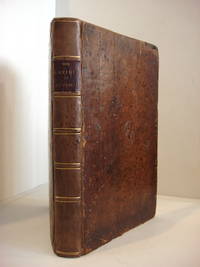
1630007124London: Godfrey Emondson and Thomas Alchorne 1630. First Edition . Hardcover. Very Good. 12mo - over 6¾ - 7¾" tall. VG 1st ed 1630. In contemporary calf corners a little worn. Spine relaid raised bands decorative gilt tooling & titles. Internally 2 5 dedication 1 8-4 ff 142 pp 2 blank some offsetting worm marks blank fep nearly loose ink name & notes to fpd Robt Chambers 1767. 176132 mm. ESTC S109765. Allibone 508. Dodderidge who as a lawyer was known as the Sleeping Judge not because of any shortcoming on his part but because of his habit of concentrating on legal argument with eyes firmly closed. ODNB. <br/> <br/> Godfrey Emondson, and Thomas Alchorne hardcover
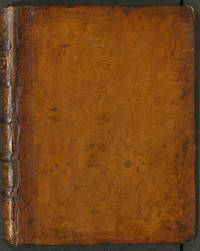
1630007469London: Godfrey Emondson and Thomas Alchorne 1630. First Edition . Hardcover. Very Good. 12mo - over 6¾ - 7¾" tall. VG 1st ed 1630. In modern calf to style by Period Binders blind tooling. Spine raised bands gilt tooling. Internally 16 142 pp new endpapers ink initials to tp J.T. evidence of removed bookplate to fpd signatures: 1 ff C2-C4 1-4 A-S3. 183131 mm. ESTC S109765. Allibone 508. Dodderidge who as a lawyer was known as the Sleeping Judge not because of any shortcoming on his part but because of his habit of concentrating on legal argument with eyes firmly closed. ODNB. <br/> <br/> Godfrey Emondson, and Thomas Alchorne hardcover
1609WB17560London: Print. for Math. Lownes 1609. Hardcover. Very Good. 2 parts in one volume folio 286 x 188mm. Pagination: 8 1-7 1-204pp. i. e. 208; 1-218pp. 2 with final blank. Signatures: A4 3 frontis. B-R6 S5 Cc4 B-V6 some signatures missigned. Engraved title of architectonic frame pair of Roman soldiers and at top portrait of Henry Frederick Prince of Wales; through the arch a military camp on either side of a river with shore in the foreground and hills in the background Imprint details are an after addition. Full-page woodcut oval portrait frontispiece of Julius Caesar wearing laurel wreath inscribed Ivlivs Caesar Dictator Perpetvvs Veni Vidi Vici Aestatis Svae 56 present and bound in before the note to the Reader A1. 12 engraved plates of various battles military formations and encampments of Caesars Roman army including Battles with the Helvetii Ilerda and the Gallic wars one labeled Cicero Besieged all but 2 double-page or folding. Woodcut engraved chapter head and tailpieces. Dedicated to the soldier Sir Francis Vere d. 1609. Verses by William Camden Joshua Sylvester Samuel Daniel and Ben Jonson. Contemporary calf gilt scrolling arabesque centerpiece on covers manuscript binders waste remnants in front hinge; extremities somewhat rubbed spine chipped at top and missing bottom compartment lacking ties and front endpapers; light marginal dampstaining some folding plates closely cropped some marginal fraying of title and two preliminaries small crack in inner portion of plate facing p. 86 in the first part later marginal note in ink on p. 190 in second part; overall a solid copy with all plates present. Later signature of Rebecca Ayre on title verso; a person seemingly untraceable it is notable at least this name suggests female ownership over some point in the life of the volume. <br/><br/>First published in 1600 in London by Peter Short dwelling on Bredstreet hill at the signe of the Starre two new editions of the Observations upon Caesars Commentaries appeared in 1604 one issued for Mathew Lownes and one for William Ponsonby and again three more editions appeared in 1609 two are linked to the printers office of Mathew Lownes ESTC S121465 as here and ESTC S91812 and the third ESTC S121472 indicates no publisher. All of the 1609 issues have variations in the titles and imprints as common. Mathew Lownes was a prominent bookseller in London at the Bishops-head in Pauls Church-yard from at least 1595 to 1625; Lowness activity is associated with several important publications on Roman imperial history between 1604 and 1623 which likely put him into the milieu of the author Sir Clement Edmondes d. 1622 who was by 1600 also an influential government official in the House of Commons and City of London. Edmondes wrote his observations on Caesars Commentaries the Gallic and Civil Wars to propagate the ways he believed ancient Roman military tactics might aid contemporary warfare. ODNB and larger scholarship notes that Edmondes carefully molded his remarks and included additional subjective material which was later seen as an attempt to influence the readers experience. This is an important publication thus for exemplifying the intent of some Roman histories written in the early Stuart years. It was popularly received in his time and Edmondes believed his efforts to draw out the true heroism of an ancient republic would help among other ideas the question of how to deal with an invasion of England. ESTC S121465. Print. for Math. Lownes hardcover books
1604H16669London: Printed for Mathew Lownes 1604. First printing. Hardcover. Good. Quarto 10.75 x 8 inches 18th century vellum over boards good copy light restoration to outer joint and inner hinges front endpapers somewhat soiled and stained two modern bookplates on pastedown and on flyleaf; with rarely seen portrait frontispiece of Caesar engraved title page 3 double-page plates 2 full page plates -- lacking one double page plate. Contents otherwise very good and clean minor occasional wear and soil occasional very short tear to edges. 7 199 1 138 pp. A copy in a contemporary binding and with all plates sold at Christie's in 2008 for a total of over $7300. STC 7490. Edmondes ca. 1568-1622 was an English government official likely in the employ of the Earl of Oxford Edward de Vere often mentioned as a possible author of Shakespeare plays. In 1600 he published a commentary on the first five books of Caesar's Commentaries dedicated to Sir Francis Vere Born about 1560 Francis was the second son of Geoffrey Vere of Crepping Hall Essex a younger son of John de Vere 15th Earl of Oxford. In this 1604 edition Edmondes augmented the previous edition with commentaries on books VI and VII and a short dissertation on the modern art of war. There is a further slight familial connection with Shakespeare. John Bernard 1604-1674 married firstly Elizabeth daughter of Sir Clement Edmondes; they had four sons who all predeceased him and four daughters. His second wife Elizabeth was the granddaughter and only surviving descendant of William Shakespeare. It is unlikely however that Shakespeare consulted Edmondes regarding the play Julius Caesar; the play was first performed in 1599 a year before Edmondes' commentary appeared. Good. Printed for Mathew Lownes hardcover
16711002105London: E.T. and R.H. for H. Brome B. Tooke and T. Sawbridge 1671. First edition in English of the complete Colloquia Familiaria of Erasmus first published in 1518 and expanded by Erasmus over the next fifteen years a lively collection of Latin dialogues that found a readership far beyond the Renaissance schoolroom. Originally intended to model colloquial conversation for students of Latin the dialogues feature pointed free-thinking exchanges on modern political religious and philosophical questions. In "Of the Abbot and Learned Woman" an ignorant abbot tries and fails to get the better of the classically educated Magdalia a character almost certainly based on Thomas More's eldest daughter: "I think thou art some sophistress thou protest so wittily." Magdalia: "I will not tell thee what I think thou art." And later: "I have often heard it usually spoken that a wise woman is twice a fool." Magdalia: "Indeed it useth to be said so but by fools." The Colloquia Familiaria was widely read and debated across Europe drawing immediate notice for its anticlerical satire: "its influence on the dialogues of Reformation Germany and Tudor England is a critical commonplace" Zlatar Reformation Fictions 11. The original purpose of the Colloquies as a text for teaching Latin postponed its direct translation; this first complete English edition was published more than 150 years after the work's first appearance. The edition opens with a short life of Erasmus and concludes with the first appearance in English of De utilitate colloquiorum Erasmus's 1526 defense of the Colloquies published after the Sorbonne condemned the book for impiety. In response Erasmus makes a case for the educational value of his dialogues' humor: "I cannot tell whether any thing be learned more successfully than that which is learned in playing." Despite his efforts the Colloquies would remain on the Papal Index of banned books through the end of the nineteenth century. Wing E-3190; PMM 53. A very good copy of a humanist landmark in a handsome contemporary binding. Octavo measuring 6.5 x 4.25 inches: 8 555 1. Contemporary Cambridge-style full speckled calf boards ruled and ornamented in blind raised bands red morocco spine label lettered and decorated in gilt top edge stained black. Engraved frontispiece portrait of Erasmus. Final leaf containing second page of bookseller catalogue excised. Joints and spine head expertly repaired; evidence of bookplate removal on front pastedown; effaced signature on title page; some running titles shaved. E.T. and R.H. for H. Brome, B. Tooke, and T. Sawbridge unknown books
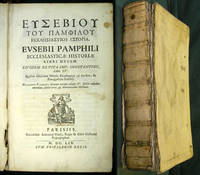
165926670Parisiis Paris: Excudebat Antonius Vitre 1659. First edition thus. Vellum blind stamped with device and rules raised bands. Spine curled and partially detached at the bottom boards soiled and worn front board endpaper first blank and half-title loose a few notations to title page and occasionally in text some light scattered foxing small chips to the lower corners of three leaves not affecting text otherwise quite clean. 4 48 14 665 12 320 7 pp. Engraved device on title page engraved initial letters and head pieces. Folio 33 cm. Title also in Greek: Eysebioy toy Pamfiloy Ekklesiastike istoria. Collation: a'4 e'4 i'4 o'4 u'4 aa4 ee2 4 4 A-Pppp4 Qqqq2 a-rr4 ss2 t1 Rrrr1. Folio. 14 3/8 x 9 inches. Double columns in Greek and Latin. Eusebius bishop of Caesarea b.260-70 and contemporary with Constantine the Great is rightly called the Father of Church History. "The position of Eusebius at the close of the period of persecution and in the opening of the period of the imperial establishment of Christianity and his employment of many ancient documents some of which have since been lost give these works a peculiar value" CE. The work was later added to by others including Socrates Sozomen Theodoret and Evagrius. The best and most important edition is that of Henri de Valois Valesius who published his first edition of the Greek text with a new Latin translation and with copious critical and explanatory notes at Paris in 1659 which also included Eusebius' Vita Constantini the remainder of the collection of the early Greek historians of the Church was published in two subsequent folio volumes ending in 1673. "For the elucidation of Eusebius' History we owe more to Valesius than to any other man. His edition of the text was an immense advance upon that of Stephanus and has formed the basis of all subsequent editions while his notes are a perfect storehouse of information from which all annotators of Eusebius have extensively drawn. Migne's edition Opera II 45-906 is a reprint of Valesius' edition of 1659" Schaff Post-Nicene Fathers 98. ABPC shows only one copy has come up at auction in the last 40 years at Quaritch in 1984. Institutional bookplate on the free front endpaper noting the book was a gift of Michael J. O'Farrell the first Bishop of the Diocese of Trenton with his bookplate on the half title. Brunet 1110. Excudebat Antonius Vitre hardcover books
1650B6295Rome/Romae: Formis Io. Iacobi de Rubei apud templum S. Mariae de Pace. Undated c.1650-latest c.1690 most probably c.1660 c.1675-1677. . Lacks folding double-page plan of the Villa Pamphilia and the first of 5 folding plates “Primusâ€. Otherwise a very good example plates are crisp and clean. . Edition: First and only edition. Italic and Roman type. Tex Binding: Contemporary panelled full burgundy morocco double-gilt filleted; spine with six 6 raised bands gilt lettered title on two with remaining compartments gilt ornamented; all edges gilt; contemporary endpapers with watermark of a fleur-de-lis within two concentric circles. Wide margin paper. Notes: An architectural plate book depicting statues and fountains displayed in Villa Pamphili an important 16th-17th century Roman villa designed by the painter Giovanni Francesco Grimaldi 1606 - 1680 and Alessandro Algardi 1598 - 1654 followed by the construction of the garden layout; …1652-1657. The publication of the present work printed by G.G. de Rossi possibly c.1675-1677 was commissioned by Pamphili’s son and heir Giambattista with the engraver Dominique Barrière documenting the statues placed both in cornices of the villa and the gardens and with further plates included such as some by Giovanni Battista Falda's ‘Le fontane di Roma’ fountains of Rome plus general views of the villa and its gardens.<br> <br>Giovanni Battista Falda c.1643 – 1678 Rome was an Italian architect engraver and artist. He is known for his engravings of both contemporary and antique buildings and structures of Rome. Falda studied and worked under Bernini; his draughtsmanship drew G. G. de Rossi’s attention. He became well-known for his “Le fontane di Roma†Fountains in Rome and “Palazzi di Roma†Palaces of Rome particularly popular with visitors to Rome.<br> <br>Giovanni Giacomo de Rossi Italian engraver and printer active in Rome during the second half of the 17th century. His father Giuseppe de Rossi 1570-1639 was the founder of the most important and active printing press of the 17th century in Rome. The press started in 1633 it was then passed to Giovanni Giacomo and his brother Giandomenico; and later to Lorenzo Filippo. In 1738 it became the “Calcografia Camerale†from 1870-1945 the “Regia Calcograficaâ€; today it is known as the “Calcografia Nazionaleâ€. Here are conserved amongst many others the plates of Giambattista Piranesi 1720-1778. Giovanni Giacomo de Rossi the most involved of all family members who ran the press from 1638-1691 took the company to its height of success. He printed etchings for artists including Giovanni Benedetto Castiglione 1609-1665 Pietro Testa 1612-1650 and Giovan. Francesco Grimaldi 1606–1680.<br> <br>Barrière c.1622–1678 was a French painter and engraver. Barrière was born at Marseilles in about 1622. He spent most of his career in Rome where he engraved a considerable number of plates after Claude and other landscape painters as well as other subjects. They are neatly etched in the manner of Stefano della Bella. He died in Rome in 1678. <br> <br> Size: Folio 434x312mm. Illustration: Fine illustrations of the famous Villa Pamphili the most important architectural constructions of Baroque Rome with its Italian garden and the fine collection of antiquities. <br>Illustrated dedication with head- & tail-vignettes and a large rubricated initial; plus a total of 82 full page and double page oblong folding copper-engraved plates.<br> References: Woodfall G.; British Museum: Catalogue of Maps Prints Drawings Etc. Forming the Geographical and Topographical Collection vol. II p. 146 1829. Rossetti 4827. Cicognara 3911. Berlin Katalog 3491. Kissner 394. Vinciana 4360. Giorgetta F. Hortus libro Category: Book Europe Italy; Book Art Architecture & Design; Book Plate Books General; Formis Io. Iacobi de Rubei, apud templum S. Mariae de Pace. hardcover
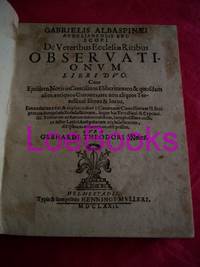
1672025969Helmestadii: Henning Mulleri Muller 1672. Book. Very Good. Hardcover. 8vo. pp. 16 504 48. Printer's device to title page engraved head and tail pieces. Later Victorian attractive half speckled calf to style with 4 raised bands and gilt decoration to the spine red title label gilt; marbled paper covered boards. All edges dyed red. Binding very good with a little general wear only corners rubbed. Contents clean and tight a few pages lightly tanned with a few spots but generally very clean. A very good copy. Henning Mulleri [Muller] Hardcover
1668V70198Antwerp: Andreae Frisi 1668. Hardcover. Good. Copperplates 45 numbered of cruel tortures including the engraved pictorial titlepage by Antonio Tempesta large copperplate printer's device of man consulting books in a library optimi Consultores Mortui. Duodecimo contemporary calf blind rules with corner floral ornaments spine with gilt label top cover nearly detached tips worn chipped to head/foot of spine All edges red sprinkled. Engraved Titlepage of the stoning of a martyr Titlepage 19pp dedication & preface 1p blank 576pp 47pp index 1p blank A-Cc12. Page 456 with small adhesion obscuring 2 or 3 letters and initial. Inscription E.lib R.S. on blank back of engraved Title. Endpapers bit browned else a clean tight neat copy needing repair to front hinge. All copperplates are present shewing gruesomely detailed plates of all the possible torture methods being administered to the martyrs which also are in crisp V.G. condition.The early editionshad fewer plates from 25 with later additions Andreae Frisi hardcover
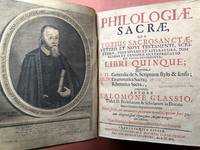
1691H3758Frankfurt and Leipzig: Apud Christophorum Davidem Fleischerum 1691. Hardcover. Very Good. Published 1691 small quarto 8.75 inches 22 cm old full vellum very good light splitting along front outer joint signs of a label removal to spine probably not institutional but private contents moderately tanned throughout. An impressive looking tome 80 1495 137 pp. This is the author's principal work published first in 1623 and considered a turning point in Biblical studies and criticism moving the entire field in the direction of Lutheran theologian Phillip Spener the Father of Pietism the principal arguments of which is to place individual faith and piety as central to Christian theology and pedagogy. Glassius also was a linguist and did much work on Hebrew especially its variations and various cognates. Apud Christophorum Davidem Fleischerum hardcover
1672QQ0466No publisher 1672. Original full dark brown mottled calf triple blind fillets framing boards triple fillets parallel to spine to front and rear boards. Raised bands blind decor and red gilt label to spine. Remains of blind decor to board edges. Hinges secure cords all holding firm though leather of front hinge cracked except for a 1cm section at base and rear board is cracked at top over hinge c. 3cm. Small loss to top spine. 8vo 11.8 x 18.4cm. All edges marbled faded. Endpapers cracked at gutters. Recent bookplate and minor pencil annots to inside front board. Typographic headpiece. Very minor tidemark to bottom margin of pp. 437-444. A response to Stillingfleet's 'notorious book on Idolatry among Catholics' Clancy the 1671 'Discourse concerning the idolatry practised in the Church of Rome' which was itself answered by Daniel Whitby and Stillingfleet himself. The 5pp. dedication to the queen is signed 'T. G.' for Thomas Godden pseudonym of Thomas Tylden or Tilden 1622-1688 Roman Catholic controversialist. The son of a tanner from Kent Tylden converted to Catholicism as a young man and by 1656 was president of the English College in Lisbon where he was created D.D. in 1660. In 1661 he was appointed chaplain and preceptor to Princess Catherine of Braganza: he accompanied her to England and was among the witnesses to her marriage to Charles II after which he remained a member of her household serving as chaplain and treasurer: 'it is said that he taught her to speak English' ODNB. According to Bishop John Russell Tylden 'spent his life at court as though in the cloister and "he was very dear to the Queen and not disliked by the King"' ODNB. His refutation of Stillingfleet in Catholicks No Idolaters was his 'most important work' ODNB. This copy has the separate section of 48pp. before the main body of the work called for in ESTC but according to Clancy 'not to be found in most . copies'. ESTC R16817; Clancy 962.3. Robust packaging. Tracking is always added to USA orders. It can be added to other overseas orders on request. Used books are exempt from USA tariffs. 1st edition. Hardcover. Very Good. 32 48 448pp. No publisher Hardcover
1689V66520London: Leake for Meredith & J.H for Meredith 4th edition 1689 1690. Hardcover. Very Good. Two Volumes in One octavo near contemporary panelled calf top cover detached/tips worn TPvi232pp; 197pp catal of books by Goodman & others. Two pages with short marginal tears neither touching text but one with narrow strip of paper loss to margin. With half title separating parts One & Two but through paginated then full titlepage to Part III with diff. printer but same publisher In the publisher's catalogue Goodman is given as the author of Winter-evening. The third part was first printed in 1686 for the third edition of the first two parts and here is reprinted for Meredith to augement Meredith's printing of the first two parts for the first time by this publisher WING 11331139. A philosophical discussion between four friends of differing beliefs including an agnostic a pious and a frivolous temperament. In dialogue form. Leake for Meredith & J.H for Meredith 4th edition hardcover
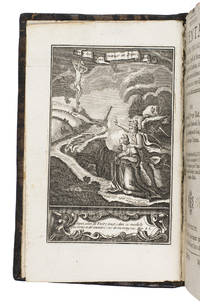
160922968Brussels: Rutger Velpius 1609. Contemporary brown calf sewn on 4 supports with corresponding raised bands on the spine gold-tooled spine with the title lettered in gold in the second compartment red sprinkled edges. 8vo. With a small woodcut vignette on both title-pages some woodcut head- and tail-pieces and woodcut decorated initials. Ad 1 with an engraved illustration depicting a Biblical scene mounted as a frontispiece on the verso of the second free flyleaf. 2 works in 1 volume the 2nd in 2 parts. With:2 GLEN Jean Baptise de and Aleixo de MENEZES. La messe des anciens Chrestiens dicts de S. Thomas en l' évesché d' Angamal és Indes Orientales . Brussels Rutger Velpius 1609. Ad 1: First French edition of António de Gouvea's account Jornada do Arcebispo de Goa Dom Frey Aleixo de Menezes first published in Portuguese in Coimbra 1606. It details the Jesuit-Portuguese success in aligning the St. Thomas Christians of Malabar with the Latin Church which was related to the trade struggles in the 16th and early 17th century between the Portuguese and their European and Indian rivals. The original Portuguese text was translated into French by Jean Baptiste de Glen 1552-1613 an Augustinian theologian. There are two issues of this edition with two different imprints: one published by J. Verdussen in Antwerp and one our copy published in Brussels by R. Velpius. The text was also translated into Spanish by Francois Munoz but remained in manuscript. Ad 2: Published under a separate title these two texts do in fact belong together. The Historie orientale and the two texts in La messe des anciens Chrestiens form a single book. Following the dedication to Abbot Gilles de Sprimont is the Remonstrance Catholique by Jean Baptise Glen. He expands on the Histoire Orientale and presents the edifying lessons the inhabitants of the Southern Netherlands can draw from it including interesting remarks on the Christian Syro-Malabar ritual and liturgy purified from the influence of Nestorianism a Christian heresy that held Jesus to be two distinct persons.The subsequent part is by Aleixo de Menezes on the Mass of the first Christians La messe des anciens Chrestiens on pp. 77-123 in which he deals with the content of the Mass and in which he gives the full Latin text. These two parts together published as one book are considered as a major contribution to the history of Christianity in India in general and the St. Thomas Christians on the Malabar Coast in particular.With a contemporary manuscript inscription on the recto of the second free flyleaf and a contemporary manuscript inscription on the title-page of ad 1. The binding shows some signs of wear second free flyleaf the title-page and the the first page of the dedication to ad 1 are restored in the upper outer corner the top margin is cut rather close to the text without affecting it. Otherwise in good condition.l Bibl. Belg. III G3; Cioranescu 33232 33233; Lach Asia in the Making of Europe III I pp. 320-1 395; USTC 6167300 7 copies; cf. STCV 6689348 1 copy other issue Rutger Velpius, hardcover
169619590Lugduni Batavorum: Hackium Boutesteyn Vivie Vander AA & Lucthmans 1696. Two volumes bound in one of this first collected edition of Giraldi's works; 20 772 26 928 30 pages Index Rerum et Verborum 1 page Catalogus Amicorum Lilii Quorum Meminit in epistola Direptionis Urbanae.; paginated in two columns except for the 'Varia' section; collated complete; text printed double-column; engraved illustrated frontispiece 7 full page and 2 double-page plates beautifully accomplished by Avele after Botard superb engravers' work with full and lively compositions realistically posed and drawn with action; title page with publishers' woodcut ornament and printed in red and black; the text with title and endpiece ornamentation and initial ornamentation as well nicely printed and with good wide margins; 11th ed. Britannica cites Giraldi Giglio Gregorio Lilius Gregorius Gyraldus 1470-1552 Italian scholar and poet born at Ferrara ".where he early distinguished himself by his talents and acquirements. he removed to Naples hwere he lived on familiar terms with Jovianus Pontanus and Sannazaro; and subsequently to Lombardy where he enjoyed the favour of the Mirandola family. At Miland in 1507 he studied Greek under Chalcondylas; and shortly afterwards at Modena he became tutor to Ercole afterwards Cardinal Rangone. About the year 1514 he removed to Rome where under Clement VII he held the office of apostolic protonotary; but having in the sack of that city 1527 which almost coincided with the death of his patron Cardinal Rangone lost all his property he returned in poverty once more to Mirandola whence again he was driven by the troubles consequent on the assassination of the reigning prince in 1533. The rest of his life was one long struggle with ill-health poverty and neglect; and he is alluded to with sorrowful regret by Montaigne in one of his Essais i. 34 as having like Sebastian Castalio ended his days in utter destitution. He died at Ferrara.a man of very extensive erudition; and numerous testimonies to his profundity and accuracy have been given both by contemporary and by later scholars. His Historia. marked a distinctly forward step in the systematic study of classical mythology; and by his treatises De Annis et Mensibus and on the Calendarium. he contributed to bring about the reform of the calendar which was ultimately effected by Pope Gregory XIII.Giraldi was also an elegant Latin poet."; approximately 15" tall by 10"; bound in full probably contemporary leather; seven raised spine bands gilt floral roll tool rectangles with fruit & leafy spray devices at corner of inner box surrounding a heavily-impressed and complex gilt central device with heroic figure surrounded by winged angel figures & cherubs figure holding a spear and a book shield below with cross device and the motto Sic Itur Ad Astra onward to the heavens; all edges tinted red; spine leather covering 1/3 gone very charred and worn; both boards still attached and the binding firm; first leaves a bit maladjusted at the inner margin from the heaviness of the binding pulling at them; text block with some spotting and darkening section at back with old bit of creasing at top corners; nevertheless mostly very fresh and clean free from markings or wear; in good condition and worthy of a rebacking or rebinding. First Edition. Leather Binding. Good. Hackium, Boutesteyn, Vivie, Vander AA, & Lucthmans books
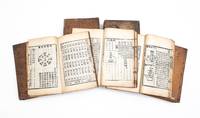
1634107041634. Several woodcut illus. in the text. 25 vols. Folio 346 x 230 mm. orig. wrappers rubbed & several with some wear three vols. with some staining occasional minor foxing orig. stitching. HansÅng: colophon in Vol. 2 dated 1634.<br /> <BR> <BR> Second edition 1st ed.: 1613 of a very great rarity “the greatest of all Korean medical treatises which devotes its last chapters to acupuncture and moxibustion.â€â€“Lu & Needham Celestial Lancets p. 263n. It is considered to have one of the finest classification systems in traditional East Asian medicine.<br /> <BR> <BR> HÅ Chun 1539/46-1615 was a court physician of the Yangcheon HÅ clan during the reign of King Seonjo 1568-1608 of the Joseon dynasty in Korea. During the Japanese invasion of Korea 1592-98 HÅ faithfully accompanied the king through numerous difficult campaigns. Following the conflict the king commissioned HÅ to write a medical book for his citizens who suffered from post-war famines and epidemics. In 1610 HÅ completed his masterwork which was first published in 1613 an even rarer book.<br /> <BR> <BR> The TongÅi pogam is divided into five broad sections: internal medicine four vols. external medicine four vols. miscellaneous diseases 11 vols. herbal remedies three vols. and acupuncture one vol. all preceded by a most useful two-volume Table of Contents. In the first section on internal medicine HÅ describes the interdependence of the liver lung kidney heart and spleen. The section on external medicine explains how the skin muscles blood vessels tendons and bones allow for movement and maintenance of posture. The part on miscellaneous diseases describes the symptoms diagnoses and treatment methods of various diseases. HÅ’s remedies rely on readily found medicinal herbs and plants and he provides impressively detailed instructions on how to extract maintain and consume the herbs. The last section explains acupuncture strategies.<br /> <BR> <BR> The work spread to other East Asian countries like China Japan and Vietnam and is still regarded as one of the classics of Asian medicine. “The Treasured mirror of eastern medicine was in fact one of the very few non-Buddhist works written outside China that achieved a wide circulation within China. It was written by HÅ Chun 1539-1615 as a summation of Korean medical knowledge and was printed in Korea in 1613. Copies were sent directly to China in 1721 and 1728 and a copy reached Japan in 1681. A revised edition was printed in Japan with glosses in 1724 and again in 1799; copies of the 1799 edition were sent to China via Nagasaki in 1811 and 1837. The Treasured mirror of eastern medicine was reprinted in China in the eighteenth and nineteenth centuries either from the Korean edition or from one of the Japanese editions with the glosses removed. This was a rare sign of high esteem for a book written outside China.â€â€“Peter Kornicki Languages Scripts and Chinese Texts in East Asia Oxford: 2018 p. 144.<br /> <BR> <BR> HÅ Chun remains famous in Korea today: there are several recently created television series and films about him and his achievements; a best-selling novel about him was published in 1990; and a museum in Seoul is devoted to his life and works.<br /> <BR> <BR> A very good “married†set with the first volume of miscellaneous diseases coming from another set. One volume has a hole to about ten leaves touching a few characters.<br /> <BR> <BR> â§ For an extended and excellent discussion of the contents and importance of this work see Yeonseok Kang “History and Characteristics of Korean Medicine†in Routledge Handbook of Chinese Medicine 2022 pp. 507-08. unknown
1631026131Lugduni Batavorum Leiden Holland: Apud Franciscum Hegerum 1631. Book. Very Good. Vellum. ffep title page 26 preliminary pages 384 plus 2 misnumbered pages between pp. 244 and 245 numberd 245 and 244 respectively and 2 blank pp. between pp. 266 and 267 colophon blank rfep. Engraved title page with portrait medallion "vatis amatoris iulia sculpta manu"; author's portrait on verso of tenth preliminary leaf. Page 353 mis-number 353 and p. 361 misnumbered 369 but page sequence is correct. Vellum overlapping fore-edges Vellum is soiled spine darkened with chip in red leather label. Front hinge is split between ffep and title page but binding stitching is secure and tight. Owner's name and pencil markings on ffep. Text block is very tight pages are very clean throughout with only a corner off of leaf five and a tiny closed tear in the margin of pp. 105-106 neither of which affects the text. Two lines underscored on p. 151. Latin. Iohannis Secundi Johannes Secundus Janus Secundus Jan Everaerts 1511-1536 was a New Latin poet of Dutch nationality. He wrote elegies epigrams odes epistles epithalimia itineraries and other prose. His most famous work was Liber Basiorum Book of Kisses which is among the works in this volume. The compiler Peter Schrijver 1576-1660 was was a Dutch writer and scholar on the history of Holland and Belgium. A remarkably tight and clean copy of this very scarce book. Size: 12mo. Apud Franciscum Hegerum Hardcover
16113462Latin manuscript on vellum with large 6 in diameter suspended black wax seal of James I of England and autograph of Anne of Denmark dated July 23 1610 granting title to Corrodownan Manor in County Cavan Ulster to one John Browne Gent. of Gorgiemill near Edinburgh and his descendants during the Plantation i.e. colonization of Ulster under James I beginning in 1609. The colonists were settled on land confiscated from the Irish inhabitants following the conquest of Ulster 1594-1603 under James's predecessor Elizabeth I. The Plantation was intended to consolidate royal control of Ulster and repress rebellion by importing a substantial Protestant population. Like John Browne and indeed James himself many of the new colonists were Scottish. Some of these families went on to form the backbone of the Protestant Ascendancy in the province. John Browne and his heirs however were not among them. Sir George Carew sent by the king in 1611 to report on the progress of the Plantation noted that "he Browne . sent an agent who took possession set the lands to the Irish returned to Scotland and . performed nothing." The land was sold in 1613 to another Scottish colonist Archibald Acheson. Acheson's descendants were raised to the peerage of Ireland in 1806 as Earls of Gosford and still owned the property in the late nineteenth century. The first nineteen lines of the document grant the Scottish Browne the rights and privileges of James's English and Irish citizens. Especially notable are the requirement that the grantee maintain an adequate supply of arms for defense against the king's enemies lines 77-80 the attempt to encourage the growth of towns 74-76 and the ban on sale of the property to "mere Irish" or to anyone who failed to acknowledge the sovereign as head of the church thus excluding all Catholics by swearing the Oath of Supremacy 114-121. See Rev. George Hill The Conquest of Ireland. An Historical Account of the Plantation of Ulster at the Commencement of the Seventeenth Century 1608-1620 Belfast 1877 308; idem Plantation Papers. Containing a Summary Sketch of the Great Ulster Plantation in the Year 1610 Belfast 1889 188-190; F.J. McCaughey Arvagh. Sources for a Local History Arvagh 1998 16.; Moiré chemise lined with exact recess for seal housed in handsome ruled red morocco clamshell case with gilt title to front cover and raised bands gilt particulars and decoration to spine; gilt rolled edges. Two leaves 65 x 81 cm; the first illuminated with a portrait of the king. Stain to upper left see image.; 65 x 81 cm; 1 pages; Signed by Notable Personage Related; All shipments through USPS insured Priority Mail. . hardcover books
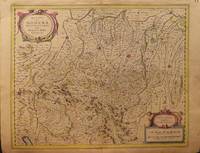
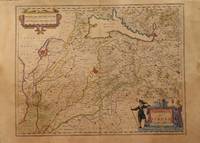
16403044<p>Amsterdam. Very Good. C.1640. Map. Verso text in Latin. Orginal 17th century hand color. Foxing to lower edges. Image size 19 1/3"- 15 1/2". Paper size 20 1/2"- 15 1/2" ; All shipments through USPS insured Priority Mail. .</p>
16403045<p>Amstedam. Very Good. 1640. Map. Image size 19"x 15 1/2". Paper size 17"x23". Orginal 17th century hand coloring. ; 8vo 8" - 9" tall; All shipments through USPS insured Priority Mail. .</p>
1691Alibris.0035927Louvain Belgium: Aegidium Denique. 1691. 8th ed. Full leather. Fair. Ex-library. Vol. 1 hinges are splitting large chips at top of spines small label at bottom of vol. 1 call number at bottom of vol. 2 covers worn & slightly bowed labels inside front covers vol. 2 front hinge is partly-separated inscription. 2 volume set. 1243 p. Includes index. 2 volume set. Volume 1: 226081633 pp. 769 pp. Volume 2: 64983624 pp. 564 pp. Index appears towards the end of each volume. . Subtitle of first volume Tomus Primus: Solidam & orthodoxam continens explicationem symboli apostolici orationis Dominicæ salutationis angelicæ præceptorum Decalogi & priorum trium sacramentorum. / Subnexa est ejusdem Censura super legenda sanctorum cum notis Joannis Molani Sacrae Theologiae Doctoris. Subtitle of second volume Tomus Seecundus: Soli dam & Orthodoxam continens Explicationem quatuor postremorum Sacramentorum Paenitentiae Extreme Unctionis & Matrimonii. Accedit ejusdem Authoris Responsio ad Quaestionem propositam ab Abbate Aquicinctino Ad quid teneatur Religiosus vi Voti sui Aegidium Denique hardcover
16869790261Jeremiam Schrey 1686. This is an ex-library book and may have the usual library/used-book markings inside.This book has hardback covers. In fair condition suitable as a study copy. No dust jacket. Re-bound by library. In Greek and Latin. Non-standard size 9.5 x 15 ins. Quarter-bound in green cloth boards with black leather on spine. Some general shelf wear lightly bumped corners untrimmed page edges. Binding firm. Pages age-toned with moderate foxing. Please note the Image in this listing is a stock photo and may not match the covers of the actual item3350grams ISBN: Jeremiam Schrey hardcover
16843938Amsterdam: Apud Henricum Wetstenium 1684. 2 parts in 1. 4852595;11218pp. Indices at end of each part. Added engraved title. Title-page printed in red & black. Cont. speckled calf some rubbing small chip at head of spine & label lacking but quite sound. Apud Henricum Wetstenium unknown books
16933937London: Printed for Jacob Tonson 1693. Folio 12-3/4" x 8-3/4". 2 parts in 1 each with a title-page. Each of the satires is preceded by its own half-title and followed by explanatory notes. Orig. speckled calf worn rebacked orig. brown morocco spine label laid back down. Repair to the fore-margin of the title affecting the ruled border and one letter. Tiny bookplate on front pastedown. The first edition of the John Dryden 1631-1700 translation. Wing J1288. Printed for Jacob Tonson unknown books