15 962 résultats
131401952X.Gpaperback. Good. Access codes and supplements are not guaranteed with used items. May be an ex-library book. paperback
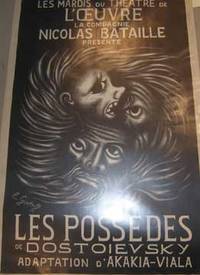
73-3490Amsterdam: 20th Century German or Dutch Publisher circa 1970s-1990s. 61x43 cm. Color poster. Very Good. Text in German Dutch and English. [Amsterdam?: 20th Century German or Dutch Publisher, [circa 1970s-1990s] unknown
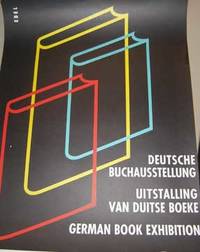
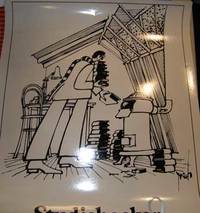
73-3577Amsterdam: 20th Century Belgian or Dutch Publisher circa 1970s-1980s. 60x48 cm. Black and white poster. Very Good. Text in Dutch. [Amsterdam?: 20th Century Belgian or Dutch Publisher, circa 1970s-1980s] unknown
73-3468Washington London: 20th Century American or English Publisher circa 1900s. 59x39 cm. Black and white poster. Very Good. In plastic. [Washington?, London?: 20th Century American or English Publisher, circa 1900s] unknown
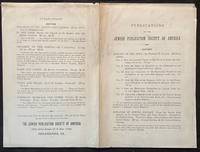
189842363Philadelphia The Society No date 1898. paperback. 18981st separate edition single fold pamphlet 4 pages 12mo. Not in Singerman though Robert Singerman himself suggested to us that the text "seems to be a match for the text in the first volume of the American Jewish Year Book 1899/1900 at pp.294-97. <br> Our item does not include any pagination and we would consider it to be a first separate edition. The item not listed in any database we were able to consult. <br> Advertising pamphlet listing imprints of the newly formed Jewish Publication Society including their first "Outlines of Jewish History" by Lady Magnus 1890 through Zangwill’s Dreamers of the Ghetto 1898 which is indicated as “Sold to Members only†probably indicating that it had just come out or perhaps related to copyright issues with Zangwill. Notably absent is any mention of the American Jewish Yearbook which began publication in 1899. All items include a short positive review from the American press. <br> The Jewish Publication Society of America was founded for "’the publication and dissemination of literary scientific and religious works giving instruction in the principles of the Jewish religion’; the third of its kind in the United States see Jew. Encyc. i. 519. Its headquarters are at Philadelphia. It was founded June 3 1888 at a convention held in Philadelphia. <br> At the end of the first fiscal year the membership was 1071; by 1903 it had reached 4700. Every member of the society receives a copy of each publication; since the society has been in existence over two hundred thousand volumes have been distributed and sold. The society is supported by the income derived from a permanent fund and from membership dues. <br> As a rule four sometimes five publications a year are issued; the first 'Outlines of Jewish History' by Lady Magnus appeared in 1890. The society issues two series a 'Special Series' seven numbers appearing occasionally and including short works of a miscellaneous character and 'The American Jewish Year Book' published since 1899-1900 5660.the society has brought out…translations from German French and Hebrew. They include histories literary religious and ethical essays poems biographies proceedings of societies republications of older classics and fiction†Cyrus Adler & Henrietta Szold in the JE 1905.<br> A copy may exist at the Dobkin Collection of Feminism; otherwise we could not locate a copy in OCLC-Worldcat nor using a google serach. Apparently exceedingly rare as such. Lightly rubbed Very Good Condition B AMR-67-28. Philadelphia, The Society, No date unknown
4555Dated in facsimile October 1899. Sambourne 1844-1910 contributed illustrations to Punch for more than forty years. On good laid paper dimensions roughly 22 inches by 17 1/2. With facsimile signature and date. Folded twice. Slightly discoloured and a little creased but suitable for framing. Depicts Mr Punch with his dog Toby sitting atop a pile of the 'evolutions of the century' including a bicycle and typewriter and waving to 116 of the century's worthies including Bismark General Tom Thumb and the jockey Fred Archer but without Karl Marx. The key approximately 17 inches by 11 has some wear along central crease but is also good. See Image. Dated in facsimile October 1899. unknown
1313559830.Gpaperback. Good. Access codes and supplements are not guaranteed with used items. May be an ex-library book. paperback
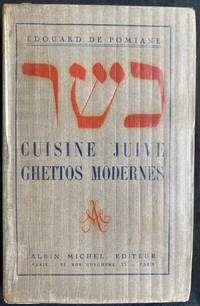
43450Paris: Albin Michel 1929. 1st edition. Original color-printed paper wrappers with later lamination 12mo 241 pages. 19cm. In French. Title translates as: "Kosher: Jewish Cuisine Modern Ghettos." Book was later re-issued under the less controversial title "The Jews of Poland; Recollections and Recipes."<br> <br> Rebecca Miller discussed the book at length in the Jewish Forward in 2013:<br> <br> "De Pomiane 1875-1964 a physician was also one of the most famous chefs and cookery writers of his day. Born Eduard Pozerski he was born into the Polish aristocracy brought up poor but refined. Both his parents were Polish patriots who fought against Russian domination of their homeland; his mother fled to France with the young Eduard when his father was deported to Siberia for insurrection against the Russians. Coming of age within the close-knit community of Polish exiles in Paris he was sympathetic to liberal causes and was a proponent of the Dreyfus cause.<br> His ethnographic book about Polish Jewish culture and cooking written in 1928 was originally entitled 'Cuisine Juive; Ghetto Modernes' 'Jewish Cooking; Modern Ghettos'. It is perhaps the weirdest book I have ever read. A tantalizingly vague recipe for Carpe a la Juive 'Take a large live carp. Kill it.' follows a horrifying description of a pogrom relayed to de Pomiane by a museum guide who had survived the massacre by hiding under a heap of hay in which his sister suffocated overnight: 'A corpse belly ripped open lay with its guts wrapped around its neck.A child wandered aimlessly haggard mute crazed its body beaten to a pulp.'<br> In de Pomiane's writing appreciative paragraphs about the accomplishment of certain refined Jews rub shoulders with unwittingly racist pseudo-science. 'I observed as a biologist.wrote as a scientist' claims de Pomiane as he cheerfully divides all male Jews into three types:<br> 'The dark-haired Jew with a long beard and a delicate aquiline nose. His lips are often thin his ears lie flat against his head. His eyes are deep almost mystical. He is less excitable than the others. It could be said that he belongs to an ethnic aristocracy. He has an Egyptian profile.'<br> 'This type is also dark-haired and much more common. His beard is black shorter his eyes are bulging and bloodshot his nose is squat his lips are thick and very red.This is the excitable Jewish type. When he laughs he sniggers. The face overall has a cruel and bestial appearance. Certainly this type of Jew would frighten a child in France even if that child were himself Jewish.'<br> 'A third and rarer type is completely red-headed. The beard is shorter and divided in two. He has the same negroid facial characteristics as the preceding type. The lips look even thicker and frame the teeth with two red borders of equal size. Although they are red the peyes look brown from being rolled twisted and curled between fingers that are constantly being licked.'<br> Having provided us with this helpful diagram of Jewish types he takes us on a tour of Jewish Poland beginning with Kazimierz the Jewish Ghetto in Crakow since the Middle Ages:<br> The whole place seems fairly and in some places extremely poverty-stricken. The more so since the population is dirty and strange. In Kazimierz everyone dresses in black everyone rushes about in a hurry they all bustle about irritably pushing shouting arguing. One would think the whole city was in the grip of some nervous disease.<br> De Pomiane believes that these poor nervous Jews give us a sense of what the tribes of Israel must have been like 'these people who when settled among us became the educated and refined individuals with whom we are familiar.' So De Pomiane argues the less 'Jew-y' the Jews are the more European the more refined they are-and hence it seems equal to non-Jews. <br> Unfortunately in only a few years there was no refinement that could save a Jew in Poland or indeed France: being Jewish was considered a racial fact not a cultural subtlety. But de Pomiane's distinctions are fascinating because they are being spouted by a man who was actually sympathetic to Jewish culture.<br> De Pomiane's observations are strikingly detailed. Describing the typical kaftan he states 'they wear a long black cloth gown which descends to their feet. It is not waisted like an overcoat but is slightly fuller. Two rows of buttons secure it over the chest. This kaftan is quite high-necked.'<br> And then he describes a head-covering that can be found in contemporary Williamsburg: 'Older Jews wear black hats of brushed felt. These head-coverings are worn very far forward a little over the eyes because on the crown of the head under the hat they wear a little black scull-cap.'<br> He speaks of prostitution: 'Just as in the Orient one sees in the streets of Cracow and Warsaw Jews attempting to draw in the passerby to admire a supposed daughter or niece.'<br> And the book is not short of anecdotes: a friend of de Pomiane's was tempted by an old man who spoke of a girl 'as beautiful and fresh as a mountain stream.' Tantalized he followed the old man into an ancient house and through a rather dark and very smelly courtyard. 'The Jew opened a door; my friend entered a room which was quite clean and saw a young girl in profile.' She was a perfect beauty. Then she turned to face him and he saw that one of her eyes had been gouged out. When he left in a panic the old man cried 'It wasn't for an eye that you followed me here!'<br> De Pomiane takes us to a stylish health resort called Zakopane. There de Pomiane finds a lot of rich Jews. 'What is so surprising' he asks. 'They alone.engage in trade. They alone are rich and they alone can afford to vacation in Zakopane.'<br> Spending time with these wealthy assimilated Jews Pomiane is amazed at their patriotism. A doctor he met 'defended both Zakopane and the whole of Poland.he was a proud Polish nationalist. There are men like these among Jewish intellectuals who have achieved a certain status in life. having left the kaftan and the ghetto behind.they have almost forgotten Yiddish replacing it with very good German. They call themselves Polish.'<br> De Pomiane the ethnographer paints a fascinating portrait of a class divide amongst the assimilated versus the unassimilated Jews:<br> Try and imagine a Jew in his worn shiny discolored kaftan with his beard and side-locks on his temples. Imagine him strolling down the Avenue Henri-Martin in Paris which is inhabited almost exclusively by wealthy French Jews. Would he be welcomed as a compatriot by those elegant ladies getting out of their automobiles whose children speak English to their nannies Definitely not. These 'Israelites' a term favored at the time by assimilated Jews as more politically correct than 'Jew' avoid the Polish Jew whom they have dubbed 'Polak'.<br> The book encapsulates contradictions and subtleties within the Polish Jewish population between the wars but also within the writer himself a Polish Francophile exile who loved food and had an abiding interest in Jewish cuisine. Beef Bouillon with Sauerkraut Chicken Soup with Almonds Goose Soup with Barley Carp a la Juive-these recipes and many more are all lovingly preserved for the curious gourmand in this most curious of books."<br> <br> OCLC: 1323307672. OCLC locates only 3 copies of the first edition in North America NYPL USC UUtah though some copies listed as "internet resource" may in fact be original hard copies. Lamination is transparent and has preserved the original paper binding quite well. Good Condition Thus. cook-4-4-'#ecc. Paris: Albin Michel unknown
43795173like new. unknown
B9781016742276Hardback. New. hardcover
ria9781017216257_inpHardcover. New. New Book; Fast Shipping from UK; Not signed; Not First Edition; This work has been selected by scholars as being culturally important and is part of the knowledge base of civilization as we know it.This work is in the "public domain in the United States of America and possibly other nations. Withi hardcover
46543586like new. unknown
46456357like new. unknown
1313859478.Gpaperback. Good. Access codes and supplements are not guaranteed with used items. May be an ex-library book. paperback
8vo, 22cm. Pp. xxxiv,178, 53 photos on 48 pls. Orig. printed wrs.
1980KOS01207640Cinema art Corporation 1980. Soft Cover. Fine. KOS01207640 Cinema art Corporation paperback
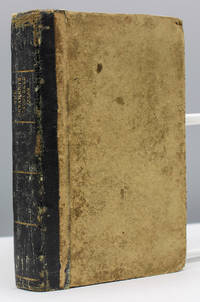
181517354London: Printed by and for William Darton Jun. 1815 First edition. Original black roan-backed drab boards gilt flat spine. Twelvemo. One engraved plate Several gatherings sprung or partially sprung but a very good tight copy. The orphan Fanny's character" as Osborne notes "exemplified the precept 'amiable manners and a well-regulated mind are the only valuable ornaments.'" The Darton catalogue at the end is quite lenghy listing ninety-five numbered items under books penmanship cards and games and there follow sections for dissected and whole sheet maps dissected puzzles and a concluding entry for "School Books" which concludes " A Quantity of Damaged Books to be Sold Cheap. Printed by and for William Darton, hardcover
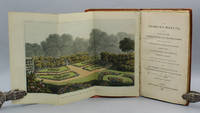
182717725<p>London: Henry Colburn 1827 Third edition enlarged of this gardening guidebook that was among the first of its kind written for women by a woman. The second and third editions are significantly expanded from the first edition 1816 which is about half as many pages and contains only two plates. Publisher's rose-colored boards. . Twelvemo. . With six hand-colored aquatint plates including large folding frontispiece 11 x 7 ". Expertly rebacked with printed paper spine label. Wear to corners. A very good unusually bright and wide copy. Maria Elizabetha Jacson 1755 – 1829 was a botanical writer and the daughter of a clergyman who owned land in Derbyshire and Cheshire. Her family had connections to Enlightenment culture in the midlands through Erasmus Darwin and her cousin Sir Brooke Boothby. She also knew Maria Edgeworth who described Jacson as a "gay garden lady" and was undoubtedly an influence on Jacson's work. Jackson took an interest in botany from a young age but did not publish her first book the children's educational volume Botanical Dialogues 1797 until she was in her forties. She later published Botanical Lectures 1804 and Sketches of the Physiology of Vegetable Life 1811 for an adult audience the former book being an introduction to the translation of Linnaeus's System of Vegetables 1783 by Erasmus Darwin. The Florist's Manual was her most popular and influential work.</p> Henry Colburn, hardcover
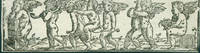
63-7103Venice: ca. 1510. Engraving 15.5 x 4.3 cm. Very Good. Text on Verso in Latin.From the Collection of Hon. Gerald Henry Brabazon Ponsonby 1829 - 1908 Private Secretary to the Lord-Lieutenant of Ireland; son of the 4th Earl of Bessborough. [Venice: ca. 1510?]. unknown
63-7104Rome: 1716. Engraving 5.3 x 6 cm. Very Good. From the Collection of Hon. Gerald Henry Brabazon Ponsonby 1829 - 1908 Private Secretary to the Lord-Lieutenant of Ireland; son of the 4th Earl of Bessborough. [Rome: 1716]. unknown
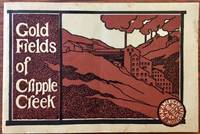
190154081Colorado Springs CO: The Woods Investment Co. of Colorado 1901. Oblong 8vo. 7.9 x 5.25 in. 48 pp unpaginated. Illustrated throughout with photos woodcut borders decorative elements maps 1 large folding frontisp. map w/ mine cross-section on verso showing Gold Coin Mine tunnels & location. Pictorial softcovers Arts & Crafts cover art of the Gold Coin Mine minor dustsoiling slight shelfwear a few leaves w/ faint dog-eared creases still VG bright copy. First edition of this scarce mining sales promotion from the Woods Investment Company which sponsored a booth in the Mining Building at the Pan-American Exposition in Buffalo NY in order to raise funds and expand the Woods mining and business empire. At the time the Woods operated the Gold Coin Mine employing 300 men with an annual payroll of $ 350000 as well as the Consolidated Doctor-Jack Pot New Zealand Mabel M. Damon Morning Glory and others. The Woods founded Victor CO and while digging the foundations for their elaborate Victor Hotel they discovered in 1894 a twenty-inch-wide vein of gold ore and began the development of the famed Gold Coin Mine. After rebuilding following the 1899 Victor CO fire the company continued to expand and rebuilt most of the burned-out business district in fire-resistant brick and stone. This work includes photo illustrations of Victor CO Cameron CO the Robinson-Victor Mine the Economic Gold Extraction Co. the Pike’s Peak power station and the Cripple Creek Short Line. The Woods were progressive mine owners who invested back into their community including the Gold Coin Club for Woods miners and workers which included a ballroom gymnasium baths bowling lanes tennis courts billiards room library and dining rooms. Unfortunately the Pan-American Exposition is best remembered as the site of the assassination of President McKinley shot by the anarchist Leon Czolgosz at the Temple of Music Sept. 6 1901. See: LaJean Greeson Linda Tingvik & Margie King The Gold Coin Mine: Part of the Woods Family Epire Victor Heritage Society 2017. The Woods Investment Co. of Colorado, paperback
68-2531Paris France: ca. 1860. 19.5" x 13" image size Good with tears. Original uncut sheet of binding paper one side black & printed with gold letters [Paris, France: ca. 1860]. unknown
68-8251Flushing Holland: 19th Century Printer ca. 1875. Calling Card. 7.5 x 12 cm. Very Good. [Flushing, Holland: 19th Century Printer, ca. 1875]. unknown
73-2361Paris: 19th Century French Publisher circa 1800s. 32x25 cm. Black and white lithograph. Very Good [Paris: 19th Century French Publisher, circa 1800s?] unknown
000354Hardback. Good. The Dublin Review not to be confused with the modern literary journal was the leading Catholic periodical of its time having begun in 1836 as a quarterly continuing until its demise in 1969. It was founded by the barrister and journalist Michael Joseph Quin who brought in Daniel O'Connell and Cardinal Wiseman to the project. The aim was "to provide a record of current thought for educated Catholics and . to be an exponent of Catholic views to non-Catholic inquirers" and to this end it recruited eminent and well-regarded writers on religious historical and literary topics and with much focus on science. Despite its name the Review was printed and published in London. Issue four April 1837 344pp plus opening Contents leaf; bound in blue-green cloth spine titled gilt no specific title page as the original wrappers are not bound in; slightly rubbed at the extremities and with a very few stamps of the Franciscan Convent Library Wexford scattered around but overall in tight clean and good condition. This issue contains a total of 15 "articles" perhaps more accurately named "elements" or "sections" as several contain material on different if somewhat related topics covering the various areas of interest. There is a 39pp review of "Memoirs of the Life of Sir Humphry Davy" by John Davy touching also on other material notes on Hansard an account of De Tocqueville's recently published "De la Démocratie en Amérique" reviews of plays discussion of German literature and of activities in Russia and Turkey and essays on elements of Catholic thought and practice. <br/> <br/> hardcover