Joel, BillyAntiquariat.de
Paul Louis Serge HaouziLivre Rare Book
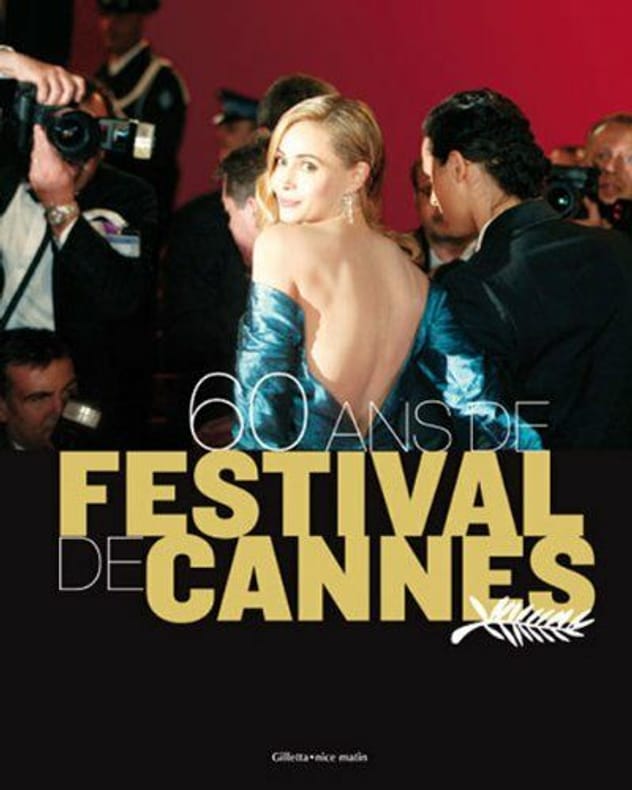
60 ans de festival de Cannes
2007500086129Gilletta 2007 144 pages 29 6x1 2x23 6cm. 2007. Broché. 144 pages.
Démons et Merveilles · Joinville, France14,00 €
15 963 résultats
54250Columbia, [o.J.]. CK 64412 CD CD
2007500086129Gilletta 2007 144 pages 29 6x1 2x23 6cm. 2007. Broché. 144 pages.
3085éditions de paris 1957 in 8 broché 316 pages plus 17 pages de notes de l'éditeur - illustrations dans le texte - couverture illustrée d un scaphandrier
196127434Biel, Schaefer & Ryser, 1961. 36 S. Mit einigen Abbildungen. 8° (20,5 x 13 cm). Original-Broschur.
Clements, JonathanIn Pristine Condition. unknown
Bøje, Chr. AIn Pristine Condition. unknown
a95649Berlin and Leipzig. All first edition. 1185 - 1903. 1 1885 Zur theorie der Doppelpunkte und Doppeltangenten der ebenen rationalen Curven pp. 516-533. 2 1886 Zur Theorie der Homogenen Linearen Substitutionen 20p. 3 1887 Zur Theorie derjenigen ebenen Curven pp. 535-545. 4Ueber das Product zweier Determinanten pp. 598-600. 5 Uber die Bedingungen 23p.; 6 Uber Produkte und Potenzen von Determinanten 23p. 7 Die nte Wurzel aus einer linearen Substitution 22p. One signed in ink by Welzien as "der Verf". All Good to VG no owner marks. Group of 7 papers: . unknown
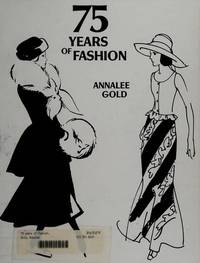
Z1-A-011-03015Fairchild Books. Used - Good. Ships from UK in 48 hours or less usually same day. Your purchase helps support Sri Lankan Children's Charity 'The Rainbow Centre'. Ex-library so some stamps and wear but in good overall condition. 100% money back guarantee. We are a world class secondhand bookstore based in Hertfordshire United Kingdom and specialize in high quality textbooks across an enormous variety of subjects. We aim to provide a vast range of textbooks rare and collectible books at a great price. Our donations to The Rainbow Centre have helped provide an education and a safe haven to hundreds of children who live in appalling conditions. We provide a 100% money back guarantee and are dedicated to providing our customers with the highest standards of service in the bookselling industry. Fairchild Books unknown
087005144X.Ghardcover. Good. Access codes and supplements are not guaranteed with used items. May be an ex-library book. hardcover
198142BBZch., Conzett & Huber, 1981. 4°. 136 S. OKt.
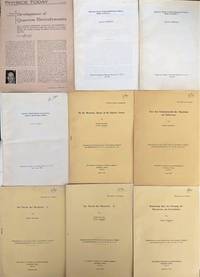
1940ST13395Tokyo:: Scientific Papers of the Institute of Physical and Chemical Research 1940. 1940. 8 offprints 1 extract. Original wrappers. From the collection of Abraham Pais. Very good. INVENTORY: 1. TOMONAGA Sin-itiro. Uber den Zusammenstoß des Mesotrons mit Elektronen. Offprint from: Scientific Papers of the Institute of Physical and Chemical Research no. 976 vol. 37 pp. 399-413 June 1940. Original yellow printed wrappers. Signed by Pais. "In 1940 Dr. Tomonaga directed his attention to the meson theory and developed the intermediate coupling theory in order to clarify the structure of the meson cloud around the nucleon." :: Nobel Lectures 1972. 2. TOMONAGA Sin-itiro. Zur Theorie des Mesotrons. I. Offprint from: Scientific Papers of the Institute of Physical and Chemical Research no. 1071 vol. 39 pp. 247-266 Dezember 1941. Original yellow printed wrappers. Signed by Pais. 3. TOMONAGA Sin-itiro. Bemerkung uber die Streuung der Mesotronen am Kernteilchen. Offprint from: Scientific Papers of the Institute of Physical and Chemical Research no. 1105 vol. 40 pp. 73-86 September 1942. Original yellow printed wrappers. Signed by Pais. 4. TOMONAGA Sin-itiro; Miyazima Tatuoki. Zur Theorie des Mesotrons. II. Offprint from: Scientific Papers of the Institute of Physical and Chemical Research no. 1103 vol. 40 pp. 21-67 August 1942. Original yellow printed wrappers. Signed by Pais. 5. TOMONAGA Sin-itiro; Miyazima Tatuoki. On the Mesotron Theory of the Nuclear Forces. Offprint from: Scientific Papers of the Institute of Physical and Chemical Research no. 1124 vol. 40 pp. 274-310 March 1943. Original yellow printed wrappers. Signed by Pais. 6. TOMONAGA Sin-itiro. Remarks on Bloch's Method of Sound Waves applied to Many-Fermion Problems. Offprint from: Progress of Theoretical Physics vol. 5 no. 4 pp.544-569 July-August 1950. Signed by Pais. 7. TOMONAGA Shin-ichiro. Elementary Theory of Quantum-Mechanical Collective Motion of Particles I. Offprint from: Progress of Theoretical Physics vol. 13 no. 5 pp.467-481 May 1955. 8. TOMONAGA Shin-ichiro. Elementary Theory of Quantum-Mechanical Collective Motion of Particles II. Offprint from: Progress of Theoretical Physics vol. 13 no. 5 pp. 482-496 May 1955. 9. TOMONAGA Sin-itiro. Development of Quantum Electrodynamics. Extracted from: Physics Today vol. 19 no. 9 pp. 25-32 September 1966. Signed by Pais. . / BIOGRAPHY: Tomonaga was a prominent Japanese physicist influential in the development of quantum electrodynamics work for which he was jointly awarded the 1965 Nobel Prize in Physics :: along with Richard Feynman and Julian Schwinger :: for the study of QED specifically for the discovery of the renormalization method. Nobel biography: Tomonaga completed work for Rigakushi bachelor's degree in physics at Kyoto Imperial University in 1929 with one of his intimate friends. Dr. Hideki Yukawa Nobel laureate. He was engaged in graduate work for three years at the same university and was then appointed a research associate by Dr. Yoshio Nishina at the Institute of Physical and Chemical Research Tokyo where he started to work in a newly developed frontier of theoretical physics quantum electrodynamics - under the guidance of Dr. Nishina. His paper on the photoelectric pair creation is well-known. Tomonaga stayed in Leipzig Germany from 1937 to 1939 to study nuclear physics and the quantum field theory in collaboration with the theoretical group of Dr. W. Heisenberg where he published a paper "Innere Reibung und Warmeleitfahigkeit der Kernmaterie" which was chosen as the thesis for Rigakuhakushi Doctor of Science at Tokyo Imperial University in December1939. In 1940 Dr. Tomonaga directed his attention to the meson theory and developed the intermediate coupling theory in order to clarify the structure of the meson cloud around the nucleon. He joined the faculty of Tokyo Bunrika University which was absorbed into the Tokyo University of Education in 1949 as Professor of Physics in 1941. It was in 1942 when he first proposed the covariant formulation of the quantum field theory in which the concept of the quantum state was generalized so as to be relativistically covariant. During the Second World War Dr. Tomonaga was interested in developing a theory of microwave systems. He solved the motion of electrons in the magnetron and also developed a unified theory of the systems consisting of wave guides and cavity resonators. As soon as the War was over Tomonaga came back to academic research again with a programme in which he was first to summarize and extend the intermediate coupling theory and secondly to apply the covariant field theory to actual physical systems. His aim was to investigate the nature of field reaction in the meson theory as well as in quantum electrodynamics. He was confident prior to the Lamb-Retherford experiment by means of a model calculation that divergence difficulty in quantumelectrodynamics could be overcome simply by handling the infinite mass and charge due to field reactions in some way or another. It was only a step further for him to develop the renormalization theory with covariant formalism in his right hand and experimental support in his left. Dr. Tomonaga was invited to the Institute for Advanced Study Princeton in 1949 where he was engaged in the investigation of a one-dimensional fermion system. Thus he first succeeded in clarifying the nature of collective oscillations of a quantum-mechanical many-body system and opened a new frontier of theoretical physics modern many-body problem. In 1955 he published an elementary theory of quantum mechanical collective motions. Dr. Tomonaga took the leadership in establishing the Institute for Nuclear Study University of Tokyo in 1955. From 1956 to 1962 he was appointed President of the Tokyo University of Education and since 1963 he has been President of the Science Council of Japan and Director of the Institute for Optical Research Tokyo University of Education. He occupies an important position in various governmental committees for scientific research and policymaking. Tomonaga's honours and awards include the Japan Academy Prize 1948; the Order of Culture 1952; the Lomonosov Medal U.S.S.R. 1964. Dr. Tomonaga is a member of the Japan Academy the Deutsche Akademie der Naturforscher "Leopoldina" and a foreign member of the Royal Swedish Academy of Science. He is a corresponding member of the Bayerische Akademie der Wissenschaften and a foreign associate of the National Academy of Science of U.S.A. Tomonaga has published widely in scientific journals on such subjects as quantum electrodynamics the meson theory nuclear physics cosmic rays and the many-body problem. His book "Quantum Mechanics" was published in 1949 and translated into English in 1963. Scientific Papers of the Institute of Physical and Chemical Research, 1940. unknown
1940S13395Tokyo:: Scientific Papers of the Institute of Physical and Chemical Research 1940. 1940. 8 offprints 1 extract. Original wrappers. From the collection of Abraham Pais. Very good. INVENTORY: 1. TOMONAGA Sin-itiro. Uber den Zusammenstoß des Mesotrons mit Elektronen. Offprint from: Scientific Papers of the Institute of Physical and Chemical Research no. 976 vol. 37 pp. 399-413 June 1940. Original yellow printed wrappers. Signed by Pais. "In 1940 Dr. Tomonaga directed his attention to the meson theory and developed the intermediate coupling theory in order to clarify the structure of the meson cloud around the nucleon." :: Nobel Lectures 1972. 2. TOMONAGA Sin-itiro. Zur Theorie des Mesotrons. I. Offprint from: Scientific Papers of the Institute of Physical and Chemical Research no. 1071 vol. 39 pp. 247-266 Dezember 1941. Original yellow printed wrappers. Signed by Pais. 3. TOMONAGA Sin-itiro. Bemerkung uber die Streuung der Mesotronen am Kernteilchen. Offprint from: Scientific Papers of the Institute of Physical and Chemical Research no. 1105 vol. 40 pp. 73-86 September 1942. Original yellow printed wrappers. Signed by Pais. 4. TOMONAGA Sin-itiro; Miyazima Tatuoki. Zur Theorie des Mesotrons. II. Offprint from: Scientific Papers of the Institute of Physical and Chemical Research no. 1103 vol. 40 pp. 21-67 August 1942. Original yellow printed wrappers. Signed by Pais. 5. TOMONAGA Sin-itiro; Miyazima Tatuoki. On the Mesotron Theory of the Nuclear Forces. Offprint from: Scientific Papers of the Institute of Physical and Chemical Research no. 1124 vol. 40 pp. 274-310 March 1943. Original yellow printed wrappers. Signed by Pais. 6. TOMONAGA Sin-itiro. Remarks on Bloch's Method of Sound Waves applied to Many-Fermion Problems. Offprint from: Progress of Theoretical Physics vol. 5 no. 4 pp.544-569 July-August 1950. Signed by Pais. 7. TOMONAGA Shin-ichiro. Elementary Theory of Quantum-Mechanical Collective Motion of Particles I. Offprint from: Progress of Theoretical Physics vol. 13 no. 5 pp.467-481 May 1955. 8. TOMONAGA Shin-ichiro. Elementary Theory of Quantum-Mechanical Collective Motion of Particles II. Offprint from: Progress of Theoretical Physics vol. 13 no. 5 pp. 482-496 May 1955. 9. TOMONAGA Sin-itiro. Development of Quantum Electrodynamics. Extracted from: Physics Today vol. 19 no. 9 pp. 25-32 September 1966. Signed by Pais. . / BIOGRAPHY: Tomonaga was a prominent Japanese physicist influential in the development of quantum electrodynamics work for which he was jointly awarded the 1965 Nobel Prize in Physics :: along with Richard Feynman and Julian Schwinger :: for the study of QED specifically for the discovery of the renormalization method. Nobel biography: Tomonaga completed work for Rigakushi bachelor's degree in physics at Kyoto Imperial University in 1929 with one of his intimate friends. Dr. Hideki Yukawa Nobel laureate. He was engaged in graduate work for three years at the same university and was then appointed a research associate by Dr. Yoshio Nishina at the Institute of Physical and Chemical Research Tokyo where he started to work in a newly developed frontier of theoretical physics quantum electrodynamics - under the guidance of Dr. Nishina. His paper on the photoelectric pair creation is well-known. Tomonaga stayed in Leipzig Germany from 1937 to 1939 to study nuclear physics and the quantum field theory in collaboration with the theoretical group of Dr. W. Heisenberg where he published a paper "Innere Reibung und Warmeleitfahigkeit der Kernmaterie" which was chosen as the thesis for Rigakuhakushi Doctor of Science at Tokyo Imperial University in December1939. In 1940 Dr. Tomonaga directed his attention to the meson theory and developed the intermediate coupling theory in order to clarify the structure of the meson cloud around the nucleon. He joined the faculty of Tokyo Bunrika University which was absorbed into the Tokyo University of Education in 1949 as Professor of Physics in 1941. It was in 1942 when he first proposed the covariant formulation of the quantum field theory in which the concept of the quantum state was generalized so as to be relativistically covariant. During the Second World War Dr. Tomonaga was interested in developing a theory of microwave systems. He solved the motion of electrons in the magnetron and also developed a unified theory of the systems consisting of wave guides and cavity resonators. As soon as the War was over Tomonaga came back to academic research again with a programme in which he was first to summarize and extend the intermediate coupling theory and secondly to apply the covariant field theory to actual physical systems. His aim was to investigate the nature of field reaction in the meson theory as well as in quantum electrodynamics. He was confident prior to the Lamb-Retherford experiment by means of a model calculation that divergence difficulty in quantumelectrodynamics could be overcome simply by handling the infinite mass and charge due to field reactions in some way or another. It was only a step further for him to develop the renormalization theory with covariant formalism in his right hand and experimental support in his left. Dr. Tomonaga was invited to the Institute for Advanced Study Princeton in 1949 where he was engaged in the investigation of a one-dimensional fermion system. Thus he first succeeded in clarifying the nature of collective oscillations of a quantum-mechanical many-body system and opened a new frontier of theoretical physics modern many-body problem. In 1955 he published an elementary theory of quantum mechanical collective motions. Dr. Tomonaga took the leadership in establishing the Institute for Nuclear Study University of Tokyo in 1955. From 1956 to 1962 he was appointed President of the Tokyo University of Education and since 1963 he has been President of the Science Council of Japan and Director of the Institute for Optical Research Tokyo University of Education. He occupies an important position in various governmental committees for scientific research and policymaking. Tomonaga's honours and awards include the Japan Academy Prize 1948; the Order of Culture 1952; the Lomonosov Medal U.S.S.R. 1964. Dr. Tomonaga is a member of the Japan Academy the Deutsche Akademie der Naturforscher "Leopoldina" and a foreign member of the Royal Swedish Academy of Science. He is a corresponding member of the Bayerische Akademie der Wissenschaften and a foreign associate of the National Academy of Science of U.S.A. Tomonaga has published widely in scientific journals on such subjects as quantum electrodynamics the meson theory nuclear physics cosmic rays and the many-body problem. His book "Quantum Mechanics" was published in 1949 and translated into English in 1963. Scientific Papers of the Institute of Physical and Chemical Research, 1940. unknown books
2014500206764LGF 2014 384 pages 11x1 6x18cm. 2014. pocket_book. 384 pages.
0553343157.Gpaperback. Good. Access codes and supplements are not guaranteed with used items. May be an ex-library book. paperback
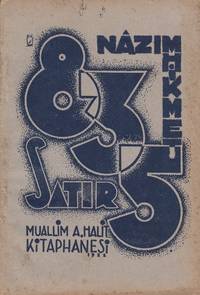
50663Istanbul: A. Halit Kitaphanesi 1932. Octavo. Original pictorial wrappers by Ali Suavi; 48 pp. Very good save for very light wear to edges. Second edition of Hikmet's first book of poetry originally published in 1929 but issued with a striking cover designed by Ali Suavi 1910 or 1913-1994 who Suavi designed most of the avant-garde-inflected covers of Hikmet's books. Little is known about Suavi who was a famous designer of books and later became known as a photographer. Nazim Hikmet 1902-1963 is considered the founder of modern Turkish poetry who transcended Ottoman versification and absorbed the influence of Russian futurist writers such as Sergei Esenin but above all Vladimir Mayakovsky. Aside from the "step-ladder" form of verse he shared with Mayakovsky his sociopolitical engagement as well as Esenin's love for the simple folk and his origins. Impressed by the 1917 October Revolution in Russia he resisted the occupying powers in Constantinple and fled to the countryside where he sought to connect with various socialist and libertarian organizations. In 1920s he traveled to Russia twice for extended periods of time where he studied in Moscow and was in close contact with Soviet Futurist poets. Upon his return in 1928 he was subject to imprisonment and harsh repressions including a ban on publishing but nevertheless garnered success with readers and created a prolific output while in prison. In 1938 he was sentenced to nearly three decades of jail but was released in 1950 and fled to Moscow exile in 1951 where he was a leading public intellectual and died in 1963. He was not published in Turkey until 1965 and remained nearly unknown in the West for much longer. See also: Saime Göksu and Edward Timms Romantic Communist: The Life and Work of Nazim Hikmet. <br/><br/>As of March 2020 no copies in North America according to KVK OCLC. unknown books
0615429246.Ghardcover. Good. Access codes and supplements are not guaranteed with used items. May be an ex-library book. hardcover
0870056808.Ghardcover. Good. Access codes and supplements are not guaranteed with used items. May be an ex-library book. hardcover
Assisi, 1981; br., pp. 286, ill. b/n, tavv. col., cm 20x29. italiano br.
19885614Peking No Publisher 1988 Première édition / uvre originale datant du mois de mai de l'année Wùchén (?????), soit mai/juin 1988. Très inspirée du style de Guan Liang (??, 19001986) et de ses disciples. La peinture représente deux artistes vêtus de costumes d'opéra de Pékin (??). Le personnage féminin est une wudan (??) (un rôle féminin martial). Elle porte un costume de soie bleue avec une coiffe élaborée, un maquillage de scène blanc et rouge, et tient une arme. Le personnage masculin est un laosheng (??), c'est-à-dire un personnage de type fonctionnaire/érudit. Une uvre originale attrayante, signée et datée. Le bras de la femme qui tient l'épée présente un léger dommage, la peinture bleue étant estompée. Il y a également trois taches d'encre ou de peinture près du sceau. La peinture est réalisée sur ce qui semble être du papier xuan chinois (??), monté sur un support en carton gris. La peinture mesure 25 cm x 25 cm. Le support en carton mesure 34,5 cm x 34,5 cm. Verso vierge.
1993004554München, Galerie Handwerk, 1993. 48 S. Etwas größere Orig.-Broschur. Ein gut erhaltenes Exemplar mit nur leichten Gebrauchsspuren.
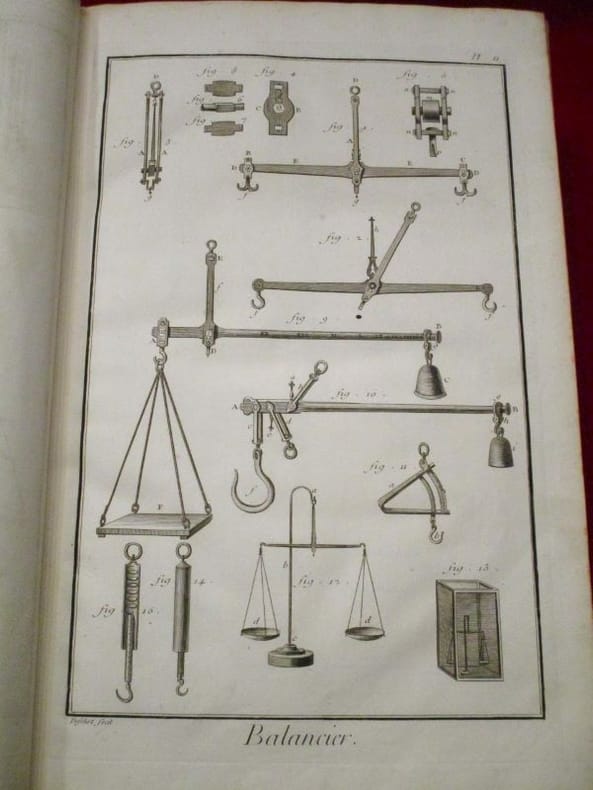
1763116905briasson david le breton durand 1763 in-folio A Paris, chez Briasson, David, Le Breton, Durand, 1763, 1 volume grand in-folio de 260x410 mm environ, complet des 233 planches et du texte explicatif. Pleine reliure d'époque, dos à six nerfs portant titres et tomaisons dorés, caissons ornés, encadrement des plats à froid, coupes filetées, tranches rouges, gardes de papier marbré à la coquille. Reliure en mauvais état mais exemplaire solide et intérieur frais : coiffes absentes, mors fendus, importantes épidermures.
18301045852Ohne Ort und Verlag [London, Bossange, Barthés and Lowell / Paris: Audot] [1830]. 52 blattgroße Umrißkupfer von Achille Réveil mit jeweils ein- bis vierseitigen Beschreibungen und Kommentaren in französischer und englischer Sprache. Unbeschnittener Block. 8° (19 x 12 cm). Interimspappband der Zeit.
Zaragoza, Imprenta Estilo, 1950. 4to.; 143 pp., 2 hs., y 9 láminas, aparte, con reproducción de documentos, portadas de libros y mapas. Encuadernación original en media tela.
New New Persian Original bdg. Dust wrapper. Roy. 8vo. (24 x 17 cm). In Persian. 252 p., ills. [Xerxes unsuccessful Achaemenid conqueror].= Khashâyârshâ jahân'gushâ-yi nâkâm-i Hakhâmanishî. A study on Xerxes, King of Persia; Achaemenid dynasty.
Book is in excellent condition with very light shelf wear to covers only in deep blue boards with gilt print at spine. Binding is solid and square, covers have sharp corners, exterior shows no blemishes, text/interior is clean and free of marking of any kind. Previous owner's name and sticker in front section of the book. Includes A smile of fortune, The secret sharer, Freya of the seven isles. 244 pages.