542 résultats
18072804London: Printed by T. Bensley for Payne and Mackinlay 1807. Lg. 4to. 8xl572pp. Cont. gilt tooled calf covers with a few old scrapes. Front hinge split but holding minor chips at extremities of spine. Bookplate on front pastedown. Printed by T. Bensley for Payne and Mackinlay unknown books
19541338883New York: Crown Publishers Inc 1954. Reprinted. Hardcover. Thick Octavo; G/G-; black spine with yellow and white text; reprinted; dust jacket has several chips to edges; mild smudges to rear; otherwise only slight wear to exterior; mylar wrap; cloth shows some slight wear to exterior; few small spots to exterior; slightly rubbed edges; mildly splayed boards; text block exterior edges moderately toned; deckled fore edge; minor defect to gutter at half title page; interior good; pp 504. Stories by: Isaac Asimov Robert A. Heinlein Damon Knight Peter Phillips Fritz Lieber John D. McDonald Robert Sheckley Clifford D. Simak Theodore Sturgeon John Wyndham and others. 1338883. FP New Rockville Stock. Crown Publishers, Inc hardcover books
1959303851959. GOLD Herbert. "The Sender of Letters." In Playboy Magazine August 1959. Very Good crease front cover. $45.00. <br/><br/> unknown books

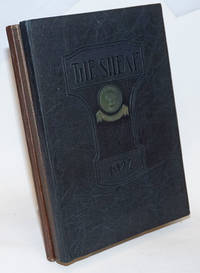
1927231699Saint Louis MO / Elsah IL: The Principia Junior College 1927. Three standard-format yearbooks rather more neatly designed and produced than most with cover decoration in blind and tint or gilding to cover seal. The 1928 issue features a subtle background printblock by Bernard Maybeck on every page; alkaline glazed paperstock throughout; and aside from touches of edgewear in as-issued condition pace some endsheet autographs in '28 which also has laid in a certificate made out to book's owner one Tommy King permitting him to wear the football team's letter. Three separate items as a small lot. The Principia Junior College unknown books
191573485New York: Alfred A. Knopf 1915. First Edition. Hardcover. Very good. The first American edition translated from the Russian by Captain Rowland Smith of the British Embassy Petrograd. A collection of 17 short stories by the Russian writer whose work is characterized by a spirit of compassion and pity that some have compared to Dostoevsky's. Octavo. Original brown cloth binding with gilt titles. Minor crease to the top corner of a single leaf. The spine is lightly faded; otherwise very good. Alfred A. Knopf hardcover books
17253447London: Np 1725. Second English language edition. Very good. Second English edition see below. Sm. 8vo. 680pp. Modern 1/2 black morocco gilt over marbled boards. Title lightly soiled. A few leaves closely trimmed at top margin. Foxon R264 noting "all copies seen were issued in Rooke's "Select Translations" 1726. It may never have been separately published." The pagination of the 1723 first printing is 12431pp. Np hardcover books
M13K-00948DC Comics. Used - Very Good. Very Good condition. DC Comics unknown books
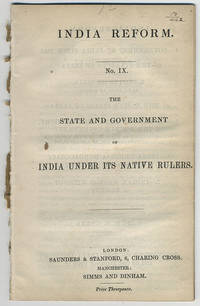
185315279London: Saunders & Stanford; Manchester: Simms & Diham 1853. Small 8vo. 40 pp. <br><br>In the society's series: "India reform" this being number 9. Library of Congress attributes authorship to John Sullivan. Condemnation of British assumptions that regarded native rule as evil and wrong. Uncommon. <br>Â Â Â Â <br>Â Â Â Â NSTC 2I1607 & 2I1608 for the series. Removed from a nonce volume. Good condition. Saunders & Stanford; Manchester: Simms & Diham unknown books
1971WRCLIT41200Toronto: For the University of Manitoba Press by the University of Toronto Press 1971. Cloth. First edition. Some pencil markings in the text extremities rubbed else very good lacking the dust jacket. For the University of Manitoba Press by the University of Toronto Press hardcover books
197136491Toronto: Published for University of Manitoba Press by University of Toronto Press 1971. 1st edition. Blue green cloth binding. Spine a bit sun-tanned. A VG copy. xxix 1 236 2 pp including Index. Illustrated. 8vo. <br/><br/> Published for University of Manitoba Press by University of Toronto Press hardcover books
1973901New York: Ben Gold Book Committee 1973. Hardcover. 224p. first edition original tan cloth binding with traces of edge wear else very condition. Novel by the founder of the Fur & Leather Workers Union about the progressive needle trades workers and their fight to throw the 'gangsters' out of the union and win a 40 hour week in the 1920s. Ben Gold Book Committee hardcover books
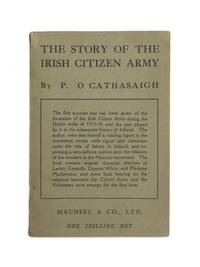
191973486Dublin and London: Maunsel & Co. Ltd 1919. First Edition. Wraps. Very good. The first account of the Irish Citizen Army a small paramilitary group of trained union volunteers formed by James Larkin James Connolly and Jack White during the Dublin strike of 1913-14. This is also the first published work by Irish playwright Sean O'Casey who served as General Secretary of the Irish Citizen Army. Small octavo: 72 p. Original printed paper wrappers. Some general toning to the contents. Small nick to the spine head which has been mended with a tiny piece of tape and a bit of light creasing to the bottom corner of the front panel; else about very good. Maunsel & Co., Ltd unknown books
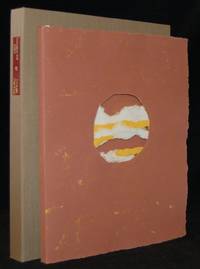
1983257195New York: Sarabande Press 1983. Limited Edition numbered 18 of 33. Disbound. Near Fine binding. Marsha Eva Gold. Signed by Clampitt Gold and the designer and printer Joe Marc Freedman on the colophon. A beautifully designed accordion binding on handmade paper designed by Marsha Eva Gold; housed in designed paper portfolio; an elegant production housed in a cloth drop-back box with marbled paper trays and maroon morocco title label;. Near Fine binding. Sarabande Press unknown books
1974Embry 162563Viking 1974. First edition first printing. Small inked name light crimp to lower spine still fine in fine faintly rubbed dust jacket in mylar cover. Viking, 1974. First edition, first printing. unknown books
86268hardcover. 877pp. 8vo cloth d.w. N.Y.: Viking 1974. vg<br/><br/> unknown books
1959139275Garden City: Doubleday & Company 1959. Octavo cloth. First edition. Collects nine stories by Clifford D. Simak Mark Clifton L. Sprague de Camp Richard Matheson Edgar Pangborn and others. A fine copy in very good dust jacket with small stain at lower spine end mild fading to spine panel light dust soiling to rear panel and clipped price. #139275 Doubleday & Company unknown books
197332294Garden City New York: Doubleday & Company 1973. 1st edition. INSCRIBED by the author in the year of publication on the ffep. Blue cloth binding. Dust jacket. VG/VG spine panel sunned/light edgewear. 68 4 pp. Illustrated by Julie Brinckloe. 8vo. <br/><br/> Doubleday & Company hardcover books
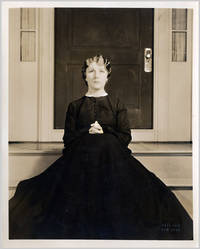
1932WRCLIT73415New York: Vandamm Studio 1932. Original 10 x 8" double weight sepia toned portrait photograph. Vandamm studio stamp and identifying text on verso small Vandamm blindstamp in lower right corner. Fine. A superb meditative character portrait of Judith Anderson in the role of Lavinia Mannon in the Theatre Guild revival of O'Neill's play staged by Philip Moeller which ran for 16 performances in May 1932 at the Alvin Theatre. The Vandamm Studio were the Broadway photographers of record for nearly four decades. While it is not possible to absolutely credit this photo to Florence she specialized in the character portraits while Tommy covered the photographs of staged productions. Vandamm Studio unknown books
1960300531New York The Dial Press 1960. 1960. First edition. 8vo. Dust jacket designed by Paul Bacon price clipped. Very good. 256 pages. No signatures or bookplates. 1st Edition. Hardcover. Very Good/Very Good. New York, The Dial Press, 1960. hardcover books
7024Japan: 1816 or after. A fine complete and uncommonly well-illustrated set of scrolls concerning the famous gold silver and copper mine on Sado Island illustrating all the steps from mining to refining to minting along with the administrative and commercial activities associated with the mines. We have had several sets of "Sado Island Scrolls" and this is by far the finest in terms of the quality of the illustration completeness and richness of detail. The skilled artist of these scrolls has provided an enormous amount of valuable factual content by labeling each depicted person's role in the production of gold silver and copper. For a really excellent account of the history of mining on Sado Island and the scrolls produced there see Hamish Todd "The British Library's Sado Mining Scrolls" in The British Library Journal Vol. 24 No. 1 Spring 1998 pp. 130-43. Our description is largely based on this wonderful and beautifully researched article. Gold silver and copper mining on Sado Island just off the coast of Niigata Prefecture had its beginnings in ancient times. With the discovery in 1601 of the rich Aikawa gold and silver mine Sado experienced an economic boom. The Edo shogunate assembled miners and slave laborers mostly the homeless from throughout Japan and sent them to Sado to exploit the Aikawa mine and three other principal mines. It soon became the largest gold and silver mine in Japan attracting a population of 200000 and to a very large degree financed the Edo shogunate for several hundred years. A series of unique mining smelting and minting technologies developed at Sado were disseminated to other mines within Japan. Today the Sado complex of mines is on the "Tentative List" of Unesco World Heritage Sites. The Aikawa mine was one of the few mines at the time to be based on kodobori mine-digging. A series of pre-modern mine management systems and mining-related technologies ranging from mining to smelting were developed at Sado including methods for extracting gold from silver such as the Chinese haifuki cupellation method brought in from the Iwami Ginzan Silver Mine Shimane Prefecture; the yakikin method; as well as manufacturing-based operational formats such as the yoseseriba. It is particularly important to remember that the entire series of processes from mining and smelting to ultimately the production of gold coinage were carried out at this single mine and its environs. The finely drawn scrolls depict every process of extraction refining and minting. Each scroll has a title on a label on the outside: "Sado kozan saikutsu jikkei" "Actual View of Sado Mining". As we unroll the scroll we find another title "Sashu kingin saisei zenzu" "Sado Gold & Silver Extracted & Processed Illustrated" and a grand index of the pictorial contents of the three scrolls. The first scroll begins with a map showing the Aikawa mountain and the numerous entrances to the mining complex with names and locations of refining buildings. This is followed by wonderful paintings of the main entrance to the mine and the surrounding buildings; miners entering and working in the shafts; the ladders made from logs into which steps have been cut; lamps made of iron dishes to hold oil and attached to long iron handles; buckets and pulleys to remove water; baskets to carry ore; government officials the mine operator and surveyors discussing the best location for a new tunnel; carpenters constructing support beams; etc. Each person has a label so we know his exact title and function. The remainder of the scroll takes place outside of the mine: blacksmiths making tools; women removing waste material from the ore and placing the ore in sieves to be washed under the watchful eye of government supervisors; the administrative center for the mine where the ore is graded for sale to the smelters with a bookkeeper recording all the transactions; a back office where managers senior administrators of the mine and accountants are meeting; a room where the ore is examined once again; the ore sewn into sacks and carried out to be loaded onto oxen to be transported to the smelting works; a storage area with big locks; another government office where mine workers turned in their ID cards at the beginning of their shifts; the building known as Kanaba where the ore was pulverized to win the precious metals; a horsetail sieve to separate the ore into various constituents; grinding of the ore using ishiusu grindstones; the process of nekonagashi which used cotton cloth in wooden troughs to extract the very smallest particles using the gravimetric principle etc. The second scroll depicts the smelters called fukidaiku with men operating the bellows all watched by a guard. The gold/silver/lead alloy was then taken to an area called the Haifukidoko where the alloy was subjected to roasting in a cupel. The following scene shows the government office where the gold sujimengane and silver yamabukigin samples are examined. Now we shift to the scenes showing the processing of copper. We see the pulverizing and winning of the copper using methods similar to those for gold and silver with the addition of extensive smelting scenes employing large smelting furnaces nibukidoko mabukidoko and nanbandoko. There are a number of processing scenes including daifukisho which are not present in the BL set of scrolls. From the copper works we move to the coast of Sado where we see the extraction of alluvial gold and silver from the sand of the beaches by means of a technique called sluicing or nekonagashi. An Archimedes screw is used to draw water up to form a flow that could be used for sluicing. The material is then taken to a building called the Hamanagashi no seriba for further processing. The third scroll is devoted to minting in the Kobandokoro where small coins called koban were produced. Using the cementation process called shioyaki the partly refined gold is further refined. Above is a criss-cross construction of wooden planks known as a senryodana designed to trap any gold dust mixed with smoke from the smelting. The workers are wearing only loin cloths to prevent theft. The powdered gold is then mixed with salt and shaped into cones. Then the cones are burned slowly for seven or eight hours. Further processing steps are shown finally resulting in balls of gold called yosegane suitable for minting. Next the silver by-product is shown being processed and refined in a series of scenes. The following series of scenes show the gold being formed into metal strips called nobegane which were then polished by salt before being sent to the office run by the Goto family the Goto Yakusho. We see Sanemon Goto 2nd d. 1845 in his office. He succeeded to running the Goto Yakusho in 1816 and this is the basis for dating these scrolls. In this office the strips were tested for purity before being cut into small sections. In fine condition. There is minor marginal worming in the beginning of the second and third scrolls. hardcover books
192821819NY: Schimer 1928. First Edition. Glory Road only. Dedicated to Paul Robeson. 4to self wraps pp. 16. Illustrated cover by Bobri. Moderate wear to the covers and partially disbound good. Wolfe was a Roumanian who found a reminder in American Blacks of the roving gypsies of his native country. He wrote a number of songs on Black subjects. Schimer unknown books
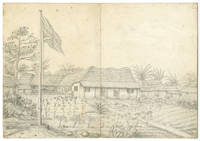
1836WRCAM52991N.p. but near present-day Prampram Ghana 1836. Three pencil sketches on wove paper each approximately 7 x 10 inches. Central vertical crease to each drawing the first two titled in a contemporary hand in pencil to verso the third similarly titled below the image. Very good. An attractive set of skillfully-executed original pencil sketches featuring British colonial structures in Prampram Gold Coast present-day Ghana likely between 1819 and 1836. The sketches are titled in pencil as follows: "Commandant's Residence Pam Pram Gold Coast" "Lower Town Pam Pram from the Upper Town" and "Abandoned Fort at Appolonia from the Beach." <br> <br> The Union Jack flies proudly in the foreground of the sketch of the Commandant's residence. Officially Great Britain colonized the Gold Coast region from 1867 until the independence of Ghana in 1957 though the British had maintained and controlled forts along the West African coastline since long before 1867. Fort Appolonia in the extreme southwestern corner of the country had been a British trading and military outpost from 1691 until 1819 and then again from 1836 onwards when it changed hands from the British to the Dutch then back to the British again. As such if the artist here labeled Fort Appolonia as "Abandoned" he or she must have sketched the fort during the period it was shuttered between 1819 and 1836. <br> <br> A fascinating trio of original sketches offering unique views from a rarely- visualized period in British colonial affairs in West Africa. unknown books
15548113Paris: Jacobum Kerver 1554. Second printing. Vellum. Very Good. 8vo. 64416pp. Woodcut portrait of the author on title. Orig. limp vellum somewhat soiled and spine a bit chipped at top. Some text soiling. Front free endpaper lacking. French legal scholar's 1488-1558 treatise on the aspect of Roman law pertaining to inheritance and succession. It was first printed in 1550. Jacobum Kerver hardcover books
1778JC14437Liege: F. J. Desoer 1778. First Edition. Hardcover. Very Good. 12mo. 303pp. Contemporary French mottled calf. Traité d'éducation morale qui a remporté le prix de la Société des sciences de Harlem sur cette question : Comment on doit gouverner le coeur & l'esprit d'un enfant pour le rendre heureux & utile. Par M. Formey. auquel on a ajouté quelques pensées relatives à ce sujet. <br/><br/>Formey was professor of philosophy at Berlin who authored several books on the writings of Rousseau. This work on education is quite scarce. F. J. Desoer hardcover books
1990UGOLTRA00SDArcade Pub. c1990. Good. Gold Herbert. Travels In San Francisco. New York: Arcade Pub. c1990. 196pp. 8vo. Hardcover with silver stamping on the spine. Book condition: Good. Slight shelf wear and some soiling. Dust Jacket Condition: Good with heavy rubbing to back and front of dj. Arcade Pub. hardcover books