AA.VV.MareMagnum

15 963 résultats
Assisi, 1985; br., pp. 222, ill. b/n, tavv., cm 20x29. italiano br.
2023__1927338832RuveneCo Inc 2023. Paperback. New. 384 pages. 10.83x8.39x1.26 inches. RuveneCo Inc paperback
1995Q-094374847XAlfred Music 1995-01-01. Paperback. New. In shrink wrap. Looks like an interesting title! Alfred Music paperback
19952490190629035Alfred Music 1995-01-01. Paperback. Like New. Nice looking book has minor edge wear. Alfred Music paperback
036569150X.Gpaperback. Good. Access codes and supplements are not guaranteed with used items. May be an ex-library book. paperback
0365691534.Ghardcover. Good. Access codes and supplements are not guaranteed with used items. May be an ex-library book. hardcover
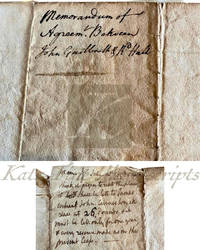
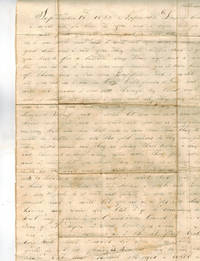
17630001650<p>On offer is a pre-Revolutionary plantation rental agreement between a Philadelphia shopkeeper and a Springfield millwright featuring notes that connect multiple family and business ties in late 18th-century Philadelphia and Chester counties.</p><p>The rental memorandum is the work of Philadelphia-based lawyer Paul Isaac Voto whose office was located at <em>"the corner of Black Horse Alley in Second Street." </em></p><p>The agreement was drafted between Mr. John Gailbreath often spelled Galbreath or Gilbreath in other historical documentation c. 1717–1766 a shopkeeper whose store was located <em>"in Second Street between Market and Chestnut streets" </em>and the prospective renter millwright Richard Hall of Springfield Chester County. Historical documents show that Hall also owned property in the region.</p><p>Dated May 1763 the rental memorandum indicates that John Gailbreath <em>".letts his house and plantation in Springfield… for one year from the date hereof to… Richard Hall paying the rent of twenty seven pounds…"</em></p><p>The agreement lays out several rules of tenancy including the following examples:</p><ul><li><p><em>"The Tenant is to have Liberty to reap his Corn and Thrash it in the Barn after the time is over leaving the Thaw and Chatt…"</em></p></li><li><p><em>".the Tenant agrees not to take any Hay Straw or Dung off the Premises…"</em></p></li><li><p><em>".the Tenant agrees to… keep the House… and Premises in repair as good as now… shall not keep more fires in the House but only one in the kitchen and one in another room and… not to cut any timber or wood But in the Back Field joining to Crosiers Croziers Plantation…"</em></p></li></ul><p>A caveat on the verso of the lease agreement states that <em>".If John McCoy do not think it proper to rent the place it shall be lett to James Cochran John Cairnes son in law at 26 pounds…" </em>According to historical news documents Galbreath was traveling in 1763 and appears to have entrusted a Chester County contact with the final decision on the rental in his absence.</p><p>The document is signed by Hall but not Galbreath. Its delivery was witnessed by Paul Isaac Voto and Elyha Taylor and the original seal is present.</p><p>This document provides not only insight into property rights legal agreements and plantation rentals in pre-Revolutionary Pennsylvania but it also offers genealogical data to support research on the still-incomplete history of early Pennsylvania families. These include the Cairnes Voto Hall Cochran and Crozier or Crosier families among others.</p><p>While some 18th-century newspaper data exists digitally to assist with ongoing research these being the sources used to find the location of the subjects' businesses this document remains an invaluable primary source for those interested in 18th-century life movement and genealogical links.</p><p><strong>Condition:</strong> Significant age toning folding and micro-tears with significant tearing in one corner. The document is written in ink with a clear legible hand and remains in good condition for its age. Overall: Fair to Good.</p>
177726884London England: Printed for the Company of Stationers 1777. Twenty-two issues of this yearly British almanac bound in one volume; consecutive and inclusive from the 1777 issue to 1797. These are printed in red & black have the tax stamps on the margins of the title pages and are of 32 pages' length with exceptions or notes as below: 1782: On page 31 the section "VI Rebus by Mr. R. Richardson of Frosterly" has been solved with the manuscript letters & names of clues neatly written at the margins. 1786: pgs 1-2 15-32; However another issue is bound after this incomplete issue that is entire in 48 pages. These almanacs are noted on the title pages as printed for the Company of Stationers; and this "extra" issue is noted on the title page as "Printed for T. Carnan in St. Paul's Church Yard; who after an expensive Suit in Law and Equity by the unanimous Opinion of the Judges of the Court of Common Please dispossessed the Stationers' Company of their pretended exclusive Privilege of Printing Almanacks which they had usurped for two Centuries; a convincing Proof that no unjust Monopoly will ever stand the Test of an English Court of Justice." 1788: pgs 1-2 15-32 only. 1793 Misbound pages out of order and complete 32 pages. 1795: A name of "Old Batholomew" has been added in ms. at the 4th Sept. in the monthly almanac pages section. 1797 pgs 1-16 only. "The existence of the Ladies' Diary or the Woman's Almanack an 18th century English magazine devoted largely to problems and puzzles in mathematics indicates that stereotypes about the inability of women to understand and enjoy mathematics were less strongly believed in the 18th century than they are today.The Ladies' Diary became one of the widely read 18th century magazines devoted to the popularization of science and mathematics; these were addressed mainly to readers with no specialized training in the subjectsThe Ladies' Diary differed from these others primarily in the language used in some of the problems--language which reminds the reader that the problems were addressed to women" from the excellent overview of the magazine its influence & impact by Teri Perl San Francisco State Univ. Historia Mathematica 6 1979 article on the 'Diary' Indecipherable by us previous owner name on back endpaper.Approx. 4" x 6 3/8" size; bound in marbled-paper covered boards leather corners edges tinted yellow; spine covering gone; wear to the edges tips of the binding; bottom cord of top board let go; the block still solidly sewn some edges trimmed close; contents generally clean and in good condition. . First Edition. Hard Cover. Good. Printed for the Company of Stationers hardcover books
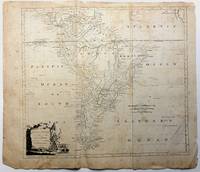
H9044Sheet measures 17x15 inches light wear and a few short tears have been neatly mended on the verso a few small stains some lengthwise creases but a handsome map. unknown
1986LFA-126749978Une plaquette de 40 pages, format 150 x 205 mm, illustrée, brochée couverture couleurs, publiée en 1986, Nouvel Atelier du Livre, bon état
18020009162BETHEL TOWNSHIP LEBANON COUNTY PENNSYLVANIA. Good. 1802. On offer is an interesting document of early 19th century education an original handwritten note book covering a myriad of subjects related to mathematics. The owner and creator of this book was a man named Henry Snevely also written as Snavely and the book dates from 1802 - 1803. It seems Snevely was born in the United States and lived his whole life in Southeastern Pennsylvania. At the time of the creation of the book Snevely was almost 50 years old an established land owner in Bethel Township Lebanon County. Why he had a book of mathematics is unknown however I have found records of a Henry Snavely who taught at a school in Bethel Township from 1797 onwards. It may be likely that this book is actual not for Henry himself but for the instruction of his students. Either way the book presents a fantastic overview of early 18th century knowledge. The book covers a very large range of topics however Math pertaining to financial matters is dominant throughout. As well there are conversions of Irish and British currency. The primary immigrants to the area at the time of the book were indeed Scotch-Irish so teaching Irish and British currency conversions wouldnt be too far off. Currency exchange in particular is a primary focus owing to the large amount of immigrants to the area. Individual page headings in the book include Exchange many pages Exchange of Arbitrations Barter Profit and Loss Fellowship Fellowship with Time Allegation Media Alternate Partial and Total Square Root Cube Root Arithmetical and Geometric Progression Compound Interest Single and Double Position Reduction Addition Subtraction Multiplication and Division of Fractions and Vulgar Fractions Rule of Three in Fractions and Questions for Exercise. There is a later manuscript memorandum on rear endpaper dated 1829 bearing the names of additional members of the Pennsylvania Snavely clan Molly George and John. The name Martin Rupp also appears in memorandum and our research confirms various Martin Rupps residing in southeastern Pennsylvania during this time. The book is in fair to good condition. The volume is bound in the original stiff paper wraps. The cover is very worn and the spine is torn and partially detached. There is mild age-toning and occasional staining but the internal pages are generally clean. The black ink is still bold and easily legible throughout. The book contains about 85 pages of manuscript entries and the book itself is approximately 90 pages. It measures 12.5 x 8 inches. Biography: Henry Snavely was born on August 2 1755 in Bethel Township Lebanon County Pennsylvania. .Henry Snavely was a Lutheran. At that time he was considered a good scholar and is said to have been a hard student obtaining his knowledge principally by his own exertion. He taught the school from 1797 to 1807.; A report from 1773 shows his farm had 150 acres 5 horses 4 cattle and no servants. OVERALL: G; Manuscript; Folio - over 12" - 15" tall; KEYWORDS: HISTORY OF HENRY SNEVELY HENRY SNAVELY EARLY 19TH CENTURY KNOWLEDGE SCIENTIFIC REVOLUTION MATHEMATICS GEOMETRY TRIGONOMETRY FINANCIAL CALCULATIONS BARTERING INTEREST TEACHER'S BOOK BETHEL TOWNSHIP LEBANON COUNTY SOUTHEASTERN PENNSYLVANIA COMPLEX MATHEMATICS ALGEBRA MARTIN RUPP PRACTICAL MATH FOR FARMERS 19TH CENTURY AMERICA EARLY 1800S IN THE MID-ATLANTIC STATES CYPHER BOOK AMERICANA HANDWRITTEN MANUSCRIPT DOCUMENT LETTER AUTOGRAPH WRITER HAND WRITTEN DOCUMENTS SIGNED LETTERS MANUSCRIPTS HISTORICAL HOLOGRAPH KEEPSAKE WRITERS AUTOGRAPHS PERSONAL MEMOIR MEMORIAL ARCHIVE DIARY DIARIES JOURNAL LOG ANTIQUITÉ CONTRAT VÉLIN DOCUMENT MANUSCRIT PAPIER ANTIKE BRIEF PERGAMENT DOKUMENT MANUSKRIPT PAPIER OGGETTO D'ANTIQUARIATO ATTO VELINA DOCUMENTO MANUSCRITTO CARTA ANTIGÜEDAD HECHO VITELA DOCUMENTO MANUSCRITO PAPEL . paperback
184974700Boston 1849. Original stampless ms. letter from agent E. P. Pratt to Company Secretary Guy. R. Phelps. The letter on typical blue paper is dated March 13 1849 and concerns policies on two very well known California '49ers; Augustus Elliott and John Webber Jr. Red circular date stamp on verso of March 14. Some age blurring but still extremely legible.Much of the letter concerns a plea for multiple copies of the company's Annual Report but at the top we read - Augustus Elliot ins'd by Policy No. 2660 goes to Calif in Barque Sangrange. At the end of the letter just prior to the salutations we read - John Webber Jr. ins'd by Pol. No. 1401 is going to California overland and wants a Permit; he is in a hurry for it as he starts shortly."A year after Elliott reached California he organized his Atlantic and Pacific Express Company to carry mail and packages between the east and west coasts of America personally accompanying each shipment by steamer across the Isthmus from San Francisco to New York and back again a “superior advantage†especially for those who wished to send gold dust to eastern banks. Offering such illustrious references as the US Senators from Massachusetts and the first federal official in San Francisco he soon added the service of assisting emigrant families to make the trip “on most favorable termsâ€. This was more than a year before Henry Wells organized the Wells Fargo Company to extend his eastern Express service to California.Unlike Elliott who soon sailed for the Isthmus of Panama Captain John Webber Jr. a heroic veteran of the Mexican-American War was selected to lead the 50 men of the “California Mutual Protection Association†overland to the Gold Fields. Well-equipped with a dozen other military veterans in uniform four musicians “two black servants and six dogs†they left Boston on March 19 a week after this letter was written their six month journey on the Oregon Trail recorded in a diary now held by the Bancroft Library. By the time Webber – portrayed as a U.S.Grant-type soldier in the Discovery Channel dramatization “Gold Fever†– reached Utah on July 31 only four of his group remained. They did not reach Sacramento until September"B. McMakin. unknown
1855007164Sacramento California 1855. Manuscript. Very Good. No Binding. HOLOGRAPH LETTER SIGNED. Two manuscript letters in ink both on ruled paper with folding creases the 1855 letter 8" x 12 1/2" with single spaced writing both sides approx. 500 words. The 1856 letter 15" x 10" folded in half to make 4 pp. approx. 300 words with small blindstamp top left corner depicting an eagle. The earlier letter is headed "September 18th 1855 Naperville Dupage County Illinois" and ends "Michael direct your letters Nevada County Nevada post office California". George writes to his brother Michael in Naperville that he has "seen a good dele sins i rote you they last letter" including a hundred "inshins" and some "Buffellow". He adds that "we had good luck all they way of may we left Council Bluff" and that he is not home sick yet. He then talks of the gold mines river mining what they are paying and the cost of things such as board "from five to ten dollars a week" "Beaf" "wors 15 to 20 cents" and "potato" "4 cent per pound". He adds that he intends to have some gold before he comes home and that "girls are not so plenty here as they are in state". He closes by asking his brother to write him and to remain at home in Illinois to care for their parents. The 1856 letter headed Sacramento august 3th 1856 informs his brother that he is well and "down to Sacramento now" working on a farm feeding a "schrasing" thrashing machine and that "they times is verry hard in California now". He adds that he had some money "stole" while he was in the mountains but since coming down into the valley he was making money and will send some home soon. The letter ends with George wishing to see them all soon and that he is not home sick. The third page of the letter bears a drawing of a wing or leaf eleven smaller versions of the same image interspersed on page 2. A fascinating testimonial on California during the gold rush written in a strong hand and in a wonderful vernacular style by a good observer. unknown
1855007164Sacramento California 1855. Two manuscript letters in ink both on ruled paper with folding creases the 1855 letter 8" x 12 1/2" with single spaced writing both sides approx. 500 words. The 1856 letter 15" x 10" folded in half to make 4 pp. approx. 300 words with small blindstamp top left corner depicting an eagle. The earlier letter is headed "September 18th 1855 Naperville Dupage County Illinois" and ends "Michael direct your letters Nevada County Nevada post office California". George writes to his brother Michael in Naperville that he has "seen a good dele sins i rote you they last letter" including a hundred "inshins" and some "Buffellow". He adds that "we had good luck all they way of may we left Council Bluff" and that he is not home sick yet. He then talks of the gold mines river mining what they are paying and the cost of things such as board "from five to ten dollars a week" "Beaf" "wors 15 to 20 cents" and "potato" "4 cent per pound". He adds that he intends to have some gold before he comes home and that "girls are not so plenty here as they are in state". He closes by asking his brother to write him and to remain at home in Illinois to care for their parents. The 1856 letter headed Sacramento august 3th 1856 informs his brother that he is well and "down to Sacramento now" working on a farm feeding a "schrasing" thrashing machine and that "they times is verry hard in California now". He adds that he had some money "stole" while he was in the mountains but since coming down into the valley he was making money and will send some home soon. The letter ends with George wishing to see them all soon and that he is not home sick. The third page of the letter bears a drawing of a wing or leaf eleven smaller versions of the same image interspersed on page 2. A fascinating testimonial on California during the gold rush written in a strong hand and in a wonderful vernacular style by a good observer. . HOLOGRAPH LETTER SIGNED. Manuscript. Very Good. books
1866286043New York 1866. unbound. very good. located in the Nevada District of the Colorado Territory with beautifully engraved vignettes of a miner working by torchlight and a group of miners sending ore from the mine shaft to the surface by way of an bucket-brigade. Signed by the Secretary and President of the Corporation whose main office was located in New York City. This certificate bears two uncancelled 25 cent Internal Revenue Certificate stamps applied to the certificate in their designated spaces. The stock certificate appears not to have been redeemed. Scarce. Very good<br/><br/> Folds are very light and the steel engravings are clearly printed. There is a small chip to the top margin above the printed border.<br/><br/> unknown books
18670001244SS ALEPPO EUROPE MT. VESUVIUS ITALY. Good. 1867. Full-Leather. On offer is an original manuscript travel diary of a young woman who travels from America to Ireland on the S.S. Aleppo and then spends time in London and Paris before going to Italy. Stating "Bought at Dublin 12 Nov. 1867" then a later hand in pencil on the fep suggests the names of Julia L. Hale or Julia de Rubignir. Entries range from 1867 to 1868 and our diarist does a great job describing the journey from America to Ireland on the ship as well as all the places she visits. The passages of her witnessing the eruption of Mount Vesuvius and their attempt to be 'tourists' of the lava flow while in Italy are great. She adds further dimension by drawing a lovely folk art picture of the volcano in action. She also sees the Prince and Princess of Italy shortly after their marriage. Here are some snippets: We first caught sight of Vesuvius an hour and a half or two hours before we reached Naples it was then quite light and we could just see a silvery white cloud hanging over it but it became brighter and showed the fire as the day grew darker and we drew nearer. The first night at Naples we went to the Hotel Washington. I shall never forget the scene as we drove up to the door there was Vesuvius black as night except where the volcanic fires rose and fell while above the mountain a cloud hung even darker but a little on the right the full moon was just rising at first we could not see it but only its effects in the silver edges of the clouds and a lovely silver light which seemed to float up from a cloud then gradually it rose into sight flooding the whole city with light gleaming on the water in strange contrast to the reflection of the Red lights on the volcano. We could scarcely tear ourselves away from the windows that night and were very sorry to leave the Hotel the next morning but there was an odor which could not be explained away so we walked away We went ashore and went to the ruin of the temple of Jupiter we went to the amphitheatre which is believe the most perfect one in the world we killed quite a large snake which was nearly at the very top then all the others except John and I went to Solfatara which is a mountain called the back door of Vesuvius. First we went to Vesuvius and drove up as far as we could then walked about two mils till we came to the lave which was thrown up or down or both as Mary wrote. It looks something like as if very thick black or brownish mush had been boiling furiously and suddenly congealed or like a storm raging at sea. We only went about half way up but it was not considered safe to go farther but we could see the mountain perfectly of course and had a good idea of the lava. Here another accident happened while we were in the tunnels there was so much smoke and steam that the engineer was poisoned by it and first fainted and then had convulsions very badly but they fanned them with branches and after an hour or two he was well enough to go on. We then went to San Lazzaro an island about a mile and a half from Venus there is a learned and celebrated Armenian convent there the monks are all so handsome and look so intelligent we had such a lovely monk to go around with us he was very small but quite handsome he had large bright black eyes and such a merry pleasant expression he had curly black hair and wore spectacles and was very restless indeed we could scarcely glance at a thing before he would say No we will go. The most interesting things we saw were the autographs of Byron his portrait which was very handsome and the room which he occupied for three months while studying the Armenian language. Thursday morning the Prince and Princess and attendants came into town about half past ten there was a rope drawn across the grand canal just above the depot and none but private gondolas were allowed to go inside of it and our gondola was just outside and when the rope was taken away the jam was so great that no one could move scarcely the men shouted agua agua and there was the greatest hubbub and confusion and I really never saw anything so exciting in my life. Many of the hired gondolas go way ahead of the private ones ours was next but one to the prince's just before they landed so we could see them splendidly. The gondola or rather barge was finely ornamented there were a great many rowers the boys took off their hats and bowed the prince did the same to them he looked very tired and dusty he had a melancholy look as usual but we all liked him. The princess looked very pretty as usual she was dressed in a very handsome suit of dove colored silk. There were also several ladies of honor and two celebrated generals one has the highest position in the army or rather the command of the army I believe." Included is a CDV of Will Morgan who is talked about throughout the diary and was traveling with her although their connection is not fully explained in a casual reading. The spine is gone for the most part but otherwise overall G.; English; 12mo - over 6¾" - 7¾" tall; VOLCANO ERUPTIONS VESUVIUS ITALY TRAVEL EUROPE GENDER STUDIES WOMEN'S STUDIES antiquité contrat vélin document manuscrit papier Antike Brief Pergament Dokument Manuskript Papier oggetto d'antiquariato atto velina documento manoscritto carta antigüedad hecho vitela documento Manuscrito HANDWRITTEN MANUSCRIPT DOCUMENT LETTER AUTOGRAPH DIARY JOURNAL LOG KEEPSAKE WRITER HAND WRITTEN DOCUMENTS SIGNED LETTERS MANUSCRIPTS HISTORICAL HOLOGRAPH WRITERS DIARIES JOURNALS LOGS AUTOGRAPHS PERSONAL MEMOIR MEMORIAL PERSONAL HISTORY Monte Vesuvio Mons Vesuvius Pompeii Herculaneum. . hardcover
186932728Virginia City California 1869. Paper. Very good. Approx. 8" x 3" check with printed green borders information and 2 stamps. Check is drawn on the account and signed by Isaac L. Requa. The information printed on the check is "Gould & Curry Silver Mining Company W. C. Ralston Treasurer. Agency of the Bank of California Virginia City. The written date is Aug 3 1869. <br /> <br /> Requa was a mining engineer early Oakland pioneer and later President of Oakland Bank and Savings. unknown
18990001206WASHINGTON DC LEIPZIG LEIPSIC. Very Good. 1899. On offer is the original 1899 manuscript diary handwritten by Rebecca P. Warner known by one and all as Bess or Bessie who was 26 at the time. Bess the oldest of 9 children offers the reader a unique view of how a prominent wealthy Washington DC family the lived at the end of the 19th century but even more important is the very intimate interesting view of Germany during one of the country's most fascinating eras of historical development pror to World War I. Bess' father was Brainard Warner Sr. who was a lawyer but made his fortune in banking real estate and land development. His company was responsible for the oversight or building of over 1000 buildings and homes in the Washington DC area. Bess's mother was Mary Jacobs Parker Warner who was descended from Edward Doty a Pilgrim and indentured servant who sailed over on the Mayflower signed the Mayflower Compact and helped to settle Plymouth Colony. This diary describes Bess' trip with her sister Anna and brother Brainard Jr. to Leipzig Germany where Brainard Jr. was the US Consul. Bess does a super job of detailing setting up house in Leipzig and also about their daily lives there. They also did a lot of traveling within Germany and she describes that as well. Research notes that the Warner family endured a lot of sadness. They lost three children at birth or very early in life. They lost their mother Mary Jacobs after the birth of Lucy who then died. They lost their son and brother Southard who committed suicide at age 33 by shooting himself while stationed as a consul in China. Then Brainard Warner Sr died two years after the death of Southard. Here are some snippets and observations from a casual reading: They went to the motette at St Thomas Kirche which was very beautiful. The church was crowded. Students belonging to a club were there. They stayed after the service and thought they might see a German wedding. They have them nearly every Saturday after motette. They got caught in the middle of a religious service. They were sitting right in front of the minister and Bess was afraid they'd get called up to do something In the evening Mrs Young telephoned to ask them over. Brainard had an engagement but Bess and Anne went. They left Leipzig for Chemnitz and went directly to the consulate where they had supper. They went with Mr Monaghan to Schellenburg where his family was summering. "This was a queer little town located on the top of a mountain" There is a beautiful castle and some old walls. Aside from that Bess thought it was an uninteresting place to spend a summer. They left on Monday. They went to a parade in honor of the King of Saxony. About 5000 men were received. They expected to see the King on horseback but he was on foot with other officers. They met Professor Gregory who showed them around some parts of the University. In the afternoon Brainard Anne and Bess called on Mrs Monroe. Brainard went out in the evening with friends. "Today is the Emperor's birthday and all the flags are out. We stood for a long time to watch the Lieut General review the officers. It was a fine sight. what little we could see though the crowd But we were nearly frozen it was so cold" Bess practiced and then went for a lesson with Herr Krause only he wasn't in. She went again at 4 pm. "He was very discouraging and said I had no independence of fingers" Bess thought it would take her several lessons to get the right finger position and that there was no royal road to piano playing. "Hard work is the only road to success in anything". She went home. They had letters from Mamma and Pa. Then they went over to hear the St Thomas Kircke choir practice such beautiful voices. They had a number of people who stopped by for visits." We actually had a count call on us Graf Laisher who was very bright and interesting. He is studying medicine at the University" He said he couldn't speak English but he was very fluent. He proceeded to show them some of his feats of exercise and they were petrified because of their rented furniture. But everything was whole when he left. In the evening Bess and Anne went to the home of Mrs Morris. They danced but it was more of a lesson for the young grandson. He fancied Bess as a teacher and so they whirled around in a circle for 2 hours. Bess wrote that dancing on the ship over was "nothing compared to my feelings after dancing in the mad German fashion" Bess Anne and Lucy went to the Catholic Church which the royal family attended. "I must say I was thoroughly disappointed in royalty as exhibited here. The king queen and two other members of the family sat in boxes on a level with the gallery of the church and just to the left of the altar. Princess Matilda is one of the coarsest people I have ever seen. She spent most of her time yawning. She must weigh at least 200 lbs. We only stayed while the King and Queen were there." The diary has approximately 141 pages of entries from January 1 1899 to August 2 1899 with some gaps in this 4" x 6 ½" diary. Overall G.; English; 12mo - over 6¾" - 7¾" tall; MAYFLOWER GENDER STUDIES TRAVEL PRE WORLD WAR I BRAINARD WARNER DOTY WOMEN'S STUDIES GERMAN ROYALTY DEUTSCHLAND ANTI SEMITISM GERMANY AUTOGRAPH HANDWRITTEN MANUSCRIPT Gründerzeit Emperor William II antiquité contrat vélin document manuscrit papier Antike Brief Pergament Dokument Manuskript Papier oggetto d'antiquariato atto velina documento manoscritto carta antigüedad hecho vitela documento Manuscrito HANDWRITTEN MANUSCRIPT DOCUMENT LETTER AUTOGRAPH DIARY JOURNAL LOG KEEPSAKE WRITER HAND WRITTEN DOCUMENTS SIGNED LETTERS MANUSCRIPTS HISTORICAL HOLOGRAPH WRITERS DIARIES JOURNALS LOGS AUTOGRAPHS PERSONAL MEMOIR MEMORIAL PERSONAL HISTORY . unknown
A9798887192055Hardback. New. <p>This anthology the first of this kind in twenty-five years collects eighteen astounding works of Jewish fiction.<br /><br /></p><p>This is the first anthology of translated multilingual Jewish fiction in 25 years: a collection of 18 splendid stories each translated into English from a different language: Albanian Croatian Czech Danish French German Greek Hebrew Hungarian Italian Ladino Polish Portuguese Romanian Russian Spanish Turkish and Yiddish. These compelling humorous and moving stories written by eminent authors that include Shmuel Yosef Agnon Isaac Babel and Lili Berger reflect both the diversities and the commonalities within Jewish culture and will make you laugh cry and think. This beautiful book is easily accessible and enjoyable not only for Jewish readers but for story-lovers of all backgrounds.</p><p>Authors in the order they appear in the book include: Elie Wiesel Varda Fiszbein S. Y. Agnon Gábor T. Szántó Jasminka Domaš Augusto Segre Lili Berger Peter Sichrovsky Maciej Płaza Entela Kasi Norman Manea Luize Valente Eliya Karmona Birte Kont Michel Fais Irena Dousková Mario Levi and Isaac Babel.</p> hardcover
B9798887192055Hardback. New. <p>This anthology the first of this kind in twenty-five years collects eighteen astounding works of Jewish fiction.<br /><br /></p><p>This is the first anthology of translated multilingual Jewish fiction in 25 years: a collection of 18 splendid stories each translated into English from a different language: Albanian Croatian Czech Danish French German Greek Hebrew Hungarian Italian Ladino Polish Portuguese Romanian Russian Spanish Turkish and Yiddish. These compelling humorous and moving stories written by eminent authors that include Shmuel Yosef Agnon Isaac Babel and Lili Berger reflect both the diversities and the commonalities within Jewish culture and will make you laugh cry and think. This beautiful book is easily accessible and enjoyable not only for Jewish readers but for story-lovers of all backgrounds.</p><p>Authors in the order they appear in the book include: Elie Wiesel Varda Fiszbein S. Y. Agnon Gábor T. Szántó Jasminka Domaš Augusto Segre Lili Berger Peter Sichrovsky Maciej Płaza Entela Kasi Norman Manea Luize Valente Eliya Karmona Birte Kont Michel Fais Irena Dousková Mario Levi and Isaac Babel.</p> hardcover
Firenze, Palazzo Strozzi, 25 settembre - 11 ottobre 1993. Firenze, 1993; ril., pp. 550, ill. col., tavv. col., cm 22x28,5. italiano ril.
Søren Mølstrøm, edIn Pristine Condition. unknown
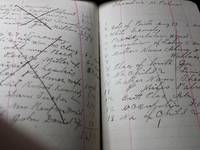
19090002367CULLMAN CEDAR BLUFF ALABAMA. Fair. 1909. On offer is a fascinating naïve group of eight 8 original ledgers once owned and handwritten by we believe a doctor named J.P. Wilson of Cedar Bluff Alabama as per an inscription in the 1909 book. That said we cannot be certain as to ownership as there are two possible ownership inscriptions the other in the 1916 book of J. D. King of Cullman County Alabama. Local researchers should undoubtedly be able to confirm the author. Through the years 1909 1910 1912 1916 1918 1920 1924 to 1927 readers will find a trove of date regarding this doctor's practice in Northern Alabama. The information includes a daily tally of patients seen prognosis medicines given and amount what he charged for his services how much the patient paid and the balance owed to him. These also show some of the trades he made for his services. Many of the births and deaths are recorded. All told the books make for what would through forensic analysis of the records a super picture of the available medical care types of treatments ailments and remedies in this rural area of Alabama. Genealogists will no doubt have a fair bit of information. Overall the books are legible though the covers and bindings for the most part are in rough shape. Overall Fair .; Manuscript; 12mo - over 6¾" - 7¾" tall; KEYWORDS: HISTORY OF CULLMAN CULLMAN COUNTY CEDAR BLUFF NORTHERN ALABAMA SOCIAL HISTORY THE DEEP SOUTH ALABAMIAN SOUTHERN AMERICANA MEDICAL HISTORY HISTORY OF MEDICAL SERVICES HUNTSVILLE BIRMINGHAM J.D. KING J.P. WILSON DOCTORING EARLY 20TH CENTURY MEDICINE RURAL ALABAMA AMERICANA HANDWRITTEN MANUSCRIPT AUTOGRAPHED AUTHORS DOCUMENT LETTER AUTOGRAPH KEEPSAKE WRITER HAND WRITTEN DOCUMENTS SIGNED LETTERS MANUSCRIPTS HISTORICAL HOLOGRAPH WRITERS AUTOGRAPHS PERSONAL MEMOIR MEMORIAL PERSONAL HISTORY ARCHIVE DIARY DIARIES JOURNAL LOG PRIMARY SOURCE FIRST HAND ACCOUNT SOCIAL HISTORY PERSONAL STORIES LIVING HISTORY ANTIQUITÉ CONTRAT VÉLIN DOCUMENT MANUSCRIT PAPIER ANTIKE BRIEF PERGAMENT DOKUMENT MANUSKRIPT PAPIER OGGETTO D'ANTIQUARIATO ATTO VELINA DOCUMENTO MANOSCRITTO CARTA ANTIGÜEDAD HECHO VITELA DOCUMENTO MANUSCRITO PAPELBIOGRAPHY BIOGRAPHICAL AUTOBIOGRAPHICAL AUTOBIOGRAPHY PERSONAL NARRATIVES . unknown
1910010179Peking Beijing China 1910. Envelope or Cover. Very good. <p>This three-page letter is written on illustrated Chinese stationery each leaf has a different illustration measuring 5" x 9". It was sent on 29 May 1910 by a young woman in Peking Debra or Delia Seavens to her Uncle Wilson Smith in Montclair New Jersey. It is enclosed in a "red-band" envelope that is franked with a 10-cent dragon stamp Scott #129 and bears two Peking postmarks. A Peking transit mark is on the reverse along with an indistinct U.S. receiving mark. The letter was routed "Via Siberia" as indicated on the front of the envelope. A typed onion-skin enclosure is included. In nice shape. Transcript will be included.</p> <br /> <br /> <p>Ms. Seavens was serving within Peking as she references travelling out of the city with a female associate. Although the letter doesn't indicate the mission's name it was likely associated with the Anglican Society to Propagate the Gospel as at the time it had the most prominent presence in the city.<br /> </p> <br /> <br /> <p>Red-band envelopes which were prized by the Chinese for their attractiveness and as a symbol of good luck were usually reserved for sending auspicious personal or commercial messages. They were seldom used by foreigners. As explained by Ms. Seavens </p> <br /> <br /> <p style="margin-left:5%; margin-right:5%;">"Please do not be shocked by the envelope. It is truly Chinese. The proper form of address would be on the red line 'Uncle Wilson Great Man' and at one side 'Please give to Mr. Smith' with the address." She also thanks him and her aunt for a thermos bottle which she used while visiting Chinese families to provide them with untainted cold water and hot milk. </p> <br /> <br /> <p>As well she enclosed a most interesting note from her Board Secretary regarding a visit from a Chinese woman . It reads in part:</p> <br /> <br /> <p style="margin-left:5%; margin-right:5%;">"The caller was a serving woman from one of the more well-to-do- families in the village. She came on an errand when Miss Andrews and Miss Browne were both out. Following her errand she said coyly 'Would you have time to take me up stairs' It was quite evident that she was not used to stairs for she mounts it with great caution feeling of the carpet at every step. Stair carpets are interesting . . . but they can't compete with beds to one who has never dreamed of anything . . . but a k'ang. 'Oh how white and how soft' she said 'how many of you sleep here' This question was answered several times till she really took it in that we had a bed apiece. . . She was dumb founded and crawled half way under the bed to see what could be making it behave so strangely as to regain its shape when vacated. She perched gingerly on the side of a rocking chair so that I expected to see her tip over any minute. . . She picked up a book and proudly showed me that she could read a few characters and fairly swelled with pride . . . as she recited a little hymn running her fingers along the lines pretending that she was reading it. . . Then we sang. . . I hit the tune once in a while and she never by any chance did. . ."</p> <br /> <br /> <p>An original source historic philatelic and visual treasure.</p> . unknown
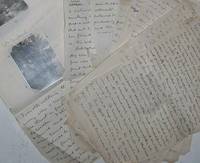
19220002248KAMPONG INDONESIA SINGAPORE 1922. On offer is a super original 1922 manuscript diary of a woman who we believe is named Margaret or Mary Discon. While she has not identified herself she does seem to refer to herself at some point in the third person. The diary describes her time spent in Kampong Singapore near Saribue Dolok. Using 8½ x 14 inch sheets of paper folded but loose she describes her time over 17 pages with some photos as titled: "A Day at _____gale." While the first part of the place name is difficult to read we are sure that local researchers and historians will no doubt uncover the location especially given the detailed clues leading up to the spot. Here are some snippets: "It was with gay hearts that we sat in the lamplight making the best breakfast we could with nerves thrilling in anticipation of the days jaunt while the boy and his wife saw to the storing of baskets of provisions; lemons soda waters etc. etc. We stepped into the car as the sun was lighting the east and a cool breeze making coats very necessary. Our days outing had been looked forward to for weeks and the visit of a fellow passenger brought the journey to completion. The jungle sounds were ceasing and domestic animals of all specimens were beginning to stir. First we went through rubber then a long street of palm shaded road through a struggling and picturesque Kampong ." Their car gets stuck in the mud and they have to have the village people dig them out: " .we reached Saribue Dolok which seemed to consist solely of a large store and a missionary's house but they usually have been native Kampong's hidden in the hollows here and there for we saw numerous parties of Balaks silently following each other to the market in Indian file ." They are now on their way to a volcano. Also describes the natives clothing. Back to Kampong. "The Kampong of Harring all lies just above the shore guarded by banyan trees. The rest house is a pleasant little bungalow provided by the Dutch government for visiting officials and lent for a small fee to any traveler. Here we found contrary to repost that a well supplied table was provided .We crossed a small stream the stream was small but gully was broad by a bridge consisting of two thin tree trunks on one side of which was a low rattan rope which gave us help and hardly any confidence ." They finally board a boat and she mentions how the crowds of people started gathering to watch them and has a photo showing just this scene. They finally return to the rest house. The diary pages were folded actually misfolded and the edges of the pages are a bit brittle and chipped with some little loss but overall Fair. . Fair. Folio - over 12" - 15" tall. Manuscript. hardcover