[Fashion]Biblio.com
740 résultats
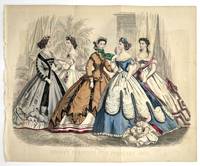
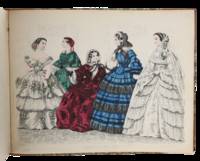
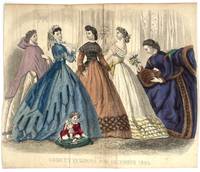
1537Folded; light creasing toning and foxing; unevenly trimmed along previously bound edge. Very good. <p>Hand-Colored Folding Plate Depicting Contemporary Lady's Fashions. Godey's Lady's Book Dec. 1865. Philadelphia: L. A. Godey & Co. 1865. <br /> Measures approximately 9.25.5 x 11.5 inches. Blank to verso. </p> . unknown
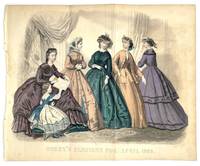
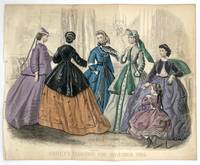
1532Folded; light creasing toning and foxing; unevenly trimmed along previously bound edge. Very good. <p>Hand-Colored Folding Plate Depicting Contemporary Lady's Fashions. Godey's Lady's Book April 1865. Philadelphia: L. A. Godey & Co. 1865. <br /> Measures approximately 9.25.5 x 11.5 inches. Blank to verso. </p> . unknown
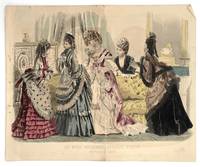
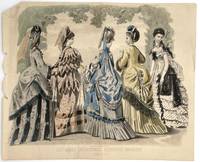
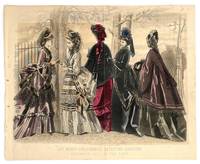
1541Folded; light creasing toning and foxing; unevenly trimmed along previously bound edge. Very good. <p>Hand-Colored Folding Plate Depicting Contemporary Paris Fashions Les Modes Perisienne's. Peterson's Magazine October 1872. Philadelphia: C. J. Peterson 1872.<br /> Measures approximately 9.5 x 11.5 inches. Blank to verso.</p> . unknown
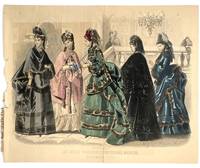
1542Folded; light creasing toning and foxing; unevenly trimmed along previously bound edge. Very good. <p>Hand-Colored Folding Plate Depicting Contemporary Paris Fashions Les Modes Perisienne's. Peterson's Magazine November 1872. Philadelphia: C. J. Peterson 1872.<br /> Measures approximately 9.5 x 11.5 inches. Blank to verso.</p> . unknown
1531Folded; light creasing toning and foxing; unevenly trimmed along previously bound edge. Very good. <p>Hand-Colored Folding Plate Depicting Contemporary Lady's Fashions. Godey's Lady's Book March 1865. Philadelphia: L. A. Godey & Co. 1865. <br /> Measures approximately 9.25.5 x 11.5 inches. Blank to verso. </p> . unknown
1536Folded; light creasing toning and foxing; unevenly trimmed along previously bound edge. Very good. <p>Hand-Colored Folding Plate Depicting Contemporary Lady's Fashions. Godey's Lady's Book Nov. 1865. Philadelphia: L. A. Godey & Co. 1865. <br /> Measures approximately 9.25.5 x 11.5 inches. Blank to verso. </p> . unknown
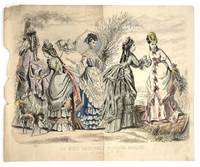
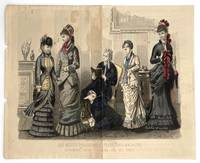
1543Folded; light creasing toning and foxing; unevenly trimmed along previously bound edge. Very good. <p>Hand-Colored Folding Plate Depicting Contemporary Paris Fashions Les Modes Perisienne's. Peterson's Magazine June 1873. Philadelphia: C. J. Peterson 1873.<br /> Measures approximately 9.5 x 11.5 inches. Blank to verso.</p> . unknown
1544Folded; light creasing toning and foxing; unevenly trimmed along previously bound edge. Very good. <p>Hand-Colored Folding Plate Depicting Contemporary Paris Fashions Les Modes Perisienne's. Peterson's Magazine August 1873. Philadelphia: C. J. Peterson 1873.<br /> Measures approximately 9.5 x 11.5 inches. Blank to verso.</p> . unknown
1546Folded; light creasing toning foxing and staining; unevenly trimmed along previously bound edge. Very good. <p>Hand-Colored Folding Plate Depicting Contemporary Paris Fashions Les Modes Perisienne's. Peterson's Magazine September 1873. Philadelphia: C. J. Peterson 1873.<br /> Measures approximately 9.5 x 11.5 inches. Blank to verso.</p> . unknown
1545Folded; light creasing toning and foxing; unevenly trimmed along previously bound edge. Very good. <p>Hand-Colored Folding Plate Depicting Contemporary Paris Fashions Les Modes Perisienne's. Peterson's Magazine November 1873. Philadelphia: C. J. Peterson 1873.<br /> Measures approximately 9.5 x 11.5 inches. Blank to verso.</p> . unknown
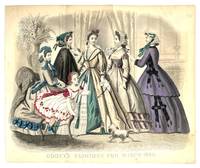
1567Folded; light creasing toning and foxing; unevenly trimmed along previously bound edge. Very good. <p>Hand-Colored Folding Plate Depicting Contemporary Lady's Fashions. Godey's Lady's Book February 1865. Philadelphia: L. A. Godey & Co. 1865.</p> <br /> <p>Measures approximately 9.25.5 x 11.5 inches. Blank to verso.</p> . unknown
185635856Paris: Goubaud et Cie 1856. First Edition. Hardcover. 380pp. Contemporary marbled boards. With twelve hand-coloured wood engravings depicting various styles of clothing and numerous b&w in-text illustrations including embroidery styles. Articles on home economics travels beaux-arts history the Louvre and the Tuileries Palace and much more. Front board is detached with title page and two leaves internally mostly clean with some foxing and toning. Text in French. ; Large Octavo. Goubaud et Cie hardcover
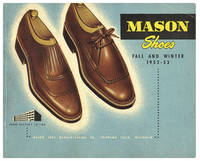
195241618Chippewa Falls WI: Mason Shoe Manufacturing Co 1952. First Edition. Very good . An illustrated wholesale catalog of leather mens and ladies footwear and outerwear from the Mason Shoe Manufacturing Company of Chippewa Falls WI. Generously illustrated in color throughout with detailed product descriptions and model numbers that correspond to the original price list in front. Of note is a four page spread of men's leather coats including "The Racer" a classic motorcycle-culture jacket with multiple zippers straps and buttons. Wraps. Oblong 4to. Color illustrated wraps. Mild handling wear. Faint creasing to wraps. Overall sound clean. 112pp. Mason Shoe Manufacturing Co unknown
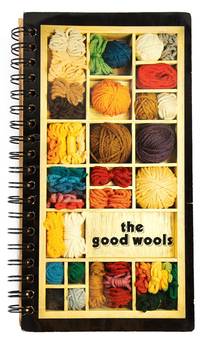
19771004235New York: The Wool Bureau 1977. Original trend report on American knitwear for fall 1977 featuring fashion sketches on every page each captioned with the name of the manufacturer the wool content and the retail price. Featured designers of these ready-to-wear styles include Donna Karan for Anne Klein Gloria Vanderbilt and Kay Unger. Also represented are the mass-market "sport" lines of Givenchy and Pierre Cardin. The Good Wools was issued by The Wool Bureau the American branch of the International Wool Secretariat. The IWS shaped global fashion trends for decades through forecasting reports like this one and through the International Woolmark Prize which launched the careers of designers Yves Saint Laurent and Karl Lagerfeld. In 1997 the IWS would rebrand as The Woolmark Company keeping their iconic logo the stylized skein of yarn used throughout The Good Wools to signify 100% wool content. Provenance: Ellen Robinson uncredited designer of the tweed separates created for a New Division of Alex Colman page 81. A near-fine copy. Spiral-bound volume measuring 10 x 5.25 inches: 8 170. Original color photographic wrappers. Text printed on tan paper with brown card chapter dividers line drawings on every page. The Wool Bureau unknown
192462500Tacoma WA: A.V. Love Dry Goods Co. 2102-2106 Pacific Ave. 1924. 4to. 4 286 i.e. 338 10 pp. Including 52 pp. of colour lithograph sample pages many w/raised colour-embossed plates of bolts of cloth or fabric samples ribbon samples colour swatches 100’s of text illustrations photo illustrations. Brown-cloth backed colour-illustrated flexible covers cover art of 1920’s bobbed-hair woman measuring bolts of cloth Love Co. advertisement on back cover minor chipping & creasing to corners edgewear minor scuffing couple minor closed tears still VG- copy. First edition of this very scarce and lavishly illustrated wholesaler’s dry-goods catalogue issued by A.V. Love Dry Goods Co. during the Roaring 20’s. As a wholesale catalogue goods and counter displays are depicted and priced such as those for cuff buttons combs hair pins perfumes pipes sewing goods textiles and yarns. Of particular interest are the beautifully colour-printed & embossed inserted sample pages for trimmings silks silk threads yarns underwear towels blankets and more. Sections specifically devoted to work clothes including overalls work gloves boots logger’s plaid work shirts wool flannels and even bathing suits are also featured. Love Sr. 1868-1942 a Virginia grocer first moved to Washington State before 1900 and by 1902 had established his own firm in Tacoma for the A.V. Love Dry Goods Co. eventually with sample showrooms in Seattle Portland Bellingham Bremerton Everett Yakima Walla Walla Aberdeen Eugene Lewiston Wenatchee and Juneau & Fairbanks Alaska Territory. The company erected the Love Dry Goods and Loft Building in 1925 built by Heath Gove and Bell located in the Denny Triangle neighborhood and was an excellent example of Seattle’s early Art Deco Architecture. The company moved their base of operations to Seattle from Tacoma on Pacific Ave. after completion. No copies in Worldcat; See: A.V. Love Dry Goods and Loft Building Photograph Collection Boyle Wagoner Architects Univ. of Washington Lib. Spec. Collects. PH0639. A.V. Love Dry Goods Co., 2102-2106 Pacific Ave., hardcover
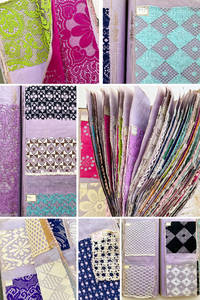
Q1242<p>A generous twentieth-century sample book representing several decades of the Nottingham lace trade. Assembled in a purpose-made binder 17 x 9.5 x 4.5 inches ideal for adding removing and generally rearranging pages. 157 total samples mostly half-page size ~8 x 6 inches. The tallest sample unfolds to 28" and several others extend between leaves up to 14 inches wide. Each specimen has a small label with manuscript number. Several numerical series are represented in the binder likely referring to different mills. 12 of the samples have an "Alan Litman Ltd." sticker a wholesaling firm founded in 1946 and one of the few businesses to weather the Nottingham lace industry's terminal decline throughout the twentieth century.</p><p>The samples are compiled in a Priestley & Swann "Patent Self Binder" that allows for contents to be regularly updated and changed out to reflect stock. Based on advertising and newspaper presence Priestley & Swann appears to have been the most active ca. 1910-1920s then fades from mention around the start of World War II. Another example of their "Patent Self Binder" is a lace sample book held at the Yale Center for British Art believed to be from another Nottingham lace maker in the 1920s Ernest Fewkes.</p><p>As the Nottingham lace businesses shuttered stock could be acquired by the remaining firms. The origin of this album is unknown but it was ultimately used as an in-house reference for Alan Litman confirmed by a current representative of the business. New samples were added through the 1960s with older samples and panels being removed to reflect changing inventory. The binder shows evidence of these changes where manuscript page numbers are crossed or cut out. Several pages were trimmed along the outer edge where some were paginated in the upper corner and at some point rearranged with new pagination assigned at the top center. Some later samples were mounted on pages that had already been repaired with tape also indicating its longtime use in the trade. The makeshift repairs extended the discontinued binder's lifespan a testament to Priestley & Swann's purpose-perfect format.</p><p>A beautiful object in salvaged condition subject to an eclectic series of repairs and repairs of repairs partially paginated in ballpoint pen with sporadic doodling and clipping to the foredges. About two-thirds of the pages were previously repaired with sellotape that had badly degraded and discolored; those mends have been remade with archival tape with additional reinforcements intended to allow the album to be gently handled without further deterioration. Discoloration has been corrected with acid-free pigment to lessen visual interference and strengthen the adhesive-damaged surfaces. New panels have been fitted to the binder posts which are reinforced with cloth binding tape. The result is a somewhat anachronistic object and rare active document of the firm's offerings with the final contents heavily representing the high fashion and novelty laces of the fifties and sixties. Remarkable for their large size and rejection of the delicate lace stereotype–more rock n roll than romance–these brilliant colors and dynamic designs are emblematic of Mod fashion and representative of how Litman adapted to stay in business.</p><p><em>Shipping will be calculated at cost. More photos available at https://alsobooksbooks.com/products/early-twentieth-century-nottingham-lace-specimen-book-with-samples-extending-into-the-1960s</em></p>
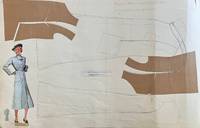
193059525Hannover: Schneidermister ca. 1930-1933. Oblong elephant folio. 23.5 x 14.5 in. 25 leaves unnumbered. Original women’s fashion patterns in pencil throughout many with tipped-in pattern cutouts mounted on the sheets as well as colour images of the finished design tipped-in and mounted manuscript pencil notes & directions in some colour pencil additions to a a few patterns. Stiff limp beige covers black cloth spine title mounted on front cover scutting edgewear repair to corners of front cover corner still a remarkable manuscript w/ tipped-in instructions for taking measurements and fashion by the Nazi Party on first leaf including one entitled “Ein Modewart macht Propaganda.†This German fashion pattern tailoring and pattern manuscript provides an exceptional original artifact of the period when the Nazi Party began to force educational and cultural changes upon German Society against the tailoring and fashion industry in Germany during the early 1930’s. By 1930 Berlin had emerged as an international fashion capital drawing Parisian fashion designers and most of the tailoring schools and fashion houses were operated by generations of Jewish family owners. Tailors and fashion designers were constantly reminded that they must create a wholly Aryan fashion and that they were to avoid French or other outside influences. Despite the pressure most women tailors and fashion designers in the tailoring or cutting schools continued to still draw their influences from Parisian and American couturiers by creating their own patterns and pattern books from which these internationally themed clothing designs could be made. This fashion pattern book by Bode focuses on women’s suits skirts capes coats and knickerbockers. However the Party never succeeded in creating a unique Fashion industry especially because of the drive to dress women in peasant costumes or uniforms even as the Nazi Party would confiscate the assets of over 2700 Jewish fashion houses retailers and manufacturers with 1000’s of tailors and seamstresses forced into labor and concentration camps to produce clothes for military and high society. See: Uwe Westphal Fashion Metropolis Berlin 1836-1939: The Story of the Rise and Destruction of the Jewish Fashion Industry 2019. Schneidermister, hardcover
183362953Leipzig Industrie-Comptoir / Baumgärtner etc. 1833-1856. Small queer-folio 22 x 285 cm. Nice later light brown half calf from ca. 1900 with five raised bands and gilt lines to spine Carl Petersens Enke. Slight wear to extremities. 100 engraved plates in contemporary colouring. A bit of even browning and occasional offsetting. A few plates with more browning. Some plates with tiny holes in blank margin from original stiching having been vertically bound with text-leaves. Occasional light creasing. One plate with a tear no loss. A few plates signed A. Brückner most plates numbered and dated and some plates having "Extra-Kupfer" or "Les Modes Parisiennes Réunis" the last five underneath. <br/><br/><em>A lovely collection of 100 beautiful contemporarily coloured engraved fashion-plates from between 1833 and 1856 importing the highest Parisian fashion of the time to Germany. This beautiful collection magnificently documents the clothing fashion and development of two decades primarily for women but also for children and men. Also in the mid-19th-century Paris was seen as the quintessence of elegance and style. The Allgemeine Moden-Zeitung kept the German-speaking public up to date with the latest fashions from Paris. The magazine “Les modes parisiennes reunites†did the same; that too was produced for the German public despite its French title. As well as outfits for appearing in high society eg. at the theatre the fashion plates collected here show clothes and notably also accessories for almost all other parts of life - paying and receiving social calls going for walks attending different events musical siorées going out with the children etc. “As part of her evening wardrobe every fashionable lady simply had to have elegant dresses in brightly coloured silks and satins with frills and lace bows and flounces tight bodices natural waistlines and exposed shoulders which gave the female figure an hour-glass silhouette. The first thing that strikes one about these ladies’ fashions are the stiff voluminous underskirts. Horsehair crinolines invented in 1850 supported wide sweeping skirts which could measure up to two or two-and-a-half metres in diameter and made the upper body look even slimmer.†Deutsches Historisches Museum. "From the 1820s onwards and particularly under the ostentatious Second Empire 1852–1870 the classicising taste of the Napoleonic era changed completely. Instead fashion now drew inspiration from the elegance of the Rococo period so much so that the period became known as the “second Rococoâ€. The waistline returned to its natural level but was awkwardly styled – at least from a health point of view: agonisingly tight corsets emphasised the so-called “wasp waistâ€. Ostensibly guided by aesthetics on closer inspection this fashion trend also had social consequences: with styles that afforded women so little freedom of movement fashion focused on the ostentatious requirements of ladies from the upper echelons of society who didn’t have to work. Practicality was not its concern. This ostentatious and – certainly from the perspective of the 21st century – inconvenient fashion style appealed not only to the fine ladies of high society but also to women from the middle classes and the petty bourgeoisie. The expansion of the textile industry and the rise of the chemical industry made the production of dyes fabrics lace and embroidery and the processing of raw materials and textiles imported from the colonies both quicker and cheaper.†DHM </em> hardcover
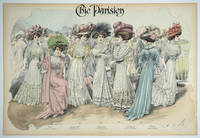
189023483Paris: Eberle 1890. Very good condition. Double spread women's fashion lithograph with early hand color showing an array of seven fashionable gowns. The lithograph depicts a row of ladies at a public event each with her gown and elegant hat depicted in great detail including one showing the intricate ties on the back of the gown. Chic Parisien a competitor to the "Gazette du Bon Ton" was a monthly fashion magazine when dressing well really meant something. 24 1/4 x 16 1/2" Eberle unknown
D21035Near Fine. A unique and visually interesting archive of 125 original womens fashion illustrations produced by several celebrated New York designers and illustrators active during the mid-twentieth century. Together the works capture an innovative and forward thinking American fashion industry post WWII. <br /> <br />The collection is highlighted by original couture evening wear and cocktail dress designs by John Paul Bozett and Frank Perullo both internationally accomplished New York fashion designers and illustrators working in New York City during the 1940s1960s. Additional contributors include De Zine Studio Henry Antonio and others illegible but presumably associated with the citys fashion community during this period. Ephemera includes a Womens Wear Daily typed letter signed TLS a press release and a TLS employment contract for David Hart Incorporated New York. <br /> <br />Rendered in graphite and colored pencil many sophisticated and detailed. Several sheets present multiple perspectives of a single design and retain original job numbers e.g. B-14 annotations regarding color styling and techniques and a few with fabric attached. Approx. 50 with ink signatures on the recto and some with studio stamps name address and telephone on the verso. Sizes vary but approximately 8 x 11 inches. Executed primarily on tissue paper with some examples taped or mounted to heavier stock. Undated but presumably date to the c. 1950s; a few might be a bit later. <br/><br/> unknown
196056965Pasadena CA: n.p. ca. 1960. Folio. 14.5 x 20 in. Twelve original gouache paintings on thick artist’s board 10 of them either w/ typed or manuscript labels 1 entitled “Garden Party†written in manuscript at upper fore-edge 8 preserving their cloth fabric swatch samples some w/ designer’s notes trimmings etc. All are preserved in a gray linen clamshell case minor edgewear rubbing wear to corners still a well-preserved fine set of paintings. This nicely executed set of fashion designs were apparently created for a Civil War theatre production in Southern California around 1960 with characters named Florence Bagshot Mrs. Ludley Bagshot Agatha Mrs. W.D.P.S. and Mrs. Forbes. The designs primarily focused on the women characters including one of a nurse standing in costume in gray striped dress apron and cap with Confederate cavalry trooper in kepi astride his horse and hatless officer with sash standing in the background. Many of the designs reflect the colour palate of the early 1960’s with avocado green vivid blues solid brown earth tones and bright nearly neon orange gauze fabrics in the renderings and samples which would not have been common in those combinations during the Civil War era. Still most of the dress designs incorporate the hoop skirts of the period often with crinoline and/or crinoline cage hoop skirts and high collars with ties and ribbons at the neck and trim patterns typical of the period. The design for Florence Bagshot’s bedroom wear incorporates elements of Mid 20th-Century design and sensibilities rather than the more common chemise and sturdy cotton for the 1860’s. The Confederate Nurse design was painted on “Brownie Board Cold Pressed Duncan Vail Co. Los Angeles†which appears in California art supply advertising from about 1960-1963. We were unable to identify the production after an extensive search through contemporary theatre production trade magazines newspapers and other industry publications. n.p., hardcover
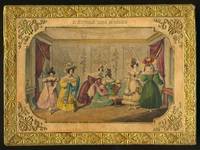
18352200376<p><i>Including a double-sided hand coloured lithograph mannequin 14.5cm high; together with 5 outdoor slipover costumes and matching hats and one indoor costume; a stand 9.5 x 13.5 cm in the form of a carpet with a hand coloured lithograph design on a red ground; </i><i>contained in the original decorated box 14 x 10 x 2.5 cm the lid with a scene of a dressmakers salon with five ladies and the milliners showing her wares; enclosed within a decorative shaped and gilt embossed paper border; The underside of the box with the label of 'Delaville Sucr. de Terzuolo-Despilly. Papetier du Roi. Rue de la Chaussée d'Antin No. 15.'</i></p><p>An early dressing game based on contemporary costumes and a visit to the milliners shop.</p><p>The quality of this paper doll indicates it was made for the most expensive end of the market confirmed by the label of Delaville who from 1822 had been 'Papetier du Roi'. Delanville had been active from 1804 and got his royal warrant in 1822 he traded from the address Rue de la Chaussée d'Antin during the late 1820s through to at least 1833 but no longer appears in the Parisian <i>l'Almanach du Commerce</i> of 1837.</p><p>The lid shows the scene of a well appointed milliners shop with six women conversing or examining merchandise the two central figures show a seated lady being shown a pink dress by her milliner. The mannequin is of a young lady in her under garments including laced bodice over a light cotton petticoat and wearing a neckless of emeralds rubies and gold.</p><p>All clothing items show the front and back of the young woman including: 1 a silk dress with large puffed out sleeves and embroidered with flowers and shaped tongue ornaments; 2 a green gingham check dress and embroidered shirt with puffed sleeves and a ruff neck holding a parasol; 3 an ochre dress with green open-work lace and fringe banded collar waist and dress band; 4 a white evening dress with grape and vine decorated collar and matching dress with flowers wheat sheaves and roses a green belt with a key on a ribbon and holding a fan in her gloved hand; 5 A light overall decorated dress with leafy fronds and shell decoration wearing tow bracelets and clasping a book; 6 a turquoise evening dress with a white boa around the shoulders and long white gloves. The five interchangeable hats decorated with feathers ribbons and flowers.</p> Delanville
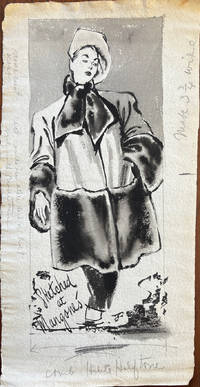
194261064Brooklyn NY: Barbara Duffy ca. 1942-1945. Seven pieces of original pen & ink art and gouache colouring and overpainting sized from 10 x 15 in. 3 up to 15 x 20 in. 3 on “Winsor & Newton’s Illustration Board 30 x 40†while the 7th piece is 9 x 17 in. executed on textured thick laid-paper pencil annotations in MS on fore-edges all pieces signed in thick black pen on versos some dustsoiling staining to fore-edges to a couple bumping to corners edgewear still a VG set of well-done exemplars. These original fashion design illustrations encompass women’s dresses hats fur coats evening wear and a post-War design by Mangone. The two dresses drawn by Duffy are reminiscent of the Claire McCardell easy to wear and comfortable dresses which emerged at the end of the War and featured a cinched-in waist floppy collars and padded shoulders retaining the influence of men’s tailoring on women’s fashions during the War. The “Toppers†are splendid examples of box or swagger coats often made in light wool cotton or rayon blends and in this case with fetching hats and cinched-in waists. The two smaller designs with mink or beaver coats include one with a matching purse and the other with a pillbox hat. The two “Paris†style Cloche hats are nicely drawn and one is fitted with a mesh veil. The exceptional Mangone design indicates it was “Sketched at Mangone’s†which was probably one of the frequent sessions the designer would put on fashion shows at the Fashion Institute or local boutiques in and around New York following World War II and features a coat trimmed in beaver fur with Cloche hat and according to Duffy was available in light and dark wool along with an ascot. Mangone 1884-1957 was not only a significant Italian-American designer who quickly adapted Paris fashion trends into his own American style and was very popular from before World War I until after World War II. Strikingly he also was a survivor of the Hindenburg disaster who managed to leap from the Zeppelin at Lakehurst NJ with his daughter and grand-daughter looking on suffering significant burns and after shock and hospitalization spent considerable time recovering. Duffy b. 1919 taught at the Jacob Gould Vocational School for girls in Prospect Park Brooklyn NY from the time she left college until after World War II after which she worked as designer in local department stores and then disappears from census and public records. Barbara Duffy, unknown
193436852New York: The Cotton-Textile Institute Inc. 1934. 1934. Very good. - Folio 11-1/4 inches high by 8-1/2 inches wide. Softcovers bound in light green wrappers printed in darker green and bound with bronze clasps along the top. The edges of the covers are chipped. 12 pages including an introductory text page titled "Swatching Service Issue Number 9 Spring and Summer 1934" and 74 swatches of cotton fabric mounted on 11 pages with descriptive text below each swatch. Very good. <p>The swatches include "Plaids and Stripes" "Piques in Plain and Printed Versions" "Seersuckers" "All White.And All Corded. Bound for Success!""Active Sports Cottons". "Coatings that Will be Admired" "New Prints" etc. New York: The Cotton-Textile Institute, Inc., 1934. paperback
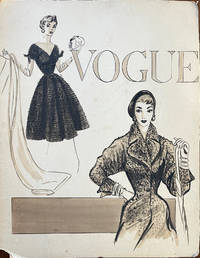
195561063Los Angeles CA: K. Jo ca. 1955. Folio. 14 x 18 in. Original pen & ink w/ gouache colouring on studio board initials of artist at lower right corner edgewear & chipping to corners fore-edges still a VG- exemplar. This delightful artwork mock-up for a Vogue fashion advertising counter display featuring a stylish black chenille silk yarn cocktail dress with the model sporting a short haircut hoop earrings and white evening gloves. The same model is shown wearing a beret and chenille wool/rayon fabric evening coat double-breasted pinch waist and gloves. K. Jo the unidentified artist has left the banner blank which would have included in the printed version the day & time of either the fashion display or of the possible patterns. This cataloguer could find no information on the original artist and two possible references to cover art designs for Vogue in 1951 and 1953. K. Jo, unknown