[Fashion ]. Saunders, VivianBiblio.com
740 résultats
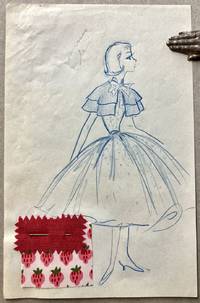
195516984n.p. Los Angeles areaa: 1955-57 Stored in a contemporary accordion-fold card paper portfolio hand-labeled "Sketches of Accepted Designs.". 137 sheets of hand-drawn sketches sixty-two on 9" x 11 " sheets 75 on 5 " x 8 " sheets. Most with handwritten design descriptions notes and accompanying fabric swatches pinned or taped onto the sheets. Also with price lists inventories and printed ads for the Candy Jr. brand ads correspond with designs made by Saunders that are included in the present set. Portfolio somewhat worn and creased. Enclosed are eight contemporary manila folders organized by season Holiday 1955 Fall 1956 Spring 1957 etc. all hand-labeled in pencil. Some designs signed "V. Saunders" or "Vivian Saunders." Some toning and creasing to leaves. A few fabric swatches detached from leaves. Overall a very good set of striking original sketches of 1950s-era fashion designs for young women. Most of the sketches are for party dresses and evening gowns made for young women in their early teens to early twenties juniors and misses. The designs include many iconic designs associated with the 1950s including "poodle" skirts with ample petticoats boleros and cardigans and sheath dresses with cinched waists. The 26 swatches indicate a wide range of textures colors and patterns like gingham plaid organza metallics appliques ribbon velvet fur and much more." unknown
192262342New York: Edward J. Clode 1922. 12 vols. 12mo. 1184 pp all vols. separately paginated. With 100’s of text illustrations diagrams patterns. Brown cloth-backed cream-coloured softcovers illustrated in brown & brown lettering very slight shelfwear slight soiling to fore-edges still a NF set preserved in the original open case. First edition 2nd printing of this informative and well-illustrated set issued by Woman’s Home Companion intended as a Jazz Age “how-to†instructional sewing and tailoring course to properly instruct young aspiring fashion designers seamstresses and at home housewives how to craft the current Flapper-era fashions. These well-organized volumes include sections on selecting the proper clothes and colours simple stitches making their garments attractive trimmings to add a little extra to underwear; different types of blouses lingerie blouses kimono blouses “Smart†clothes drop waist dresses and the key of pattern making. This course helped to propel the idea of “Flapper Design Fashion†and reflected many of her own innovative artistic and graciously elegant designs. Conover Stadtmiller 1891-1968 was a Los Angeles fashion designer associate fashion editor of Woman’s Home Companion and after marrying noted Kennicott Copper Co. mining engineer Karl Stadtmiller 1893-1934 retired from her career until after her husband’s sudden death. Worldcat locates 4 sets FIT-NY Indiana U MFA Boston Toronto Public. Edward J. Clode, paperback
192047418Milwaukee WI: Adler Compay ca. 1920. Large image mounted on thick card stock 14 x 22 in. Colour lithograph decorative arts & crafts border nice colours varnished some minor edgewear lettering at borders slightly cropped in order for counter display to be cut to standard size very minor soiling lower fore-edge some yellowing from varnish still VG exemplar. A vivid and scarce counter advertising display for Adler Company Collegian men’s suits line. The Collegian line was for college men and any man who cared about perfect style with points of refinement. Although their advertising was not specifically collegiate their advertising campaigns often employed illustrations that conjured idealized college associations implying that if one were to buy their ready-to-wear suits then they too would be successful in college business and the appropriate middle class lifestyle. This advertisement offers a beautiful example of Jazz Age advertising. The Adler Company was founded in 1848 by Solomon Adler in Milwaukee Wisconsin and grew and thrived through the Civil War the Victorian era and eventually would employ over 900 people with nationwide sales in the 1920s over one and one-half million dollars. During the Jazz Age the Adler Company was synonymous with their Collegian line. The company was liquidated after the crash in 1929. See: Daniel Clark Creating the College Man American Mass Magazines and Middle-Class Manhood pp. 165-168; Historic Designation Study Report Emanuel D. Adler House pp. 5-6. Adler Compay, unknown
188054558Amsterdam: A. Jager ca. 1880. 12mo. 3.5 x 5.25 in. 12 hand-coloured albumen carte de visite images sized 2.25 x 3.5 in. mounted on thick 3 x 5 in. cards text in lower fore-edge of board bound in leporello accordion-style format linen hinges renewed. Original publisher’s decorated red cloth over beveled boards elaborate gilt decorated front cover and lettering minor rubbing edgewear minor bumping to corners still VG exemplar w/ most images retaining strong contrast and colour bookseller’s label of Joh. G. Stemler Cz. Algemeene Goekhandel Amsterdam on rear pastedown. Early printing of this charming photographic souvenir with hand-coloured albumen CDV photos illustrating the styles of folk costumes in different regions of the Netherlands. The villages and regions include Marken North Holland a fisherwoman carrying basket on her head from Scheveningen a fishing port a middle class orphan girl from Amsterdam a young girl wearing elaborate hat from Krommenie North Holland northeast of Haarlem. Jager 1825-1905 published many different series of these souvenir fashion photos as well as images of scenes in and around Amsterdam often as stereoviews some working with Dutch photographer Pieter Oosterhis. See: Maartje van den Heuvel The Rise of Dutch Landscape Photography. How a Vision of Painting Entered Photography Depth of Field Vol. 6 No. 1 July 2015. A. Jager, hardcover
192546331New York: Irving Samuels Hat Co. ca. 1925. 9 x 7.5 in. unused hat box label minor creasing to fore-edge otherwise an excellent bright sample. Scarce hat box label produced for the Samuels Hat company who supplied Plebe hats for the United States Naval Academy and other military academies across the United States in the 1920s and 1930s. Irving Samuels Hat Co., unknown
195562463New York NY Kansas City MO & Carmel Santa Barbara & San Francisco CA: Marian Ross Mizelle Madrigal 1955-1974. Four Vols. and original Store Sign for Carmel CA boutique. Folio. 2 - 12 x 15.25 in. & 2 - 13 x 19 in. 48; 48; 48; 48 pp unpaginated. all w/ mylar sleeves archival black paper insert backings with 151 original designs in gouache watercolour chalk and pen & ink 38 in pen & ink or pencil sized from 7 x 11 in. up to 10 x 15 in. and nearly all signed by Marian Ross three feature original fabric sample swatches affixed to them including one w/ pencil MS “Winner†and mimeographed description affixed to verso several of them are translucent pochoir stapled to backing paper many are on thick stiff studio board while others on assorted textured paper stock. In addition there are three newspaper and magazine clippings 1966 & 2013 a photostat copy of early Ross Mizelle “Mod†fashion designs and original black & white silver gelatin photo of young Marian Ross modeling a wedding dress. All are preserved in flexible vinyl portfolios printed labels on spines some minor scuffing & shelfwear to portfolios occasional very minor closed tears or edgewear to the designs a few w/ minor holes from removed staples still an exemplary archive of designs together with the original Madrigal signboard sized 16 x 27 in. from their Carmel CA store. This sensational archive of original fashion designs for Kansas City MO based department store suppliers by Marian Ross Mizelle before her move to California in the 1970’s to establish the Madrigal boutique with her husband Elliot A. Mizelle 1916-2007. These vividly reveal the Mid-20th-Century fashion trends following World War II. Many of the designs in this collection reflect the transition from the late 1950’s elegance and emphasis on Dior’s “New Look†highlighting femininity and opulent use of fabrics towards the more youthful designs emerging out of Swinging London which were a slimming down beginning to raise hemlines with short skirts bolero tops and increasing influence of Pierre Cardin Andre Courreges and Givenchy. The Mid-20th-Century saw a tremendous upsurge in marketing slimmer lines tighter fitting bodices and fashions emerging from such cultural events as Audry Hepburn in her iconic 1961 “Breakfast at Tiffany’s†film which heavily influenced a generation of young women.Young Marian Ross b. 1936 after completing her Fashion Academy certificate in 1955 free-lanced and worked in the New York fashion industry before landing with the influential and hot-selling Gay Gibson label with Gernes Garment Co. in 1961. The Gernes Garment Co. had been originally founded in 1928 by Sara Desaix Gernes 1896-1978 and her husband Alexander Gernes 1882-1947 to market her groundbreaking fashion designs targeting everyday fashion for young women juniors and teens. Her designs proved very popular as she initiated and fashioned sizing and dresses and clothing for teenagers through young college-age women and her designs proved very successful and were marketed through Chicago’s Marshall Field’s department store. By 1961 the Gernes Garment Co. moved their design and pattern making department to New York to capture young fashion designers such as Marian Ross as well as be closer to the influential couturier houses in New York & Paris. The Gay Gibson label was marketed in Mademoiselle Seventeen Glamour and Vogue magazines with Twiggy often modeling Gay Gibson dresses in the 1960’s. Marian’s designs were inventive playful and emphasizing movement as well as comfort. Many of the fashion patterns depict her models in flats ballet flats or even shoeless while dressed in elegant evening or formal dress. Also depicted are designs such as billowing harem pants modified and sleek upscale poodle skirts and Tartan patterned capes pockets dresses and accessories. Others encompass swimwear ski wear as well as the emphasized and often enforced domesticity of the late 1950’s to 1960’s with stylish plaid house-dresses in the kitchen and bar as well as frequent use of lace. The Gay Gibson label maintained a showroom at 1407 Broadway on the 39th Floor in New York ad held over 24 showings from 1961-1969 including Junior Dresses Summer Collections Spring Junior Collections as well as Holiday and Resort collections. By the early 1970’s the label was having financial difficulties and the popularity began to drop with the company run by Desaix Gernes her mother and husband Paul before folding a few years after Sara Desaix Gernes’ death. Marian and Elliot Mizelle established Madrigal Inc. name chosen because of the seductive chic of Manhattan’s Le Madrigal restaurant and grew into a legendary luxury boutique at one point operating store fronts in Santa Barbara downtown San Francisco and Carmel CA. In her 2015 interview for “Women in Business†with the Carmel Pine Cone Marian stated she “wanted to be an actress but it didn’t work out that way. I used to sketch a lot so I studied design instead. Everything I touched while was designing worked. I got a lot of jobs and was featured on a lot of Seventeen magazine covers.†This cataloguer could find not similar extant archive of original designs for the 1960’s period of the Gay Gibson label or for Marian Ross Mizelle; See: Interview with Desaix Gernes Garment Industry Oral History Collection The Kansas City Public Library Jan. 14 2005 SC229 Series 2 2024; Gay Gibson Vintage Fashion Guild 2025; Donnelly Garment Company vs. International Ladies Garment Workers Union et al Photographs Clothing Demonstration The Pendergast Years Kansas City in the Jazz Age & Great Depression 2025. Marian Ross Mizelle, Madrigal, hardcover
191056016New York & Tacoma: Samuel W. Peck & Co.; Dege & Milner Printed by Sherman & Bryan Inc. 1910. Sml. 4to. 16 pp unpaginated. Colour-illustrated borders & plates throughout with artwork reminiscent of children’s book illustrator Virginia Keep. Colour-illustrated softcovers cover art image of boys tossing down apples from a tree fine copy. First edition of this wonderfully illustrated fashion catalogue targeting the young boys in the decade before World War I. The illustrations depict young boys in knickers short coats and capes running carving Jack-o-Lanterns for Halloween playing with a dog and collecting chestnuts. This copy was printed for the Dege & Milner department store in downtown Tacoma which was operated from 1901-1915 by James H. Dege and his partner William Milner before Dege opened the James H. Dege Co. store. No copies located in Worldcat. Samuel W. Peck & Co.; Dege & Milner, (Printed by Sherman & Bryan, Inc.), paperback
190656017Tacoma WA: Dickson Bros. Co. 1120-1122 Pacific Ave. The Quick Print 1906. 8vo. 42 2 pp. With woodcut-engraved illustrations throughout. Pictorial light green softcovers front cover art rendering of the Dickson Bros. front facade before expansion and young college men wearing suits in Cornell dorm room minor toning to fore-edges minor curling to textblock 1 very small tear still a VG copy. First edition of this exceedingly scarce Washington department store catalogue for the Dickson Bros. Co. which expanded quickly at 1120-1144 Pacific Ave. in Tacoma WA during the first 30 years of the 20th Century. The company flourished by emphasizing ready-to-wear lines of clothing rather than tailored clothing selling Adler Bros. and Stein-Bloch suits and clothing based out of Rochester NY Stetson Hats and more. They also sold heavy denim work clothes such as Keystone railroad overalls and jackets trunks traveling bags boots shoes and more. George Dickson 1851-1935 was an active outdoorsman mountaineer and merchant in Tacoma. No copies located in Worldcat; See: George L. Dikcson’s Narrative Tacomian Jan. 7 1893. Dickson Bros. Co., 1120-1122 Pacific Ave., The Quick Print, paperback
188755685New Haven CT & Pittsburgh PA: L. Candee & Co. H. Childs & Co. 1887. 8vo. 28 pp. Decorated title page lithographed illustrations throughout. Embossed & decorated softcovers front cover decorated & illustrated in gilt & burgundy w/ peacock feather above lettering and nicely executed lithograph on back cover of young saleswoman standing next to a rack of rubber boots & shoes for sale minor toning shelfwear very slight tidemark at upper fore-edge front cover still a VG copy. First edition of this nicely printed Victorian catalogue for rubber boots and shoes. The nicely executed lithographs promote the Hip Boots hip waders thigh high sporting boots double thick Pebble Leg Boots and Fairy Boots reminiscent of cowboy boots as well as the rubber Duck or Canvas Boot for hunting. Also included are many different styles and varieties of rubber shoes for women and children including No Heel Imitation Sandals Gossamer Imitation Sandals Buskins with cotton flannel lining Opera Dew Drop Feather Weight and many others. The company also produced tennis rubber soled shoes croquet shoes as well as heavy duty Stalwart Lumbermen’s Shoe intended to fit over logger’s Wool Boots or German Socks. Leverett Candee 1795-1863 obtained early patent rights from Goodyear for manufacturing rubber shoes as early as 1844 and by 1852 had organized the large Candee Rubber Co. factory with the Hotchkiss Brothers in New Haven and Timothy Lester. No copies located in Worldcat; See: Davis The New England States Vol. I pp. 344-346 1897; Joseph Kane Famous First Facts 1950. L. Candee & Co., [H. Childs & Co.], paperback
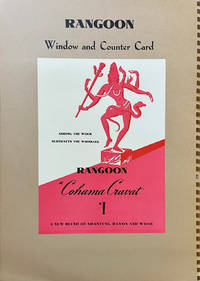
194061451New York: Cohama Cravats United Merchants & Manufacturers 1412 Broadway 1940. Atlas folio. 13 x 18 in. 34 pp unpaginated. printed on thick tan paper stock with 21 different tipped-in advertising promotional samples including camera-ready newspaper ads sample window & counter display cards and folded promotional brochures for mailing each to be imprinted with the retailer’s name order book tucked into rear pocket mounted on last leaf. Tan boards plastic-comb binding to spine minor bumping to couple corners some dustsoiling minor chipping to foot of spine still a VG bright exemplar. First edition of this exceedingly scarce sales and advertising catalogue designed to present the 1940 plan by the company for their $ 1.00 men’s cravat ties. Featured are the proposed newspaper ad lines for the six different Cohama Cravats in the Spring & Summer including the Briar Bahama Camelot Rangoon Gamester and Seminole. American tie manufacturing emerged as a significant force at the end of the Jazz Age and through the 1930’s as their popularity grew world wide for their heavy use of colours vivid patterns and breaking away from the more sedate colour palate of the British tie industry. Contributing to the explosion of tie manufacturing in the 1930s and 1940s were the need by many men during the Great Depression and then the War years to change their fashion look by adding a decorative tie rather than buying a new suit or set of clothes. The Duke of Windsor heavily influenced ties styles and wearers by not only developing the Windsor knot but also wearing them with many different types of clothing. Cohama was a trademark of United Merchants which was a textile firm originally founded in 1912 as the Cohn-Hall-Marx Co. merging with United Merchants in 1928 and later clothing chains across the East and South through World War II. No copies located in Worldcat; See: Gibbings The tie trends and traditions 1990. Cohama Cravats, United Merchants & Manufacturers, 1412 Broadway, hardcover
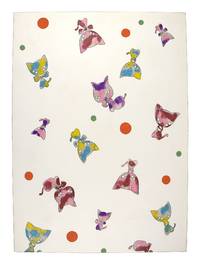
194033730Suzuka Japan et al. 1940. Very Good . Suzuka Japan: n.d. ca. 1940-1960. Nineteen original hand-stenciled designs ca 48x35cm; thirteen examples with rubber-stamp from two different craft shops the remaining six unattributed. Light wear and soil else a Very Good to Near Fine collection.<br /> <br /> Colorful multi-decade sampling of designs for the Japanese casual summertime cotton kimono known as yukata. The designs were almost certainly designed for children's outfits decorated as they are with baby birds puppies ducklings circus elephants bunnies musical instruments and teddy bears. The ten earliest examples all hail from the same shop and all use the same color scheme of navy blue slate blue and orange-brown. Later examples expand the color palate to much more vibrant and neon colors. One design in particular of a small child in a red bunny costume anticipates both the manga and the Hello Kitty aesthetic that became a global phenomenon beginning in the 1970s and 1980s. unknown
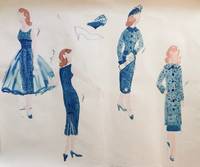
195358213Seattle WA: Nancy Paine ca. 1953-54. Twenty-one original fashion design watercolour paintings all oblong folio 9 sized 15 x 12 in.; 12 sized 18 x 15 in. 1 is painted title only many of them signed by Nancy down in lower corner 1 graded and reviewed by teacher several with neat cursive annotations some curling minor edgewear to corners some toning still VG set with the 2nd set retaining the original portfolio cover sheet. These original watercolour fashion designs reflect the 1950’s emphasis on full circle skirts swing skirts pencil skirts tea length dresses and fitted tight waist blouses reflecting the influence of Christian Dior towards increased femininity in the post-World War II era. For the College Coed portfolio our young artist has included designs for Capri pants lingerie fitted wool dresses flowing “poodle†skirts bathing suits tennis outfit ice skating clothing riding outfits and evening wear. The second portfolio incorporates diamond pattern one-piece bathing suits terrycloth robes different evening weather and nighttime negligee. Although young Miss Paine would not go onto becoming a commercial artist she did work as office manager for many years for the Simpson Lumber Company. Nancy Paine, hardcover
192447496Dayton OH: The Comer Manufacturing Co. 1924. Tall 8vo. 5.5 x 10.5 in. 36 pp. Numerous illustrations 4 colour plates 4 sepia-tinted plates 64 wool wool blend canvas linen leather cotton and patterned fabrics some treated w/ coating tipped-in occasional offsetting from samples either surrounding the sample or on facing leaves. Dark red printed softcovers decoration & lettering in orange & blue minor soiling some creasing still a VG- copy. First edition of this scarce salesman sample catalogue for men and women’s Jazz Age raincoats and overcoats in the mid-1920s. The company was founded before World War I by Charles E. Comer b. 1887 who quickly established the company as one of the largest manufacturers in Ohio of raincoats. The colour fashion plates are quite striking for the period and offer invaluable historical reference for the styles and weight of raincoats sold during the Flapper Era. Comer produced rubber-lined coats offered deals if you ordered two coats at once and also offered Mackinaws General Purpose coats Rubber rain slickers reversible coats and even waterproof aprons for housewives. This catalogue notes that they had just completed their new 40000 square foot and even offered waterproof luggage and garment bags. They were well known for advertising in labor magazines trade magazines and professional magazines constantly promoting their product and recruiting new salesmen. Worldcat locates only 1 copy Vol. 166. The Comer Manufacturing Co., paperback
188546789Auburn NY: L. Marshall ca. 1885. Tall 8vo. One colour chromolithograph card 6.75 x 11.75 in. very slight toning to fore-edges very slight bumping to couple corners still a VG bright copy. First edition thus of this advertising card for L. Marshall who were a very successful and popular Victorian clothing and furnishing store in Auburn New York. They were particularly well known for their beautiful colour advertising cards sent out as promotions and were at their height of popularity at the end of the 19th century. L. Marshall, hardcover
195556299Vienna: Wiener Modellgesellschaft M.B.H. Editions de Mode Fashion Publications 1955. Folio. 9 x 13 in. 23 colour plates in pochoir-inspired hand-coloured style. Printed beige softcovers minor creasing head of spine minor dustsoiling still VG bright copy. First edition thus of this beautifully rendered collection of haute couture summer dress designs issued by the Viennese fashion cooperative in the 1950s. These designs show the decided shift towards elegance and perfectly matched accessories for women during the 1950s with nipped-in waists full-skirted dresses as well as tailored fitted clothes with a hint of playfulness and exuberance inspired by the designs of Cristobal Balenciaga and Hubert de Givenchy as well as the feminine silhouette of Christian Dior. No copies in Worldcat of this issue. Wiener Modellgesellschaft, M.B.H., Editions de Mode, Fashion Publications], paperback
195061482Tokyo Japan: Mikimoto ca. 1950. Oblong folio. 14.5 x 11.5 x 1.4 in. Original wooden shadow box sample display case holding 10 opened & cleaned pearl oyster shells on white padded fibers and 5 varying grades of cultured pearls showing progression of growth minor scuffing to corners of polished wood frame backed w/ birch plywood box a VG exemplar. Commercial cultured pearls were first developed by Kokichi Mikimoto who succeeded in creating semi-spherical cultured pearls in 1893 by developing the exacting method of inserting grains into pearl oysters and harvesting two years. later. The company exhibited at many International World’s Fairs in the succeeding years and following World War I gained a foothold in Europe during the Art Deco jewelry phase. Virulently opposed by European jewelers who attacked cultured pearls as imitations rather than real pearls Mikimoto would win the lawsuit at the “Paris Trial†and quickly established the custom of distributing trade literature explaining the pearl process as well as visual sample cases. Although the 1930’s saw the emergence of very good glass imitation pearls cultured pearls continued to be valued and in post-World War II America reached their heyday with elegance and femininity favored with designs inspired by Grace Kelly and later Jackie Kennedy of single strands of pearls and pearl studs. These sample boxes continued to remind customers that the pearls were actually cultivated and harvested from oysters. See: Mikimoto Brand Story Our Founder Kokichi Mikimoto 2024; Amber Michelle A History of Cultured Pearls IAJA 2022. Mikimoto?, unknown
193562566Tacoma WA: Day’s Tailor-D Clothing Inc. ca. 1935. Folio. 15.75 x 22 in. Colour serigraph counter display on masonite w/ cardboard stand unfolded on verso minor tidemark some soiling back cover minor curving to the masonite still VG bright exemplar. An exceptional original brightly counter display for these popular durable corduroy slacks which became known as the “College Cords†and expanded the company’s popular offerings beyond their iconic “Big 5†work overalls. The “College Cords†also proved to be popular durable work pants but were initially targeted towards the college man. The company was founded by Day 1874-1947 in 1903 and quickly began selling the “Big 5†work overalls and in 1906 were unionized by the United Garment Workers of America forming Local 201 and embraced the slogan “Western Made Union Made.†The company in 1928 changed its name to Day’s Tailor-D Clothing Inc. and sons Hollis and Judd Day took over the company after 1947. During the 1950’s they maintained 400 employees and $ 1 million dollar payroll best known as one of the largest Pacific Northwest employers of women in the region. In 1973 the company merged with Warnaco. See: Day’s College Cords Marketing Tacoma Library Northwest Room 2022; Day’s Tailor-D Clothing, Inc., hardcover
195161036New York: G.P. Putnam’s Sons 1951. 8vo. 8 310 pp. Photo frontisp. numerous photo plates. Gray publisher’s cloth scuffing at front hinge w/ d.j. photo of author on back cover by Robert Avedon minor chipping edgewear old tape repairs still VG-/VG- copy signed by author on ffep. from the library of Maebelle Doolittle Traylor 1881-1961 former Pasadena socialite longtime widow of stock trader Neal Traylor and daughter of Pasadena pioneer developer Samuel Hosmer Doolittle 1850-1942 w/ clipping laid-in. First edition signed of this memoir by the famed Hollywood fashion designer who had begun his career before World War I with Lucile and would later design for the Lasky Players Silent movies. Later after setting up his own Fashion House he designed clothes for Greta Garbo Shirley Temple Theda Bara Gloria Vanderbilt Mary Pickford Ginger Rogers Irene Dunne Ingrid Bergman and Katharine Hepburn emphasizing eye-catching elements and fitted torso evening garments. G.P. Putnam’s Sons, hardcover
199747024New York: Christie’s Park Avenue 1997. 4to. 212 pp. Over 200 colour photos & designs. Colour-illustrated softcovers NF copy. First edition of this fascinating catalogue documenting the style of the tragic Princess whose fashion sense preferred English designers. This catalogue includes original fashion drawings and renderings with some of the dresses chronicles where and when they were worn and pays homage to the memory of Diana. Some of the designers include Gina Fratini Catherine Walker Zandra Rhodes Sassoon Victor Edelstein and others. Christie’s Park Avenue, paperback
193963709Aussig Usti Nad Labem Czechoslovakia & Vienna: C. Wolfrum ca. 1939. Folio. 50 leaves. 1 leaf with type-written explanation of all the fashions illustrated in the catalogue. 44 hand-coloured pochoir fashion designs on translucent paper each with item number printed below 5 leaves with printed designs showing the backs of all the fashions some pencil shading and details added. Original textured beige softcovers embossed WMI Wolfrum Manufacturing on front cover metal spiral bound as issued some dustsoiling & wear to fore-edges of covers very slight bumping to couple corners still a VG copy w/ beautifully illustrated fashion designs. First edition of this exceedingly scarce original trade catalogue issued by the C. Wolfrum textile firm in Czechoslovakia for its Vienna Austria market around the time of the forced annexation of the Sudetenland by Nazi Germany in 1939. The firm was famed for its woolen & silk textiles for women’s fashions and their catalogues were very desired. This catalogue includes fashions for silk rayon & wool women’s dress suits leisure suits formal evening dresses & winter coats all evoking the fashion trends of the period. The designs in the catalogue reflect the rising influence of militaristic styles and fascism with square-edged shoulder pads the plate hats as well as the emphasis on tight waists and long skirts. There are a couple designs with distinctive chocolate brown for leisure wear reflecting the heavy Nazi-influenced fashion design of the period. In addition the slim lines were enhanced by cutting clothes across the fabric avoiding bunches of gathers at the waist for full skirts allowing material to flow. In addition the evening wear dresses emphasized low or no backs and hair was to be grown long and worn swept up. This catalogue also includes a few evening formal dress designs clearly inspired by the dresses worn by Vivien Leigh in the 1939 Gone With the Wind Movie with the puffed sleeves polk-a-dot patterns and fabrics. No copies in Worldcat. C. Wolfrum, paperback
194562617Philadelphia: J.B. Lippincott Co. 1945. 8vo. 204 2 pp. With 22 photo plates. Black publisher’s cloth silver lettering front cover & spine slight shelfwear minor bumping at foot of spine w/ d.j. cover art of Dragonia fabric by Everfast chipping & tear to upper fore-edge minor chipping foot of spine couple minor closed tears still VG/VG- copy. Second printing of this work drawn from interviews with 12 leading American fashion designers intended as a “splendid career book full of suggestions for the girl who who feels drawn to the great world of clothes and designers.†Those interviewed included Clare Potter - considered inventor of American sportswear; Emily Wilkens - pioneer in fashion clothing for teenagers; Hattie Carnegie with her ever elegant dresses; Edith Head - famed Hollywood costume designer; Louella Ballerino -- famed California designer of sportswear swimwear and distinct ethnographic influenced fashions and others. J.B. Lippincott Co., hardcover
189554146New York: Standard Fashion Company June 1895. 4to. 96 pp. 1 large folding colour chromolithograph frontisp. sized 21.5 x 10.75 in. 1 colour chromolithograph plate over 150 woodcut text illustrations & engravings. Gold-coloured printed softcovers brick-red lettering minor dustsoiling light wear to creases of folding frontisp. still VG copy. First edition of this scarce and beautifully printed fashion magazine which was published under this title only from 1894 through 1896 when it was forced to change the name to The Standard Designer after losing a lawsuit brought by the Butterick Publishing Co. against Frank Koewing d. 1933 their former western sales manager for Butterick. Founded in 1887 the Standard Fashion Co. would eventually become a serious rival to the Butterick Pattern Co. appropriating the “Delineator†for his magazine poaching employees and eventually building the company to issuing over 100000 cut patterns a week. While often facing bankruptcy and litigious to a fault the company was acquired as a subsidiary in 1900 by Butterick and the combined companies would thrive through the ensuing decades. Each of the Standard Delineator magazine issues featured a large chromolithograph frontispiece of the latest fashions as well as a smaller one of millinery designs. Worldcat locates primarily microfilm copies however individual issues are held by Notre Dame and Davidson College; See; A Man of the Hour Frank Koewing The Bookseller and Newsman Vol. 13 1896 pp. 4-5; Carol Ann Dickson Patterns for Garments: A History of the Paper Garment Pattern Industry in America 1979. Standard Fashion Company, paperback
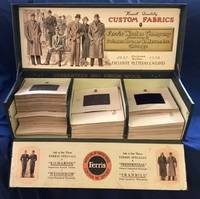
193754988Chicago: Ferris Woolen Co. Successor to Detmer Brewer & Mason Wawak Co. Inc. 1937. Sample case. 27.75 x 11 x 7.5 in. Containing 172 thick cards w/ black & red advertising lettering stock & style Nos. with 172 woolens worsted wool imported wool samples some preshrunk all mounted on the cards. Original sample display case w/ green textured cloth over boards divided into 3 compartments nickel plate slider hinges printed advertising on inner lid and drop front reinforced corners some minor wear insect predation around fore-edges of a few samples still a remarkable display case from the John the Tailor Shop Suits and Overcoats made to order Wausau WI w/ stamp on top Wawak sample card. First edition of this spectacular tailoring sample counter display for men’s suits and overcoats in the Fall & Winter of 1937-1938. Ferris Woolen Company a subsidiary of Wawak Woolens was originally founded in 1922 in Chicago along with Detmer Woolen Co. Bruner Woolen Co. Mason & Hanson Inc. and Salter & Wolf to supply woolens & trimmings to tailors and department stores across the United States. The companies were known for their high-quality wools at a reasonable price and often incorporated imported wool wool silk blends gabardines and tweeds especially from Scotland Wales France and Great Britain. In 1933 the Wawak Co./Ferris Woolen Co. purchased the exclusive right to all the Detmer Bruner Co. customers West of the Mississippi. They quickly began commissioning and producing display cases reflecting the change and proved very successful with the Ferris Woolen Co. catering to the trade into the 1960s. These sample cases were very expensive to produce and so were most often found in department stores mercantiles and men’s stores which would have these display on the sales floor for two seasons or more often adding or subtracting fabrics as they became available. The samples included with this case offer invaluable textile reference for the colours and fabrics during the era of fashion influenced by the elegance and glamor of Hollywood films and film noir at the time. The styles depicted on the inside of the lid and the drop-down front are reminiscent of the very popular Thin Man fashions worn by William Powell and Myrna Loy at the time. No copies located in Worldcat. Ferris Woolen Co., Successor to Detmer, Brewer & Mason, Wawak Co., Inc., hardcover
193456170Omaha NE: Northwestern Fur Company ca. 1934. Two vols. 4to. 15 1; 16 pp unpaginated. with numerous photo and text illustrations diagrams. Self-printed illustrated softcovers both with cover art of stylish young women wearing furs including one in front of an Art Deco screen both with centerfold creases as issued minor shelfwear rubbing still VG set retaining original mailing envelope addressed to A.lbert H.enry McConnell 1861-1939 Payette Valley Silver Fox Farm Fruitland ID formerly of Gunnison CO set up his fruit orchards ranching business and other opportunities in Idaho. First editions of these very rare fur fashion and furrier supply catalogues issued by the Northwestern Fur Co. of Omaha NE including in the first catalogue furs for sale such as chokers scarfs muskrat Northern Seal Hudson Seal Caracul Siberian Squirrel and others. Also included are listings for furriers’ tools and equipment taxidermy work fasteners and more while the second catalogue promotes the complete furrier course offered by the company. Elwood 1875-1947 with two partners Paul F. Greve and R.H. Smith incorporated the Northwestern Fur Company school of taxidermy and the Northwestern Fur Company furs mail order in 1903 and quickly expanded for the succeeding decades. Elwood had previously taught and been director at a trade school in Iowa before moving to Omaha NE and continued as the public face of the mail order company for decades eventually closing down in the 1980s. No copies located in Worldcat; See: Northwestern School of Taxidermy Northwestern Fur Company Nebraska State Historical Society Manuscript Finding Aid RG5451.AM. Northwestern Fur Company, paperback
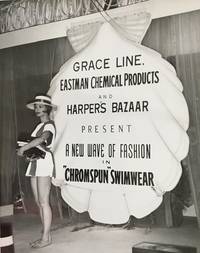
195956594New York & Rochester NY: Grace Line Harper’s Bazaar & Eastman Chemical Products subsidiary of Eastman Kodak 1959. 4to. With 33 black & white photographs inserted in mylar sleeves. Recent flexible black vinyl cover portfolio NF exemplar w/ images having bright strong contrast. First edition of this remarkably scarce group of photos advertising the 1959 fashionable swimsuits made from Chromspun acetate yarn developed for textiles by Eastman Kodak in the early 1950s. Discovered while developing cigarette filters the yarn proved durable and elastic enough for swimsuits other apparel home furnishings and other applications. The swimsuits modeled in this show were influenced by and possibly included the very popular Rose Marie Reid line of swimwear which was heavily marketed by Harper’s Bazaar during the 1940s and 1950s and was considered to be the quintessential California swimsuit worn by such stars as Jane Russell and Sandra Dee in the first Gidget movie produced by Columbia in 1959. Represented in these photos are the swimsuits included the strapless bikini princess bubble Baby Doll often with stripes and cover-ups. Although not indicated in the photographs this fashion show was probably held on one of the new Grace Line ocean liners the Santa Rosa which was delivered in 1958 and serviced the Caribbean South America and traveled through The Saint Lawrence Seaway into the Great Lakes. See: Rose Marie Reid Glamour by Design Special Collections Exhibit Brigham Young University 2015-2016; Michael Grace The Grace Line History Cruising the Past Travel and Social History 2009; Jean Was a “Young American Goddess of Paris Couture†Jean Patchett Prose on Genesis 2020. Grace Line, Harper’s Bazaar, & Eastman Chemical Products, subsidiary of Eastman Kodak, unknown