GRUAU ( d'après, René).Livre Rare Book

5 882 résultats
1987215151987 1 Peinture émail, titrée "Annick" (1987),10,5 x 15 cm., encadrée.
1988225301988 Pastel signé,1998, 46 x 60 cm.
19091291909 Sans lieu ni date (Paris, Imprimerie Porcaboeuf, 1909), grand in-4° à l'italienne, 14 feuillets non chiffrés, reliure de l'éditeur, demi-chagrin vert à coins, un fer doré sur le premier plat représentant un chapeau et des symboles de la chasse avec les dates 1630 - 1867,reliure frottée.
192367992Berlin Imprimé par Ernst Wasmuth 1923 1 vol. relié fort in-4, toile éditeur jaune, 32 pp. et 128 planches en couleurs. Edition originale française de ce travail pionnier de recension ethnographique par le peintre berlinois Max Tilke (1869-1942), connu dès 1900 pour ses dessins de costumes traditionnels, qu'il présente ici à plat, d'Afrique du Nord au Japon, en passant par l'Egypte, le Soudan, la Syrie, le Caucase, la Perse, le Cachemire et la Chine, comme une série de patrons qui permettraient leur confection. Reliure un peu salie, mais les superbes planches sont en parfait état de conservation, et l'exemplaire est d'autant plus intéressant qu'il porte le bel ex-libris gravé de la couturière Jeanne Lanvin.
192367992Berlin Imprimé par Ernst Wasmuth 1923 1 vol. relié fort in-4, toile éditeur jaune, 32 pp. et 128 planches en couleurs. Edition originale française de ce travail pionnier de recension ethnographique par le peintre berlinois Max Tilke (1869-1942), connu dès 1900 pour ses dessins de costumes traditionnels, qu'il présente ici à plat, d'Afrique du Nord au Japon, en passant par l'Egypte, le Soudan, la Syrie, le Caucase, la Perse, le Cachemire et la Chine, comme une série de patrons qui permettraient leur confection. Reliure un peu salie, mais les superbes planches sont en parfait état de conservation, et l'exemplaire est d'autant plus intéressant qu'il porte le bel ex-libris gravé de la couturière Jeanne Lanvin.
195025923n.p. 1950. Sold individually. Please inquire for images of each. Image approximately 12 x 10 inches plus margins. Sold individually. Please inquire for images of each. Image approximately 12 x 10 inches plus margins. Reynaldo Luza 1893-1978 pre-eminent fashion artist was born in Lima Peru. He began training as an architect at the University of Louvain Belgium but returned to Peru at the outbreak of World War I where he changed his studies from architecture to art. In 1918 he came to the United States where he earned his living by contributing drawings to several fashion publications principally VOGUE HARPERS BAZAAR and VANITY FAIR. In 1921 he joined HARPERS BAZAAR as the principal fashion artist a position he was to hold for 27 years. He divided his time between New York Paris and London working closely with all of the leading fashion designers of the times--Poiret Patou Lelong Paquin Douillet Doucet Cheruit Worth Drecoll Callot Soeurs Redfern Martial et Amand Premet Reboux Chanel Vionnet Molyneaux Schiaparelli Hartnell Steibel and Balenciaga among others.<br /> <br /> In 1940 Luza made New York his principal base where over the next few years he continued his activities at Harpers as well as creating fabric and furniture designs and the costumes for the movie "The Bridge of San Luis Rey". Among other distinctions he received several honorary appointments from the government of Peru including that of Artistic Director of the Paris Exposition of 1938 and the New York World's Fair of 1939-40; he also did the interior design of the new Lima airport.<br /> <br /> In 1950 Luza returned to Peru where he began a second career as a portrait painter exhibiting his work over the next few years in Paris New York and Washington D.C. unknown
195025923n.p. 1950. Sold individually. Please inquire for images of each. Image approximately 12 x 10 inches plus margins. Sold individually. Please inquire for images of each. Image approximately 12 x 10 inches plus margins. Original Fabric Designs by Fashion Artist Reynaldo Luza. Reynaldo Luza 1893-1978 pre-eminent fashion artist was born in Lima Peru. He began training as an architect at the University of Louvain Belgium but returned to Peru at the outbreak of World War I where he changed his studies from architecture to art. In 1918 he came to the United States where he earned his living by contributing drawings to several fashion publications principally VOGUE HARPERS BAZAAR and VANITY FAIR. In 1921 he joined HARPERS BAZAAR as the principal fashion artist a position he was to hold for 27 years. He divided his time between New York Paris and London working closely with all of the leading fashion designers of the times--Poiret Patou Lelong Paquin Douillet Doucet Cheruit Worth Drecoll Callot Soeurs Redfern Martial et Amand Premet Reboux Chanel Vionnet Molyneaux Schiaparelli Hartnell Steibel and Balenciaga among others.<br/><br/>In 1940 Luza made New York his principal base where over the next few years he continued his activities at Harpers as well as creating fabric and furniture designs and the costumes for the movie "The Bridge of San Luis Rey". Among other distinctions he received several honorary appointments from the government of Peru including that of Artistic Director of the Paris Exposition of 1938 and the New York World's Fair of 1939-40; he also did the interior design of the new Lima airport.<br/><br/>In 1950 Luza returned to Peru where he began a second career as a portrait painter exhibiting his work over the next few years in Paris New York and Washington D.C. unknown books
192323399Paris VOGEL 1923 1 in-4 Paris, Librairie Centrale des Beaux-Arts, Lucien Vogel Directeur, 1923, petit in-4, en feuilles, sous chemise éditeur illustrée d'une fleur.
192462500Tacoma WA: A.V. Love Dry Goods Co. 2102-2106 Pacific Ave. 1924. 4to. 4 286 i.e. 338 10 pp. Including 52 pp. of colour lithograph sample pages many w/raised colour-embossed plates of bolts of cloth or fabric samples ribbon samples colour swatches 100’s of text illustrations photo illustrations. Brown-cloth backed colour-illustrated flexible covers cover art of 1920’s bobbed-hair woman measuring bolts of cloth Love Co. advertisement on back cover minor chipping & creasing to corners edgewear minor scuffing couple minor closed tears still VG- copy. First edition of this very scarce and lavishly illustrated wholesaler’s dry-goods catalogue issued by A.V. Love Dry Goods Co. during the Roaring 20’s. As a wholesale catalogue goods and counter displays are depicted and priced such as those for cuff buttons combs hair pins perfumes pipes sewing goods textiles and yarns. Of particular interest are the beautifully colour-printed & embossed inserted sample pages for trimmings silks silk threads yarns underwear towels blankets and more. Sections specifically devoted to work clothes including overalls work gloves boots logger’s plaid work shirts wool flannels and even bathing suits are also featured. Love Sr. 1868-1942 a Virginia grocer first moved to Washington State before 1900 and by 1902 had established his own firm in Tacoma for the A.V. Love Dry Goods Co. eventually with sample showrooms in Seattle Portland Bellingham Bremerton Everett Yakima Walla Walla Aberdeen Eugene Lewiston Wenatchee and Juneau & Fairbanks Alaska Territory. The company erected the Love Dry Goods and Loft Building in 1925 built by Heath Gove and Bell located in the Denny Triangle neighborhood and was an excellent example of Seattle’s early Art Deco Architecture. The company moved their base of operations to Seattle from Tacoma on Pacific Ave. after completion. No copies in Worldcat; See: A.V. Love Dry Goods and Loft Building Photograph Collection Boyle Wagoner Architects Univ. of Washington Lib. Spec. Collects. PH0639. A.V. Love Dry Goods Co., 2102-2106 Pacific Ave., hardcover
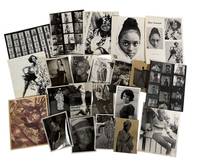
1950211751950. Archive of fashion photography documenting African American women's participation in commercial and editorial modeling from the 1950s through the 1980s a period in which the American fashion and advertising industries remained overwhelmingly centered on white beauty standards and limited Black representation in print media. Working in Cultural / Representational Mode the material illustrates changing presentations of Black femininity glamour and natural beauty across several decades of American fashion culture. The photographs provide visual evidence of evolving aesthetic conventions surrounding race cosmetics hairstyles leisure and commercial image-making during the postwar and Civil Rights eras. Particularly notable are several 1970s images depicting Black models with natural hairstyles and minimal cosmetic styling reflecting broader cultural shifts associated with Black pride movements and changing representations of African American identity in fashion and advertising imagery.<br /> Collection comprises 23 silver gelatin photographs and one color photograph produced by several professional photographers between the 1950s and 1980s. Images include editorial fashion shoots casting and publicity photographs scanned negatives and studio portraiture featuring predominantly Black women alongside several white models photographed by the same studios. Two 1970s editorial images depict a lean Black model with closely cropped natural hair posed in a leopard-print wrap. Four photographs focus specifically on Black women including close-up portraits emphasizing natural presentation and informal styling. One younger woman appears without visible makeup wearing a bandana and t-shirt while another is photographed in a straw hat with hoop earrings and patterned sash. Additional photographs include a Black model posed in a bikini atop the rim of a classical fountain featuring Aphrodite imagery. Four professional photographs and one casting card depict singer and actress Sylvia Vanderbeilt in commercial studio poses. Several scanned negatives portray a Black female model in multiple outfits and poses characteristic of 1970s fashion photography including one sequence featuring both the model and a young Black girl during apparent test shoots. The latest material consists of scanned negative strips from an apparent 1980s fashion session featuring a Black model with a sleek bob hairstyle modeling padded blazers and contemporary commercial attire. Other photographs depict white women in evening gowns fur wraps and casual mid-century fashions including two images by photographer Lee Brian showing the same model posed in mid-length evening gowns amid neoclassical architectural settings one with an elaborate mink shawl. Several photographs bear photographer or studio stamps on the verso including L.W. Ward of Cedar Rapids Iowa and Lee Brian of Palm Beach Florida.<br /> The archive traces substantial shifts in fashion photography and racial representation across three decades of American commercial imagery from heavily stylized mid-century glamour photography to the more natural aesthetics associated with 1970s fashion editorials and Black cultural self-presentation. The inclusion of both editorial and test photography offers insight into the production practices of commercial modeling studios as well as the visual conventions used in presenting Black women to advertising and fashion audiences during a period of gradual but uneven industry integration. Minor wear and light handling marks throughout; photographs otherwise remain in very good condition overall. A visually strong grouping documenting African American representation within postwar American fashion photography and commercial image culture. unknown
1989102182Arnoldo Mondadori Editore Arte, Milano, 1989. 31 cm ; Leinen
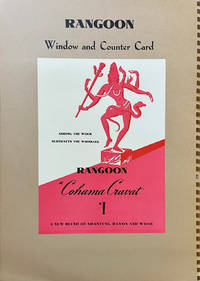
194061451New York: Cohama Cravats United Merchants & Manufacturers 1412 Broadway 1940. Atlas folio. 13 x 18 in. 34 pp unpaginated. printed on thick tan paper stock with 21 different tipped-in advertising promotional samples including camera-ready newspaper ads sample window & counter display cards and folded promotional brochures for mailing each to be imprinted with the retailer’s name order book tucked into rear pocket mounted on last leaf. Tan boards plastic-comb binding to spine minor bumping to couple corners some dustsoiling minor chipping to foot of spine still a VG bright exemplar. First edition of this exceedingly scarce sales and advertising catalogue designed to present the 1940 plan by the company for their $ 1.00 men’s cravat ties. Featured are the proposed newspaper ad lines for the six different Cohama Cravats in the Spring & Summer including the Briar Bahama Camelot Rangoon Gamester and Seminole. American tie manufacturing emerged as a significant force at the end of the Jazz Age and through the 1930’s as their popularity grew world wide for their heavy use of colours vivid patterns and breaking away from the more sedate colour palate of the British tie industry. Contributing to the explosion of tie manufacturing in the 1930s and 1940s were the need by many men during the Great Depression and then the War years to change their fashion look by adding a decorative tie rather than buying a new suit or set of clothes. The Duke of Windsor heavily influenced ties styles and wearers by not only developing the Windsor knot but also wearing them with many different types of clothing. Cohama was a trademark of United Merchants which was a textile firm originally founded in 1912 as the Cohn-Hall-Marx Co. merging with United Merchants in 1928 and later clothing chains across the East and South through World War II. No copies located in Worldcat; See: Gibbings The tie trends and traditions 1990. Cohama Cravats, United Merchants & Manufacturers, 1412 Broadway, hardcover
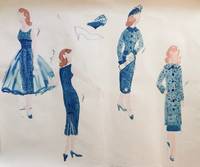
195358213Seattle WA: Nancy Paine ca. 1953-54. Twenty-one original fashion design watercolour paintings all oblong folio 9 sized 15 x 12 in.; 12 sized 18 x 15 in. 1 is painted title only many of them signed by Nancy down in lower corner 1 graded and reviewed by teacher several with neat cursive annotations some curling minor edgewear to corners some toning still VG set with the 2nd set retaining the original portfolio cover sheet. These original watercolour fashion designs reflect the 1950’s emphasis on full circle skirts swing skirts pencil skirts tea length dresses and fitted tight waist blouses reflecting the influence of Christian Dior towards increased femininity in the post-World War II era. For the College Coed portfolio our young artist has included designs for Capri pants lingerie fitted wool dresses flowing “poodle†skirts bathing suits tennis outfit ice skating clothing riding outfits and evening wear. The second portfolio incorporates diamond pattern one-piece bathing suits terrycloth robes different evening weather and nighttime negligee. Although young Miss Paine would not go onto becoming a commercial artist she did work as office manager for many years for the Simpson Lumber Company. Nancy Paine, hardcover
1945Arm330Paris Les éditions du Chène 1945 Brochure in4 ( 32,5 x26 cm ) - non paginé ( 32 pages ) - Avec la liste des collections et objets prêtés ainsi que l'invitation a l'exposition - illustrations couleurs contre collées - Frontispice et ornement de la page 13 de Georges Lepape - Reproductions et lithographies par Georges Duval et Mourlot Frères - Direction artistique de Boris Kochno - Tirage à 1500 exemplaires Textes de Marcel Rochas et Louise de Vilmorin
1945Arm330Paris Les éditions du Chène 1945 Brochure in4 ( 32,5 x26 cm ) - non paginé ( 32 pages ) - Avec la liste des collections et objets prêtés ainsi que l'invitation a l'exposition - illustrations couleurs contre collées - Frontispice et ornement de la page 13 de Georges Lepape - Reproductions et lithographies par Georges Duval et Mourlot Frères - Direction artistique de Boris Kochno - Tirage à 1500 exemplaires Textes de Marcel Rochas et Louise de Vilmorin
195852261Remiremont Cooprative du Centr 1958 Plaquette in-4, en feuilles, couverture imprime.Cette plaquette consacre la mode a t conue et ralise pendant 6 mois par 36 lves du Centre d'Apprentissage Fminin de Remiremont, sous la direction de Michle Ferry (troisime anne de couture), Josette Creusot (seconde anne) et Suzanne Duval (premire anne). L'ouvrage a t tabli selon une mise en pages originale, avec diffrents caractres typographiques de tailles variables, le changement de la couleur du papier pour un des cahiers, de nombreuses illustrations (5 linogravures, 2 dessins, une composition en couleurs reproduisant une armoire lorraine dont les portes s'ouvrent pour dvoiler 2 compositions de mode (un dessin et une aquarelle originale en couleurs), 5 petits clichs, un travail de couture fait avec une soutache et la reproduction d'un autoportrait de Jean Cocteau). Les articles et les illustrations, souvent contrecolles, sont lis l'actualit de l'anne 1925, en particulier la littrature Dada, la peinture, le cinma et la musique. Un signet jaune en forme de crayon, attach l'exemplaire par un ruban gris, comporte un texte qui quantifie tout le travail des lves et prcise que le tirage a ncessit 65 preuves. Tirage unique limit 20 exemplaires numrots sur papier offset des Papeteries Schwindenhammer (Turckheim, Haut-Rhin). Exemplaire nominatif non numrot.
190346401766, 1903 ;
1913227811913 Montrouge, Draeger, 1913, in-4 carré, demi-vélin blanc, plats cartonnés, couvertures conservées, 32 pages.
1925193011925 Gouache et aquarelle, maquette de carte publicitaire, en couleurs, (1925), 18 x 12.8 cm.
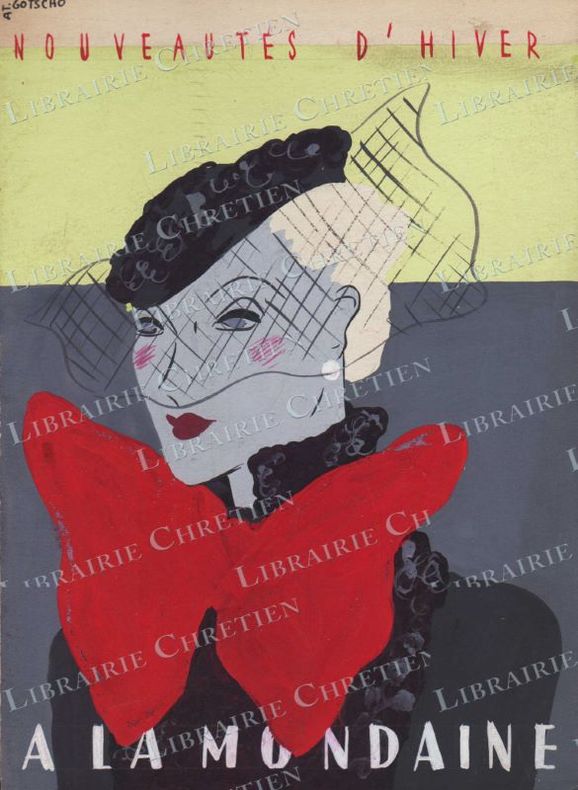
1930193001930 Maquette préparatoire pour des cartes publicitaires, magasin de prêt à porter "Marlène", (1930), gouache et mine de plomb, 24 x 17 cm.
1965100471BBParis, um 1965. 24,5 x 20 cm.
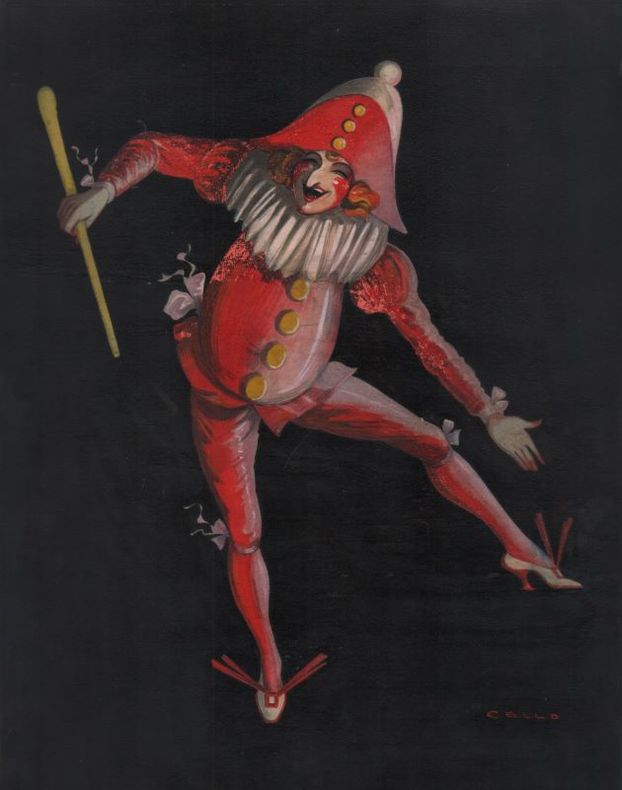
1930225251930 1 in-folio Gouache sur carton signée en bas à droite, (1930), 40 x 27.5 cm.
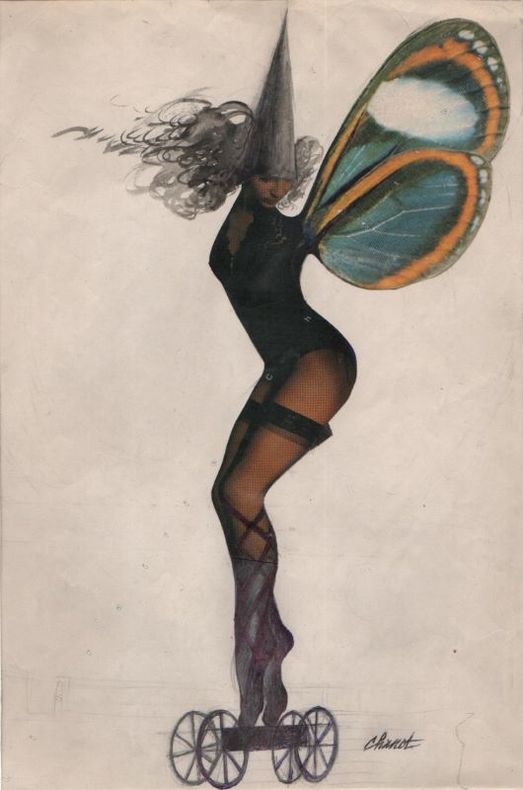
2000232302000 Collage et mine de plomb signée en bas à droite, 2000, 28.5 x 17 cm., encadrée.
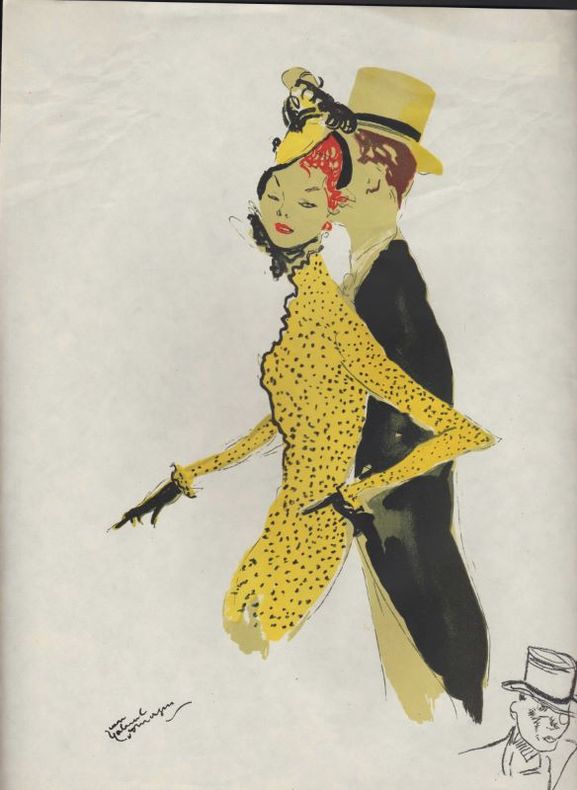
195519708Paris FORET EDITEUR 1955 1 Lithographie originale pour "La Parisienne" de Cécil Saint-Laurent, signée dans la planche en bas à gauche, sur papier Japon. Paris, Joseph Foret Editeur d'Art, 1955, 40.8 x 32.3 cm.
193223547Paris JUNGMANN ET CIE TOLMER 1932 1 Paris, Édition Jungmann et Cie, imprimerie Tolmer, 1931, in-8 oblong, cartonnage noir et doré orné d'une tête de renard en noir, en feuilles, 24 planches illustrées en noir par Ray BRET KOCH accompagnées d'une double page sur les créations de fourrure de la Maison Jungmann.