10 613 résultats
20112092902139200008Cambridge University Press 2011. Soft Cover. Fine. The book is in fine condition. Cambridge University Press paperback
1998304593London : Folio Society 1998. First Edition. Hardcover. Fine copies in the original gilt-blocked cloth-backed boards in a slip-case. Slightest suggestion only of dust-dulling to the panel edges. Remains particularly well-preserved overall; tight bright clean and strong. Physical description: 3 vol. ill. ; 23cm. Subjects: Legends -- Great Britain. Mythology. London : Folio Society hardcover
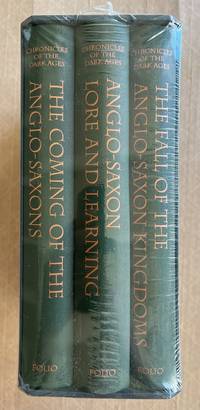
200893299London: The Folio Society 2008. Hardcover. New. In original shrinkwrap and slipcase. Three quarto dark green volumes in matching slipcase: color illustrations; 26 cm. Approx 350p per volume; bibliographical references. Contents: Volume 1 The coming of the Anglo-Saxons -- Volume 2 Anglo-Saxon lore and learning -- Volume 3 The fall of the Anglo-Saxon kingdoms. / Civilization Anglo-Saxon -- Sources. English literature -- Old English ca. 450-1100. Anglo-Saxons. Civilisation anglo-saxonne -- Sources. Littérature anglaise -- ca 450-1100 Vieil anglais Anglo-Saxons. Anglo-Saxons. Antiquities. Civilization Anglo-Saxon. English literature -- Old English. History. Sources. 449-1100 A.D. Great Britain -- History -- Anglo-Saxon period 449-1066. Great Britain -- Antiquities. Grande-Bretagne -- Histoire -- 449-1066 Période anglo-saxonne Great Britain. / A large heavy set weighing 6.5 lbs before packing. . Extra shipping charges may apply for international & expedited orders. Please inquire. The Folio Society hardcover
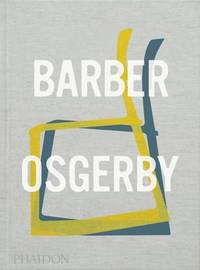
20171-0714874833Phaidon Inc Ltd 2017. Hardcover. New. 312 pages. 14.00x11.00x1.25 inches. Phaidon Inc Ltd hardcover
2023x-0367621452CRC Pr I Llc 2023. Hardcover. New. 2nd edition. 560 pages. 10.00x7.00x1.42 inches. CRC Pr I Llc hardcover
24638274like new. unknown
2008DADAX0415429617Routledge 2008-11-24. 1. hardcover. New. 6.14x0.56x9.21. Buy with confidence. Excellent Customer Service & Return policy. Routledge hardcover
1991DADAX0815301448Routledge 1991-05-01. 1. hardcover. New. 5.75x0.75x8.75. Buy with confidence. Excellent Customer Service & Return policy. Routledge hardcover
2012DADAX1849713499Routledge 2012-09-18. 1. hardcover. New. 5.50x0.75x8.75. Buy with confidence. Excellent Customer Service & Return policy. Routledge hardcover
2008DADAX1859738125Berg Publishers 2008-02-01. hardcover. New. 6.14x0.75x9.21. Buy with confidence. Excellent Customer Service & Return policy. Berg Publishers hardcover
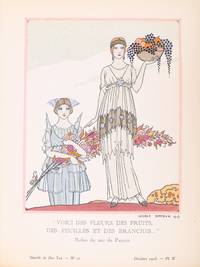
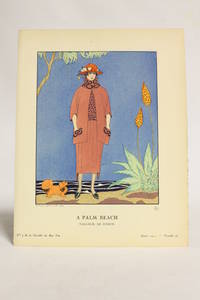
191389500Paris 1913. Fine. Paris Octobre 1913 19 x 24.50 cm une feuille Original colour print heightened in palladium printed on laid paper and signed at the bottom right outside the plate. Original engraving produced for the illustration of La Gazette du Bon Ton one of the most beautiful and influential fashion journals of the 20th century celebrating the talent of French designers and artists at the height of the Art Deco era. A celebrated fashion magazine established in 1912 by Lucien Vogel La Gazette du bon ton appeared until 1925 with a hiatus from 1915 to 1920 due to the war the editor-in-chief having been called up for service. It consisted of 69 issues printed in only 2000 copies each and notably illustrated with 573 color plates and 148 sketches of the models of the great designers. Right from the start this sumptuous publication “was aimed at bibliophiles and fashionable society” Françoise Tétart-Vittu “La Gazette du bon ton” in Dictionnaire de la mode 2016 and was printed on fine vergé paper using a type cut specially for the magazine by Georges Peignot known as Cochin later used in 1946 by Christian Dior. The prints were made using stencils heightened in colors some highlighted in gold or palladium. The story began in 1912 when Lucien Vogel a man of the world involved in fashion he had already been part of the fashion magazine Femina decided with his wife Cosette de Brunhoff – the sister of Jean creator of Babar – to set up the Gazette du bon ton subtitled at the time: “Art fashion frivolities.”  Georges Charensol noted the reasoning of the editor-in-chief: “’In 1910’ he observed ‘there was no really artistic fashion magazine nothing representative of the spirit of the time. My dream was therefore to make a luxury magazine with truly modern artists…I was assured of success because when it comes to fashion no country on earth can compete with France.’” “Un grand éditeur d’art. Lucien Vogel” in Les Nouvelles littéraires no. 133 May 1925. The magazine was immediately successful not only in France but also in the United States and Latin America. At first Vogel put together a team of seven artists: André-Édouard Marty and Pierre Brissaud followed by Georges Lepape and Dammicourt as well as eventually his friends from school and the School of Fine Arts like George Barbier Bernard Boutet de Monvel and Charles Martin. Other talented people soon came flocking to join the team: Guy Arnoux Léon Bakst Benito Boutet de Monvel Umberto Brunelleschi Chas Laborde Jean-Gabriel Domergue Raoul Dufy Édouard Halouze Alexandre Iacovleff Jean Émile Laboureur Charles Loupot Chalres Martin Maggie Salcedo. These artist mostly unknown when Lucien Vogel sought them out later became emblematic and sought-after artistic figures. It was also they who worked on the advertising drawings for the Gazette. The plates put the spotlight on and celebrate dresses by seven designers of the age: Lanvin Doeuillet Paquin Poiret Worth Vionnet and Doucet. The designers provided exclusive models for each issue. Nonetheless some of the illustrations are not based on real models but simply on the illustrator’s conception of the fashion of the day.   The Gazette du bon ton was an important step in the history of fashion. Combining aesthetic demands with the physical whole it brought together – for the first time – the great talents of the artistic literary and fashion worlds; and imposed through this alchemy a completely new image of women: slender independent and daring which was shared by the new generation of designers including Coco Chanel Jean Patou Marcel Rochas and so on… Taken over in 1920 by Condé Montrose Nast the Gazette du bon ton was an important influence on the new layout and aesthetics of that “little dying paper” that Nast had bought a few years earlier: Vogue. unknown
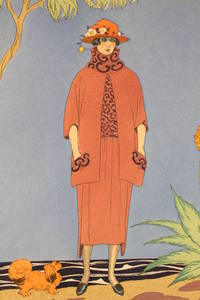
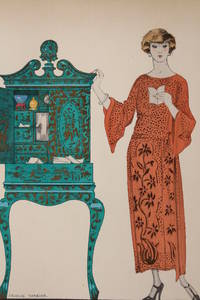
192154878Paris: Lucien Vogel éditeur 1921. Fine. Lucien Vogel éditeur Paris 1921 18 x 24 cm une feuille Original color print printed on vergé paper signed in the plate. An original print used to illustrate the Gazette du bon ton one of the most attractive and influential 20th century fashion magazines featuring the talents of French artists and other contributors from the burgeoning Art Deco movement. A celebrated fashion magazine established in 1912 by Lucien Vogel La Gazette du bon ton appeared until 1925 with a hiatus from 1915 to 1920 due to the war the editor-in-chief having been called up for service. It consisted of 69 issues printed in only 2000 copies each and notably illustrated with 573 color plates and 148 sketches of the models of the great designers. Right from the start this sumptuous publication was aimed at bibliophiles and fashionable society Françoise Tétart-Vittu La Gazette du bon ton in Dictionnaire de la mode 2016 and was printed on fine vergé paper using a type cut specially for the magazine by Georges Peignot known as Cochin later used in 1946 by Christian Dior. The prints were made using stencils heightened in colors some highlighted in gold or palladium. The story began in 1912 when Lucien Vogel a man of the world involved in fashion he had already been part of the fashion magazine Femina decided with his wife Cosette de Brunhoff the sister of Jean creator of Babar to set up the Gazette du bon ton subtitled at the time: Art fashion frivolities. Georges Charensol noted the reasoning of the editor-in-chief: In 1910 he observed there was no really artistic fashion magazine nothing representative of the spirit of the time. My dream was therefore to make a luxury magazine with truly modern artists I was assured of success because when it comes to fashion no country on earth can compete with France. Un grand éditeur dart. Lucien Vogel in Les Nouvelles littéraires no. 133 May 1925. The magazine was immediately successful not only in France but also in the United States and Latin America. At first Vogel put together a team of seven artists: André-Édouard Marty and Pierre Brissaud followed by Georges Lepape and Dammicourt as well as eventually his friends from school and the School of Fine Arts like George Barbier Bernard Boutet de Monvel and Charles Martin. Other talented people soon came flocking to join the team: Guy Arnoux Léon Bakst Benito Boutet de Monvel Umberto Brunelleschi Chas Laborde Jean-Gabriel Domergue Raoul Dufy Édouard Halouze Alexandre Iacovleff Jean Émile Laboureur Charles Loupot Chalres Martin Maggie Salcedo. These artist mostly unknown when Lucien Vogel sought them out later became emblematic and sought-after artistic figures. It was also they who worked on the advertising drawings for the Gazette. The plates put the spotlight on and celebrate dresses by seven designers of the age: Lanvin Doeuillet Paquin Poiret Worth Vionnet and Doucet. The designers provided exclusive models for each issue. Nonetheless some of the illustrations are not based on real models but simply on the illustrators conception of the fashion of the day. The Gazette du bon ton was an important step in the history of fashion. Combining aesthetic demands with the physical whole it brought together for the first time the great talents of the artistic literary and fashion worlds; and imposed through this alchemy a completely new image of women: slender independent and daring which was shared by the new generation of designers including Coco Chanel Jean Patou Marcel Rochas and so on Taken over in 1920 by Condé Montrose Nast the Gazette du bon ton was an important influence on the new layout and aesthetics of that little dying paper that Nast had bought a few years earlier: Vogue. Lucien Vogel éditeur unknown
192157545Paris: Lucien Vogel éditeur 1921. Fine. Lucien Vogel éditeur Paris 1921 18 x 24 cm une feuille original print in color printed on laid paper signed lower left on the board. Original content produced for the illustration of The Gazette fashionable one of the finest and most influential twentieth century fashion magazines celebrating the talent of creators and artists French burgeoning art deco. Famous fashion magazine founded in 1912 by Lucien Vogel The Gazette fashionable appeared until 1925 with an interruption during the War of 1915 to 1920 due to mobilization of its editor. She is 69 Deliveries from just 2000 copies and is illustrated including 573 color plates and 148 sketches depicting models of fashion designers. Upon publication these luxury publications ""are for bibliophiles and worldly aesthetes"" Françoise Tétart-Vittu ""good Gazette of tone"" in the fashion dictionary 2016. Printed on fine laid paper they use a typeface created specifically for the magazine by Georges Peignot the Cochin character taken in 1946 by Christian Dior. The prints are made with the technique of metal stencil enhanced color and some outlined in gold or palladium. The adventure began in 1912 when Lucien Vogel man of the world and fashion - it has already participated in Femina magazine - decided to found with his wife Cosette de Brunhoff John's sister the father of Babar Gazette good tone in which the subtitle is then ""Art fashions and frivolities."" Georges Charensol quotes the editor: ""In 1910 he observed there was no truly artistic fashion magazine and representative of the spirit of his time. So I thought of making a glossy magazine with truly modern artists . I was certain of success because no country for fashion can compete with France. """" A great art editor. Lucien Vogel ""in Literary News No. 133 May 1925. The success of the magazine is immediate not only in France but also the US and South America. Originally Vogel therefore brings together a group of seven artists: André-Édouard Marty and Pierre Brissaud followed by Georges Lepape and Dammicourt; and finally his friends from the School of Fine Arts as are George Barbier Bernard Boutet de Monvel or Charles Martin. Other talents come quickly reach the equipped Guy Arnoux Léon Bakst Benito Boutet de Monvel Umberto Brunelleschi Chas Laborde Jean-Gabriel Domergue Raoul Dufy Edward Halouze Alexander Iacovleff Jean Emile Laboureur Charles Loupot Charles Martin Maggie Salcedo. These artists mostly unknown when Lucien Vogel appealed to them will eventually become iconic figures and artistic sought. These are the same illustrators who make the drawings advertisements Gazette. The boards highlight the dresses and sublime seven artists of the time: Lanvin Doeuillet Paquin Poiret Worth Vionnet and Doucet. The designers provide for each number of exclusive models. Nevertheless some of Illustrations contained no real model but only the idea that the illustrator is done in the fashion of the day. Gazette fashionable is a milestone in the history of fashion. Combining the aesthetic requirement and plastic unit it brings together for the first time the great talents of the world of arts literature and fashion and imposed by this alchemy a new image of women slender independent and bold also driven by the new generation of designers Coco Chanel Jean Patou Rochas Marcel . Recovery in 1920 by Condé Montrose Nast Gazette fashionable modeled for the new composition and the aesthetic choices of the ""little dying newspaper"" that Nast had bought a few years ago: the Vogue magazine. Lucien Vogel éditeur hardcover
192254957Paris: Lucien Vogel éditeur 1922. Fine. Lucien Vogel éditeur Paris 1922 18 x 24 cm une feuille Original color print heightened with gold printed on vergé paper signed in the plate. An original print used to illustrate the Gazette du bon ton one of the most attractive and influential 20th century fashion magazines featuring the talents of French artists and other contributors from the burgeoning Art Deco movement. A celebrated fashion magazine established in 1912 by Lucien Vogel La Gazette du bon ton appeared until 1925 with a hiatus from 1915 to 1920 due to the war the editor-in-chief having been called up for service. It consisted of 69 issues printed in only 2000 copies each and notably illustrated with 573 color plates and 148 sketches of the models of the great designers. Right from the start this sumptuous publication was aimed at bibliophiles and fashionable society Françoise Tétart-Vittu La Gazette du bon ton in Dictionnaire de la mode 2016 and was printed on fine vergé paper using a type cut specially for the magazine by Georges Peignot known as Cochin later used in 1946 by Christian Dior. The prints were made using stencils heightened in colors some highlighted in gold or palladium. The story began in 1912 when Lucien Vogel a man of the world involved in fashion he had already been part of the fashion magazine Femina decided with his wife Cosette de Brunhoff the sister of Jean creator of Babar to set up the Gazette du bon ton subtitled at the time: Art fashion frivolities. Georges Charensol noted the reasoning of the editor-in-chief: In 1910 he observed there was no really artistic fashion magazine nothing representative of the spirit of the time. My dream was therefore to make a luxury magazine with truly modern artists I was assured of success because when it comes to fashion no country on earth can compete with France. Un grand éditeur dart. Lucien Vogel in Les Nouvelles littéraires no. 133 May 1925. The magazine was immediately successful not only in France but also in the United States and Latin America. At first Vogel put together a team of seven artists: André-Édouard Marty and Pierre Brissaud followed by Georges Lepape and Dammicourt as well as eventually his friends from school and the School of Fine Arts like George Barbier Bernard Boutet de Monvel and Charles Martin. Other talented people soon came flocking to join the team: Guy Arnoux Léon Bakst Benito Boutet de Monvel Umberto Brunelleschi Chas Laborde Jean-Gabriel Domergue Raoul Dufy Édouard Halouze Alexandre Iacovleff Jean Émile Laboureur Charles Loupot Chalres Martin Maggie Salcedo. These artist mostly unknown when Lucien Vogel sought them out later became emblematic and sought-after artistic figures. It was also they who worked on the advertising drawings for the Gazette. The plates put the spotlight on and celebrate dresses by seven designers of the age: Lanvin Doeuillet Paquin Poiret Worth Vionnet and Doucet. The designers provided exclusive models for each issue. Nonetheless some of the illustrations are not based on real models but simply on the illustrators conception of the fashion of the day. The Gazette du bon ton was an important step in the history of fashion. Combining aesthetic demands with the physical whole it brought together for the first time the great talents of the artistic literary and fashion worlds; and imposed through this alchemy a completely new image of women: slender independent and daring which was shared by the new generation of designers including Coco Chanel Jean Patou Marcel Rochas and so on Taken over in 1920 by Condé Montrose Nast the Gazette du bon ton was an important influence on the new layout and aesthetics of that little dying paper that Nast had bought a few years earlier: Vogue. Lucien Vogel éditeur unknown
2023x-1501390023Bloomsbury USA Academic 2023. Hardcover. New. 264 pages. 9.50x6.50x0.75 inches. Bloomsbury USA Academic hardcover
20162-032324338XW B Saunders Co 2016. Hardcover. New. 6th edition. 1280 pages. 11.00x9.00x1.50 inches. W B Saunders Co hardcover
2015x-1498510507Lexington Books 2015. Hardcover. New. 248 pages. 9.13x6.57x1.11 inches. Lexington Books hardcover
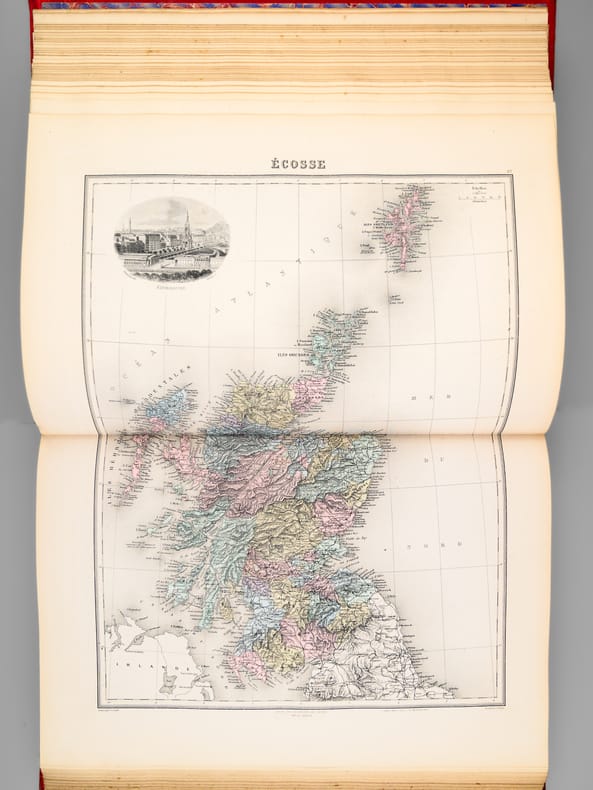
189366574Dressé, dessiné et gravé par MM. Desbuissons, Lorsignol, Lacoste, Fillatreau, Lecocq, Smith, Bizet, Fontaine, Barbier, Soudain, etc..., Texte par M. A. Martineau, 1 vol. in-folio reliure éditeur demi-chagrin rouge, Direction et Administration, Paris, 1893, 3 ff et 66 cartes en couleurs (62 numéros et 4 numéros bis), et une grande carte dépliante (Carte dépliante des Chemins de Fer en Europe par Chartier)
iv, 220 pp. Bibliography. Index. Generously illustrated with black and white reproductions of interesting archival photos. Presents the family recollections of: Eleanor Dahl, Jessie Stinson, John Wannamaker, Earl and Mabel Onderdonk, Mildred Wannamaker, Krysia Mason, Douglas K. Redner, Verna Sills, Mrs. Jack Langman, Robert and Carole Bleecker, Mrs. George Flower, Bruce Graham, Gwen Braidwood, Jack DeLong, Mary and Cecil McConkey, Emma Barber, Gladys Adams, Beth Nightingale, Nellie Montgomery, Lorna Bowerman, and Mrs. John Jinks. Also includes a fascinating page of information about the Spanish Influenza epidemic of 1918, including a 'Recipe for Influenza' which involves vinegar, turpentine and flannel. Clean and unmarked with light wear. A nice copy of this informative local history and wonderful genealogical reference. Book
16 pages. Features: Lloyd Triumphs - great comeback in the L.A. Open; Bolt's 63 fails to catch Mangrum; Amateurs in the South; Photo of the Maxwell Boys, W.O. (Jr.), Billy, and Bobby, who all recently held course records at the Big Spring CC in Texas; Nice photo and article about the success of Lloyd Mangrum; One-page golf-themed photo ad for the 1956 Lincoln car; Photos of Jerry Barber and Tommy Bolt; Page of photos of the pros who accomplished feats in 1955, including Mike Souchak, Doug Ford, Mortie Dutra, Ed Furgol, Chick Harbert, and Cary Middlecoff (being kissed by the Tennessee Governor's wife); Photo of the retirement of Mr. Hack (H.C. Hackbarth), nearly 50 years the pro at the Little Rock, AR CC; Photo of Milt Woodard; Photo of Dan Sheehan; Large back cover photo of the Vare Family - Mr. and Mrs. Edwin H. Vare, Jr.(of Philadelphia) and relatives; and more. Moderate wear. Unmarked. A sound copy of this great vintage issue. Magazine
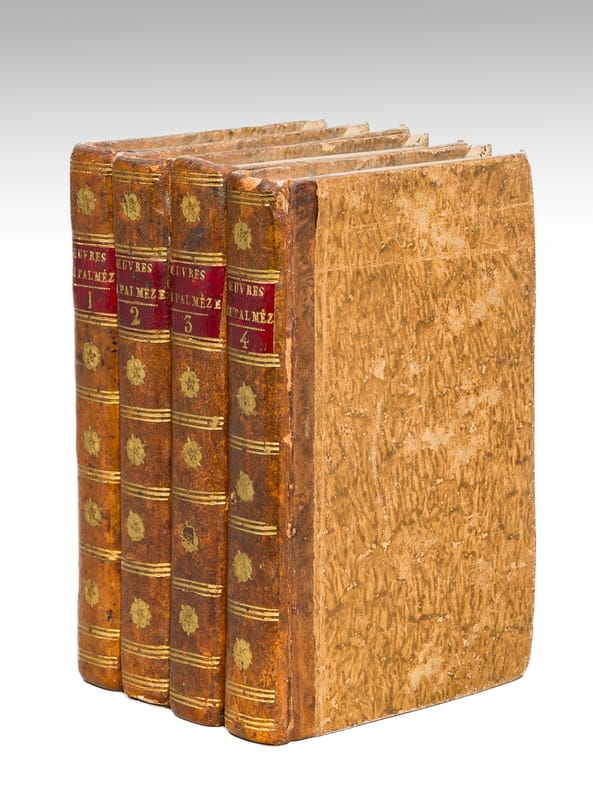
1810654654 vol. in-18 reliure de l'époque demi-basane marron, Chez Mme Desmarest, Paris, 1810, 2 ff., 229 pp. ; 252 ; 258 ; 266 pp.
98 pages. Fiction: See you in the movies; The black devil; Papa played the cello; Bright message; A drive through the country; The outraged heart (part 3 of 4). Articles: Trieste - Battleground for Peace - article with photos; Message to Americans; One Hungry World; I Am a Spastic; Call Them Mister; Brass Hats and Blue Pencils - the Stars & Stripes Army newspaper; Benedict Bogeaus' Movies; A Million Miles of Fishing - a vast tuna industry awaits development in the Pacific Islands; Nice color ad for GE radios; Great color ad for International diesel tractor pulling a scraper; Sweet color one-page ad for the Mercury (Woody) Station Wagon; Great color Coke ad shows magician at work; Union Pacific ad featuresYellowstone National Park; Nice color Chrysler ad; Wonderful photo ad for Columbia sun Glasses; Nice GMC truck ad features G.I. Joe in barber shop; Nice one-page Borden's ad featuring Elsie the Cow; Nice Lucky Strike cigarette ad on back cover features tobacco farmer; and more. Moderate wear. Unmarked. A sound vintage copy. Book
2009NOCT17-9781567936964-677The Guilford Press 2009-03-19. Hardcover. New. NEW TEXTBOOK SHIPS WITH EMAILED TRACKING FROM USA The Guilford Press hardcover