41 résultats
174325189Leiden: Joannem & Hermannum Verbeek 1743. From the first edition of one of the greatest of all Anatomical Atlases. Tabula IX which features Albinus and Wandelaar's famous "Muscle Man" a skinned figure whose musculature is visible and defined as viewed in walking profile with the left arm raised and the right foot forward his head is turned slightly away from the viewer. Elephant folio 620 by 475 mm single folio sheet now mounted with the use of none-evasive corner tabs and protected by mylar. Very well preserved fully intact with only the most minor evidence of age. ONE OF THE MAGNIFICENT PLATES FROM "AMONG THE MOST ARTISTICALLY PERFECT OF ANATOMICAL ATLASES." Wandelaar placed his skeletons and musclemen against lush ornamental backgrounds to give them the illusion of vitality using contrasts of mass and light to produce a three-dimensional effect. The most famous plate in the atlas depicts a skeletal figure standing in front of an enormous grazing rhinoceros sketched by Wandelaar from the first living specimen in Europe which had arrived at Amsterdam zoo in 1741" Norman.<br> The plates in this large folio work and in the four supplementary works in large folio with which it is bound are unsurpassed for their cool elegant aesthetic and scientific accuracy. They were drawn and engraved by Jan Wandelaer a pupil of the engravers Jacob Fokema and Guillem van der Gouwen and the painter Gerard de Lairesse who prepared the drawings for Bidloo's atlas. Prior to working for Albinus Wandelaer worked for Friedrik Ruysch. Albinus however provided Wandelaar with the opportunity for the full expression of his talents as a draftsman and engraver. <br> In an attempt to increase the scientific accuracy of anatomical illustration Albinus and Wandelaar devised a new technique of placing nets with square webbing at specified intervals between the artist and the anatomical specimen and copying the images using the grid patterns. Wandelaer placed each figure in a carefully chosen landscape setting and the artistic results are so pleasantly successful that the anatomical figures although composed of many separate parts appear to be actually stepping out of the picture. Joannem & Hermannum Verbeek unknown
174025188Leiden: Joannem & Hermannum Verbeek 1740. From the first edition of one of the greatest of all Anatomical Atlases. Tabula V which features Albinus and Wandelaar's famous "Muscle Man" a skinned figure whose musculature is visible and defined as viewed from behind standing with the left arm raised right arm turned and his weight shifted to the right foot. Elephant folio 620 by 475 mm single folio sheet now mounted with the use of none-evasive corner tabs and protected by mylar. Very well preserved fully intact with only the most minor evidence of age. ONE OF THE MAGNIFICENT PLATES FROM "AMONG THE MOST ARTISTICALLY PERFECT OF ANATOMICAL ATLASES." Wandelaar placed his skeletons and musclemen against lush ornamental backgrounds to give them the illusion of vitality using contrasts of mass and light to produce a three-dimensional effect. The most famous plate in the atlas depicts a skeletal figure standing in front of an enormous grazing rhinoceros sketched by Wandelaar from the first living specimen in Europe which had arrived at Amsterdam zoo in 1741" Norman.<br> The plates in this large folio work and in the four supplementary works in large folio with which it is bound are unsurpassed for their cool elegant aesthetic and scientific accuracy. They were drawn and engraved by Jan Wandelaer a pupil of the engravers Jacob Fokema and Guillem van der Gouwen and the painter Gerard de Lairesse who prepared the drawings for Bidloo's atlas. Prior to working for Albinus Wandelaer worked for Friedrik Ruysch. Albinus however provided Wandelaar with the opportunity for the full expression of his talents as a draftsman and engraver. <br> In an attempt to increase the scientific accuracy of anatomical illustration Albinus and Wandelaar devised a new technique of placing nets with square webbing at specified intervals between the artist and the anatomical specimen and copying the images using the grid patterns. Wandelaer placed each figure in a carefully chosen landscape setting and the artistic results are so pleasantly successful that the anatomical figures although composed of many separate parts appear to be actually stepping out of the picture. Joannem & Hermannum Verbeek unknown
174025187Leiden: Joannem & Hermannum Verbeek 1740. From the first edition of one of the greatest of all Anatomical Atlases. Tabula V which features a human skeleton in a three-quarter view and seen from the rear is portrayed in a walking motion with the left hand raised and extended. Elephant folio ca. 620 by 475 mm single folio sheet now mounted with the use of non-evasive corner tabs and protected by mylar. Very well preserved fully intact with only the most minor evidence of age. ONE OF THE MAGNIFICENT PLATES FROM "AMONG THE MOST ARTISTICALLY PERFECT OF ANATOMICAL ATLASES." Wandelaar placed his skeletons and musclemen against lush ornamental backgrounds to give them the illusion of vitality using contrasts of mass and light to produce a three-dimensional effect. The most famous plate in the atlas depicts a skeletal figure standing in front of an enormous grazing rhinoceros sketched by Wandelaar from the first living specimen in Europe which had arrived at Amsterdam Zoo in 1741" Norman.<br> The plates in this large folio work and in the four supplementary works in large folio with which it is bound are unsurpassed for their cool elegant aesthetic and scientific accuracy. They were drawn and engraved by Jan Wandelaer a pupil of the engravers Jacob Fokema and Guillem van der Gouwen and the painter Gerard de Lairesse who prepared the drawings for Bidloo's atlas. Prior to working for Albinus Wandelaer worked for Friedrik Ruysch. Albinus however provided Wandelaar with the opportunity for the full expression of his talents as a draftsman and engraver. <br> In an attempt to increase the scientific accuracy of anatomical illustration Albinus and Wandelaar devised a new technique of placing nets with square webbing at specified intervals between the artist and the anatomical specimen and copying the images using the grid patterns. Wandelaer placed each figure in a carefully chosen landscape setting and the artistic results are so pleasantly successful that the anatomical figures although composed of many separate parts appear to be actually stepping out of the picture. Joannem & Hermannum Verbeek unknown
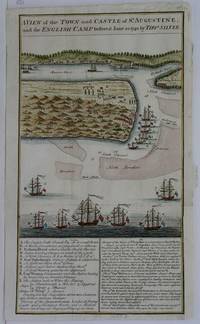
1740M6794London: Gentleman's Magazine 1740. Very Good;lower right margin extended. Notes: The View depicts the seige of Spanish St. Augustine in Florida by the British led by General Oglethorpe. Notes and key appear at the bottom of the image. <br>The Siege of St. Augustine was a part of the War of Jenkins' Ear during which England and her colonies attacked Spanish colonies in the Americas. After some mutual minor skirmishes Governor Oglethorpe of the colony of Georgia raised a mixed force of British regulars the 'Old' 42nd Regiment of Foot colonial milita from Georgia and Carolina Hugh MacKaye's Highlanders and American Creek and Chickasaw or Uchee Indians. The British never were successful. Size : 295x165 mm 11.61x6.50 Inches Coloring: Hand Colored Reference: Jolly Gent-12 Category: Maps United States South Florida; Gentleman's Magazine unknown
17849900042258London: W. and A. Strahan 1784. 1st edition. Hardcover. charts engravings. 4to. Complete four volume set of the first edition. In the original boards but boards detached. Overall the contents remain tightly-bound and in remarkably good condition. Vol. I complete but for The List of Plates pp. xci to xcvi - however included in the fourth volume - see below and all seven maps on six plates four folding and one folding plate are present. Vol. II complete with all eleven maps or views six folding. Vol. III shows an early worm hole to the first few pages not affecting text. All six maps and plates are present two folding plus the folding table at the end but with no advertising leaf included. Vol IV contains 61 engravings of people places and animals visited by Capt. Cook in what is now Hawaii described as the Sandwich Islands Western British Columbia and Alaska. Forty of the plates are folding; 21 are large single-page plates. The volume begins with 'The List of Plates' and is numbered pages xci to xcvi see above. Some of the illustrations are foxed. This volume lacks three charts nos. I and VI from vol. I and no. XXXVI from vol. II. There is foxing off-setting really on the pages facing the plates and charts and occasional marginal foxing to the text but the latter is hardly untoward. Beddie Bibliography of Captain James Cook BCJC 1543 Streeter 3478. Sabin 16250 Howes 729a Sotheby's London sale 11/21/91 lot #377 three vols only. W. and A. Strahan hardcover
17504310The binding probably Augsburg 1750. Agenda-format binding size 155 x 78 x 24 mm. Contents: 143 small engravings all but the first 48-50 x 35-37 mm. the first mounted sideways measuring 50 x 97 mm. consisting of 11 engravings for each saint trimmed to borders and mounted on 78 leaves of wove paper. 18th-century German silver-gilt embossed binding regilt in the 19th century both covers with a large oval cartouche containing a scene of the Crucifixion on the upper cover and the Resurrection on lower cover both covers with cherubs within ornamental foliage at the four corners the pair at top holding a cartouche with a scene of the Entombment on upper cover and the Ascension on lower cover the pair at the foot holding laurel wreaths and flanking a winged angel’s head; spine with embossed flowers ribbons and foliate ornaments above and below a central scene of Moses with the brazen serpent at top a monogram of the letters CJ; two chased metal fore-edge clasps attaching on upper cover; lined in later 19th-century green watered silk edges gilt and gauffered. Housed in a folding cloth felt-lined folding case upper cover with morocco gilt label with Abbey’s named coat of arms; his paper shelf-mark label JA 2680 on lower cover. Provenance: unidentified monogram on binding; Major John Roland Abbey 1894-1969 bookplate on case; see Hayward Silver Bindings no. 17; Bernard Breslauer anonymous sale Sotheby’s 10 May 1985 “Silver and Enamel Bindings†lot 26 unsold.<br /> <br /> A stunning embossed silver-gilt binding almost certainly produced in Augsburg from the collection of Major Abbey. <br /> <br /> The binding dates from the “last phase of baroque and the fully developed rococo†Hayward the final culminating period of Augsburg craftsmanship in embossed silver. Describing this binding and two others from the collection Hayward wrote: “the most finely worked book-covers in the Abbey Collection date from the second quarter of the Eighteenth Century. The subjects are the familiar scenes from the life of Christ but treated even in the small compass of a book-cover with extraordinary dramatic force. The designs were probably derived from a contemporary illustrated Bible but their effectiveness is greatly enhanced by the relief in which they are rendered and by the strong contrasts of light and shade†p. 3. To accentuate the pathos the silversmith or designer chose to highlight minor characters: in the dramatic Crucifixion scene the most deeply embossed figures occupying the foreground are two soldiers throwing dice at the foot of the cross; similarly the centurion is the largest and most solid figure in the Resurrection scene on the lower cover.<br /> <br /> The binding encloses an album of 143 fine small unsigned 17th-century probably Flemish engravings of Franciscan saints neatly mounted on wove paper. The Antwerp engraver and print publisher Philips Galle had initiated the vogue for “Franciscan†prints with his series of engravings of the Life of St. Francis first produced before 1580 cf. Sellink pp. 129-131. The present suite contains 13 series each with 11 small engravings depicting a saint or group of saints as follows: St. Francis The 5 Martyred Saints the 7 Martyred Saints Anthony of Padua Bonaventura Ludovicus Episcopius Bernardino of Siena John of Capestrano Didacus Diego of Alcalá Clare of Assisi Elizabeth of Hungary S. Elizabeth vidua Louis of France and Elzear. With one exception John of Capestrano instead of St. Ivo of Brittany these were the saints chosen by Hendrik Sedulius guardian of the Antwerp Franciscans for his Imagines Sanctorum Francisci printed and illustrated by Philips Galle in 1602 but that quarto-format work only includes one large engraving per saint each accompanied by a page of text. The exact source of this more extensive small format suite remains to be identified. Each engraving has a caption citing a chapter number. <br /> <br /> Major John Roland Abbey assembled the largest English book collection of his generation. His first love was bindings and among these he brought together an exceptional group of silver bindings some of which were described and illustrated by John F. Hayward in an article published in The Connoisseur in 1952. The present binding is number 17; Hayward noted its earlier regilding as well as the “fine quality†of the embossing. Bernard Breslauer later bought the collection en bloc from Abbey’s widow “and in 1985 Bernard consigned the collection with some additions from his own stock to Sotheby’s London. Despite Sotheby’s well-illustrated and informative catalogue the sale was calamitous: of the fifty-eight silver and enamel bindings only fourteen met the reserve†Laird p. 67. This binding was not one of them. <br /> <br /> Cf. M. S. Sellink Philips Galle 1537-1612: engraver and print publisher in Haarlem and Antwerp PhD ThesisVrije Universiteit Amsterdam 1997 online. J. F. Hayward Silver Bindings from the J. R. Abbey Collection offprint from The Connoisseur October 1952. Cf. M. Laird “Bernd Bernard Hartmut Breslauer 1918-2004: A Personal Memoir†Gazette of the Grolier Club 72 2023 59-92. Thanks to Mr. Laird for sharing the sale results from B. Breslauer’s own catalogue in his possession. <br /> <br /> <br /> <br /> <br /> <br /> unknown
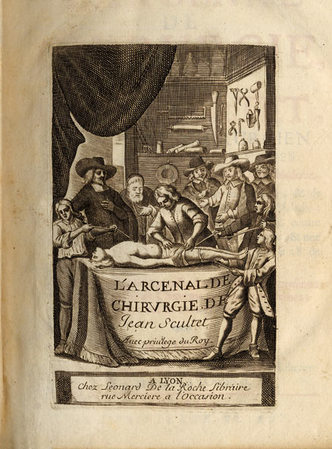
17129402Lyon, Léonard De La Roche, 1712 ; in-4 ; plein veau havane, dos à nerfs richement décoré et doré, pièce de titre grenat, tranches mouchetées rouges (reliure de l'époque) ; (16) y compris le frontispice gravé, titre en rouge et noir, Dédicace aux médecins et chirurgiens de Lyon, table, 369, (3), 138, (22) pp. de tables ; 46 planches numérotées plus 4 non chiffrées soit 50 planches gravées hors-texte au total, certaines dépliantes, représentant de très nombreux outils et appareils, des opérations et 3 planches de monstres.
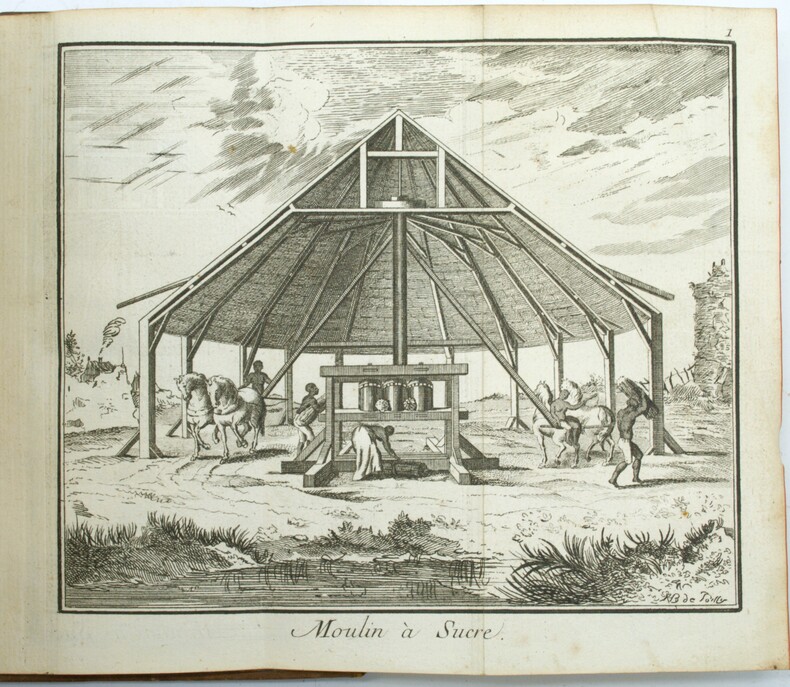
1762249483Paris: de l'Imprimeries de H.L. Guerin & L.F. Delatour 1762. 42 pp. 7 full page engraved plates. 1 vols. Folio 18 x 12 inches. Contemporary drab wrappers uncut . Fine. 42 pp. 7 full page engraved plates. 1 vols. Folio 18 x 12 inches. From Description des arts et métiers. de l'Imprimeries de H.L. Guerin & L.F. Delatour] unknown
1762249483Paris: de l'Imprimeries de H.L. Guerin & L.F. Delatour 1762. 42 pp. 7 full page engraved plates. 1 vols. Folio 18 x 12 inches. Contemporary drab wrappers uncut . Fine. 42 pp. 7 full page engraved plates. 1 vols. Folio 18 x 12 inches. From Description des arts et métiers. de l'Imprimeries de H.L. Guerin & L.F. Delatour] unknown books
178618071018xbvkParis, Bibliothèque des dames, 1786. 1 sheet, with a decorated titlefield. Ca. 21,2 x 23,9 cm (will be shipped flat, unfolded).
1793H3339Madrid: En La Imprenta Real 1793. First printing. Hardcover. Very Good. First edition 1793 original flame calf deep red spine label very good copy 8 290 3 pp. In three parts the first lessons for children on their obligations when they are grown to their king and lord the second addressed to priests and the third part addressed to Pius VI regarding the revolution in France and what it portends. The author was a well known priest orator and educator on very good terms with Spanish royalty who rewarded him by making him a bishop with his base in Rio de la Plata Argentina but also with bishoprics in Cordoba and Catamarca Bolivia. This book would have been part of his efforts to educate South American children on their duties to Spain one of his chief goals. En La Imprenta Real hardcover
173711025Ulm Daniel Bartholomé 1737 -in-12 argent ciselé sur peau de requin un volume, reliure allemande d'époque en argent sur peau de requin noir avec plats avec encadrement merveilleusement et finement ciselé : thème floral et fermoirs tout aussi finements travaillés en argent (une petite merveille) in-douze (duodecimo), dos à nerfs (spine with raised bands) muet (without title), toutes tranches dorées (all edges gilt) avec dessins à froid réalisés par le relieur sur les tranches, orné d'une gravure en frontispice (frontispiece) et 4 gravures hors-texte (full page engraving) de scènes Bibliques gravées sur cuivre en noir par FRIDRICH Jacob Andreas " le vieux" 1684-1751 ( graveur allemand, Graveur à Nuremberg, mort à Augsbourg, père de Bernhard Gottlieb et de Jacob Andreas le Jeune) , 407 pages, 1737 Ulm Daniel Bartholomé Editeur,
180075108London: Benjamin & White. Very Good. 1800. Copper Plate Engraving. An original 11 x 9 extract from the Transactions of the Linnean Society of London. Complete in pages 261-263 plus a 2 page folding sepia tined copper plate engraving in beautiful fresh condition. . Benjamin & White unknown
180075108London: Benjamin & White. Very Good. 1800. Copper Plate Engraving. An original 11 x 9 extract from the Transactions of the Linnean Society of London. Complete in pages 261-263 plus a 2 page folding sepia tined copper plate engraving in beautiful fresh condition. . Benjamin & White unknown books
18001008901800. London: T. Cadell and W. Davies 1800. <br /> <br /> Frontispiece a little browned around the edges. Engraved by Blake but not signed.<br /> <br /> § Blake's first and perhaps happiest collaboration with his patron William Hayley one that also included Blake's friend of many years John Flaxman. Bentley Blake Books 467. Essick Blake's Commercial Book Illustrations XXXIX. unknown
1800100890Frontispiece. London: T. Cadell and W. Davies 1800. Frontispiece a little browned around the edges. Engraved by Blake but not signed. § Blake’s first and perhaps happiest collaboration with his patron William Hayley one that also included Blake’s friend of many years John Flaxman. Bentley Blake Books 467. Essick Blake's Commercial Book Illustrations XXXIX. T. Cadell and W. Davies unknown books
1716146217Homann, Nürnberg,, um 1716. Ansichtsgröße ca. 57x48cm, Blattgröße 60x52,5cm,
1751PHO-1679Londres, Nourse, 1751. 2 volumes in-12, veau marbré, dos à nerfs orné, pièces de titre et de tomaison, tranches rouges (Reliure de l'époque), coiffes usées, manque les pièces de titre et tomaison au tome 2
1744PHO-2162Trévoux, par la Compagnie, 1744, 3 (4) volumes in-12 (17x10,5cm), (6) ff., 394 pp. ; (1) f., 428 pp. ; 346 pp., illustré de 7 cartes et plans, manque le frontispice au tome 1, veau marbré époque, dos à nerfs ornés avec pièces de titre et de tomaison grenat, tranches rouges, 4 planches détachées, frottements, épidermures plus marquées au tome 2, coiffes arasées au tome 2, petit manque au tome 1, coins usés, coupes usées au tome 2, manque de papier en marge p. 11, sans atteinte au texte.
1751PHO-1273LONDRES (CHEZ NOURSE) 1751 2 VOL. RELIES EN 1, IN-12°, 17 X 10 CMS, RELIÉ VEAU MOUCHETÉ, DOS A 5 NERFS ORNÉ DE FLEURONS DORÉS, TR. ROUGE. 2FF-285PPS; 1FF-148PPS. PREMIÈRE ÉDITION FRANÇAISE TRADUITE PAR RAULIN, ANCIEN OFFICIER DES DRAGONS.
17263094Paris, Rollain, Quillau, Desaint, 1726 ; quatre tomes in-4 ; plein maroquin rouge cerise à grain long, dos à nerfs ornés, titre doré, triple filet doré d'encadrement des plats, filet doré et fleurons décoratifs en écoinçons, roulette décorative dorée sur les coupes et en intérieur, toutes tranches dorées (Thouvenin, relieur de 1813 à 1834) ; (6) ff., 696 pp. ; (1) f., 719 pp. ; (1) f., 552, 4 pp., (1) f. ; (1) f., 240, 408, 221, XX pp. et en tout, portrait gravé de l'auteur en frontispice, 6 cartes et plans et 70 portraits gravés blasonnés hors-texte et 4 vignettes.
17861505010565xbvk[Paris, Bibliothèque des dames, 1786.]. 1 sheet, with a decorated titlefield; Ca. 20,9 x 23,7 cm (will be shipped flat, unfolded).
17861409151357xbvkParis, Bibliothèque des dames, 1786. 1 sheet, with a decorated titlefield; ca. 21 x 24 cm (will be shipped flat, unfolded).
177041847(Paris) 1770. 37,5 x 55 cm. = Mapa antiguo, grabado en cobre == Orig. copper plate engraving of the River Plate / La Plata River. Sehr gut erhalten.
177097Birmingham or Sheffield 1770. <p>Oblong folio. 390 x 220 mm. 15 1/4 x 8 3/4 inches. Vellum spine over decorative blue paper wrappers paper label with title in Italian on upper board and ink title in Italian on spine. Paper stock toned with age a few leaves with staining in the margin otherwise in good condition.</p> <br /> <p>Silversmith model book containing 80 full-page engravings of candles sticks and holders candelabra pitchers plates salt and pepper shakers serving utensils silverware and other household pieces. Each image is beautifully and careful engraved with rich detail and ornamentation. Each includes a printed product number as well as one in ink with a different item number and a price.</p> <br /> <p>Although there is no title-page or signatures of engravers this large sales catalogue appears to be English as some of the engravings have English words of explanation engraved in the text. The binding is definitely Italian and the paper label is in an Italian hand. The watermark is a "fleur de lis" pattern suggesting an international company manufacturing the silver. There were only a few English companies with the capacity to export at this time including silver works in Sheffield and Birmingham both of which by 1770's had established networks of dealers selling their wares across the continent. This catalogue with specific Italian connections is very unusual and suggests the scope of the business had reached export capacity by the third quarter of the century. The most important Italian silver makers at this time were Giardini of Rome and Venuti of Naples.</p> . unknown