1 334 résultats
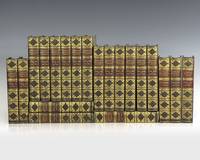
1818109061London: John & Arthur Arch; Hackney: Conrad Loddiges & Sons et al 1818-1833. Rare first edition large paper issue set of Loddiges' renowned Botanical Cabinet with 2000 numbered hand-colored plates by George Cooke. Octavos 20 volumes bound in three quarters morocco over marbled boards with elaborate gilt tooling to the spine in six compartments within raised gilt bands red morocco spine labels lettered in gilt all edges marbled. Illustrated with 2000 numbered hand-colored botanical plates by George Cooke. In near fine condition. Armorial bookplates. An exceptional collection most rare and desirable in a complete set. Founded by Joachim Conrad Loddiges in Hackey north of London the renowned Loddiges plant nursery rose to great prominence during the early nineteenth century under George Loddiges who published in serial numbers the present Botanical Cabinet produced in connection with George Cooke one of the more highly sought after engravers of the era. The 2000 hand-colored plates catalogued the broad array of exotic plants trees shrubs ferns palms and orchids introduced into the famed nursery's hothouses and gardens from around the world. John & Arthur Arch; Hackney: Conrad Loddiges & Sons, et al hardcover books
1818109061London: John & Arthur Arch; Hackney: Conrad Loddiges & Sons et al 1818–1833. Rare first edition large paper issue set of Loddiges' renowned Botanical Cabinet with 2000 numbered hand-colored plates by George Cooke. Octavos 20 volumes bound in three quarters morocco over marbled boards with elaborate gilt tooling to the spine in six compartments within raised gilt bands red morocco spine labels lettered in gilt all edges marbled. Illustrated with 2000 numbered hand-colored botanical plates by George Cooke. In near fine condition. Armorial bookplates. An exceptional collection most rare and desirable in a complete set. Founded by Joachim Conrad Loddiges in Hackey north of London the renowned Loddiges plant nursery rose to great prominence during the early nineteenth century under George Loddiges who published in serial numbers the present Botanical Cabinet produced in connection with George Cooke one of the more highly sought after engravers of the era. The 2000 hand-colored plates catalogued the broad array of exotic plants trees shrubs ferns palms and orchids introduced into the famed nursery's hothouses and gardens from around the world. John & Arthur Arch; Hackney: Conrad Loddiges & Sons, et al hardcover
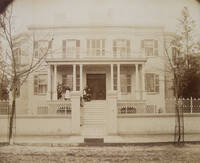
1886312762Charleston South Carolina 1886. 120 vintage albumen prints 4-3/4 x 8 inches with one measuring 7-1/4 x 8-3/4 inches mounted to stiff card album leaves most captioned in ink in a contemporary hand with an additional albumen print 4-3/4 x 8 inches mounted on card heavily worn with loss stamped "Geo. L.G. Cook photographer 265 King Street Charleston S.C.". Folio 12-1/4 x 10-1/4 inches. Contemporary black morocco gilt titled in gilt on front cover "The Charleston Earthquake / August 31st. 1886 / Francis W. Dawson. Spine perished but album intact extremities worn fading to some images occasional foxing to mounts and images. 120 vintage albumen prints 4-3/4 x 8 inches with one measuring 7-1/4 x 8-3/4 inches mounted to stiff card album leaves most captioned in ink in a contemporary hand with an additional albumen print 4-3/4 x 8 inches mounted on card heavily worn with loss stamped "Geo. L.G. Cook photographer 265 King Street Charleston S.C.". Folio 12-1/4 x 10-1/4 inches. An album of 120 vintage albumen photographs showing the devastation to the city of Charleston South Carolina following the earthquake of August 31 1886. Estimated to have reached a magnitude of between 6.6 and 7.3 on the Richter scale the earthquake left 60 people dead and caused substantial property damage to nearly every structure in the city. Felt as far away as Chicago and Cuba the Charleston earthquake remains the strongest recorded earthquakes on the east coast of the United States.<br /> <br /> The photographs collected in this album were taken by various Charleston photographers in the aftermath of the earthquake and document extensive property damage soil liquefaction sink holes and fissures ruptured rail lines and overturned train cars and the tent camps erected to house the newly homeless. "At least forty thousand people were 'tenting' in Charleston by September 3" Williams & Hoffius p. 53. A particular focus is placed on the damage sustained by the many Charleston churches and grand private residences. The photographers include George La Grange Cook 1849-1919 son of the prominent Civil War photographer George S. Cook 1819-1902. Cook's earthquake photographs were popular souvenir items and he offered some 200 images in his series "Cook's Earthquake Views of Charleston and Vicinity." Other identified photographers include the Irish-born James A. Palmer 1825-1896 who specialized in views of southern blacks and the English-born William E. Wilson d. 1905 who specialized in documentary photography of Mobile and Savannah. Photographs of the destruction - along with vials of "earthquake sand" - were popular souvenirs among the waves of "disaster tourists" who began arriving shortly after the earthquake to view the ruined city.<br /> <br /> This album belonged to the English-born Francis W. Dawson 1841-1889 who in 1862 emigrated to the South to fight for the Confederacy. At the time of the earthquake Dawson was co-owner and editor of the Charleston News and Courier a photograph of the paper's damaged office is included in the album and was the city's most prominent private citizen. Despite his earlier support for the Confederacy Dawson used his influential position to urge racial tolerance and support for Reconstruction. Dawson was appointed a member of the Executive Relief Committee formed in the aftermath of the earthquake and was instrumental in spearheading and supporting the rebuilding of the city. His newspaper urged optimism and resilience in the face of mounting racial tension and the ever-present fear of another cataclysmic natural event. "Almost single-handedly Dawson was attempting to prod his fellow citizens to buck up and rebuild their city" ibid p. 93<br /> <br /> Produced between 1886 and the time of Dawson's sensational murder in 1889 the album may have been presented to Dawson as a tribute for his efforts in the rebuilding of the city. The first photograph in the album shows Dawson's home at 99 Bull Street with Dawson and family sitting on their new front porch rebuilt after its destruction during the earthquake. To the left of the family is Hélène Burdayron the Swiss au pair who was at the center of a dispute that lead to Dawson's murder. Williams & Hoffius Upheaval in Charleston 2011; Roxana Robinson "The Strange Career of Frank Dawson" The New York Times 20 March 2012 unknown
182961486Berlin, Joachim Pauli bzw. (nur ?Mineralien?) Frankfurt-Leipzig, auf Kosten der Verlags-Casse, 1771-1829. 8°. Mit zus. 32 kolor. Titelkupfern, 64 gest. kolor. Titelvignetten, einer gefalt. Tabelle, 2 gefalt. kolor. Kupferkarten u. 2161 (davon 2 gefalt. u. 2149 kolor.) Kupfertafeln. Zus. ca. 20.700 S., HLdr.-Bde. d. Zt. a. 5 Bünden m. etw. Rückenverg., je 2 goldgepr. Rückenschildern u. dreiseitigem Farbschnitt.
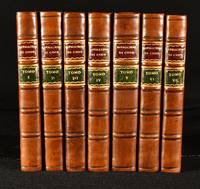
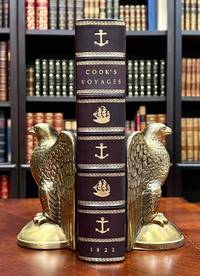
1816722L20Milano: Sonzogno e Comp 1816. First edition. Fine Binding. Very Good. 7" by 4". None. A beautifully illustrated Italian language edition of James Cook's global voyages. The first edition with these illustrations. Very rare and collated complete with all illustrations. In Italian. Captain James Cook was responsible for mapping New Zealand to Hawaii in a detail not previously charted by Western explorers. He sailed for twelve years around the Pacific Ocean which contributed to European's knowledge of the area. Illustrated with a frontispiece three coloured plates and a folding map to volume I. four coloured plates to volume II three coloured plates and one uncoloured plates to volume III. three coloured plates one uncoloured to volume IV four plates to volume V all hand-coloured. five plates to volumes VI and VII respectively all hand coloured. Therefore a frontispiece folding map 27 coloured plates and two uncoloured plates across all volumes. Folding map remains extremely bright. Collated all plates are present according to binder's instructions. Volume VII binder's instructions have not been bound in. With half titles to all volumes. A very scarce complete set of this work. In later uniform half calf bindings with paper covered boards. Externally very smart with just some light shelfwear to the extremities. Internally all volumes are firmly bound. Pages are bright. Minor damp-staining to all volumes with tidemarks to the head of all pages to volume I. This does not affect the readability of text. Volume II has the heaviest damp staining throughout affecting some of the text to page 205. Damp staining to the head of pages 212 to end of volume VI heavier to the final ten pages. Light tidemarks to the head of final few leaves to volume VII. Repair to the rear of folding map to volume I. Light ink spots to the bottom edges of volume III to margins only. Small worm hole from 385-end of volume V only affecting one letter per page. Otherwise just the odd spots to pages. Very Good Sonzogno e Comp unknown
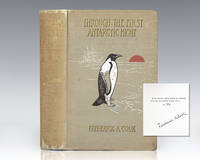
1900111201New York: Doubleday & McClure Co 1900. Signed limited edition of American arctic explorer Frederick Cook's narrative of the first expedition to winter in the Antarctic region in which he saved numerous lives as the ship's surgeon. Octavo original illustrated cloth tissue-guarded frontispiece in color illustrated. One of one thousand numbered copies signed by the author on the limitation page opposite a tissue-guarded engraved portrait this is number 92. From the library of James Stephen "Steve" Fossett with his bookplate to the pastedown. American businessman and record-setting aviator Steve Fossett became the first person to fly solo nonstop around the world in 2002 in his 10-story high balloon Spirit of Freedom. He completed the 2002 trip in 13 days 8 hours and 33 minutes and set records for both the Longest Distance Flown Solo in a Balloon and Fastest Balloon Flight Around the World. Fossett was also one of sailing's most prolific distance record holders set the Absolute World Speed Record for airships with a Zeppelin NT in 2004. He received numerous awards and honors throughout his career including aviation's highest award the Gold Medal of the Federation Aeronautique Internationale FAI which he was awarded in 2002. Fossett disappeared on September 3 2007 while flying a light aircraft over the Great Basin Desert between Nevada and California. In near fine condition. American physician Frederick Albert Cook was the surgeon on Robert Peary's Arctic expedition of 1891-1892 and on the Belgian Antarctic Expedition of 1897-1899. He contributed to saving the lives of its crew members when their ship--the Belgica--was ice-bound during the winter as they had not prepared for such an event. It became the first expedition to winter in the Antarctic region. To prevent scurvy Cook went hunting to keep the crew supplied with fresh meat. "His narrative is certainly one of the finest and most interesting from any Antarctic expedition" Rosove and the first to contain an extensive photographic record of the region. Doubleday & McClure Co hardcover books
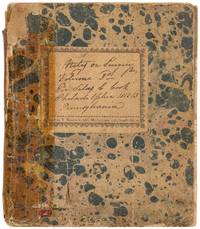
1812550272Philadelphia 1812. Softcover. Very Good. Manuscript notebook. Small quarto 6½" x 7¾". Contains 85 manuscript pages written in ink on the rectos and versos in two separately paginated parts. Each part or "volume" consists of two lectures: Lecture 4 - Mortification pp. 1-12 and Lecture 5 - Wounds pp. 13-42; Lecture 6 - Wounds continued pp. 2 1-24 and Lecture 7: Ulcers pp. 24-42. Original marbled paper wrappers with a bookseller's printed paper titling label: "Sold by T. Desilver 220 Market and 152 South 6th St." mounted on front cover. The label is titled in manuscript: "Notes on Surgery Volume 3d - per Silas C. Cook . ." Laid-in is a folded octavo sheet titled: "Recipe for Pills" which lists the ingredients of cough and digestive pills. One page in the notebook also contains a recipe for "Cathartics Emetic." The wrapper is torn at head of spine with some loss spine and left edge of front cover mended with old strips of clear tape minor toning and scattered short tears and nicks very good overall.<br /> <br /> A remarkable notebook documenting early American diagnosis and treatments of "mortification" defined as "the certain destruction or death of any part of the body"; and of multiple types of wounds including: punctured lacerated and penetrating wounds; wounds of the face and abdomen etc. as well as gun shot wounds. Also included is a final lecture on ulcers. Celebrated today as the "Father of American Surgery" Philip Syng Physick was among the few doctors who remained in Philadelphia to care for the sick during the city's devastating Yellow Fever Epidemic of 1793. A surgeon at Pennsylvania Hospital 1784-1861 and professor of surgery at the University of Pennsylvania Physick was one of the most sought-after medical lecturers of the 19th century. His lectures prepared a generation of surgeons for service throughout America including Dr. Silas Cook.<br /> <br /> Born in 1791 Silas Cook was raised in Morristown New Jersey and pursued his medical studies under the guidance of Dr. Lewis Condit a leading Morris County physician. He attended Physick's medical lectures at the University of Pennsylvania during the winters of 1812 and 1813. Licensed to practice in 1813 he conducted a successful practice throughout New Jersey until 1842. From 1842 until 1857 he was located at Easton Pennsylvania where he was rated as one of Easton's most skillful and successful physicians. In 1857 he returned to Hackettstown New Jersey and continued in practice until his death in 1873.<br /> <br /> An important notebook documenting contemporary surgical procedures and the education of an early American doctor in the early 19th Century. unknown
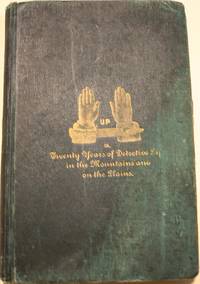
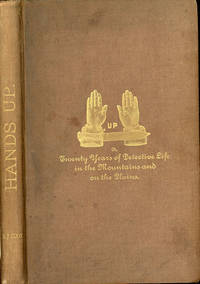
1882023211<p>Denver CO: Republican Publishing Co. 1882. Book. Good . Hardcover. First Edition. Original gilt pictorial green cloth spine title in gilt 285 pages frontis 30 full page illustrations cover stained and edge worn some staining to end-sheets inner hinges fairly solid the rare half title page is present 2 page edges have short tears one page has a very small hole inscribed by Cook on the front paste-down also signed by Cook under the photo of him with is the frontispiece. Overall a better than good copy of a rare title especially so being signed twice by Cook. Cook arrived in Colorado during the 1859 gold rush. He was a soldier city marshal of Denver sheriff of Arapahoe County U.S. Marshal Major General of Colorado Militia founder and chief of the Rocky Mountain Detective Association. This exceptionally rare first edition of this important outlaw book said to have been used as gun wadding during the Ute War. Many tales of murder robbery and mayhem all illustrated with wonderful primitive woodcuts. The numerous plates shows all manner of western violence including robberies murders arrests hangings and more. "The book was originally published in wrappers to be sold on trains by newsboys. It was reprinted the same year bound in cloth with the design made from a photograph of Wild Bill's hands and his scalping knife. The knife was said to have formerly belonged to Wild Bill Hickok and to have been given to Cook." A rare item with only the Graff copy listed with the original wraps. Six-Guns 483 exceedingly rare Howes C728 Graff 862 Rader 905 Adams One-Fifty 34 Eberstadt "An important and rare contemporary account of western outlaws and their crimes by the man who brought them to justice.".</p> Republican Publishing Co. hardcover
188252684Denver: Republican Publishing Company 1882. 1882. First edition. First Edition. Original brown cloth. 285pp. Frontispiece Illustrations. "Reminiscences by General D. J. Cook Superintendent of the Rocky Mountain Detective Association. A Condensed Criminal History of the Far West." Cook was a soldier city marshal of Denver sheriff of Arapahoe County U. S. Marshal Major General of Colorado Militia and founder & chief of the Rocky Mountain Detective Association. "This book was written by Thomas F. Dawson Director of the Colorado Historical Society . Mr. Dawson told me also that the reason both this work and his "Ute Massacre" were so rare was because the copies were used to make paper wadding for cartridges during the Indian Campaign." . Edward Eberstadt. "A grisly and entertaining account of the experiences of General David J. Cook Superintendent of the Rocky Mountain Detective Association. This sensationalist narrative takes the reader through the true history of crime in the Colorado area during the 1860's and 70's. The times were hard and the men desperate and there was almost no law enforcement to speak of. The few brave souls who did try to battle crime saw such scenes of butchery as cannot be spoken of without a shudder." Some light rubbing with minor wear to edges and corners else a very good copy. A rare work! Republican Publishing Company, 1882. hardcover
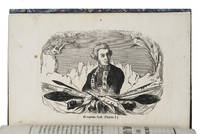
1853ABC_46299Madrid: Doña Teresa Martinez é Hijo 1853. Modern half black morocco marbled sides gold-tooled spine with title in gold blue sprinkled edges new marbled and blank endpapers with the original publishers back wrapper bound in but with a front wrapper apparently from a different work published by M. Gonzalez 1855. 8vo. With 4 full-page wood-engraved plates. Surprisingly rare Spanish account of Cook's first voyage preceded by a short account of his life extracted from Kippis. Spanish editions of Cook's voyages are remarkably few. Kippis's biography had already been translated in the 18th century but Marta Torres Santo Domingo found only three Spanish publications in the 19th century relating to Cook. The present work was planned to cover all Cook's voyages the drop-title on page XIII reading "Relacion de los tres viajes. Primer viaje." but apparently this was never realised. Oddly the illustration on the front wrapper seems to depict South American vaqueros hardly relevant to James Cook. The plates include portraits of Cook and Tupaia.The original publishers back wrapper bound in at the end contains an advertisement for the book.The original front wrapper is not preserved. With some very minor water stains but overall in very good condition. A scarce Spanish edition of Cooks first voyage.l Beddie 155; WorldCat 3 copies; cf. Torres Santo Domingo "Los viajes del Capitán Cook en el siglo XVIII. Una revisión bibliográfica" in: Biblio 3W VIII April 2003 no. 441; not in Ferguson. Doña Teresa Martinez é Hijo, unknown
1862WRCAM54585Washington D.C.: War Department Adjutant General's Office 1862. Three volumes with over 300 individual imprints. 12mo. Uniformly bound in contemporary three- quarter roan and marbled boards gilt leather labels. Wear to leather and edges boards somewhat rubbed front hinges tender. Contemporary ownership inscriptions and binder's tickets on front endpapers of second and third volumes; later bookplate on front pastedown of first volume. Light toning in places otherwise internally clean. Very good. A uniformly-bound set of General Orders issued by the Adjutant General's Office of the War Department in Washington D.C. previously owned by Brig. Gen. John Pope Cook. The orders cover 1861 and 1862 and comprise a nearly complete run of orders for the Union Army during the first two years of the Civil War. Undoubtedly the most significant General Order in this collection is a preliminary printing of the Emancipation Proclamation. <br> <br> A handful of the orders are signed in ink by the various adjutant generals. The Emancipation Proclamation bound in the third volume is as follows: <br> <br> GENERAL ORDERS No. 139. THE FOLLOWING PROCLAMATION BY THE PRESIDENT IS PUBLISHED FOR THE INFORMATION AND GOVERNMENT OF THE ARMY AND ALL CONCERNED: BY THE PRESIDENT OF THE UNITED STATES OF AMERICA A PROCLAMATION caption title. Washington D.C.: War Department Adjutant General's Office ca. September 24 1862. 3pp. This work is one of the earliest printings of the Preliminary Emancipation Proclamation issued to regimental commanders in the field during the Civil War in the week after President Lincoln's official manuscript version was finished. Here the third paragraph rings out with Lincoln's timeless words: "That on the first day of January in the year of our Lord one thousand eight hundred and sixty- three all persons held as slaves within any State or designated area of a State the people whereof shall then be in rebellion against the United States shall be then thenceforward and forever free." <br> <br> Following the Seven Days Battle and Gen. McClellan's retreat from the Peninsula at the end of June 1862 President Lincoln realized that there would be no early end to the war and found himself "as inconsolable as it was possible for a human to be and yet live." Anxious for news from the army and needing to escape the constant interruptions at the White House he frequently visited the telegraph office in the War Department building to await dispatches. It was during one such visit early in July that he asked the chief of the telegraph staff Maj. Thomas Thompson Eckert for some paper to "write something special" and began the first draft of the Emancipation Proclamation completing it in a few weeks. <br> <br> Lincoln had long hoped to resolve the slavery issue through a congressional act of emancipation compensating slave owners for their loss of "property" but that approach was roundly rejected by representatives from the border states leaving the President who had decided upon the necessity of emancipation with a presidential proclamation as the only option. The extraordinary document he conceived would announce the liberation on January 1 1863 of all slaves in those states still in rebellion against the Union and promised compensation to slave owners in those states that returned to the fold before that time if they adopted "immediate or gradual abolishment of slavery." This proclamation would be followed by a final proclamation issued on the 1st of January identifying those states still in rebellion and confirming the liberation of all slaves therein. <br> <br> On Tuesday July 22 Lincoln presented his draft to the Cabinet telling them that he had resolved firmly upon the course of action it specified and asking them not for advice but suggestions. The only observation he had not anticipated came from Secretary of State Seward who proposed that it might be best to wait for a military victory before issuing the Proclamation as it could otherwise seem like "the last measure of an exhausted government." Immediately recognizing the wisdom of the suggestion Lincoln held back. On September 17 after an anxious wait of nearly two months he received the victory he needed at the bloody Battle of Antietam. Completing his final draft Lincoln presented it to his cabinet for refinement on September 22. Following the meeting Seward took the amended draft with him to the State Department where a formal manuscript copy was made then signed by Lincoln and Seward. <br> <br> The first edition of the Preliminary Emancipation Proclamation Eberstadt #1 a small three-page circular intended for distribution within the government and to the local press was likely printed on September 22. At the time that Charles Eberstadt published his study of the Proclamation 1950 he was able to locate only one copy which he himself owned and as nearly as we have been able to determine no other copies have come to light since then. <br> <br> Eberstadt #2 is a supposed second edition no copy of which Charles Eberstadt was able to locate whose existence he inferred from the standard State Department practice of printing a folio edition consisting solely of the text of the proclamation followed by another printing consisting of the text of a letter of transmittal from the Secretary of State as well as the text of the proclamation. While there may be a copy of Eberstadt #2 in the National Archives as he speculated it is not recorded in their online catalogue nor have we been able to find a copy in any other online catalogue including OCLC the Library of Congress and the Abraham Lincoln Library. <br> <br> Eberstadt's third printing of the Preliminary Emancipation Proclamation is without a doubt the earliest obtainable printing. It consists of Secretary of State Seward's one-page letter of transmittal addressed "To the Diplomatic and Consular Officers of the United States in foreign countries" and the text of the proclamation. Eberstadt located a total of only five copies in institutions at the Library of Congress the National Archives Yale the Clements Library and Brown. OCLC does not record any additional copies nor is it recorded in Monaghan. This firm sold a copy several years ago. <br> <br> The present copy of GENERAL ORDERS No. 139 is Eberstadt's fourth printing of the Preliminary Emancipation Proclamation dated in print on September 24. Charles Eberstadt surmises that this field order printing could have been accomplished as late as September 29 or 30 and produced in as many as 15000 copies. It is however rather uncommon in the market and this is the first copy of this printing of the Preliminary Emancipation Proclamation offered by this firm. <br> <br> "From the first days of the Civil War slaves had acted to secure their own liberty. The Emancipation Proclamation confirmed their insistence that the war for the Union must become a war for freedom. It added moral force to the Union cause and strengthened the Union both militarily and politically. As a milestone along the road to slavery's final destruction the Emancipation Proclamation has assumed a place among the great documents of human freedom" - National Archives. "The proclamation has been called by responsible persons one of the three great documents of world history ranking with Magna Carta and the Declaration of Independence" - Eberstadt. <br> <br> Besides including about 300 orders on all manner of Union military activity at the outset of the Civil War the present collection also contains the 1861 printing of REGULATIONS FOR THE UNIFORM AND DRESS FOR THE ARMY OF THE UNITED STATES. Set out in GENERAL ORDERS No. 6 this twenty-four-page printing of the Army dress regulations was the first to set out uniform requirements for the Union during the conflict. The first sentence of the first section requires officers to "wear a frock coat of dark blue cloth." Thus the Blue and the Gray begins. <br> <br> This set was collected and bound by John Pope Cook who began the Civil War as a colonel in command of the 7th Illinois Volunteer Regiment. He was promoted to brigadier general after his troops played a key role in the Union victory at Fort Donelson early in 1862. After his promotion he was transferred to a command in the Department of Iowa and Dakota Territory where he remained until early 1863 conducting campaigns against the Sioux from his base in Sioux City Iowa. These orders must have been bound near the end of this period since contemporary labels note the binder one William F. Kiter as being from relatively close by Council Bluffs. <br> <br> A very early printing of one of the most important political acts in the Civil War and indeed in American history contained in a set of General Orders contemporaneously assembled by a significant Union Army commander. EBERSTADT LINCOLN'S EMANCIPATION PROCLAMATION 4. War Department, Adjutant General's Office hardcover books
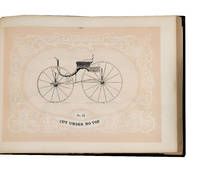
18601701081860. COOK G.D. & Co. Illustrated Catalog of Carriages and Special Business Advertiser New Haven Ct. iv 226 pp. Oblong 8vo 170 x 245 mm. bound in original embossed brown cloth rebacked in tan calf spine gilt. New York: Baker & Godwin 1860. This illustrated catalog is a wonderful study of mid-nineteenth century American commerce. G. & D. Cook established in 1794 produced this catalog not only to showcase their extensive line of carriages but also to introduce the numerous commercial enterprises in and around New Haven Connecticut. Ninety-seven of the 145 carriages found in the descriptive price list are illustrated. Those in search of the "Alabama Six Seat" "World's Fair Buggy" "Eureka Jump Seat" "The Gem" or "Pride of the South" would have to look no further than this catalog. In addition to carriages the catalog also features a wide range of products from Connecticut and New York so numerous that an alphabetical index by product has been included. Among the wide variety of goods offered one can find advertisements for artificial heat guano mowing machines time indicators area hotels and firearms. Each advertisement is wonderfully illustrated in the greatest detail. All advertisements are black and white engravings with the exception of the tinted plate advertisement for architect Henry Austin. To further advertise the city and its commerce an essay has been included entitled: "New Haven in 1860. A Few Notes by a Business Man Who Loves the Town." The essay is essentially a commercial guide for the city expounding on the growing industry and population and includes a map of New Haven and its surrounding areas. A very bright fresh copy binding restored and inscribed by Cook. ROMAINE p. 80. hardcover
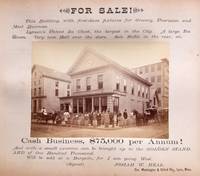
187955602Lynn MA: Published by Josiah W. Heal 1879. Oblong 4to. 12 x 9.2 in. 100 pp unpaginated. printed on thick paper stock all leaves hinged at gutter margin w/ linen hinges all printed w/ woodcut-engraved borders. With 24 albumen photographs sized primarily 4.5 x 6.75 in. mounted on leaves sized 10.75 x 8.75 in. all w/ printed captions or further explanatory text below 2 colour chromolithograph advertisement plates for Sawyer’s Crystal Blue & Howard Patent Metallic brushes; 7 advertising plates printed w/ red & black or red blue & black inks woodcut-engraved illustrations throughout and on illustrated ads on pastedowns. Publisher’s black cloth over beveled boards decorative gilt lettering on front cover wear & rubbing to fore-edges head & foot of spine corners worn minor wear to corners to textblock leaves minor lifting of the cloth 2 leaves hinge repaired at gutter margin still a good unsophisticated copy w/ the albumen photos retaining strong contrast. First edition of this scarce and fascinating business and land promotion for the city of Lynn Massachusetts at the height of the Gilded Age filled with advertising extolling the virtues and products of this New England manufacturing town. Following the Civil War Lynn rapidly developed as the center of shoe manufacturing and leather manufacturers in Massachusetts revolutionized by the introduction widespread adoption and use of the shoe sewing machine. The advertisements in this work the photographs and text all indicate a fast growing economy filled with wide streets well built homes & businesses a broad array of retailers including jewelers carpenters gunsmiths cigar stores lumber stores grocery stores hardware stores as well as a wider group of dyers leather makers machinists and factories all acting as suppliers for the dominant shoe trade. The photographs include street scenes businesses and contemporary advertising as well as photographic photos of the Kid & Morocco Manufactory for P.P. Tapley & Co. at No. 114 Broad Street; Factory & retail operation for C.H. Aborn & Co. Lennox & Co. Goat & Morocco; John Mahon & Sons Shoe Manufacturers; the Bay Street Wheel Co. with sample wheels arranged in front; the Lynn Hotel first opened in 1803 and built by the Salem Turnpike & Chelsea Bridge Corp. Also included is a photo advertising Josiah Heal’s attempt to sell his grocery business & building for $ 75000 at the corner of Washington & Oxford Streets in order to go West he does not appear in census or street directories for about 10 years. Of particular interest is the photo of Lydia E. Pinkham’s residence & laboratory producing the famed Vegetable Compound marketed to women to relieve menstrual cramps and menopausal symptoms first developed in 1873 containing black cohosh life root unicorn root pleurisy root and fenugreek seed with a “preservative†of 20% alcohol. From 1860 to the end of the 19th century Lynn’s population increased from about 12000 to over 60000 with a massive influx of farm workers leaving the farms to fill the factory jobs as well as increased immigration. Cook fl. 1872-1879 operated as a photographer in Sharon and Hudson Massachusetts but no address for a studio appear in contemporary street directories. Heal 1841-1925 was one of the most successful grocers and civic boosters for Lynn Massachusetts and although unclear whether he ever made the move West he does not appear to have directory listings for his business during part of the 1880s. Worldcat locates 8 copies collations vary although most appear to indicate 71-95 pp. whereas this copy is 100 pp.; See: Polito & Steele A Directory of Massachusetts Photographers: 1839-1900 2018; History of Lynn Lynn Open Space and Recreation Plan June 2016 pp. 14-17; Rainey Horwitz Lydia Pinkham’s Vegetable Compound 1873-1906 The Emryo Project 2017. Published by Josiah W. Heal, hardcover
1822195372182785J. Robins and Co 1822. Hardcover. Near Fine. BOOK IS IN NEAR FINE CONDITION BEAUTIFULLY REBOUND IN FULL LEATHER WITH BLIND STAMPED DETAILS TO BOARDS SIX COMPARTMENTS AND FIVE RAISED BANDS TO SPINE WITH BRIGHT GILT DETAILS AND TITLE. BINDING AND HINGES ARE VERY GOOD NO LOOSE OR MISSING PAGES PAGES ARE WITHOUT MARKS LIGHT SPORADIC SOILING AND FOXING. PROFUSELY ILLUSTRATED WITH FULL PAGE PLATES 798 PAGES BOOKS MEASURE 10.75"x9". 200 YEARS OLD. A STUNNING EXAMPLE IN EXCELLENT CONDITION. J. Robins and Co hardcover
1857462459Trenton: Printed at the Office of the True American 1857. Hardcover. Very Good. First edition. Octavo. 211pp. 11 plates plus large folding map in color. Brown cloth stamped in blind and gilt. Library of Congress duplicate stamp bottom of the front board and corners bumped very slight loss at the spine ends small tears and faint stain in the margins of the map with a minor archival repair on the verso overall very good or better. Inscribed by the author George H. Cook to Spencer F. Baird of the Smithsonian who is acknowledged on p.11 for his survey of fishes in the area: "Prof. Spencer F. Baird with the respects of Geo. H. Cook." Baird's small ownership stamp on the titlepage. Baird's comprehensive geological and natural history survey of the County with Beesley's informative and relatively early historical sketch including early mentions of sea bathing at the County resorts. A noteworthy association copy the map by Egbert L. Viele is highly prized in its own right. Printed at the Office of the True American hardcover
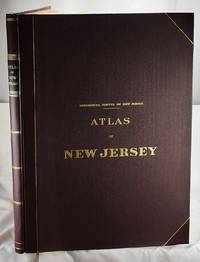
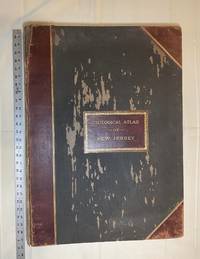
18882003030066New York Julius Bien & Co 1888. 2nd. Hardcover. Very Good. Atlas folio 26 3/8 x 19 inches. Rebacked with modern leather spine over publisher's gilt-lettered boards. Very good binding and cover. At head of title: Geological Survey of New Jersey. Scale of maps 1-17: 1 mile to an inch. 20 double page chromolithographic maps 70 x 51 cm. Light toning. Collated listed of maps: no. 1. Kittatinny; no. 2. Southwestern Highlands; no. 3. Central Highlands; no. 4. Northeastern Highlands; no. 5. Southwestern Red Sandstone Vicinity of Flemington; no. 6. Central Red Sandstone Valley of the Passaic; no. 7. Northeastern Red Sandstone The Counties of Bergen Hudson Essex; no. 8. Trenton; no. 9. Monmouth Shore; no. 10. Lower Delaware Vicinity of Salem; no. 11. Camden; no. 12. Mount Holly; no. 13. Barnegat Bay; no. 14. Delaware Bay Bridgeton; no. 15. Southern Interior; no. 16. Egg Harbor; no. 17. Cape May; no. 18 New Jersey State Map Geographic; no. 19 New Jersey Relief map Hypsometric; no. 20 Geological Map of New Jersey. <br> 2nd edition 1st was published in 1884 this edition has an additional map not present in the first. According to Felcone this atlas represents the first accurate mapping of New Jersey the result of the first topographical survey based on triangulation of an American State. LeGear. Atlases of the United States L5609; Schwartz Seymour I. and Ehrenberg Ralph E. The mapping of America p. 310. Rumsey 2902. <br> This is an oversized or heavy book which requires additional postage for international delivery outside the US. New York, Julius Bien & Co hardcover
1837PHO-2283Paris, A. Bertrand, 1837. 2 volumes in-8 (21,5x13,5 cm), xv, [1], 574 ; [4], 520, vii pp., illustré de 4 gravures et une carte dépliante, relié demi chagrin époque, traces de réparations à la reliure, cachets répétés, rousseurs et brunissures.
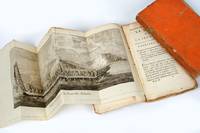
18083801448Paris: n.p. 1808. A little dusted and rubbed spines wearing; a very attractive set in unsophisticated condition. Two volumes duodecimo with three wide folding engraved plates after John Webber; uncut in the original orange paper wrappers with printed paper labels. <p><p>A very good set in original condition of this attractive popular French account of various voyages for children. As the title suggests much of the material here is taken directly from the voyages of Captain Cook. The three folding engraved plates all after Webber respectively depict a MÄori war canoe a walrus hunt and a Tahitian human sacrifice.</p> <p>There were a number of juvenile editions based on Jean-Pierre Bérenger's popular collections of voyage accounts which first appeared in 1780. Bérenger was a Swiss polymath; politically active he was exiled from Geneva and spent much of his adult life in Lausanne. He wrote several important books on geography and the voyages to the Pacific. This Paris edition is largely devoted to the voyages of Cook and has chapters describing Tahiti New Zealand Unalaska and the Sandwich Islands followed by an abridged life of the navigator. Forbes notes that the second volume of this work includes a lengthy section some fifty pages devoted to Hawaii.</p> <p>No copy of this specific version is recorded by Forbes in Hawaiian National Bibliography though its existence is noted in the entries for two Avignon editions 370 & 495.</p> </p> . n.p. unknown
18324106630Madrid: Imprenta de Don Tomás Jordan 1832. Six volumes duodecimo with six engraved plates one in each volume original blue printed wrappers preserved a charming set in period Spanish quarter calf gilt. <p><p>Very uncommon first Spanish edition of Cook's first voyage published in 1832 as part of a series described as the 'New Library of Modern Voyages useful and interesting for Spanish youth.' The work has a charming series of six plates which include a scene in Tahiti featuring the Chief Mourner and two New Zealand scenes a warrior in profile the war canoe and conclude with a dramatic scene on board the Endeavour. The presence of the original printed wrappers bound-in is of more than passing interest as the back wrappers give an interesting overview of how the set was marketed being sold for 6 reales per volume as they were issued whether in Madrid or in the provinces and stressing the value of the work for the instruction of youth. Each volume would subsequently be priced 8 reales per volume.</p> <p>The translator Alvarado y de la Pena based his work on the French edition of Cook's first voyage. He also prepared at least one other work of Australian interest an edition of George Barrington published in Madrid circa 1815. Beddie listed copies in the Mitchell and National Libraries.</p> </p> . Provenance: Early owner's name on title-pages; old stamps from a Barcelona library; José Gallart Folch bookplates. Imprenta de Don Tomás Jordan unknown
183412082Paris, Just Tessier, 1834. 2 vol. in-8 brochés de (4)-384 pp. et (4)-412 pp., couvertures jaunes imprimées, étui chemise bordé, demi-veau vert, dos lisse orné de filets dorés.
180441059Reliure d'époque pleine basane racinée. Dos lisse avec pièces de titre et de tomaison en maroquin rouge et fleurons dorés. Frise dorée en encadrement sur les plats. Toutes tranches dorées. Manques de cuir sur les mors de certains tomes. Coiffes et coins frottés.
1889028277New York: Julius Bien & Co 1889. Condition of the binding is only Fair with pest damage. Leather over the spine has perished. Front and rear outer hinges cracks have been neatly reinforced with high quality clear flexible glue. Inner hinges are OK having been reinforced by the publisher/bookbinder with sturdy maroon cloth. SEE PHOTOS. Condition of all maps is NEAR FINE - FINE. NO foxing or toning. Pages are clean and unmarked. SEE PHOTOS. Includes a title page map of New Jersey Key to the System of Mapping and 19 linen-backed double page maps. Collated and complete per table of contents -- SEE PHOTOS. The maps are lithographically printed in blue red yellow and black. The double page maps open to an impressive 26.50" across by 36.50" tall. No year of publication is stated but Phillips 2149 in A LIST OF GEOGRAPHIC ATLASES Vol. 1 says 1889. The maps themselves are variously dated up to 1888. Titles of Sheets: No. 0. New Jersey State Map Geographic; No. 1. Kittatinny Valley and Mountain No. 2. Southwestern Highlands; No. 3. Central Highlands; No. 4. Northeastern Highlands; No. 5.Vicinity of Flemington; No. 6. Valley of the Passaic; No. 7. The Counties of Bergen Hudson Essex No. 8. Vicinity of Trenton; No. 9. Monmouth Shore; No. 10. Vicinity of Salem No. 11. Vicinity of Camden; No. 12. Vicinity of Mount Holly; No. 13. Vicinity of Barnegat Bay; No. 14. Vicinity of Bridgeton; No. 15. Southern Interior; No. 16. Egg Harbor and Vicinity; No. 17. Peninsula of Cape May; Unnumbered map. "New Jersey from Original Surveys based on the Triangulation of the U.S. Coast and Geodetic Survey Relief Map." Scale of first and last doublepage maps: 5 miles to an Inch. Scale of maps No. 1 to No. 17: 1 mile to an Inch. Bound in black pebble-grain cloth with gilt-stamped brown leather title label leather spine and corners leather backstrip has perished. SEE PHOTOS. The textblock could be easily rebacked or recased with no re-sewing required since all pages/maps are still securely bound together. Oversize Hardcover. 19.50" wide by 27" tall. This massive extremely heavy book will require SUBSTANTIAL extra postage at our cost based on your location. LeGear ATLASES OF THE UNITED STATES L5609. See also Schwartz and Ehrenerg's THE MAPPING OF AMERICA pp. 310-311. Phillips 2149. This massive extremely heavy book will require SUBSTANTIAL extra postage at our cost based on your location. Second Edition. Oversize Hardcover. Fair - FINE condition. Illus. by NOT a library discard. Atlas folio. Great Packaging Fast Shipping. Julius Bien & Co Hardcover
18084520Paris, Chez Capelle et Renand, 1808. In-8, plein veau raciné, roulette dorée encadrant les plats, dos lisse orné, pièce de titre rouge, 384 p.
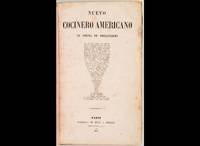
1858LL 701<p><strong><em>"Nuevo Cocinero Americano en forma de diccionario que contiene todos los procedimientos empleados en la alta mediana y pequeña cocina la lista normal de los platillos que deben componer la distintas comidas que con variedad de nombres se hacen en el dia el método de aderezar los platos y de disponer los diferentes servicios de una mesa y los mas selecto de las artes del pastelero del bizcochero del confitero del destilador y del nevero con todo lo relativo a la repostería.—Encontrándose en él todos los artículos importantes de las obras de esta clase que se han publicado en castellano y otros nuevos relativos tanto a la cocina Mexicana como a la Francesa tomados estos últimos del cocinero real de las obras de Beauvilliers de los tratados de Carême del diccionario de Mr. Burnet de la nueva cocina económica y de otros autores. "</em></strong></p><p>4 1008 pages 6 unnumbered leaves of plates one of them in color: illustrated colored frontispiece with a detailed kitchen scene and hand colored salad arrangements below.</p><p>Probably the most popular nineteenth-century Mexican cookbook. This edition was preceded by an 1845 edition done in Mexico by Cumplido with a slight title variation. This is considered the true first edition. Rare cornerstone work.</p><p><strong><u>Bibliographical "mystery"</u></strong><u>:</u> Both Palau 196443 and OCLC describe this work with a different title "<em>Nuevo Cocinero Mexicano</em>" but with the same publisher pagination and illustrations as ours. As later editions changed the title to "<em>Nuevo Cocinero Americano</em>" this might be a unique copy or a proof title page of the first edition with the "new" title that the publisher planned to use in later editions.</p><p>As Dan Strehl says in the introduction to Encarnación's Kitchen: "<em>In Mexico the printing of cookbooks began in the 1830s with large comprehensive books authored mostly by men. By that time Mexico possessed a highly evolved cuisine combining distinctive Spanish Indian and French influences. This is documented in the first cookbook printed in Mexico in 1831 El cocinero mexicano. El Cocinero mexicano has had a remarkably long and important life in Mexican culinary literature. In 1845 the 1834 edition was rearranged in alphabetical order by Mariano Galván Rivera and published throughout the nineteenth century with reprints through the twentieth century</em>"</p><p>The editor of this edition reviews the history of this cookbook and others and explains the rationale for the present edition. He states that over 3000 copies of his own cookbook have been sold since it first appeared in 1831 in addition to the many others both produced domestically and imported from abroad. He further remarks that he has thoroughly edited the text removing some unpopular recipes and adding others especially in light of the fact that "<em>la cocina francesa ha invadido nuestros comedores</em>" thereby making Mexican cooking more cosmopolitan. In recipe revisions or new introductions however the recipes have been suited to Mexican tastes and ingredients.</p><p>The publisher also remarks specifically on the lithographs which he remarks have been included to clarify points and demonstrate how things are actually done. Finally he observes that he has kept the price low so that the book is "<em>al alcance aun de las personas de poca fortuna</em>." In keeping with the national character of the text under the article "Bien-me-sabe" he notes: "<em>Con este nombre podia disignarse todas las confectiones y condimentos de que se trata en este Diccionario…."</em></p><p>In an interesting typographical nod to the contents most of the type on the title page is set in the shape of a glass.</p><p># WorldCat U.S.Libraries: Berkeley San Diego BPL San Antonio with a slight different title page see above.</p> LibreriÌa de Rosa y Bouret
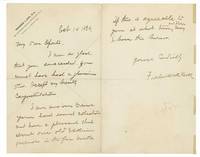
1896238153Brooklyn NY 1896. 1-1/2 pp. in ink on personal stationery Frederick A. Cook M.D. 687 Bushwick Avenue Brooklyn N.Y. 1 vols. 12mo. Slightly soiled old folds docketed presumably by Operti "ans O/18/96. 1-1/2 pp. in ink on personal stationery Frederick A. Cook M.D. 687 Bushwick Avenue Brooklyn N.Y. 1 vols. 12mo. Cook Congratulates Operti 1896. A charming letter between two Arctic veterans. <br/><br/>Frederick Cook founding member of both the Arctic Club and the Explorer's Club and future rival claimant to Robert Peary as discoverer of the North Pole writes to his old friend Albert Operti. Both Cook and Operti had been with Peary on an Arctic expedition in 1891 Cook as surgeon Operti as artist and Operti had just returned from a second Peary expedition to Greenland with sketches notes paintings and memorabilia which now form an important part of the collections of the Explorer's Club. The letter reads:<br/><br/>"My dear Operti<br/><br/>"I am so glad that you succeeded. You must have had a glorious time. Accept my hearty congratulations.<br/>"I am anxious to see your hard earned collection and have a peasant chat about our old Eskimo friends in the far North . <br/>"if this is agreeable to you at what time and place may I have the honor . <br/>"Yours cordially<br/><br/>"Frederick A. Cook unknown books