323 résultats
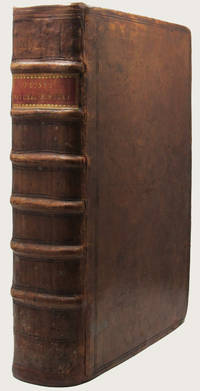
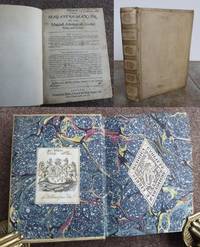
165252876<p>London printed for Joshua Kirton at the Kings Arms in St. Pauls Church-yard 1652. FIRST EDITION 1652. First word of title and part of running title in Greek characters. Small 4to approximately 180 x 125 mm 7 x 5 inches pages: 16 1-240 24 241-376 bound in full vellum gilt lettering and decoration to spine gilt decoration to edges of covers marbled endpapers all edges gilt 3 bookplates: Sir William Grace; Henry Cunliffe Armiger to first pastedown and first free endpaper; Fox Pointe Collection on last pastedown. Vellum slightly dusty and soiled pale age-browning and staining to title page title page slighty dusty with small ink letter and small repair on blank side to top margin trimmed copy affecting the lower margins of pages 369-374 with loss in lower margin of 4 catchwords and 2 signature numbers 16 ink pointing hands in margins plus a few ink marginalia small repair to 3 margins not affecting text occasional small ink stain or brown spot otherwise a very good copy. An attack on magical practices and beliefs with dedication to Oliver Cromwell. John Gaule 1603 1687 was an English Puritan cleric now remembered for his sceptical views on astrology witchcraft and hermetic philosophy. See: A Catalogue of Printed Books in the Wellcome Library Volume 3 page 96; William Lowndes & Henry Bohn Volume 2 page 869; Sotheby's Catalogue Tuesday 14th December 1993 The Fairfax Library and Archive No. 395; ESTC R3643. MORE IMAGES ATTACHED TO THIS LISTING ALL ZOOMABLE FURTHER IMAGES ON REQUEST. POSTAGE AT COST.</p> London, printed for Joshua Kirton at the Kings Arms in St. Pauls Church-yard, 1652. hardcover
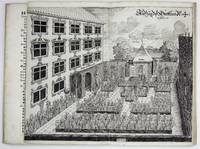
1641401738Augsburg: Johann Schultes and Mathias Rembold 1641. From the Collection of Arthur & Charlotte Vershbow. Folio 300 x 203 mm. Letterpress title printed in red and black torn and repaired 15 double-page or folding engraved plates or plans by Matthäus Rembold 1629-1657 on guards. Contemporary vellum. Some plates trimmed closely. Provenance: purchased from Ars Libri 1990. FIRST EDITION of this work on civil architecture by the eminent Ulm architect Joseph Furttenbach the Elder. The Architectura privata describes his own dwelling-house and grounds and the fine copperplates show the basics and elevations of the house windows portals grotto and gardens among other things. With its small grotto richly decorated with rare flowers arranged in compartments Furttenbach's garden courtyard epitomizes the intimate "secret garden" owned by the wealthy bourgeoisie in early seventeenth-century Germany and the Netherlands. The grotto in his garden is described as being filled with artifice and exotica including shell-encrusted sculptures and waterworks painted cosmological imagery and mirrors. The flowers depicted are identifiable as the most sought after and costly bulbs of the period the narcissus tulip fritillary and crown imperial demonstrating Furttenbach's knowledge of current botanical research. Following his studies in architecture and engineering in Italy Furttenbach returned to Ulm where he designed buildings and gardens and published a number of treatises on architecture and fortification. His construction of the Ulm city fortifications were among the strongest of their time remaining impregnable during the Thirty Years' War. Berlin Kat. 1958. <br/><br/> Johann Schultes and Mathias Rembold hardcover books
161959078Anchorage & Seward A.T.: Alaska Engineering Commission AEC Phinney S. Hunt ca. 1916-1917. 4to. 86 silver print photographs sized 6.25 x 8.25 in. nearly all w/ photographer’s imprint w/in negative at lower fore-edge as well as caption negative number and AEC some w/ occasional pencil annotations on verso all preserved in mylar sleeves occasional creasing at corners a couple w/ slight loss at corners in the small blank margin. Recent 3-ring clamshell binder an excellent set of photos with all retaining bright strong contrast. This outstanding photo archive provides not only some of the earliest photographs of Anchorage Alaska Territory but also this immense railroad project first authorized by the US Congress in 1912. The few existing privately-run railroads operating in Alaska at the time including the Alaska Northern Railway and the Tanana Valley Railroad primarily fulfilled the needs of the mining companies carrying resources to sea ports and very little allowance was made for passenger traffic and it was impossible to travel by rail from Ship’s Creek at the Cook Inlet north to Fairbanks. Through an April 1915 executive order President Wilson directed that the newly created Alaska Engineering Commission construct a railroad along the surveyed “Western Route†from Seward or Portage Bay along the Turnagain & Knik Arms of Cook Inlet North through the Suitna Valley and then follow the Nenana River until it joined the Tanana with the intent it would connect eventually to Fairbanks. Employing discarded surplus railroad equipment from the Panama Canal Railroad project and under the direction of engineer Mears who had worked on both the Panama Canal and Great Northern Railroads the tiny tent city of Ship’s Creek swelled to 5500 people within two years and was officially labeled by the Post Office as “Anchorage.†Photos included here reveal the barren original landscape of Ship’s Creek with one of the photos showing the steam launches “Alaska†& “Seagull†who carried cargo and passengers from ships offshore. In addition there are views of the construction of the immense AEC Railway machine shop by Sept. 1916 as well as the newly completed first Railroad Depot in Anchorage with the progression of buildings erected beyond. These early views of the fast developing project portray the Commissary Hospital Bunkhouses finished machine shop interiors of the powder house for blasting along with a view of the AEC’s photo studio and the completed electrical power house. Early street views of the nascent city are quite scarce and one of particular interest shows Fourth Ave. looking East with newly built stores and homes built along both sides of the roadway stretching into the distance. Brutal working conditions continually interfered with the pace of the project with one of the images showing the AEC’s “Electric Thawing Machine†on a sled whie others depict piles of snow work camps in snow and even sternwheeler and docks trapped in an ice flow in March 1917. A couple of the photographs feature the sternwheeler SS Omineca underway which had been originally constructed in 1909 for the Grand Trunk Railway running the Skeena River from 1909-1912 and powered by the original SS Caledonia’s engines. By the end of 1916 60 miles of track had been laid 100 miles were graded and right-of-way cleared for 230 miles with photos in this archive showing AEC Construction camps at various mile markers blasting activity and track laying. At the same time they rehabilitated the bankrupt Alaska Northern Railroad tracks and by Oct. 24 1917 the first AEC Railway train reached the Chickaloon coal mines 74 miles North of Anchorage. The railroad would actually not be finished until 1923 when the Tanana River Bridge was completed and last 57 miles of track to Fairbank converted to standard gauge. Photos also show the Anchorage Baseball Field which featured games for the Cook Inlet Baseball League composed at the time of Matanuska Anchorage and Turnagain Arm teams. There’s also a very fine series of the Decoration Day parade held May 30 1917 depicting many of the main streets and businesses in the background. In addition several photographs show the ocean docks completed which allowed ships to directly dock at Anchorage rather than lightering passengers and cargo to shore prior to 1917. Hunt 1866-1917 originally worked as a California optician before trekking to Valdez Alaska as a gold rush prospector but quickly established himself as a photographer opening his studio and documenting Valdez and development of the region. He would bring his wife and children to Alaska by 1907. He later secured work as one of the AEC’s official photographers shooting some of the early survey work by 1914 and through the project until suffering a heart attack Oct. 14 1917 in Seward AK. Hunt’s son A.O. Hunt also worked as an assistant photographer for the AEC. A few of these images appear as negatives in the Alaska State Library Historical Collections with a couple shown in their Digital Archives and some appear in the Alaska Engineering Commission archive at the U of W Collect. No. PH0495 but the bulk of that collection features photographs by James McPherson H.G. Kaiser and A.J. Johnson who were the other official photographers on the project; See: Phinney S. Hunt Photographs of Alaska 1902-1909 Photographs in and around Valdez and Sitka Alaska University of Washington Special Collections; Phinney S. Hunt Obituary Alaska Railroad Record Vol. I No. 49 Oct. 16 1917 p. 389. Alaska Engineering Commission, AEC, Phinney S. Hunt, unknown
1682261Gibson1<p><strong>THE ANATOMY OF HUMANE BODIES EPITOMIZED. </strong></p><p><strong>First Edition. </strong></p><p><strong>Printed in 1682.</strong></p><p><strong>Complete with all 13 plates. </strong></p><p><br /><br /><br /><br /></p><p><strong>The Anatomy Of Humane Bodies Epitomized. </strong></p><p><strong>Wherein All The Parts Of Man's Body With Their Actions And Uses Are Succinctly Described. </strong></p><p><strong>Printed in 1682. </strong></p><p><strong>This is the rare First Edition.</strong></p><p><strong>This book is extremely difficult to find. </strong></p><p><br /><br /><br /></p><p>First published anonymously in 1682 The Anatomy of Human Bodies Epitomiz'd was probably the most successful English anatomical textbook published to date – it was ultimately issued in eight editions.</p><p><br /><br /><br /></p><p>Illustrated with plates.</p><p>ALL 13 PLATES ARE PRESENT.</p><p>This book is complete.</p><p>Title page imprimatur leaf containing all of the correct number of 13 engraved plates.</p><p><br /><br /></p><p>The covers are original.</p><p>The spine was rebacked in the mid 1800's.</p><p>Original title page is exceptionally well preserved.</p><p>Imprimatur leaf opposite the title page is still present.</p><p><br /><br /><br /></p><p><strong>The first edition was printed in 1682 and is unobtainable.</strong></p><p><br /><br /></p><p>In very good condition. Binding with a lot of general wear.</p><p><strong>Heavy generalized abrasion wear to the original binding. Spine rebacked in the 1800's. Title page has the date handwritten. Internally exceptionally well preserved. Minor signs of use stains an underlining. In exceptional condition despite the age. </strong></p><p><strong>Printed on quality rag paper. Paper is supple and well preserved despite the age. Printed on quality rag paper that can still be read without damaging the paper. </strong></p><p><br /><br /></p><p><strong>This was one of the most important anatomical works of this era. </strong></p><p><br /><br /></p><p><strong>Anatomy of Humane Bodies </strong></p><p><strong>Printed in 1682</strong></p><p><br /><br /></p><p><strong>The Anatomy Of Humane Bodies Epitomized : Wherein All The Parts Of Man's Body With Their Actions And Uses Are Succinctly Described</strong></p><p><br /><br /></p><p><strong>By Gibson Thomas</strong></p><p><strong>London: Thomas Fletcher. Good. Full-Leather. Small 8vo</strong></p><p><strong>First published anonymously in 1682 The Anatomy of Human Bodies Epitomiz'd was probably the most successful English anatomical textbook published to date – it was ultimately issued in eight editions. Gibson the Physician-General to the English army based his comprehensive text on Alexander Read's Manual of Anatomy. However the content was so extensively revised and supplemented Gibson claimed authorship. Gibson listed his principal sources some 33 titles by 27 authors which was an uncommon practice at the time. </strong></p><p><br /><br /></p><p>The Anatomy Of Humane Bodies Epitomized</p><p>Original leather boards; nineteenth century re backed leather spine -</p><p>Printed in 1682 by Gibson Thomas By a Fellow of the College of Physicians London Small octavo 7 3/4 by 4 3/4 inches 8 510 pages containing all of the correct number of 13 engraved plates; hardcover leather binding in original boards neatly re-backed in mid 19th century with raised bands title in gilt on spine inked name cleanly written on first fly leaf very good condition minor scuffing to base of spine minor wear to hinges hinges very strong. ESTC Nos. R 8370 & R188113 Wing 5672.</p><p>Divided into six separate sections each with their own chapters:</p><p><br /><br /></p><p>Complete in 6 books bound as one:</p><p>I. "On the lowest Cavity called Abdomen"</p><p>II. "Of the Breast"</p><p>III. "Of the Head"</p><p>IV. "Containing a description of the Veins Arteries and Nerves of the Limbs"</p><p>V. "Containing a Treatise of all the Musceles of the Body"</p><p>VI. "Of the Bones."</p><p><br /><br /></p><p>This book measures 7 3/4 inches tall.</p><p><br /><br /><br /><br /></p><p>This book will be well protected for shipping.</p><p>Your signature will be required for delivery.</p><p><br /><br /><br /></p><p>26.1</p> Thomas Fletcher
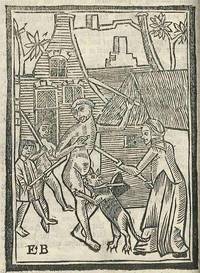
1684WRCLIT66732London: Printed by T.J. for Edward Brewster . and Thomas Passenger . 1684. Three parts bound in one volume. 80 leaves A-U4; 56 leaves A-O4; and 8160pp. Quarto. Modern blind paneled calf raised bands gilt label. First two parts illustrated with spirited woodcuts. Occasional foxing and mild spotting marginal smudges to first title usual tanning lower forecorners of E2-3 in first part torn away and replaced with a few letters and a few words in the sidenote in ms a few upper margins dust-soiled last three gatherings in third part supplied from another copy and trimmed slightly shorter at lower margin; a good sound copy neatly bound. First edition of the third part. An omnibus gathering of these three separately printed editions each with independent register and with the title of the first part taking into account the presence of the latter two. The terminal advert leaf to the first part is present. Wing attributes the text of the first part to John Shirley and that for the third is occasionally attributed to the publisher Edward Brewster. The first part is illustrated with 62 woodcut illustrations signed 'E.B.' of which 23 are repeats; the second part includes 15 woodcuts all of which appear as well in the first part. The first part was first printed in this form in 1667 and the second in 1672; the first part was reprinted again in 1701. Among the most widely adapted of the beast fables the tales of Reynard the Fox originated in the 12th and 13th centuries with early versions in French Dutch Latin and German being notable. Caxton printed a translation based on a Flemish text in 1481. The character of Reynard an anthropomorphic fox and trickster has since become almost an archetype in the literatures of several languages. ESTC R24532 & R218371 & R40614. WING S3513 & M2912 & S3436. BRUNET IV:1228. LOWNDES VII:2076. Printed by T.J. for Edward Brewster ... and Thomas Passenger ... hardcover books
168831913London: by Miles Flesher for Richard Tonson 1688. First Edition in English. This copy has two title pages one with the Tonson imprint rubricated black and red the other with the Heyrick imprint in black only. Sabin states: “As some copies have only the black titles and some only the rubricated ones while others have both it seems possible that all the issues were originally published with two titles.†Engraved portrait frontispiece of translator Paul Rycaut the rubricated title page in red and black and 10 copperplate engravings. Folio an especially handsome copy bound in its original contemporary speckled English calf the spine with raised bands the compartments with floriated panels decorated in gilt red morocco lettering piece gilt the covers with a border decorations rolled in blind and double-filleted rules at the borders. 1019. A superb copy of this rare and early work. The book remains in its original binding. The text-block is crisp clean and unpressed The engraved illustrations are all in excellent condition. A truly wonderful copy and especially fine survival of a book rarely if ever found in such condition. RARE FIRST EDITION OF THIS HIGHLY IMPORTANT EARLY HISTORY OF THE INCAN CIVILIZATION AND OF THE CONQUEST OF PERU BY THE SPANISH. De la Vega was a prince of Incan royalty by virtue of his mother who was descended from the last Incan King of Peru. He took great pride in his Incan ancestry styling himself “Garcilasso Inca†and becoming a dedicated student of the Peruvian language and traditions. However the translator also tells us that “the Spanish humour was most prevalent in him so that he delighted much to tell us as in diverse places that he was also the son of Garcilasso de la Vega one of the first Conquerours of the new World.†Such an illustrious ancestry provides for a rendering of the history of the Incan civilization from a unique point of view. <br> The first section of the text details the early history of the Incas before the Spanish conquest including their laws and government and other “particulars relating to their Empire and Policies.†The second part details the Spanish conquest and the various civil wars and rebellions that came along with them and after them. The first part was published in Lisbon in 1609 and the second part in 1617. This edition is the first English translation by Sir Paul Rycaut. This is a classic work comprehensive and painstakingly researched and remains today one of the chief authorities on the subject of ancient Peru. by Miles Flesher for Richard Tonson hardcover
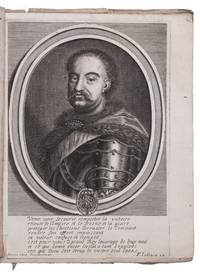
168722346Bordeaux: Pierre Abegou 1687. Marbled wrappers. 4to. With an inserted latter engraved frontispiece portrait of the Polish King Jan III Sobieski engraved by F. Jollain. Very rare pamphlet published during the European wars against Turkey with a frontispiece portrait of the Holy Roman Emperor Léopold I 1640-1705 Archduke of Austria and King of Bohemia and Hungary. He succeeded his father Ferdinand III in 1657 and immediately had to fight against the Turks in the Great Turkish War also known as the War of the Holy League 1683-1699. This war finally led to the Peace of Karlowitz in 1699.This work gives directions and arrangements for ritual processions that the Turkish Sultan Suleiman III ordered after his victories during the so-called Holy Wars against the Christians. It is of great importance for our understanding of the problematic Turkish-European relations during the 17th century especially as an interesting example of counter-propaganda. One of Suleiman IIIs directions presented in the book for example ordered that one Christian slave or one Jew was to be killed every fifteen minutes as part of the procession. One can imagine the reaction of a Christian reading this text: although the crusades were over this could provoke war and violence between the parties.Wrappers worn and somewhat frayed a few worm holes but still in good condition.l Bibliotheca bibliographica Aureliana CX XVIIe siècle XIV Bordeaux 2176 not mentioning the portrait; cf. Desgraves Bordeaux 1580. Pierre Abegou, unknown
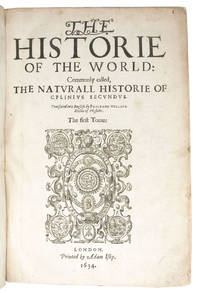
163434275London: Printed by Adam Islip and to be sold by John Grismond in Ivy-lane and to be sold at the Signe of the Gun 1635 1634 1634. The first Tome. The second Tome. The second printing with numerous corrections of the first English translation. Printed by Adam Islip in 1634 the first volume contains the title-page dated 1635 which was offered for sale by John Grismond the second volume retains the 1634 title-page. Elaborate woodcut printer's device to title engraved floriated initials and fine head and tail pieces throughout. Folio in 6s 2 vols. bound in one an excellent copy bound in full contemporary polished calf in original state the back with raised bands over cords covers with double fillet rules in blind. 56 614 42; 12 632 86. Advertisement leaf at end of vol. II pp. Collated complete. An especially desirable copy of this highly important book. In its rare original state this book is seldom encountered. The textblock is crisp and unpressed and remains in a very pleasing state of preservation some minor evidence of damp in a few places as to be expected the spine with expert restoration at the head and tail of the panel a beautiful copy. IMPORTANT EARLY ISSUE OF THE GREAT TRANSLATION OF PLINY INTO ENGLISH BY PHILEMON HOLLAND. The second printing of the first full English translation of this important book. First published in Venice in 1469 “The ‘Natural History†of Pliny the Elder is more than a natural history: it is an encyclopaedia of all the knowledge of the ancient world. .He was a compiler rather than an original thinker and the importance of this book depends more on his exhaustive reading he quotes over four hundred authorities Greek and Latin than on his original work. All the spare time allowed him by a busy administrative career was devoted to reading; he began long before daybreak his nephew the younger Pliny recorded and grudged every minute not spent in study; no book was so bad he used to say as not to contain something of value. When he died the 'Natural History' the sole extant work out of one hundred and two volumes from his pen was still incomplete. It comprises thirty-seven books dealing with mathematics and physics geography and astronomy medicine and zoology anthropology and physiology philosophy and history agriculture and mineralogy the arts and letters. He is scrupulous in his acknowledgment of his sources you must he wrote with honest humility declare those from whom you have profited and the whole of the first book is devoted to the tables of contents and authorities which bear witness to his method.<br> The HISTORIE soon became a standard book of reference: abstracts and abridgments appeared by the third century. Bede owned a copy Alcuin sent the early books to Charlemagne and Dicuil the Irish geographer quotes him in the ninth century. It was the basis of Isidorets Etymologiae and such medieval encyclopedias as the Speculum Majus of Vincent of Beauvais and the Catholicon of Balbus. One of the earliest books to be printed at Venice the center from which so much of classical literature was first dispensed it was later translated into English by Philemon Holland in 1601 and twice reprinted a notable achievement for so vast a text. .<br> More recently scholars as various as Humboldt and Grimm have praised and acknowledged their debt to it. Over and over again it will be found that the source of some ancient piece of knowledge is Pliny. PMM<br> The standard of reference for scholars since the 15th century Holland’s translation made it available to the English speaking world for the first time. Although not strictly scientific itself mingling a good deal of the author's fancy with fact Pliny's NATURALL HISTORIE was important in stimulating scientific thought in succeeding generations. "It is an encyclopedia of all the knowledge of the ancient world set out in an orderly fashion. It was the source of much medieval knowldege--and legend--and the model for such works as the SPECULUM MAJUS of Vincent of Beauvais. The high regard in which it was held in the world of the Renaissance can be seen by its early appearance in print 1472" PMM.<br> The HISTORIE divided into 37 libri or "books" was completed except for finishing touches in 77 CE. In the preface dedicated to Titus who became emperor shortly before Pliny's death Pliny justified the title and explained his purpose on utilitarian grounds as the study of "the nature of things that is life" "Preface" 13. Heretofore he continued no one had attempted to bring together the older scattered material that belonged to "encyclic culture" <br>egkyklios paideia the origin of the word encyclopaedia. Disdaining high literary style and political mythology Pliny adopted a plain style--but one with an unusually rich vocabulary--as best suited to his purpose. A novel feature of the NATURALL HISTORIE is the care taken by Pliny in naming his sources more than 100 of which ae authors and sometimes the titles of the books many of which are now lost from which Pliny derived his material.<br> The HISTORIE properly begins with Book II which is devoted to cosmology and astronomy. Here as elsewhere Pliny demonstrated the extent of his reading especially of Greek texts.<br> Books VII through XI treat zoology beginning with humans VII then mammals and reptiles VIII fishes and other marine aninmals IX birds X and insects XI. In Books XII throuogh XIX on botany Pliny came closest to making great contributions to science. He drew heavily upon Theophrastus and still made important independent observations particularly those made during his travels in Germany. Pliny is one of the chief sources of modern lknowledge of Roman gardens early botanical writings and the introduction into Italy of new horticultural and agricultural discoveries.<br> Born at Como in 23 Pliny died while observing the eruption of Vesuvius in 79 A.D. His NATURALIS HISTORIA is a scientific encyclopedia often uncritical but very elaborate and of great value. Pliny attached to each book the list of his authorities 146 Roman and 327 Greek being quoted. He explained that people may be living at the antipodes and stated that the speed of light is greater than that of sound. His work includes the oldest account of ancient art. In addition it contains a remarkable amount of early information on Asia and Africa. Its influence throughout the Middle Ages was very great.<br> This is an especially nice copy of the second offering of the work in English. This issue corrected the many errors of the first English edition. As with the copy listed in the British Museum the first tome has a new title page dated 1635. Further this is a variant issue with “and are to be sold by John Grismond†after Adam Islip on the imprint. Dedicated to Sir Robert Cecil. Printed by Adam Islip and to be sold by John Grismond, in Ivy-lane and to be sold at the Signe of the Gun hardcover
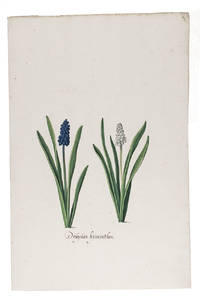
165019905Netherlands 1650. Watercolour ca. 13.5 x 13 cm on laid paper 31.5 x 21 cm with caption below. Delicate watercolour of two grape hyacinths by the Dutch watercolour painter and engraver Pieter Holsteyn de Jonge 1614-1673. Holsteyn made many drawings of plants birds and insects which were often composed in albums. Some of those albums are still intact and supplied with a title-page by the artist himself and as a result many of the drawings in those albums were not signed. These grape hyacinths were in such an album which was later taken to pieces. With certificate from Dr. S. Segal Amsterdam. In very good condition. unknown
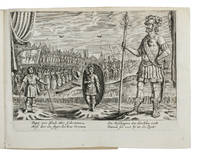
1648B1GGR2474I77Amsterdam 1648. Small 4to 19 x 15 cm. Tymen Houthaeck Modern marbled wrappers. With a engraved illustration of a labyrinth on title-page an engraved plate by P. Holsteyn after A. Vinckenbrinck 3 engravings in text and a folding engraved plate of David & Goliath. 8 ll. Extremely rare third edition the first with poems by Jan Vos and double the size of the two earlier editions of a description intended as souvenir of the "Oude Doolhof" literally: old labyrinth of Amsterdam a sort of amusement park at the Looiersgracht. It was the first public doolhof founded by the wine merchant and inn-keeper Vincent Jacobsz. Coster at the beginning of the 17th century. The Doolhof was a sculpture garden with a labyrinth exhibiting fountains sculptures and automata showing historical mythical and biblical figures and spectacles. The booklet was first published ca. 1645 by Crispyn Passe the younger in 4 leaves and other versions followed soon after. For the present edition one full-page and one folding engraved plate were added together with poems by Jan Vos 1612-1667 the most popular Dutch playwright of his time.With the outer corner of the foot of the title-page and the first plate torn off and two minor waterstains on the title-page otherwise in very good condition.l Franken 1375 note; Meijer "Het oude doolhof te Amsterdam" in: Oud Holland I 1883 pp. 119-135; Spies De Amsterdamse doolhoven pp. 70-71; STCN 2 copies; WorldCat same 2 copies. unknown
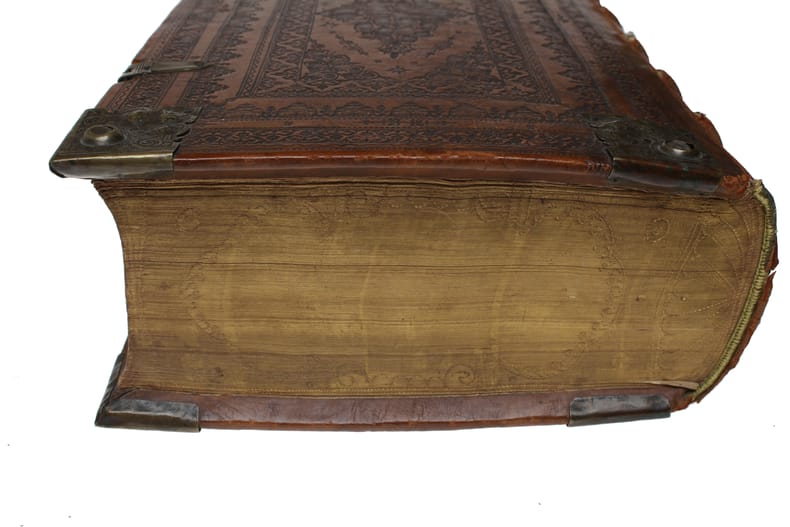
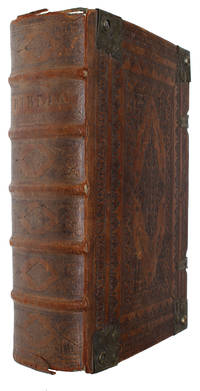
163360241Kiøbenhaffn, (Melchior Martzan og Salomon Sartor), (1632-) 1633. Folio (binding: 37 x 25 cm.). Bound in a spledid, contemporary full calf binding over wooden boards. Rich, elaborate gilding to both boards and spine. The gilding is vague, especially on the front board, but the tooling is very sharp, and the binding overall is magnificent. With four beautiful, ornamented brass edges to each board and two large ornamented brass clasps. All edges are gilt and beautifully blindtooled. Wear to capitals, where the cords are loosening a bit, and with a bit of loss of leather. A bit of wear to hinges, at the cords, which are showing. But overall the binding is in splendid condition. Also internally extremely well preserved. The title-page has a tiny restored hole to lower right corner, and the first four leaves might have been inserted. They are slightly smaller at the outer margin than the other leaves. But that might also be due to restoration, as the binding has not been tampered with at any point and is completely unrestored. The text is unusually nice, clean and fresh, by far the nicest copy we have ever come across. Pasted-down front end-paper with the ownership signature and lacquered coat-of-arms seal of Severin Svanenhielm (Severin Seehusen (1664-1726) ) as well as the ownership signatures of Søren Schiøtz (1796-1863) (with names of members of his family), C. Th. Zahle and Erik Zahle. With the book plate of William Davignon (d. 1924). The brass corners carry the initials HL and are depicted in Johannes Rudbeck's Svenska Bokband I (fig. 26, p.53). The binding there is dated 1622, whereas our binding is from 1633 or right after. The brass fittings were a commercial merchandise for sale in Germany and probably also in both Sweden and Denmark. Engraved title-page as well as the engraved portrait of Christian IV, all by the royal engraver Simon the Pas. Without the half-title, which merely contains the printed words ""BIBLIA / Paa Danske"", which is almost never present. (21 - not counting the engraved title-page and the portrait), 353 (i.e. 354 due to the erroneous double pagination 353), 226, 159 ff.
163360241Kiøbenhaffn Melchior Martzan og Salomon Sartor 1632- 1633. Folio binding: 37 x 25 cm. Bound in a spledid contemporary full calf binding over wooden boards. Rich elaborate gilding to both boards and spine. The gilding is vague especially on the front board but the tooling is very sharp and the binding overall is magnificent. With four beautiful ornamented brass edges to each board and two large ornamented brass clasps. All edges are gilt and beautifully blindtooled. Wear to capitals where the cords are loosening a bit and with a bit of loss of leather. A bit of wear to hinges at the cords which are showing. But overall the binding is in splendid condition. Also internally extremely well preserved. The title-page has a tiny restored hole to lower right corner and the first four leaves might have been inserted. They are slightly smaller at the outer margin than the other leaves. But that might also be due to restoration as the binding has not been tampered with at any point and is completely unrestored. The text is unusually nice clean and fresh by far the nicest copy we have ever come across. Pasted-down front end-paper with the ownership signature and lacquered coat-of-arms seal of Severin Svanenhielm Severin Seehusen 1664-1726 as well as the ownership signatures of Søren Schiøtz 1796-1863 with names of members of his family C. Th. Zahle and Erik Zahle. With the book plate of William Davignon d. 1924. The brass corners carry the initials HL and are depicted in Johannes Rudbeck's Svenska Bokband I fig. 26 p.53. The binding there is dated 1622 whereas our binding is from 1633 or right after. The brass fittings were a commercial merchandise for sale in Germany and probably also in both Sweden and Denmark. Engraved title-page as well as the engraved portrait of Christian IV all by the royal engraver Simon the Pas. Without the half-title which merely contains the printed words "BIBLIA / Paa Danske" which is almost never present. 21 - not counting the engraved title-page and the portrait 353 i.e. 354 due to the erroneous double pagination 353 226 159 ff. <br/><br/><em>A magnificent copy of the scarce first edition of the last i.e. the third of the Danish folio-bibles known as "Christian IV's Bible" being a slightly revised edition of the Bible of 1589. Christian IV is the most famous Danish king ever to have lived and the Christian IV bible is extremely sought-after. An unusually fresh and complete apart from the always lacking half-title copy of this splendid bible printed by the first royal printer Melchior Martzan and Salomon Sartor part 2. The numerous woodcut illustrations are the same that were used for the Frederik II Bibel from 1589. The four engraved leaves - the portrait and the three title-pages - are by Simon de Pas.Bibl. Dan.I9 - Thesaurus II 378. - Birkelund 41. - Darlow and Moule 3160. Provenance: Svanenhielm was a family of Danish and Norwegian nobility. Morten Hansen Seehuusen 1629-1694 was a merchant from Bredstedt in Schleswig-Holstein who re-located to Stavanger Norway. His son Severin Seehusen 1664-1726 was an official in Bergen as well as in Stavanger and Northern Norway. He owned among other properties Damsgård Manor outside Bergen Svanøy in Sunnfjord and Arnegård in Stavanger. In 1720 Severin Seehausen was ennobled under the name Svanenhielm. Søren Daniel Schiøtz 1796-1863 was a Norwegian bailiff and judge who was also very much engaged in religious matters and came to play an important role in the history of theology in Norway. He was one of the founders of the Norwegian Mission Society and the Norwegian Israeli Mission. He translated several important upbuilding pieces from German among them a comprehensive bible history. Carl Theodor Zahle 1866 – 1946 was a highly important Danish lawyer and politician. He was prime minister of Denmark from 1909 to 1910 and again from 1913 to 1920. In 1895 he was elected member of the lower chamber of the Danish parliament for the Liberal Party. A campaigner for peace in 1905 he co-founded the Social Liberal Party Det Radikale Venstre. He stayed on as a member of Parliament for Det Radikale Venstre until 1928 when he became a member of the upper chamber of Parliament Landstinget. In 1929 he became Minister of Justice a post which he held until 1935. Zahle was instrumental in starting negotiations for a new Danish–Icelandic Act of Union in 1917 which resulted in Iceland being recognized as a sovereign nation in a personal union with the king of Denmark the following year. Erik Zahle 1898-1969 was a famous Danish art historian author and museum director. </em> hardcover
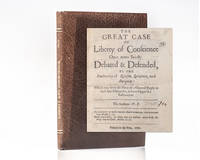
1670149562London 1670 i.e. 1671. Rare second edition of one of the most persuasive defences of liberty and “the free and uninterrupted exercise of our consciences"William Penn. Quarto bound in full modern morocco gilt titles and ruling to the spine inner dentelles elaborately stamped in blind. A powerful argument for toleration and against the intrusion of civil authority into religious matters this second edition was revised and enlarged from the first edition during Penn's imprisonment at Newgate in 1670 a defining episode in his lifelong defense of religious liberty. This is evidently a 2nd edition being much enlarged from the 1st which may be seen on comparison; and "J." for Junior is here omitted in the Title page and also the Dedication to the King which the first contains -- and an address "to the Supream Authority of England" dated "Newgate the 7th of the 12th monteth called February 1670." -- and a Preface added; also new matter in the work" Smith Friends' Books II p.286-7. In very good condition. Bookplate of William Tarun Fehsenfeld to the pastedown. The Great Case of Liberty of Conscience Once More Briefly Debated & Defended by the Authority of Reason Scripture and Antiquity constitutes one of William Penn’s earliest and most systematic expositions of the principle of religious toleration. This second edition revised and enlarged during his imprisonment in Newgate Prison in 1670 following his arrest for preaching at an unlawful Quaker meeting develops and refines arguments first articulated in the initial printing. Drawing on reason Scripture and early Christian authority Penn maintains that civil government possesses no jurisdiction over matters of faith and that coercion in religion violates both divine and natural law. Produced during a formative period of persecution the text articulates a mature defense of liberty of conscience that would later inform Penn’s political philosophy and the legal and religious framework of his American colony. unknown
16154007Ãvila and La Horcajada 1615. <p>Manuscript on parchment 380 x 270 mm. 18. Complete. Contents: ff. 1r-4v: Regla in Spanish in 30 numbered sections inconsistent numbering on ff. 3v-4v in a rounded script in brown ink the first page slightly larger up to 27 lines. F. 1r: incipit first four lines in large lettering with very large calligraphic initial: En el nombre de dios todo poderoso padre y hijo y espiritu sancto tres personas y una esencia. Section 30 f. 4v added in a slightly later hand. The word Cruz symbolized by a red Maltese cross. Text on ff. 2r-2v underlined in red. Calligraphic initials some with marginal extensions in brown purple or red. Marginal drawings of prickly foliage some in the shapes of fantastic animals. Later marginal notes opposite many sections. Ff. 5r-5v: Heading: Este es traslado de un testimonio followed by two notarial subscriptions on f. 5v one partially in cursive signed and dated Ãvila 11 May 1527 the other in italic partly faded including the date 1615. F. 6r: A cerca de la procession de la Resurrection. After an introductory portion in a small round early 16th-century hand in brown ink the text continues from f. 4v with sections 32-37 of the Regla of which sections 33-37 are in a later sixteenth-century hand; these sections ruled through with light diagonal lines. Signatures or notes in lower margin. F. 6v: blank except for five lines heavily cancelled in red. Ff. 7r-7v: five paragraphs in a fine upright italic hand the first and third with headings in red La orden que han de tener en la procession de la Resurxection sic en la faded and illegible…; La orden que sea de tener en la procession de la Resurretion sic en el domingo de pascua es la siguente. Followed on f. 7v by a note in a different hand dated from La Horcajada 21 May 1550. Ff. 7v-8v and back inner cover: later additions some quite faded. A few later marginal annotations throughout.<br /> Rubrication and decoration: headings and line fillers in red a few ornamented line fillers or borders some passages underlined in red or light purple else ruled in dry point numerous calligraphic initials in red or brown ink opening initial with purple filigree extension filling left margin numerous foliate vegetable and zoomorphic ornamental designs in the margins in red purple and brown ink.<br /> Binding: stitched into the original parchment cover with title “Regla de la Pasion†in large letters the R with decorative extensions above a large cross in green ink entwined with the snake and in the margins apparently the instruments of the Passion.<br /> Condition: rubbing and staining vertical crease from folding causing occasional erasure of text outer edge of first page somewhat rubbed affecting legibility of text some words at line ends helpfully written over in a later hand the inks used in the last two leaves quite faded; wrapper worn and darkened with tears at top and 3 small holes in lower cover.<br /> Provenance: Confraternity of the Holy Cross of Horcajada; purchased in France with export license.  <br /> <br /> An early Spanish confraternity manuscript containing the rules and statutes that governed the Confraternity of the Holy Cross referred to as the CofradÃa or Hermandad de la Cruz the word Cruz being supplied by a Maltese cross in red of La Horcajada a town located in Castile y León in the province of Ãvila. As in other Roman Catholic countries confraternities or lay brotherhoods played a vital role in community life in Spain functioning as mutual aid societies and venues for laypeople to express their piety and perform charitable acts. Vernacular manuscript confraternity statutes from the Iberian peninsula surface much more rarely than for example their Italian counterparts although it appears that Spain had a larger number of confraternities proportional to the population especially in Castile y Leon than the other Catholic lands. Virtually every community including small villages had at least one confraternity. While exact numbers of confraternities in sixteenth-century Spain are unknown “studies carried out for a number of cities suggest that the number of confraternities and brotherhoods in the Hispanic kingdoms was larger than elsewhere in Catholic Europe. The reasons behind the extraordinary popularity of confraternities and brotherhoods in the Hispanic kingdoms cannot yet be established however in view of the current state of research on the topic. There has been a tendency for scholars to emphasize the confraternity as a primarily urban phenomenon a reflection perhaps of their early development in Italy where they formed an essential part of civic and urban life. In the Hispanic kingdoms however these institutions were equally important in the religious and social life of the small village. Pastoral visitations carried out by the bishops of Cuenca during the sixteenth century found that `nearly every community had at least one brotherhood’ even small villages of 500 inhabitants. A similar pattern prevailed in villages around Toledo during the late sixteenth century†Callahan pp. 18-19.<br /> <br /> In his article on Spanish confraternities William Callahan further points out their popular nature which “arose from the initiative of the laity rather than the clergy prime examples of the lay piety that began to flourish in late medieval Europe. This piety developed largely on its own uncontrolled by either local bishops or the pope both of whom regarded its manifestations with some suspicion. The resiliency of traditional confraternities and brotherhoods developed from their connection to local religious cultures. It also reflected a fact noted by scholars who have studied specific cities and regions the strongly popular character of membership. There were of course some associations that limited membership to the nobility or clergy but in most cases members were recruited from the popular classes. This was obviously true in the case of peasant villages where only one or two confraternities existed.†pp. 22-23. In spite of the centrality of confraternities to early modern religious life in Spain there is comparatively little modern scholarly literature especially on the rural confraternities. Note the absence for example of any articles on Spain or Portugal in Brill’s recently published Companion to Medieval and Early Modern Confraternities edited by Konrad Eisenbichler.<br /> <br /> This working manuscript bears witness to this central but understudied aspect of Spanish popular religious culture before the restrictions placed on confraternities by the Council of Trent and succeeding Popes. Consulted frequently and contributed to by members of the confraternity the manuscript includes abundant interlinear and marginal additions and corrections and half- or full-page later additions. The town of La Horcajada is identified in the opening page. Ff. 1r to 5v contain the introduction the first 30 statutes and a notarized testimony with heading “Este es traslado de un testimonio†which relates to the apparently recent establishment of the confraternity. The statutes cover admission of new members general rules of comportment requirements of prayer and confession for feast days and for the canonical hours charity for poorer members of the confraternity chants etc. Several paragraphs relate to processions including required habits and admission of non-members into the processions. On f. 6r a paragraph on the procession de la Resurrection is followed by six entries numbered 32 to 37 of which paragraphs 33 to 37 are in a later 16th-century hand. Several light diagonal lines through these five paragraphs may indicate that they were cancelled. The verso f.6v contains only five lines heavily cancelled in red ink and f. 7r continues discussion of the procession of the Resurrection on a feast day the name of the saint is smudged and on Easter Sunday in a different 16th-century upright cursive. This second section of which portions are difficult to read because of fading ends on f. 7v and is followed by a note in a larger hand dated from La Horcajada 21 May 1550. The final leaf and inner back cover contain later additions some quite faded. One late addition in the lower margin of f. 5v is dated 1615.<br /> <br /> The manuscript is decorated in a popular style. Some of the leafy plant designs have a thorny look that may reflect local vegetation. Animals and grotesques include a scorpion-like creature birds and possibly imaginary mammals. A witness to the central role played by religious confraternities in early modern Spain bearing the marks of its use and in original condition it is a rare survival and would repay further study.<br /> <br /> Cf. William Callahan “Confraternities and Brotherhoods in Spain 1500-1800†Confraternitas: The Newsletter of the Society for Confraternity Studies 12:1 2001 17-25. See also William A. Christian Local Religion in Sixteenth Century Spain Princeton 1981; Maureen Flynn Sacred Charity: Confraternities and Social Welfare in Spain 1400-1800 Basingstoke 1989.</p> unknown
1634I44FL3PUPRNNLondon: Adam Islip 1634. Contemporary calf spine in six compartments tooled and lettered in gilt. Folio 23.5 x 32 cm. Elaborate woodcut device on title-page; woodcut initials head- and tailpieces. 2 parts in one volume. Pliny's renowned Natural History in its second publication in English repeating with corrections the 1601 first publication translated by Philemon Holland the greatest translator of the Elizabethan age. The "Naturalis Historia" is one of the largest single works to have survived from the Roman empire to the modern day and purports to cover the entire field of ancient knowledge based on the best authorities available to the author. Pliny claims to be the only Roman ever to have undertaken such a work. It comprised 37 books in 10 volumes and covered over 20000 facts on topics including the fields of botany zoology astronomy geology and mineralogy as well as the exploitation of those resources. It remains a standard work for the Roman period and the advances in technology and understanding of natural phenomena at the time. Some technical advances he discusses are the only sources for those inventions such as hushing in mining technology or the use of water mills for crushing or grinding corn. Much of what he wrote about has been confirmed by archaeology. ''We know from Pliny that there were important pearl fisheries in the Gulf . Pliny identifies Tylos Bahrain as a place famous for its pearls . He attests that pearls were the most highly rated valuable in Roman society and that those from the Gulf were specially praised . The pearl related finds at the site of El-Dur indicate the site was integrated into the maritime trade routes linking the Roman Empire the Persian Empire India and South Arabia'' Carter. Book 6 holds a chapter that gives the first detailed account of the regions around the Gulf including what are now Qatar the Emirates and Oman. Binding rubbed; front hinge splitting. Includes the final printed leaf in vol. 2 containing the publisher's advertisement to the reader that all errors have been corrected in the present edition and the errata leaf included in the same position in 1601 has become unnecessary rather than having been mistakenly omitted. Some slight browning and brownstaining but an excellent copy removed in 1973 from the Royal Meteorological Society Symons Bequest 1900 with their bookplate on the front pastedown.l STC 20030. Cf. Pforzheimer 496 1601 ed. Adam Islip, unknown
16154007Ávila and La Horcajada 1615. Manuscript on parchment 380 x 270 mm. 18. Complete. Contents: ff. 1r-4v: Regla in Spanish in 30 numbered sections inconsistent numbering on ff. 3v-4v in a rounded script in brown ink the first page slightly larger up to 27 lines. F. 1r: incipit first four lines in large lettering with very large calligraphic initial: En el nombre de dios todo poderoso padre y hijo y espiritu sancto tres personas y una esencia. Section 30 f. 4v added in a slightly later hand. The word Cruz symbolized by a red Maltese cross. Text on ff. 2r-2v underlined in red. Calligraphic initials some with marginal extensions in brown purple or red. Marginal drawings of prickly foliage some in the shapes of fantastic animals. Later marginal notes opposite many sections. Ff. 5r-5v: Heading: Este es traslado de un testimonio followed by two notarial subscriptions on f. 5v one partially in cursive signed and dated Ávila 11 May 1527 the other in italic partly faded including the date 1615. F. 6r: A cerca de la procession de la Resurrection. After an introductory portion in a small round early 16th-century hand in brown ink the text continues from f. 4v with sections 32-37 of the Regla of which sections 33-37 are in a later sixteenth-century hand; these sections ruled through with light diagonal lines. Signatures or notes in lower margin. F. 6v: blank except for five lines heavily cancelled in red. Ff. 7r-7v: five paragraphs in a fine upright italic hand the first and third with headings in red La orden que han de tener en la procession de la Resurxection sic en la faded and illegible.; La orden que sea de tener en la procession de la Resurretion sic en el domingo de pascua es la siguente. Followed on f. 7v by a note in a different hand dated from La Horcajada 21 May 1550. Ff. 7v-8v and back inner cover: later additions some quite faded. A few later marginal annotations throughout.Rubrication and decoration: headings and line fillers in red a few ornamented line fillers or borders some passages underlined in red or light purple else ruled in dry point numerous calligraphic initials in red or brown ink opening initial with purple filigree extension filling left margin numerous foliate vegetable and zoomorphic ornamental designs in the margins in red purple and brown ink.Binding: stitched into the original parchment cover with title "Regla de la Pasion" in large letters the R with decorative extensions above a large cross in green ink entwined with the snake and in the margins apparently the instruments of the Passion.Condition: rubbing and staining vertical crease from folding causing occasional erasure of text outer edge of first page somewhat rubbed affecting legibility of text some words at line ends helpfully written over in a later hand the inks used in the last two leaves quite faded; wrapper worn and darkened with tears at top and 3 small holes in lower cover.Provenance: Confraternity of the Holy Cross of Horcajada; purchased in France with export license. An early Spanish confraternity manuscript containing the rules and statutes that governed the Confraternity of the Holy Cross referred to as the Cofradía or Hermandad de la Cruz the word Cruz being supplied by a Maltese cross in red of La Horcajada a town located in Castile y León in the province of Ávila. As in other Roman Catholic countries confraternities or lay brotherhoods played a vital role in community life in Spain functioning as mutual aid societies and venues for laypeople to express their piety and perform charitable acts. Vernacular manuscript confraternity statutes from the Iberian peninsula surface much more rarely than for example their Italian counterparts although it appears that Spain had a larger number of confraternities proportional to the population especially in Castile y Leon than the other Catholic lands. Virtually every community including small villages had at least one confraternity. While exact numbers of confraternities in sixteenth-century Spain are unknown "studies carried out for a number of cities suggest that the number of confraternities and brotherhoods in the Hispanic kingdoms was larger than elsewhere in Catholic Europe. The reasons behind the extraordinary popularity of confraternities and brotherhoods in the Hispanic kingdoms cannot yet be established however in view of the current state of research on the topic. There has been a tendency for scholars to emphasize the confraternity as a primarily urban phenomenon a reflection perhaps of their early development in Italy where they formed an essential part of civic and urban life. In the Hispanic kingdoms however these institutions were equally important in the religious and social life of the small village. Pastoral visitations carried out by the bishops of Cuenca during the sixteenth century found that `nearly every community had at least one brotherhood' even small villages of 500 inhabitants. A similar pattern prevailed in villages around Toledo during the late sixteenth century" Callahan pp. 18-19.In his article on Spanish confraternities William Callahan further points out their popular nature which "arose from the initiative of the laity rather than the clergy prime examples of the lay piety that began to flourish in late medieval Europe. This piety developed largely on its own uncontrolled by either local bishops or the pope both of whom regarded its manifestations with some suspicion. The resiliency of traditional confraternities and brotherhoods developed from their connection to local religious cultures. It also reflected a fact noted by scholars who have studied specific cities and regions the strongly popular character of membership. There were of course some associations that limited membership to the nobility or clergy but in most cases members were recruited from the popular classes. This was obviously true in the case of peasant villages where only one or two confraternities existed." pp. 22-23. In spite of the centrality of confraternities to early modern religious life in Spain there is comparatively little modern scholarly literature especially on the rural confraternities. Note the absence for example of any articles on Spain or Portugal in Brill's recently published Companion to Medieval and Early Modern Confraternities edited by Konrad Eisenbichler.This working manuscript bears witness to this central but understudied aspect of Spanish popular religious culture before the restrictions placed on confraternities by the Council of Trent and succeeding Popes. Consulted frequently and contributed to by members of the confraternity the manuscript includes abundant interlinear and marginal additions and corrections and half- or full-page later additions. The town of La Horcajada is identified in the opening page. Ff. 1r to 5v contain the introduction the first 30 statutes and a notarized testimony with heading "Este es traslado de un testimonio" which relates to the apparently recent establishment of the confraternity. The statutes cover admission of new members general rules of comportment requirements of prayer and confession for feast days and for the canonical hours charity for poorer members of the confraternity chants etc. Several paragraphs relate to processions including required habits and admission of non-members into the processions. On f. 6r a paragraph on the procession de la Resurrection is followed by six entries numbered 32 to 37 of which paragraphs 33 to 37 are in a later 16th-century hand. Several light diagonal lines through these five paragraphs may indicate that they were cancelled. The verso f.6v contains only five lines heavily cancelled in red ink and f. 7r continues discussion of the procession of the Resurrection on a feast day the name of the saint is smudged and on Easter Sunday in a different 16th-century upright cursive. This second section of which portions are difficult to read because of fading ends on f. 7v and is followed by a note in a larger hand dated from La Horcajada 21 May 1550. The final leaf and inner back cover contain later additions some quite faded. One late addition in the lower margin of f. 5v is dated 1615.The manuscript is decorated in a popular style. Some of the leafy plant designs have a thorny look that may reflect local vegetation. Animals and grotesques include a scorpion-like creature birds and possibly imaginary mammals. A witness to the central role played by religious confraternities in early modern Spain bearing the marks of its use and in original condition it is a rare survival and would repay further study.Cf. William Callahan "Confraternities and Brotherhoods in Spain 1500-1800" Confraternitas: The Newsletter of the Society for Confraternity Studies 12:1 2001 17-25. See also William A. Christian Local Religion in Sixteenth Century Spain Princeton 1981; Maureen Flynn Sacred Charity: Confraternities and Social Welfare in Spain 1400-1800 Basingstoke 1989. unknown books
16011169London: Adam Islip 1601. First Edition. Good. Folio. 2 vols. in 1. 60 614 42 12 632 86. First edition in English of Pliny’s important encyclopedic work which was for centuries considered the highest authority on subjects relating to the natural and physical world including botany zoology geography pharmacology and more. Lowndes referred to this translation as a "work of immense labour and what few men of his time could have executed in a superior manner to Dr. Holland." Near contemporary half brown calf over marbled boards black gilt morocco lettering labels spine lettered and ruled in gilt wear to binding and joints ink notations throughout especially to front blank and title-page ownership signatures on title page 9 of vol. I and page 4 of vol. II as well as some ink markings to the woodcut devices on the first few leaves of vol. I and the final leaf in vol. II. This is a huge book for 1601 and copies with missing or duplicated or misbound leaves are seen with more frequency than slimmer books or later ones. This one has the complete text and prelims and it has the often missing errata after the Preface in vol. I and at the end of vol. II though it is not without its faults. B iii and B iv in vol. II are chipped at the margins just touching the marginal citations these two leaves may be supplied imissing Ppp index vol/ 2 there is creasing to the first few and last few leaves and minor insect damage near the end of volume II but withal it is a good textually complete copy. Pliny's encyclopedic work functioned for centuries as the highest authority on subjects relating to the natural and physical world including botany zoology geography pharmacology and numerous other disciplines. Completed around 77-79 CE the “Natural Historyâ€Â synthesized Greek and Roman knowledge within a single comprehensive framework drawing from nearly 500 sources to create what became arguably the most influential scientific text of the pre-modern period.<br /> <br /> Philemon Holland's 1601 translation brought Pliny's comprehensive compilation to English readers for the first time. Lowndes characterized this as a "work of immense labour and what few men of his time could have executed in a superior manner." Holland's scholarly approach preserved the technical vocabulary while rendering complex concepts accessible to readers lacking classical training.<br /> <br /> Pliny himself embodied the Roman aristocratic ideal of combining administrative service with intellectual pursuit. Gaius Plinius Secundus served as Vespasian's admiral while compiling his vast encyclopedia demonstrating the integration of practical governance and scholarly endeavor characteristic of the Roman elite. His death during the Vesuvius eruption of 79 CE killed by ash inhalation while investigating the catastrophe exemplifies the empirical curiosity that drove his encyclopedic project. Adam Islip unknown
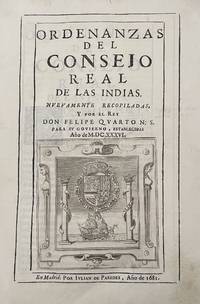
16812474Madrid: Por Julian de Paredes 1681. Second revised and enlarged edition. In contemporary limp vellum. Engraved device on title page. Woodcut initials throughout and a tailpiece at end of each part. Tinted edges. Stains on binding string missing panels with small damage at the outer edge. Tinted title on spine rubbed. 19th-century shelfmark on the inner front panel in ink. Contemporary notes and sings to the margins throughout the first part. Old restoration with paper tape to a few pages in the first part. Otherwise in very good condition. Second revised and enlarged edition. In contemporary limp vellum. 206 14 p. <p><p><br /> Revised and enlarged second edition of these substantial bodies of law relating to the New World and the treatment of Native Americans an important volume on the Administrative History of the Indies.<br /> <p><p><br /> One of the most important volumes of the administrative history of the Indies a fundamental collection of laws and ordinances decreed by the Council of the Indies the supreme governing body of Spain’s colonies in America during the reign of Philip IV. <br /> <p>The first part Ordenanzas del Consejo Real de las Indias contains 245 ordinances of the Council of the Indies pp. 3–112; first published in 1636 the second part Autos acuerdos y decretos de govierno del Conseio Real y supremo de las Indias embodies an additional 190 ordinances concerning for the most part the administration of Spanish America pp. 113–206 plus 14 p. of index; first published in 1658.<br /> <p><p><br /> Any editions of these bodies of law are extremely scarce on the market RHB lists only 2 copies of the present edition within the last 70 years. <br /> Sabin 57477. Por Julian de Paredes unknown
16013078London:: Impensis G. Bishop 1601. FIRST EDITION second issue with cancel title page. Folio:. 33 x 22 cm. Ï€6 par.4 a-b6 A8 B-3I6 3K4; A-3G6 3H4 3I-3O6 3P8 lacking blank leaves Ï€1 and 3P8 Complete in two parts; with a divisional title page to the second tome and the errata/colophon on leaf 3P7 Bound in contemporary English calfskin ruled in blind rebacked and recornered in morocco. An excellent crisp bright copy with very minor faults: repaired clean tear with no loss leaf P4. A few signatures with very light marginal dampstains. Occasional rust spots marginal tears or marginal natural paper flaws no loss whatsoever. Title pages to both volumes. The first with an elaborate architectural border with Solomonic columns. The second with a large woodcut device. An impressive book. “The ‘Natural History’ of Pliny the Elder is more than a natural history: it is an encyclopaedia of all the knowledge of the ancient world… It comprises 37 books with mathematics and physics geography and astronomy medicine and zoology anthropology and physiology philosophy and history agriculture and mineralogy the arts and letters… The ‘Historia’ soon became a standard book of reference; abstracts and abridgements appeared by the third century. Bede owned a copy Alcuin sent the early books to Charlemagne and Dicuil the Irish geographer quotes him in the ninth century. It was the basis of Isidore's Etymologiae and such medieval encyclopedias as the Speculum Majus of Vincent of Beauvais and the Catholicon of Balbus. One of the earliest books to be printed at Venice the centre from which so much of classical literature was first dispensed it was later translated into English by Philemon Holland in 1601 and twice reprinted a notable achievement for so vast a text… Over and over again it will be found that the source of some ancient piece of knowledge is Pliny.†PMM 5 “Holland's first book the first complete rendering of Livy into English was published in 1600 when he was nearly fifty. It was a work of great importance presented in a grand folio volume of 1458 pages and dedicated to the queen. … “The Livy was followed in the next year by an equally huge translation of the elder Pliny: The Historie of the World Commonly called the Naturall Historie. This encyclopaedia of ancient knowledge about the natural world had already had a great indirect influence in England as elsewhere in Europe but had not been translated into English before and would not be again for 250 years.â€ODNB Pforzheimer 496; STC 2nd ed. 20029 Impensis G. Bishop, unknown books
162718927Frankfurt: Matthaeus Merian 1627. First edition. Hardcover. Very good. Matthaeus Merian. Oblong folio leaves: 20.6 by 31.2 cm; plates: 10 to 11.5 by 14.5 to 15.5 cm. Engraved titlepage borders without letterpress; 231 of 233 engraved plates printed on the rectos with no printed text depicting biblical scenes from the Old and New Testaments lacks Gen. XIX: Lot and his daughters after the destruction of Sodom and Gomorrah; Exod. VIII & IX: The plague of frogs. Recent marbled calf lightly rubbed at extremities bordered in blind; gilt-tooled spine with raised bands gilt lettering pieces. Occasional light stains and smudges especially at the outermost leaves and almost entirely restricted to the blank margins; old mostly marginal repairs and reinforcement of tears to about 30 leaves Matt. IV plate with loss of about 10 words of manuscript text. Protected by wide margins the plates are clean fresh and bright with relatively few minor blemishes. Housed and protected in a custom luxurious modern leather clamshell box.<br /> <br /> Rare suite of biblical illustrations printed before letter perhaps as proofs comprising 231 of 233 engraved plates from the Icones Biblicae of Matthaeus Merian the elder 1593-1650. The engravings are printed on large paper and lack any printed text. They are preceded by a leaf of the engraved title borders to the first part in which the central cartouche which would have contained a letterpress title and imprint is here blank. Neat manuscript annotations appear throughout: atop each engraving is a brief title along with a notation of the biblical book and chapters; beneath each engraving are six-lines of rhyming verse in German; at the top corners are leaf numbers in Arabic numerals. All are penned in black ink in the same old cursive German hand. The engraved title leaf is not included in the manuscript foliation. The first three leaf numbers and several others among the first 23 leaves are obscured by wear or later marginal repairs. The foliation ends at leaf 233 and is discontinuous where one would expect to find numbers 15 and 38 corresponding to the missing plates noted above. As noted by Wütrich only four of the 233 plates are signed by Merian all in the New Testament series. Each of these signed plates appears in our suite: Matthaei I. - page 7; Johannis VIII. - page 65; Matthaei XXVII. - page 101; Apocalyps. IX. - page 145 header titles and page numbers from the first edition.<br /> <br /> The first editions were published at Frankfurt in four parts between 1625 and 1627. The Pentateuch series was published in 1625. The second part illustrating the Old Testament books from Joshua to Kings appeared in 1626. These first two series were published under the name of Merian's father-in-law the printer and bookseller Johann Theodor de Bry 1561-1623 whose heirs retained title to the business. The third part illustrates the remainder of the Old Testament and Apocrypha; the fourth the New Testament. These last two parts were published in 1627 under the engravers's own name. Verses in Latin German and French accompany each plate in the three Old Testament series the French verses being omitted in the 1627 New Testament series.<br /> <br /> While the eminent Swiss draughtsman and engraver Matthaeus Merian is best known for his topographical depictions of the German speaking lands which appeared in the Theatrum Europaeum his novel selection of biblical stories and innovative stylistic approach revealed in the present series of plates proved highly influential ushering in a new age of copperplate engraving in Bible illustration. Merian broke with the century-long tradition of woodcuts which had accompanied countless editions of Luther's German Bible. Even as he drew on the Bible illustrations of Jost Amman Hans Holbein Virgil Solis and Tobias Stimmer Merian greatly expanded the traditional iconographic and compositional repertoire. The Old Testament alone contains 23 prints depicting stories that had never before been the subject of an engraver. While earlier New Testament woodcuts focused on the Book of Revelation Merian now provided a rich series of plates to illustrate the Gospels and Acts of the Apostles as well.<br /> <br /> Merian had an obvious preference for crowd scenes and battles along with some of the novelistic features of the Old Testament such as Jacob's lentil dish Solomon and Shulamit in the Song of Songs or the apocryphal story of the Dragon in Babylon. Merian sometimes provides local color from his home town of Basel as in his depiction of Solomon's Temple Consecration in which despite the baroque redesign the Basel Cathedral with the old choir is easily recognizable. The costumes and gestures of Merian's biblical characters display a baroque fantasy of the ancient Near East as reflected in the theater of his day; in depicting cities and buildings however Merian generally prefers to follow contemporary models. In individual cases such as Bathsheba's Bath he succumbed to the temptation as an engraver and artist to show off his skills in a magnificent fashionable palace and garden complex. All-in-all Merian's engravings initiated a development in Bible illustration "that led further and further away from the didactic Reformation purpose of Bible pictures to purely artistic-representational purposes and finally ended in the well-known pathos of the German Romantic Nazarenes" Schmidt.<br /> <br /> In the first few decades after their appearance these Bible plates were widely copied throughout Europe especially in the Netherlands and France Poortman. The first folio Bible to use Merian's copper plates to illustrate the text was published by the heirs of Lazarus Zetzner at Strasbourg in 1630. Subsequent editions of the "Merian Bible" were published at Frankfurt where Merian had taken over his father-in-law Johann de Bry's business. For over a century as Merian's heirs continued to publish new editions this would become "the most widespread German illustrated Bible in southern Germany Basel and Alsace primarily in wealthy households" Schmidt. After the demise of the Merian publishing house in 1727 the bookseller Philip Heinrich Hütter acquired the copper plates which he used to illustrate a Catholic Bible edition published at Frankfurt in 1740 Poortman.<br /> <br /> A very notable instance of transposing Merian's biblical engravings into another context occurs in the famous and oft-reprinted Amsterdam Haggadah the ritual for the Jewish Passover meal first published in 1695. The engravings were made by Abraham ben Jacob a former Protestant preacher who converted to Judaism. Introducing skills he had earlier acquired when working outside the Jewish community Abraham ben Jacob "widened the scope of Jewish book illustration" Rosenau and introduced new elements into the traditional iconography of the Haggadah. "He chose many of the same incidental scenes as had appeared in the Venice Haggadot 1599-1604 but he drew them afresh basing his work on the biblical pictures in the Icones Biblicae by Matthew Merian" EJ. Among them was the image of the Temple of Solomon in Jerusalem. As Merian used a wide variety of prototypes Rosenau suggests that the two free-standing columns Jachin and Boaz depicted at the front porch of the Temple in Merian's engraving and Abraham ben Jacob's adaptation may have ultimately been derived from the woodcuts which accompany Estienne's Bible Paris 1540 based upon the scholarship of Franciscus Vatablus.<br /> <br /> In Das druckgraphische Werk von Matthaeus Merian d. Ae. 1993 L. H. Wüthrich describes a "Spezialausgabe ohne Drucktext" complete with 233 biblical engravings located in Darmstadt at the Hessische Landesbibliothek 31/643. This "separate edition without text or a series of proofs" which he describes has three notable features: 1 an undated first edition title page of the second part Pars II of the Old Testament which has been "corrected. by crossing out or shaving" to read "Pars I"; 2 the first edition title page of the New Testament series dated 1627; 3 an engraving of the The Fall of Man probably after Johann Theodor de Bry which later appears in Gottfried's Chronicle part 1 1629/1630 but which differs from that found in most copies of the first edition Wütrich 1a. The copies containing this plate after de Bry Wütrich 1aa. were likely printed in 1626. Further research perhaps locates only one other suite of Merian plates without text at the Herzog August Bibliothek Wolfenbüttel catalogued under two call numbers: the Old Testament series dated 1626-1627 comprising 157 leaves including an engraved title A: 30.1 Geom. 2 "Ausg. ohne Text von Ps. 1 und 2." = VD17 23:289608V and the New Testament series dated 1627 comprising 78 leaves including an engraved title A: 30.1 Geom. 3 "Ausg. ohne Text" = VD17 23:655618H. The catalogue entry for the Old Testament series references Wütrich's "Spezialausgabe ohne Drucktext." Surprisingly the key images provided for this entry illustrate the same three notable features of the "Spezialiausgabe" which Wütrich located at Darmstadt !. Our suite of plates is provided with a single blank engraved title leaf the one used for the first series of the Old Testament plates which lacks any letterpress. The third plate which depicts the Fall of Man is here in Merian's style and is the image more commonly found in the first printings Wütrich 1a.<br /> <br /> In the first edition of the Icones Biblicae the title page notes "Mit Versen und Reymen in dreien Sprachen geziert und erkläret Durch Johann Ludwig Gottfried" decorated and described with verses and rhymes in three languages by Johann Ludwig Gottfried. In the first three parts of Icones Biblicae Gottfried's German verses are in four lines with a rhyme scheme of ABBA. In the fourth part the New Testament the German verses are modified to six lines with a rhyme scheme of AABCCB. The manuscript verses in German which accompany each of the 231 plates in our suite differ from both of these formats being composed in six lines of iambic hexameter with a rhyme scheme of ABABCC. To give a sense of how these versions differ the four lines of the German printed verses which accompany the first plate The Creation may be compared with the following transcript of the written verses which describe this scene in our set.<br /> <br /> in the first edition of Merian's Bilderbibel<br /> <br /> Im Anfang Gott Erschuff den Himmel und die Erden<br /> Die Wasser und das Meer das Liecht der Sternenschein<br /> Die Vögel Fisch Gewürm alle Thier groß und klein<br /> Warauß sein Gütigkeit und Kraft erkant mag werden.<br /> <br /> the hand of anonymous versifier<br /> <br /> Im Anfang schuff der Herr den Himmel und die Erden<br /> Das Licht die Sonn den Mond die Sternen und das Meer<br /> Gras Bäume Laub und Kraut und was genannt mag werden<br /> Von Thieren Vögel Fisch in ihrem grosen Heer<br /> Nur durch ein einig Wort: Ich kan hieraus erkennen<br /> O Gott! dein ew'ge Krafft und dich den Schöpffer nennen.<br /> <br /> Watermark: flambeau surrounded by garland<br /> <br /> Provenance: laid-in typed description on a half-sheet bearing the early twentieth-century letterhead of Harry A. Levinson Rare Books: "There appears to be no record of another such copy of proofs before letter." References: L. H. Wüthrich Das druckgraphische Werk von Mattaeus Merian d. Ae. Basel: Bärenreiter 1993 vol. 3 p.16: "Spezialausgabe ohne Drucktext;" Enc. Jud. 2nd ed. 8:215; W. C. Poortman Bijbel en Prent 's-Gravenhage 1986 2:56-59; H. Rosenau Vision of the Temple London: Oresko 1979 pp. 135; 146f. Ph. Schmidt Die Illustration der Lutherbibel Birsfelden/Basel 1977 pp. 304-329; VD17 23:289608V and 23:655618H. [Matthaeus Merian] hardcover
1614ABC_48468Utrecht 1614. Oblong folio ca. 18.5 x 26.5 cm. for Crispijn van de Passe Later half calf decorated paper sides gold-tooled spine and red sprinkled edges. With a full-page plate of Flora embracing the cornucopia in a landscape with an epigram by Arnoldus Buchelius in a cartouche in the left hand corner engraved by Simon van de Passe after Crispijn van de Passe 2 different frontispieces both appearing twice of ideal gardens full of flowers and 174 full-page engraved plates of flowers fruits fruit trees and medicinal plants mainly by Crispijn van de Passe the Younger 3 by his brother Willem van de Passe. 2 parts in 1 volume the first in 4 sections. 26 pp. 118 engraved ll.; 1 1 blank pp. 61 engraved ll. Very rare first Dutch edition of this famous book on horticulture including beautifully engraved plates of flowers organised according to the season in which they bloom and frontispieces showing the ideal garden. The work was first published in Latin under the following title: Hortus floridus in quo rariorum & minus vulgarium florum icones . without text published in Arnhem by Jan Jansz. in 1614. The expertly engraved plates were also sold separately and were constantly updated and amended by adding various details insects other animals or simply different numbers to meet demand. While the present first Dutch edition contains short explanations of the plates on separate typographical leaves the same information was only added to the Latin version of the work in its second edition 1616 - the corresponding text then appearing on the verso of each engraved plate. The text was written by Arnoldus Buchelius or Aernout van Buchel 1565-1641 a Dutch scholar and humanist from Utrecht who is now most known for specialising in genealogy and heraldry.This Dutch edition was soon followed by English and French editions. The Hortus floridus including translations was considered without question the most popular florilegium ever published An Oak Spring Flora and "Blunt calls this the most celebrated and influential of the early florilegia and one of the finest Hunt.The emphasis of the plates is on the common garden flowers with a preponderance of spring bulbs. The book was intended to provide inspiration for garden lovers who were invited to colour the black and white copperplate engravings themselves according to the colours they found in their own gardens. The introduction is enlarged with details on how to colour the plates. Many of the flowers shown are tulips hyacinths crocuses and other bulb plants mirroring the new enthusiasm and passion for bulbs which eventually led to the tulip mania of the years 1636-37 when contract prices for some bulbs reached extraordinarily high levels leading to the first recorded speculative bubble in history.As the plates were printed then modified and assembled at different times between 1614 and 1617 almost no two copies are the same - consisting of various numbers of plates with different title pages and prefaces. Our copy seems to be a practically complete copy of the Dutch edition containing an unmatched number of plates the only plate not present in this copy which is sometimes included in others is the engraved plate frontispiece of the Latin quotation from Matthew 6 Cognoscite lilia in part 2. The four sections of part 1 include 113 plates of flowers including the 99 that are called for in the preface organised per season: spring: 41; summer: 20; autumn: 26; winter: 12. The extra plates are as follows: 1: an addition to spring with plate 42 = second copy of plate 2 of summer 2: 12 plates depicting tulips numbered 43-54 and 3: an addition to autumn: a plate depicting two metal cylinders for growing flowers 1 with a tulip not found in any other copy consulted but possibly called for by Nissen "Garten Instruments".The second part includes 61 plates depicting 120 numbered depictions of fruits fruit trees and medical plants. This part included in most copies of the Latin edition and in some of the Dutch edition had been published already by Crispijn van de Passe the Elder around 1600-1604 when he was in Cologne in association with the publisher Hans Woutneel.The quality of the engravings is exceptionally fine and delicate representing real masterpieces of horticultural art executed by a leading family of engravers and publishers in the first half of the Dutch Golden Age.With a 19th-century round stamp with double eagle and the initials "H.C.P.S.G." and a red stamp "Ex libris J. Visser Rotterdam" on the title page with the red ex libris stamp also on the divisional title page of the second part. Lacking the engraved plate frontispiece of the Latin quotation from Matthew 6 Cognoscite lilia in part 2. The binding is very slightly rubbed the bottom outer corner of the back board is slightly damaged the typographical leaves are slightly soiled the head margin of the title page is cut short and restored with paper lightly foxed some very slight foxing and/or soiling throughout mainly to the outer edges of the margins some small marginal tears some restored in several leaves plate 44 spring with a repaired tear plate 43/44 in part 2 is repaired in the head margin. The verso of 45 plates show minute pricked holes in the leaf following the outlines of the depicted flowers and plants as a way of tracing the images on another leaf of paper or possibly another copperplate. Otherwise in good condition.l Franken 1881 no. 1346; Hunt no. 199; Nissen BBI no. 1494; Oak Spring Flora 12; Saunders Picturing Plants pp. 36-37; Savage The Hortus Floridus in: Transactions Bibiogr. Society Second series IV 1923 pp.181-206; Segal Flowers and Nature 1990 pp. 165-166; Soultrait 17th century 226; STCN 308020359 3 copies incl. 1 incomplete; USTC 1022789 4 copies incl. 1 incomplete; 3 the same as STCN; cf. Veldman Crispijn de Passe and his Progeny 1564-1670: a century of print production 2001 pp. 205-212. ABE CAT Art History unknown
167312722Bologna Guiseppe Longihi Pietro Todeschi 1673. Nova et accurata totius Americae tabula auct. G. I. Blaeu America quarta pars orbis quam plerunq nuvum orbem apellitant primo detecta est anno 1492 a Christophoro Columbo . A hand-coloured engraved wall map printed on 4 joined sheets. Size: 86 x 110 cm. / 33.9 x 433 inch. Large very rare hand coloured copy of Willem Blaeu's famous wall map of the Americas which is considered ""one of the most influential maps of America ever made"" Burden. The map is based on the latest explorations and shows everything known at the time about the American continent as well as the north and south poles which are included on two inset maps. As the wall map was in great demand but expensive and difficult to transport it was also printed by various French and Italian publishers for the local market. Like Blaeu's edition the French and Italian editions are very scarce as it is highly unusual for wall maps from this period to survive. We have only been able to trace 4 other copies of the present edition in sales records of the past hundred years of which only 1 is also hand coloured. Willem Janszoon Blaeu 1571-1638 first published the wall map in 1608 together with similar maps of Asia Africa and Europe. He spared no expenses for this project and hired Hessel Gerritsz 1580-1632 a great cartographer in his own right to both design the maps and research the latest sources exhaustively to create the most accurate depiction of the continents possible. Although the Americas were drawn too wide due to the inadequate methods of determining longitude at the time the shapes and most of the coastline are already very well defined. Central and South America were drawn according to Portuguese and Spanish sources and ""Nova Scotia"" on the Atlantic coast was based on the voyages of Samuel de Champlain and Pierre Gua de Monts from 1604. After the first edition in 1608 the four continents were subsequently published in 1612 and in 1624 they were reissued by Hendrik Hondius and in 1655 by Nicholas Visscher. The third state included changes to the Strait of Magellan based on Le Maire's findings from his expedition in 1615-1617. The map has been beautifully decorated with cartouches and small engravings. The cartouche in the lower right tells how the New World was discovered and is flanked by the figures of Christopher Columbus and Amerigo Vespucci. Below are four roundels containing the portraits of the four circumnavigators: Ferdinand Magellan Sir Francis Drake Sir Thomas Cavendish and Olivier Van Noort. The Atlantic features a beautiful depiction of King Philip III of Spain riding a sea chariot supposedly on a figurative visit to his New World possessions and in the Pacific Poseidon with his wife Amphitrite and son Triton can be found amidst battle ships and sea monsters. Elephants rhinoceroses camels and ostriches roam the continent. Some copies of the present map include a decorative border with illustrations of native people and sometimes also a textual border with descriptions which are not present here. It appears that these borders were engraved on separate copper plates and were not always included. Blaeu's wall maps were first printed in Italy in 1646 probably by Stefano Mozzi Scolari 1598-1650 in Venice which were based on the third state from 1624. The present copy was engraved by Pietro Todeschi dates unknown around 1670 and published in Bologna in 1673 probably by Giuseppe Longhi who had worked on similar projects with Todeschi before. It closely resembles the Venetian edition which was most likely used as the model. Todeschi's edition is however clearly recognizable because of the misspelling of Mar del Norte as Mar del Noi and the fact that California has been drawn as an island. It is the only edition known to do so. The map has been reinforced on the back and is somewhat browned and stained; the surface has faded the work has been professionally restored: the colouring has been retouched some of the losses have been filled in. Otherwise in good condition. Burden II 433; Schilder Monumenta cartographica Neerlandica V p. 195; cf. Burden I 156 Blaeu map. Bologna, Guiseppe Longihi, Pietro Todeschi unknown
1700ABC_49540Japan 1700. 104 x 272 cm each illustrated panel: ca. 90.5 x 44.5 cm. Ink watercolours gold paint and gold leaf on paper. The image is surrounded by a frame of silk brocade a narrow frame in burgundy and gold and a wider frame in yellow gold and black with a clear floral pattern; together the frame is 5 cm wide the whole is mounted on six roiro black lacquered wood panels with gilt metal fittings on the outer corners of the outer panels. The panels are backed with decorative paper. A remarkable example of a Nanban byobu literal translation: Southern Barbarian screen a type of Japanese folding screen byobu depicting the arrival of Europeans especially the Portuguese in Japan during the late 16th- and early 17th centuries. It shows the vast expanse of the Portuguese seaborne empire. From their possessions along the coast of the Indian subcontinent and their lease of Macau individual Portuguese reached Japan in 1542 and were followed by traders and missionaries the most famous being Francis Xavier. Nanban art provides a unique glimpse into a period of significant cultural exchange and the Japanese perspective on the arrival of the Portuguese in their islands. While inspired by the arrival of and trade with the Portuguese in Japan before the enforcement of the isolationist foreign policy commonly known as Sakoku by the Japanese Tokugawa shogunate from 1633/1639 onwards it remained a popular subject to depict on these folding screens and in other artworks during the Edo period and beyond. The image on the present folding screen shows a large four-masted ship probably approaching the port of Nagasaki. Crew members both Portuguese and people from Portuguese possessions in the Indian subcontinent are seen furling the sails and performing remarkable acrobatic feats in the ship's rigging. The artist emphasises the balloon-like bagginess of their bombacha trousers typically associated with the Portuguese and other Europeans but focuses also on distinctive details such as heavy gold necklaces facial hair hats capes frilly white handkerchiefs and ruffled collars. The foreigners are depicted as being exotic but not scary or very "other" they are depicted as being different while still simply being human. The decoration and colours of the flags flown at the top of each mast are reminiscent of Christian symbols the Cross of Christ and Portugal's colours green and red. Cargo and passengers are offloaded into small boats that pull alongside the ship the top right corner shows a 12-point wind rose including a depiction of the globe. The whole scene is enschrouded in gold clouds.After the Sengoku period a period of practically consecutive and almost continuous civil wars and social upheavals in the 15th- and 16th centuries Japan entered a more peaceful and prosperous period. Folding screens such as the present example were used to divide larger homes and generally show of the growing wealth and prosperity of the warrior and merchant classes. The screens are finely executed in detail and using vibrant colours and copious amounts of gold paint and/or gold leaf. Thematically the painting here continues a tradition of now-lost screens of Chinese trade ships that were in vogue during the 15th- and 16th centuries at the peak of the Sino-Japanese tribute missions that brought entourages numbering in the thousands from the Ming court. The precise subject of these paintings had since shifted from Chinese trade ships to Chinese- or more general Southeast Asian-style ships carrying European including men from the European possessions in Africa and Asia crews. The scene illustrates the dynamic convergence of Eastern and Western cultures through trade around 1600. Portuguese traders first arrived in Japan in 1543 and by 1570 they had established the Bay of Nagasaki as a strategic hub for their commercial operations which were largely unregulated. They generated significant profits by exchanging Chinese silk for Japanese silver although some European goods were also part of the trade. The Portuguese carracks massive three-decked vessels weighing up to 1600 tons captivated local observers with their impressive scale unfamiliar crews and exotic cargo.Alongside these traders Jesuit missionaries sought to spread Christianity finding particular success in Kyushu where many local daimyo converted. However a Christian-led rebellion in 1638 alarmed the Tokugawa authorities raising fears of European colonial interference. As a result the Portuguese were expelled in 1639. When a Portuguese delegation attempted to restore diplomatic relations the following year all sixty members were executed. In 1640 the shogunate instituted a policy of national seclusion restricting foreign contact to limited trade with Chinese merchants a small number of Dutch traders and occasional Korean envoys. By 1650 Christianity was outlawed and any missionary work was punishable by death. The present screen is a slightly later example and the focus of the scene lies mostly on trade and the ship's crew itself and not directly on any Christian identity of the foreigners arriving on Japanese shores.This screen belongs to approximately ninety surviving Nanban screens ranking second only to capital city scenes in popularity among Japanese patrons. The earliest examples date to the 1590s and their continued production throughout the Edo period demonstrates the lasting impact of the Portuguese encounter on Japanese culture.Some minor flaking of the gold paint/gold leaf barely any soiling the decorative paper back of the work shows some traces of wear and use. The image remains clear and the colours vibrant. Overall in very good condition. This exceptional screen offers collectors an important historical document that captures both Portuguese maritime exploration and the Jesuit mission to Japan-a unique period of cultural exchange between East and West. unknown