8 447 résultats
186166<p>Original rubbing for the Stele of Second Opium War Arrow War in China during 1856-1860. Stele erected in 1861 in Canton Guangzhou City in GuangTong Province in China.</p><p>Very big size on a whole thick rice paper 152cm X 98cm The original stone had been demolished long long ago. This rubbing is the only one found in the world. Folded a few wears at edges. Both text and pictures were fine copied and undamaged but had some folds.</p><p>Rubbing is an ancient Chinese method to copy text and pictures on stone or on bronze wares by hand.</p>
187355762Hertford: Printed by Stephen Austin and Sons 1873. Hardcover. g to vg-. Quarto. 11 1/4 x 8 3/4". 7 1 12pp. Period full pebbled green morocco with elaborate gilt tooling and ruling on covers. 7 pages of text in English left to right followed by 12 pages in Persian right to left. Lavishly decorated binding with Islamic motifs produced by the publisher Stephen Austin and Sons. Each page contains elaborate decorative borders in gilt along with either red or purple framing the text. Title page includes a printed image of the Qajar Dynasty coat of arms with the Lion and Sun motif.<br /> <br /> This extremely scarce text printed in both English and Persian was presented by a delegation of the Anglo-Jewish Association to Nasar al-Din 1831-1896 the fourth Shah of Qajar Iran during an audience at Buckingham Palace on June 24th 1873. An exceedingly lavish copy of the bound text was gifted to the Shah which included the Qajar Dynasty coat of arms inlaid to the middle of the front cover and was signed by the members of the delegation in the area following the end of the Persian text. According to contemporary reporting in the Jewish Chronicle the English text was translated into Persian by a Syd Abdullah. Our book is one of a very limited but unknown number of additional copies of this bilingual text likely printed for the members of the delegation and/or other members of the Shah's entourage. It is possible than less than 10 of these additional copies were produced and we have currently only been able to confirm one other extant copy.<br /> <br /> The Shah's visit to the United Kingdom was part of his European tour of that year which was significant in that it marked the first time a modern Persian monarch had traveled to the continent. On numerous stops in various cities throughout Europe the Shah was presented with Jewish appeals from local representatives of their respective communities advocating for the improvement of the conditions of the Jews in Iran. Most notably in addition to the British Jewish delegations in June the Shah met with a member of the Rothschild family likely Baron Alphonse de Rothschild and Adolphe Crémieux head of the Alliance Israélite Universelle in Paris in July.<br /> <br /> On the 24th of June two delegations of prominent members of the British-Jewish community visited the Shah at Buckingham Palace for the same purpose. The first group consisted of members of the Board of Deputies of British Jews comprising Sir Moses Montifiore Joseph Meyer Montefiore Morris S. Oppenheim and Sir Joseph Sebag-Montefiore. The second delegation who presented this text was from the Anglo-Jewish Association and comprised Sir Julian Goldsmid Sir John Simon Baron George de Worms Frederick David Mocatta Reuben David Sassoon and Herbert G. Lousada. <br /> <br /> In the text here presented to the Shah the delegation of the Anglo-Jewish Association states that advocacy on behalf of our "brethern-in-faith" in promoting their "moral social and intellectual well-being" is the organization's aim. Presented is a list of eight grievances on behalf of the Jewish community of Iran relating to their systemic religious legal and economic persecution in the country often originating in the long held pervasive Islamic belief in the ritual impurity of Jews. Ideas for increased civil rights and economic opportunities for Jews are advanced in the text with specific remedies for some these issues proposed especially in regard to taxation and prejudice in the judicial system. The history of anti-Semitic persecution in Europe and the subsequent emancipation of Jews in the modern period is held up as an example for an enlightened ruler. Jewish contributions to broad social improvements and economic success in their respective countries is discussed as a positive result of such changes. The text extolls their "industry energy and integrity" as well as "their loyal devotion to their sovereign and their country. There is scarcely a trade profession or art in which they do not excel; and in the various spheres of intellectual distinction the countries of Europe derive a considerable portion of their renown from the activity and perseverance of their Jewish citizens." The tone of the text consistently appeals to the just enlightened and modern nature of the Shah and draws a clear lineage of rule between Cyrus the Great of the ancient Persian Empire liberator of the Jews and the then current monarchy of Iran.<br /> <br /> Bilingual text in English and Persian.<br /> <br /> Binding with some rubbing to extremities especially corners. Minor scratches and stains to the back cover. Interior with some smudging to the endpapers. Ex-libris ink stamps at the bottom of the interior covers. Starting after the eigth page in between the two sections. Binding in good interior in very good- condition overall. Ex-libris ink stamps of Dr. Eugen Meyer. A card with printed text 'Ex-libris Eugen Meyer' and some notes in ink below laid in. Meyer served as a district Rabbi in Zweibrücken Germany.<br /> <br /> Title text in Persian:<br /> Øيدا شاهنشاه خورشید کلاه Ùلك بارگاه جهان پناه که٠امن Ùˆ امان نوشیروان زمان وارث ملك سليمان مولى الملوك العرب والعجم سلطان البر Ùˆ البØر خد يوكشور ستان اعني اعلیٰ Øضرت قدر قدرت ØاÙظ شریعت غÙرا Ùˆ ناصر ملت بیضا السلطان ابن السلطان الخاقان ابن الخاقان ناصر الدین شاه قاجار<br /> <br /> Bibliographic sources:<br /> The Jewish Chronicle London No. 222 June 27th 1873;. Printed by Stephen Austin and Sons hardcover
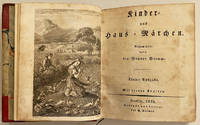
1825BB116<b>GRIMM</b> Jacob 1785-1863 and <b>GRIMM</b> Wilhelm 1786-1859. <br /><i><b>Kinder- und Haus-M</b></i><i><b>ä</b></i><i><b>rchen</b></i>. <br />Berlin: G. Reimer 1825. <br />Seven page illustrations by Ludwig Emil Grimm 1790-1863 comprising scenes from Mary's Child Hansel & Gretel Cinderella Little Red Riding Hood Sleeping Beauty Snow White and the Goose Girl.<br />Thick 12mo. iv 316 pp.; early 3/4 red leather marbled boards. The spine title misspelt "Hans Märchen" instead of "Haus".<br /><br />This is the very rare <b>first "Kleine Ausgabe"</b> i.e. <i>Popular Edition</i> of Grimm's fairy tales <b>intended specifically for children</b> <b>to read themselves</b>. Inspired by the success of Cruikshank's popular English edition the Grimms released this version comprising a selection of 50 of their most popular tales in pocket-size format omitting the critical apparatus of earlier editions and adding illustrations. <br />The earliest version of their Fairy Tales 1812-1815 was chiefly philological and unillustrated; the next edition 1819 was re-edited and written for parents to read these stories aloud to the child. G. Reimer hardcover
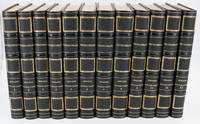
184991066Paris: EugèneVictor Penaud frères 1849. Fine. With plates from the first illustrated edition and a letter by Chateaubriand: ""but I am dead utterly dead"" Eugène Victor Penaud frères Paris 1849-1850 ; 14 avril 1839 lettre manuscrite 13.7 x 21.2 cm 12 volumes reliés et une lettre signée Rare and sought-after first edition first issue with exceptionally added plates from the first illustrated edition published that same year. 34 full-page engravings after Demoraine Gagnier Staal and engraved by F. Delannoy. Includes the subscribers list and the foreword which will be removed for the second issue when the remainder of this edition was bought by another publisher Dion-Lambert. It also features the pagination error in volume two: page 164 instead of 364. With a scribal letter by the author bearing his autograph signature. One page written in black ink on a leaf. Slightly darkened at the upper edge with occasional foxing and the usual folds. Black half-morocco bindings flat spines with double gilt fillets and double blind-stamped compartments black paper boards slight superficial rubbing to some boards marbled paper pastedowns and endpapers sprinkled edges; contemporary bindings. Sparse foxing. Exceptional prophetic and macabre letter by François-René de Chateaubriand. Signed with the authors faltering hand this apparently unpublished letter was penned by his secretary. Black half-morocco bindings flat spines with double gilt fillets and double blind-stamped compartments black paper boards slight superficial rubbing to some boards marbled paper pastedowns and endpapers sprinkled edges; contemporary bindings. Sparse foxing. You will recognise the hand of Pilorge whom I employ to replace my own suffering from gout. I shall read your recollections with the greatest pleasure but as for me I am dead utterly dead and if I were required to write a single word in a paper I would sooner be buried a thousand feet underground. I am done with life; it would be a sweet thing indeed to rise again if only to be of some use to you Rest assured that no one will take a more genuine interest nor share more wholeheartedly in your success than I shall. Entirely yours from the depths of my grave Chateaubriand 14 April 1839. This letter was dictated by the author to his secretary who provided invaluable assistance in the very preparation of the Mémoires: Having remained in Chateaubriands service for twenty-five years Hyacinthe Pilorge was the principal hand behind the transcription of the Mémoires doutre-tombe. His task was to make a legible copy of Chateaubriands texts progressively transcribing everything his master wrote or dictated. Chateaubriand revised and corrected from these copies and when the newly written pages became excessively amended Pilorge would write a new copy. Pilorge was tasked in 1840 of transcribing the first complete copy of the Mémoires doutre-tombe. For many years this manuscript served as the reference text. It comprised over four thousand pages assembled by quires and kept in cardboard folders with each leaf designed to be corrected moved or replaced at will. Once this monumental task was completed in 1841 Chateaubriand set his work aside for some time. Yet thanks to its highly adaptable structure the Mémoires doutre-tombe continue to stand as a living evolving work a perpetual work in progress. Bibliothèque nationale de France The recipient of the letter is the author of Souvenirs which Chateaubriand here declines to promote. The writer speaks as though from beyond the grave almost ten years before his actual death: as for me I am dead utterly dead and if I were required to write a single word in a paper I would sooner be buried a thousand feet underground. I am done with life; it would be a sweet thing indeed to rise again if only to be of some use to you. These masterful lines carry the humour so often encountered in the pages of the Mémoires which André Lebois describe EugèneVictor Penaud frères hardcover
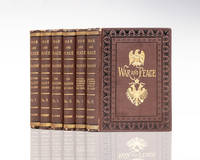
1886149532New York: William S. Gottsberger Publisher 1886. First edition in English of Tolstoy's masterpiece a pillar of world literature. Octavo six volumes in the publisher's original pictorial brown cloth stamped in gilt and black brown coated endpapers with the cursive imprint in each part. Translated by Clara Bell. In near fine condition. Housed in two custom marbled slipcases. An exceptional set of Tolstoy's masterpiece one of the finest we have seen. Widely considered the greatest novel ever written War and Peace is at once an epic of the Napoleonic Wars a philosophical study and a celebration of the human spirit. Tolstoys genius is seen clearly in the multitude of characters in this massive chronicleall of them fully realized and equally memorable. Out of this complex narrative emerges a profound examination of the individuals place in the historical process one that makes it clear why Thomas Mann praised Tolstoy for his Homeric powers and placed War and Peace in the same category as the Iliad: "To read him . . . is to find ones way home . . . to everything within us that is fundamental and sane." "There remains the greatest of all novelists--for what else can we call the author of War and Peace" Virginia Woolf. William S. Gottsberger, Publisher hardcover
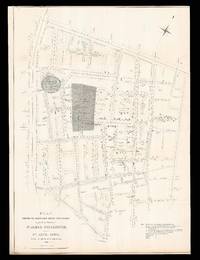
185516264London: HMSO 1855. 810 by 580mm. 32 by 22.75 inches. Folding lithograph plan. Rare epidemiological plan of Soho that accompanied the General Board of Health's exhaustive report into the 1854 Broad Street cholera outbreak. Cholera is a contagious disease caused by the bacterium vibrio cholerae. The bacteria lives in warm salty stagnant waters and is contracted when an individual ingests water or food contaminated with the bacteria. In the most severe strains the bacteria multiplies dramatically within the individual's gut causing the intestine to release increasing amounts of water leading to severe diarrhoea vomiting and rapid loss of the fluids and can if untreated lead to death within 24 hours. The majority of epidemics are caused when the faecal matter of an infected individual contaminates the water supply. It has been estimated that since the beginning of the nineteenth century cholera has been responsible for some 50 million deaths and although relatively simple rehydration treatments are now readily available according to the World Health Organisation some 120000 people a year still die from the disease. The Broad Street outbreak The London epidemic of 1853-54 was part of the larger 1846-1860 cholera pandemic - the third such pandemic to occur since 1817 - and the second time that the disease had spread to British shores. The Broad Street outbreak which was to be traced by Dr John Snow to a contaminated water pump outside number 40 Broad Street was a particularly virulent strain and would result in the deaths of 500 people over a period of just ten days; by the end of the outbreak a total of 619 people would have succumbed to cholera leading the Observer newspaper to note that "such mortality in so short a time is almost unparalleled in this country". The Broad Street outbreak led to the publication of two reports and a monograph: The General Board of Health BoH The Report on the Cholera Epidemic of 1854 1855; The Cholera Inquiry Committee 1855 set up by the Parish of St James's; and Doctor John Snow On the Mode and Communication of Cholera 2nd edition 1855. Although Snow's work is now seen as one of the foundation stones of epidemiology its argument - that cholera was a waterborne disease - was not widely held by the Victorian medical establishment with prominent people such as Edwin Chadwick head of the first General Board of Health expounding the view that cholera was an airborne disease brought about by foul odours caused by unsanitary conditions. Although Snow was to prove that the airborne hypothesis was erroneous the 'miasmatic' theory with its instance that "all smell is disease" would be the catalyst for many of the great municipal sanitary improvements - such as Bazalgette's great sewer - carried out during the Victorian era. Formation of the General Board of Health In 1848 Parliament passed the Public Health Act which instituted the Board of Health for a period of five years with powers to sanction expenditure for sanitary improvements requested by local government and in the event of an epidemic to provide guidance to the government's response. The board was headed by and was the brainchild of Edwin Chadwick whose 1842 General report on the Sanitary condition of the Labouring Population of Great Britain has been called the "fundamental document on modern public health" Rosen. "The creation of the Board of Health was a high point of the great Victorian enterprise of sanitary reform whose central idea was that environmental circumstances particularly pollution of the air and water defective sanitation dampness filth and overcrowding were causes of disease particularly epidemic disease and these diseases often killed the wage earners left poor working families impoverished pushed widows and orphans into workhouses and undermined the moral fibre of the working classes" Paneth. Although the Board was successful in enacting a great many sanitary improvements over the next five years Chadwick's brusque and arrogant manner led to the board's charter not being renewed by Parliament and on 31st July 1854 the members of the board were dismissed. Unfortunately for the government the disbanding of the board coincided with a sharp increase in the number of cholera cases in London from 1 a week to 133 a week during the month of July. On Augsut 1st Parliament instituted another but much weaker Board of Health: its charter had to be renewed annually and consisted of only one board member which had to be filled by a sitting Member of Parliament. The MP chosen was Sir Benjamin Hall who by dint of not being Chadwick was deemed eminently qualified for the job; by the time he assumed his role on the 12th August cases of cholera in London had increased to 644 a week. The Board of Health's Cholera Investigation On the 13th August Hall met with his advisory council which he had rapidly put together the council consisted of some of the most eminent medical practitioners of the day including: John Ayrton Paris and James Alderson president and treasurer respectively of the Royal College of Physicians; William Lawrence vice-president of the Royal College of Surgeons; James Clark physician ordinary to the Queen; Benjamin Babington founder and president of the London Epidemiological Society; and William Farr compiler of the Weekly Returns which included among other statistics deaths and cause of death - a resource that greatly aided Snow in his research. The council divided itself into three sub committees: Committee for Scientific Inquiries CSI which would be responsible for the majority of the cholera report; the Committee for Treatments; and the Committee for Foreign Correspondence. The work of the CSI started on the 5th September 1854 when Drs Fraser Hughes and Ludlow began house to house investigations of the Golden Square area around the same time that Snow was also commencing his investigations; and three days before St James's parish would remove the handle from the water pump on Broad Street on the advice of Snow. The report details some 800 houses listing their inhabitants any deaths from cholera and the sanitary state of the premises which was often terrible and included the condition of any cesspools "bad-smells from water-closets" and untrapped drains. The house to house investigations were supplemented by the scientific report. Hall employed three men to carry out investigations for the committee: James Glaisher superintendent of the magnetic and meteorological department at Greenwich and a founder of the British Meteorological Society; Richard Dundas Thomson professor of chemistry at St. Thomas Hospital; and Arthur Hill Hassall author of the first textbook of microscopic anatomy in English 1846 and famed for his revelations through microscopy of the extraordinarily frequent contamination of food and water in London by adulterants and animalcules Paneth. Although Chadwick was no longer in charge a brief look at the committee's make up clearly shows that the sanitarians still dominated. Their belief that the atmosphere was critical in the spread of disease is demonstrated by the fact that almost a third of the scientific report contains the investigations of meteorologist James Glashier. The Map The map that accompanies the report is a great deal larger and includes much more information than the map that Snow produced for his monograph. Based on the map produced by the Metropolitan Commission of Sewers which was also published in the report carried out by the St James's Parish it covers a much greater area and marks not only cholera deaths and pump locations but also: house numbers new and old sewers sewer grates trapped and untrapped side entrances and ventilators. The map has been updated with the number of cholera deaths in the area tracing people who were hospitalised and those that worked or visited the area. To the upper left are two shaded areas. The first a circle which bisects Little Marlborough Street titled: The erroneously supposed position of the ancient plague pit shewn in the map of the Commissioners of Sewers and the second a rectangle titled: Extent of Craven Estate corresponding with site of pest-field three acres two chains which covers much of Marshall Street and houses either side and ends just west of the water pump on Broad Street - the epicentre of the outbreak. Both sites mark supposed burial pits dug during the Great Plague of 1665. Many had argued that the disturbance of the pits when new sewers where dug in the 1840s and 1850s was responsible for the severity of the Golden Square outbreak. However this theory is conclusively dismissed in the report stating that no burial remains were encountered when the sewers were dug. A comparison of the maps that accompany Snow's monogram and the BoH's report clearly illustrates the authors' varying approach to the epidemic. Snow's map is narrowly focused on the centre of the outbreak and marks only the individual deaths marked by black coffin like lines to each house together with the position of the water pumps; Snow clearly wanting the viewer to draw the causal link between the Broad Street pump and its proximity to a large number of cholera deaths. The BoH's map on the other hand shows a much great area and contains much more information sewers drains plague pits etc. Snow's correlation just like the report that this map accompanied is lost under a mass of miasmic information. In hindsight the report just like the present map can be seen as too large and unwieldy the miasma theory at its heart "predicted to much and therefor was difficult to contradict or falsify"Paneth. In contrast Snow's economy of purpose his monograph at just 162 pages is almost a third the length of the BoH report shines through. "The strength of Snow's hypothesis lies in its exclusion of other alternatives; by insisting on the singular mode of transmission i.e. water Snow was able to imagine circumstances that would invalidate his hypothesis" Paneth. For example the exclusion of both the Broad Street Brewery works and the local Poor House from the cholera epidemic led Snow to investigate their water supply both drew them from independent sources; as did the death of a widow from cholera in faraway Hampstead who was so fond of the Broad Street water that she had her nephews send her bottles of it. Snow is keen to challenge his hypothesis where ever possible alas the BoH report contains no such challenges with the authors suffering from a large degree of confirmation bias. Although the BoH report is now largely forgotten and its hypothesis discredited it was favourably received at the time and would be the catalyst for the creation of The Metropolitan Board of Works arguably the body whose policies would make the greatest impact on the health and wellbeing of Londoners in the nineteenth century. Setup by the head of the BoH Joseph Hall in 1855 it would be responsible for among other things the clearing of slums the creation of London's numerous parks and Bazalgette's great sewerage works. Rarity We are unaware of individual examples of the plan appearing on the market in the last fifty years. HMSO, unknown
18295146264London, The Trustees of the British Museum 1820-1829. Mit 2 Schabkunst-Porträts und 2 Holzschnitt-Vignetten. Gr.-2° (46 x 33,5 cm). Professionell restaurierte Pappbände der Zeit mit gedruckten Orig.-Papierrückenschildern.
1805007260London: E. Jackson and G. Kearsley 1805. First Edition. Quarter Calf. Cloth slipcase. Very Good. Scarce hand-colored copy of work two parts bound in one. Oblong 27 by 34.5 cm. 20 hand-colored etched plates. The prints are inspired by Boswell's "Journal of a Tour in the Hebrides with Samuel Johnson" which originally appeared in 1785. Additional plates include an engraved portrait of Johnson by Thomas Trotter two hand-colored Cruikshank plates satirizing life in Scotland and the seven etched plates from "Outlines of the Opposition Collected from the Designs of the Most Capital Jacobin Artists" published by Hannah Humphrey in 1794 -- these plates are not colored. Binding heavily rubbed along edges with some chipping and loss of paper pastedown. Calf abraded. Title written in ink on front cover. The etched plate series with a fair amount of light foxing. E. Jackson and G. Kearsley unknown
1813032473London: T. Egerton 1813. Book. Very Good. Quarter Leather. 2nd Edition. 12mo - over 6¾ - 7¾" tall. Three volumes. 2nd edition thus. Contemporary quarter brown calf with marbled boards gilt rules. Decorative gilt and bands to spine with labels expertly replaced. Brown top stain. Half titles not present. Armorial paper bookplate to endpaper. Sporadic foxing to endpapers and occasional inside leaves; otherwise text blocks are clean and square. Slight edge wear. Housed in fine sturdy brown slipcase. A very good rare set. . T. Egerton Hardcover
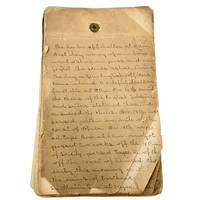
18990012049Donsol Pilar Manila Philippines New York Malta. Poor with no dust jacket. 1899-1901. Other. On offer is an unbelievable handwritten account of 19 months of action on the frontlines of the Philippine Insurrection the Philippine-American War between November 1899 and June 1901. An unknown American soldier writes of his experiences in a level of detail that cannot be overstated. This diary places the reader in the Philippines with shocking realism making this diary exceedingly rare. The 139 pages of this journalled account of events have been removed from a larger document and someone has pinned these loose pages together. This writing begins at the end of a sentence penned on presumably November 17 1899 and concludes half way through a sentence written on June 23 1901. There seem to be very few missing pages from within the journal and it reads very smoothly. The content is outstanding. The diary opens with our soldier diarist sailing from New York to the Philippines via the British Naval base at Gibraltar and the Suez Canal. He describes his experiences sailing sharing about a stop ashore in Malta a Thanksgiving spent at sea a concert enjoyed aboard the gunboat Nashville on the way to Manila and more. He arrives with his regiment in Manila on Dec 22 1899. The troops explore Manila and meet Filipino locals. In early January of 1900 they receive orders to head to southern Luzuon on the Kobbe Expedition which refers to General William Kobbes Expedition to Bicolandia. This expedition was in response to an urgent order from Washington to open up hemp ports of Southern Luzon due to an American hemp shortage. The problem was the port towns were largely controlled by Filipino Insurgents. Our diarist provides absolutely remarkable detail about Americas role in defeating the Insurgents and the tragedy of the Filipino peoples experience. Context indicates that our diarist was possibly a member of the 43rd Volunteer Infantry Regiments USV Company A. An excerpt that provides a sense of how our soldier explains the circumstances in the Philippines follows: Jan 16th we got the order to pack up and get ready to leave Mikata and to proceed to the Southern part of Luzon we were put aboard the transport Hancock which was at anchor in the Bay of Manila All combined we were named the Kobbe Expedition to the Southern Luzon to open up the Hemp ports and protect the natives from the Insurgents down there On the 21st of Jan 1900 our boats dropped anchor in a bay named the bay of Sorsogon in the Province of Albay All over this province there are large gangs of Insurgents holding the towns so at many towns our boys had a hard fight with the Insurgents before they could take the towns and the gun boat had to shell many of the towns. Our Regt. Occupied nine towns. Our detachment of A and D. Co. Were taken to a town named Donsol the gunboat Helena took us ashore from the Hancock On their arrival ashore they were met by a crowd of Philippinos. They had an order from the officers of the Insurgents it read saying that they would not haul down their colors nor surrender for three days. So our Major returned to the gunboat and a short conversation was held with the officers of the gun-boat and it was decided to prepare the gun boat for action and land all of us. If the Insurgents fired one shot at us the gun-boat would shell the town The hills were full of fleeing people. A detail of men were sent out on the hills at once then the Insurgents fired their first shot at us. Our boys had a warm fight for 15 minutes. They found the hills well entrenched and also found one big cannon. Lots of spears Bolas and wooden guns. They returned to town bringing in a few prisoners. A scouting party was seent and they saw a lot of Philippinos fleeing to the mountains. This town had a population of 10000 and three hundred were Insurrectors. The next thing we done was to find ourselves some good houses to live in. Outposts were put out all around the town. A few natives came across our post for a few nights and on the 22th Jan the Insurgents paid our town a visit setting fire to one of the big houses where our men were sleeping. Our men got out of the house without anyone being hurt. We surrounded the town fired a few volleys . Later in January our soldiers regiment goes on the first of many missions all of which he describes in glaring detail. On this mission the troops attempt to leave Donsol for Pilar when they run into trouble as the connecting bridge was destroyed by Insurgents. They make it to Pilar and find the town has been deserted. As they march back to Donsol they find someone has lit the bridge ablaze: Jan 28th We had a very hard time crossing the bridge burning our shoes and legs but we got safely on the Donsol side before the bridge fell with a crash into the river. We marched on we heard several shots from the Mauser and Remington rifles. Next we discovered a big fire and a call to arms and fire call was sounded The fire of the Insurgents got heavier. Our Major gave an order not to fire. He was going out in the front of our lines. He went out with a detail of men and discovered that our town was surrounded and the hills were full of Insurgents. He fired a few volleys then he came into town. The Insurgents answered him by firing a cannon. Then the Insurgents gave a yell and started to advance and we kept quiet and let them get close to our lines. Then we got the order to commence firing and the boys opened up all around the town and we soon put the Insurgents to flight firing a few shots as they ran. Next morning we discovered a few dead Insurgents close to our lines. The Insurgents almost always carry their dead and wounded along with them in their flight Our soldier does an absolutely phenomenal job of describing not only the day-to-day in Donsol where he spends majority of his time but also the various missions in which he participates. His words paint a fulsome picture of the war: 21st Feb at noon our Major asked for a detachment of men to volunteer to go up the river on a scouting expedition. I along with 12 more men went out of our company and 12 out of D. Co. Along with Capt. Hart of D. Co. And our Major left Donsol in a hard paddle boat and one white boat in tow On our way up the river we could see high hills on each side and the river was very narrow. There were many Insurgents outposts in the high trees all the way up and we fired at every one we saw. We went up a distance of 8 miles before we thought of coming home as it was getting late We had traveled one mile on our homeward way when the Insurgents fired on us from the left hand ashore. Our men in the rear boat fired a volley into the two Insurgents and were taking good aim for a second volley when the hills fairly echoed with the yells from the Insurgents. They then opened up on the right hand side which was aimed at the white boat hitting one of our men our company in the head and he was killed instantly. Then we answered their shots from each of our boats and from that time until we got back to Donsol we were under the hot fire of the Insurgents we could see the hills full of Insurgents and we had plenty to shoot at. We made every shot count. The insurgents even fired rocks at us from the high hills . More texture is added when our soldier discusses aspects of the war that dont involve active fire. Some examples follow: March 5th Gen Kobbe of the 8th Army Cor was here on a visit and he said these two companies were a very industrious lot of men and that the building of the stocade and trenches was a very sensible work he also brought us 17 of the Battery G 3rd Artillery men and one Hotch Kiss gun for reinforcements. April 10th the mail boat was here bringing the report of Gen. Pawa likely Jose Ignacio Paua an Insurgent Gen in Command of the Insurgent troops through this province. He surrender to our Colonel in Legaspi Legazpi and was sent to the Military Prison in Manila. April 21st We took a long march across the hills in a round about manner to a town named Sevilla merely an Insurgent camp. The town was deserted on our arrival. Fires were still burning in the houses. Everything was just as they had dropped it in their flight. We passed through the town and discovered many traps laid in the roads for us. One trap was an arrow trap on each side of the path in the bushes and by pulling a strong the arrows would stick into anyone going down the path. None of their traps caught us. Our soldier writes frequently about expeditions for which he volunteers. He describes a mission to Banningaran sic. En route the men captured Captain Hernandiz sic; possibly Adriano Hernández y Dayot and his family before being caught unprepared by the Insurgents who severely injured one of the American sargeants. On their hike back to Donsol they are again attacked by the Insurgents this time caught off guard as they attacked from the rear. And so it goes for many more months. Our author describes the movements of the men with whom he is stationed his commanding officers and the various wins and setbacks of both the Americans and the Insurgents. In May of 1901 our soldier and his regiment begin the process of boarding a ship to return to America. There is of course never a straightforward path and there are many bumps in the road. However our soldier does eventually board a ship and begins again to describe his journey in detail. The diary cuts off abruptly mid-sentence on June 23 1901 as our soldier is describing being at sea with nothing but a sailboat in sight for miles. While we do not know our soldiers identity we do know he was safely heading home at the conclusion of his diary. We know he was a highly motivated volunteer soldier who displayed total buy-in to the mission of the Americans in the Philippines and we know he was a gifted writer penning his experiences with such texture and realism that the reader feels as though they too have been on the front lines of a bloody wet miserable war in the Philippines - fighting for America and for the displaced Philippino people forced to flee from the Insurgents to the mountains. This journal measures 8x5 inches and contains 139 single-sided sheets. The pages were all loose so the author has pinned them together with a single round-headed fastener post. There are no covers to this journal. As a result the first and last few pages show obvious and significant wear and tear including a large corner of the first page being completely ripped off obstructing the text. The handwriting is quite legible. Overall Fair to Poor. ; Manuscripts; 8vo 8" - 9" tall; 139 pages . unknown
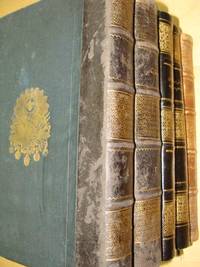
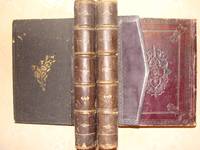
1883000521<p>Istanbul: Matbaa-i Bahriye the Navy press 1883 Book. Very Good. Hardcover. 1st Edition. 8vo - over 7¾ - 9¾" tall. THE MOST COMPREHENSIVE ENCYCLOPAEDIA IN THE OTTOMAN TURKISH ABOUT THE ARABIAN PENINSULA AND THE TOW HOLY SANCTUARIES IN HEDJAZ BY THE WELL-KNOWN AUTHOR WHO WAS EMPLOYED IN THE OTTOMAN ARMY IN HEJAZ IN C. 1865 AND THEN BECAME AN ADMIRAL IN THE OTTOMAN NAVY. EYUP SABRI PASHA WAS BORN IN TASALYA THESSALIA IN THE 19th C. AND DIED IN ISTANBUL IN 1890. HE IS BETTER KNOWN WITH HIS DESCRIPTIVE BOOKS ABOUT MECCA MEDINA THE ARABIAN PENINSULA AND THE WAHHABY ACTIVITIES BESIDE HIS RELIGIOUS BOOKS. HE WAS AWARE OF THE OFFICIAL ISSUES OF THE HEJAZ BECAUSE OF HIS BEING ACQUAINTED ON THE OFFICIAL CORREPONDENCE BETWEEN THE VILAYET OF HEJAZ AND THE CENTRAL AUTHORITY IN ISTANBUL Five parts in five volumes. Part 1 Mir'at Mecca in tow volumes. Vol. 1 44 Index pages 1 to 640 with lithographic plates of which tow are in colours on double pages and one gilted. Vol. 2 p. 45 to 58 index pages 641 to 1175 with lithographic plates of which one is in green and silver one unusual to be existing big folding plate in colours gilt and sprinkled in gold of the curtain of the gate of Ka'baa. One folding plan of the holy mosque in Mecca. The tow volumes of Mecca are in contemporary fine bindings with the arm of the Ottoman state and richly gilted spines. Part 2 Mir'at al Medina in tow volumes printed in 1886. Vol. 1 pages 1 to 698 with some diagrams and lithographic plates including one folding in green and silver. Vol. 2 8 index pages 699 to 1343 with a plan of the holy mosque in Medina. The tow volumes of Medina are in contemporary or possibly later fine Ottoman bindings with richly gilted spines. Part 3 Mir'at Jazirat al 'Arab View of the Arabian Peninsula one vol. printed in 1888. index 416 p. with 2 lithographic plates. Contemporary fine Ottoman binding with richly gilted spine. FINE SET WITH EXTRA PLATE WHICH IS VERY DIFFICULT TO EXIST. For other copies of this book see inventory no. 000276 000519 and 000520.</p> Matbaa-i Bahriye (the Navy press) hardcover
18931276951893. LAWRENCE T.E. LONGUS. Daphnis and Chloe: A Most Sweet and Pleasant Pastoral Romance for Young Ladies. London: Vale Press 1893. Quarto contemporary full black crushed morocco elaborately gilt-decorated spine and covers raised bands top edge gilt uncut. $15000.An exceptional association copy: the finely printed and beautifully illustrated Vale Press Daphnis and Chloeone of only 210 copies 200 of which were for sale with 36 charming woodcuts in the Italian style by Charles Ricketts and Charles Shannon with ""T.E.L.""likely in T.E. Lawrence's handfaintly penciled in the upper right corner of the front free endpaper and a note from recipient Charles Francis Bell describing the circumstances in which Lawrence presented this copy to him. Beautifully bound in full morocco-gilt by C. & C. McLeish.""There are works which will never cease to be reprinted and which artists will ever love to illustrate according to their own individual fancies"" Jules Claretie Preface. This classical Greek work whose author Longus has not been fully identified has been dated to the 2nd or early 3rd century CE. Described by one scholar as ""an unknown best seller"" Giles Barber Daphnis and Chloe is considered ""the original or earliest survivor"" of the idyllic/pastoral romance Hardin Love in a Green Shade 1. This large-format illustrated edition is one of the Vale Press' most impressive books. It uses the quaint 17th-century translation of Thornley designed to convert the lascivious tale into reading matter for young ladies. One homosexual passage is left in the original Greek. In the Art Nouveau style the illustrations by Ricketts and Shannon effectively capture Longus' combination of decadence and sweet innocence.Born in 1859 binder Charles McLeish was apprenticed to Andrew Grieve in Edinburgh then came to London in 1890 to work for Riviere. When Cobden-Sanderson founded the Doves Bindery in 1893 he hired McLeish as the firm's finisher. McLeish held that estimable position until 1909 when he left to go into partnership with his son Charles who had apprenticed under Roger de Coverly. Although the senior McLeish was no longer in the employ of Cobden-Sanderson all of the bindings that were signed ""Doves Bindery"" between 1909 and 1921 were actually done in the McLeish workshop. The work produced by the McLeishes was beautifully designed and impeccably executed as evidenced in the present volume. With publisher's scarce four-page prospectus bound in at rear. Bookplate of recipient art historian Charles Francis Bell with his handwritten note regarding the circumstances of Lawrence presenting this copy to him tipped to the front free endpaper: ""This book was bound by McLeish for Colonel T.E. Lawrence whose initials in pencil in his own writing are in the top corner of the opposite endpaper. It was given by him to me at All Souls College Oxford on November 16 1920. C.F. Bell."" Bell 1871-1966 was curator of the Department of Fine Art in the Ashmolean Museum Oxford where he met Lawrence when the latter had brought fragments of pottery into the Ashmolean for identification. The two became friends and frequently discussed their shared enthusiasm for Medieval art and architecture. Although the brevity and faintness of the initials on the front free endpaper make it difficult to verify it as being in Lawrence's hand it is consistent with Lawrence's known practice of initialing his own books.Mild offsetting from woodcuts; offsetting from morocco turn-ins partially obscuring penciled initials in upper corner of front free endpaper binding beautiful and fine. An excellent association copy with distinguished provenance. hardcover
1804007897London: Printed by Thomas Bensley for R. Bowyer 1804. First Edition. Full Calf. Very Good. One of the greatest of early 19th century hand-colored plate books and a monumental work of publishing just at the juncture that interest in Egypt and other areas of the Middle East was intensifying and these areas were also becoming more accessible to Europeans. Folio 47 by 33.5 cm. 96 hand-colored plates. Egypt volume 1801: 6 -- title for entire set title for the volume 102 2 pp. 48 color plates. Ottoman Empire volume 1803: 40 pp. 24 color plates. Palestine volume 1804: 47 1 pp. 24 color plates. Beautiful full speckled calf bound set. Boards with gilt floral patterned border. Red leather title on spine. Five raised spine bands ruled gilt decoration. Bindings are more modern but sympathetic to period -- in a style compatible with an early nineteenth binding. Condition: The bindings are generally fine but the second volume in particular does have some light spotting distinct from the original speckling. The leaves generally have light age toning around their perimeters and also finger smudging and at times a light film of soiling much of which can be mitigated with a simple eraser if one wishes to make the effort. The scattered fox marks and the few dampstains generally small and relatively inconspicuous can't be so eliminated though. Moderate offsetting but if anything on the lighter side. The plates even with the occasional fox mark are invariably bright and we think most would deem them rather clean. A few minor closed tears 2-3mm and not ones likely to increase in length with circumspect handling. Overall this is a beautiful set that in some respects is Near Fine and others merely Very Good in our view. Printed by Thomas Bensley for R. Bowyer unknown
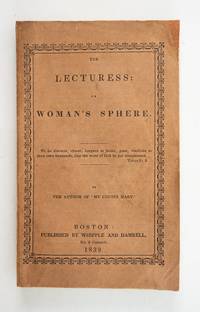
1839ST20899Boston: Whipple and Damrell 1839. FIRST EDITION. 155 x 95 mm. 6 x 3 3/4". 124 pp. 1 leaf ads. <br/> Original brown printed paper wrappers flat spine inside wrappers and back cover with ads discreet repairs to upper corners of front cover. Housed in a fine custom made green cloth drop-back box. Wright I 1081. For the author see: Oxford Companion to Women's Writing in the United States pp. 371-72; Feminist Companion to Literature in English pp. 474-75. See also: Ganter "The Unexceptional Eloquence of Sarah Josepha Hale's 'The Lecturess'" in "Journal of the American Antiquarian Society" 2004. Covers vaguely soiled front corners a little creased text with frequent foxing sometimes noticeable due to paper quality but still an extremely well-preserved copy of a fragile item with joints and hinges as good as new.<br/> <br/> In an excellent state of preservation in its original wrappers this is the first known American novel featuring a women's rights activist written by one of the 19th century's leading editors and tastemakers. The story follows Marian Gaylord an educated and outspoken young woman who earns a living by lecturing on the importance of female education. As the story progresses Marian's attempts to step into public life bring serious personal consequences affecting her reputation relationships and health. At the novel's end Marian on her deathbed repents her lifestyle to a close friend telling her that "approaching death has taught me how wrong were all my opinions. It taught me that true pride true independence in a woman is to fill the place which her God assigns her; to make her husband's happiness her own and to yield her will to his in all things." Despite the author's apparent belief that woman's natural place is in the home Sarah Josepha Hale 1788-1879 was herself a successful career woman and seems to have been as progressive as often as she was conservative on a number of issues related to women's rights. According to ANB "In an age when women were regarded as natural invalids confined to the home she urged the necessity for women doctors women nurses and women teachers and helped found schools for their training; she advocated physical exercise and fresh air for women sensible dress and an end to tight lacing. In addition she supported the use of any labor-saving devices that would make domestic work easier such as the sewing machine and the washing machine and in spite of religious opposition she fought for the use of anesthesia for surgery and in childbirth." Hale was not however a suffragist and the "Oxford Companion to Women's Writing in the United States" notes that "Debate continues about the nature of Hale's feminism. Some scholars criticize her as a proponent of 'women's sphere'; as a believer in women's moral superiority she expected women to provide spiritual leadership for western civilization and for the Christianization of the world. . . . But she disliked women public speakers abolitionists and women's rights proponents. Yet she advocated property rights for married women female doctors and in her later life support for working women." Despite displaying considerable ambivalence in the world of emerging feminism Hale is acknowledged by modern scholars as having an important role in literary history being "the most prominent American woman engaged in literary enterprise in the mid-nineteenth century" and "the first of the great 'lady editors." Oxford Companion Widowed at the age of 34 and with five children to support Hale turned to writing to provide a living for her family. Her first successful novel "Northwood" 1827 is considered to be "one of the first American novels to deal with the question of slavery." ANB She also wrote children's books and poetry including the popular nursery rhyme "Mary Had a Little Lamb." Her success led to editorial positions at "Ladies' Magazine" and "Godey's Lady's Book" where she remained for 40 years. There she made her most enduring marks on American culture publishing original work by American writers particularly women campaigning for causes such as the Bunker Hill Monument and a national Thanksgiving Day and promoting female education including the founding of Vassar College. "The Lecturess" is a very rare book in the marketplace: we could find just one rather dog-eared copy sold at auction fetching $6930 at Christie's in 2023. Whipple and Damrell unknown
1881SET25-A-3London : Trustees of the British Museum 1881-1904. Fine Binding. Very Good Indeed. 13.5" by 10". None. An extensive and comprehensive catalogue of the printed books included in the British Museum at the end of the nineteenth century in a fine binding. Organised alphabetically by author. The volumes contained in this set cover authors A. through to Z. in forty-seven volumes along with nine volumes of supplements to the main catalogue. Also included are one volume containing a catalogue of every edition of the Bible in the posession of the British Museum at the time of publication 1892 a volume on the periodicals in the collection 1885 and two volumes containing a list of the laws statutes and treaties of England 1900 and France and Germany 1898. During its long history the British Museum Library/British Library has published several catalogues describing its collections of printed books periodicals and ephemera. Each edition is inclusive incorporating all material included in previous versions. BL This edition was originally published in three-hundred and ninety-three parts with a forty-four part supplement and is referred to by the British Library and British Museum as GK1. Complete in sixty volumes. In half-morocco bindings. Externally mainly smart although with some rubbing in places particularly to the spines and a few marks to the boards. Dusting to textblock edges. Five joints of one hundred and twenty starting. Internally generally firmly bound although slightly strained in places. Hinges of the third volume have failed and textblock is detached. Hinges are reinforced with cloth tape. Pages are mainly bright and clean with just some scattered light spotting in places. Very Good Indeed Trustees of the British Museum unknown
1842098065Great Britain 1842. A near complete run from 1842 to 1930 lacking only 3 half years Jan/Jun 1848 1899 & 1916 . 133 volumes. Books measures 13 x 9 inches or slightly larger 13 1/2 x 9 inches. 115 volumes bound in red quarter calf or red cloth with gilt title lettering. All these volumes are in very good clean firm condition. The other 18 volumes are bound in black half calf. Showing some minor wear occasional abrasion wear with minor loss. All in good firm condition. Generally all volumes are in very good clean firm condition. Internally extensively illustrated throughout many single page and folding plates occasional small library mark/stamp occasional minor defect or repair. Pages in very good clean condition throughout. A very nice clean well bound run. . Very Good Plus. Small Folio. hardcover
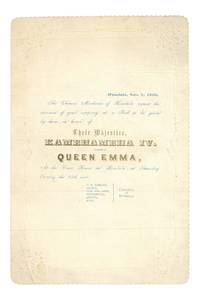
1856140946651Honolulu HI: Committee of Invitation 1856. Near Fine. 5.8"x7.25. Single sheet with scalloped edges and decorative embossed borders with text printed in gold and blue. Near Fine with minor soiling light toning and old folds. <p>One of the earliest printed works commissioned by Chinese immigrants in what is now the United States. While the first Chinese explorers reached Hawaii in the late 18th century Chinese immigration to any part of the United States began in appreciable numbers about the time of the California Gold Rush. While much writing about Chinese immigrants survives from the mid-19th century almost nothing survives by any of those immigrants. This invitation represents a rare and very early instance of such printed matter. <p>The Great Chinese Merchants' Ball of 1856 was thrown in celebration of the marriage of Liholiho Kamehameha IV to Emma Naea Rooke. Following a series of celebrations including balls thrown by the American Club and German Club roughly three dozen Cantonese in Honolulu felt that it was necessary for them if they were to succeed in the mercantile trade during the reign of the king to have a personal relationship with him. They decided to demonstrate the depth of their loyalty to the throne by presenting an extravaganza that would surpass those given by the Americans and Germans. <p>A respected Cantonese merchant Chun Afong who was proficient in the Hawaiian and English languages and conversant with Western manners was persuaded to head the committee of arrangements for a ball. Afong would eventually become the first Chinese millionaire in Hawaii. <p>The Chinese Merchants' Ball was one of the most Hawaiian elaborate affairs of the 1850s. It was a key event in Honolulu's social history where for the first time "East" and "West" met as social equals greatly solidifying the Chinese community's position in Honolulu. <p>A rare survival of an invitation to an important social event in Hawaiian cultural history as well as an unusually early document printed by Chinese immigrants in America. Committee of Invitation unknown
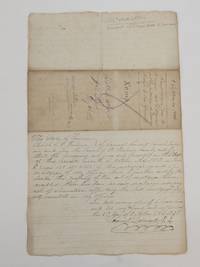
1838291492New Orleans 1838. unbound. very good. Rare autograph document signed: The Citizens Bank of Louisiana trades shares in the capitol stock of the bank for parcels of land and slaves. Folio 4 pages City and Parish of New Orleans Louisiana September 8th 1838 whereby Demey Kemp and wife who are wealthy land owners with many slaves enters into a contract with Victorin Patin President of the Citizens Bank of Louisiana to secure the sum of fifteen-hundred dollars the amount equal to fifteen shares in the Capital Stock of said bank with fifteen shares in an additional allowance of stock for the following described property to wit as adjudicated by Judge Samuel Leonard and certified by Theodore Seghers notary public in small part: ".that including four tracts or parcels of land in the Parish of St. Helena containing two-thousand and forty acres; a tract of land situated on the River Licksaw containing six-hundred acres. Likewise further: Demey Kemp declares that one of the Slaves therein mentioned and named Adelin aged nine years has died since appraisement; and he referred to the title papers in the possession of the said Bank to show from when the appraised property is derived; with the exception of twenty-eight slaves who were born on the property. A mortgage is granted by the said Demey Kemp . to secure fifteen additional shares allowerd on his subscription in the Capital Stock of the Citizens Bank of Louisiana. According to the Judge's certificate there is no mortgage in this office on the different described properties except the mortgage granted in the sum of two-hundred schares in the Capital Stock of said Bank . then this said . Demey Kemp will be recognized as a stockholder of the Citizens Bank of Louisiana for fifteen additional shares." This document has been certified by Justice Samuel Leonard on verso with his signature and embossed seal October 6th 1938. Condition: usual folds with light soiling and minor toning on the Court Filing page: Very good.<br/> <br/> Between 1831 and 1866 Citizens Bank of Louisiana currently owned by J.P. Morgan Chase & Co. accepted 13000 slaves as collateral on loans and repossessed 1250 enslaved individuals on loans that plantation owners defaulted on. Though this information is readily available through extensive historical research much of it financed by J.P. Morgan Chase and personally authorized by Jamie Dimon 2003-2005 this is the first document we have ever encountered whereby Citizens Bank of Louisiana is knowingly trading stock in their bank for slaves to shareholders.<br/> <br/> unknown
1883000519<p>Istanbul: Matbaa-i Bahriye the Navy press 1883 Book. Very Good. Hardcover. 1st Edition. 8vo - over 7¾ - 9¾" tall. THE MOST COMPREHENSIVE ENCYCLOPAEDIA IN THE OTTOMAN TURKISH ABOUT THE ARABIAN PENINSULA AND THE TOW HOLY SANCTUARIES IN HEDJAZ BY THE WELL-KNOWN AUTHOR WHO WAS EMPLOYED IN THE OTTOMAN ARMY IN HEJAZ IN C. 1865 AND THEN BECAME AN ADMIRAL IN THE OTTOMAN NAVY. EYUP SABRI PASHA WAS BORN IN TASALYA THESSALIA IN THE 19th C. AND DIED IN ISTANBUL IN 1890. HE IS BETTER KNOWN WITH HIS DESCRIPTIVE BOOKS ABOUT MECCA MEDINA THE ARABIAN PENINSULA AND THE WAHHABY ACTIVITIES BESIDE HIS RELIGIOUS BOOKS. HE WAS AWARE OF THE OFFICIAL ISSUES OF THE HEJAZ BECAUSE OF HIS BEING ACQUAINTED ON THE OFFICIAL CORREPONDENCE BETWEEN THE VILAYET OF HEJAZ AND THE CENTRAL AUTHORITY IN ISTANBUL. PART 1 MIR'AT MECCA TOW SECTIONS IN ONE VOLUME. 22 INDEX 1175 P WITH SEVERAL LITHOGRAPHIC PLATES OF WHICH TOW ARE IN COLOURS. CONTEMPORARY FULL LEATHER OTTOMAN BINDING WITH FLAP. PART 2 MIR'AT AL MEDINA TOW SECTIONS IN TOW VOLUMES. PRINTED IN 1886. VOL.1 8 INDEX PAGES 1 TO 642 WITH 3 LITHOGRAPHIC PLATES OF WHICH ONE IS FOLDING AND IN COLOURS. VOL.2 PAGES 643 TO 1343 WITH ONE FOLDING PLAN OF THE HOLY MOSQUE IN MEDINA AND ONE DIAGRAM. PART 3 MIR'AT JAZIRAT AL 'ARAB VIEW OF THE ARABIAN PENINSULA INDEX 416 P WITH 2 LITHOGRAPHIC PLATES. PRINTED IN 1888. THE THREE VOLUMES OF MIR'AT AL MEDINA AND MIR'AT JAZIRAT AL 'ARAB ARE IN SIMILAR GILTED OTTOMAN BINDINGS. Tall 8vo. THE FIRST AND ONLY EDITION. For other set of this book see no. 000276 in our inventory.</p> Matbaa-i Bahriye (the Navy press) hardcover
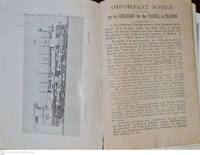
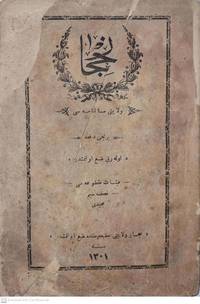
1900000209<p>10 p. Of text in English Ottoman Turkish Arabic Urdu and Russian with 9 full page plates. A hajj travel brochure printed in İstanbul supposed to be by an Armenian press in c. 1900. Rare</p> An Armenian press paperback
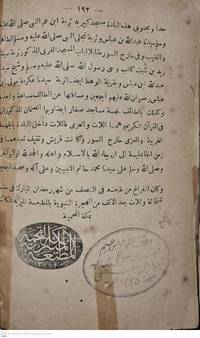
1885000205192 p. Arabic text a rare print. Stamp of the general Ibrahim Rif'at Pasha in 1335 an endorsement copy. With several notes during the copy. Modern binding. Hejaz printing house hardcover
1891000206310 p. Ottoman Turkish text. Ownership by Mesud Qasim zaynal Ali Riza in jeddah the son of the Ottoman delegate of Jeddah. Hejaz printing house hardcover
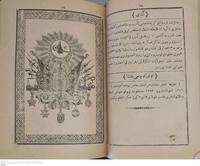
1885000210<p>182 pages. Ottoman Turkish text. The first official yearbook printed by a lithographic press in Mecca. An early work printed in the Hejaz. Rare.</p> Lithograph press hardcover
1839965Z28DLondon: The Railway Times Office 1839-63. First edition. Leather. Very Good Indeed. 11" by 9". None stated. An impressive run of early issues of the 'Railway Times' periodical an important railway periodical which documented developments and current news in the railway industry during the 1800s. A beautifully bound set of a very scarce periodical. An extensive twenty-nine volume set featuring a collection of the 'Railway Times' periodical from 1839-1863. All being the first edition. The periodical provides an impressive historical account of the current news and developments in the railway industry during the early to mid nineteenth century. The articles range from finances stock information new patents and inventions accidents and updates on railways from across the globe. Notable articles include; an article on Mr Robert Stephenson's new 1842 locomotive which proposed to use less fuel and a Testimonial to Isambard Kingdom Brunel the legendary engineer. This set includes; '1839' Vol II No. 71-72 85-94 and '1840' Vol III No. 27-41 and Vol II No. 52 of the 'Railways Magazine & Commercial Journal' bound into one volume. The rest of the years are bound over two volumes and feature complete runs of the magazine for that year with these being; '1841' Vol I- No.157 Vol III No. 1 - No.182 Vol Iv-No. 26. Vol II- No.183 Vol IV No.27 - No. 208 Vol IV No.52. '1842' Vol I- No. 209 Vol IV No.1 - No.234 Vol V-No.26. Vol II- No.235 Vol V No.27 - No.261 Vol V No.53. '1846' Vol I- No.418 Vol IX No.1 - No.443 Vol IX No.26. Vol II- nO.44 Vol IX No.27 - No.469 Vol IX No. 52. '1847' Vol I- No.470 Vol X No.1 - No.495 Vol X No.26. Vol II- No.496. Vol X No.27 - No.521 Vol X No.52. '1854' Vol I - No.836 Vol XVII No.1 - No.860 Vol XVII No.25.Vol II - No.861 Vol XXII No.26 - No.887 Vol XVII No. 52. '1855' Vol I - No.888 Vol xviii No.1 - No.913 Vol xviii No.26. Vol II - No. 914 Vol XVII No.27-No.939 Vol XVIII No. 52. '1856' Vol I - No. 940 Vol XIX No.1 - No.965 Vol XIX No.26.Vol II - No. 966 Vol XIX No.27 - No.991 Vol XIX No.52. '1857' Vol I- No.992 Vol XX No.1 - No.1017 Vol XX No.26. Vol II - No.1018 Vol XX No.27 - No.1043 Vol XX No.52. No. 18-22 have been misnumbered with No.18 numbered twice and missing No.21 however the work is complete with the pagination continuous as is expected. '1858' Vol I-No.1044 Vol XXI No.1 - No.1069 Vol XXI No.26. Two of the issues are numbered '23' but nothing is lacking. Vol II- No.1070 Vol XXI No.27-No.1094 Vol XXI No.52. '1859' Vol I- No.1095 Vol XXII No.1 - No.1120 Vol XXII No.26. Vol II - No.1121 Vol XXII No.27 - No.1147 Vol XXII No.53. '1860' Vol I- No.1148 Vol XXIII No.1 - No.1173 XXIII No.26. Vol II- No.1174 XXIII No.27 - No.1199 Vol XXIII No.52. '1861' Vol I- No.1200 Vol XXIV No.1 - No.1225 Vol XXIV No.26.Vol II - No.1251 Vol XXIV No.27 - No.1251 XXIV No.52.'1862' Vol I - No.1252 Vol XXV No.1 - No.1277 Vol XXV No.26. Vol II - No.1278 Vol XXV No.27 - No.1303 Vol XXV No.52. '1863' Vol I - No.1305 Vol XXVI No.1 - No.1329 Vol XXVI No.26.Vol II - No.1330 Vol XXVI No.27 - No.1355 Vol XXVI No.52. Illustrated heavily with numerous monochrome vignettes and the occasional full page illustration. Volume '1854' contains a folding map to pp. 356. A very scarce and important periodical with this being some of the earliest examples of the magazine currently on the market. A beautifully bound and uniform set. Bound in modern crushed quarter morocco with cloth to the boards. Endpapers renewed.All pages and issues present after the 1839-40 volumes. The occasional article clipped. Bound in modern crushed quarter morocco with cloth to the boards. Endpapers renewed. Externally lovely with only very minimal edge wear and slight leans to the odd volume. Internally generally firmly bound with the title page to pp.22 to '1854' tender and minimal strain in places otherwise firmly bound. Pages generally bright with only light age toning to the odd volume. Pages generally clean with only the odd spot slightly heavier to '1855' the occasional ink mark to '1841' and a more significant tidemark to '1856' pp. 569. Very minimal handling marks and occasional 'Railway Times' stamps to all the volumes. The odd page closely cropped to '1839-40' and the odd small closed tear and chip to the extremities. Several articles have been clipped from the pages heavier to the earlier volumes. Minor ink notations to '1847'. Hand written notes written on separate papers inserted into the odd volume. All in all a beautifully bound set with generally clean and bright pages with only the odd clipped article and mark. Very Good Indeed The Railway Times Office hardcover