323 résultats
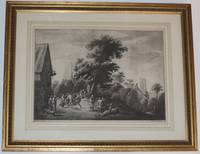
164921035Antwerp : Unknown 1649. Framed. Very Good. Based on a Teniers painting this is the original 1649 etching by Wenceslaus Hollar. One could suspect slight trimming of the margin but we will note that our measurements are the same as those of the Metropolitan Museum's copy. The print is floating on the backing and thus the entirety of the print revealed and attractively surrounded by tasteful matting and an appropriate complimentary gilt frame. Publisher unknown although it is quite possible Hollar was his own publisher. We think it likeliest that the print was done in Antwerp where the Flemish-born Hollar retreated in in 1646 from England because of the turmoil caused by the English Civil War. The print is 25 by 34.5 cm. With frame and matting 40 by 50 cm. We believe that the original etching meaning one printed in 1649 is quite scarce. Besides the Metropolitan Museum the only other copy of which we are aware is in the Royal Collection. The very narrow margin of the print has dusty soiling. There is a conspicuous closed tear running down the top center about 3 cm into the picture but luckily a less important area of the illustration. The tear is repaired or so we believe but it is undeniably visible. The gilded frame and matting are very attractive. Unknown unknown
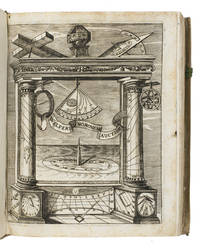
16723992Nuremberg 1672. 4to. Paulus Fürstens printed by Christoph Gerhard Contemporary parchment sewn on 3 supports with a hollow back each board with a frame of blind double fillets green cloth ties. With a finely engraved frontispiece an architectural gate with a wide variety of sundials and other astronomical instruments 2 title-pages each in a decorative frame built up from typographic ornaments 16 engraved plates 1 folding in the first part that for p. 48 repeated - at the end of vol. 2 - in accordance with the instructions to the binder and numerous mathematical illustrations and figures on 13 folding engraved plates lettered A-N in the second part. Further with letterpress tables on the integral leaves woodcut tailpieces and decorative gothic initials and headpieces built up from typographic ornaments. Set in fraktur types with incidental roman and Schwabacher. 2 volumes bound as 1. 12 88; 74 2 pp. Rare second edition 1st issue in 2 volumes extensively revised and enlarged of a mathematical study of the construction of sundials by Eberhard Welper the elder 1590-1664 first published in 1625 and here with useful additional observations and enlarged with a second part by Johann Christoph Sturm. Welper was born in Lohr near Marburg but studied in Strasbourg where he worked as a bookseller printer mathematician astrologer and astronomer. The first edition of the present work was one of his earliest publications. Sturm greatly expanded Welpers Gnomonica for the 1672 edition which was originally complete in the present two volumes. In 1681 Sturm added a third volume so the present two volumes were reissued with the third. Doppelmayer added a fourth volume in 1708.Occasionally browned but still in good condition. A rare 17th-centry work on sundials.l BMC STC 17th cen. W815 vols. 1-2; VD17 39:119761M & 39:119760D vols. 1-2 6 copies; Zimmer Astronomische Instrumente pp. 546 & 583; cf. Zimmer Astronomischen Literatur 5023 1625 ed.; not in Honeyman; Poggendorff; Wheeler gift. hardcover
165952753London: Printed for Tim. Garthwait at the little North doore of St. Paules 1659. Hardcover. Good- to very good condition. Octavo. 11 188 48 80pp. Bound in modern light brown full leather with gilt lettering and ruling on spine retaining original endpapers; raised bands. Reddish edges. Frontispiece engraving by Hollar. Fully engraved title page by Hollar with publisher's device. Decorative headpiece. Historiated and decorative initial. Second title page with publishers device. Decorative headpieces and initials.<br /> <br /> Three parts bound in one: 1. Choice Sermons Preacht on Several Eminent Occasions by Mr. John Hales of Eton College printed for Timothy Garthwait with an introduction "To The Reader" by John Pearson and a letter to Mr. Garthwait by Anthony Farindon 188pp.; 2. Walter Balcanqual's letters from the Synod of Dort to the Right Honourable Sir D. Carlton L. Embassador 48pp.; 3. Mr. Hales letters from the Synod of Dort to the Right Honourable Sir Dudley Carlton 80pp.<br /> <br /> Library plate on new front free endpaper with binder's sticker on inside front cover bottom edge near spine. Water staining of free endpapers frontispiece title page and block through page 61 though diminishing considerably after a few pages. Pages in second half of Balcanqual's letters and first few pages of Hales' letters with plane damp-staining light in Hale's letters. Block lightly age-toned. 51718. Printed for Tim. Garthwait at the little North doore of St. Paules hardcover
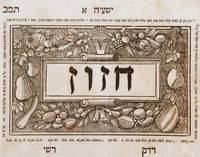
161952679Basel: Ludwig König 1619. First edition in part. Hardcover. Good. Eight parts in three volumes folio biblical texts and commentary in four parts continuously foliated; three supplemental sections each with separate foliation; Tiberias 1655 with separate pagination here bound after the Haftarot - Vol. 1: 6 title and prelims 1-228 1 sect. title 234-441 1 blank ff. Vol. 2: 1 sect. title 442-705 3 blank 707 sect. title-837 1 blank ff. Vol. 3: 839 half-title-881 1 blank 883-946; 8 Targum Yerushalmi; last leaf unfoliated; 67 Masorah 1 blank; 1 title 2-36 Haftarot ff.; 8 title and prelims 108pp. Despite the gap in foliation between the first and second parts and numerous errors in foliation throughout the Rabbinic Bible collates complete with all blanks noted in Prijs Die Basler hebräischen Drucke and the Haftarot bound at the end. Largely arranged in two columns of biblical texts in square font surrounded by commentaries in rabbinic Rashi font; biblical texts read from right to left. This copy with collective Hebrew title surrounded by biblical quotations in Hebrew set within elaborate woodcut architectural borders; brief preface in Hebrew by Abraham Braunschweig at the verso. Hebrew sectional titles set within the same woodcut borders for the three other biblical sections and the Haftarot with a plain letterpress half-title for the Five Megillot. Opening word of each biblical book set in large one-third to one-half page cartouche vignettes with elaborate woodcut borders and surrounding letterpress Hebrew text. Main title Jewish date chronogram = 5378 1618-1619. Near-contemporary half calf over speckled boards worn and rubbed; spines with raised bands gilt morocco lettering pieces and old paper labels heavily faded. About two-thirds of the text embrowned ranging from minimal to moderately heavy; worm tracing in a 1- by 2-inch section at leaves 541-553 affecting text. A good complete set notably containing the Ashkenazi Haftarot readings not found in all copies.<br /> <br /> Sixth Rabbinic Bible in Hebrew: Mikra'ot Gedolot edited by Johann Buxtorf I 1565-1629 professor of Hebrew at the University of Basel and the foremost Christian Hebraist of his era with the assistance of the Jewish scholars Abraham Braunschweig who served as the principal corrector and Mordechai Gumplin of Posen. This was "a truly audacious undertaking for his time" Burnett as no Christian scholar had yet attempted to edit the entire biblical corpus including the Aramaic versions Targumim and masoretic notes. Based mainly on the third Rabbinic Bible published by Daniel Bomberg at Venice in 1546-1548 the editor has carefully incorporated elements from two other Venetian editions. At the verso of the Latin title Buxtorf provides a detailed bibliographical excursus on the earlier Venetian editions and offers a tribute to Bomberg's industry by reprinting the colophon of the second Venetian Rabbinic Bible 1524-1525 at the conclusion of the masoretic appendix with text by the Hebrew grammarian and lexicographer Elijah Levita 1468 or 1469-1549 and a new introduction by Abraham Braunschweig. The design of the sectional titles and separate book title vignettes closely model those of the Venetian editions. "Buxtorf did not plan simply to reprint one of the existing Venice editions but rather to assemble the best features of them all into one work" and "to provide theologians with what he considered the most important tools for interpreting the Old Testament" Burnett. Buxtorf served in an official capacity as Basel's Hebrew censor charged with the oversight of all Jewish printing in the city and insuring that "no 'blasphemies' or slurs against Christians or Christianity appear in any book printed in Basel" Burnett. He carefully edited the Jewish commentaries in the Rabbinic Bible in accordance with this mandate "and removed many words and phrases which had escaped the attention of earlier censors" Burnett. <br /> <br /> The Rabbinic Bible contains the vocalized Masoretic text of the Hebrew Scriptures with accents and a vocalized Targum an Aramaic paraphrase of the biblical text: Onkelos for the Pentateuch; Jonathan b. Uzziel for the Prophets; and Targum Hagiographa for the Writings. The Hebrew and Aramaic versions are printed in square characters and presented in facing columns at the center of each page. The Jerusalem Targum of the Pentateuch appears as an appendix. In addition to the Aramaic paraphrases the Rabbinic Bible includes a massive scholarly apparatus of biblical commentaries by Rashi Ibn Ezra Baal ha-Turim Jacob b. Asher R. David Kimchi Radak R. Levi b. Gershon Ralbag Saadia Gaon and R. Isaiah along with the Masora a corpus of critical notes on the external form of the Biblical text compiled by Jewish scholars from late antiquity through the medieval era. As frequently occurs a copy of Buxtorf's work on the textual history of the Hebrew Bible Tiberias the 1655 revised edition is bound-in. This work was made possible by the publication in 1538 of Elijah Levita's Masoret ha-Masoret a commentary on the Masora which Buxtorf translated into Latin for his own private use in 1593. While "Buxtorf was concerned with the integrity of the consonantal text and the origin and integrity of the vowel points and accents of the Hebrew Bible from the very beginning of his scholarly career." While he had earlier published a long excursus on the age of the vowel points and accents in his 1609 Thesaurus Grammaticus "Tiberias is Buxtorf's fullest and most impressive work on the history of the biblical text" Burnett. Intended as a reference work for Christian students and scholars interested in studying the Masora Buxtorf was also keen to refute the view advanced by Levita that the Hebrew vowel points were early medieval innovations. Our folio version of Tiberias was intended to accompany the Rabbinic Bible and has the same architectural borders at the title. König also published a quarto edition in the same year but only the folio version includes a critical commentary on the Masora in which Buxtorf proposes various corrections to the Masoretic notes. <br /> <br /> As noted at the title Buxtorf's faithful study and tireless labor studio fido et labore indefesso yielded notably long-lasting results: "The Basel rabbinical Bible became a standard tool for research among Christian scholars and would remain so. until the end of the nineteenth century" Burnett. A vast array of early modern scholars including Protestants like Johannes Drusius and John Selden as well as Roman Catholics like Robert Bellarmine and Andreas Masius owned a copy or two of the Rabbinic Bible. "Johannes Buxtorf's thoroughly censored "Christian" version of the Rabbinic Bible Basel 1618-19 only made it easier for Hebraists to own copies of their own" Burnett Christian Hebraism in the Reformation Era p.163.<br /> <br /> A note on the date of publication: "The actual printing began between the mid-August and mid-September of 1618. According to the colophon production ended on the 24 of Ab 379 = August 4 1619 but since this date also appeared on the colophon of the Bomberg Biblia rabbinica edition of 1524-25 reprinted unchanged in the 1546-48 and 1568 editions it is suspect. Prijs suggested that the probable completion date was sometime during Ab of 379 between July 12 and August 10 of 1619" Burnett. References: Biblia Sacra: Burnett 7. Cowley 87. Darlow & Moule 5120 like our copy bound with the 1665 second edition of Tiberias cf. 5093. Davidson Otsar ha-shirah vol.1 p.406 no.8954. Prijs 219. Steinschneider 423 423b. VD17 23:675325G. S. Burnett Christian Hebraism in the Reformation Era Leiden: Brill 2012 p.163. Tiberias: Burnett 114. Prijs 272a. For detailed analyses of both works see: S. Burnett From Christian Hebraism to Jewish Studies Leiden: Brill 1996 pp.169-239 chaps. 6 & 7. Ludwig König hardcover
1661V75228London: William Lee 6th and last edition. 1661. Hardcover. Good. Full page "brasse" plate with 6 heresies scenes of repentance & destruction 7 half-page engraved portraits of "heretics" or "sectaries". . Octavo handsome tan roan on 5 raised bands with red gilt titled spine label covers re-attached. Facing engraved titlepage is a listing of the Sectaries & some contents of the text. Printed title says "added this year 1661 many new additions not heretofore extant in print together with brasse plates of the most eminent Sectaries" 22pp prelims inc. publisher's account of author's life & material added to this 1661 edition 279pp 18pp Postscript index and publisher's catalogue collated complete. Coat of arms of Andrew Robert Vaughan Daubeney 1873-1971 on pastedown 1 leaf with 2 ink crossings out and 2 marginal ink "corrections". Frontispiece and facing page are a bit squeezed into gutter and the plate is cropped at fore-edge but otherwise all margins are good and side notes are not cropped. A nice copy with some signs of use. Highlights include chapters on Brownists and Quakers. There is a plate of an Adamite on p117. Pagitt or Pagit was a committed Royalist. This 6th posthumous edition is the last publication of his most notable work with many more pages of new material and portrait plates added by the publisher William Lee after his 5th edition. The last section with portrait of James Naylor 1618-1660 notably says "The Quaker is an upstart branch of the Anabaptists lately sprung up but thickest set in the North parts; the body of this Heresie is composed and made up out of the dregs of the common people" Referenced by ESTC R24442 Wing CD-Rom 1996 P181. William Lee, 6th and last edition. hardcover
160548560Mogvntiae Mainz Andreas Wechsel 1605. 4to. Contemp. full vellum raised bands blindstamped covers. Printers wood-cut device on titlepage. 16619;63836 pp. A bit of browning to the first few leaves. A few scattered brownspots. Printed in double columns. <br/><br/><em>This is the first edition containing all 30 books. The first 20 books were published in Spanish in 1601. Marianas's importent history of Spain deals with the country from the first settlements to the death of King Ferdinand who united the Crowns of Castile and Aragon."Among his Maraina's literary labours the most important is undoubtedly his great work on the history of Spain which is still remembered today. There was published as late as 1854 in Madrid an improved and richly illustrated edition continued up to that year. The work first appeared as "Historiæ de rebus Hispaniæ libri XX. Toleti typis P. Roderici 1592". A later edition of the compiler himself carried on still further is "De rebus Hispaniæ libri XXX" published at Mainz in 160 the item offered. This edition bears the imprimatur of the order for the thirty books given by Stephan Hojeda visitor from Dec. 1598 and of the provincial from 1604. The author had in the mean time converted a Latin edition into Spanish and this appeared complete containing the thirty books of the Latin edition at Toledo in 1601. This went through a number of editions during the lifetime of the author and through others after his death" The Catholic Encyclopedia. </em> hardcover
160548560Mogvntiae (Mainz), Andreas Wechsel, 1605. 4to. Contemp. full vellum, raised bands, blindstamped covers. Printers wood-cut device on titlepage. (16),619"638,(36) pp. A bit of browning to the first few leaves. A few scattered brownspots. Printed in double columns.
162471651Rouen: Chez Jacques Besongne 1624. Small 8vo. 16 724 13 pp. Vellum binding gilt lettering to spine edges speckled red. A few very small marks where the vellum has worn. Internally clean occasionally a bit of creasing to pages as usual. Laid paper. Two fold-out illustrations. A very smart volume. . Very Good. Vellum Binding. 1624. Chez Jacques Besongne 1624 hardcover
16431205809Venedig, M. Leni u. G. Vecellio, 1643. Kl.-4to. Illustr. Kupfertitel, 7 Bl., 136 S. Hlwdbd des 20. Jahrh. (die letzten 8 Bl. wasserfleckig, ohne das Porträt).
16781304093Jena, Gollner, 1678. Kl.-4to. 16 Bl. Rücken-Broschur (etwas feuchtwellig, Ränder gebräunt).
165439429ABLeiden, Elsevier 1654. 4°. [2] Bll., 872 [recte 870] S., [3] Bll. Pgmt der Zt. Titelblatt mit geringf. Papierergänzung. Sauber und wohlerhalten.
1673Ant66061673. Hickman Henry Recently rebound in black cloth. Library book plates on front endpapers. Despite the large hiatus in page numbering the book is complete. Wing H1909 ESTC R2576 hardcover
160860390Frankfurt Apud Claud. Marnium & Heredes Joan. Aubrij 1608. 8vo. In contemporary full vellum over wooden boards with title in contemporary hand to spine. Soiling and miscolouring to extremities. Previous owner's name to title-page and front free end-paper with annotations. Internally fine and clean. 16 1688 182 pp. hardcover
1615Biblio748<p><em>Svmptibvs Samvelis Crispini. Samuel Crispin. Coloniae Allobrogvm. Geneva 1615. Folio. Title page in red and black. Engraved device depicting Fama to title page. 34 746 160 8 116 3-29pp. Pages 2 and 27 incorrectly numbered 116 and 23 pagination complying with the Kew copy. Main body of text printed in double columns with marginal printed notation. Head and tail pieces historiated initials. Imprint date uses turned Cs. Running title: C. Plinii Secvndi Natvral Hist. Half calf spine in seven compartments with leather label renewed at a later date retaining earlier marbled boards. Reinforced to hinges with linen. Some spotting foxing offsetting etc. A few minor dog-ears. Historic annotation in a neat hand to Lib. VI p.102 "These numbers are doubtless transposed" & to Lib. XXXIII p.653 "Ante de diminuum". A notably significant volume. </em></p><p><strong><em>PROVENANCE</em></strong></p><p><strong><em> Early Inscriptions to Title Page:</em></strong></p><p><em> D. Laurentius Strange</em></p><p><em> Further indecipherable inscription written at an angle</em></p><p><strong><em> Bookplates of note to front pastedown:</em></strong></p><p><em> 'Lady Rodd / 1840' Armorial Bookplate with ribboned collar and badge of Knight Commander of the Order of the Bath.</em></p><p><em> 'Sir J. Rennell Rodd. Recte Omnia Duce Deo'. Armorial Bookplate in indigo.</em></p><p><strong><em> Jane Rennell Lady Rodd</em></strong><em> the daughter of Major James Rennell see below was born in 1777 on St Helena. Jane Rennell married Admiral Sir John Tremayne Rodd KCB in 1809. Jane Lady Rodd devoted many years publishing her father's current charts and revising new editions of his principal works. She died in December 1863.</em></p><p><strong><em> Vice-Admiral Sir John Tremayne Rodd KCB</em></strong><em> c. 1769-1838 Royal Navy. During the Napoleonic Wars Rodd served in a number of ships including HMS San Josef under Admiral Sir Charles Cotton and HMS Indefatigable during the Battle of the Basque Roads. In 1825 he was promoted to rear-admiral later advancing to vice-admiral and knighted. He died in 1838. </em></p><p><em> Their son <strong>James Rennell Rodd</strong> 1812–1892 father of:</em></p><p><strong><em> James Rennell Rodd 1st Baron Rennell GCB GCMG GCVO PC</em></strong><em> 1858-1941 British diplomat poet and politician. Friend of Oscar Wilde. British Ambassador to Italy during the First World War.</em></p><p><strong><em> Major James Rennell FRS FRSE FRGS</em></strong><em> 1742-1830 Geographer cartographer oceanographer. Rennell produced some of the first accurate maps of Bengal at one inch to five miles as well as accurate outlines of India. Surveyor General of Bengal. Rennell has been called the Father of Oceanography. In 1830 he was one of the founders of the Royal Geographical Society in London. He is buried in the centre of the nave of Westminster Abbey.</em></p><p><em> The Royal Geographical Society holds The Rennell Collection a selection of books from the extensive library at <strong>The Rodd Presteigne Radnorshire</strong> left to the Royal Geographical Society by the late Lord Rennell a past President. Johnson Alison M. "The Rennell Collection." The Geographical Journal vol. 148 no. 1 1982 pp. 38–42.</em></p><p><strong><em> Gaius Plinius Secundus AD 23/24 – 79 Pliny the Elder.</em></strong><em> Roman author naturalist natural philosopher and naval and army commander of the early Roman Empire. Known commonly as The Natural History this is one of the largest single works to have survived from the Roman Empire. Probably the first encyclopaedia to have been written and certainly the earliest to survive. "An astonishing compilation of 20000 "things worth knowing" was avowedly intended to be a repository of ancient Mediterranean knowledge". Richard Saller. Pliny's Roman Economy: Natural History Innovation and Growth. Princeton University Press. 2022.</em></p><p><em> Historiae mundi libri XXXVII : Opus omni quidem commendatione maius sed nullis ad hunc diem editionibus nulla cuiusquam singulari vel opera vel industria à mendis quæ aut temporum iniquitate aut superiorum ætatum negligentia inter Latinos primæ notæ scriptorem hactenus occuparunt satis vnquam emaculatum fuerit. Nunc denuo quanta praestari potuit fide cura & diligentia tam ex vetustissimorum & aliorum hactenus excusorum quam plurium etiam manuscriptorum codicum attentissima collatione; idque post vltimam defuncti doctissimi D. Iacobi Dalecampii præstantissimi medici manum ita fliciter repurgatum: variis quoque Sigism. Gelenii Fredenandi sic Pintiani & aliorum lectionibus castigationibus & adnotationibus eruditissimis ornatum; vt nihil posthac huic operi desiderari posse videatur. Accessere itidem indices vtiles & necessarij.<br /></em></p><p><em> Dalecampius Jacobus edit.</em></p><p><em> Gelenius Sigismundus edit.</em></p><p><em> Pintianus Ferdinandus edit.</em></p><p><em> Rhenanus Beatus edit.</em></p> Samvelis Crispini. [Samuel Crispin]. hardcover
160860390Frankfurt, Apud Claud. Marnium & Heredes Joan. Aubrij, 1608. 8vo. In contemporary full vellum over wooden boards with title in contemporary hand to spine. Soiling and miscolouring to extremities. Previous owner's name to title-page and front free end-paper with annotations. Internally fine and clean. (16), 1688, (182) pp.
162229700London. W. Stansby for Matthew Lownes and William Barret. Good with no dust jacket. 1622. Full-Leather. Good full leather edition missing the frontispiece portrait. The hinges have had some repair but are holding. The leather has some light wear at the spine ends and corner tips. There is a Subscription Library bookplate on the inside of the front board but no other library marks. ; 8" x 11 1/2"; 248 pages . London. W. Stansby for Matthew Lownes and William Barret hardcover
1685141941685. Mallet Allain Manesson. Nouveau Continent Avec Plusiers Isles et Mers 1685 documents seventeenth-century European geographic knowledge of the Americas including the widely circulated misconception of California as an island. Produced within the context of expanding French engagement with global exploration and imperial geography the map records how information from Spanish voyages missionary reports and speculative cartographic traditions circulated across Europe. The depiction of "Californie Isle" reflects a persistent geographic error that shaped European understanding of North America well into the eighteenth century while inscriptions such as "Terres Incognues" mark the limits of mapped knowledge. The engraving supports research into early modern cartography colonial knowledge production and the transmission of geographic information during the age of exploration.<br /> <br /> Mallet Allain Manesson. Description de L'Univers. Paris: Denys Thierry 1685. Copper engraving identified as Figure 86 later hand-colored. Map measures approximately 4.5" x 6.5" presented in a mat measuring 8.5" x 11". The composition depicts North and South America with labeled regions including "Amerique" "N. Mexique Septentrionale" "Californie Isle" "Mer de Californie" "Magellanique" "Terres Arctiques" "Terres Australes" and "Terres Incognues." A small engraved ship appears in the Pacific Ocean reinforcing the maritime orientation of early modern geographic representation. The map's decorative and schematic elements align with Mallet's broader project of synthesizing global geographic knowledge for a European readership.<br /> <br /> Issued during a period when European cartographers attempted to reconcile exploration accounts with inherited classical geography the map demonstrates how conjecture and observation coexisted within printed atlases. Mallet's work contributed to the dissemination of geographic ideas among educated audiences in France and beyond shaping perceptions of the Americas as both mapped and unknown territories. The persistence of the California-as-island depiction underscores the slow correction of geographic error despite ongoing exploration making the map a useful document for studying the evolution of cartographic knowledge. Light scuffing to mat; engraving clean and well-preserved; overall in very good condition. unknown
1699621824Leiden, J. du Vivie & I. Severinus, 1699. Folio. 3 Bl., 23 S., 2 Bl., 263 S., 1 Bl., 30 Bl. Mit 34 (statt 35) Kupfertafeln. Leder d. Zeit (berieben u. bestoßen, Gelenke gebrochen, vordere Vorsätze erneuert). [4 Warenabbildungen]
162718927Frankfurt: Matthaeus Merian 1627. First edition. Hardcover. Very good. Matthaeus Merian. Oblong folio leaves: 20.6 by 31.2 cm; plates: 10 to 11.5 by 14.5 to 15.5 cm. Engraved titlepage borders without letterpress; 231 of 233 engraved plates printed on the rectos with no printed text depicting biblical scenes from the Old and New Testaments lacks Gen. XIX: Lot and his daughters after the destruction of Sodom and Gomorrah; Exod. VIII & IX: The plague of frogs. Recent marbled calf lightly rubbed at extremities bordered in blind; gilt-tooled spine with raised bands gilt lettering pieces. Occasional light stains and smudges especially at the outermost leaves and almost entirely restricted to the blank margins; old mostly marginal repairs and reinforcement of tears to about 30 leaves Matt. IV plate with loss of about 10 words of manuscript text. Protected by wide margins the plates are clean fresh and bright with relatively few minor blemishes. Housed and protected in a custom luxurious modern leather clamshell box.<br /> <br /> Rare suite of biblical illustrations printed before letter perhaps as proofs comprising 231 of 233 engraved plates from the Icones Biblicae of Matthaeus Merian the elder 1593-1650. The engravings are printed on large paper and lack any printed text. They are preceded by a leaf of the engraved title borders to the first part in which the central cartouche which would have contained a letterpress title and imprint is here blank. Neat manuscript annotations appear throughout: atop each engraving is a brief title along with a notation of the biblical book and chapters; beneath each engraving are six-lines of rhyming verse in German; at the top corners are leaf numbers in Arabic numerals. All are penned in black ink in the same old cursive German hand. The engraved title leaf is not included in the manuscript foliation. The first three leaf numbers and several others among the first 23 leaves are obscured by wear or later marginal repairs. The foliation ends at leaf 233 and is discontinuous where one would expect to find numbers 15 and 38 corresponding to the missing plates noted above. As noted by Wütrich only four of the 233 plates are signed by Merian all in the New Testament series. Each of these signed plates appears in our suite: Matthaei I. - page 7; Johannis VIII. - page 65; Matthaei XXVII. - page 101; Apocalyps. IX. - page 145 header titles and page numbers from the first edition.<br /> <br /> The first editions were published at Frankfurt in four parts between 1625 and 1627. The Pentateuch series was published in 1625. The second part illustrating the Old Testament books from Joshua to Kings appeared in 1626. These first two series were published under the name of Merian's father-in-law the printer and bookseller Johann Theodor de Bry 1561-1623 whose heirs retained title to the business. The third part illustrates the remainder of the Old Testament and Apocrypha; the fourth the New Testament. These last two parts were published in 1627 under the engravers's own name. Verses in Latin German and French accompany each plate in the three Old Testament series the French verses being omitted in the 1627 New Testament series.<br /> <br /> While the eminent Swiss draughtsman and engraver Matthaeus Merian is best known for his topographical depictions of the German speaking lands which appeared in the Theatrum Europaeum his novel selection of biblical stories and innovative stylistic approach revealed in the present series of plates proved highly influential ushering in a new age of copperplate engraving in Bible illustration. Merian broke with the century-long tradition of woodcuts which had accompanied countless editions of Luther's German Bible. Even as he drew on the Bible illustrations of Jost Amman Hans Holbein Virgil Solis and Tobias Stimmer Merian greatly expanded the traditional iconographic and compositional repertoire. The Old Testament alone contains 23 prints depicting stories that had never before been the subject of an engraver. While earlier New Testament woodcuts focused on the Book of Revelation Merian now provided a rich series of plates to illustrate the Gospels and Acts of the Apostles as well.<br /> <br /> Merian had an obvious preference for crowd scenes and battles along with some of the novelistic features of the Old Testament such as Jacob's lentil dish Solomon and Shulamit in the Song of Songs or the apocryphal story of the Dragon in Babylon. Merian sometimes provides local color from his home town of Basel as in his depiction of Solomon's Temple Consecration in which despite the baroque redesign the Basel Cathedral with the old choir is easily recognizable. The costumes and gestures of Merian's biblical characters display a baroque fantasy of the ancient Near East as reflected in the theater of his day; in depicting cities and buildings however Merian generally prefers to follow contemporary models. In individual cases such as Bathsheba's Bath he succumbed to the temptation as an engraver and artist to show off his skills in a magnificent fashionable palace and garden complex. All-in-all Merian's engravings initiated a development in Bible illustration "that led further and further away from the didactic Reformation purpose of Bible pictures to purely artistic-representational purposes and finally ended in the well-known pathos of the German Romantic Nazarenes" Schmidt.<br /> <br /> In the first few decades after their appearance these Bible plates were widely copied throughout Europe especially in the Netherlands and France Poortman. The first folio Bible to use Merian's copper plates to illustrate the text was published by the heirs of Lazarus Zetzner at Strasbourg in 1630. Subsequent editions of the "Merian Bible" were published at Frankfurt where Merian had taken over his father-in-law Johann de Bry's business. For over a century as Merian's heirs continued to publish new editions this would become "the most widespread German illustrated Bible in southern Germany Basel and Alsace primarily in wealthy households" Schmidt. After the demise of the Merian publishing house in 1727 the bookseller Philip Heinrich Hütter acquired the copper plates which he used to illustrate a Catholic Bible edition published at Frankfurt in 1740 Poortman.<br /> <br /> A very notable instance of transposing Merian's biblical engravings into another context occurs in the famous and oft-reprinted Amsterdam Haggadah the ritual for the Jewish Passover meal first published in 1695. The engravings were made by Abraham ben Jacob a former Protestant preacher who converted to Judaism. Introducing skills he had earlier acquired when working outside the Jewish community Abraham ben Jacob "widened the scope of Jewish book illustration" Rosenau and introduced new elements into the traditional iconography of the Haggadah. "He chose many of the same incidental scenes as had appeared in the Venice Haggadot 1599-1604 but he drew them afresh basing his work on the biblical pictures in the Icones Biblicae by Matthew Merian" EJ. Among them was the image of the Temple of Solomon in Jerusalem. As Merian used a wide variety of prototypes Rosenau suggests that the two free-standing columns Jachin and Boaz depicted at the front porch of the Temple in Merian's engraving and Abraham ben Jacob's adaptation may have ultimately been derived from the woodcuts which accompany Estienne's Bible Paris 1540 based upon the scholarship of Franciscus Vatablus.<br /> <br /> In Das druckgraphische Werk von Matthaeus Merian d. Ae. 1993 L. H. Wüthrich describes a "Spezialausgabe ohne Drucktext" complete with 233 biblical engravings located in Darmstadt at the Hessische Landesbibliothek 31/643. This "separate edition without text or a series of proofs" which he describes has three notable features: 1 an undated first edition title page of the second part Pars II of the Old Testament which has been "corrected. by crossing out or shaving" to read "Pars I"; 2 the first edition title page of the New Testament series dated 1627; 3 an engraving of the The Fall of Man probably after Johann Theodor de Bry which later appears in Gottfried's Chronicle part 1 1629/1630 but which differs from that found in most copies of the first edition Wütrich 1a. The copies containing this plate after de Bry Wütrich 1aa. were likely printed in 1626. Further research perhaps locates only one other suite of Merian plates without text at the Herzog August Bibliothek Wolfenbüttel catalogued under two call numbers: the Old Testament series dated 1626-1627 comprising 157 leaves including an engraved title A: 30.1 Geom. 2 "Ausg. ohne Text von Ps. 1 und 2." = VD17 23:289608V and the New Testament series dated 1627 comprising 78 leaves including an engraved title A: 30.1 Geom. 3 "Ausg. ohne Text" = VD17 23:655618H. The catalogue entry for the Old Testament series references Wütrich's "Spezialausgabe ohne Drucktext." Surprisingly the key images provided for this entry illustrate the same three notable features of the "Spezialiausgabe" which Wütrich located at Darmstadt !. Our suite of plates is provided with a single blank engraved title leaf the one used for the first series of the Old Testament plates which lacks any letterpress. The third plate which depicts the Fall of Man is here in Merian's style and is the image more commonly found in the first printings Wütrich 1a.<br /> <br /> In the first edition of the Icones Biblicae the title page notes "Mit Versen und Reymen in dreien Sprachen geziert und erkläret Durch Johann Ludwig Gottfried" decorated and described with verses and rhymes in three languages by Johann Ludwig Gottfried. In the first three parts of Icones Biblicae Gottfried's German verses are in four lines with a rhyme scheme of ABBA. In the fourth part the New Testament the German verses are modified to six lines with a rhyme scheme of AABCCB. The manuscript verses in German which accompany each of the 231 plates in our suite differ from both of these formats being composed in six lines of iambic hexameter with a rhyme scheme of ABABCC. To give a sense of how these versions differ the four lines of the German printed verses which accompany the first plate The Creation may be compared with the following transcript of the written verses which describe this scene in our set.<br /> <br /> in the first edition of Merian's Bilderbibel<br /> <br /> Im Anfang Gott Erschuff den Himmel und die Erden<br /> Die Wasser und das Meer das Liecht der Sternenschein<br /> Die Vögel Fisch Gewürm alle Thier groß und klein<br /> Warauß sein Gütigkeit und Kraft erkant mag werden.<br /> <br /> the hand of anonymous versifier<br /> <br /> Im Anfang schuff der Herr den Himmel und die Erden<br /> Das Licht die Sonn den Mond die Sternen und das Meer<br /> Gras Bäume Laub und Kraut und was genannt mag werden<br /> Von Thieren Vögel Fisch in ihrem grosen Heer<br /> Nur durch ein einig Wort: Ich kan hieraus erkennen<br /> O Gott! dein ew'ge Krafft und dich den Schöpffer nennen.<br /> <br /> Watermark: flambeau surrounded by garland<br /> <br /> Provenance: laid-in typed description on a half-sheet bearing the early twentieth-century letterhead of Harry A. Levinson Rare Books: "There appears to be no record of another such copy of proofs before letter." References: L. H. Wüthrich Das druckgraphische Werk von Mattaeus Merian d. Ae. Basel: Bärenreiter 1993 vol. 3 p.16: "Spezialausgabe ohne Drucktext;" Enc. Jud. 2nd ed. 8:215; W. C. Poortman Bijbel en Prent 's-Gravenhage 1986 2:56-59; H. Rosenau Vision of the Temple London: Oresko 1979 pp. 135; 146f. Ph. Schmidt Die Illustration der Lutherbibel Birsfelden/Basel 1977 pp. 304-329; VD17 23:289608V and 23:655618H. [Matthaeus Merian] hardcover
1630SAV156Strassburg: In Verlegung Lazari Zetzners Seligen Erben 1630. Hardcover. Good. 1625-1630. Four parts in one volume separately titled two with engraved borders. Oblong 8vo 133x175mm. Pagination: Part 1: 3-111 1pp. lacking title; Part II: 135 1pp. pp. 19-20 misbound but present ; Part III: 87 1pp.; Part IV: 159 1pp lacking 5 engravings at pp. 69-70 89-90 141-144 157-158. Sold as is. 228 oblong copperplate engravings of Old and New Testament compositions covering biblical books of Genesis to Apocalypse with Latin German and French text from a chronicle by Johann Ludwig Gottfried. Old German Type. This copy opening with the dedication by Merian to the austere and noble Frankfurt town mayor Johann Martin Bawer von Eiseneck Baur von Eysseneck and followed by the Favorable Reader pages. Part I of the Icones Biblicae covers the books of Genesis to end of Deuteronomy. Part II is dedicated to Anna Maria Königin and Jacob Sandrarts a burger and tradesman of Frankfurt respectively and covers the books of Joshua to second book of Kings. Part III the shortest and dated 1630 covers books of Chronicles to II Maccabees. Part IV dated 1629 with engraved title with Christ as Humilitas and astounded St. Paul in Glory covers New Testament chronicles and scenes including all four Gospel writers Acts of the Apostles and the Apocalypse. Later half calf over speckled boards; front cover loose some minor excisions as noted above preliminary leaves and some corners and margins repaired some margins shaved close with loss scattered stains overall a good compact copy rich in engravings. <br/><br/>Merians engravings and Gottfrieds trilingual chronicle together an iconographic compendium to the Bible the Icones Biblicae published between 1625 and 1630 by Zetzners in Strassburg. The printers De Bry in Frankfurt produced another edition of the same title from 1625 to 1627. After 1631 other editions of the "Icones Biblicae" appeared in Amsterdam and Cologne. The initial work was conceived as a monumental collection of great scenes from the Bible designed by Merian and accompanied with short descriptive texts in German Latin and French by German theologian and historian Johann Ludwig Gottfried. Swiss-born engraver Matthaeus Merian the Elder lived in Frankfurt most his life where he produced several religious historical and topographical publications for the European market. Perhaps best known for his detailed prints of European cities Merians biblical imagery both of Old and New Testament compositions were also well integrated into the vernacular culture of his time. Merians superb engravings are reminiscent of seventeenth century European landscapes plentiful in period details and notable for Baroque-ized exaggerations consisting of raucous figures in high drama situations. It is purported Rembrandt van Rijn consulted a copy of the "Icones Biblicae" for ideas for his compositions. OCLC locates only one copy but that of De Bry in a US institution. This Zetzners edition is uncommon outside Europe. Altogether a scarce work and commonly lacking a few engravings which were probably pulled for artistic reference. In Verlegung Lazari Zetzners Seligen Erben hardcover
168736Paris: Paris chez Mademoiselle Jablier 1687 1687. First Edition. Rebound in full calf.Octavo 7.5 x 6 inches Latin and French Condition: Near Fine. 24 engraved tables in Latin and 24 parallel tables in French. Near Fine. A Rare Parallel Latin-French Edition of Sabbathier's Christian Kabbalah Engravings<br /> 1687<br /> <br /> Esprit Sabbathier edited by François-Marie of the same order<br /> Idealis Umbra Sapientiae Generalis 1687<br /> <br /> Publisher: Paris chez Mademoiselle Jablier 1687<br /> Octavo 7.5 x 6 inches<br /> Latin and French Condition: Near Fine<br /> <br /> A rare mystical work of Christian Kabbalah authored by the Capuchin friar Esprit Sabbathier and edited by his brother François-Marie. The book sets out a symbolic system of universal wisdom presented through 24 engraved tables in Latin and 24 parallel tables in French. Both parts were originally engraved onto one or two very large copperplates by the engraver Caumartin then cut apart glued down and bound on tabs a curious production method that explains why surviving complete copies are so scarce. This a very rare work of high mysticism and Christian Kabbalah.<br /> <br /> Rebound in modern full leather with five raised bands gilt title to the spine over a red paste down and blind-stamped ruling to the borders of the boards. Inside are the two parts one in Latin and one in French each containing 24 double-page engraved tables mounted as described above.<br /> <br /> Near Fine condition with only light smudging to some pages and smudge marks at the base of the title page. Paris, chez Mademoiselle Jablier, 1687 unknown
16421308100163Johan. et Cornel. Blaeu 1642-01-01. Hardcover. Good. 16mo. 3/4 leather binding. Front board starting. 16 616 40 Clean unmarked pages. Engraved title. Early modern printing of Justinian's classic code of law. Johan. et Cornel. Blaeu hardcover
165965275Amsterdam:: Apud Danielem Elzevirium 1659. Third edition. old mottled calf; gilt paneled spine. A few very old ink annotations; binding rubbed at extremities but tight and sound. 4to. Title page in red and black; printer's device. Apud Danielem Elzevirium, unknown
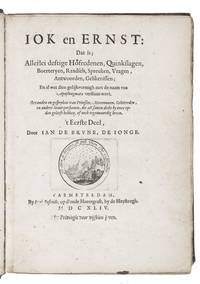
1644J4PFYT1MCEDCAmsterdam: Jacob Lescaille 1644. Contemporary vellum traces of ties. 4to. With engraved vignette on title-page. First edition of the first and only volume of a collection of apophthegmata aptly titled Jok en ernst "Jest and earnest" by the cousin of Johan de Brune the elder 1588-1658 who is now better known but in his heyday less popular than his younger namesake. It includes 240 anecdotes all accompanied by extensive commentary. It is this combination of witticisms with a broad knowledge that gives this book its intellectual charm.Johan de Brune the younger 1616-1649 was raised partly in England by his uncle Francicus Junius a pioneer of Germanic philology and partly in Amsterdam by the Dutch humanist Vossius. He was well-read at an early age and was compared to Montaigne and Bacon by his contemporaries but his early death prevented him from living up to these comparisons.A restored tear and some minor waterstains in the lower margins the title-page slightly browned and some occasional spots otherwise in very good condition. Binding somewhat soiled but still very good.l STCN 7 copies of this issue; Te Winkel IV pp. 327-328. Jacob Lescaille, hardcover
169436324Amsterdam Abraham Wolfgang 1694. Uncut in contemp. blank boards. Title handwritten on spine. Spine a little rubbed. 22307 pp. and 8159 pp. Textillustrations in woodcut illustrating Cartesian physics and world system. A large copy few marginal brownspots. Previous owners name on fly-leaf Vilhelm Maar Danish historian of medicine. <br/><br/><em>First Latin edition The French original from 1690 Voyage du Monde de Descartes of this imaginary travel to find Descartes on the moon and in the upper spheres. The work is one of the most importent anti-Cartesian polemics of the 1690's and it attacs the whole of Descartes system in a satirical way."It aimes principally at the sharp Cartesian distinction between body and soul related in a satirical fashion the voyage of the disembodied souls of the narrator of Mersanne and of another old friend of Descartes in the upper spheres. On their way to visit Descartes in the third heaven they meet the souls of Aristotle and the disciples of descartes clearly refelcting here the philosophical opinions of Gabriel Daniel himself. One of the articles of that treaty stipulates that the Cartesians will refer to Aristotle with more respect whereas the Aristotelians will refrain from calling Descartes "Enthusiast" "Madman" "Heretick" or "Atheist" - all of these evidently labels commonly used by the opponents of Descartes at that time." Michael Heyd in "Be Sober and Reasonable". The work was published anonymous and earlier sometimes attributed to Daniel Defoe. - </em> hardcover