323 résultats
169316116(No place, no date(1693)). Very large engraved seechart, measuring 60 x 86,5 cm. in original outline colouring. The chart showing the Northern part of England from Lancaster to Banf, of Ireland from Blackrock to Carlingford and all the Islands to the north: Shetland, Orkney, Faroe etc. etc. A fine impression on good thick paper with the watermark: BYCOLUMBIER. Folded down the center.
169316118Very large engraved seechart measuring 61 x 875 cm. in original outline colouring with large inset view of the harbour of Kinsal and Kinsal River. The chart showing the Westcoast of Ireland from Bay of Roonstahound to Kiriec in lower left corner C. Berey scr. A fine impression on good thick paper with the watermark: BYCOLUMBIER. fOLDED DOWN THE CENTER. <br/><br/><em>The "Neptune Francois" was published in 1693 and its charts are larger and more lavishly decorated than those of any preceding book of its kind. The chart is without year place and "par Ordre du Roi" pointing to a later issue but issued from the original copperplate. It is also without "Imprimerie Royale" belonging to the imprints from 1792. Koeman IV425:11. </em> unknown
169316118Very large engraved seechart, measuring 61 x 87,5 cm. in original outline colouring with large inset view of the harbour of Kinsal and Kinsal River. The chart showing the Westcoast of Ireland from Bay of Roonstahound to Kiriec (in lower left corner C. Berey scr.) A fine impression on good thick paper with the watermark: BYCOLUMBIER. fOLDED DOWN THE CENTER.
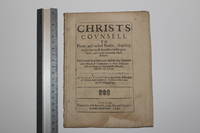
1647011659London: Printed for John Rothwell at the Sun and Fountaine in Pauls Churchyard 1647 Book. Good. Disbound. iv 22 2 pages. The final two pages are blank. ESTC R5046. Damp stained throughout. Disbound. Original binding stabholes visible to the inner margins. Printed for John Rothwell at the Sun and Fountaine in Pauls Churchyard unknown
16732111902160201422Hayashi Izumi Kambei Murakami Jinshiro Yao Kanni Murakami 1673. Soft Cover. Fine. Number of books: 2 Hayashi Izumi Kambei Murakami Jinshiro Yao Kanni Murakami paperback
16567101656. Engraving with hand coloring and heightening in watercolor on two leaves of expertly conjoined handmade laid paper one leaf with a large watermark a feathered dragon 7 1/4 x 11 1/4 inches 183 x 285 mm. In excellent condition with superb coloring and heightening. The pigments and ink are extremely fresh and vibrant as originally presented. unknown
169745644Leipzig Grosse & Gleditsch 1697. 4to. No wrappers. In: "Acta Eruditorum Anno MDCXCVII" No V May-issue. Pp. 193-240 entire issue offered. With titlepage to the volume 1697. Leibniz: pp. 201-205. Johann Bernoulli: pp. 206-211. Jacob Bernoulli: pp. 211-214. Newton: pp. 223-224. As usual some leaves with browning. <br/><br/><em>First appearance of the famous issue of Acta Eruditorum in which the 4 solutions by the 4 most eminent mathematicians at the time were printed together. There were in all 5 solutions to the posed problem and Newton's solution was first printed in the Philosophical Transactions January 1697 and reprinted here. The solution proposed by L'Hopital not printed here was not published until 1988.The brachistochrone problem was posed by Johann Bernoulli in Acta Eruditorum in June 1696. He introduced the problem as follows: "I Johann Bernoulli address the most brilliant mathematicians in the world. Nothing is more attractive to intelligent people than an honest challenging problem whose possible solution will bestow fame and remain as a lasting monument. Following the example set by Pascal Fermat etc. I hope to gain the gratitude of the whole scientific community by placing before the finest mathematicians of our time a problem which will test their methods and the strength of their intellect. If someone communicates to me the solution of the proposed problem I shall publicly declare him worthy of praise." Johann Bernoulli and Leibniz deliberately tempted Newton with this problem. It is not surprising given the dispute over the calculus that Johann Bernoulli had included these words in his challenge:- ."there are fewer who are likely to solve our excellent problems aye fewer even among the very mathematicians who boast that they. have wonderfully extended its bounds by means of the golden theorems which they thought were known to no one but which in fact had long previously been published by others."According to Newton's biographer Conduitt he solved the problem in an evening after returning home from the Royal Mint. Newton: . "in the midst of the hurry of the great recoinage did not come home till four in the afternoon from the Tower very much tired but did not sleep till he had solved it which was by four in the morning."Newton send his solution to his friend Charles Montague and Montague published anonymously in the Transactions. Newton's solution presented here in the Acta is also anonymous. The episode did not please Newton as he later wrote: "I do not love to be dunned pestered and teased by foreigners about mathematical things ." After the competition Johann Bernoulli said ". my elder brother made up the fourth of these after Leibniz himself and Newton that the three great nations Germany England and France each one of their own to unite with myself in such a beautiful search all finding the same truth."Struik Edt. "A Source Book in Mathematics 1200-1800 pp. 391 ff. </em> unknown
169745644Leipzig, Grosse & Gleditsch, 1697. 4to. No wrappers. In: ""Acta Eruditorum Anno MDCXCVII"", No V, May-issue. Pp. 193-240 (entire issue offered). With titlepage to the volume 1697. Leibniz: pp. 201-205. Johann Bernoulli: pp. 206-211. Jacob Bernoulli: pp. 211-214. Newton: pp. 223-224. As usual, some leaves with browning.
16742083002116205703Copy from the Tokushima Prefectural Library 1674. Soft Cover. Fine. The book is in fine condition. Copy from the Tokushima Prefectural Library paperback
165849004Amstelodami: ex officina Elseviriana 1658. 12mo pp. 24 643 1; engraved title page printer's woodcut device on printed title several woodcut initials and ornaments; contemporary full calf gilt-decorated spine in 5 compartments gilt-lettered direct in 1; spine worn but generally good and sound. This is the third Elzevier edition. Copinger 2552; Willems 1231. ex officina Elseviriana unknown
165849004Amstelodami: ex officina Elseviriana 1658. 12mo pp. 24 643 1; engraved title page printer's woodcut device on printed title several woodcut initials and ornaments; contemporary full calf gilt-decorated spine in 5 compartments gilt-lettered direct in 1; spine worn but generally good and sound. This is the third Elzevier edition. Copinger 2552; Willems 1231. <br/><br/> ex officina Elseviriana unknown books
1648001003Lugduni Batavorum (Leyde) Elzevir 1648
1643621201Utrecht, J. van Doorn, 1642 (-1643). Folio. 2 Bl., 191 (recte 173, 3), 12 S., 6 Bl.; 2 Bl., 331 S., 16 Bl.; 4 Bl., 180 S., 16 Bl. Mit 1 doppelblattgroßen Kupferkarte u. 2 Textkupfern. Pergament d. Zeit (angestaubt, Rücken mit Einriß u. kleiner Fehlstelle, hinterer Innendeckel mit Wurmspuren). [4 Warenabbildungen]
167648738Amsterdam henric Westenius 1676. 12mo. Later modest hcloth. Engraved titlevignette. 161482188 pp. 7 textengravings of which 4 are full-page several woodcut illustrations. A small piece of corners gone on titlepage no loss of text. Light browning to the fist leaves a marginal dampstain to the last 12 leaves. <br/><br/><em>Second edition of caspar Bartholin's historical account of the jewellery of the Ancients together with his father's dissertation on nose-rings.Bibl. Danica II:446. - Wellcome II 108. </em> hardcover
167648738Amsterdam, henric Westenius, 1676. 12mo. Later modest hcloth. Engraved titlevignette. (16),148,(2),18,(8) pp. 7 textengravings (of which 4 are full-page), several woodcut illustrations. A small piece of corners gone on titlepage, no loss of text. Light browning to the fist leaves, a marginal dampstain to the last 12 leaves.
1694862F42Roterodami Rotterdam: Typis Regneri Leers 1694. Leather. Very Good. 15" by 10". Not Stated. The second edition of Franciscus Junius's treatise on the art of the ancient Greeks and Romans. In the original Latin.First published in 1637 this second edition was greatly expanded and enlarged with an added index and account of the author's life provided by editor J.G. Graevius.Junius's work is considered one of the earliest and most influential studies on classical art and aesthetics during the Renaissance period contributing to a broader renewed interest in the study of ancient civilizations during the Renaissance and Baroque periods.Illustrated with an engraved copper plate title page but lacking the engraved portrait of the author.With the register 2 4 3-4 2-34 A-2O4 2P-2T2 4 2-72 A-2F4 2G-2L2. Text leaves collated and complete.ESTC Citation No. R11629Two volumes in one with individual title pages pagination and register.With a bookplate indicating this work as awarded to the Bishopric of Cornwall by Rev Frank Parker in 1883 to the front pastedown and small ink inscriptions to head of front free endpaper and engraved title page.The treatise aims to revive and promote the study of ancient painting which was highly admired during the Renaissance as a model of excellence. Junius emphasizes the importance of studying and imitating the works of the ancients to achieve artistic perfection. He explores different genres of painting such as portraiture history painting and mythology and provides examples and analysis of ancient artworks. Rebacked in a full calf binding with original boards restored. Rubbing to boards with remnants of sticker to spine tail. Retaining the original endpapers with hinges reinforced. Bookplate to front pastedown ink inscriptions to head of front free endpaper and engraved title. Internally firmly bound. Pages age toned but generally clean with instances of light spotting. Very Good Typis Regneri Leers hardcover
16981264342Leipzig, N. Scipio, 1698. Kl.-4to. 68 S. Hlwdbd des 19. Jhdts (Kanten berieben, durchgehend mit Nässespuren im Bund u. im Außenrand).
1657BOOKS073619IRome 1657. HC. good vellum bound hardcover light curl to vellum covers. Further detail and illustrations on our website - please ask for link. unknown
167244860No Place No Printer Gedruckt in 't Wonder-Jaer 1672. 4to. No wrappers. 12 pp. <br/><br/><em>The pamphlet contains a discussion between three persons an Englishman a French and a Dutch relating to the Third Anglo-Dutch War 1672-74. </em> unknown
167244860No Place, No Printer, Gedruckt in 't Wonder-Jaer 1672. 4to. No wrappers. 12 pp.
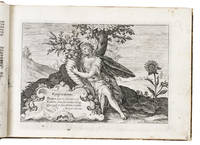
1614ABC_48468Utrecht 1614. Oblong folio ca. 18.5 x 26.5 cm. for Crispijn van de Passe Later half calf decorated paper sides gold-tooled spine and red sprinkled edges. With a full-page plate of Flora embracing the cornucopia in a landscape with an epigram by Arnoldus Buchelius in a cartouche in the left hand corner engraved by Simon van de Passe after Crispijn van de Passe 2 different frontispieces both appearing twice of ideal gardens full of flowers and 174 full-page engraved plates of flowers fruits fruit trees and medicinal plants mainly by Crispijn van de Passe the Younger 3 by his brother Willem van de Passe. 2 parts in 1 volume the first in 4 sections. 26 pp. 118 engraved ll.; 1 1 blank pp. 61 engraved ll. Very rare first Dutch edition of this famous book on horticulture including beautifully engraved plates of flowers organised according to the season in which they bloom and frontispieces showing the ideal garden. The work was first published in Latin under the following title: Hortus floridus in quo rariorum & minus vulgarium florum icones . without text published in Arnhem by Jan Jansz. in 1614. The expertly engraved plates were also sold separately and were constantly updated and amended by adding various details insects other animals or simply different numbers to meet demand. While the present first Dutch edition contains short explanations of the plates on separate typographical leaves the same information was only added to the Latin version of the work in its second edition 1616 - the corresponding text then appearing on the verso of each engraved plate. The text was written by Arnoldus Buchelius or Aernout van Buchel 1565-1641 a Dutch scholar and humanist from Utrecht who is now most known for specialising in genealogy and heraldry.This Dutch edition was soon followed by English and French editions. The Hortus floridus including translations was considered without question the most popular florilegium ever published An Oak Spring Flora and "Blunt calls this the most celebrated and influential of the early florilegia and one of the finest Hunt.The emphasis of the plates is on the common garden flowers with a preponderance of spring bulbs. The book was intended to provide inspiration for garden lovers who were invited to colour the black and white copperplate engravings themselves according to the colours they found in their own gardens. The introduction is enlarged with details on how to colour the plates. Many of the flowers shown are tulips hyacinths crocuses and other bulb plants mirroring the new enthusiasm and passion for bulbs which eventually led to the tulip mania of the years 1636-37 when contract prices for some bulbs reached extraordinarily high levels leading to the first recorded speculative bubble in history.As the plates were printed then modified and assembled at different times between 1614 and 1617 almost no two copies are the same - consisting of various numbers of plates with different title pages and prefaces. Our copy seems to be a practically complete copy of the Dutch edition containing an unmatched number of plates the only plate not present in this copy which is sometimes included in others is the engraved plate frontispiece of the Latin quotation from Matthew 6 Cognoscite lilia in part 2. The four sections of part 1 include 113 plates of flowers including the 99 that are called for in the preface organised per season: spring: 41; summer: 20; autumn: 26; winter: 12. The extra plates are as follows: 1: an addition to spring with plate 42 = second copy of plate 2 of summer 2: 12 plates depicting tulips numbered 43-54 and 3: an addition to autumn: a plate depicting two metal cylinders for growing flowers 1 with a tulip not found in any other copy consulted but possibly called for by Nissen "Garten Instruments".The second part includes 61 plates depicting 120 numbered depictions of fruits fruit trees and medical plants. This part included in most copies of the Latin edition and in some of the Dutch edition had been published already by Crispijn van de Passe the Elder around 1600-1604 when he was in Cologne in association with the publisher Hans Woutneel.The quality of the engravings is exceptionally fine and delicate representing real masterpieces of horticultural art executed by a leading family of engravers and publishers in the first half of the Dutch Golden Age.With a 19th-century round stamp with double eagle and the initials "H.C.P.S.G." and a red stamp "Ex libris J. Visser Rotterdam" on the title page with the red ex libris stamp also on the divisional title page of the second part. Lacking the engraved plate frontispiece of the Latin quotation from Matthew 6 Cognoscite lilia in part 2. The binding is very slightly rubbed the bottom outer corner of the back board is slightly damaged the typographical leaves are slightly soiled the head margin of the title page is cut short and restored with paper lightly foxed some very slight foxing and/or soiling throughout mainly to the outer edges of the margins some small marginal tears some restored in several leaves plate 44 spring with a repaired tear plate 43/44 in part 2 is repaired in the head margin. The verso of 45 plates show minute pricked holes in the leaf following the outlines of the depicted flowers and plants as a way of tracing the images on another leaf of paper or possibly another copperplate. Otherwise in good condition.l Franken 1881 no. 1346; Hunt no. 199; Nissen BBI no. 1494; Oak Spring Flora 12; Saunders Picturing Plants pp. 36-37; Savage The Hortus Floridus in: Transactions Bibiogr. Society Second series IV 1923 pp.181-206; Segal Flowers and Nature 1990 pp. 165-166; Soultrait 17th century 226; STCN 308020359 3 copies incl. 1 incomplete; USTC 1022789 4 copies incl. 1 incomplete; 3 the same as STCN; cf. Veldman Crispijn de Passe and his Progeny 1564-1670: a century of print production 2001 pp. 205-212. ABE CAT Art History unknown
168556729Kiøbenhaffn Bockenhoffer 1685. Lille 8vo. Samtidigt helpergament. Lille stempel på titelbladet. 1411682 pp. Enkelte gl. tilskrifter og understregninger. Et par ark svagt bruntonede men et velbevaret eksemplar. <br/><br/><em>Originaludgaven af den første danske grammatik skrevet på modersmålet.Thesaurus II675. - Bibl. Danica IV62. </em> unknown
168556729Kiøbenhaffn, Bockenhoffer, 1685. Lille 8vo. Samtidigt helpergament. Lille stempel på titelbladet. (14),116,82) pp. Enkelte gl. tilskrifter og understregninger. Et par ark svagt bruntonede, men et velbevaret eksemplar.
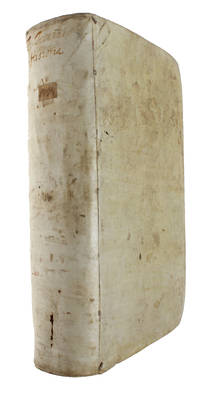
163060564Strasburg Dietzel 1630. Folio 34 x 215 mm. In contemporary full vellum with yapp edges. Title in contemporary hand to spine. Small paper label pasted on to spine indicating the volume's number in an estate library. Title-pages in red and black within historiated woodcut border. Binding soilied and with a few stains. Outer lower corner of title-page cut off no loss of text. A fine copy. 12 960 36 12 214 10 pp. <br/><br/><em>Fine copy of this later edition of two of Jesephus' most important works. The later work is a translation of a Latin christological version of Josephus' De bello Judaico dating from ca. 367-374 A.D. It is of uncertain authorship but cited as the work of "Hegesippus" or "Egesippus." It was transmitted among the works of and sometimes attributed to Ambrose Bishop of Milan Titus Flavius Josephus was a first-century Romano-Jewish historian who was born in Jerusalem. He fought against the Romans during the First Jewish–Roman War as head of Jewish forces in Galilee but surrendered in 67 CE to Roman forces led by Vespasian. After Vespasian became Emperor in 69 CE he granted Josephus his freedom at which time Josephus assumed the emperor's family name of Flavius. Josephus recorded Jewish history with special emphasis on the first century CE and the First Jewish–Roman War 66–70 CE including the Siege of Masada. His most important works were The Jewish War c. 75 and Antiquities of the Jews c. 94. The Jewish War recounts the Jewish revolt against Roman occupation. Antiquities of the Jews recounts the history of the world from a Jewish perspective for an ostensibly Greek and Roman audience. These works provide valuable insight into first century Judaism and the background of Early Christianity although not specifically mentioned by Josephus. Josephus' works are the chief source next to the Bible for the history and antiquity of ancient Palestine. For centuries Josephus' works were more widely read in Europe than any book other than the Bible. They are an invaluable eye-witness to a momentous turning point in Judaism Christianity and Western civilization. The present edition was first published in 1569. Graesse III Pp. 481-482 </em> hardcover
163060564Strasburg, Dietzel, 1630. Folio (34 x 215 mm). In contemporary full vellum with yapp edges. Title in contemporary hand to spine. Small paper label pasted on to spine indicating the volume's number in an estate library. Title-pages in red and black within historiated woodcut border. Binding soilied and with a few stains. Outer lower corner of title-page cut off, no loss of text. A fine copy. (12), 960, (36), (12), 214, (10) pp.