[MAP OF ASIA IN THE PACIFIC WAR].Biblio.com
1 167 résultats
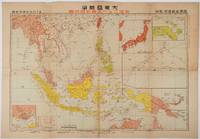
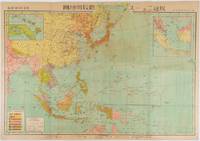
1719176771東京. Tokyo.: 日本放送出版会社. Nihon Hōsō Shuppan Kaisha. Showa 17 1942. Colour folding map scale 1:14500000 55cm x 80cm naval warship photographic illustrations on reverse. The wartime paper is browned and friable but small closed tears along fold lines and edges have been neatly repaired with archival washi on the verso. 79 x 53cm This colour map of Asia and the Pacific was published as a supplement to a magazine Hoso 放送 on January 1942 less than one month after the Pearl Harbor attack by the Japanese Forces. The war had just started but amazingly the map accurately predicted where the fighting would take place throughout the war. An inset map on upper right shows Singapore Borneo Sumatra and Java where battles took place in the area in early 1942. An inset chart on lower left shows various resources and their location including coal tin and iron ore clearly showing that the war was fought over securing resources. On reverse eleven photographic illustrations of war ships from Germany Britain the US and Japan are shown including the Prince of Wales and Enterprise. . 日本放送出版会社. [Nihon Hōsō Shuppan Kaisha]. unknown
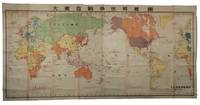
1719218447Japan.: 大本營海軍報道部 Daihonei Kaigun Hōdōbu. Showa 17 1942. Large colour folding map 165 x 215.8cm. Some strengthening of folds and neat repairs on reverse small chip in margin a little light browning on some folds but overall very good. This extra-large world map presents a detailed depiction of global wartime activity during the latter half of 1942. Japanese military campaigns and land and sea battles that occurred between 10 April and the end of September are marked in red with all naval engagements included. The map highlights the growing intensity of conflict in Southeast Asia and the Pacific areas that appear to have reached the height of military activity at the time of publication. In Europe regions under German and Italian control are indicated with blue diagonal lines. A comprehensive legend identifies military air and submarine bases belonging to Germany Italy and the Allied nations as well as territories occupied or bombed by Japanese forces. . 大本營海軍報道部 [Daihonei Kaigun Hōdōbu]. unknown
1719219230東京. Tokyo.: 日本放送協会. Nihon Hōsō Shuppan Kyōkai. Showa 17 1942. Colour folding map scale 1: 10000000 54.7cm x 79.5cm chronology of building the Greater East Asia Co-Prosperity Sphere on reverse. Some light browning a little darker at folds and reverse washi repairs to folds on reverse. This colour map of Asia and the Pacific published on 30 January 1942—just one month after Japan's attack on Pearl Harbor—offers a striking glimpse into wartime strategy and propaganda. Remarkably despite being produced at the war's outset it accurately anticipated key battlegrounds that would define the conflict. The main map is supplemented by two inset maps: one in the upper right highlighting Japan the Hawaiian Islands and Honolulu and another in the lower left focusing on Singapore with Darwin marked along the lower edge. <br> <br>The reverse side features a revealing chronological chart titled "Building Great East Asia" documenting Japan's military expansion from the 1931 Manchurian Incident through January 1942 as troops advanced across Southeast Asia. Notably two blank rows were intentionally left at the chart's end anticipating future victories to be recorded as the war progressed—a telling detail that underscores the map's dual role as both strategic document and propaganda tool. An interesting map which combines geographical precision with ideological messaging. . 日本放送協会. [Nihon Hōsō Shuppan Kyōkai]. unknown
17811311741Riga, J. Fr. Hartknoch, 1781. 240 S. Neuer Ppbd (innen etwas gebräunt u. braunfleckig, die letzten beiden Lagen im Unterrand etwas spakig u. tls mit geringen Nagespuren).
175520334ABLa Haye, Jean van Duren 1755. 2 Bände. XLVI (recte XLII), 544 S.; 1 Bl., XXXV, (1), 540 S. PpBde der Zt mit Rückenschild. Einbände minimal berieben und geringf. fleckig.
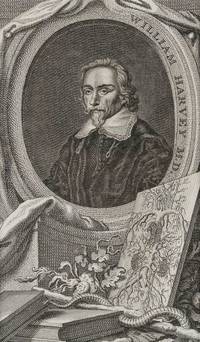
1770100010AG1770. Amsterdam J. Houbraken no year c.1770. Original copper engraving portrait of english physician William Harvey " first known physician to describe completely and in detail the systemic circulation and properties of blood". The vintage engraving shows William Harvey head-and-shoulders portrait facing slightly left in a medallion draped with cloth also shows a drawing of the cardiovascular system parts of a plant and a snake entwined around a stick suggesting a caduceus. The original engraving is framed and comes with an exceptional Facsimile of the first edition of "De Motu Cordis see images". Beautifully Framed. Size of frame with Harvey's portrait: 32 cm x 38 cm. Size of the actual portrait engraving: 9.5 cm x 15.5 cm. Excellent condition ! William Harvey 1 April 1578 3 June 1657 was an English physician who made seminal contributions in anatomy and physiology. He was the first known physician to describe completely and in detail the systemic circulation and properties of blood being pumped to the brain and body by the heart though earlier writers such as Realdo Colombo Michael Servetus and Jacques Dubois had provided precursors of the theory. In 1973 the William Harvey Hospital was constructed in the town of Ashford a few miles from his birthplace of Folkestone. William's father Thomas Harvey was a jurat of Folkestone where he served the office of mayor in 1600. Records and personal descriptions delineate him as an overall calm diligent and intelligent man whose "sons. revered consulted and implicitly trusted in him. they made their father the treasurer of their wealth when they acquired great estates.He kept employed and improved their gainings to their great advantage." Thomas Harvey's portrait can still be seen in the central panel of a wall of the dining-room at Rolls Park Chigwell in Essex. William was the eldest of nine children seven sons and two daughters of Thomas and his wife Joan Halke. Notable family connections include Heneage Finch 1st Earl of Nottingham who married William's niece Elizabeth Harvey and the diplomat Sir Daniel Harvey. Harvey's initial education was carried out in Folkestone where he learned Latin. He then entered the King's School Canterbury. Harvey stayed at the King's School for five years after which he matriculated at Gonville and Caius College in Cambridge in 1593. Harvey graduated as a Bachelor of Arts from Caius in 1597. He then travelled through France and Germany to Italy where he entered the University of Padua in 1599. During Harvey's years of study there he developed a relationship with Fabricius and read Fabricius's De Venarum Ostiolis. Harvey graduated as a Doctor of Medicine at the age of 24 from the University of Padua on 25 April 1602. It reports that Harvey had "conducted himself so wonderfully well in the examination and had shown such skill memory and learning that he had far surpassed even the great hopes which his examiners had formed of him." After graduating from Padua Harvey immediately returned to England where he obtained the degree of Doctor of Medicine from the University of Cambridge that same year and became a fellow of Gonville and Caius College. Following this Harvey established himself in London joining the Royal College of Physicians on 5 October 1604. A few weeks after his admission Harvey married Elizabeth Browne "daughter of Lancelot Browne Dr. Physic". They had no children. Harvey was elected a Fellow of the Royal College of Physicians on 5 June 1607 which earned him the Post-nominal letters FRCP and he then accepted a position at St Bartholomew's Hospital that he was to occupy for almost all the rest of his life. Succeeding a Dr Wilkinson on 14 October 1609 he became the Physician in charge at St Bartholomew's Hospital which enjoined him "in God's most holy name" to "endeavor yourself to do the best of your knowledge in the profession of physic to the poor then present or any other of the poor at any time of the week which shall be sent home unto you by the Hospitaller. You shall not for favor lucre or gain appoint or write anything for the poor but such good and wholesome things as you shall think with your best advice will do the poor good without any affection or respect to be had to the apothecary. And you shall take no gift or reward. for your counsel. This you will promise to do as you shall answer before God. " Harvey earned around thirty-three pounds a year and lived in a small house in Ludgate although two houses in West Smithfield were attached as fringe benefits to the post of Physician. At this point the physician's function consisted of a simple but thorough analysis of patients who were brought to the hospital once a week and the consequent writing of prescriptions. Published in 1628 in the city of Frankfurt host to an annual book fair that Harvey knew would allow immediate dispersion of his work the 72 page Exercitatio Anatomica de Motu Cordis et Sanguinis in Animalibus contains the matured account of the circulation of the blood. Opening with a dedication to King Charles I the quarto has 17 chapters which give a clear and connected account of the action of the heart and the consequent movement of the blood around the body in a circuit. Having only a tiny lens at his disposal Harvey was not able to reach the adequate pictures that were attained through such microscopes used by Antonie van Leeuwenhoek; thus he had to resort to theory and not practical evidence in certain parts of his book. After the first chapter which simply outlines past ideas and accepted rules regarding the heart and lungs Harvey moves on to a fundamental premise to his treatise stating that it was important to study the heart when it was active in order to truly comprehend its true movement; a task which even he found of great difficulty as he says: ".I found the task so truly arduous. that I was almost tempted to think. that the movement of the heart was only to be comprehended by God. For I could neither rightly perceive at first when the systole and when the diastole took place by reason of the rapidity of the movement." This initial thought led Harvey's ambition and assiduousness to a detailed analysis of the overall structure of the heart studied with less hindrances in cold-blooded animals. After this Harvey goes on to an analysis of the arteries showing how their pulsation depends upon the contraction of the left ventricle while the contraction of the right ventricle propels its charge of blood into the pulmonary artery. Whilst doing this the physician reiterates the fact that these two ventricles move together almost simultaneously and not independently as had been thought previously by his predecessors. This discovery was made while observing the heart of such animals as the eel and several other types of fish; indeed the general study of countless animals was of utmost importance to the physician: among the ones already cited one can add the study of the snail the invisible shrimp the chick before its hatching and even the pigeon. A digression to an experiment can be made to this note: using the inactive heart of a dead pigeon and placing upon it a finger wet with saliva Harvey was able to witness a transitory and yet incontrovertible pulsation. He had just witnessed the heart's ability to recover from fatigue. As early as the 17th century William Harvey had already discerned the existence of the Ductus Arteriosus and explained its relative function. Here he says ".in embryos whilst the lungs are in a state of inaction performing no function subject to no movement any more than if they had not been present Nature uses the two ventricles of the heart as if they formed but one for the transmission of the blood." However the apex of Harvey's work is probably the eighth chapter in which he deals with the actual quantity of blood passing through the heart from the veins to the arteries. Coming into conflict with Galen's accepted view of the liver as the origin of venous blood Harvey estimated the capacity of the heart how much blood is expelled through each pump of the heart and the number of times the heart beats in a half an hour. All of these estimates were purposefully low so that people could see the vast amount of blood Galen's theory required the liver to produce. He estimated that the capacity of the heart was 1.5 imperial fluid ounces 43 ml and that every time the heart pumps 1/8 of that blood is expelled. This led to Harvey's estimate that about 1/6 imperial fluid ounce 4.7 ml of blood went through the heart every time it pumped. The next estimate he used was that the heart beats 1000 times every half an hour which gave 10 pounds 6 ounces of blood in a half an hour and when this number was multiplied by 48 half hours in a day he realized that the liver would have to produce 498 pounds of blood in a day more than the weight of the whole body. Having this simple but essential mathematical proportion at hand which proved the overall impossible aforementioned role of the liver Harvey went on to prove how the blood circulated in a circle by means of countless experiments initially done on serpents and fish: tying their veins and arteries in separate periods of time Harvey noticed the modifications which occurred; indeed as he tied the veins the heart would become empty while as he did the same to the arteries the organ would swell up. This process was later performed on the human body in the image on the right: the physician tied a tight ligature onto the upper arm of a person. This would cut off blood flow from the arteries and the veins. When this was done the arm below the ligature was cool and pale while above the ligature it was warm and swollen. The ligature was loosened slightly which allowed blood from the arteries to come into the arm since arteries are deeper in the flesh than the veins. When this was done the opposite effect was seen in the lower arm. It was now warm and swollen. The veins were also more visible since now they were full of blood. Harvey then noticed little bumps in the veins which he realized were the valves of the veins discovered by his teacher Hieronymus Fabricius. Harvey tried to push blood in the vein down the arm but to no avail. When he tried to push it up the arm it moved quite easily. The same effect was seen in other veins of the body except the veins in the neck. Those veins were different from the others they did not allow blood to flow up but only down. This led Harvey to believe that the veins allowed blood to flow to the heart and the valves maintained the one way flow. Contrary to a popular misconception Harvey did not predict the existence of capillaries. His observations convinced him that direct connection between veins and arteries are unnecessary; he wrote "blood permeates the pores" in the flesh and it is "absorbed and imbibed from every part" by the veins. Wikipedia hardcover
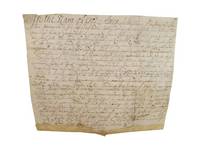
1711000908Oxfordshire: No Publisher 1711. Copy of a will on vellum approximately 240mm x 205mm. Old fold creases slightly browned and slightly rubbed lacking seal to foot. Will of William a plasterer from Stanton Harcourt Oxfordshire leaving bequests to educate poor children of Kidlington twenty pounds Cassington twenty pounds Eynsham twenty pounds Standlake thirty pounds and Stanton Harcourt thirty pounds. He enjoins the trustees of his will 'to take care of the six score pounds given to ye poor children of the five towns be carefully sett forth and I do give them one whole yeare's interest of the six score pounds next after my decease'. First Edition. Unbound. Good. 8vo Oblong. Manuscript. No Publisher Paperback
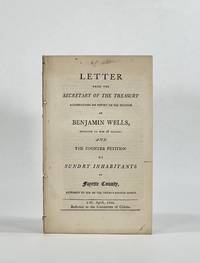
18007688Philadelphia 1800. Disbound. Very Good binding. Octavo. 21 3 blank pp. Removed from nonce volume. Light soiling to the covers but largely a clean copy. <br /> <br /> Concerns compensation for losses suffered during the Whiskey Rebellion of 1794. Includes lists of property belonging to Bejamin Wells John Nevill Charles Reno George Fowler Philip Regan Bezl. Howe and William Cochran that were destroyed by the insurgents with estimates of their value. Also contains a statement of the amount of money appropriated by Congress for the relief of those who sustained losses and the apportionment of these funds by the commissioners appointed to ascertain damages. Evans 38762. unknown
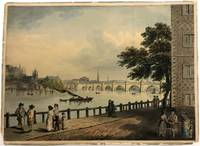
18003220069<i>Watercolour 330 × 460mm in modern mount. </i><br /><br />The view shows part of the gateway of Lambeth Palace to the right and on the left Westminster Abbey and the Palace of Westminster to the left. - A closely allied view by Malton was apparently sold at auction in 1925 whereabouts unknown with figures differently placed.<br />
1800013075London: Printed for T. N. Longman and O. Rees 1800. 1st English Edition. Hardcover. Good. First English edition. Translated by S. T. Coleridge with a preface by Coleridge before each part. Bound as one volume: 6 ii 2 214; 2 6 157 5. Ad for "Death of Wallenstein" states a portarit of Wallensatein will be included. If it was issued it is not present in this copy. Light foxing througout hinges exposed. Printed for T. N. Longman and O. Rees hardcover
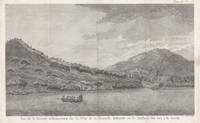
177415391774. Copper-line engraving. 250mm by 365mm sheet. After pl. no. 19 v.2 of: An account of the voyages undertaken by the order of his present Majesty . by John Hawkesworth.<br /> Vertical folds as issued.Light mark in right hand border.Beddie 1046. unknown
179027657Paris CHEREAU 1790 une vue d'optique en couleurs, GRAVÉE A L'EAU-FORTE ET AQUARELLÉE SUR PAPIER DE FORMAT: 33,4 x 43,7 cm. (1790) à Paris chez CHEREAU Editeur
177527718PARIS Daumont 1775 une vue d'optique en couleurs, GRAVÉE A L'EAU-FORTE ET AQUARELLÉE SUR PAPIER DE FORMAT: 48 x 29 cm., 1775 Paris Daumont Editeur,
175027721LONDRES 1750 une vue d'optique en couleurs, GRAVÉE A L'EAU-FORTE ET AQUARELLE SUR PAPIER DE FORMAT: 44,5 x 29 cm., 1750 Londres Publish'd according Act of Parliament, sans nom d'Editeur,
1797105650Paris: Chez Tavernier. 1797. 1st ed. An VI. Octavo full-leather binding with gilt-stamped decorations bands and title to spine gilt dec border to boards contemporary marbled endpapers pp viii 243 last page misprinted as 343. Three large folding engraved maps drawn up by Major James Rennell the leading British geographer of his time when Mungo Park returned from West Africa: all in very good condition. Spine rubbed minor scuffs to boards front free endpaper just starting to detach. Very good condition. First edition. Published in Paris in the revolutionary "An VI" 1797. Describes the explorations in the interior of Africa of Daniel Houghton 1740 - 1791 and Mungo Park 1771 - 1806. Daniel Houghton was sent by the African Association the Association for Promoting the Discovery of the Interior Parts of Africa; his instructions were to sail to the mouth of the Gambia navigate the river to the Barra Kunda falls and then to travel overland to the Hausa lands to the east. He was one of the first European explorers in the interior of Africa but after a successful visit in Bambouk territory he disappeared somewhere on his journey to Timbuctoo his last despatch being in July 1791. Mungo Park was then sent by the African Association and travelled more extensively in West Africa. He published the book "Travels in the interior districts of Africa" in 1799 i.e. this book precedes Park's publication. Uncommon. 1st Edition. Leather. Chez Tavernier hardcover
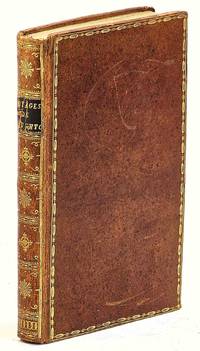
17737875CBA Genève, chez L. A. Caille, imprimeur-libraire, 1773. 8°. 303 S. Mit Anfangs- und Schlussvignette. Etwas späterer Halblederband. + Wichtig: Für unsere Kunden in der EU erfolgt der Versand alle 14 Tage verzollt ab Deutschland / Postbank-Konto in Deutschland vorhanden +, 7875CB|7875CB_2|7875CB_3|7875CB_4 [4 Warenabbildungen]
17737875CBA Genève, chez L. A. Caille, imprimeur-libraire, 1773. 8°. 303 S. Mit Anfangs- und Schlussvignette. Etwas späterer Halblederband.
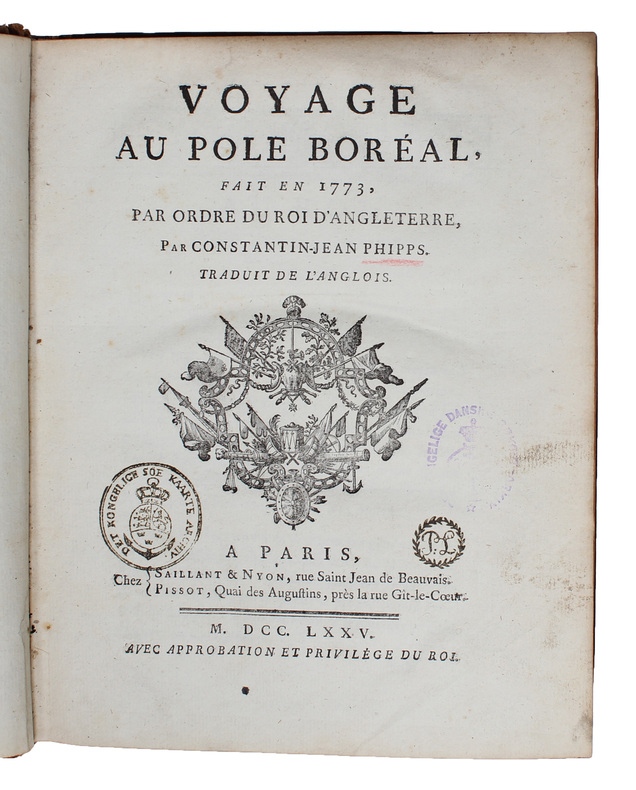
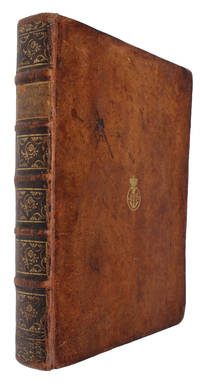
177553681Paris, Saillant & Nyon (et) Pissot, 1775. 4to. Contemp. full calf. Raised bands, richly gilt spine, titlelabel with gilt lettering. Stamps on title-page. XII,260 (incl. 2 folded tables),(4) pp., 3 folded engraved maps and 9 folded engraved plates. Internally clean, 3 plates with a faint dampstain.
177553681Paris Saillant & Nyon et Pissot 1775. 4to. Contemp. full calf. Raised bands richly gilt spine titlelabel with gilt lettering. Stamps on title-page. XII260 incl. 2 folded tables4 pp. 3 folded engraved maps and 9 folded engraved plates. Internally clean 3 plates with a faint dampstain. <br/><br/><em>First French edition. "An importent addition to nautical science which does honor to its author. Besides of a journal of the voyage it contains a descriptive catalogue of the natural productions of Spitzbergen." Sabin. Phipps here mapped the northern part of Spitzbergen.Sabin62574. </em> hardcover
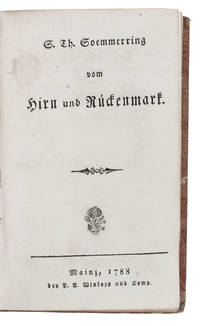
1788H74DZNIHVXHCMainz 1788. Small 8vo 15.5 x 9.5 cm. P.A. Winkopp & Komp. colophon: printed by Johann Joseph Alef printer to the Electoral Court and University Near contemporary boards covered with orange paste-paper sewn on 3 cords with a hollow back gold-tooled spine label orange and brown sprinkled edges. With a decorated rule on the title-page and a few decorations built up from cast fleurons. Set in frasktur types with Latin words in italic and non-German book titles in roman. The present copy has a pomegranate stamped on the title-page after printing and folding but before binding. XIV = XVI 115 1 pp. First edition of one of the rare early anatomical works of one of the most important German anatomists later also known for his introduction of vaccinations against smallpox soon after Jenners 1798 publications on the subject his work on fossils and sunspots and his 1809 invention of an electrical telegraph. The present work discusses the anatomy of the human brain and spinal cord carrying on from the author's doctoral thesis a decade earlier on the neural organization of the brain. It is dedicated to the Friedrich Karl Joseph von Erthal Elector and Archbishop of Mainz who had called Soemmerring to Mainz as a professor four years before. A second edition appeared in 1792.Soemmerring 1755-1830 son of a doctor of the same name was an anatomist doctor and wide-ranging researcher. He wrote his doctoral thesis in 1778 and was named professor of anatomy and physiology at Mainz in 1784. He was knighted in 1808.The pomegranate stamped on the title-page could easily be mistaken a printed ornament but one can see it has been separately stamped and that the impression carried through to the following leaf though not now aligned suggesting it was made when the sheets had already been folded and gathered but not yet bound. It may be an owners mark or simply a decoration. In very good condition. The backstrip is slightly damaged but the binding remains good.l August Hirsch Biogr. Lexikon . Aerzte 1887 pp. 453-455; cf. VD18 1792 ed. hardcover
175550315Altenburg, Richterischen Buchhandlung, 1755. 4to. Contemp. boards. Handwritten titlelabel on spine. Engraved titlevignette. (20),531,(5) pp. and 22 folded engraved plates. A few scattered brownspots, but in general clean.
175550315Altenburg Richterischen Buchhandlung 1755. 4to. Contemp. boards. Handwritten titlelabel on spine. Engraved titlevignette. 205315 pp. and 22 folded engraved plates. A few scattered brownspots but in general clean. <br/><br/><em>Scarce first German edition of this hugely influential textbook in optics."Smith wrote on optics and harmonics. In 1738 he published A Compleat System of Optics in Four Books viz. A Popular at Mathematical a Mechanical and a Philosophical Treatise. Both comprehensive and reliable the work became probably the most influential optical textbook of the eighteenth century. It was also published in Dutch in 1753 in German in 1755 and in two different French translations in 1767 In 1778 an abridged version was published in English. In turn its popularity helped to establish the eighteenth-century conviction that light is particulate." DSB. </em> hardcover
173511774DBAugsburg und Dillingen, In Verlag und Truckerey Johann Caspar Bencards seel. Witwe und Consort, 1735. 4°. 34 cm. 7 Blatt, 56, 1088, 50 Seiten. Pergamentband der Zeit auf Holzdeckeln mit 5 echten Bünden, 2 Metallschliessen an Lederlaschen, blindgeprägter floraler Buchschmuck im Rollen und Plattendruck auf beiden Deckeln,von alter Hand geschriebener Rückentitel. [4 Warenabbildungen] Rosweyd: Heribert, Jesuit, geboren zu Utrecht am 22. Januar 1569, gestorben zu Antwerpen am 5. October 1629, trat mit 20
17793689<b>Scarce Contemporary Stony Point Battle Plan</b><br /><br />This rather crude woodcut depicts a battle plan of General "Mad Anthony" Wayne's daring and dramatic capture of the British fortification at Stony Point about 30 miles up the Hudson River from New York City. The battle planned in detail by Washington took place around midnight on July 16 1779. <br /><br /> The lower portion of the battle plan includes a four item key: "A. The British Fortress B. Abattes abatis in front C. The Reserve D. The detached Party who stormed the Works." Nebenzahl's <i>A Bibliography of Printed Battle Plans of the American Revolution 1775-1795</i> cites only a 1784 London-printed battle plan by Faden for the Stony Point engagement #145. The offered plan is not noted by Nebenzahl was published in America and was issued five years earlier than the Faden plan. The<i> Bickerstaff's Boston Almanack</i> for 1780 would almost certainly have been published in November or December of 1779 – within six months of the actual battle. <br /><br /> A very scarce almanac in the trade. Auction records indicate the most recent copy sold at the Gutman sale in 2005 for $4800. Prior to that Swann sold an example in 1979. <br /><br /><b>References:</b> For the almanac: Evans: 16287; Drake: 3290. For the map: Cresswell: 309. <br /><br /><b>Condition: </b>Map appears on verso of title page and measures about 6 ½ x 3 ¾." Almanac is complete in 24 pp. Slight loss of road table text at upper tip of final leaf.<br /><br />ICN 7643. Printed and sold by Draper and Folsom, and John Mycall of Newbury.
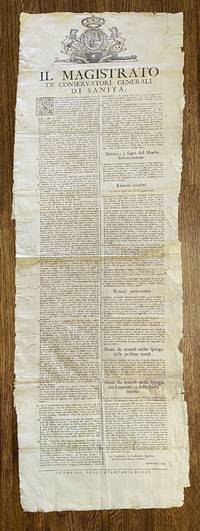
17444109Turin Italy: Stamperia Reale 1744. Very good. Huge letterpress broadside 1070 x 360 mm printed on 2 1/2 folio sheets edges untrimmed. A few sections underlined and annotated in a contemporary hand in the left blank margin worn; paper extensions mainly in the right margin; prominent horizontal central fold other folds reinforced on verso with occasional lost of one or two letters. A remarkable survival preserved in mylar L-sleeve backed with lig-free board. GIGANTIC APPARENTLY UNRECORDED BROADSIDE ISSUED BY THE STATE MAGISTRATE WARNING AGAINST THE 1744 "CATTLE PLAGUE" EPIDEMIC IN NORTHERN ITALY A FLIMSY ATTEMPT AT GOVERNMENTAL MANAGEMENT AND DISEASE CONTROL. <br /> <br /> The disease described herein was almost certainly RIDERPEST a highly contagious viral infection which can produce a 100% death rate among herds the colloquial term "cattle plague" is a misnomer because sheep and goats can also be afflicted by it. <br /> <br /> The 1744 outbreak had been observed in The Netherlands in the months before our broadside was printed but the Magistrate mentions only the reports from Franche Comté. While the devating consequences of cattle plague in The Netherlands are well researched its effects in Italy at this same time are not well-known probably due to the comparatively low survival rate of contemporary documentation. <br /> <br /> Indeed no other copy of our broadside can be found. Here the Magistrate of the Conservatory General of Health gives warning signs of the infection and preventative measures against its spread including mandatory "lazarettos" quarantine areas for livestock. The "nature and the signs" of the disease is addressed along with a dubious and ineffectual attempt at a remedy which involved cold water salt vinegar pepper and camphor; "Rimedi preservativi" prophylactic measures are recommended and steps for "fumigating" i.e. disinfecting livestock and their owners are given. <br /> <br /> The urgency of Magistrate's is justified: less than 30 years earlier through circuitous trade routes cattle plague had spread like wildfire even the most remote regions of Eastern and Western Europe and Britain. Such trade networks had become larger and more sophisticated in order to supply food to growing urban centers.<br /> <br /> Throughout history outbreaks of cattle plague led to severe economic crisis: the resulting famine inflation civil unrest and overall moral decay destabilized societies with crippling effect as had been seen in The Netherlands in the first outbreak of 1713-1720. Wherever and whenever cattle plague emerged religious figures government officials technocrats and the public wrested with the meaning and consequences of these disasters.<br /> <br /> Students and scholars of socio-economics in the Early Modern era would do well do incorporate primary sources of veterinary history in their research.<br /> <br /> NB: Interested parties are advised that this huge broadside will be shipped folded. Stamperia Reale unknown