280 résultats
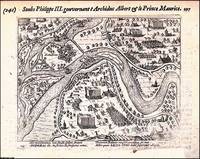
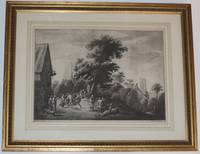
164921035Antwerp : Unknown 1649. Framed. Very Good. Based on a Teniers painting this is the original 1649 etching by Wenceslaus Hollar. One could suspect slight trimming of the margin but we will note that our measurements are the same as those of the Metropolitan Museum's copy. The print is floating on the backing and thus the entirety of the print revealed and attractively surrounded by tasteful matting and an appropriate complimentary gilt frame. Publisher unknown although it is quite possible Hollar was his own publisher. We think it likeliest that the print was done in Antwerp where the Flemish-born Hollar retreated in in 1646 from England because of the turmoil caused by the English Civil War. The print is 25 by 34.5 cm. With frame and matting 40 by 50 cm. We believe that the original etching meaning one printed in 1649 is quite scarce. Besides the Metropolitan Museum the only other copy of which we are aware is in the Royal Collection. The very narrow margin of the print has dusty soiling. There is a conspicuous closed tear running down the top center about 3 cm into the picture but luckily a less important area of the illustration. The tear is repaired or so we believe but it is undeniably visible. The gilded frame and matting are very attractive. Unknown unknown
168619026London: Printed for and sold by Stephen Bateman 1686. Second edition. Frontispiece & Illustrated with 44 sculptures. 1 vols. Folio. Contemporary quarter calf and boards rebacked later endpapers; corner of title page torn away first three leaves waterstained at lower edge. A good sound copy. Second edition. Frontispiece & Illustrated with 44 sculptures. 1 vols. Folio. Pettus was deputy governor of the royal mines for over thirty-five years. The first part is translated from the German of Erckern but the second part is Pettus' own contribution to the lexicography of metals - and wonderfully anecdotal and original it is as this from his entry on "DUNG":<br /> ".among the Indians it was usual that when they intended Homage to their Superiors or welcome too their Friends they did evacuate their Dung into their Hand and so daub it on the Face of whom they intended to honour or pleasure and was ever accepted by them as the first and best of the Welcoming Ceremonies: for Agricola tells us of Mans-Dung made as sweet as Civit. But to return nearer home when I remained in London during the great Plague in 1666 Dr. Glisson famous in his time being my old Friend and Acquaintance perswaded me to take a piece of his constant Antidote which was only the Dung of one that had dyed of the Plague dryed and so kept in a foraminous Box for the best Antidotical Perfume; but I thank God I escaped without it."<br /> Engaging too are the delightful engravings which embellish the work. Wing P-1907 Printed for and sold by Stephen Bateman unknown
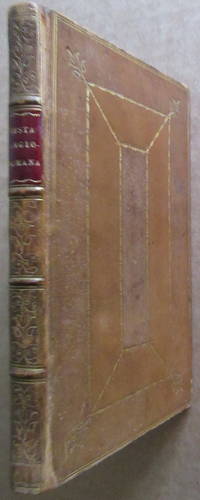
1678082226United Kingdom: Willam Jacob . 136 pages. Full leather - wear around edge of spine leather etc. Name on title page small old and in ink. Light browning to title page very minor. Small size 15cm x 9 cm slim book in decorative leather. See image from Winghale Books. Festa Anglo-Romana Or the Feasts of the English and Roman Church with Their Fasts and Vigils Being an Exact and Concise Accompt of Their Various Etymologies and Appellations with the Reasons and Grounds of Their Celebration - this is the William Jacob 1678 edition. . Good. Hardcover. 1678. Willam Jacob hardcover
16231200829.01Government Printing Office Washington DC 1916-23. Paperback. Good. 4to paperback. Good condition. 39 monthly issues: 02/1916 through 12/1916 11; 01/1917 through 12/1917 lacking May and July 10; 12/1918 1; 07/1920; 1; January and May 1921 2; 01/1922 through 11/1922 11; and March April and May 1923 3. Staplebound pulp paper contents with some brittleness to some issues: condition varies from very good to fair with most issues in very good condition. All contents complete. An interesting record of some of the early years of the Federal Reserve showing the evolution of its activities and growing involvement with open market intervention as well as wartime financing post-war stimulus etc. Government Printing Office, Washington, DC paperback
169632611Nürnberg 1696. The large engraving of the procession through Stockholm being composed of 13 engraved plates joined together measuring 30x450 cm. Plates numb. 1-13. Some mostly marginal dampstains some marginal tears some brownspots mainly marginal. Upper margin of plate 3 partly gone. Margins strenghtened at verso with brown paper. Some variation to paperquality but in general in good strong impressions. <br/><br/><em>The procession gives a panoramic view through Stockholm with the Swedish battleships salute-firing in the harbour. The engraving was published together with Pufendorf's work De rebus a Carolo Gustavi gestis.Nürenberg 1696. The procession was drawn by Erik Dahlberg who was an eyewitness and engraved by different engravers. </em> unknown
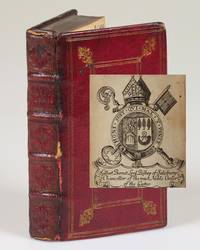
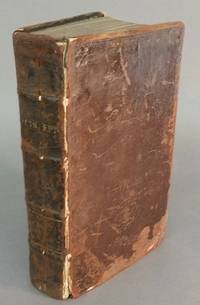
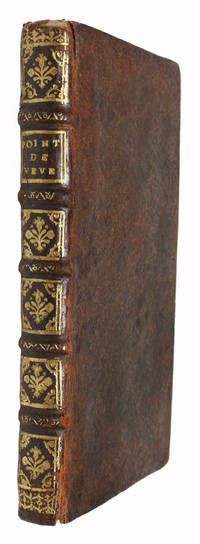
1640008360LVGD. Batavorum Leiden Netherlands: Ex Officina Elseviriorum Elzevir 1640. First Elzevir edition. Full leather. This diminutive volume is noteworthy for condition binding publication and provenance. This is the 1640 first Elzevir edition of Pliny with noteworthy 17th century provenance owned by Gilbert Burnet Bishop of Salisbury and historian and featuring notably clean contents in a lovely venerable binding. <br /> <br />The duodecimo volume measures 5.25 x 3 inches bound in attractive late 17th or early 18th century maroon Morocco covers paneled in gilt with French fillets forming an outer border and an inner frame the latter with floral vase cornerpieces raised bands spine once elaborately gilt in compartments featuring scrolling cornerpieces and lozenge centerpiece most of the gilt now eroded all edges gilt. Woodcut printers device on the title page woodcut headpieces initials and tailpiece. The verso of title page features the armorial bookplate of Gilbert Burnet Lord Bishop of Salisbury Chancellor of the most Noble Order of the Garter. First blank with the ink monogram of Edwin Wolf II 1911-1991 a librarian bibliophile author historian Franklin scholar and a civic leader in Philadelphia. Several leaves at rear with older ink marks in margins. <br /> <br />Condition approaches very good the joints a bit flaked with small cracks beginning at top and bottom spine evenly darkened fore margin of a few gatherings with faint browning other minor defects but nonetheless a sound and attractive copy the text notably bright and clean. <br /> <br />The publisher Elzevir was the name of a family of Dutch booksellers printers and publishers 15 members of which were in business between 1587 and 1681. Their duodecimo series of Elzevirs of which this is a lovely example became famous and desirable. After having enjoyed an almost legendary reputation among bibliophiles for excellence of typography and design the Elzevirs work is now regarded only as typical of the high quality that prevailed in their day in Holland. Among their four chief typographical devices the solitary consisting of an elm tree a fruitful vine and a man alone with a motto Non solus Not alone is perhaps the best known. This is the device that adorns the title page of this volume. <br /> <br />Offered four bishoprics while still in his twenties Gilbert Burnet 1643-1715 was not only the most celebrated clergyman of his time but also a person intimately involved with prominent figures during one of the most intriguing periods of British politics. Burnet is perhaps best known as a historian because of two remarkably popular and influential works - his account of the Reformation in England and his famous History of His Own Time both of which are still consulted. Born in Scotland where he held his first appointment as a minister of the Anglican church Burnet offended Charles II by his desire for greater tolerance of the Scotch Presbyterians and his opposition to Catholicism later proved so offensive to James II that Burnet retreated to Holland where this volume was published. There Burnet established warm relations with Princess Mary Jamess daughter who was eventually established on the throne of England with her husband William by the Glorious Revolution for which Burnet wrote a defense. In 1689 through Marys patronage he became bishop of Salisbury. Books from Burnets library are rarely on offer. <br /> <br />References: ODNB; LOC; The Library Company of Philadelphia; Brittanica. <br/><br/> Ex Officina Elseviriorum (Elzevir) hardcover
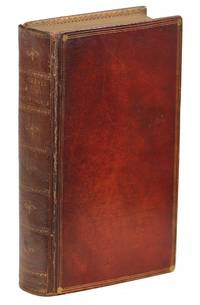
166900009791Lugduni = Lyon: Ex Officina Hackiana 1669. Later edition. Hardcover. Very Good. 8vo. 52 818 28 pp. Full late eighteenth-century red morocco with the spine in six and a half compartments lettered and decorated in gilt. Boards ruled in gilt with the edges and turn-ins decorated with gilt pointillé; all edges gilt. With a green silk ribbon bookmark bound in. Bound by Padeloupe in France. Illustrated with an engraved title page a woodcut publisher's device on the printed title page and with woodcut initials and headpieces. Early twentieth-century bookplate of Viscount Birkenhead on the front pastedown. Dibdin 331. Moss 494. Oxford Classical Dictionary 1198. Dibdin cites this imprint as one of the scarcest and most valuable of the octavo Variorum classics. This edition is praised for the elegance of its typography the correctness of the text and the usefulness of the commentary. Pliny the Younger was a soldier and a senator in the latter part of the first century A.C.E. into the second century A.C.E. During his lifetime he wrote and published nine books of literary letters concerned with social domestic judicial and political matters. These letters are rhetorically crafted with their syntax and semantics tooled to create a new literary style new to Rome. His letters provide a history of quotidian matters in Rome with plenty of anonymous criticisms aimed at slave owners political weasels and the miserly. Senatorial debates elections and trials and other matters of public life are revealed in his letters. The final book is composed of letters between him and Trajan. These were likely first published after Pliny's death. These letters function as a historical source for understanding how the Romans governed their provinces. In one letter Pliny describes one of the earliest accounts of Christian worship and describes the prejudiced attitude of pagan people towards what was then the Christian minority in the Roman Empire. An illuminating history of Rome beautifully bound. A Very Good or better copy with a touch of rubbing to the extremities particularly to the bottom corners and the front joint. Bookseller's ticket on the verso of the free front endpaper. Ex Officina Hackiana hardcover
16696728baX3Leyden Netherlands: Hackiana 1669. Book. Very good- condition. Hardcover. Roman history; philosophy; 818p.; 19.7cm; full old leather worn; front hinge cracked; engraved t. p. added; index; author Roman consul; one of earliest references to Christians in letter to emperor Trajan; Kasper von Barth 1587-1658; Francois Baudouin 1520-73; August Buchner 1591-1661; Isaac Casaubon 1559-1614; Joan Maria Catanaeo d.1529; Henri Estienne 1531-98; Joannes Fredericus Gronovius 1611-71; Janus Gruterus 1560-1627; Konrad Rittershausen 1560-1613; Joannes Veenhusen 17th century; Gerardus Joannes Vossius 1577-1659; bookplate. Hackiana Hardcover
1616373417Michel Colin Amsterdam Undated c.1616. Unframed Print. Very Good Condition. The page measures 17 x 22 cms printed to both sides. There is loss of blank margin and an old lower margin repair. A rather rare survivor of a very uncommon publication. Category: PRINTS : Antiquarian Interest; Antiquarian & Rare; PRINTS : Historic Interest; Special Features. This item may require more postage than the rates shown for delivery outside the UK. If extra postage is required we will contact you before processing your order and you will be given the details and option to decline the extra cost. Michel Colin unknown
1619MASTER139822INEW YORK: AMERICAN HISTORICAL SOCIETY. G IN RED LEATHER & CLOTH BOARDS W/ GILT LETTERING & MARBLED EPS. Pages: 1350. . 1916 -1925. HARDCOVER. 3 VOLUME SET. BOARDS VERY EDGEWORN. PAGES TONING PAGE EDGES SOILED. PREV. OWNER ADDRESS STAMPS. TEXT BLOCKS CLEAN & TIGHT. . AMERICAN HISTORICAL SOCIETY hardcover
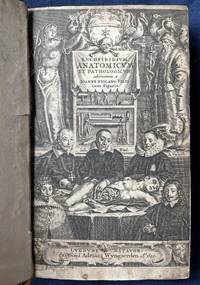
1649V75350Lugduni Batavorium Leiden.: Adrian Wyngaerden 1649. Hardcover. Good. Fine frontispiece of dissection deomonstration with named doctors present implements etc folding engraved plates 24 as called for by R.A. Persyn. Octavo later half calf and marbled sides 1" split to head&foot of hinge/tips worn 2047148pp Signatures: 8 2 A-Z AaBb8 Cc6 Cc6 blank Dd-Hh8 and 24 unsigned leaves of letterpress accompanying plates. Pages 411-416 omitted in numbering FEP with comments on Riolan by a previous owner. The folding plates and their facing textural explanations are printed on one side of the leaves only the first plate has a small repaired tear without loss last few blank versos of the pages are dusty in margins. Small loss to blank area of lower margin of frontis. Some stainging and minor tanning throughout to the pages but never intrusive and not affecting the crispness of the paper. Riolano was physician to Mary de Medici mother of Louis XIII and influenced the king to establish Paris' botanical gardens. This is one of his principal works but he also wrote against Harvey's blood circulation tried to disprove existance of Giants &c but according to the commentator on the front endpaper he was finally convinced of the circulatory vascular system towards the end of his life referenced by Waller 7998. Adrian Wyngaerden hardcover
16611600621661. In der Platte bezeichnet "Antonius Van Dyck Eques pinxit / P. Lombart sculpsit londini...". Gegensatzreicher Druck auf Bütten mit gleichmäßigem schmalen Rand um die Darstellung und den Schriftrand. 35 x 25,8 cm
1642EPL71London 1642. Paperback. Good. Published between 1628-1642. Based on the Common Debates of 1628. Including An act to prevent Extortions in Sheriffes Under-Sheriffes and Bayliffes of Franchises and Liberties in cases of Execution and An act for the better suppressing of unlicensed alehouse keepers. Upon question passed. Some contemporary inscriptions in English. Some pages remargined intermittent browning or chipping but a rare piece. Size: 260 x 180mm. <br/><br/> paperback
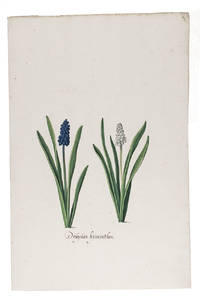
165019905Netherlands 1650. Watercolour ca. 13.5 x 13 cm on laid paper 31.5 x 21 cm with caption below. Delicate watercolour of two grape hyacinths by the Dutch watercolour painter and engraver Pieter Holsteyn de Jonge 1614-1673. Holsteyn made many drawings of plants birds and insects which were often composed in albums. Some of those albums are still intact and supplied with a title-page by the artist himself and as a result many of the drawings in those albums were not signed. These grape hyacinths were in such an album which was later taken to pieces. With certificate from Dr. S. Segal Amsterdam. In very good condition. unknown
1699V76045London: hos. Bennet 1699. Hardcover. Good. titlepage in red and black and all edges sprinkled red with top edge darkened. 8vo Newer brown leather with 5 raised bands to spine and gilt title date and rules to spine. Covers with blindstamped floral panells and with darker prinkled middle compartment to both covers.Edges quite worn & chipped especially to corners/ inner hinges reinforced Titlepage in double ruled border 6p =Preface 266pp 4p index. Page 265/6 and first leaf of index have some soiling and some paper loss to the outer margin not anywhere near the text. There are three fonts used in the book. Greek letter italic and Roman and they are also used in the side notes of the outer margin. At the foot of the pages in the front about a dozen pages have a tide mark not impinging on the print and in gathering O & P there is another feint tidemark which just touches the bottom two lines of text. Page 279/280 are cut a bit short but there is still plenty of margin. The last section of the text deals with the Fables of Aesop and how Bentley has traduced them. This copy is the 3rd edition of Boyle's book and has some additional new material added. hos. Bennet hardcover
169944461Iena Ehrt 1699. 12mo. Contemp. hcalf. Spine gilt. Binding defective at start another small work taken out 1613913 pp. and 20 textengravings some full page. Some leaves with a dampstain. <br/><br/><em>First edition of this curious and interesting tract on the history of haloes and nimbuses secular as well as religious. </em> unknown
167944323Paris Thomas Jolly 1679. Small8vo. 15x9 cm. Contemp. full sprinckled calf. raisedbands richly gilt spine. Top of spine a bit worn. Edges of covers gilt. 12861 pp. Last page "Extrait du Privilege du Roy". 34 fine full-page engravings 25 copper-engraved a. 9 in woodcut. A paperflw at foot of titlepage neathly repaired no loss of paper or letters. Internally clean and fine printed on thick good paper. <br/><br/><em>Extremely scarce first edition of Leclerc's important work on binocular vision in which he finds that one of the eyes has a dominant status thus announcing the discovery of the "Master-eye" - a discovery of outmost importance in the theory of shooting and elsewhere. With use of diagrams he shows that "things that can be seen clearly are seen with but one single eye.". He records and depicts a large series of experiments with binocular vision and shows geometrically the relation to the science of perspective and points out the importance of understanding the physiology of binocular vision for perspective painting in general.Sebastien Leclerc was originally an engraver who studied physics and geometry in relation to perspective theory a field of which he became famous. In 1672 he was appointed to "l'Academie de Peinture" as professor in perspective. He was also engraver to Louis XIV and was appointed professor at "l'Ecole des Gobelins". </em> unknown
16831308086Wittenberg, Brünings Witwe, 1683. Kl.-4to. 8; 8 Bl. Rücken-Broschur.
163060564Strasburg Dietzel 1630. Folio 34 x 215 mm. In contemporary full vellum with yapp edges. Title in contemporary hand to spine. Small paper label pasted on to spine indicating the volume's number in an estate library. Title-pages in red and black within historiated woodcut border. Binding soilied and with a few stains. Outer lower corner of title-page cut off no loss of text. A fine copy. 12 960 36 12 214 10 pp. <br/><br/><em>Fine copy of this later edition of two of Jesephus' most important works. The later work is a translation of a Latin christological version of Josephus' De bello Judaico dating from ca. 367-374 A.D. It is of uncertain authorship but cited as the work of "Hegesippus" or "Egesippus." It was transmitted among the works of and sometimes attributed to Ambrose Bishop of Milan Titus Flavius Josephus was a first-century Romano-Jewish historian who was born in Jerusalem. He fought against the Romans during the First Jewish–Roman War as head of Jewish forces in Galilee but surrendered in 67 CE to Roman forces led by Vespasian. After Vespasian became Emperor in 69 CE he granted Josephus his freedom at which time Josephus assumed the emperor's family name of Flavius. Josephus recorded Jewish history with special emphasis on the first century CE and the First Jewish–Roman War 66–70 CE including the Siege of Masada. His most important works were The Jewish War c. 75 and Antiquities of the Jews c. 94. The Jewish War recounts the Jewish revolt against Roman occupation. Antiquities of the Jews recounts the history of the world from a Jewish perspective for an ostensibly Greek and Roman audience. These works provide valuable insight into first century Judaism and the background of Early Christianity although not specifically mentioned by Josephus. Josephus' works are the chief source next to the Bible for the history and antiquity of ancient Palestine. For centuries Josephus' works were more widely read in Europe than any book other than the Bible. They are an invaluable eye-witness to a momentous turning point in Judaism Christianity and Western civilization. The present edition was first published in 1569. Graesse III Pp. 481-482 </em> hardcover
168556729Kiøbenhaffn Bockenhoffer 1685. Lille 8vo. Samtidigt helpergament. Lille stempel på titelbladet. 1411682 pp. Enkelte gl. tilskrifter og understregninger. Et par ark svagt bruntonede men et velbevaret eksemplar. <br/><br/><em>Originaludgaven af den første danske grammatik skrevet på modersmålet.Thesaurus II675. - Bibl. Danica IV62. </em> unknown
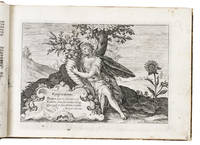
1614ABC_48468Utrecht 1614. Oblong folio ca. 18.5 x 26.5 cm. for Crispijn van de Passe Later half calf decorated paper sides gold-tooled spine and red sprinkled edges. With a full-page plate of Flora embracing the cornucopia in a landscape with an epigram by Arnoldus Buchelius in a cartouche in the left hand corner engraved by Simon van de Passe after Crispijn van de Passe 2 different frontispieces both appearing twice of ideal gardens full of flowers and 174 full-page engraved plates of flowers fruits fruit trees and medicinal plants mainly by Crispijn van de Passe the Younger 3 by his brother Willem van de Passe. 2 parts in 1 volume the first in 4 sections. 26 pp. 118 engraved ll.; 1 1 blank pp. 61 engraved ll. Very rare first Dutch edition of this famous book on horticulture including beautifully engraved plates of flowers organised according to the season in which they bloom and frontispieces showing the ideal garden. The work was first published in Latin under the following title: Hortus floridus in quo rariorum & minus vulgarium florum icones . without text published in Arnhem by Jan Jansz. in 1614. The expertly engraved plates were also sold separately and were constantly updated and amended by adding various details insects other animals or simply different numbers to meet demand. While the present first Dutch edition contains short explanations of the plates on separate typographical leaves the same information was only added to the Latin version of the work in its second edition 1616 - the corresponding text then appearing on the verso of each engraved plate. The text was written by Arnoldus Buchelius or Aernout van Buchel 1565-1641 a Dutch scholar and humanist from Utrecht who is now most known for specialising in genealogy and heraldry.This Dutch edition was soon followed by English and French editions. The Hortus floridus including translations was considered without question the most popular florilegium ever published An Oak Spring Flora and "Blunt calls this the most celebrated and influential of the early florilegia and one of the finest Hunt.The emphasis of the plates is on the common garden flowers with a preponderance of spring bulbs. The book was intended to provide inspiration for garden lovers who were invited to colour the black and white copperplate engravings themselves according to the colours they found in their own gardens. The introduction is enlarged with details on how to colour the plates. Many of the flowers shown are tulips hyacinths crocuses and other bulb plants mirroring the new enthusiasm and passion for bulbs which eventually led to the tulip mania of the years 1636-37 when contract prices for some bulbs reached extraordinarily high levels leading to the first recorded speculative bubble in history.As the plates were printed then modified and assembled at different times between 1614 and 1617 almost no two copies are the same - consisting of various numbers of plates with different title pages and prefaces. Our copy seems to be a practically complete copy of the Dutch edition containing an unmatched number of plates the only plate not present in this copy which is sometimes included in others is the engraved plate frontispiece of the Latin quotation from Matthew 6 Cognoscite lilia in part 2. The four sections of part 1 include 113 plates of flowers including the 99 that are called for in the preface organised per season: spring: 41; summer: 20; autumn: 26; winter: 12. The extra plates are as follows: 1: an addition to spring with plate 42 = second copy of plate 2 of summer 2: 12 plates depicting tulips numbered 43-54 and 3: an addition to autumn: a plate depicting two metal cylinders for growing flowers 1 with a tulip not found in any other copy consulted but possibly called for by Nissen "Garten Instruments".The second part includes 61 plates depicting 120 numbered depictions of fruits fruit trees and medical plants. This part included in most copies of the Latin edition and in some of the Dutch edition had been published already by Crispijn van de Passe the Elder around 1600-1604 when he was in Cologne in association with the publisher Hans Woutneel.The quality of the engravings is exceptionally fine and delicate representing real masterpieces of horticultural art executed by a leading family of engravers and publishers in the first half of the Dutch Golden Age.With a 19th-century round stamp with double eagle and the initials "H.C.P.S.G." and a red stamp "Ex libris J. Visser Rotterdam" on the title page with the red ex libris stamp also on the divisional title page of the second part. Lacking the engraved plate frontispiece of the Latin quotation from Matthew 6 Cognoscite lilia in part 2. The binding is very slightly rubbed the bottom outer corner of the back board is slightly damaged the typographical leaves are slightly soiled the head margin of the title page is cut short and restored with paper lightly foxed some very slight foxing and/or soiling throughout mainly to the outer edges of the margins some small marginal tears some restored in several leaves plate 44 spring with a repaired tear plate 43/44 in part 2 is repaired in the head margin. The verso of 45 plates show minute pricked holes in the leaf following the outlines of the depicted flowers and plants as a way of tracing the images on another leaf of paper or possibly another copperplate. Otherwise in good condition.l Franken 1881 no. 1346; Hunt no. 199; Nissen BBI no. 1494; Oak Spring Flora 12; Saunders Picturing Plants pp. 36-37; Savage The Hortus Floridus in: Transactions Bibiogr. Society Second series IV 1923 pp.181-206; Segal Flowers and Nature 1990 pp. 165-166; Soultrait 17th century 226; STCN 308020359 3 copies incl. 1 incomplete; USTC 1022789 4 copies incl. 1 incomplete; 3 the same as STCN; cf. Veldman Crispijn de Passe and his Progeny 1564-1670: a century of print production 2001 pp. 205-212. ABE CAT Art History unknown