3 353 résultats
SLIVCN-9781634856898NOVA SCIENCE PUBLISHERS INC (3/2017)
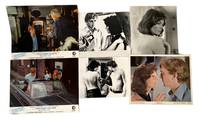
1966196421966. Antonioni Michelangelo director. Blow-Up 1966 examines perception photography and uncertainty within the cultural landscape of 1960s London placing a fashion photographer at the center of a narrative involving a possible murder captured unintentionally on film. As Antonioni's first English-language production the film situates itself within the visual and social environment of the London "mod" scene integrating fashion music and youth culture into its structure. Its treatment of sexuality and ambiguity contributed to the erosion of the Hollywood Production Code and preceded the establishment of the Motion Picture Association of America rating system marking the film as part of a broader shift in cinematic regulation and content standards. Awarded the Palme d'Or at the Cannes Film Festival the film occupies a central place in discussions of postwar European art cinema and the changing boundaries of representation.<br /> <br /> Blow-Up. Metro-Goldwyn-Mayer: United States 1966. Archive of six original promotional photographs issued for theatrical display ranging in size from approximately 6.5 x 8 to 8.75 x 11 inches including three color and three black and white prints. Images depict scenes from the film including interactions between Vanessa Redgrave and David Hemmings and views of Hemmings' Rolls-Royce emphasizing both character dynamics and the material culture of the London setting. Black and white photographs include production and photography information on the verso while color prints feature the film title actor names and MGM logo along the lower margin.<br /> <br /> Produced during a period of rapid transformation in film aesthetics and censorship standards Blow-Up aligns with broader developments in 1960s cinema that prioritized ambiguity visual experimentation and contemporary urban life. Its focus on the act of looking and the instability of photographic evidence reflects wider cultural concerns with media surveillance and reality during the decade. Promotional materials such as these photographs document how studios presented avant-garde narrative and stylistic elements to mainstream audiences bridging commercial exhibition and art cinema discourse. Minor handling wear with one photograph showing faint pinholes; overall very good to excellent condition. unknown
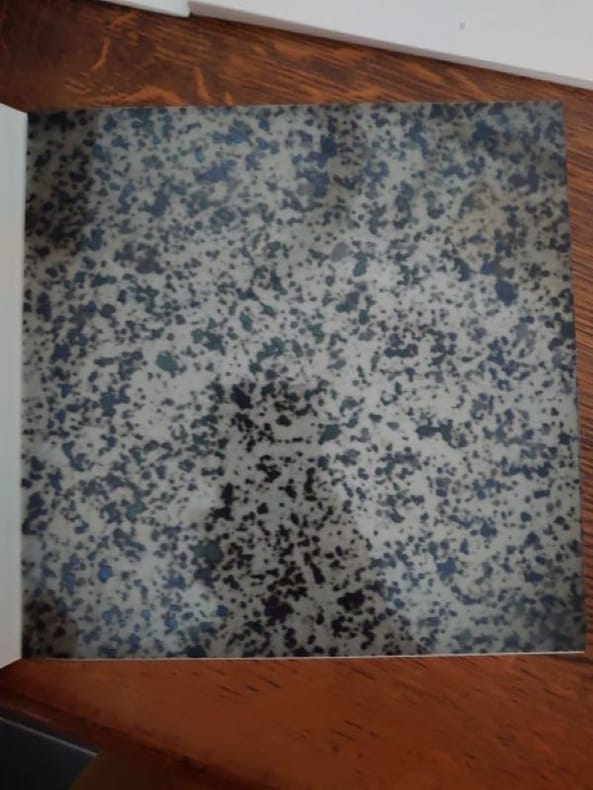
105328Bruxelles-Paris, Les maîtres de forme contemporains, M. & L. Durand-Dessert, 1993, un livre broché 230x 230x15 mm contenu dans un boîtier est réalisé à partir d’un miroir sérigraphié sur plexiglas. A l’intérieur du boîtier, l’on trouve dix cahiers de photos comprenant six images de Pistoletto et huit cahiers de textes, y compris un texte original de Jacques Meuris. Le boîtier contient également une œuvre originale de l’artiste appelléeRotazione dei Corpi,représentant un détail de l’épaule del’Homme interstellairede Pistoletto. Édition de 120 exemplaires, 15 exemplaires hors commerce et 10 épreuves d’artistes, tous numérotés et signés par Michelangelo Pistoletto et Jacques Meuris. État neuf. (105328)
In-foli cm. 31 X 40 pp. 416 con 500 ill. a colori, manca l'inserto di 16 pag. in carta pergamenata. Legatura in pergamena con dorso in pelle con nervature. Impressioni in oro sui piatti, tiratura di 1999 esemplari (647). Come nuovo in cofanetto illustrato.
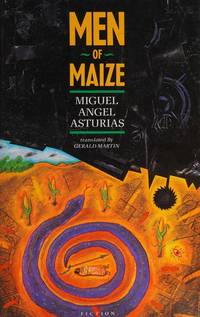
1971009639New York: Doubleday & Co. 1971 New York: Doubleday 1971. Stated first edition. White pictorial boards dustjacket. Asturias was the winner of the 1967 Nobel Prize for Literature. A neglected Nobel laureate Asturias a Guatemalan novelist is thought to be the "father" of "magic realism". Doubleday & Co. hardcover
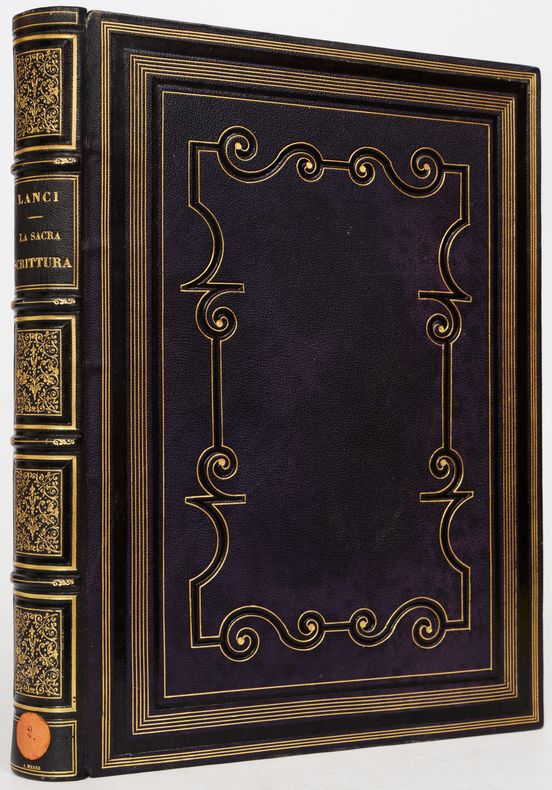
182776Rome, Società tipografica, 1827 2 parties en un vol. in-4, [8]-264-17 pp., [8] ff. n. ch. de tables, avec 7 planches, gravées au trait, chagrin marine, dos à nerfs à caissons dorés richement ornés, encadrements de triple, quadruple et simple filet doré sur les plats enserrant un décor géométrique également doré, double filet doré sur les coupes, tranches mouchetées, encadrement de quadruple filet doté sur les contreplats, gardes doublées de papier gaufré ivoire (J. Weber). Une tache sur le plat supérieur, mais bel exemplaire, à grandes marges.
182775Paris, Dondey-Dupré, 1845 2 vol. in-4, XV-384 et VIII-406 pp., avec 9 planches gravées au trait (à la fin du volume I), demi-chagrin marine, dos à nerfs ornés de filets et de caissons dorés, coins en vélin vert, tranches mouchetées (reliure de l'époque). Rousseurs, mais bon exemplaire.
1988014516Verso Books. Unclipped DJ in archival cover minor edge wear. . Fine. Hardcover. 1988. Verso Books hardcover
185053296Torino: Stab. Fontana 1850. In-4 p. mm. 323 x 229 3 volumi mz. pelle coeva decorazioni e titolo oro al dorso pp. 216; 208; 2202; incluse 3 belle antiporte allegoriche; ornato da pregevoli grandi iniziali figurate e finali incise su legno; illustrato da 305 su 306 bellissime tavole caricaturali incise in rame non firmate. Straordinaria opera di satira politica soprattutto contro il Papato la Francia e l'Austria. L'Autore già comproprietario e articolista del "Don Pirlone" caduta la Repubblica Romana fuggi' a Torino dove pubblicò la presente opera mantenendone lo stile satirico che aveva fatto la fortuna del giornale romano. "Prima edizione" rara e molto ricercata. Cfr. Inventario Raccolta Bertarelli "Risorgimento Italiano"I6395.Esemplare con lievi fioriture peraltro in buono stato. Stab. Fontana, unknown
17838Michelangelo. Edited by Cesare Guasti. CXXXV pp. introductory text 367 pp. transcriptions of the poems copious notes indices 2 facsimile plates. 4to. Orig. printed wrpps. somewhat worn and rubbed. Florence Le Monnier 1863. The fine scholarly edition of Michelangelo's poems by the noted historian and critic of Florentine art. unknown books
1960138792Italy: Nepi Film 1960. Vintage borderless photograph from the set of the 1961 film. A candid aerial photograph of Mastroianni Moreau and two other cast members conversing around a table. With a stamp for Telecine and a few annotations on the verso. <br/><br/>The second film in the trilogy that begins with "L'Avventura" 1960 and ends with "L'Eclisse" 1962. Shot on location in Milan. <br/><br/>Probably no one has ever said it better than Bosley Crowther who reviewed the film for the New York Times in 1961: "Too sensitive and subtle for apt description are Antonioni's pictorial fashionings of a social atmosphere a rarefied intellectual climate a psychologically stultifying milieu-and his haunting evocations within them of individual symbolisms and displays of mental and emotional aberrations. Even boredom is made interesting. There is for instance a sequence in which a sudden downpour turns a listless garden party into a riot of foolish revelry exposing the lack of stimulation before nature takes a flagellating hand. Or there's a shot of the crumpled wife leaning against a glass wall looking out into the rain that tells in a flash of all her ennui desolation and despair."<br/><br/>9.5 x 7.5 inches. Near Fine. In a custom museum-quality frame archivally mounted with UV glass. <br/><br/>Criterion Collection 678. Eureka Masters of Cinema 61. Nepi Film unknown books
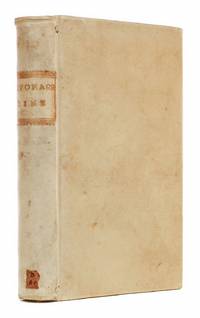
65820Firenze Florence: Appresso Domenico Maria Manni 1726. Small 8vo. 16 x 10 cm. pp.xxx1923. Near contemporary full vellum spine with gilt lettering and old shelf label marbled endpapers to pastedowns edges dyed blue. Charming wood-cut vignettes throughout. Old ownership inscription to title-page Melchior Magius Romae C.A.C 1727 an additional later inscription dated 1844 to flyleaf. Some faint spotting and toning generally a very good example. Michelangelo Buonarroti was a prolific poet writing over 300 poems including sonnets madrigals and epigrams during his lifetime. Michelangelo's poetry often overshadowed by his monumental visual art was deeply romantic intensely personal and frequently controversial due to its homoerotic themes and intense emotional expressions. Largely dedicated to young men with the most famous recipient being the Roman nobleman Tommaso dei Cavalieri these poems represent one of the first known examples in high art of a man openly declaring his passion for another in a confessional manner. This edition contains essays humanist Benedetto Varchi and Mario Guiducci apologist for Galileo. Firenze [Florence]: Appresso Domenico Maria Manni, 1726. hardcover
In 4', leg. in tela con sovracc. ill., pp. 1019, 868 ill. n.t.Dedica autografa di Paolo Portoghesi in prima bianca.Protetto con sovracc. artigianale di plastica trasparente, lievi usure agli angoli e ai margini. Buone condizioni.Saggi di Giulio Carlo Argan, Aldo Bertini, Sergio Bettini, Renato Bonelli, Decio Gioseffi, Roberto Pane, Paolo Portoghesi, Bruno Zevi.Il volume offre agli studiosi una documentazione affatto originale della produzione architettonica michelangiolesca dalla tomba di Giulio II e dall'impianto della Sistina alla cappella Sforza e all'intervento estremo di Santa Maria degli Angeli. Tutti gli schizzi architettonici di Michelangiolo sono qui riprodotti, spesso in grandezza naturale e in quadricromia. Le rilevazioni dei monumenti sono state eseguite appositamente per questo libro e costituiscono un patrimonio filologico di eccezionale importanza che consente una precisa identificazione dei segni michelangioleschi. Centinaia di nuove fotografie illustrano gli spazi, i volumi, le modanature rapprese o erompenti, gli scatti della scrittura architettonica buonarrotiana.Luogo di pubblicazione TorinoEditore EinaudiAnno pubblicazione 1964Materia/Argomento Architettura, Michelangelo
85270Florenz «A spese dell’editore» 1852. Gr.8° 1 Bl. Impressum Titelbl. XII 151 S. Priv.-HLwd. d. Zt. m. goldgepr. Rückenschildchen Rücken min. fleckig Deckel min. beschienen Exlibris a. Innendeckel Papier tlw. etw. gebräunt von rosa ausgeblichen u. min. stockfl. - Exemplar m. unterschiedlicher Bogengrösse Druck oben und innen zentriert: allg. gutes Ex. «Una ristampa della edizione fattane già nella Etruria» etw. verbessert. Ex. Nr. 3/65 von Pietro Fanfani im Impressum signiert. 010 Florenz, «A spese dell’editore», 1852 unknown
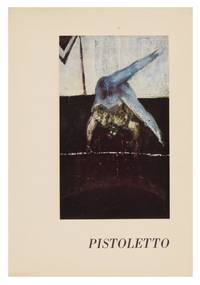
196031839Torino: Galatea 1960. Two pinholes to front panel; thus close to near fine. Scarce with single OCLC record located worldwide Reina Sofia. Octavo. Bifolium catalogue from Michelangelo Pistoletto's first exhibition of paintings Mar. 30 - Apr. 15 1960. With descriptive list of 20 exhibited works accompanied by an insightful commentary from Luigi Carluccio—positioning Pistoletto as against-the-grain for his post-War commitment to figuring the human body. Front panel illustrated with a striking tipped color plate. Torino: Galatea unknown
17353981735 Couverture rigide A Florence, chez Michel Nestnus & François Moucke, 1735. Un volume in-8 (18,5 x 13 cm), reliure plein vélin, dos lisse, titre doré, pièce de titre en maroquin rouge. Texte juxtalinéaire italien-français, 308 pages, vignette(s) au(x) titre(s), bandeaux et culs de lampe gravés, quelques rousseurs et piqûres éparses. Traduction effectuée par Vlenghels, selon Le Barbier. L'édition originale date de 1557. Ludovico Dolce, écrivain et théoricien de l'art, établit dans ce texte un dialogue fictif entre Francesco Fabrini (1516-1580) et L’Aretin (1492-1556), révélateur du débat entre l'art florentin et vénitien de l'époque. Dolce considère notamment que les oeuvres de Raphaël et du Titien sont bien supérieures à celle de Michel-Ange. Bon exemplaire.
1557Bruxelles, Les Maîtres de forme contemporains, 1993. 22 x 22 cm, pagination discontinue, en feuilles sous chemise imprimée sous emboîtage conçu par Michelangelo Pistoletto et réalisé en sérigraphie sur plexiglas miroir. Plexiglas rayé (mais peut-être est-ce normal?). Un des 5 exemplaires numérotés marqués EA/JM et signés par les deux auteurs. A l'intérieur du boîtier, l'on trouve dix cahiers de photos comprenant six images de Pistoletto et huit cahiers de textes, y compris un texte original de Jacques Meuris. Le boîtier contient également une oeuvre originale de l'artiste appellée Rotazione dei Corpi, représentant un détail de l'épaule de l'Homme interstellaire de Pistoletto. Oeuvre tirée en photostat sur transparents à l'intention de cet ouvrage.
Reggio Emilia, Scripta Maneant 2012, in-folio, legatura editoriale mezza pelle con sei nervi al dorso, copertina rivestita in pergamena con impressioni e titoli dorati, cofanetto telato con titoli dorati, pp. 415 completamente illustrato a colori. Tiratura di 1999 esemplari, la nostra copia n. 567. In stato di nuovo.
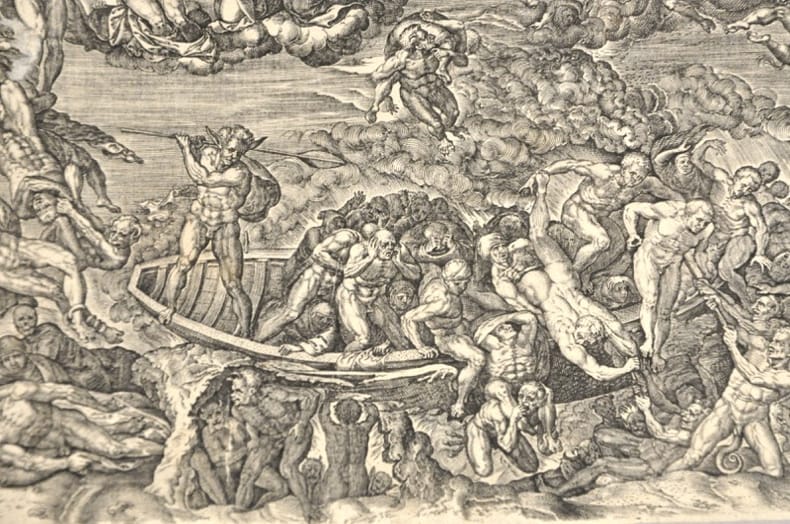
2977Fin XVIe siècle Belle épreuve légèrement jaunie, coupée au sujet avec des accidents restaurés au verso, petit manque. 31 x 22,8cm. Filigrane à la crosse la Bâle dans monogramme utilisé au XVIe siècle de 1520 à 1606, Gaudriault, Filigranes (…) p119 N° 488. Avant la signature te l’inscription sur la dalle. Portrait médaillon représentant Michel-Ange, le visage tourné vers la gauche, mention « MICHAEL ANGELUS BONAROTUS PATRICIUS FLORENT AN ANGENS LXXIII »C’est surtout par la gravure, permettant d’avoir une vue d’ensemble du jugement dernier, que la fresque de Michel-Ange obtint une reconnaissance universelle. Ce qui explique la prolifération des copies tout au long du XVIe et XVIIe siècle de cette œuvre majeure. Bel exemplaire ne tirage du XVIe siècle avant la lettre et d’un très bel encrage.
28232Mantua Italy : Edizioni Corraini 2005. Small quarto 250 x 180 mm pp. 32 printed on diecut aluminium leaves spiral bound in publisher's original cardboard slipcase. Limited to 700 copies signed and numbered by the artist. Text in English and Italian. An as new copy very fine. A striking artist's book / private press production printed entirely on aluminium sheets which accompanied Pistoletto's exhibition of the same name where he created six large scale dining tables out of steel conceived as meeting point for the cultures and nations bordering the seas. ""Understanding and accepting the Other is the most threatening dare that recent history challenges us"" says Angela Vettese editor of this book. Michelangelo Pistoletto picks up this dare and shows us six ""dining tables of cultures"" projected thinking at the form of the seas that link different people landscapes and cultures: from Mediterranean sea to Baltic from South China sea to Caribbean sea without forgetting Black and Red sea. If a sea joins an island can be the setting of a world in which art claims a responsible change in society: in San Servolo island near Venice the italian artist presented Cittadellarte some installations that show a different social structure in politics communication works economics and so on. Even the book's construction reflects Pistoletto's sensibility towards nature: every page included cover are made of aluminium. Some of these are punched and like open doors show the concepts on which is based the new civilization pushed by Cittadellarte. 'Michelangelo Pistoletto is an Italian painter performance artist and theorist. Best known for his innovative stainless steel paintings with mirror-like surfaces he also produced pioneering performance art and sculptural installations. He maintained a lifelong interest in the use of humble and discarded materials and at the height of his career was considered one of the stars of the Italian art movement Arte Povera. Born on June 25 1933 in Biella Italy he studied art while apprenticing at his father’s restoration workshop and in 1960 mounted his first solo show of figurative paintings and portraits at the Galleria Galatea in Turin. He rose to international prominence with his sculpture series Minus Objects1966 which includes a set of columns and a two-dimensional table and chairs. The work along with a series of mirror paintings was awarded first prize in the São Paulo Biennale. Growing increasingly reclusive over time Pistoletto withdrew his work from the Venice Biennale in 1968 due to the student riots. He has had solo exhibitions in institutions around the world notably including the Tate Modern in London and the Guggenheim Museum in New York. He lives in Turin Italy.' - Artnet http://www.artnet.com/artists/michelangelo-pistoletto/ unknown
BN86164Leuven/Louvain B University Press. Sporen in Belgie. 175 Jaar Spoorwegen - 75 Jaar NMBS. <br/><br/> Leuven/Louvain (B), University Press unknown
ill., cart.
1960138792Italy: Nepi Film 1960. Vintage borderless photograph from the set of the 1961 film. A candid aerial photograph of Mastroianni Moreau and two other cast members conversing around a table. With a stamp for Telecine and a few annotations on the verso. <br /> <br /> The second film in the trilogy that begins with "L'Avventura" 1960 and ends with "L'Eclisse" 1962. Shot on location in Milan. <br /> <br /> Probably no one has ever said it better than Bosley Crowther who reviewed the film for the New York Times in 1961: "Too sensitive and subtle for apt description are Antonioni's pictorial fashionings of a social atmosphere a rarefied intellectual climate a psychologically stultifying milieu-and his haunting evocations within them of individual symbolisms and displays of mental and emotional aberrations. Even boredom is made interesting. There is for instance a sequence in which a sudden downpour turns a listless garden party into a riot of foolish revelry exposing the lack of stimulation before nature takes a flagellating hand. Or there's a shot of the crumpled wife leaning against a glass wall looking out into the rain that tells in a flash of all her ennui desolation and despair."<br /> <br /> 9.5 x 7.5 inches. Near Fine. In a custom museum-quality frame archivally mounted with UV glass. <br /> <br /> Criterion Collection 678. Eureka Masters of Cinema 61. Nepi Film unknown
Lotto comprensivo di 188 stampe in nero originali, presumibilmente di diversa provenienza, tutte raffiguranti soggetti classici (prevalentemente religiosi e mitologici) ricavati da grandi autori quali Raffaello, Michelangelo, Rubens, Reni, Leonardo Da Vinci, ... Stampate in Francia, non datate ma, presumibilmente, risalenti ai primi decenni dell'800. Dimensioni: 12 x 18 cm all'incirca. Stato di conservazione: Qualche inevitabile ossidazione della carta, alcune stampe presentano piccole mancanze o tagleitti sui margini, alcune presentano i margini un po' rifilati, due o tre stampe (in totale) presentano una scritta apenna sul margine bianco ma, nell'insieme, un lotto ben conservato Si vedano le fotografie che fanno parte integrante della descrizione. Soggetti vari: una quindicina di stampe sono dedicate a San Bruno "Couronnement de Charlemagne" (Raphael) "La peste" (C. Procaccini) "Galilèe en prison" "La jurisprudence" (Raphael) "Proserpine aux enfers" Pandore Apollo "Danse des muses" Centaure "Gladiateur mourant" "Incendie de Borgo Vecchio" (Raphael) "Salomé fille d'Herodiade (Leonard de Vinci) "Paysage - scene d'effroi" "Paysage - Animaux près d'une ruine", "Vue des bords de la mer" St. Michel Bacco Promethée "Les bergers d'Arcadie" "Massacre des innocens" "Victoire d'Ostie" diverse stampe ritraggono la Santa Famiglia "La nativité" Ercole "Diane et ses nymphes" "Le bapteme" St. Marc Milon de Crotonne "Salomon et la reine Saba" Amazone "Naissance de l'amour" "Abram recevant les trois anges", St. Madaleine St. Jérome St. Barthélemy "Venus Victorieuse" "Marche de silène" "St. Antoine tourmente par le demon" "Fuite en Egypte" "Charles Ier" "Les lutteurs" "Le char de l'aurore" (Guido Reni) ....
Interessante carteggio di Michelangelo Billia indirizzato allo scrittore Odoardo Campa. Studioso di filosofia Billia fondò la rivista filosofica Nuovo Risorgimento (1891), fu Arconte del Sillogo Filellenico per la Confederazione orientale. Polemista violento, sostenne con tenacia il rosminianesimo, specialmente contro i neotomisti.