3 354 résultats
1993116558Lisboa Lisbon Portugal: Museu Calouste Gulbenkian 1993. Softcover. VG but for light sunning to page and cover edges;. White wraps with color-illustrated cover; protective cover; 111 pp. with 20 works pictured in color and bw;. Text in both Portuguese and English; works are in large color plates with Portuguese descriptions followed in the back by small bw reproductions with English translations of descriptions; includes an index of the works and an essay;. Museu Calouste Gulbenkian paperback books
1993347019Lisboa : Museu Calouste Gulbekian : Fundação Calouste Gulbekian 1993. First Edition. Softcover. Near fine copy in the original stiff-card wrappers; edges very slightly dust-dulled and toned. Remains particularly and surprisingly well-preserved; tight bright clean and especially sharp-cornered. Physical description; xii 111 pages : illustrations some color ; 32 cm. Notes; Cover title: Os Guardi da Collecção C. Gulbekian = The Guardi paintings of the C. Gulbekian Collection. Errata slip pasted in. Text in Portoguese and English. Includes bibliographical references. Portuguese and English. Subjects; Guardi Francesco 1712-1793. Guardi Giacomo 1764-1835. Guardi Francesco 1712-1793 ; Catalogs. Museu Calouste Gulbenkian ; Catalogs. Fundação Calouste Gulbenkian Catalogs. Painting Portugal Lisbon ; Catalogs. Painting Italian 18th century. Venice Italy in art. Genres; Bibliography. Catalogs. Catalogue. Illustrated. Lisboa : Museu Calouste Gulbekian : Fundação Calouste Gulbekian paperback
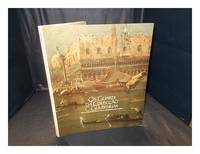
1993116558Lisboa Lisbon Portugal: Museu Calouste Gulbenkian 1993. Softcover. VG but for light sunning to page and cover edges;. White wraps with color-illustrated cover; protective cover; 111 pp. with 20 works pictured in color and bw;. Text in both Portuguese and English; works are in large color plates with Portuguese descriptions followed in the back by small bw reproductions with English translations of descriptions; includes an index of the works and an essay;. Museu Calouste Gulbenkian paperback
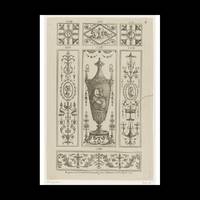
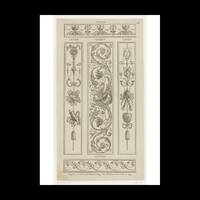
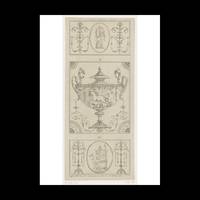
1785013Contentum Ltd. Loose sheet. New. High-quality art print based on an original work from the Rijksmuseum. Created in the 18th century 1779. Professionally printed on premium fine-art paper Photo Rag Bright White premium quality in size A2. The artwork is printed with a white border museum-style presentation. Contentum Ltd. unknown
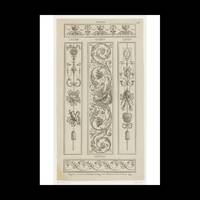
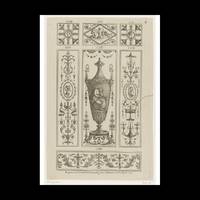
1785024Contentum Ltd. Loose sheet. New. High-quality art print based on an original work from the Rijksmuseum. Created in the 18th century 1779. Professionally printed on premium fine-art paper Museum Etching museum quality in size A3. The artwork is printed with a white border museum-style presentation. Contentum Ltd. unknown
1785014Contentum Ltd. Loose sheet. New. High-quality art print based on an original work from the Rijksmuseum. Created in the 18th century 1779. Professionally printed on premium fine-art paper Museum Etching museum quality in size A2. The artwork is printed with a white border museum-style presentation. Contentum Ltd. unknown
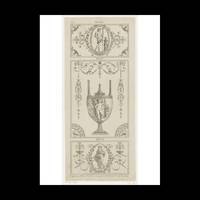
1785027Contentum Ltd. Loose sheet. New. High-quality art print based on an original work from the Rijksmuseum. Created in the 18th century 1779. Professionally printed on premium fine-art paper Museum Etching museum quality in size A2. The artwork is printed with a white border museum-style presentation. Contentum Ltd. unknown
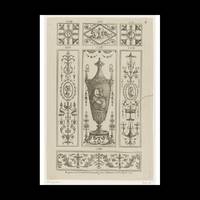
1785025Contentum Ltd. Loose sheet. New. High-quality art print based on an original work from the Rijksmuseum. Created in the 18th century 1779. Professionally printed on premium fine-art paper Photo Matt Fibre in size A2. The artwork is printed with a white border museum-style presentation. Contentum Ltd. unknown
1785012Contentum Ltd. Loose sheet. New. High-quality art print based on an original work from the Rijksmuseum. Created in the 18th century 1779. Professionally printed on premium fine-art paper Photo Matt Fibre in size A2. The artwork is printed with a white border museum-style presentation. Contentum Ltd. unknown
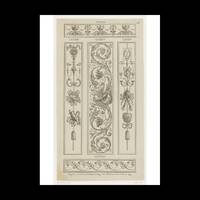
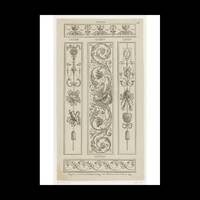
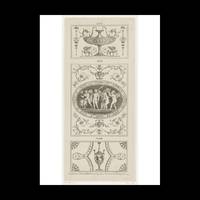
1785026Contentum Ltd. Loose sheet. New. High-quality art print based on an original work from the Rijksmuseum. Created in the 18th century 1779. Professionally printed on premium fine-art paper Photo Rag Bright White premium quality in size A2. The artwork is printed with a white border museum-style presentation. Contentum Ltd. unknown
1785011Contentum Ltd. Loose sheet. New. High-quality art print based on an original work from the Rijksmuseum. Created in the 18th century 1779. Professionally printed on premium fine-art paper Museum Etching museum quality in size A3. The artwork is printed with a white border museum-style presentation. Contentum Ltd. unknown
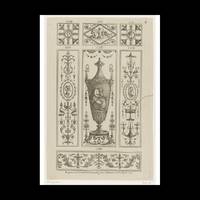
1784978Contentum Ltd. Loose sheet. New. High-quality art print based on an original work from the Rijksmuseum. Created in the 18th century 1777. Professionally printed on premium fine-art paper Museum Etching museum quality in size A3. The artwork is printed with a white border museum-style presentation. Contentum Ltd. unknown
1785419Contentum Ltd. Loose sheet. New. High-quality art print based on an original work from the Rijksmuseum. Created in the 18th century 1778. Professionally printed on premium fine-art paper Museum Etching museum quality in size A3. The artwork is printed with a white border museum-style presentation. Contentum Ltd. unknown
1785001Contentum Ltd. Loose sheet. New. High-quality art print based on an original work from the Rijksmuseum. Created in the 18th century 1777. Professionally printed on premium fine-art paper Museum Etching museum quality in size A3. The artwork is printed with a white border museum-style presentation. Contentum Ltd. unknown
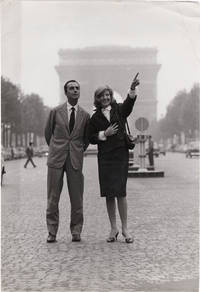
1963150442N.p.: N.p. 1963. Vintage borderless black and white photograph of Michelangelo Antonioni and Monica Vitti at the Place Charles de Gaulle in Paris with the Arc de Triomphe in the background. With the stamps of Cinemonde Archives and Parimage on the verso. <br /> <br /> Vitti and Antonioni enjoyed a prolonged romantic and professional relationship throughout the late 1950s and 1960s creating "L'avventura" 1960 "La Notte" 1961 and "L'eclisse" 1962. Vitti's fourth film with Antonioni "Il Deserto Rosso" 1964 was filmed shortly after Vitti returned to Rome from Paris where she starred in Roger Vadim's 1963 comedy "Nutty Naughty Chateau." <br /> <br /> 7.5 x 10.75 inches. Very Good plus with light creasing to the top corners faintly toned along the left edge. N.p. unknown
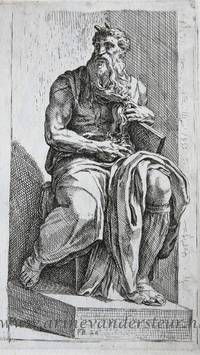
66038The Moses of Michelangelo in the church of St. Pietro in Vincoli in Rome. Signed and numbered on the pedestal: ""FP B 20"" FP monogrammed and the B stands for ""Bergognone"". From 'Segmenta Nobiliarum Signorum et Statuarum' a series of 101 etched plates frontispiece and 100 illustrations representing statues from Rome first published in Rome in 1638 and reprinted five times before the end of the seventeenth century. On verso on the bottom right corner collector's mark: ""P"" in black stencilled. Date of publishing print: 1638. Etching on laid paper; plate mark: 219 x 129 mm total: 292 x 180 mm; some soiling on the external margins a brownish stain towards the bottom right otherwise very nice impression. Le Blanc 38-137. unknown
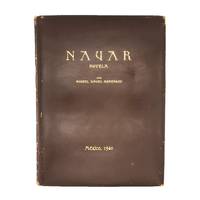
194061ORIGINAL TYPESCRIPT ANNOTATED BY THE AUTHOR OF THE NOVEL THAT WON THE FIRST MEXICAN NATIONAL PRIZE FOR LITERATURE AND THE HONOURABLE MENTION AT THE FIRST LATIN AMERICAN PRIZE NOVEL CONTEST IN NEW YORK 1940-41.<br /><br />Large 4to. Initial blank title leaf 197 ff. final blank. Occasional pen annotations in dark blue ink throughout the text by the author. Elegant presentation binding in brown soft faux leather with gilt letterings stamped on front cover and spine. Brown synthetic cloth endpapers with light reflective effect creating wavy lines. Typed on high-quality paper handmade thin and very crisp showing pattern of half rising suns as watermark. Trimmed edges styled unevenly rough irregular surface. A few marks chipping and rubbing to binding mostly along board extremities and spine. We did not manage to locate duplicates nor other similar typescripts in public libraries. Excellent condition. An exceptional item through which the final steps of the novel's genesis can be studied. Thanks to the annotations of the author who proofread the text sometimes elegantly overwriting little parts of it adding words and entire phrases or erasing unnecessary elements one can appreciate the last changes the final touching and retouching of the author before submitting his typescript to the jury. A comparison between this typescript and the novel's first printed edition reveals that not all these changes were eventually included in the final version. It is of the greatest interest to observe the "labor limae" of the artist and be in the capacity to learn which words he first used and then decided to exclude forever from the text.<br /><br />THE NOVEL. <i>There are no better words than those chosen by Howard S. Phillips in his article Mexico's Prize Novel which appeared in the University of Oklahoma literary magazine Books Abroad 1941 to introduce this outstanding piece of writing on the everyday life and exploitation of the indigenous Cora people in the Nayarit state: "Original in structure word-lean yet evolved in distinguished lyrical prose allusive rather than graphic in its nonetheless profoundly incisive characterization the story of Nayar dealing with a small and isolated corner of Mexico projects in its social purport a singularly true and comprehensive panorama of the entire country and even more – of all Latin America. Though as an example of creative writing its virtues are manifold this is its salient merit. Its opening chapters devoted in large part to the creation of the primordial background the description of the sierra and jungle of Nayarit attain a beauty and puissance fairly comparable to Hudson's 'Green Mansions.' The episodes though wrought with an almost austere realism are not presented mainly for their story content but each embodies a profound symbolical significance." Furthermore as Phillips pointed out this important novel that contributed to popularise greatly the Latin American "indigenista" genre is also: "a deeply penetrating study … of the mestizo: the most authentic Mexican type who after four centuries of biological assimilation has yet failed to achieve his complete social and psychological integration. The book voices the drama of the Mexican mestizo aimlessly groping through the jungles of his existence in pursuit of his own ultimate destiny." In addition to this splendidly written review it should be stated that Nayar impresses also for the powerful magical elements illustrated in it taken from the old traditions of the native world as well as its richness in indigenous vocabularies a list of which follows the text at the end of the book.<br /></i><br />THE AUTHOR. <i>Born in Izamal the author Miguel Ãngel Menéndez 1905-1982 studied at the Escuela Modelo and the Instituto Literario de Yucatán. Then he moved to Hollywood where he worked for a while in the film industry. Returned to Mexico he held political charges and contributed to founding the National Revolutionary Party 1929. Throughout more than 60 years he dealt with journalism publishing several reports and articles and also establishing and directing the Mexico City Herald. Besides award-winning novels he wrote essays and several poems. In his crucial study on C20th Mexican literature José Luis MartÃnez has it this way while introducing the author: "Menéndez que se dio a conocer como poeta alcanzó su mayor acierto con una hermosa novela indigenista… Pese a sus restricciones y a una consistencia más lÃrica que genuinamente novelesca Nayar de Miguel Ãngel Menéndez es la mejor novela aparecida en 1941. El cuidado estilo la atención que tuvo el autor en su composición y las dotes de mesura unidas a la buena intención social con que Menéndez se encaró al problema de los indÃgenas nayaritas justifican sin duda tal aserto." p. 116 see references section.<br /></i><br />THE CONTEXT. <i>It is worth illustrating thoroughly the historical and political context in which Nayar originated in order to fully understand its relevance which is not just literary but diplomatic as well. In 1940 Washington-based Pan-American Union 1889-1949 today's OAS Organization of American States jointly with Farrar & Rinehart Publishing House of New York summoned the writers of all the Latin American countries to take part in a continental competition for the first Pan-American literary award. This event was part of a number of initiatives taken in several fields and at various levels aimed to tighten friendly relationships between North Central and South America. In the wake of the tragic outbreak of WWII and the proliferations of dictatorial regimes and extreme ideologies the PanAmerican Union felt urgently the need to foster peace and unity within the Americas. Thus following the idea known as Moral Disarmament and the Good Neighbour policy the Union started to encourage international cooperation and understanding to ensure that war between nations could no longer be possible. In this scenario the main obstacle to the Pan-American Union's plan was to beat the historical distrust that Latin America had towards the idea of Pan-Americanism especially if it came from an organisation on which the United States had great influence. Any such attempt coming from the US was often seen as northern American imperialism. However as Veremundo Carillo Reveles showed in his crucial study on the topic this problem found solution mainly thanks to the woman behind the organisation of the Latin American Prize Novel Contest Mexican Concha Romero James who in 1935 became head of the Division of Intellectual Cooperation of the Pan-American Union. Thanks to Concha Romero the competition had an important feature: the organisers sought the support of circles of Latin American thinkers and their collaboration with US writers and publishers. In other words it was not just unilateral initiative coming from the north to the south of the continent but it was structured horizontally on two levels. The call for participants and selection of the novels that represented the 20 Latin American republics and Puerto Rico were carried out by independent national committees. Then the selected works competed in front of an international jury that granted the final award.<br /></i><br /><i>The international jury had a double function: to offer certainty of impartiality and to include the United States so that the contest had a true Pan-American meaning. Its members were carefully selected. American novelist John Dos Passos was the most relevant figure among the judges who provided highlevel legitimacy to the competition. At that time Dos Passos son to Portuguese immigrants was already a world-renowned storyteller with several works translated into Spanish. The second member of the jury was Chilean writer Ernesto Montenegro whose moral authority was greatly appreciated among the literary circles of Latin America and the United States. In addition to collaborating with various newspapers including The New York Times El Mercurio La Nación Excelsior and El Universal de Venezuela Montenegro delivered lectures at various US universities on Latin American literature. In this sense he was a link between the two Americas the Latin and the Anglo-Saxon. The third person to join the international jury was American novelist Blair Niles. She was a student of the indigenous and Afro-descendant peoples from various regions of Latin America. Her inclusion also sought to promote the participation of Latin American female writers and make visible in general the intellectual work of women. The collaboration of the New York publisher Farrar & Rinehart and Reedbook Magazine was in turn a central element. On the one hand it showed the interest of certain sectors of the North American literary scene to meet and connect with the storytellers from the south of the continent. On the other hand it validated the seriousness of the competition and was a great incentive both for the commitment to publish the winning novel and for the prize offered: 2500 dollars plus royalties on sold copies. The call specified that only original typescripts of unpublished novels whose rights were the exclusive property of the author would be accepted precisely in order to guarantee that the benefits of the distribution would fall to the winning authors and the publishers. No restriction was imposed on the subject of the novel but it was pointed out that it had to have a minimum length of 50 thousand words and be presented by Latin American writers who resided in any Latin American nation even if it was not the country of birth and that the text had to be written in the language of the country in which he lived. In this way the works were intended to be effectively representative of local literary scenes. 300 novels participated at continental level.<br /></i><br /><i>The Mexican board of judges was formed by Alfonso Reyes Genaro Fernández MacGregor Julio Jiménez Rueda Alfonso Teja Zabre and Octavio Barreda. Letras de México the most prestigious periodical in the Central American country at the time was the advertiser of the competition at national level. The magazine gave birth to vast debates on the essence of Americanity and in particular on Ibero-American literature. Hence the contest was welcomed with interest and sympathy. Both the judges and the periodical assumed the organisation of the event as their own to the extent of introducing an innovation: the author of the winning novel as well as the second and third places would be awarded by the Mexican government. Thanks to an agreement with the Ministry of Public Education the National Prize for Literature was instituted with a total purse of 10000 pesos half of which being reserved for the first place. It was a way to fully "nationalise" the Pan-American award. 34 novels were eventually submitted. Miguel Ãngel Menéndez obtained the first place with Nayar Gregorio López y Fuentes the second with A los cuatro vientos and En la Rosa de los Vientos by José Mancisidor the third position. Nayar was Menéndez's first novel ever. López and Mancisidor were already renowned novelists. The decisions drawn up by the national jury were published in Letras de México No. 24 vol. 2 p. 4 December 16 1940.<br /></i><br /><i>As the Mexican winner Nayar competed with the novels that won the other national contests about 24 before the international jury. The verdict was announced in early March 1941 and the news spread immediately via Associated Press cables throughout the continent. Peruvian writer Ciro AlegrÃa's El mundo es ancho y ajeno was the winner. The jury awarded also three honourable mentions: to the Mexican Menéndez Ecuadorian Enrique Gil Gilbert for Nuestro Pan and Brazilian Cecilio J. Carneiro for his A Fogueira. Farrar & Rinehart committed to publish all four novels. The formal announcement of the awards was scheduled on one of the most symbolic dates for Pan-Americanism: April 14 1941 Day of the Americas. Thanks to the coverage of agencies such as the Associated Press and the radio broadcasting of the Columbia Broadcasting System with which the Pan-American Union constantly collaborated news of the awards spread at national and international level. The works were reviewed by The New York Times The Nation The Chicago News The Philadelphia Inquirer and by specialised magazines such as The Antioch Review the afore-mentioned Books Abroad and Columbia University's Revista Hispánica Moderna. Latin American countries had as well great expectations. In 1941 the novels of AlegrÃa and Menéndez were published in Spanish in Santiago del Chile and Mexico respectively. Menéndez's work appeared in the classic paperback edition for the wider public see image on this page and a limited hardback edition of 600 copies 500 of which numbered and signed by the author dated 1940 and illustrated by M. Cadena. Ãngel Flores's English translation of Nayar published by Farrar & Rinehart appeared on the US market in early January 1942. It had great sales success in bookstores. In response to the demand of the Latin American public Mexican publisher La Prensa reprinted it in 1959 and 1965 and later Editorial Porrúa in 1978 and 1991.<br /></i><br />PROVENANCE AND AUTHENTICITY. <i>According to the newspaper article reporting the Mexican jury's decision which was published in Letras de México on the 15th of December 1940 Menéndez submitted his typescript under the pseudonym of "Manuel Briseño". The judges eventually found out the real name of the author only on the day of the public announcement of the awards. Thus bearing the name of Menéndez clearly stated on the title-page </i><i>there is reason to believe that this is the typescript</i><i> prepared for submission to the Pan American contest in New York in which the author participated with his real name as the official winner of the Mexican award. Indeed in addition to show all the physical features of a book that has to be presented for evaluation on an important occasion that is it is made of high-quality materials for presentation the typescript was acquired by its previous owner exactly in New York. It was part of Italian Hispanist Gaetano Massa's private library. Arrived in New York in 1933 Massa lived and worked in the American metropolis for about 40 years. He first studied Spanish and Portuguese literature at Columbia University then being aware of the rising success of Spanish literature in the city he founded the publishing house and bookstore Las Américas which marked an entire tradition of Spaniards and Latin Americans in the US. Among Massa's early undertakings as a publisher there was Las Américas Series of Contemporary Latin American Writers 1942-43. Throughout 30 years Massa's Manhattan-based Las Américas was the heart of the Latin American intellectual community in New York. A voracious book collector he was acquainted with the most influential writers and thinkers of the time. In 1971 Massa returned to Italy with his private library and sold his firm to publisher Germán Sánchez Ruipérez who in turn sold it to legendary bookseller Eliseo Torres. The latter is renowned for having stored about one million books in a Bronx building which at his death were acquired by another bookseller Abelardo Linares from Sevilla who took all of them to Spain for more information on Massa and his activity see Fernando González Ariza "Las Americas 1940-1970 una editorial hispánica en Nueva York" en Encarnación Castro Páez Pedro Cervera Corbacho y Ana MarÃa Bocanegra Valle coords. Historias y desafÃos de la edición en el mundo hispánico vol II 2013 pp. 289-303.<br /></i><br /><i>San Nicolás de Los Garza's Capilla Alfonsina University Library which is part of the Universidad Autónoma de Nuevo León Mexico preserves the library of Alfonso Reyes one of the most prestigious members of the Mexican jury that awarded Menéndez. The Capilla Alfonsina holds the copy of Nayar's hardback limited edition that the author dedicated to Reyes. Through the person of Dr Leticia Garza Moreno who is Head of Public Relations the Capilla Alfonsina confirmed the authenticity of the item. By comparing Menéndez's handwritten dedication on the Reyes copy with the manuscript notes on this typewritten copy it is possible to acknowledge a common feature relating to the author's style that is the roundness and clarity of the handwriting. <br /></i><br />REFERENCES: CARRILLO REVELES V. "'Las Américas' una historia de novelas. El Concurso Literario de la Unión Panamericana como instrumento diplomático The Americas a story of novels. The Latin American Prize Novel of the Pan American Union as a diplomatic tool" Revista de Historia de América no. 156 Jan-Jun. 2019 pp. 279-319; MARTÃNEZ J. L. La literatura mexicana del siglo XX 1910-1949 2001; PANE R. U. "A Selected Bibliography of Latin-American Literature in English Translation" The Modern Language Journal Vol. 26 No. 2 Feb. 1942 pp. 116-122; PHILLIPS H. S. "Mexico's Prize Novel" Books Abroad Vol. 15 No. 3 Summer 1941 pp. 276-79; Diccionario de escritores mexicanos siglo XX Vol. 5 desde las generaciones del Ateneo y Novelistas de la Revolución hasta nuestros dÃas 2000 p. 291-92; MORAN LÓPEZ G. Nayar Novela Indigenista De Miguel Ãngel Menéndez doctoral dissertation Mexico D. F.1990.
151226055X.Gpaperback. Good. Access codes and supplements are not guaranteed with used items. May be an ex-library book. paperback
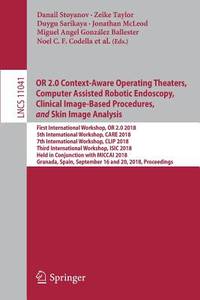
SONG9811087814Springer 2018-10-20. 1st ed. 2019. hardcover. Used: Good. 6.14x0.50x9.21. Buy with confidence. Excellent Customer Service & Return policy. Springer hardcover
DADAX9811087814Springer 2018-10-20. 1st ed. 2019. hardcover. New. 6.14x0.50x9.21. Buy with confidence. Excellent Customer Service & Return policy. Springer hardcover
31817717-nnew. unknown
31817717like new. unknown
“...nell'essequie di Michelagnolo Buonarroti in Firenze, nella Chiesa di San Lorenzo. Indiritta al molto Mag. & Reverendo Monsignore M. Vincenzio Borghini Priore degli Innocenti”. Edizione ANASTATICA dell'originale (Firenze, Appresso i Giunti, 1564). Un volume di 68 pagine, brossura editoriale riproducente il frontespizio originale con velina protettiva cartacea trasparente. Dimensioni: 14,5x19 cm. Ottime condizioni. Introduzione di Alessandro Parronchi. Edito in occasione del quinto centenario della Nascita di Michelangelo.