832 résultats
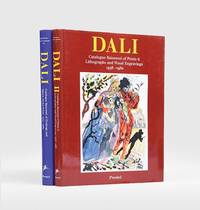
189507Munich: Prestel-Verlag 1994-5. First edition of this definitive guide to all of Dali's prints including unauthorized editions and forgeries. 2 vols quarto. With 190 colour plates and over 1500 black and white reproductions. Original dark red cloth spines lettered in black. With illustrated dust jackets. A near fine set in the bright unclipped dust jackets. hardcover
1995C86349Prestel Publishing. As New. 1995. Hardcover. 3791316028 . FREE UPGRADE to Courier/Priority Shipping Upon Request - IN STOCK AND IMMEDIATELY AVAILABLE FOR SHIPMENT - Flawless copy brand new pristine never opened -- 192 pages; 693 illustrations. Catalogue Raisonné Catalogue Raisonne Catalog Raisonnee Complete Lithographs and Wood Engravings -- with a bonus offer-- - May be EITHER: out of print OOP and extremely rare in this pristine condition; signed by author or contributor; or a first or special edition; inquire for details . Prestel Publishing hardcover
199586349Prestel Publishing. New. 1995. Hardcover. 3791316028 . FREE UPGRADE to Courier/Priority Shipping Upon Request - IN STOCK AND IMMEDIATELY AVAILABLE FOR SHIPMENT - Flawless copy brand new pristine never opened -- 192 pages; 693 illustrations. Catalogue Raisonné Catalogue Raisonne Catalog Raisonnee Complete Lithographs and Wood Engravings Prestel Publishing hardcover
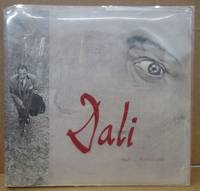
196521524Greenwich Connecticut: The New York Graphic Society 1965. 1965. Good. - Quarto 11-1/4 inches high by 8-3/4 inches wide. Grayish-white marbled boards backed with a black cloth spine titled in gilt on the spine. The book is housed in its original white slipcase with a full-page illustration mounted on the case's front cover. The slipcase is rubbed and soiled with short tears to the edges. 74 & 1 pages illustrated with a tipped-in portrait frontispiece by Halsman and 27 tipped-in color plates of Dali's jewelry with descriptive text on the facing page. The plate opposite page 52 is torn and creased along its right edge. Good. <p>Inscribed and signed on the front endpaper by Owen Cheatham the owner of the collection.<p>Laid in with the book is the 12-page exhibition catalog with a descriptive index of the jewels. The 8-1/2 inch high by 5-1/2 inch wide catalog is bound in gilt-titled white wraps with a yellow silk cord at the spine. Greenwich, Connecticut: The New York Graphic Society, (1965). paperback
195816677JGreenwich: New York Graphic Society 1958. First Edition First Printing. Signed presentation copy with a vigorous 2 page original signed pencil drawing on the title pages by Salvador Dali. Inscribed “Pour Len homage Dali.†The drawing is one of Dali’s stark landscapes with two of his swirling figures and a large Daliesque ant like those depicted in his famous oil painting Persistence of Memory. Large oblong folio with fine black & white gravure illustrations and 17 tipped-in color plates. Fine in the original clear acetate dust jacket and in the especially rare cardboard box with printed label which is in very good condition. New York Graphic Society unknown
1959004774Graphic Society 1959. 1st Edition 1st Printing. Hardcover. Very Good/No Jacket. About the book: Hardcover without jacket as issued. Housed in decorative slipcase. Book has been inscribed by Celeste W. Cheatham to Toronto artist John Newman on first blank page. Both book and jacket are in good to very good condition. Additional photos available upon request. <br/> <br/> Graphic Society hardcover
195890214New York Graphic Society 1958. Hardcover. Very Good/Very Good. Quarto 35 cm x 37 cm 96 pp.This is the first American edition that has two acetate and Mylar dust jackets. The front cover of the jacket has some fading for the subtitle but Dali remains bold. There is some wear on the bottom of the front cover on the bottom as well with a bump on the top of the spine. There is a roughly 4 3/4 piece missing on the inner flap of the dust jacket with some shelf wear as well. There is a blue spot on the back cover and a small chip as well. There is some discoloration on the interior. he name of the prior owner is written on the front end page.There are 27 color plates that have been mounted within the book with other illustrations printed. New York Graphic Society hardcover
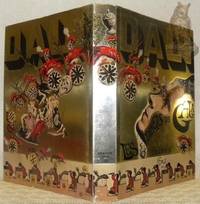
19747425New York: Harry N. Abrams Inc. Publishers 1974. Abridged Edition. Hardcover. Unpaginated. Quarto. measuring 9" x 12". Publisher's ivory cloth over boards with stamped gilt lettering and illustration to the spine and front board. Illustrated with many full-page and in-text black-and-white and colour plates and illustrations throughout. Near fine contents without blemish and with firm sound binding; near fine and housed in its elaborately illustrated unclipped dustjacket. Uncommon in commerce in this edition and state. <br/><br/> Harry N. Abrams, Inc., Publishers hardcover
1974ALIliDAL93New York: Harry N. Abrams Inc. 1974. 1974. 4to. pp. 140. 98 illus. 30 colour many full & double-page. cloth. dw. Abridged Edition. Hardcover. New York: Harry N. Abrams, Inc. [1974]. Hardcover
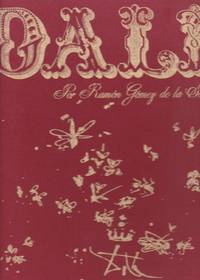
26116-Espasa Calpe 1977-. First edition. Text in Spanish. 315x260mm 253 pages. Illustrated in colour and black and white. Cloth with gilt design by Dali 1972 a little corner fraying. Some light spotting to prelims and endpages. No dustjacket known. Very good. Ask to see our other Salvador Dali titles. We specialise in exhibition catalogues. Dali. Por Ramon Gomez de la Serna spanish artist 8423942740 -Espasa Calpe (1977)- hardcover
197778491Paris : Draeger 1977. 305x220mm. photos couleurs et n/b reliure d'ÂŽditeur sous jaquette. Jaquette en trÂs bons ÂŽtat. Bel exemplaire. 2011 Draeger unknown
197378490Paris : Draeger 1973. 305x220mm. photos couleurs et n/b reliure d'ÂŽditeur sous jaquette. Jaquette en trÂs bons ÂŽtat. Bel exemplaire. 2170 Draeger unknown
40990München Schirmer/Mosel 2005. 4° 607 S. unzähl. Abb. davon 249 farbig OLwd. m. OU. Tadell. Englische Originalausgabe. 010 München, Schirmer/Mosel, 2005 unknown
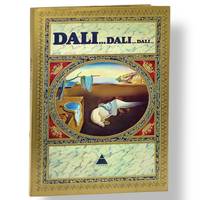
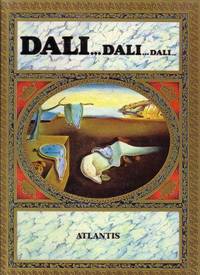
25151-Atlantis / Editorial Blume 1985-. First edition. Text in Spanish. Illustrated in colour and black and white. Unpaginated. Pictorial boards. Small chip to rear edge. Very good. No dustjacket. Ask to see our other Salvador Dali titles. Dali. Dali. Dali.Spain Spanish Artist 20th Century 3881999809 -Atlantis / Editorial Blume (1985)- hardcover
46238Berlin Propyläen 1969. 4° o. P. ca. 120 Bl. durchgeh. tlw. farb. Abb. Kart. m. OU OU min. gebrauchsspurig sonst tadellos in Schuber. Dt. Erstausgabe. 010 Berlin, Propyläen, 1969 unknown
0019861958: New York Graphic Society Book. Very Good. Hardcover. 1st Edition. First American Edition. Illustrated boards in printed acetate dustjacket. Illustrated with black & white reproductions and 17 tipped-in color plates. Top edge a trifle dusty. Dustjacket with red lettering has 2 closed tears but no missing pieces. 94 pp. 37x35 cm. . New York Graphic Society Hardcover
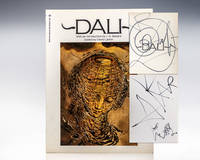
149870New York: Ballantine Books 1974. First edition second printing of this illustrated work by Salvador Dali. Quarto original pictorial wrappers illustrated with 40 glossy color plates. Presentation copy boldly inscribed by Salvador Dali in black felt tip on the verso of the front cover and half-title page with his enormous signature and a large drawing of a woman's head wearing a conical hat to the bottom left. In fine condition. Edited by David Larkin. Introduction by J.G. Ballard. The infamous Surrealist in full colour and in his own words Picasso called Dali "an outboard motor that's always running." Dali thought himself a genius with a right to indulge in whatever lunacy popped into his head. Painter sculptor writer and film maker Salvador Dali 1904-1989 was one of the century's greatest exhibitionists and eccentrics -- and was rewarded with fierce controversy wherever he went. He was one of the first to apply the insights of Sigmund Freud and psychoanalysis to the art of painting. He brought extraordinary sensitivity imagination and concern for precision to bear upon submerged levels of consciousness. Ballantine Books unknown
19762092902143801861Futami shobo 1976. Soft Cover. Fine. Number of books: 1 book Futami shobo paperback
200016716Cumberland Rhode Island U.S.A.: Yale Univ Pr. New. 2000. Hardcover. 0300081774 . FREE UPGRADE to Courier/Priority Shipping Upon Request - IN STOCK AND IMMEDIATELY AVAILABLE FOR SHIPMENT - Flawless -- with a bonus offer-- . Yale Univ Pr hardcover
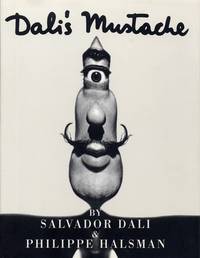
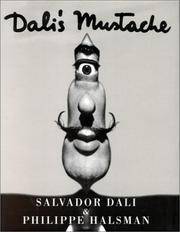
5054Dali's Mustache Salvador Dali & Philippe Halsman Signed "Dali" with Original Drawing of an ant expanding across inside cover to first end paper. Full title "Dali's Mustache: A Photographic Interview by Salvador Dali and Philippe Halsman" New York Simon and Schuster 1954. Halsman 1906-79. Dali ends the Preface about his view of his mustache "Some day perhaps one will discover a truth almost as strange as this mustache - namely that Salvador Dali was possibly also a painter." Halsman captioned photographs of Dali throughout interspersed with bold face questions some obvious "What is beauty" some comical "Dali What makes You Tick" Condition: Cover shows wear and chipping to boards and spine break to spine following two second page of preface with all pages in tact. unknown
1996Q-2080135600Flammarion 1996-01-15. Hardcover. New. New. In shrink wrap. Looks like an interesting title! Flammarion hardcover
1954021413New York: Simon & Schuster 1954. Book. Good. Hardcover. 1st Edition. External tape repairs along the spine some edge wear 2 previous owner's ink names on the front endpaper and rear endpaper seems to be missing. A difficult book to find in nice condition as the spine is quite often missing altogether. Simon & Schuster Hardcover
51-6816Paris: Flammarion 1994. 12mo. 13 x 18cm. Boards in d-j. Fine.The relationship between Dali and Halsman:. The collaboration between Dalà and Halsman began in 1941. They met while working on Labyrinth a project performed by the Ballets Russes at New York’s Metropolitan Opera House in 1941 for which Halsman photographed the costumes designed by DalÃ. They continued to work closely together on joint commissions mainly related to ballet but also generated their own projects such as Dali’s Midsummer Night’s Mare Dali Atomicus Dali Sculpture with Light and In Voluptate Mors in which models are arranged in the shape of a skull. In 1960 Halsman documented the making of DalÃ’s film Chaos and Creation.Philippe Halsman explains the concept of the jointly produced book Dali’s Mustache as follows: “In 1954 the growth of Dali’s mustache miraculously increased. When the painter returned to New York I was amazed: the points of his mustache were higher than his eyebrows. I saw my duty and started to photograph the play and interplay of his mustache. I needed DalÃ’s consent and I approached the great surrealist cautiously: ‘Books have been written about you and about other painters. But there is no book about a part of their personality as for instance Rembrandt’s nose or Picasso’s foot. What a tribute to your genius DalÃ! A book to appear – dedicated not to the whole but only to a small part of you!â€.Text below by Mary PanzerCurator of PhotographsNational Portrait Gallery Smithsonian Institution.Philippe Halsman 1906-1979 was born in Riga Latvia. He studied engineering in Dresden before moving to Paris where he set up his photographic studio in 1932. Halsman's bold spontaneous style won him many admirers. His portraits of actors and authors appeared on book jackets and in magazines; he worked with fashion especially hat designs and filled commissions for private clients. By 1936 Halsman was known as one of the best portrait photographers in France.From the 1940s through the 1970s Philippe Halsman's sparkling portraits of celebrities intellectuals and politicians appeared on the covers and pages of the big picture magazines including Look Esquire the Saturday Evening Post Paris Match and especially Life. His work also appeared in advertisements and publicity for clients like Elizabeth Arden cosmetics NBC Simon & Schuster and Ford. Photographers amateur as well as professional admired Halsman's stunning images. In 1958 a poll conducted by Popular Photography named Halsman one of the "World's Ten Greatest Photographers" along with Irving Penn Richard Avedon Ansel Adams Henri Cartier-Bresson Alfred Eisenstaedt Ernst Haas Yousuf Karsh Gjon Mili and Eugene Smith. Altogether Halsman's images form a vivid picture of prosperous American society in the middle years of the twentieth century. "Philippe Halsman: A Retrospective" is the first historical survey of his work.Halsman's career came to a dramatic halt in the summer of 1940 when Hitler's troops invaded Paris. Albert EinsteinHis wife daughter sister and brother-in-law who all held French passports immigrated to America but as a Latvian citizen Philippe Halsman could not obtain a visa. For several long months he waited in Marseilles along with many others who were forced to escape fascist Europe. Finally through the intervention of Albert Einstein who had met Halsman's sister in the 1920s Halsman obtained permission to enter the United States and he arrived in New York in November 1940 with little more than his camera.Halsman's big break came when he met Connie Ford a striking young model who agreed to pose in exchange for prints for her portfolio.Constance Ford When publicists at Elizabeth Arden saw Halsman's photograph of Ford against an American flag they used the image to launch a national campaign for "Victory Red" lipstick. A year later in the fall of 1942 Life asked Halsman to shoot a story on new hat design. To Halsman's delight his portrait of the model smiling through a feathery brim landed on the cover. One hundred more covers followed before the magazine ceased weekly publication in 1972.When Halsman began working for Life the magazine was only six years old and photojournalism was still a new field. Before the existence of Life and its competitors Americans learned about the world from newspapers radio and newsreels. But the new picture magazines published pages filled with bright dramatic photographs bringing Americans vivid information that no other media could match. Frank SinatraIn the spirit of a variety show or a world's fair magazines combined stories about international politics everyday life news events celebrities exotic scenery and humor to prove that "so much of the world so judiciously selected had never been seen before in one place." Today to understand the significance of those great magazines we need only look at the many forms of mass media that have come to replace them. Now we find photographs on television and billboards; in special publications devoted to news people fashion or sports; in newspapers; in museums and galleries; and on the Internet. And ironically the more places there are to see photographs the harder it is to attract viewers. But in 1942 when Philippe Halsman's portrait simply appeared on the cover of Life and immediately reached a large united audience.Surrealism:.In Paris Halsman studied the work of other artists and photographers especially the surrealists from whom he learned to make images that surprised his viewers. By including homely and ultimately disturbing details he gave his subjects memorable tension. Through subtle lighting sharp focus and close cropping he turned formal fashion shots into serious investigations of character. When Halsman posed NBC comedians against bare white paper eliminating all defining context their isolation made them look both frail and funny.Salvidor Dali Most important of all from the surrealists' exploration of the erotic unconscious Halsman learned how to combine glamour sex and wholesome energy in one portrait. This unusual ability made him Life's favorite photographer for sensual stars like Marilyn Monroe and Brigitte Bardot. Halsman's sympathy for surrealism also led to his long productive friendship with Salvador Dali. Halsman met Dali on assignment in 1941 and over the next three decades they became partners on many projects including a series of playful tableaux that had all the disturbing irrationality of dreams or a painting by Dali. Their most notable production was "Dali Atomicus" in which the artist his canvas furniture cats and water all appear suspended in air.Psychological Portraiture:.Over the course of his career Halsman enjoyed comparing his work to that of a good psychologist who regards his subjects with special insight. With his courtly manners and European accent Halsman also fit the popular stereotype at a time when Americans regarded psychology with fascinated skepticism. In fact Halsman was proud of his ability to reveal the character of his sitters. As he explained "It can't be done by pushing the person into position or arranging his head at a certain angle. It must be accomplished by provoking the victim amusing him with jokes lulling him with silence or asking impertinent questions which his best friend would be afraid to voice.".Marilyn MonroeIn the spring of 1952 Halsman put his signature technique to work when Life sent him to Hollywood to photograph Marilyn Monroe. Halsman asked Monroe to stand in a corner and placed his camera directly in front of her. Later he recalled that she looked "as if she had been pushed into the corner cornered with no way to escape." Then Halsman his assistant and Life's reporter staged a "fiery" competition for Monroe's attention. "Surrounded by three admiring men she smiled flirted giggled and wriggled with delight. During the hour I kept her cornered she enjoyed herself royally and I . . . took between 40 and 50 pictures.".In this widely familiar portrait Monroe wears a white evening gown and stands with her back against two walls one dark the other light her eyes half closed and her dark lipsticked mouth partly open. Yet Halsman deftly avoided any explicit representation of the true subject of the picture. Using the euphemistic language of the time Halsman's assistant admired the photographer's ability to make "suggestive" pictures of beautiful women which still showed "good taste" emphasizing "expression" rather than "physical assets." And then the assistant added "Halsman is very adept at provoking the expression he wants.".Jumpology:.In 1950 NBC asked Halsman to photograph many of its popular comedians. Milton Berle Ed Wynn Sid Caesar Groucho Marx Bob Hope Red Skelton and many others came to Halsman's studio where they performed while he captured their antics on film. A single session could generate two or three hundred pictures. When Halsman compared these comic images to more traditional portraits he found that comedians often jumped and always stayed in character. Desperation and good humor finally drove him to ask others to jump for his camera when the Ford Motor Company commissioned him to make an official family photograph in honor of the company's fiftieth anniversary. WindsorsHalsman spent a long tiring session with nine edgy adults and eleven restless children. Afterward Halsman's irrepressible humor inspired him to ask matriarch Mrs. Edsel Ford "May I take a picture of you jumping'" The astonished Mrs. Ford replied "You want me to jump with my high heels" Next her daughter-in-law Mrs. Henry Ford II requested a turn. The "jump" pictures had surprising charm and over the next six years Halsman asked many clients to jump for him. Van Cliburn Edward R. Murrow and Herbert Hoover declined Halsman's invitation but most people realized they had nothing to lose. Some gained considerably like the suddenly buoyant and likable Vice President Richard Nixon who jumped for Halsman in the White House. Halsman claimed the jumps revealed character that was otherwise hidden. "When you ask a person to jump his attention is mostly directed toward the act of jumping and the mask falls so that the real person appears.".Halsman also pursued this project to discover something about himself. "I assure you that often before approaching the person my heart would beat and I would have to fight down all my inhibitions in order to address this request to my subject. At every time when the subject agreed to jump it was for me like a kind of victory." How did Halsman persuade so many to abandon their composure for his camera Somehow he managed to convince each one that the risk was all his own.Like many who escaped Hitler's Europe Philippe Halsman rarely discussed the past. He rightly insisted that his most important work took place in America and in many ways his adopted country became his subject. One typical review noted his patriotic flair praising Halsman's "unsanctimonious and immensely intense portrayal of American bounce." From a historian's perspective it seems clear that Halsman invented a glowing image of the nation as he saw it using light persuasion nerve imagination psychology and experience. This place and these faces are his creation.Halsman's perpetual quest for hidden truth also recalls his personal history as an artist and a refugee. Halsman knew that the effort to establish one's identity had significance far beyond the needs of the celebrity marketplace. "This fascination with the human face has never left me. . . . Every face I see seems to hide and sometimes fleetingly to reveal the mystery of another human being. . . . Capturing this revelation became the goal and passion of my life.". Paris: Flammarion, 1994. hardcover
1993Q-2080124331FLAMMARION 1993-12-07. Hardcover. New. New. In shrink wrap. Looks like an interesting title! FLAMMARION hardcover
1982WB16623Paris: Arthaud 1982. Hardcover. Very Good. Publisher's pictorial cloth. pp. 128. Photographs throughout. The 1982 reissue of this clever book. Inscribed by Halsman's wife Ivonne to whom the book was dedicated <br/><br/> Arthaud hardcover