1 544 résultats
2003Y-127-511Museo Picasso Málaga 2003. Paperback. Very Good. Former library book. Edition 2003. Ammareal gives back up to 15% of this item's net price to charity organizations. Museo Picasso Málaga paperback
BN315983Museo Picasso Málaga. Softcover. El Picasso de los Picasso <br/><br/>El Picasso de los Picasso Pablo Picasso Museo Picasso Málaga paperback
ETRYHERN08280NEW. NEW. Enviamos a todo el mundo por USPS. UPS o DHL. 100% garantia en su compra. We ship worldwide. unknown
196214225Editions Cercle D'Art 1962. Prints. Very Good. This 1962 linocut print by Pablo Picasso titled Faunes et Chevre Fauns and Goat is part of the celebrated series of prints published by Cercle d'Art in Paris. This is plate 31 and it reflects Picasso’s playful and inventive engagement with mythological themes during his later years. The print is from Picasso Linogravures published by Editions Cercle D'Art in 1962. Margins are toned print measures 15.25x12.625" printed area measures 12.75x10.625". All orders packed with care most dust jackets protected by Brodart sleeve independent bookseller since 2011 Editions Cercle D'Art unknown
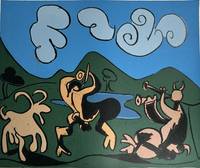
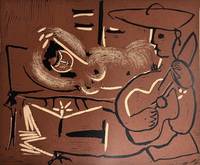
196214227Editions Cercle D'Art 1962. Prints. Very Good. This 1962 linocut print by Pablo Picasso titled Femme Couchee et Guitariste Reclining Woman and Guitarist is part of the celebrated series of prints published by Cercle d'Art in Paris. This is plate 15 and it reflects Picasso’s playful and inventive engagement with mythological themes during his later years. The print is from Picasso Linogravures published by Editions Cercle D'Art in 1962. Margins are toned print measures 15.25x12.625" printed area measures 12.875x10.625". There is some spotting visible in the margins and bend lower left corner. All orders packed with care most dust jackets protected by Brodart sleeve independent bookseller since 2011 Editions Cercle D'Art unknown
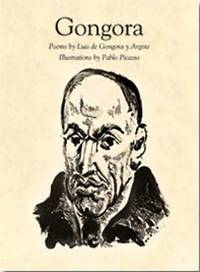
1985BN96138George Braziller Inc. 1985. 1985. Hardcover. Gongora. Introduction by John Russell. Poetry by Luis de Gongora Y Argote. Translated by Alan S. Trueblood. <br/><br/>Gongora. Introduction by John Russell. Poetry by Luis de Gongora Y Argote. Translated by Alan S. Trueblood. George Braziller Inc. hardcover
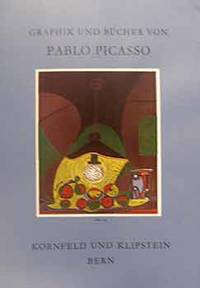
18-9915Bern : Kornfeld und Klipstein 1970. 4to. Unpaged. Matte softcover glossy pages. Very Good minor creasing around corners and spine pencil marking on front cover very minor markings on back cover. B&W color prints throughout. From the Collection of the Art Historian Peter Selz. Bern : Kornfeld und Klipstein, 1970. paperback
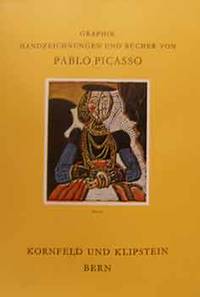
18-9914Bern : Kornfeld und Klipstein 1969. 4to. Unpaged. Matte softcover glossy pages. Very Good minor creasing around corners and spine. B&W color prints throughout. From the Collection of the Art Historian Peter Selz. Bern : Kornfeld und Klipstein, 1969. paperback
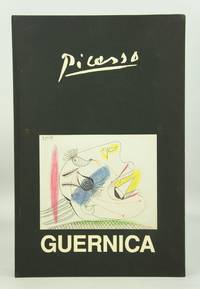
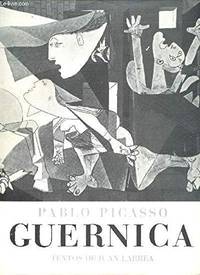
073928New York: Harry N. Abrams Inc. Publishers 1990. Facsimile Mounted Prints in Clamshell Case. Near Fine. Very Large Folio: . Pablo Picasso. This edition which reunites for the first time the preliminary studies on paper that Picasso made for Guernica was printed on April 18 1990 by Akademische Druck-u Verlagsanstalt in Graz Austria. Forty-two color reproductions of select art from Pablo Picasso's work mounted in thirty-one carton mats all present. Housed in a large clamshell case in black with white lettering and color illustration of another facsimile of Picasso's works on paper affixed. Title is from enclosed booklet cover which contains forty-five numbered detailed studies of each piece of art along with the story of the Genesis of Guernica with artistic analysis. Booklet contains many smaller reproductive images of Picasso's works as well. Booklet is 20 pp. Artwork included is mounted as two-pieces per mount and as one piece per mount. Mounts with art measure 23.75" tall x almost 15.75" wide respectively as does the accompanying booklet. Large clamshell case measures 24.75" tall x 16.25" wide x 3" thick. <br><br>CONDITION: All mounted plates are fine. Facsimile art is vivid and striking. Laid in text booklet and clamshell case are VG. Booklet shows moderate wrinkling and some leaves have split along the side of the spine fold at the foot about a third of the way up yet does not badly compromise the booklet's integrity. Case shows indentation along the front spine indicating a heavy book had once been placed on top. Light fading and some soiling on case with a 1/2 inch chip at the head of the back of the clamshell box. Even so this collection is stunning and the art pieces are magnificent. At over 18 lbs. due to this item's size and weight an additional shipping charge will apply and will be delivered with signature required. Full refund if not satisfied. <br><br>EXCERPTS FROM THE BOOKLET: "Few names are as evocative as that of Guernica. The ruthless bombardment of this small Basque town a regional capital and ancient pilgrimage site became one of the blackest and bloodiest spots in the history of the twentieth century. Today it no longer represents only the massacre of a civilian population and a point of no return in the rise of Fascism: Picasso's painting gave to the name of Guernica the scope of a universal symbol that expresses the barbarism of modern warfare. After its militant exhibitions in 1937 Paris and 1939 New York its long exile and its final arrival in Madrid this 'living legend' is displayed behind bulletproof glass in the Cason del Buen Retiro of the Prado Museum. .<br><br>Picasso executed forty-five sketches between May 1 and June 4 1937 some of which stand on their own as complete drawings. They included six compositional studies four studies of the horse one of the bull one of the horse and bull alone ten of heads of the horse and bull ten studies of female heads six of the woman with a dead child one of the horse and the woman with the child three heads of dead warriors a study of a man with raised arms and two studies of hands. He used a variety of mediums: pencil india ink gouache and oils; and supports: white blue and brown paper plywood and canvas.<br><br>These studies are not only extraordinary drawings in their own right but they also show the different states of mind through with Picasso passed as he was working on the painting. They are like a seismograph of his thoughts and feelings and so they permit us to understand what he really wanted to paint in Guernica. <br><br>A study of these sketches reveals the progress of the artist at work - his hesitations his searching the choices he made. They show the slow formation of the images the maturation of the initial idea the successive contributions the departures; in short Picasso's way of working and as such they constitute the laboratory of Guernica. Harry N. Abrams, Inc., Publishers unknown
15922APaperback. Fair. Good clean copy with a tight binding. Previous owner's name inside front cover. Dust jacket edge wear tears. paperback
17-2277Chicago : R.S. Johnson International 1973. 8vo. 63 pp. Soft cover. Very Good. Illustrated paper wraps. Minor shelf wear. Color and B&W plates throughout.Collection from San Francisco Museum of Modern Art. Chicago : R.S. Johnson International, 1973. paperback
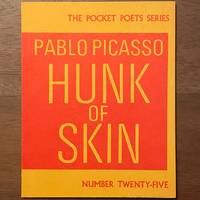
196813San Francisco: City Lights Books 1968. First Edition. Paperback. Very Fine. Covers are slightly yellowed due to age but with tight binding and seemingly unread. City Lights Books paperback
1968110677City Lights Books 1968-01-01. Paperback. Very Good. 8x5x0. First American edition with very light soil to covers and gift note to the inside of the front cover. Please email for photos. City Lights Books paperback
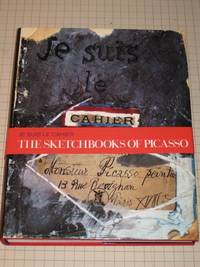
1986002911The Atlantic Montly Press. 1986 349 p. 4to. Boston. Publisher's red cloth hardcover black stamped title on spine cover color graphic illustrated dust jacket illustrated text with six critical essays. Mylar protective cover. Measures: 1.5 W x 9.5 D x 12.5 H inches. Weight: 5 pounds 5 ounces. About the work: The volume is one of 4000 copies printed by the Pace Gallery as catalogue of the exhibition dedicated to Picasso's sketchbooks May 2 - August 1 1986. CONDITION NOTES: Near fine; light wear not commensurate with age and use e.g. gift inscription on dedication page mylar covers scratched strong square spine/tight binding clean dust jacket/book covers interior pages bright crisp and clean. A very nice copy. 1st Edition. Hardcover. Near Fine/Near Fine. The Atlantic Montly Press. hardcover
GOR012146973Hardback. Like New. hardcover
195079413Paris: Robert J. Godet 1950. Fine. Robert J. Godet Paris 1950 23 x 28.50 cm broché Illustrated edition as frontispiece with an engraving by Pablo Picasso on a loose leaf one of 1000 numbered copies. Covers and boards stained small tears on spine. Our copy is decorated with an original drawing dated and signed by Robert J. Godet representing a statue of a woman surmounted by a sun casting its rays upon her matching this poetic autograph inscription which accompanies it: ""bel âge en vérité / Nadine soleil couchée / Nadine soleil-chat / Petite Nadine / Soleil qui a encore peur de briller."" ""beautiful age indeed / Nadine setting sun / Nadine sun-cat / Little Nadine / Sun who is still afraid to shine."" Provenance: from the library of Nadine Nimier wife and widow of Roger Nimier. Robert J. Godet hardcover
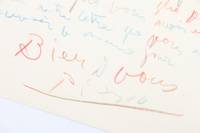
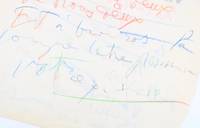
195789530Cannes 1957. Fine. ""The 7th Bull races"" Cannes 13 juin 1957 21 x 27 cm 2 pages sur un feuillet Multi-coloured autograph letter from Pablo Picasso to Max Pellequer signed and dated by the author on June 13 1957. The document includes the autograph address of his villa La Californie. 2 pages on one sheet 22 lines in green blue and red pencils on a watermarked sheet. Minor folds. An exceptional account of Pablo Picasso's passion for bullfighting a recurring theme in his art since his very first works painted at the age of eight ""The Little Yellow Picador"" 1899. Pablo Picasso gives Max Pellequer and his wife details regarding a trip to Arles on July 5 6 and 7 1957 to which the artist has invited them along with a handful of friends. With undisguised enthusiasm he announces that he has booked their rooms at the ""Norpinus"" Nord-Pinus and their seats for the bullfight. Only after providing this essential information does the painter mention the opening of his exhibition at the Réatu Museum and the official dinner with Douglas Cooper the great collector and the mayor of Arles Charles Privat: ""Dinner with Cooper & the mayor"". A performance of ""Aïda at the bullring"" is also scheduled during this Arlesian getaway which ends on the 7th with an intriguing ""bull run with the presence of a black king"". In the 1950s Pablo Picasso and Jacqueline Roque are regular visitors to the Arles bullrings. At that time the painter is not discovering the city. Fascinated by Van Gogh's portraits he paints his first Arlésienne in 1912 and his last featuring Jacqueline just after writing this letter in 1958. But it is his love of bullfighting that will ultimately bind the Andalusian to the bullfighting capital of Provence. From his early Barcelona works Scène de corrida and courses de Taureaux presented to Ambroise Vollard in 1901 to the famous and omnipresent theme of the Minotaur Picasso was one of the main promoters of bullfighting in France. In the late 1950s Arles becomes the painter's mecca for his passion immortalised in 1956 by David Douglas Duncan who photographed Pablo in the Arles bullring captivated by the bullfights. This exceptional letter bears witness to the excitement of the artist who at the height of his international fame becomes for the time being a groupie happy to accommodate his friends in the legendary ""Norpinus"" hotel known for hosting toreros after their bullfights. Bullfighting also features in the other major events presented by the artist in the 22 lines of our sheet. He announces the opening of his first exhibition at the Musée Réattu which gives pride of place to the figure of the bull in Picasso's work. Among the paintings on display from July 6 to September 2 1957 38 of the artist's artworks will be exhibited for the first time. Picasso the main lender for this event will ironically be absent from the opening too busy painting portraits of Jacqueline using pigeon feathers. The author continues his letter by proposing a dinner with British collector Douglas ""Cooper"" who along with the Barcelona Museum will also be invited to contribute to the exhibition. The ""mayor"" of Arles Charles Privat is the second personality invited to this dinner. Picasso and Privat who meet for the first time in April 1957 will maintain a fruitful relationship that will conclude in 1971 with the artist's donation of 57 artworks to the Musée Réattu. In the second part of the letter Pablo Picasso adds a performance of Verdi's opera ""Aïda"" to the schedule demonstrating the artist's continued keen interest in operatic works more than 30 years after designing sets for the Ballets Russes. Finally the only possible conclusion for Picasso's letter and stay with his friends is to attend of course one final bullfight whose announcement itself seems like the title of a painting: bullfight with the presence of a black king"". We do not know which African dignitary attended the 1957 bullfight but the pain unknown
19711154825Skira 1971. Softcover. Very good. Text is in French.<br /> <br /> Great condition. Covers are tanned but readability is not impacted. Lamination on covers is peeling. Text block and inside edges are tanned but legibility is not affected. Pages are clean and unmarked. Skira unknown
194391824Robert J. Godet 1943. Fine. Robert J. Godet 1943 23 x 28 cm broché First edition illustrated with 6 original lithographs by Pablo Picasso one of 500 numbered copies on Lafuma paper. A pleasing copy complete with its ""prière d'insérer"" written by Paul Eluard. Robert J. Godet unknown
44023Musée Picasso In 8-carré 24 cm 128pp. illustr. et photos une carte postale du Musée jointe: Portrait de Dora Maar bon etat Ats34-Nb-0300 unknown
194516148Paris: Gallimard 1945. Fine. Gallimard Paris 1945 14 x 19.50 cm broché First edition on chestnut. A small marginal tear without gravity on the second board nice complete copy of his trailer. Gallimard unknown
196869751Paris: Flammarion 1968. Fine. Flammarion Paris 1968 15.50 x 21.50 cm broché First edition in French one of 60 numbered copies on pur fil paper the only deluxe copies. A handsome copy. Flammarion unknown
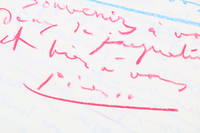
1955855571955. Fine. 20 décembre 1955 26.80 x 20.90 cm un feuillet Multi-colored autograph letter to Max Pellequer Elegant multi-colored autograph letter by Pablo Picasso to Max Pellequer signed and dated 'December 20 1955'. A leaf in multi-color pencil blue green orange and red. Traces of transverse folds. This ""graphic"" letter in the most literal sense constitutes a superb polychrome and artistic link in an epistolary chain that linked Picasso and his prominent patron for decades. Despite his prolific correspondence Picasso's entirely autographed letters are extremely rare as Laurence Madeline points out in her article on the confidential activity of the great artist:The inertia paralyzing Picasso who preferred his work as an artist to that of a secretary made the letters he took pleasure in writing more essential and more touching Laurence Madeline Picasso épistolier L'Herne no. 106. Living on the hills over Cannes the painter was indeed helped by his faithful secretary and childhood friend Jaume Sabartés who was responsible for writing numerous missives save a few correspondents notably Pellequer. Picasso wrote each of Pellequer's letters even the most insignificant in an ample voluptuous script playing with letters and words as graphic objects blending aesthetically in the space of the page in perfect contrast to the prosaic nature of the letter's content. It could even be argued that his artistic soul largely invaded his daily and administrative correspondence with his banker and ardent collector of his works. Part of their correspondence is kept at the National Picasso Museum in Paris. An extraordinary recipient. Banker and collector Max Pellequer was introduced to Picasso in 1914 by his uncle by marriage André Level. He quickly became one of Picasso's most important collectors and his financial advisor for over 30 years. Pellequer's interest in his art began as early as the 1910's when he purchased a Picasso bronze from the art dealer Ambroise Vollard. During the 1930s and 1940s as Picasso's personal banker he secured and enhanced the painter's wealth and allowed him to settle comfortably in the South of France. Picasso created a superb ex-libris on copper for him bought him paintings including La mer à L'Estaque by Cézanne now in the Picasso museum and offered him a few works. Pellequer assembled a vast collection of paintings by the great masters of modern art: Degas Raoul Dufy Paul Gauguin Fernand Léger Henri Matisse Joan Miró Modigliani and Maurice Utrillo today preserved in the most important international museums. The epistolary art of Picasso. Picasso's epistolary production acted as an outlet for his incessant creative energy which was expressed in ceramics sculptures photographs illustrations collages or poetry. Each letter was an opportunity for genius to blossom regardless of the administrative content of his exchanges with Pellequer. Perhaps to counteract the dullness of his work Picasso redoubled his efforts: an explosion of color calligraphic letters across the page. to conjure up beauty and adorn his words in shimmering hues using oil pastels black felt-tip pens or colored pencils.These alphabet letters numbers words and sentences placed on the paper like so many musical scales are literally brought to life by the creative power of the painter. The years of La Californie in Cannes. Living with Jacqueline Roque in the villa La Californie at the time of this letter the painter was producing a series of captivating lithographed portraits of his partner. Paradoxically this colorful letter corresponds to a very monochrome period of his work a superb counterpart to the black washes on zinc. Matisse with whom Pellequer also corresponded had died a month earlier. A very beautiful and visual illustration of Picasso's need for total expression through his correspondence with one of his close advisors and friends. unknown
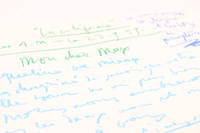
195989523Cannes 1959. Fine. A polychrome and artistic link in an epistolary chain that linked Picasso to his prominent patron for decades Cannes 23 septembre 1959 21 x 27 cm un feuillet Multi-coloured autograph letter from Pablo Picasso to Max Pellequer signed and dated by the artist on September 23 1959. The document includes the autograph address of his villa La Californie. Ten lines in blue and green pencils on a watermarked BFK Rives sheet.Minor folds and marks. A very elegant letter written in pastel colours by Pablo Picasso. Despite his prolific correspondence Picasso's entirely autographed letters are extremely rare as Laurence Madeline points out in her article on the confidential activity of the great artist:The inertia paralyzing Picasso who preferred his work as an artist to that of a secretary made the letters he took pleasure in writing more essential and more touching Laurence Madeline Picasso épistolier L'Herne no. 106. Living on the hills over Cannes the painter was indeed helped by his faithful secretary and childhood friend Jaume Sabartés who was responsible for writing numerous missives save a few correspondents notably Pellequer. Picasso wrote each of Pellequer's letters even the most insignificant in an ample voluptuous script playing with letters and words as graphic objects blending aesthetically in the space of the page in perfect contrast to the prosaic nature of the letter's content. It could even be argued that his artistic soul largely invaded his daily and administrative correspondence with his banker and ardent collector of his works. Part of their correspondence is kept at the National Picasso Museum in Paris. An extraordinary recipient. Banker and collector Max Pellequer was introduced to Picasso in 1914 by his uncle by marriage André Level. He quickly became one of Picasso's most important collectors and his financial advisor for over 30 years. Pellequer's interest in his art began as early as the 1910's when he purchased a Picasso bronze from the art dealer Ambroise Vollard. During the 1930s and 1940s as Picasso's personal banker he secured and enhanced the painter's wealth and allowed him to settle comfortably in the South of France. Picasso created a superb ex-libris on copper for him bought him paintings including La mer à L'Estaque by Cézanne now in the Picasso museum and offered him a few works. Pellequer assembled a vast collection of paintings by the great masters of modern art: Degas Raoul Dufy Paul Gauguin Fernand Léger Henri Matisse Joan Miró Modigliani and Maurice Utrillo today preserved in the most important international museums. The epistolary art of Picasso. Picasso's epistolary production acted as an outlet for his incessant creative energy which was expressed in ceramics sculptures photographs illustrations collages or poetry. Each letter was an opportunity for genius to blossom regardless of the administrative content of his exchanges with Pellequer. Perhaps to counteract the dullness of his work Picasso redoubled his efforts: an explosion of color calligraphic letters across the page. to conjure up beauty and adorn his words in shimmering hues using oil pastels black felt-tip pens or colored pencils.These alphabet letters numbers words and sentences placed on the paper like so many musical scales are literally brought to life by the creative power of the painter. The years of La Californie in Cannes. Living with Jacqueline Roque in the villa La Californie at the time of this letter the painter was producing a series of captivating lithographed portraits of his partner. Paradoxically this colorful letter corresponds to a very monochrome period of his work a superb counterpart to the black washes on zinc. Matisse with whom Pellequer also corresponded had died a month earlier. A very beautiful and visual illustration of Picasso's need for total expression through his correspondence with one of his close advisors an unknown
1958895271958. Fine. 23 septembre 1958 20 x 17.5 cm Deux pages sur un feuillet Multi-coloured autograph letter from Pablo Picasso to Max Pellequer signed and dated by the artist on September 23 1958. The document includes the autograph address of his villa La Californie. 13 lines in a multi-coloured tip pen orange red blue and green on a sheet marked VIA WESTERN UNION.Minor folds. Tear in the lower left corner. Colour is not systematically used in Pablo Picasso's letters. It would seem that the artist wanted to make a kind gesture towards his friend and banker Max Pellequer because the more aesthetically pleasing his letters are the more valuable they are. The use of a multicoloured pen in letter writing was a practice shared by several artists notably Paul Éluard. Despite his prolific correspondence Picasso's entirely autographed letters are extremely rare as Laurence Madeline points out in her article on the confidential activity of the great artist:The inertia paralyzing Picasso who preferred his work as an artist to that of a secretary made the letters he took pleasure in writing more essential and more touching Laurence Madeline Picasso épistolier L'Herne no. 106. Living on the hills over Cannes the painter was indeed helped by his faithful secretary and childhood friend Jaume Sabartés who was responsible for writing numerous missives save a few correspondents notably Pellequer. Picasso wrote each of Pellequer's letters even the most insignificant in an ample voluptuous script playing with letters and words as graphic objects blending aesthetically in the space of the page in perfect contrast to the prosaic nature of the letter's content. It could even be argued that his artistic soul largely invaded his daily and administrative correspondence with his banker and ardent collector of his works. Part of their correspondence is kept at the National Picasso Museum in Paris. An extraordinary recipient. Banker and collector Max Pellequer was introduced to Picasso in 1914 by his uncle by marriage André Level. He quickly became one of Picasso's most important collectors and his financial advisor for over 30 years. Pellequer's interest in his art began as early as the 1910's when he purchased a Picasso bronze from the art dealer Ambroise Vollard. During the 1930s and 1940s as Picasso's personal banker he secured and enhanced the painter's wealth and allowed him to settle comfortably in the South of France. Picasso created a superb ex-libris on copper for him bought him paintings including La mer à L'Estaque by Cézanne now in the Picasso museum and offered him a few works. Pellequer assembled a vast collection of paintings by the great masters of modern art: Degas Raoul Dufy Paul Gauguin Fernand Léger Henri Matisse Joan Miró Modigliani and Maurice Utrillo today preserved in the most important international museums. The epistolary art of Picasso. Picasso's epistolary production acted as an outlet for his incessant creative energy which was expressed in ceramics sculptures photographs illustrations collages or poetry. Each letter was an opportunity for genius to blossom regardless of the administrative content of his exchanges with Pellequer. Perhaps to counteract the dullness of his work Picasso redoubled his efforts: an explosion of color calligraphic letters across the page. to conjure up beauty and adorn his words in shimmering hues using oil pastels black felt-tip pens or colored pencils.These alphabet letters numbers words and sentences placed on the paper like so many musical scales are literally brought to life by the creative power of the painter. The years of La Californie in Cannes. Living with Jacqueline Roque in the villa La Californie at the time of this letter the painter was producing a series of captivating lithographed portraits of his partner. Paradoxically this colorful letter corresponds to a very monochrome period of his work a superb cou unknown