132 résultats
1782287287London: Boydell 1782. Second. hardcover. very good. Raphael. Illustrated with 106 engraved plates 45 in outline some foxing throughout. Tall folio recently rebound in 1/2 crimson morocco marbled boards. London: Printed for John Boydell 1782. Second edition. A very good copy in a fine binding.<br/> <br/> An elaborate artist's manual first published in 1759. It celebrates Raphael's cartoons purchased by William and Mary and then housed in their own gallery within Hampton Court. Ralph's book begins with 12 plates "of the Study of Geometrical Figures." These are followed by 4 plates of human bodies engraved as academic designs by B. Picart. The bulk of the book shows heads of figures from Raphael's cartoons. The plates each depict two heads which are shown in simple line drawings followed with a finished engraving of the same heads. This second edition contains one hundred and six plates as opposed to 75 plates in the first edition of 1759.<br/> <br/> Boydell unknown
1782287287London: Boydell 1782. Second. hardcover. very good. Raphael. Illustrated with 106 engraved plates 45 in outline some foxing throughout. Tall folio recently rebound in 1/2 crimson morocco marbled boards. London: Printed for John Boydell 1782. Second edition. A very good copy in a fine binding.<br/><br/> An elaborate artist's manual first published in 1759. It celebrates Raphael's cartoons purchased by William and Mary and then housed in their own gallery within Hampton Court. Ralph's book begins with 12 plates "of the Study of Geometrical Figures." These are followed by 4 plates of human bodies engraved as academic designs by B. Picart. The bulk of the book shows heads of figures from Raphael's cartoons. The plates each depict two heads which are shown in simple line drawings followed with a finished engraving of the same heads. This second edition contains one hundred and six plates as opposed to 75 plates in the first edition of 1759.<br/><br/> Boydell unknown books
177715684Rome 1777. Copper engraving by Volpato after a drawing by Camporesi later professional hand-colouring. Good condition. Expert strengthening to verso of right outer blank margin some old light creasing to 3 inches of the sheet. This beautiful perspective view of Raphael's Loggia served as the frontispiece to the celebrated text "Loggie di Rafaele nel Vaticano".<br/> <br/>This arresting print is a general perspective view of Raphael's design for the Loggia at the Vatican with a large profile portrait of Raphael in a medallion over the entrance to the corridor. The plate served as the frontispiece to the first part of the "Logge di Rafaele nel Vaticano" which depicted the decorative work executed by Raphael and his assistants between 1518-1519 in the Vatican. This remarkable print one of the first to be published of the decoration of the Logge on the main storey of the Vatican apartments was probably planned as early as 1760 but was not executed until between 1772 and 1776. The project as a whole was carried out by the painter Gaetano Savorelli the draughtsman Ludovico Teseo the architect Pietro Camporesi and the engravers Giovanni Ottaviani and Giovanni Volpato. The whole series was of importance not just for the size and magnificent colouring of the prints but also because of the influence they had on contemporary taste. The decision was made to "borrow" elements from Raphael's Vatican tapestries and insert them where the original frescoes were in too poor a state to be legible. The finished plates therefore represented an amalgam of design elements presented with a crisp freshness of colour that held enormous appeal and stimulated the taste for the "grotesque" in the neo-classical period.<br/> <br/>Cf. Brunet IV 1110; cf. Berlin Kat. 4068; Lambert Pattern and Design V. & A.: 1983 p. 26; "Raphael Invenit: Stampe da Rafaello" 1985 Volpato 1; Raphael: Reproduktions-graphik aus vier Jahrhunderten Coburg: 1984 p. 104; G. Marini editor Giovanni Volpato 1735-1803 1988 no. 198. unknown books
178970461Madrid 1789. 49x62 cms. unknown
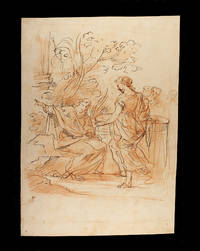
175298901752. 343x244mm. 13½x9½". España c.1752-1761. Sanguina y pluma con tinta marrón oscura anverso; lápiz y carboncillo reverso sobre papel verjurado ocre amarillento. 343 x 244mm. El dibujo de "Cristo y la Samaritana" puede encuadrarse en la etapa romana o durante la primera estancia madrileña 1761 a 1769. La "Sagrada Familia con San Juanito" fue realizado por Mengs para su yerno Manuel Salvador Carmona entre septiembre y octubre de 1778. Será la primera obra de Mengs que Carmona convertirÃa en grabado. Referencias: "Dibujo español del Renacimiento a Goya. La colección de la reina MarÃa Cristina de Borbón" Zaragoza 2008 nº 66 pp. 240 y 243 unknown
177627836Rome 1776. Large folio. 29 1/4 x 26 3/4 inches. 12 of 13 hand-coloured engraved plates each printed on two joined sheets by Ottaviani after Gaetano Savorelli and Pietro Camporesi. Interleaved with blanks. Bound without the engraved title soft vertical center crease light abrasions in the images some marginal chips and edge tears to a few plates. A very fine set with particularly fine contemporary hand-colouring of the second part of this great work which concentrates on the quadrants above the windows and doors in the Vatican Logge.<br/> <br/>The work was completed in three parts and depicts the decorative work executed by Raphael and his assistants between 1518-1519 in the Logge on the main storey of the Vatican apartments. The remarkable prints the first to be carried out of the decoration of the Logge were probably planned as early as 1760 but were not executed until 1774 to 1776. The project was carried out by the painter Gaetano Savorelli the draughtsman Ludovico Teseo the architect Pietro Camporesi and the engravers Giovanni Ottaviani and Giovanni Volpato. The plates were remarkable not just for their size and magnificent colouring but also because of the influence they had on contemporary taste. The decision was made to borrow elements from Raphael's Vatican tapestries and insert them where the original frescoes were in too poor a state to be legible. The finished plates therefore represented an amalgam of design elements presented with a crisp freshness of colour that held enormous appeal and did much to stimulate taste in the neo-classical period.<br/> <br/>Raphael Invenit: Stame da Rafaello 1985 Ottaviani 18 21-33; cf. Brunet IV 1110; cf. Berlin Kat. 4068; Raphael: Reproduktions-graphik aus vier Jahrhunderten Coburg 1984 p.104. unknown books
17723753Rome 1772. Large folio. 29 3/4 x 17 1/4 inches. 2pp. letterpress text in French "Aux Amateurs des Beaux Arts" with uncoloured engraved head-piece and initial and colophon at foot of second page. One small format folding plate "Ordine tenuto nel disporre le stampe de pilastri delle logge Rafaele." 7 x 19 1/32 inches 34 hand-coloured engraved leaves comprising: 1 general perspective view with title and portrait of Raphael by Volpato after Pietro Camporesi strip attached at lower edge to bring up to size; 2 folding plates of doorways by Ottoviani after Gaetano Savorelli and Camporesi each on two sheets joined 36 x 17 1/4 inches overall; 14 views of pilasters on 28 plates by Ottoviani after Savorelli and Camporesi the first plate of each view cut to edge of image with strip attached to lower edge to bring up to size; general plan "Spaccato per il longe del seconde piano del loggia" on three plates by Ottoviani after Savorelli and Camporesi designed to form a single panoramic image . Lower blank margin of text leaf torn and repaired small tears to folds of the doorway plates. Bound with: RAPHAEL. - Nicolas DORIGNY 1648-1746 engraver. Psyches et Amoris nuptiae fabula a Raphaele Sanctio Urbinate Romae in Farnesianis hortis Transtyberim ad veterum aemulationem ac laudem colorum luminibus expressa a. Dorigny. delineata et incisa et a Ioanne Petro Belloriio notis illustrata. Rome: Domenico de' Rossi 1693 or later. Large folio 29 3/4 x 17 1/4 inches. 10 hand-coloured engraved plates by Dorigny titles and imprints printed in gold. 2 works in one volume. Late 18th-century Roman red morocco gilt contemporary with the first work covers with elaborate border of dog-tooth roll double-fillet and repeated use of a three-flower spray a heart and a rococo drawer-handle tool the same tool massed to form a lozenge shape at the corners and forming a triangular motif mid-way up the long sides with stars birds and small and large flower-spray tools all enclosing a large central lozenge formed from an outline of a simpler variant drawer-handle tool and large flower sprays enclosing a center of massed scrolling foliage with pomegranates and acorns the spine in seventeen sections with raised bands lettered in the second the others with repeat decoration of a central flower spray with smaller sprays at the corners patterned paper pastedowns. Ties lacking light worming to head and foot of spine with resultant small tears and loss modern cloth solander box morocco lettering-piece on the spine. A very fine collection with richly hand-coloured plates of the best of the decorative interior work carried out by Raphael in Rome. The album is hand-coloured and bound in Rome in the fourth quarter of the 18th-century. It is clearly as it was delivered to its original owner perhaps a Grand-Tourist perhaps a local dilettanti and perfectly echoes his wishes: the first part of Ottoviani's excellent work on Raffaello's Logge frescoes that is the part on the pilasters and including Maitre Dorigny's engravings but only the Loggia of Psyche set all hand-coloured and uniform in size. The first work part one of three concentrates on the decorative pilasters executed by Raphael and his assistants as part of a larger scheme of redecoration between 1518-1519 in the Logge on the main storey of the Vatican apartments. The remarkable prints the first to be carried out of the decoration of the Logge were probably planned as early as 1760 but were not executed until 1774 to 1776. The project was carried out by the painter Gaetano Savorelli the draughtsman Ludovico Teseo the architect Pietro Camporesi and the engravers Giovanni Ottaviani and Giovanni Volpato. The plates were remarkable not just for their size and magnificent colouring but also because of the influence they had on contemporary taste. The decision was made to borrow elements from Raphael's Vatican tapestries and insert them where the original frescoes were in too poor a state to be legible. The finished plates therefore represented an amalgam of design elements presented with a crisp freshness of colour that held enormous appeal and did much to stimulate the taste for the grotesque in the neo-classical period. The second work is of Raphael's Cupid and Psyche series of frescoes carried out by Raphael between 1516 and 1518 in the Loggia of Psyche in the villa Farnesina in Rome. The series also comes with a title and an eleventh plate of the ceiling fresco in the adjoining Sala di Galatea executed in 1512: neither the plate nor the title were ever bound in the present collection. Originally published by the Rossis it is the work of Nicolas Dorigny 1658-1746 who lived and worked in Rome between about 1690 and 1719. The painter classicist and art historian Giovanni Pietro Bellori 1613-1696 provided the text at the foot of the plates appropriate excerpts from Apuleuis's Golden Ass. "Raphael Invenit: Stampe da Rafaello" 1985 Volpato 1; Ottaviano 2-19 and Dorigny 37-46. Brunet IV cf.1110 & 1111; Berlin "Kat". Cf.4068 & 4066; "Raphael: Reproduktions-graphik aus vier Jahrhunderten Coburg 1984 p.104 & no.245; "Giovanni Volpato 1735-1803" Bassano del Grappa 1988 173. unknown books