132 résultats
17777514London: Published by John Boydell Cheapside 1777. Mezzotint. State iii/iii with the engraved inscription in thick and thin cursive letters. In good condition apart from some overall light surface soiling and foxing. Occasional rubbed creases throughout image. Laid down onto cream wove backing paper. Image size: 13 1/16 x 10 15/16 inches. This charming portrait of the fashionable Catherine Schindlerin expertly illustrates Smith's superior technique and artistic ingenuity.<br/> <br/>Catherine Schinderlin was a German singer and actress who began her career in London in 1775 the year Reynolds did this portrait for the Duke and Duchess of Dorset. It shows the actress in the role of the "Coquette" from an as yet unidentified play or opera. A highly influential figure in the late eighteenth-century British art world John Raphael Smith was the most robust and prolific printmaker of his time. During his prodigious career Smith produced nearly 400 prints 130 of which were of his own design. The remainder were reproduced paintings by such noted British artists as Joshua Reynolds George Romney and Joseph Wright of Derby. Smith was an incredibly astute businessman and soon became an impresario of the print-publishing trade. At the 1783 exhibition of the Society of Artists Smith exhibited his print of the Prince of Wales. This clever bit of marketing precipitated his appointment as the Prince of Wales' mezzotint engraver immediately making him even more desirable to an art market hungry for quality prints. D'Oench<br/> <br/>D'Oench Copper into Gold Prints by John Raphael Smith 88; Frankau An Eighteenth Century Artist and Engraver John Raphael Smith 306 iii/iii; Chaloner Smith British Mezzotinto Portraits 147 iii/iii; Russell English Mezzotint Portraits and their States 147; O'Donoghue Catalogue of Engraved British Portraits.in the British Museum 1; Lennox-Boyd & Stogdon state iii/iii. Published by John Boydell, Cheapside unknown books
1780404758Rome: Ludwig Sommerau 1780. Hardcover. both boards separated disbound and first two blanks lacking. some stains and foxing throughout. some plates have pencil notes at the bottom. despite flaws plates are very sharp and bright. see scans all plates are shown. folio 19" x 15-1/2". Sommerau's engravings depict tapestries designed by Raphael and made between 1517 and 1521 in the workshop of Pieter van Aelst in Brussels. Originally made for the Sistine Chapel the tapestries are now housed in the Vatican Library.per Bonhams. Ludwig Sommerau hardcover
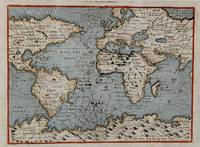
1713M8194Italy c.1713. Very Good. Notes: Savonarola used the pseudonym Alphonsus Lasor a Varea. Monk of Theatine order who worked in the monastery library in Padua. He was also Professor of Holy Scripture. Universes Terrarum Orbis Scriptorum. Size : 105x140 mm 4.13x5.51 Inches Coloring: Hand Colored Reference: Mickwitz A.M. Miekkavaara L. and Rantenen T. The A.E. Nordenskiold Collection in the Helsinki University Library Volume 2 1981 pp. 269- 276 Category: Maps World; unknown
1795147391795. Engraving. Printed on laid paper. Collector mark bearing the initials E.O printed in blue ink on verso of sheet. Some rippling in the middle of image. Image size: 22 x 15 1/16 inches. An exceedingly rare self/family portrait by Raphael Morghen after a painting by Angelica Kauffman.<br/> <br/>Though the whereabouts of the original painting is not known this is clearly a self-portrait of Angelica Kauffman seated with what appear to be two grown children and a son-in-law. She holds what is perhaps a portrait of her second husband Francesco Zucchi who died in 1795. Her children would have to have been from her unhappy first marriage. There is no title but rather a text in French about how virtue is instilled in children. This impressive portrait was painted by the celebrated artist Angelica Kauffman and engraved by the renowned Italian printmaker Raphael Morghen. Kauffman was a child prodigy who executed her first commissioned work before the age of thirteen. As a child she traveled through Austria and Italy with her father the painter Joseph Kauffman. She assisted him by painting the backgrounds of his works but she quickly received her own commissions and established a reputation for herself as an accomplished painter. In 1766 she traveled to London where she painted portraits and decorative paintings. She was a close friend of Reynolds and was one of the first female members of the British Royal Academy. Goethe called her "the most accomplished woman in Europe". Raphael Morghen received his first artistic training from his father the accomplished engraver Filippo Morghen. Like Kauffman Morghen was also a child prodigy publishing his first engraving at the age of twelve. By the age of twenty he had established himself as one of the premiere engravers in Europe allowing him to garner countless commissions. He worked in Naples Rome and Florence and produced over two hundred and fifty prints during his prolific career.<br/> <br/>Benezit Dictionnaire des Peintres Sculpteurs Dessinateurs et Graveurs. unknown books
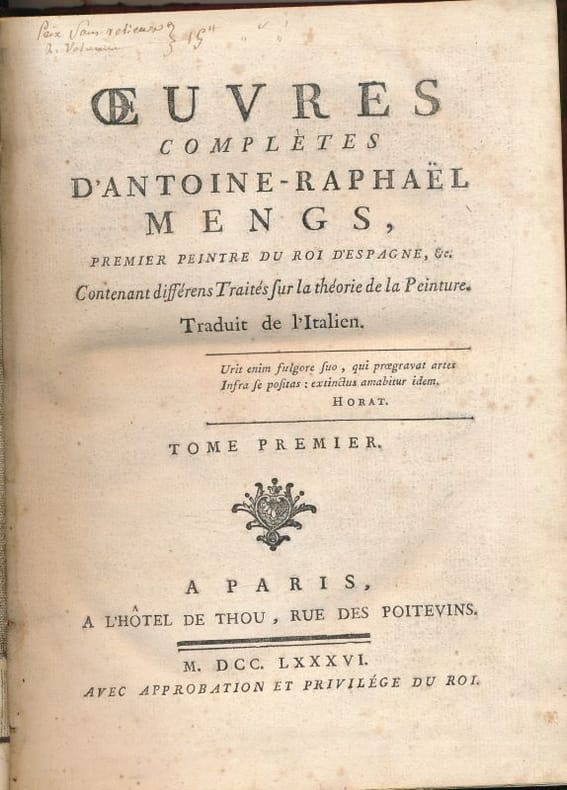
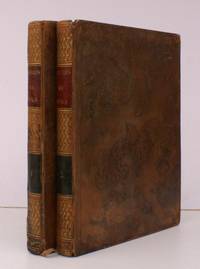
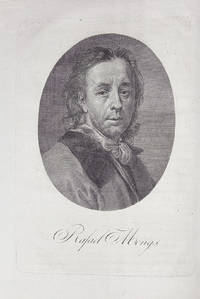
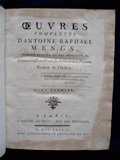
1786165424Hôtel de Thou A Paris Hôtel de Thou 1786, 2 volumes In-4 reliés, demi basane blonde à coins, dos lisses à filets dorés, pièces de titre et de tomaison rouges. VIII + 354 + 392 pages. Bien complet du portrait en frontispice . Mémoires sur la vie et sur les ouvrages de M. Mengs par le Chevalier d'Azara en début d'ouvrage. Traduit de l'italien, première édition française. Plats cartonnés des reliures un peu frottés, coins un peu émoussés, Une moullure angulaire au frontispice, brunissures éparses. Bon exemplaire, peu courant.
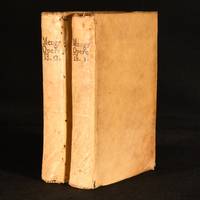
1787935P23Roma: Stamperia Pagliarini 1787. Vellum. Good Only. 8" by 5". Various. A scarce two volume edition collecting together the artistic writings of Neoclassical painter Anton Raphael Mengs. Complete in two volumes the scacer edition by Pagliarini who also published an edition in one volume.Illustrated with a frontispiece to each volume. In Italian.The collected writings by the noted eighteenth century Neoclassical painter Anton Raphael Mengs.Mengs' writings were all on the theory of art and on the lives of eminent painters throughout history. This includes his 1762 'Reflections on Beauty and Taste in Painting' an influential treatise which inspired the artistic society of his day. His other writings includes 'Reflections on the Three Great Painters Raphael Correggio and Titian and on the Ancients' 'Practical Painting Lessons' 'Reflection on the Academy of Fine Arts in Madrid' a selection of letters written to Antonio Ponz 'Dreams on Beauty' and more. As an artist Mengs painted many of the important figures of his day such as Charles IV of Spain Maria Luisa of Spain and Johann Joachim Winckelmann as well as striking religious and mythological scenes of figures such as Helios and St. John the Baptist. Including a life of Mengs by Jose Nicolas d'Azara edited by Carlo Fea.Collated complete. In the original vellum binding. Externally generally smart. Vellum is discoloured as is usual to see heavier to the spines. Minor marks to the boards and spine. Light bumping to the head and tail of the spines and to the extremities. Chip and lifting to the fore edge of the rear board of Volume I. Heavier patch of discolouration to the rear board of Volume II. A few small chips to the vellum mostly to the spines and joints. Hinges are tender. Front endpapers are detached and edge worn. Lacking the paper to the rear paste downs. Internally generally firmly bound. Pages are lightly age-toned and generally clean with scattered spots. Dampstain to the first few pages of Volume I with amateur repairs from the half-tile to page xvi. Frontispiece and page xxix of Volume I are detached but present as if the half-title frontispiece and title of Volume II. Mark to the bottom edge of the first half of the text and final few pages of Volume II. Good Only Stamperia Pagliarini hardcover
178629839A l'Hotel de Thou Rue des Poitevins Paris 1786. 2 vols. 4to. First Edition thus with engraved portrait frontispiece; handsomely bound in contemporary tree calf backs with four flat bands ruled in gilt second and fourth compartments with leather labels red/green respectively lettered and numbered in gilt all other compartments richly tooled in glt gilt dentelles blue speckled edges marbled endpapers red silk markers joints cracked but binding entirely sound boards lightly age-marked else a remarkably bright crisp copy in wholly unrestored period binding. FIRST EDITION IN FRENCH following publication in Italian by Bodoni. VERY SCARCE. Palau 164521. A l'Hotel de Thou, Rue des Poitevins, Paris, hardcover
179713068Madrid: Imprenta Real 1797. 243x190mm. 9½x7½". Madrid Imprenta Real 1797. En 4º 243 x 190mm. 6 h. 1 retrato lii-402 pp. Encuadernación de la época en plena piel lomera con ruedas doradas formando nervios y hierro dorado en las calles tejuelo en marroquén. MagnÃfico ejemplar de esta obra estimada muy bien impresa en la Imprenta Real a expensas de Julián Pereyra. Segunda edición copia exacta de la primera. Contiene además de las obras completas de Mengs un "Comentario al Tratado de la Belleza" de Mengs por Joseph Azara y varias cartas. Al fin un tratado con lecciones prácticas de pintura. Obra importante. Antonio Rafael Mengs gozó de un buen prestigio y sus obras eran consultadas por todos los artistas de la época. El libro contiene además de las obras completas de Mengs un "Comentario a su Tratado de la Belleza" por Joseph Azara quien además se encargó de recoger los textos del pintor. Al fin un tratado con lecciones prácticas de pintura. Perfecto ejemplar. Imprenta Real unknown
17868168London: Published by J. R. Smith No. 83 Oxford Street 1786. Coloured mezzotint. In good condition with the exception of some faint soiling in upper margin. Bottom margin outside platemark is coated with white paint. Water stains on verso of sheet not noticeable on front of sheet. Image size: 14 3/4 x 17 inches. Plate size: 17 7/8 x 19 5/8 inches. Sheet size: 19 5/8 x 20 inches. A wonderful mezzotint after Rev. Matthew William Peters by one of the finest eighteenth century engravers.<br/> <br/> This charming print is engraved after a painting by Rev. Matthew William Peters and is a fascinating example of this period in British printmaking. Matthew Peters was trained in London under the portraitist Thomas Hudson. He quickly became a prominent member of the Society of Artists exhibiting portraits in oil and pastel and attracting a number of prominent aristocratic patrons including the Duke of Manchester the Marquess of Granby and Lord Grosvenor for whom he painted some of his most controversial pictures. Urged by his patrons Peters painted a series of quasi-erotic character studies of courtesans which at that time were quite unusual in Britain. These controversial pictures were eagerly reproduced by industrious printmaker/publishers such as Smith and caused a flurry of curious customers to hurry to London print-shops. Following his ordination in 1781 Peters quickly denounced his early erotic pictures as immoral. Upon being appointed Honorary Chaplain to the Royal Academy Peters expressed a profound regret "that he ever devoted his talents to such subjects". With this in mind this picture becomes extremely interesting. In this work Peters continues to observe and appreciate charming subjects in fancy costumes but eliminates the erotic overtones present in his earlier works. Instead he has chosen to depict an age-old moral subject fortune-telling an institution in western art since the Renaissance. This print which is expertly engraved by one of the finest eighteenth century printmakers is a fascinating view into a turbulent period in Peters' life when he struggled to produce images that would appeal to his viewers while remaining true to his moral beliefs.<br/> <br/> D'Oench Copper into Gold: Prints by John Raphael Smith 1751-1812 p. 224 No. 274; Smith Catalogue No. 135 & 136; Ackermann 1802 p. 9 described as companion prints; Chaloner Smith British Mezzotinto Portraits Ward 97 Smith 186; Frankau An 18th Century Artist and Engraver: John Raphael Smith 146. Published by J. R. Smith, No. 83 Oxford Street unknown
17867634A l'hôtel de Thou | à Paris 1786 | 25.50 x 20 cm | deux volumes reliés
177420163Rome 1774. Copper engraving on two joined sheets by Ottaviani after drawings by Savorelli and Camporesi printed in light brown coloured ink with contemporary hand-colouring. Some marginal restoration at corners and margins. A stunning plate from "Logge di Rafaele nel Vaticano": with contemporary colouring of the highest quality from the golden age of the hand-coloured print.<br/> <br/> A very fine image from the second part of a work titled "Loggie di Rafaele nel Vaticano" depicting the decorative work executed by Raphael and his assistants between 1518-1519 in the Vatican. They were drawn by Gaetano Savorelli a Roman painter and draughtsman best known for his Raphael drawings and Pietro Camporesi a Roman architect who worked for Pope Clemens XIII and Pius VI on rooms for the Vatican Museum. The first to illustrate the famous frescoes these beautiful plates were probably planned as early as 1760 but were not executed until 1772 to 1776. The plate is remarkable not only as the first important visual record of Raphael's work but also for the quality of the hand-colouring - the work on this image is in our opinion some of the greatest to be produced in Europe during the whole of the eighteenth century: the golden age of the hand-coloured print. They were remarkable not just for their size and magnificent colouring but also because of the influence they had on contemporary taste. The decision was made to "borrow" elements from Raphael's Vatican tapestries and insert them where the original frescoes were in too poor a state to be legible. The finished plates therefore represented an amalgam of design elements presented with a crisp freshness of colour that held enormous appeal and did much to stimulate the taste for the "grotesque" in the Neo-classical period. A year after the death of his principal patron Julius II Raphael succeeded Donato Bramante in 1514 as the official Vatican architect. Having previously adorned the "Stanze" or chambers of Julius on the second floor of the papal apartments in the Vatican palace he was commissioned by Leo X in 1517 to decorate the adjacent Logge. He designed an elaborate cycle of ornamental frescoes for the room's ceiling vaults doors and auxiliary pillars which were executed by his assistants Giulio Romano and Giovanni da Udine. Twelve of the quadrilateral ceiling vaults were adorned with murals of familiar Old Testament scenes and one with a scene from the New Testament while the more decorative frescoes painted on the pilasters by Udine were covered with imaginative compositions of 'grotesque' motifs like foliage fruit and chimerical beasts. The biblical scene depicted shows the infant brothers Cain and Abel vying for their mother's attention. Adam is sowing nearby.<br/> <br/> Cf. Brunet IV 1110 & 1111; cf. Berlin Katalog 4068 & 4066; "Raphael Invenit: Stampe da Rafaello" 1985 Ottaviano 22; cf. "Raphael: Reproduktions-graphik aus vier Jahrhunderten" Coburg 1984 104 & no. 245. unknown
177420164Rome 1774. Copper engraving by Ottaviani after drawings by Savorelli and Camporesi printed in light brown coloured ink with contemporary hand-colouring. Neat marginal restoration. A stunning plate from "Logge di Rafaele nel Vaticano": with contemporary colouring of the highest quality from the golden age of the hand-coloured print. The scene in the main panel shows the three angels that appeared to Abraham and told him that he and his wife Sarah will have a son.<br/> <br/> A very fine image from the second part of a work titled "Loggie di Rafaele nel Vaticano" depicting the decorative work executed by Raphael and his assistants between 1518-1519 in the Vatican. They were drawn by Gaetano Savorelli a Roman painter and draughtsman best known for his Raphael drawings and Pietro Camporesi a Roman architect who worked for Pope Clemens XIII and Pius VI on rooms for the Vatican Museum. The first to illustrate the famous frescoes these beautiful plates were probably planned as early as 1760 but were not executed until 1772 to 1776. The plate is remarkable not only as the first important visual record of Raphael's work but also for the quality of the hand-colouring - the work on this image is in our opinion some of the greatest to be produced in Europe during the whole of the eighteenth century: the golden age of the hand-coloured print. They were remarkable not just for their size and magnificent colouring but also because of the influence they had on contemporary taste. The decision was made to "borrow" elements from Raphael's Vatican tapestries and insert them where the original frescoes were in too poor a state to be legible. The finished plates therefore represented an amalgam of design elements presented with a crisp freshness of colour that held enormous appeal and did much to stimulate the taste for the "grotesque" in the Neo-classical period. A year after the death of his principal patron Julius II Raphael succeeded Donato Bramante in 1514 as the official Vatican architect. Having previously adorned the "Stanze" or chambers of Julius on the second floor of the papal apartments in the Vatican palace he was commissioned by Leo X in 1517 to decorate the adjacent Logge. He designed an elaborate cycle of ornamental frescoes for the room's ceiling vaults doors and auxiliary pillars which were executed by his assistants Giulio Romano and Giovanni da Udine. Twelve of the quadrilateral ceiling vaults were adorned with murals of familiar Old Testament scenes and one with a scene from the New Testament while the more decorative frescoes painted on the pilasters by Udine were covered with imaginative compositions of 'grotesque' motifs like foliage fruit and chimerical beasts.<br/> <br/> Cf. Brunet IV 1110 & 1111; cf. Berlin Katalog 4068 & 4066; "Raphael Invenit: Stampe da Rafaello" 1985 Ottaviano 22; cf. "Raphael: Reproduktions-graphik aus vier Jahrhunderten" Coburg 1984 104 & no. 245. unknown
177417011Rome 1774. Copper engraving by Ottaviani after drawings by Savorelli and Camporesi printed in light brown coloured ink with contemporary hand-colouring. Good condition. Shaved within plate mark expert neat repairs to left margin one just affecting the image area. A stunning plate from "Logge di Rafaele nel Vaticano": with contemporary colouring of the highest quality from the golden age of the hand-coloured print.<br/> <br/> A very fine image from the second part of a work titled "Loggie di Rafaele nel Vaticano" depicting the decorative work executed by Raphael and his assistants between 1518-1519 in the Vatican. They were drawn by Gaetano Savorelli a Roman painter and draughtsman best known for his Raphael drawings and Pietro Camporesi a Roman architect who worked for Pope Clemens XIII and Pius VI on rooms for the Vatican Museum. The first to illustrate the famous frescoes these beautiful plates were probably planned as early as 1760 but were not executed until 1772 to 1776. The plate is remarkable not only as the first important visual record of Raphael's work but also for the quality of the hand-colouring - the work on this image is in our opinion some of the greatest to be produced in Europe during the whole of the eighteenth century: the golden age of the hand-coloured print. They were remarkable not just for their size and magnificent colouring but also because of the influence they had on contemporary taste. The decision was made to "borrow" elements from Raphael's Vatican tapestries and insert them where the original frescoes were in too poor a state to be legible. The finished plates therefore represented an amalgam of design elements presented with a crisp freshness of colour that held enormous appeal and did much to stimulate the taste for the "grotesque" in the Neo-classical period. A year after the death of his principal patron Julius II Raphael succeeded Donato Bramante in 1514 as the official Vatican architect. Having previously adorned the "Stanze" or chambers of Julius on the second floor of the papal apartments in the Vatican palace he was commissioned by Leo X in 1517 to decorate the adjacent Logge. He designed an elaborate cycle of ornamental frescoes for the room's ceiling vaults doors and auxiliary pillars which were executed by his assistants Giulio Romano and Giovanni da Udine. Twelve of the quadrilateral ceiling vaults were adorned with murals of familiar Old Testament scenes and one with a scene from the New Testament while the more decorative frescoes painted on the pilasters by Udine were covered with imaginative compositions of 'grotesque' motifs like foliage fruit and chimerical beasts. The biblical scene depicted shows the infant brothers Cain and Abel vying for their mother's attention. Adam is sowing nearby.<br/> <br/> Cf. Brunet IV 1110 & 1111; cf. Berlin Katalog. 4068 & 4066; "Raphael Invenit: Stampe da Rafaello" 1985 Ottaviano 22; cf. "Raphael: Reproduktions-graphik aus vier Jahrhunderten" Coburg 1984 104 & no. 245. unknown
177020166Rome 1770. Copper engraving on two joined sheets by Ottaviani after drawings by Savorelli and Camporesi printed in light brown coloured ink with contemporary hand-colouring. Neat marginal restoration. A stunning plate from "Logge di Rafaele nel Vaticano": with contemporary colouring of the highest quality from the golden age of the hand-coloured print. The main panel shows Jacob at Luza having a vision of the angels ascending and descending by a ladder which reached from earth to heaven.<br/> <br/> A very fine image from the second part of a work titled "Loggie di Rafaele nel Vaticano" depicting the decorative work executed by Raphael and his assistants between 1518-1519 in the Vatican. They were drawn by Gaetano Savorelli a Roman painter and draughtsman best known for his Raphael drawings and Pietro Camporesi a Roman architect who worked for Pope Clemens XIII and Pius VI on rooms for the Vatican Museum. The first to illustrate the famous frescoes these beautiful plates were probably planned as early as 1760 but were not executed until 1772 to 1776. The plate is remarkable not only as the first important visual record of Raphael's work but also for the quality of the hand-colouring - the work on this image is in our opinion some of the greatest to be produced in Europe during the whole of the eighteenth century: the golden age of the hand-coloured print. They were remarkable not just for their size and magnificent colouring but also because of the influence they had on contemporary taste. The decision was made to "borrow" elements from Raphael's Vatican tapestries and insert them where the original frescoes were in too poor a state to be legible. The finished plates therefore represented an amalgam of design elements presented with a crisp freshness of colour that held enormous appeal and did much to stimulate the taste for the "grotesque" in the Neo-classical period. A year after the death of his principal patron Julius II Raphael succeeded Donato Bramante in 1514 as the official Vatican architect. Having previously adorned the "Stanze" or chambers of Julius on the second floor of the papal apartments in the Vatican palace he was commissioned by Leo X in 1517 to decorate the adjacent Logge. He designed an elaborate cycle of ornamental frescoes for the room's ceiling vaults doors and auxiliary pillars which were executed by his assistants Giulio Romano and Giovanni da Udine. Twelve of the quadrilateral ceiling vaults were adorned with murals of familiar Old Testament scenes and one with a scene from the New Testament while the more decorative frescoes painted on the pilasters by Udine were covered with imaginative compositions of 'grotesque' motifs like foliage fruit and chimerical beasts.<br/> <br/> Cf. Brunet IV 1110 & 1111; cf. Berlin Katalog 4068 & 4066; "Raphael Invenit: Stampe da Rafaello" 1985 Ottaviano 22; cf. "Raphael: Reproduktions-graphik aus vier Jahrhunderten" Coburg 1984 104 & no. 245. unknown
177420167Rome 1774. Copper engraving on two joined sheets by Ottaviani after drawings by Savorelli and Camporesi printed in light brown coloured ink with contemporary hand-colouring. Neat marginal restoration. A stunning plate from "Logge di Rafaele nel Vaticano": with contemporary colouring of the highest quality from the golden age of the hand-coloured print. The main panel shows Joseph telling his brothers of his prophetic dreams "Hear my dream which I dreamed. I thought we were binding sheaves in the field: and my sheaf arose as it were and stood and your sheaves standing about bowed down before my sheaf . I saw in . another dream as it were the sun and the moon and eleven stars worshipping me."<br/> <br/> A very fine image from the second part of a work titled "Loggie di Rafaele nel Vaticano" depicting the decorative work executed by Raphael and his assistants between 1518-1519 in the Vatican. They were drawn by Gaetano Savorelli a Roman painter and draughtsman best known for his Raphael drawings and Pietro Camporesi a Roman architect who worked for Pope Clemens XIII and Pius VI on rooms for the Vatican Museum. The first to illustrate the famous frescoes these beautiful plates were probably planned as early as 1760 but were not executed until 1772 to 1776. The plate is remarkable not only as the first important visual record of Raphael's work but also for the quality of the hand-colouring - the work on this image is in our opinion some of the greatest to be produced in Europe during the whole of the eighteenth century: the golden age of the hand-coloured print. They were remarkable not just for their size and magnificent colouring but also because of the influence they had on contemporary taste. The decision was made to "borrow" elements from Raphael's Vatican tapestries and insert them where the original frescoes were in too poor a state to be legible. The finished plates therefore represented an amalgam of design elements presented with a crisp freshness of colour that held enormous appeal and did much to stimulate the taste for the "grotesque" in the Neo-classical period. A year after the death of his principal patron Julius II Raphael succeeded Donato Bramante in 1514 as the official Vatican architect. Having previously adorned the "Stanze" or chambers of Julius on the second floor of the papal apartments in the Vatican palace he was commissioned by Leo X in 1517 to decorate the adjacent Logge. He designed an elaborate cycle of ornamental frescoes for the room's ceiling vaults doors and auxiliary pillars which were executed by his assistants Giulio Romano and Giovanni da Udine. Twelve of the quadrilateral ceiling vaults were adorned with murals of familiar Old Testament scenes and one with a scene from the New Testament while the more decorative frescoes painted on the pilasters by Udine were covered with imaginative compositions of 'grotesque' motifs like foliage fruit and chimerical beasts.<br/> <br/> Cf. Brunet IV 1110 & 1111; cf. Berlin Katalog 4068 & 4066; "Raphael Invenit: Stampe da Rafaello" 1985 Ottaviano 22; cf. "Raphael: Reproduktions-graphik aus vier Jahrhunderten" Coburg 1984 104 & no. 245. unknown
177420169Rome 1774. Copper engraving on two joined sheets by Ottaviani after drawings by Savorelli and Camporesi printed in light brown coloured ink with contemporary hand-colouring. Neat marginal restoration. A stunning plate from "Logge di Rafaele nel Vaticano": with contemporary colouring of the highest quality from the golden age of the hand-coloured print. The main panel shows King David having subdued Syria returning to Jersusalem with armour made of gold.<br/> <br/> A very fine image from the second part of a work titled "Loggie di Rafaele nel Vaticano" depicting the decorative work executed by Raphael and his assistants between 1518-1519 in the Vatican. They were drawn by Gaetano Savorelli a Roman painter and draughtsman best known for his Raphael drawings and Pietro Camporesi a Roman architect who worked for Pope Clemens XIII and Pius VI on rooms for the Vatican Museum. The first to illustrate the famous frescoes these beautiful plates were probably planned as early as 1760 but were not executed until 1772 to 1776. The plate is remarkable not only as the first important visual record of Raphael's work but also for the quality of the hand-colouring - the work on this image is in our opinion some of the greatest to be produced in Europe during the whole of the eighteenth century: the golden age of the hand-coloured print. They were remarkable not just for their size and magnificent colouring but also because of the influence they had on contemporary taste. The decision was made to "borrow" elements from Raphael's Vatican tapestries and insert them where the original frescoes were in too poor a state to be legible. The finished plates therefore represented an amalgam of design elements presented with a crisp freshness of colour that held enormous appeal and did much to stimulate the taste for the "grotesque" in the Neo-classical period. A year after the death of his principal patron Julius II Raphael succeeded Donato Bramante in 1514 as the official Vatican architect. Having previously adorned the "Stanze" or chambers of Julius on the second floor of the papal apartments in the Vatican palace he was commissioned by Leo X in 1517 to decorate the adjacent Logge. He designed an elaborate cycle of ornamental frescoes for the room's ceiling vaults doors and auxiliary pillars which were executed by his assistants Giulio Romano and Giovanni da Udine. Twelve of the quadrilateral ceiling vaults were adorned with murals of familiar Old Testament scenes and one with a scene from the New Testament while the more decorative frescoes painted on the pilasters by Udine were covered with imaginative compositions of 'grotesque' motifs like foliage fruit and chimerical beasts.<br/> <br/> Cf. Brunet IV 1110 & 1111; cf. Berlin Katalog 4068 & 4066; "Raphael Invenit: Stampe da Rafaello" 1985 Ottaviano 22; cf. "Raphael: Reproduktions-graphik aus vier Jahrhunderten" Coburg 1984 104 & no. 245. unknown
177420170Rome 1774. Copper engraving on two joined sheets by Ottaviani after drawings by Savorelli and Camporesi printed in light brown coloured ink with contemporary hand-colouring. Neat marginal restoration. A stunning plate from "Logge di Rafaele nel Vaticano": with contemporary colouring of the highest quality from the golden age of the hand-coloured print. The main panel shows the moment during the Last Supper when Jesus announces that one of the twelve disciples will betray him.<br/> <br/> A very fine image from the second part of a work titled "Loggie di Rafaele nel Vaticano" depicting the decorative work executed by Raphael and his assistants between 1518-1519 in the Vatican. They were drawn by Gaetano Savorelli a Roman painter and draughtsman best known for his Raphael drawings and Pietro Camporesi a Roman architect who worked for Pope Clemens XIII and Pius VI on rooms for the Vatican Museum. The first to illustrate the famous frescoes these beautiful plates were probably planned as early as 1760 but were not executed until 1772 to 1776. The plate is remarkable not only as the first important visual record of Raphael's work but also for the quality of the hand-colouring - the work on this image is in our opinion some of the greatest to be produced in Europe during the whole of the eighteenth century: the golden age of the hand-coloured print. They were remarkable not just for their size and magnificent colouring but also because of the influence they had on contemporary taste. The decision was made to "borrow" elements from Raphael's Vatican tapestries and insert them where the original frescoes were in too poor a state to be legible. The finished plates therefore represented an amalgam of design elements presented with a crisp freshness of colour that held enormous appeal and did much to stimulate the taste for the "grotesque" in the Neo-classical period. A year after the death of his principal patron Julius II Raphael succeeded Donato Bramante in 1514 as the official Vatican architect. Having previously adorned the "Stanze" or chambers of Julius on the second floor of the papal apartments in the Vatican palace he was commissioned by Leo X in 1517 to decorate the adjacent Logge. He designed an elaborate cycle of ornamental frescoes for the room's ceiling vaults doors and auxiliary pillars which were executed by his assistants Giulio Romano and Giovanni da Udine. Twelve of the quadrilateral ceiling vaults were adorned with murals of familiar Old Testament scenes and one with a scene from the New Testament while the more decorative frescoes painted on the pilasters by Udine were covered with imaginative compositions of 'grotesque' motifs like foliage fruit and chimerical beasts.<br/> <br/> Cf. Brunet IV 1110 & 1111; cf. Berlin Katalog 4068 & 4066; "Raphael Invenit: Stampe da Rafaello" 1985 Ottaviano 22; cf. "Raphael: Reproduktions-graphik aus vier Jahrhunderten" Coburg 1984 104 & no. 245. unknown
177216447Rome 1772. Copper engraving with stunning early colour. Printed on laid paper with added wove margins. In excellent condition with the exception of some light foxing in the margins. Image size: 22 7/8 x 15 3/4 inches. This beautiful perspective view of Raphael's Loggia with contemporary colouring of the highest quality from the golden age of the hand-coloured print served as the frontispiece to the celebrated text "Loggie di Rafaele nel Vaticano".<br/> <br/> This arresting print is a general perspective view of Raphael's design for the Loggia at the Vatican with a large profile portrait of Raphael in a medallion over the entrance to the corridor. The plate served as the frontispiece to the first part of the "Logge di Rafaele nel Vaticano" which depicted the decorative work executed by Raphael and his assistants between 1518-1519 in the Vatican. The project as a whole was carried out by the painter Gaetano Savorelli the draughtsman Ludovico Teseo the architect Pietro Camporesi and the engravers Giovanni Ottaviani and Giovanni Volpato. The plate is remarkable not only as the first important visual record of Raphael's work but also for the quality of the hand-colouring - the work on this image is in our opinion some of the greatest to be produced in Europe during the whole of the eighteenth century: the golden age of the hand-coloured print. The whole series was remarkable not just for the size and magnificent colouring of the prints but also because of the influence they had on contemporary taste. The decision was made to "borrow" elements from Raphael's Vatican tapestries and insert them where the original frescoes were in too poor a state to be legible. The finished plates therefore represented an amalgam of design elements presented with a crisp freshness of colour that held enormous appeal and stimulated the taste for the "grotesque" in the neo-classical period.<br/> <br/> Cf. Brunet IV 1110; cf. Berlin Katalog 4068; Lambert Pattern and Design V. & A.: 1983 p. 26; "Raphael Invenit: Stampe da Rafaello" 1985 Volpato 1; Raphael: Reproduktions-graphik aus vier Jahrhunderten Coburg: 1984 p. 104; G. Marini editor Giovanni Volpato 1735-1803 1988 no. 198. unknown
177420168Rome 1774. Copper engraving on two joined sheets by Ottaviani after drawings by Savorelli and Camporesi printed in light brown coloured ink with contemporary hand-colouring. Neat marginal restoration. A stunning plate from "Logge di Rafaele nel Vaticano": with contemporary colouring of the highest quality from the golden age of the hand-coloured print. The main panel shows Moses coming down from Mount Sinai holding the tablets bearing the ten words of the Covenant his face "horned from the conversation of the Lord". Aaron and the children of Israel seeing the face of Moses "horned" are afraid to come near.<br/> <br/> A very fine image from the second part of a work titled "Loggie di Rafaele nel Vaticano" depicting the decorative work executed by Raphael and his assistants between 1518-1519 in the Vatican. They were drawn by Gaetano Savorelli a Roman painter and draughtsman best known for his Raphael drawings and Pietro Camporesi a Roman architect who worked for Pope Clemens XIII and Pius VI on rooms for the Vatican Museum. The first to illustrate the famous frescoes these beautiful plates were probably planned as early as 1760 but were not executed until 1772 to 1776. The plate is remarkable not only as the first important visual record of Raphael's work but also for the quality of the hand-colouring - the work on this image is in our opinion some of the greatest to be produced in Europe during the whole of the eighteenth century: the golden age of the hand-coloured print. They were remarkable not just for their size and magnificent colouring but also because of the influence they had on contemporary taste. The decision was made to "borrow" elements from Raphael's Vatican tapestries and insert them where the original frescoes were in too poor a state to be legible. The finished plates therefore represented an amalgam of design elements presented with a crisp freshness of colour that held enormous appeal and did much to stimulate the taste for the "grotesque" in the Neo-classical period. A year after the death of his principal patron Julius II Raphael succeeded Donato Bramante in 1514 as the official Vatican architect. Having previously adorned the "Stanze" or chambers of Julius on the second floor of the papal apartments in the Vatican palace he was commissioned by Leo X in 1517 to decorate the adjacent Logge. He designed an elaborate cycle of ornamental frescoes for the room's ceiling vaults doors and auxiliary pillars which were executed by his assistants Giulio Romano and Giovanni da Udine. Twelve of the quadrilateral ceiling vaults were adorned with murals of familiar Old Testament scenes and one with a scene from the New Testament while the more decorative frescoes painted on the pilasters by Udine were covered with imaginative compositions of 'grotesque' motifs like foliage fruit and chimerical beasts.<br/> <br/> Cf. Brunet IV 1110 & 1111; cf. Berlin Katalog 4068 & 4066; "Raphael Invenit: Stampe da Rafaello" 1985 Ottaviano 22; cf. "Raphael: Reproduktions-graphik aus vier Jahrhunderten" Coburg 1984 104 & no. 245. unknown
177420165Rome 1774. Copper engraving on two joined sheets by Ottaviani after drawings by Savorelli and Camporesi printed in light brown coloured ink with contemporary hand-colouring. Neat marginal restoration. A stunning plate from "Logge di Rafaele nel Vaticano": with contemporary colouring of the highest quality from the golden age of the hand-coloured print. In the main panel the Lord appears to Isaac and tells him not to go down into Egypt but to stay in Gerara.<br/> <br/> A very fine image from the second part of a work titled "Loggie di Rafaele nel Vaticano" depicting the decorative work executed by Raphael and his assistants between 1518-1519 in the Vatican. They were drawn by Gaetano Savorelli a Roman painter and draughtsman best known for his Raphael drawings and Pietro Camporesi a Roman architect who worked for Pope Clemens XIII and Pius VI on rooms for the Vatican Museum. The first to illustrate the famous frescoes these beautiful plates were probably planned as early as 1760 but were not executed until 1772 to 1776. The plate is remarkable not only as the first important visual record of Raphael's work but also for the quality of the hand-colouring - the work on this image is in our opinion some of the greatest to be produced in Europe during the whole of the eighteenth century: the golden age of the hand-coloured print. They were remarkable not just for their size and magnificent colouring but also because of the influence they had on contemporary taste. The decision was made to "borrow" elements from Raphael's Vatican tapestries and insert them where the original frescoes were in too poor a state to be legible. The finished plates therefore represented an amalgam of design elements presented with a crisp freshness of colour that held enormous appeal and did much to stimulate the taste for the "grotesque" in the Neo-classical period. A year after the death of his principal patron Julius II Raphael succeeded Donato Bramante in 1514 as the official Vatican architect. Having previously adorned the "Stanze" or chambers of Julius on the second floor of the papal apartments in the Vatican palace he was commissioned by Leo X in 1517 to decorate the adjacent Logge. He designed an elaborate cycle of ornamental frescoes for the room's ceiling vaults doors and auxiliary pillars which were executed by his assistants Giulio Romano and Giovanni da Udine. Twelve of the quadrilateral ceiling vaults were adorned with murals of familiar Old Testament scenes and one with a scene from the New Testament while the more decorative frescoes painted on the pilasters by Udine were covered with imaginative compositions of 'grotesque' motifs like foliage fruit and chimerical beasts.<br/> <br/> Cf. Brunet IV 1110 & 1111; cf. Berlin Katalog 4068 & 4066; "Raphael Invenit: Stampe da Rafaello" 1985 Ottaviano 22; cf. "Raphael: Reproduktions-graphik aus vier Jahrhunderten" Coburg 1984 104 & no. 245. unknown
17846627London: Published by J. Birchall 1784. Mezzotint. In excellent condition with the exception that the lower margin is trimmed along the plate mark. A beautiful mezzotint after the sentimental genre painting by William Redmore Bigg.<br/> <br/>William Redmore Bigg 1755-1828 was a popular London genre painter who is best known for his family tableaux depicting acts of charity. Of these this scene in which an aristocratic lady attended by her daughters young black servant and dog visit a poor "cottager" is one of the best. The original painting 1781 is in the Philadelphia Museum of Art. John Raphael Smith 1752-1812 engraved the mezzotint for John Boydell the leading London printseller which tells the story admirably. It is a sentiment expressed without irony though we now consider the black servant boy in livery and turban politically insensitive. He too looks on the poor woman and her sleeping child with pity. Nor are the silk dressesextragant hats lap dog and silk parasol that the Lord's family sport intended for criticism: this is an idealised version of recommended behavior. The littlest girl overcome by this encounter with poverty cries as she hands over the money and we understand that this is part of her moral education. The composition is appealing and successful. The Lady whose fine country house can be seen in the distance forms the apex of the pyramidal group just as her generous act is the apex of a good and stable society. At this time virtually all "welfare" was local and critical to the large portion of the English population lived in want. Nevertheless it was only beginning to be thought that the wealthy had any obligation to the poor and it was generally accepted that acts like these were and ought to be wholly voluntary. This is an ideal example of the print clearly an early impression in which silks and satins gleam curls and ribbons swirl. Published by J. Birchall unknown books
17867634à Paris: A l'hôtel de Thou 1786. Fine. A l'hôtel de Thou à Paris 1786 25.50 x 20 cm deux volumes reliés First French edition translated from Italian by M. Jansen the work was indeed first published in Italian by Bodoni. Near-contemporary full sheep bindings with smooth spines bronze title and volume labels. Handsome copy. The work begins with memoirs on the life and works of Mengs 1728-1779 by Chevalier d'Azara and a notice on Mengs's paintings followed by the painter's treatises on painting covering beauty taste technical aspects of painting as well as various celebrated painters Raphael Correggio Titian. The preface contains a paragraph by Klopstock the German editor and Fuessli. Court painter to the King of Poland he joined the Spanish court at the behest of Charles III King of Spain; his paintings quite early in the neoclassical taste see his Cleopatra secured him fame and wealth and the writings he left on painting and the arts are marked by research and subtlety. A l'hôtel de Thou unknown
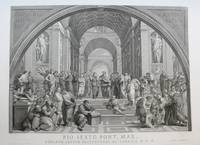
1768P4456Rome c.1768. Very Good. Notes: A fine engraving of the Raphael fresco of the various great minds that made up the "School of Athens" during the mid 18th century. The interior scene shows Greek philosophers Plato left and Aristotle right in the center surrounded by groups of other philosophers and mathematicians. In the lower left foreground Pythagoras writes in a book; at right Euclid demonstrates a compass to four young men. The scene is framed by an arch with the inscription: "Raphael in aedibus santius vatica pinx nis". <br>Other figures that are believed to be represented are: <br>Zeno of Citium Epicurus Heraclitus the "weeping" philosopher Democritus the "laughing" philosopher Boethius Averroes Alcibiades Antisthenes Raphael Aeschines Socrates Michelangelo Diogenes of Sinope Plotinus Zoroaster Ptolemy and Protogenes. Image Size : 515x733 mm 20.28x28.86 Inches Platemark Size : 565x741 mm 22.24x29.17 Inches Paper Size : 618x860 mm 24.33x33.86 Inches Coloring: Hand Colored Medium: Copper Engraving Categories: Views Europe Italy; Architectural General; unknown
17976966Madrid: Imprenta de Sancha 1797. First Edition — Primera edición. Hardcover — Tapa dura. 204x135mm. 8x5¼". Madrid Imprenta de Sancha 1797. En 4º menor 204 x 135mm. 4-xv-1 330 2-cv pp. Encuadernación de la época en piel. Primera edición de este libro apreciado y poco común tocante a la historia del comercio entre España y América; ya Palau decÃa en su época que el libro escaseaba. A partir de la p. 330 un Apéndice con copias de algunos documentos citados en estas memorias históricas. Antúnez y Acevedo 1736-1800 cultivó el estudio de la jurisprudencia mercantil en todos sus ramos siendo un profundo conocedor de las leyes y costumbres del comercio hispano-indiano. Portada con ligeras manchas papel tostado. Libro raro en comercio. Imprenta de Sancha hardcover