25 340 résultats
17723753Rome 1772. Large folio. 29 3/4 x 17 1/4 inches. 2pp. letterpress text in French "Aux Amateurs des Beaux Arts" with uncoloured engraved head-piece and initial and colophon at foot of second page. One small format folding plate "Ordine tenuto nel disporre le stampe de pilastri delle logge Rafaele." 7 x 19 1/32 inches 34 hand-coloured engraved leaves comprising: 1 general perspective view with title and portrait of Raphael by Volpato after Pietro Camporesi strip attached at lower edge to bring up to size; 2 folding plates of doorways by Ottoviani after Gaetano Savorelli and Camporesi each on two sheets joined 36 x 17 1/4 inches overall; 14 views of pilasters on 28 plates by Ottoviani after Savorelli and Camporesi the first plate of each view cut to edge of image with strip attached to lower edge to bring up to size; general plan "Spaccato per il longe del seconde piano del loggia" on three plates by Ottoviani after Savorelli and Camporesi designed to form a single panoramic image . Lower blank margin of text leaf torn and repaired small tears to folds of the doorway plates. Bound with: RAPHAEL. - Nicolas DORIGNY 1648-1746 engraver. Psyches et Amoris nuptiae fabula a Raphaele Sanctio Urbinate Romae in Farnesianis hortis Transtyberim ad veterum aemulationem ac laudem colorum luminibus expressa a. Dorigny. delineata et incisa et a Ioanne Petro Belloriio notis illustrata. Rome: Domenico de' Rossi 1693 or later. Large folio 29 3/4 x 17 1/4 inches. 10 hand-coloured engraved plates by Dorigny titles and imprints printed in gold. 2 works in one volume. Late 18th-century Roman red morocco gilt contemporary with the first work covers with elaborate border of dog-tooth roll double-fillet and repeated use of a three-flower spray a heart and a rococo drawer-handle tool the same tool massed to form a lozenge shape at the corners and forming a triangular motif mid-way up the long sides with stars birds and small and large flower-spray tools all enclosing a large central lozenge formed from an outline of a simpler variant drawer-handle tool and large flower sprays enclosing a center of massed scrolling foliage with pomegranates and acorns the spine in seventeen sections with raised bands lettered in the second the others with repeat decoration of a central flower spray with smaller sprays at the corners patterned paper pastedowns. Ties lacking light worming to head and foot of spine with resultant small tears and loss modern cloth solander box morocco lettering-piece on the spine. A very fine collection with richly hand-coloured plates of the best of the decorative interior work carried out by Raphael in Rome. The album is hand-coloured and bound in Rome in the fourth quarter of the 18th-century. It is clearly as it was delivered to its original owner perhaps a Grand-Tourist perhaps a local dilettanti and perfectly echoes his wishes: the first part of Ottoviani's excellent work on Raffaello's Logge frescoes that is the part on the pilasters and including Maitre Dorigny's engravings but only the Loggia of Psyche set all hand-coloured and uniform in size. The first work part one of three concentrates on the decorative pilasters executed by Raphael and his assistants as part of a larger scheme of redecoration between 1518-1519 in the Logge on the main storey of the Vatican apartments. The remarkable prints the first to be carried out of the decoration of the Logge were probably planned as early as 1760 but were not executed until 1774 to 1776. The project was carried out by the painter Gaetano Savorelli the draughtsman Ludovico Teseo the architect Pietro Camporesi and the engravers Giovanni Ottaviani and Giovanni Volpato. The plates were remarkable not just for their size and magnificent colouring but also because of the influence they had on contemporary taste. The decision was made to borrow elements from Raphael's Vatican tapestries and insert them where the original frescoes were in too poor a state to be legible. The finished plates therefore represented an amalgam of design elements presented with a crisp freshness of colour that held enormous appeal and did much to stimulate the taste for the grotesque in the neo-classical period. The second work is of Raphael's Cupid and Psyche series of frescoes carried out by Raphael between 1516 and 1518 in the Loggia of Psyche in the villa Farnesina in Rome. The series also comes with a title and an eleventh plate of the ceiling fresco in the adjoining Sala di Galatea executed in 1512: neither the plate nor the title were ever bound in the present collection. Originally published by the Rossis it is the work of Nicolas Dorigny 1658-1746 who lived and worked in Rome between about 1690 and 1719. The painter classicist and art historian Giovanni Pietro Bellori 1613-1696 provided the text at the foot of the plates appropriate excerpts from Apuleuis's Golden Ass. "Raphael Invenit: Stampe da Rafaello" 1985 Volpato 1; Ottaviano 2-19 and Dorigny 37-46. Brunet IV cf.1110 & 1111; Berlin "Kat". Cf.4068 & 4066; "Raphael: Reproduktions-graphik aus vier Jahrhunderten Coburg 1984 p.104 & no.245; "Giovanni Volpato 1735-1803" Bassano del Grappa 1988 173. unknown books
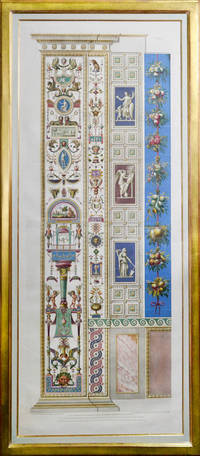
101658Rome Marco Pagliarini 1772-77. . 14 copper engraved plates with beautiful contemporary hand colour drawn by Gaetano Savorelli and Pietro Camporesi engraved by J. Ottaviani. Framed and glazed overall size: 56 x 123 cm<br /> Beautiful plates scarce with vibrant original hand-colour: a complete set of pilasters from the first part of the Loggie di Rafaele nel Vaticano series. <br /><br />From the first series of Camporesi's spectacular series of decorative engravings for Raphael's Loggie consisting of 13 bays in the Pope's private apartments beautifully decorated by Bramante and upon his death in 1514 finished by Raphael and his pupil Giovanni da Udine until 1519. <br /><br />Loggie de Raphaele nel Vaticano was a work commissioned by Pope Clement XIII at the bidding of Catherine the Great to portray one of the best kept secrets of the Renaissance. The plates depict the pilaster frescoes in stucco relief of the doorways and windows. They are renowned for their highly stylised portrayal of Classical and Biblical scenes and figures. The fanciful "grotesqueness" of Raphael's and mainly da Udine's designs show how much they were inspired by the recently discovered Golden House of Nero. Indeed the term "grotesque" was born out of the Loggie having been applied to it due to the similarity of the designs in the subterranean rooms or 'grottoes' of Nero's Palace and these pilaster's frescoes. Some commentators place these designs amongst the defining pieces of the Italian Renaissance with Michaelangelo's Sistine Chapel and Massacio's Carmine Church.<br /> Brunet IV 1110; Berlin Kat 4068 & 4066; RIBA Early printed books 2710; Raphael Invenit: Stampe da Rafaello 1985 Ottaviano 2-15; Raphael: Reproduktions-graphik aus vier Jahrhunderten Coburg 1984 p.104 & no.245. Rome, Marco Pagliarini, 1772-77. unknown
000418<p>Cairo BÅ«lÄq: Royal Press of BÅ«lÄq Bolacco / Stamperia Reale 1822 1238 AH.<br />Book. Very Good. Hardcover. First Edition.<br />4to over 9¾"–12".<br />EXTREMELY RARE.<br />An early Arabic–Italian dictionary comprising vocabulary and technical terms printed in parallel Arabic and Latin pagination arranged in two columns Arabic and Italian.<br />The Arabic title page dated 1238 AH states the place of printing:<br />"Tamma al-á¹abÊ¿ fÄ« BÅ«lÄq bi-maá¹baÊ¿at á¹¢Äḥib al-SaÊ¿Ädah."<br />The volume also includes a separate Italian title page giving full printing details:<br />"Bolacco dalla Stamperia Reale 1822."<br />The work contains:<br />266 pages in two columns Arabic / Italian<br />4 pages of errata in Italian<br />2 pages of errata in Arabic<br />An author's preface in Arabic<br />A clearly stated subtitle explaining the scope of the work<br />The book is divided into two parts:<br />Part I: Dizionario arranged in the customary alphabetical order<br />Part II: A concise collection of the most necessary and useful nouns and verbs for the study of both languages<br />This is the first book printed at the BÅ«lÄq Press—and in a national Egyptian printing office—after the French Expedition.</p><p>Raphaël Antoine Zakhour was an Egyptian-born Melkite Catholic monk of Aleppine origin active in the early 19th century and a pivotal figure in the founding period of the BÅ«lÄq Press in Cairo.<br />Historical Importance<br />Zakhour is best known as the author of the first book printed at the BÅ«lÄq Press Egypt's first national printing house established under Muḥammad Ê¿AlÄ« Pasha. His work marked the beginning of modern state-sponsored printing in Egypt and the Arabic-speaking world.<br />Major Work<br />Dizionario Italiano e Arabo BÅ«lÄq 1238 AH / 1822 AD<br />An extremely rare Arabic–Italian dictionary printed in parallel columns designed to facilitate practical language acquisition for administrators translators and scholars.<br />Career<br />Born in Egypt to a family originally from Aleppo<br />A Melkite Catholic monk often styled Don Raphaël<br />Served as a translator during the French Expedition accompanying the French forces on their departure from Egypt to France<br />Returned to Egypt and by order of Muḥammad Ê¿AlÄ« Pasha entered service at the BÅ«lÄq Press where his dictionary was printed<br />Legacy<br />Zakhour occupies a unique position in Middle Eastern print history as a bridge between European philology and Arabic scholarly tradition and as a foundational figure in Egyptian state printing. His dictionary remains a cornerstone reference in studies of early Arabic typography bilingual lexicography and the history of the BÅ«lÄq Press.<br />Standard references:<br />Sarkis MuÊ¿jam al-Maá¹bÅ«Ê¿Ät;<br />Louis Cheikho TÄrÄ«kh Ä€dÄb al-Lugha al-Ê¿Arabiyya;<br />Raá¸wÄn AbÅ« al-Futūḥ TÄrÄ«kh Maá¹baÊ¿at BÅ«lÄq;<br />KhalÄ«l á¹¢abbÄá¹ TÄrÄ«kh al-ṬibÄÊ¿a fÄ« al-Mashriq al-Ê¿ArabÄ«.</p> Bolacco (Bulak) hardcover
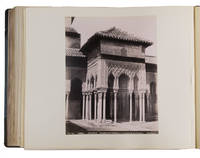
1890ABC_473841890. Half blind-tooled greenish brown calf and grey/green net grained cloth over boards with the title in gold on the front board red edges and decorated endpapers. Large oblong album 32 x 40 cm. 89 original photographs mostly 20 x 26 cm. In 711 a Muslim army led by Tariq ibn Ziyad conquered most of the Iberian Peninsula which was then part of the Visigothic Kingdom. This region became known as Al-Andalus with Cordoba serving as its capital. In 756 Abd ar-Rahman I established the Emirate of Cordoba as an independent state. The present photo album covers in many photographs the magnificent architecture and features of the Great Mosque of Cordoba which is considered one of the most significant architectural monuments of the western Islamic world. Built in 785 the mosque's most notable feature was its enormous hypostyle hall comprised of rows of columns connected by double tiers of arches. The lower tier included horseshoe arches and was constructed with alternating red brick and light-colored stone. Abd ar-Rahman II expanded the mosque's dimensions in 836 while preserving its original design. His successors Muhammad Al-Mundhir and Abdallah also added new features to the mosque. One of the mosque's western gates Bab al-Wuzara' now known as Puerta de San Esteban is a famous prototype of later Moorish architectural forms and motifs featuring horseshoe arches with alternating coloured and decorated voussoirs set within a decorative rectangular frame called an alfiz. At the centre of Garzóns photographic work on Córdoba was the Palace of the Lions also known as the Court of the Lions Patio de los Leones; . Situated in the center of the Alhambra with its ancient citadel consisting of a complex of forts palaces and gardens this is one of the most buildings of the period of Muslim rule. The palace was commissioned by the Nasrid sultan Muhammed V of the Emirate of Granada during the second phase of his reign between 1362 and 1391 AD. The general layout of the Palace of the Lions courtyard comprises an elongated rectangle with two halls facing each other at opposite ends which is a common feature in numerous earlier palaces throughout Al-Andalus including other Nasrid palaces located within the Alhambra such as Comares Palace. Similar designs can even be traced back to the 10th century at Madinat al-Zahra located near Cordoba. What sets the Palace of the Lions apart is the addition of two more halls which face each other across the courtyard's shorter axis. This innovation is accompanied by an extension of the columned portico to encompass all four sides of the courtyard. The four converging water channels within the courtyard's floor are generally believed to be a symbolic representation of Paradise which both Muslim and Christian traditions describe as having four rivers. This arrangement may have drawn inspiration from the Persian chahar bagh tradition which involves a garden divided into four symmetrical parts along its central axis. The Palace of the Lions combines this with the classical peristyle tradition which features a portico or arcade surrounding a courtyard. Other monuments in Al-Andalus and North Africa where they are commonly referred to as a riad or riyad also feature gardens with a chahar bagh-type quadripartite division.Rafael Garzón 1863-1923 was born in Granada became known as one of Spains foremost photographers of the early twentieth century. He owned studios situated inside the Alhambra of Granada and in Seville. His photographic work mainly focused on capturing the landscapes and monuments of Andalucía particularly his photographic portraits which gained him recognition. His studio inside The Alhambra became particularly famous. Upon his arrival in Seville in 1901 he established a studio with an elaborate Arabic theme to enhance his photographs. He photographed the aristocrats of Seville as well as the earliest tourists of the 19th century who visited Andalucía. The spread of his photographs contributed greatly to the rising touristic interest in Spain. Garzón's photography encompassed two distinct styles. His monumental photography of prominent Spanish structures such as the Alhambra the Mosque-Cathedral of Córdoba and the Cathedral and Reales Alcázares of Seville. The other style was a popular type of photography designed to cater to the preconceived notions of foreign visitors seeking classic gypsy portraits from Sacromonte or the Carmenes from Córdoba or Seville. His photographic work was both of high quality and commercially attractive and Garzón distributed them in various formats including postcards collector's items and travel books.The binding shows very slight signs of wear mainly around the foot of the spine the interleaved tissue paper is slightly browned the upper-outer corner of the leaves is occasionally slightly dustsoiled. hardcover
169315680Rome: Domenico de' Rossi 1693. Large folio. 10 hand-coloured engraved plates by Dorigny on laid paper each 15 7/8 x 26 inches approximately titles and imprints printed in gold black ink-ruled borders each plate cut to the edge of the image mounted on large sheets of contemporary thick laid paper each 29 3/8 x 40 3/8 inches approximately. Unbound<br/> <br/>A very fine suite of richly hand-coloured plates offering a stunning visual record of one of the best of the decorative interior schemes carried out by Raphael in Rome.<br/> <br/>This wonderful series records Raphael's 'Cupid and Psyche' series of frescoes carried out by him between 1516 and 1518 in the Loggia of Psyche in the villa Farnesina in Rome. The series also comes with a title and an eleventh plate of the ceiling fresco in the adjoining Sala di Galatea executed in 1512: neither the plate nor the title are present here. Originally published by the Rossis the engravings are the work of Nicolas Dorigny 1658-1746 who lived and worked in Rome between about 1690 and 1719. The painter classicist and art historian Giovanni Pietro Bellori 1613-1696 provided the text at the foot of the plates appropriate excerpts from Apuleuis's Golden Ass.<br/> <br/>"Raphael Invenit: Stampe da Rafaello" 1985 Dorigny 37-46; cf. Brunet IV 1111; cf. Berlin Kat 4066. Domenico de' Rossi unknown books
158768909London: H. Denham 1587. Full description:<br> <br> HOLINSHED Raphael. The First and second volumes of Chronicles comprising 1 The Description of England 2 The Description and Historie of Ireland 3 The Description and Historie of Scotland: First collected and published by Raphael Holinshed William Harrison and others: now newlie augmented and continued with manifold matters of singular note and worthie memorie to the year 1586 by John Hooker alias Vowell Gent and others. London: at the expenses of John Harrison George Bishop Rafe Newberie Henrie Denham and Thomas Woodcocke 1587. Together with: HOLINSHED Raphael. The Third volume of Chronicles beginning at duke William the Norman commonlie called the Conqueror; and descending by degrees of yeares to all the kings and queenes of England in their orderlie successions. London: at the expenses of John Harrison George Bishop Rafe Newberie Henrie Denham and Thomas Woodcocke 1587.<br> <br> Second edition of the true Shakespeare edition. Three volumes bound in four. Four folios 13 7/8 x 9 1/8 inches; 353 x 232 mm. viii 250 iv 202 27 table 1 blank; 8 9-61 1 blank; 121 183 1 blank 10 table; 431 437-438 431-432 438-464 16 table; viii 132 135-798; 799-1080 1080-1189 1191-1192 1192-1371 1371-1592 58 table. Seven title pages within engraved woodcut borders McKerrow and Ferguson 147a148 122 and 138 numerous ornamental intials head- and tailpieces. Black letter double column. Index to Vols I and II divided and bound at end of each section. The History of Scotland is bound after the two parts of the History of Ireland in Volume II as in Lowndes. Complete but with many of the usual excised leaves apparently supplied from 18th-century printings as is commonly found and mostly in the third volume.<br> <br> Full 18th-century tan calf. Boards ruled and stamped in gilt. Spines ruled and lettered in gilt. Board edges ruled in gilt. Gilt dentelles. All edges gilt. Marbled endpapers. Green silk page-markers. Some rubbing and repairs along outer joints. Title-page for History of Ireland with a small marginal tear not affecting engraving. Vol III part I: Title-page is trimmed and mounted. There is some staining to inner margin. Volume III part II with the penultimate leaf with repairs and the final leaf being cut down and mounted to verso. Previous owner's bookplate on front pastedown of each volume. Still overall a very good clean copy.<br> <br> Holinshed's Chronicles was the source for many of Shakespeare's plays including Richard II Richard III the Henry Plays Macbeth and Cymbeline. The first edition of the Chronicles was originally thought to be Shakespeare's source but the work of Boswell-Stone and Anders established this second edition as the true Shakespeare edition.<br> <br> The Chronicles were always politically sensitive. This 'newlie augmented' edition contained several passages which were brought to the attention of Queen Elizabeth I. These were mainly concerned with Anglo-Scottish affairs Mary Queen of Scots the Babington conspiracy and Leicester's campaign in the Low Countries. Elizabeth ordered the Archbishop of Canterbury to recall the book which resulted in the numerous cancels to be found in volumes II and III.<br> <br> "In 1587 a second edition of Holinshed's Chronicles appeared. It was a substantial undertaking. The colophon to this text indicates that it was printed cum privilegio that is under a royal privilege by Henry Denham at the sign of The Star in Aldersgate at the expense of John Harrison George Bishop Ralph Newbury and Thomas Woodcocke. Holinshed's Chronicles of 1587 were castrated and reformed in three stages. The hands of Randolph Killigrew and Hammond clearly dictated the earliest stage of censorship evident in the earliest revised state of the text. Their work removed passages in the continuation of the Scottish history that might jeopardize Anglo-Scottish relations especially those concerned with English intervention in Scottish factional politics. In the continuation of the 'History of England' their reforms enhanced the stature of Leicester distanced England from the duc d'Alençon who had recently offended the Dutch and polished accounts of English legal practice to insist that trials and executions in England were administered fairly and according to due process of law. The censors apparently acted with the speed required by the privy council's order since the first stage of the censorship was probably completed during the first week of February. This can be detected in one cancel in the 'History of Scotland' containing revised text that refers to the 'now imprisoned queene of Scotland' p. 443 sig. A6-7. Since the page with this reference was reset the initial review and reformation including the resetting of the cancel leaves must have taken place within a week of the initial order for censorship and before Mary's execution on 8 February 1587. Then once the text had been reformed to meet Killigrew's Randolph's and Hammond's requirements it was fine-tuned probably by Whitgift since at this stage censorship eliminated much of a long history of the archbishops of Canterbury. All the castrations and cancels appear in the sections of the 1587 Chronicles that extended Holinshed's earlier histories of Scotland and England. Besides the few extant copies of the Chronicles that escaped castration and reformation some copies exist that contain variant cancels together with more original leaves than the state of the text described in the STC. Without a census of extant copies of Holinshed's 1587 Chronicles it is unclear how many copies reflect each successive state of the text. Since the sale was stayed and the subsequent reformations made within a month of the book's completion and initial publication copies with a fully uncensored text appear to be very rare. And although a particular copy may predominantly reflect a given state of the text of 1587 two circumstances may produce yet more variation. It is possible that in any one copy where leaves should have been castrated and replaced with cancels the site none the less may have been overlooked and the castration not made. Thus original leaves in one site or more may coexist in a copy with cancels elsewhere. Conversely a castration may have been made but the cancel not added. As a further complication besides the variations that may have been produced in the sixteenth-century printing house some copies of the Chronicles result from changes produced by antiquarian interests in the eighteenth century. Between 1723 and 1728 three facsimile reprints of the castrated leaves were sold with the clear intention that they should be sophisticated into existing copies of the Chronicles to replace cancels and missing leaves. Consequently many copies of the 1587 edition have eighteenth-century leaves sophisticated at one or more of the castration sites." Oxford DNB.<br> <br> Lowndes p1086; Pforzheimer 1577 9 first edition; STC 13569.<br> <br> HBS 68909.<br> <br> $27500. H. Denham unknown
157766536First Edition of Holinshed's Chronicles an Important Shakespeare Source Book HOLINSHED Raphael and others. The First -Laste Volumes of the Chronicles of England Scotlande and Irelande. London: George Bishop and John Hunne 1577. First edition. Two median folio volumes 11 1/2 x 7 3/4 inches; 289 x 197 mm. Titles with woodcut borders McK. 147a numerous woodcut initials and vignettes of various sizes throughout many repeated. Blank b6 lacking in I:2; second leaf of errata lacking from I; several leaves supplied G5-8 I2-3 in I:3; 4S2 in II and probably others from another genuine copy; map of Edinburgh remargined and with other minor repairs; several paper repairs to the titles and text with occasional loss; some printed marginal notes shaved as usual. A made-up copy "as many copies have been made-up by later owners who combined parts having different imprints" Pforzheimer. This copy with the George Bishop title in Vol. I and the remaining titles with the John Hunne imprint. Early nineteenth-century full tan calf over thick boards gilt wide fillet bordering on covers gilt-ruled board edges spines gilt in compartments with six raised bands. Yellow endpapers. All edges gilt. A little rubbed; a few scuffs. Hinges and joints just becoming tender. Overall a very good copy of this important work. Housed in a custom quarter brown morocco clamshell gilt-stamped. While in the employ of London printer/publisher Reyner Wolfe King's Printer in Greek Latin and Hebrew Raphael Holinshed began planning the Chronicles that are known by his name though by several hands. This work formed the first authoritative vernacular and continuous account of the whole of English history. The Historie of Englande was written by Holinshed himself. The Description of Britaine was written by William Harrison. The Historie and Description of Scotlande and the Historie of Irelande were transcriptions or adaptations. The Description of Irelande was written by Richard Stanyhurst and Edmund Campion. Provenance: Borowitz Sotheby Parke Bernet 15 November 1977. STC 13568 most sets seem to have variations in imprint. Grolier Langland to Wither 146. Lowndes 1086. Pforzheimer 494. HBS 66536. $25000 George Bishop [and] John Hunne hardcover books
15872142London: John Harrison George Bishop Rafe Newberie Henrie Denham and Thomas Woodcocke 1587. Second Edition. 18th-century calf rebacked. Very Good. THE SECOND EDITION 1587 OF HOLINSHED'S "CHRONICLES": THE BOOK AND THE EDITION USED BY SHAKESPEARE AS A SOURCE FOR A DOZEN OF HIS PLAYS. "In 1548 the prominent London printer and bookseller Reyner or Reginald Wolfe ambitiously decided to produce a universal history and cosmography. of the world. After Wolfe's death in 1573 his assistant Raphael Holinshed took over the project hired more writers and restrained its scope to the British Isles. The Chronicles was first published in 1577 in a two-volume folio edition illustrated with numerous woodcuts. After Holinshed's death in 1580 Abraham Fleming published the significantly expanded revised second edition of 1587 in a larger folio format this time without illustrations" British Library. By scholarly consensus it is the second 1587 edition offered here that Shakespeare used as the source of many of plays: "Shakespeare used Holinshed as a source for more than a third of his plays including Macbeth King Lear and the English history plays such as Richard III. He used it in a range of ways sometimes following the text of the Chronicles closely even echoing its words and phrases; sometimes using it as an inspiration for plot details; and at other times deviating from its account altogether either preferring other sources or his own imagination. Comparing Shakespeare's plays to Holinshed and other sources can provide rich insight into his creative intentions and processes as well as giving us an idea of some of the context in which Shakespeare's contemporary audiences would have understood his plays" British Library. The major use that Shakespeare made of Holinshed was certainly in the British history plays: "Queen Elizabeth herself said that Shakespeare's history plays existed 'aswell for the recreacion of our loving subjects as for our solace and pleasure.' Both sovereign and subject certainly found much comfort and recreation in Shakespeare's histories because they stage a thematic movement that shapes Holinshed's Chronicles 1377-1485; from the death of a frequently chaotic violently chivalric medieval world to the birth of the 'Peaceable and Prosperous' early modern commonwealth of their day. "An astute reader Shakespeare transformed into the medium of drama four major political themes and messages taught by Holinshed and his successors who enlarged the 1587 text: the ideal and decorum of English kingship the role of France in English public discourse the idea of Englishness and the idea of the commonwealth." Igor Dhjordjevic "Shakespeare and Medieval History" Oxford Handbook. On the bibliography of the 1587 edition: In February 1587 the Archbishop of Canterbury was ordered by the Privy Council to recall and censor "reform" the book on the grounds that the new material in the second edition included "sundry things which we wish had bene better considered; forasmuch as the same booke doth also conteyne reporte of matters of later yeeres i.e. the reign of Elizabeth I that concern the State and that "ther is inserted such mention of matter touching the King of Scottes as may give him cause of offence." As a result some 16 pages in volume II and almost 150 pages in volume III were excised "castrated" and replaced by a much smaller number of pages only seven leaves in volume III to paper over the gaps. The censors however neglected the index which continued to contain references to the excised pages. In the early eighteenth century three separate publishers issued sets of replacement leaves that collectors could use to complete their castrated sets of the 1587 edition. Cyndia Susan Clegg "Censorship" in Oxford Handbook; Keith L. Maslen "Three Eighteenth Century Reprints of the Castrated Sheets in Holinshed's Chronicles" The Library 5th Series. There is wide variation among the surviving sets of the second edition partly because of the presence of three different eighteenth century sets of replacement leaves and partly because the original sixteenth century castrations and replacements were apparently not applied consistently to all of the then-existing sets. Some sets now have one or more of the castrated pages; some have the sixteenth century replacement pages; some have the eighteenth century replacement pages; and some are mixed-and-matched. Thus "no two copies of Holinshed's Chronicles. are likely to have identical text" Randall McLeod "Cronicling Holinshed's Chronicles: Textual Commentary" in "The Peaceable and Prosperous Regiment of Blessed Queene Elisabeth: A Facsimile from Holinshed's Chronicles" 2005. In the copy offered here the replacement leaves in volume III appear to conform to the set issued in 1722/1723 by William Mears Fletcher Gyles and James Woodman "The castrations of the last edition of Holinshed's Chronicle: both in the Scotch and English parts containing forty four sheets; printed with the old types and ligatures and compared literatim by the original". However volume II of the offered copy does not include a complete set of the 18th-centurty replacement leaves and the replacement pages that are present do not conform to the Mears/Gyles/Woodman set. Thus this volume most likely contains the publisher's original sixteenth-century replacement leaves. Castrated pages 421-24 are here replaced by a single leaf with the recto numbered 421 and the verso numbered 424; 432-38 are replaced by a single page 433 and 443-50 are replaced by two leaves numbered 443/444 and 445/450. Provenance: With stamps on titles and privilege leaves from "Bibliotheca Regia" an unidentified Royal library including the de-accession stamps "Double Vendu". London: John Harrison George Bishop Rafe Newberie Henrie Denham and Thomas Woodcocke 1587. Folio 234x363mm eighteenth-century calf rebacked. Some wear to boards. Text extraordinarily clean with wide margins. A beautiful and important set. John Harrison, George Bishop, Rafe Newberie, Henrie Denham, and Thomas Woodcocke unknown books
7170Soyer Raphael. Soyer Raphael. BOWERY NOCTURNE. Cole 28. Lithograph 1933. 12 3/4 x 17 7/8 inches. Edition of 25. Signed in pencil. In excellent condition. Soyer considered this and its companion piece "The Mission" to be among his most important works as a printmaker. Rare. unknown
1587000443<p>London: London: printed by Henry Denham in Aldersgate street at the signe of the Starre 1587. 2nd Edition . Hardcover. Very Good. Second edition; large folio; 3 volumes bound into 2 physical volumes. Vol. 1: 10 250; 4 202 2pp. Vol. 2: 61 13 183 1; 421 424-430 436-438 431-433 439-445 450-464 56pp. Vol. 3: 8 1080 1080-1327 2 1332-1371 1371-1421 1490-1491 1536-1555 1574-1592 62pp. Mismatching set. Volumes 1-2 bound in 17th century reversed calf somewhat worn with a few old repairs hinges cracked corners and spine ends worn with minor loss blind rolls to margins of boards spine with five raised bands gilt-lettered red leather spine label to second compartment and additional hand-written leather spine label to third compartment housed in attractive custom-made clam-shell box in red half leather over marbled boards with five raised spine bands and gilt lettering direct to spine in second compartment. Unobtrusive creasing and wear to opening and closing leaves lower outer quarter of title page missing and sometime laid down lacks preliminary blanks together with divisional titles to History of England Ireland and Scotland title-page to 'Second Volume of Chronicles' and preceding blank "The Epistle Dedicatorie to S. William Brooke" the "Names of the Authors" the "Table of Chapters" and the fold-out plate of the Map of Edinburgh i.e. lacks 10 leaves in all without loss to substantive text with occasional contemporary ink marginalia and early ink inscriptions of Joseph Brooke 1733 to front free endpaper and Edward Gostwyk to top of title page. Volume 3 bound in contemporary full leather somewhat worn with minor loss of leather to board corners expertly respined over six raised spine bands with gilt lettered title direct to spine in second compartment and gilt lettered date/regnal year direct to foot of spine. Lacks title page preliminaries and first 4 pages of text ie. first 6 leaves A-A6 missing but otherwise complete including dated colophon on closing leaf. Very early ink inscriptions on opening blanks a few marginal annotations in an indecipherable early hand very feint marginal dampstaining on a few rear leaves last leaf remargined just touching colophon rearmost two leaves somewhat creased and torn with mostly marginal loss. Two bookplates to front pastedown including 18th century ownership label of Thomas Weld Britwell Oxfordshire. Overall a clean and attractive copy of this celebrated monumental history printed in black gothic typeface and with attractive woodcut capitals and head and tail pieces. Holinshed's Chronicle needs little introduction given its influence on literature and especially on Shakespeare. The present set provides an original example of the 2nd edition text Shakespeare used as the basis for his History plays. STC 2nd edn 13569. ESTC S122178.</p> London: printed [by Henry Denham] in Aldersgate street at the signe of the Starre hardcover
158795438London: John Harrison George Bishop Rafe Newberie Henrie Denham and Thomas Woodcocke 1587. Preferred second edition of the greatest Elizabethan repository of English history which served as an important source for Shakespeare's plays. Folios 3 volumes bound into 2 bound in full calf gilt titles and tooling to the spine raised bands red morocco spine labels gilt ruled woodcut initials and title pages. Separate title pages and pagination for The Description and Historie of England The Description and Historie of Ireland and The Description and Historie of Scotland comprising volume 1. When this expanded second edition of the Chronicles appeared in January 1587 the Privy Council responding to Queen Elizabeth's displeasure at certain passages ordered the Archbishop of Canterbury to recall and censure the work; as a result extensive cancellations 74 pages were made of offending sections in Volumes II and III. The censors removed "all references to English intervention in Scottish politics raised the profile of the Earl of Leicester and distanced England from Elizabeth's one time suitor the Duc d'Alencon. Any accounts of trials and executions were altered to ensure proceedings were unequivocally portrayed as being fair and legal" King's College London. The work of altering the entire edition of the Chronicles was rather haphazardly carried out so that the sections affected vary from copy to copy. In this copy all of the offending sections are cancelled or excised. A nice example scarce and desirable. An immediate success upon publication Holinshed's Chronicles "form a very valuable repertory of historical information. The enormous number of authorities cited attests Holinshed's and his successors' industry. The style is clear although never elevated and the chronicler fully justified his claim 'to have had an especial eye unto the truth of things" DNB. As the foremost British history available at the time the Chronicles did more to shape Elizabethan literature than any English historical work. "The Elizabethan dramatists drew many of their plots from Holinshed's pages" and this second edition is demonstrably the edition employed by Shakespeare as the principal source of his "history" plays. "Both W. G. Boswell-Stone and H. R. D. Anders have shown that it was this second edition which Shakespeare employed as the source sole or part of ten of his plays" Pforzheimer 494 note. "Nearly all of the historical plays as well as Macbeth King Lear and part of Cymbeline are based on Holinshed" DNB. In fact Shakespeare drew not only his plots from Holinshed but occasionally his phrases. The complete story of the rise and fall of Macbeth can be found in the Scottish history Part III pp. 170-76 and the Chronicles' eloquent descriptions intimate at times the very wording of Shakespeare's drama: Macbeth is described as "a valiant gentleman and one that if he had not beene somewhat cruell of nature might have beene thought most worthie the governement of a realme"; the three "weird sisters. women in straunge and wild apparell resembling creatures of elder world" deliver to Macbeth and Banquo the fateful prophecies; and in the final battle Macduffe reveals that "I am even he that thy wizzards have told thee of who was never borne out of my mother but ripped out of her wombe" Whitaker Shakespeare's Use of Learning. John Harrison, George Bishop, Rafe Newberie, Henrie Denham, and Thomas Woodcocke hardcover books
158795438London: John Harrison George Bishop Rafe Newberie Henrie Denham and Thomas Woodcocke 1587. Preferred second edition of the greatest Elizabethan repository of English history which served as an important source for Shakespeare's plays. Folios 3 volumes bound into 2 bound in full calf gilt titles and tooling to the spine raised bands red morocco spine labels gilt ruled woodcut initials and title pages. Separate title pages and pagination for The Description and Historie of England The Description and Historie of Ireland and The Description and Historie of Scotland comprising volume 1. When this expanded second edition of the Chronicles appeared in January 1587 the Privy Council responding to Queen Elizabeth’s displeasure at certain passages ordered the Archbishop of Canterbury to recall and censure the work; as a result extensive cancellations 74 pages were made of offending sections in Volumes II and III. The censors removed “all references to English intervention in Scottish politics raised the profile of the Earl of Leicester and distanced England from Elizabeth’s one time suitor the Duc d’Alençon. Any accounts of trials and executions were altered to ensure proceedings were unequivocally portrayed as being fair and legal†King’s College London. The work of altering the entire edition of the Chronicles was rather haphazardly carried out so that the sections affected vary from copy to copy. In this copy all of the offending sections are cancelled or excised. A nice example scarce and desirable. An immediate success upon publication Holinshed’s Chronicles “form a very valuable repertory of historical information. The enormous number of authorities cited attests Holinshed’s and his successors’ industry. The style is clear although never elevated and the chronicler fully justified his claim ‘to have had an especial eye unto the truth of things†DNB. As the foremost British history available at the time the Chronicles did more to shape Elizabethan literature than any English historical work. “The Elizabethan dramatists drew many of their plots from Holinshed’s pages†and this second edition is demonstrably the edition employed by Shakespeare as the principal source of his “history†plays. “Both W. G. Boswell-Stone and H. R. D. Anders have shown that it was this second edition which Shakespeare employed as the source sole or part of ten of his plays†Pforzheimer 494 note. “Nearly all of the historical plays as well as Macbeth King Lear and part of Cymbeline are based on Holinshed†DNB. In fact Shakespeare drew not only his plots from Holinshed but occasionally his phrases. The complete story of the rise and fall of Macbeth can be found in the Scottish history Part III pp. 170-76 and the Chronicles’ eloquent descriptions intimate at times the very wording of Shakespeare’s drama: Macbeth is described as “a valiant gentleman and one that if he had not beene somewhat cruell of nature might have beene thought most worthie the governement of a realmeâ€; the three “weird sisters… women in straunge and wild apparell resembling creatures of elder world†deliver to Macbeth and Banquo the fateful prophecies; and in the final battle Macduffe reveals that “I am even he that thy wizzards have told thee of who was never borne out of my mother but ripped out of her wombe†Whitaker Shakespeare’s Use of Learning. John Harrison, George Bishop, Rafe Newberie, Henrie Denham, and Thomas Woodcocke hardcover
177627836Rome 1776. Large folio. 29 1/4 x 26 3/4 inches. 12 of 13 hand-coloured engraved plates each printed on two joined sheets by Ottaviani after Gaetano Savorelli and Pietro Camporesi. Interleaved with blanks. Bound without the engraved title soft vertical center crease light abrasions in the images some marginal chips and edge tears to a few plates. A very fine set with particularly fine contemporary hand-colouring of the second part of this great work which concentrates on the quadrants above the windows and doors in the Vatican Logge.<br/> <br/>The work was completed in three parts and depicts the decorative work executed by Raphael and his assistants between 1518-1519 in the Logge on the main storey of the Vatican apartments. The remarkable prints the first to be carried out of the decoration of the Logge were probably planned as early as 1760 but were not executed until 1774 to 1776. The project was carried out by the painter Gaetano Savorelli the draughtsman Ludovico Teseo the architect Pietro Camporesi and the engravers Giovanni Ottaviani and Giovanni Volpato. The plates were remarkable not just for their size and magnificent colouring but also because of the influence they had on contemporary taste. The decision was made to borrow elements from Raphael's Vatican tapestries and insert them where the original frescoes were in too poor a state to be legible. The finished plates therefore represented an amalgam of design elements presented with a crisp freshness of colour that held enormous appeal and did much to stimulate taste in the neo-classical period.<br/> <br/>Raphael Invenit: Stame da Rafaello 1985 Ottaviani 18 21-33; cf. Brunet IV 1110; cf. Berlin Kat. 4068; Raphael: Reproduktions-graphik aus vier Jahrhunderten Coburg 1984 p.104. unknown books
1802B5905Roma: : Work I: Roma: Niccola de Antoni; Work II: Roma: n.p. Work I: c. 1802; Work II: c.1770. . A handsome fine example. Prints are clean and crisp. . Binding: Skillfully rebacked half calf preserving contemporary blue speckled - marbled boards. Spine raised with six 6 bands; compartments elegantly gilt ornamented at borders corners and centres and gilt lettered title on two. Notes: Work I: Raphael 1483-1520 painted the ceilings walls and columns of the Vatican Logge over the two-year period before he would pass away. Together with Michelangelo and Leonardo da Vinci he forms the traditional trinity of great masters of that period. These particular images are renowned for their clarity and accessibility. Much of the subject matter on the columns is traced to Roman iconography. Such items as coins vases sarcophagi and various other items are done with stunning clarity and accuracy. Carlo Lasinio 1759 – 1838 was an Italian engraver who worked chiefly in Florence. Lasinio started as a painter at the Accademia di Belle Arti Venice. He quickly placed more emphasis on printmaking especially after moving to Florence in 1778. He established his reputation with two large series of etchings in 1787 and 1789. Lasinio also taught engraving at the Accademia in Florence becoming a Professor in 1800. <br><br>Work II: A collection of plates from this work with no title page. The Raphael fresco decorations in the Vatican's three-storied balconies known as the 'Logge' quickly became famous and various suites of plates were issued from the 17th century onward. However this set was the first to attempt to show all the decoration of the pilasters and pillars. A set of the present engravings stimulated Catherine the Great to have a replica of the Logge built at the Hermitage in St. Petersburg.<br><br> Size: Folio 621x478mm. Illustration: Illustrated with plates after Raphael: Work I: 14 decorative copper engraved plates; engraved title page by Giovanni Balzar; remaining by Carlo Lasinio after Raphael’s depictions of the Vatican’s loggia and columns. Work II: collection of 31 full page etchings amounting to thirteen 13 pairs or sets of engravings after the Vatican frescoes by Raphael. Volume: Two works in one volume Provenance: Upper pasted endpaper ex libris bookplate marked “Dampierreâ€. All leaves of the first work of wove paper contain the watermark “Pietro Miliani Fabriano.†References: Berlin Kat. 1048 Pages: Work I: illustrated half-title plates numbered figure: II No. I &II III No. III & IV IV No. V& VI V No. VII & VIII VI No. IX&X I No. I&II II No. III&IV III No. V&VI IV No.VII&VIII V No. IX&X dated 1802 VI No.XI&XII VII No.XIII&XIV VIII No.XI&XII ; Work II: plate I-XIII Num I-XIII I-V Category: Book Art Architecture & Design; Book Europe Italy; Book Plate Books General; Work I: Roma: Niccola de Antoni; Work II: Roma: [n.p.] hardcover
1587033342<p>At London printed in Aldergate Street at the signe of the Starre: John Harrison George Bishop Rafe Newberie Henrie Denham and Thomas Woodcocke 1587 A good copy of the 2nd edition of Holinshed's Chronicles bound in 3 volumes. This edition is particularly known for its association with William Shakespeare who used it for historical background for example in Macbeth. It lacks the extensive woodcuts found in the 1st but has ornate initial capitals and head and tailpieces. This set was rebound in full morocco leather in the 1800's. The bindings have flat spines with gilt titles and volume numbers and gilt lining. The boards have gilt lining around the edges and gilt dentelles on the inner edges. Endpapers are marbled and all volumes have silk bookmarks. The leather is worn on the edges spine joints spine ends and corners but the bindings are currently sound. Vol I has a small closed tear at the top spine end. Vol II has a scuff across the front board. All page edges are gilted. The 2nd edition brings the history up to the date of publication and as such attracted the displeasure of Queen Elizabeth I who had clear views on how her reign and actions should be recorded. The Archbishop of Canterbury was required by the Privy Council in February 1587 to recall the work and reform it. The process of printing large works was very different to that of our digital world and the censorshjp and revision process must have caused chaos at the printers. Sections of the work on Scotland in Vol I and parts of the Chronicles of England are affected and all copies reflect the censorship mess to some extent with odd pagination cancels substitution and gaps in some copies. This set is largely complete lacks title to Chronicles of England and the colophon. Very different thicknesses and colour of the paper suggest where sections have been substituted and there are several instances of mispagination. Contents - Vol I: title and prelims viii; text 250 pp; Historie of England in 8 books; iv; 202 pp; title The Second Volume of Chronicles containing Ireland and Scotland viii; Ireland pp 9-61 blank verso; title Irish Historie xii; 183 pp with blank verso; title - Description of Scotland 2; text pp 3-23 blank verso; title Historie of Scotland blank verso; preface 2pp; text 29-404; Annals of Scotland pp 405-464 ; table alphabeticall First to Fourth 53 pp; Colophon January 1597 1p. Vol II: lacks title - text covers William I to Henry VII- vi; text 1-798. Vol III: text from Henry VIII pp 799 - 1267; Continuation - preface 1268-9 text 1270-1592; third table 58pp; lacks colophon. The contents generally bright clean and sound. There are some minor areas of staining or marking some paper repairs and some mispagination. Please enquire if you would like to see the details on each volume and/or further images.</p> John Harrison, George Bishop, Rafe Newberie, Henrie Denham and Thomas Woodcocke hardcover
1935133111935. Soyer Raphael. Soyer Raphael. PASSER-BY. Etching 1935 Cole 40. 9 5/16 x 6 7/8 inches; 237 x 175 mm. Edition of 2 or 3 per Cole "about three" per Gettings "Raphael Soyer Sixty-Five Years of Printmaking Hirschorn catalogue." signed in pencil. Provenance The Arnold Collection New York to Swann Gallies New York to a private New York collection. One of the rarest and among the finest of Soyer's early prints. In excellent condition. This is the second example of this print we have owned. It differs from the example illustrated as Cole 40 and both are different from the other one we owned. It suggests that Soyer experimented with different states of this etching and ended by abandoning it without producing and edition. Soyer comment quoted in Gettings: "This is after a painting called "New Hat." The model was Erica a young woman who posed for me a great deal. She also posed for Reginald Marsh. The etching is about a girl dressed up in a coat gloves and hat passing a store window on a cold day. I observed people walking like this girl and tried to reproduce it in my studio." In later years Soyer reworked and published in large editions of 250 to 300 images from his early graphic oeuvre. Often these later pieces were done in color where the original has been in black & white usually they are lithographs almost always they suffer in comparison with the originals on which they are based. The image for Passer-By is one which was reworked in this manner but done in lithography printed in sepia and of different dimensions.See other works by Raphael Soyer at https://edpollackfinearts.com/cgi-bin/edp1/creator2011.htmlme=253&te=2 unknown
7705Soyer Raphael. Soyer Raphael. SPRINGTIME. Cole 56. Lithograph 1938. 14 x 17 1/4 inches; 356 x 440 mm. Signed and titled in pencil. Edition of about 25. Upper right corner professionally replaced else a very good impression in very good condition. Inscribed to "For Morris Carnovsky" in the margin just below the image.Together with The Mission and Bowery Nocturne of 1933 Cole 27 and 28 Springtime is one of three large format lithographs in which Soyer powerfully portrayed Depression-era scenes of New York City life. Although done in the studio it depicts Washington Square ParkA scarce and important item in Soyer's graphic oeuvre.Morris Carnovsky 1897-1992 was a distinguished American stage and screen actor whose long career included work with the Yiddish Theater the Provincetown Playhouse starring roles in Odets' "Awake and Sing" and "Golden Boy" the film "Life of Emile Zola" and acclaimed portrayals of King Lear and Shylock. He was blacklisted in 1950 but was cast by John Houseman in Ibsen's Enemy of the People.An interesting Association Copy of this rare print. unknown
169315680Rome: Domenico de' Rossi 1693. Large folio. 10 hand-coloured engraved plates by Dorigny on laid paper each 15 7/8 x 26 inches approximately titles and imprints printed in gold black ink-ruled borders each plate cut to the edge of the image mounted on large sheets of contemporary thick laid paper each 29 3/8 x 40 3/8 inches approximately. Unbound<br/> <br/> A suite of ten engraved plates with very fine original hand colouring offering a stunning visual record of one of the best of the decorative interior schemes carried out by Raphael in Rome.<br/> <br/> This wonderful series records Raphael's 'Cupid and Psyche' series of frescoes carried out by him between 1516 and 1518 in the Loggia of Psyche in the villa Farnesina in Rome. The series also comes with a title and an eleventh plate of the ceiling fresco in the adjoining Sala di Galatea executed in 1512: neither the plate nor the title are present here. Originally published by the Rossis the engravings are the work of Nicolas Dorigny 1658-1746 who lived and worked in Rome between about 1690 and 1719. The painter classicist and art historian Giovanni Pietro Bellori 1613-1696 provided the text at the foot of the plates appropriate excerpts from Apuleuis's Golden Ass.<br/> <br/> "Raphael Invenit: Stampe da Rafaello" 1985 Dorigny 37-46; cf. Brunet IV 1111; cf. Berlin Katalog 4066. Domenico de' Rossi unknown
192480043Boston and New York: Houghton Mifflin Company 1924-37. Signed and handsomely bound The Autograph Edition number 632 of 750 sets signed by the author on a special leaf in the first volume. This attractively bound complete set includes Sabatini's famous historical adventures Captain Blood 1922 Scaramouche 1921 and The Sea Hawk 1915. The pleasing illustrations are by Charles Edmund Brock 1870-1938 who is particularly well-regarded for his illustrated editions of period books. Sabatini 1875-1950 reached a worldwide audience via both his swashbuckling novels and their early film adaptations. His "greatest gift was the ability to bring the past to life in vivid and convincing colours and to enthuse millions of readers with his own love of history" ODNB. 34 vols octavo. With numerous plates with captioned tissue guards after drawings by Charles E. Brock. Attractively bound in recent burgundy half morocco titles and decoration to spine burgundy cloth boards marbled endpapers top edges gilt others untrimmed. An excellent set. hardcover
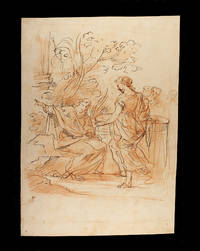
175298901752. 343x244mm. 13½x9½". España c.1752-1761. Sanguina y pluma con tinta marrón oscura anverso; lápiz y carboncillo reverso sobre papel verjurado ocre amarillento. 343 x 244mm. El dibujo de "Cristo y la Samaritana" puede encuadrarse en la etapa romana o durante la primera estancia madrileña 1761 a 1769. La "Sagrada Familia con San Juanito" fue realizado por Mengs para su yerno Manuel Salvador Carmona entre septiembre y octubre de 1778. Será la primera obra de Mengs que Carmona convertirÃa en grabado. Referencias: "Dibujo español del Renacimiento a Goya. La colección de la reina MarÃa Cristina de Borbón" Zaragoza 2008 nº 66 pp. 240 y 243 unknown
8412Soyer Raphael. Soyer Raphael. PORTRAIT STUDY FOR "PORTRAIT OF A MAN - A TRANSIENT. Drawing pencil c. 1937. c. 13 x 12 1/2 inches 330 x 317 mm. The same subject Soyer's model Walter Broe posed similarly to Cole 49 except in reverse and with the hand resting on the table as opposed to being out of sight as in the lithograph. In excellent condition. Framed. unknown
193751511937. Soyer Raphael. Soyer Raphael. FURNISHED ROOM. Etching 1937 Cole 48. Edition of 25 or fewer signed and titled in pencil. Published by the W.P.A. Federal Arts Project with its ink stamp in the margin lower left. 7 x 8 3/4 inches 180 x 224 mm. Three parallel printing creases right else a fine impression in excellent condition of this very scarce print. One of Soyer's most affecting images of the period of the depression. unknown
178970461Madrid 1789. 49x62 cms. unknown
1807SET23-B-1London : J. Johnson F. C. and J. Rivington et al 1807-9. Leather. Very Good. 12" by 9.5". None. Three scarce complete sets of early nineteenth-century publications of influential Medieval and Early-Modern Era chronicles uniformly and finely bound. Holinshed's Chronicles also known as Holinsheds Chronicles of England Scotland and Ireland is a collaborative work published in several volumes and two editions the first in 1577 and the second in 1587. In 1548 Reginald Wolfe a London printer conceived the idea of creating a "Universal Cosmography of the whole world and there with also certain particular histories of every known nation." He wanted the work to be printed in English and he wanted maps and illustrations in the book as well. Wolfe acquired many of John Leland's works and with these he constructed chronologies and drew maps that were up to date. When Wolfe realised he could not complete this project on his own he hired Raphael Holinshed and William Harrison to assist him. Wolfe died with the work still uncompleted in 1573 and the project changed to a work about just the British Isles was run by a consortium of three members of the London stationers. They kept Raphael Holinshed who employed William Harrison Richard Stanyhurst Edmund Campion and John Hooker. In 1577 the work was published in two volumes after some censorship by the Privy Council of some of Stanyhurst's contribution on Ireland. Shakespeare used the revised second edition of the Chronicles published in 1587 as the source for most of his history plays the plot of Macbeth and for portions of King Lear and Cymbeline. Richard Grafton c. 15111572 was King's Printer under Henry VIII and Edward VI. He was a member of the Grocers' Company and MP for Coventry elected 1562-63. On the accession of Edward VI Grafton was appointed King's Printer and this gave him the sole right to print all Acts and Statutes. He had held the appointment for six years when on the King's death he printed a proclamation of the accession of Lady Jane Grey in which he signed himself "Printer to the Queen." For this he was cast into prison by Mary I. John Cawood became Queen's Printer and Grafton's career as a printer ended. In prison Grafton compiled an Abridgement of the Chronicles of England which he published in 1563. To this he added in 1568 A Chronicle at Large. Enguerrand de Monstrelet c. 1400 20 July 1453 French chronicler belonged to a noble family of Picardy. In 1436 and later he held the office of lieutenant of the gavenier i.e. receiver of the gave a kind of church rate at Cambrai and he seems to have made this city his usual place of residence. He was for some time bailiff of the cathedral chapter and then provost of Cambrai. Little else is known about Monstrelet except that he was present not at the capture of Joan of Arc but at her subsequent interview with Philip the Good duke of Burgundy. Continuing the work of Froissart Monstrelet wrote a Chronique which extends to two books and covers the period between 1400 and 1444 when according to another chronicler Mathieu d'Escouchy he ceased to write. Monstrelet's own writings dealing with the latter part of the Hundred Years' War are valuable because they contain a large number of documents which are certainly and reported speeches which are probably authentic. This publication of Monstrelet's chronicles are the first English translation translated by Thomas Johnes. 'Containing an account of the cruel civil wars between the houses of Orleans and Burgundy; of the possession of Paris and Normany by the English their explusion thense and of other memorable events that happened in the Kindom of France as well as in other countries. A history of fair example and of great profit to the French beginning at the year MCCCC where that of Sir John Froissart finishes and ending at the year MCCCCLXVII and continued by others to the year MDXVI'. Holinshed contains facsimiles of the original 1586 titles and a handwritten 'list of Kings of Scotland from Holinshed's History' loosely inserted. Grafton contains facsimiles of the original 1569 titles and a table to the rear 'declaring the reignes of euerie King of this Realme'. Monstrelet has vignette titles and volume v is made up of 51 plates one folding collate complete. Armorial bookplates of Coulthart of Coulthart and Collyn 'Virtue non Verbis' to front pastedown of every volume. Three sets uniformly bound in decorative full diced calf. Externally very attractive with a lovely patina to the spines. There is some wear and rubbing to the extremities occasioning slight loss to some of the spine leather: very slight to the heads and tails of most volumes and in the cases of volume II of the Holinshed and volume I of the Grafton more loss affecting the gilt lettering.There are a few marks to the boards. Of the twenty-six joints three are starting fifteen are cracked and delicate and four boards are held by the cords only. So in need of osome reinforcement at modest cost for this important set. Internally they are all firmly bound. Generally bright and clean with some instances of age-toning ranging mild to bad occasional off-setting from the text and some intermittent scattered spotting and the odd severely spotted page. The Holinshed set has marks to page V of volume i small spill burns to the gutters of some pages a closed tear to page 3 of volume i dusting and tide marks to volume ii and an ink note to the verso of the front free-endpaper of volume i. Grafton has a few small dustmarks. Monstrelet has some instances of light foxing and ink marks to page 2 of volume III. Some spotting to the bookplates. Very Good J. Johnson, F. C. and J. Rivington et al hardcover
3631Valldemossa Mallorca: New Seizin Press / Libra Press 1999. THE LAST TRULY GREAT ILLUSTRATED BOOK OF THE TWENTIETH CENTURY: A BRILLIANT EXPOSITION OF JOAN MIRO'S WORK THAT REQUIRED SEVEN YEARS TO PRODUCE WITH TWENTY PENCIL-SIGNED ORIGINAL PRINTS BY NILS BURWITZ. Twenty texts about Miro by leading Spanish and Catalan intellectuals and artists including Camilo Jose Cela Rafael Alberti and Robert Graves who spent much of his life living in Mallorca. The texts are in Spanish or Catalan except for Graves' poem which is in English and all appear here in first edition. Each text is accompanied by a AN ORIGINAL COLOR FULL-PAGE HORS-TEXTE MIXED-MEDIA PRINT BY NILS BURWITZ JUSTIFIED AND SIGNED IN PENCIL BY THE ARTIST. These twenty highly complex prints are mostly etchings often with aquatint and embossing. They brilliantly illuminate various aspects of Miro's work--and unmistakably demonstrate Burwitz' artistic and technical virtuosity. EDITION LIMITED TO 125 COPIES ALL PRINTED ON EXTREMELY FINE HANDMADE PAPER AND SIGNED BY THE ARTIST IN THE COLOPHON. Large folio. Loose as issued in the original solander case covered with beautiful dyed fabric made in Mallorca. Ceramic plaque with the title mounted to the front cover. Housed in a cloth slipcase. FINE AND BRIGHT WITH NO DEFECTS. Laid in is a prospectus and a copy of the explanatory booklet--one of 1000 copies also signed by Burwitz--that contains reproductions of all of the prints portraits by Burwitz of course of all of the authors and translations of all of the texts into English and German and into Spanish for the Catalan texts and Catalan for the Spanish. A monumental and stunning work. <br/><br/> Valldemossa, Mallorca: New Seizin Press / Libra Press, 1999 hardcover