HOLBEIN, HansBiblio.com
679 résultats
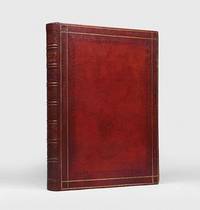
1792160199London: W. Bulmer and Co. Shakespeare Printing-Office 1792-1800. This magnificent work" - Holbein rendered by Bartolozzi First edition of this superlative folio about which the leading authorities are in full agreement: "in every way a splendid book" Abbey and "this magnificent work is surely the finest early example of English colour printing" Ray. This is a most handsome copy in contemporary red morocco. "During his second stay in England 1532-43 Hans Holbein made a series of drawings of sitters connected with the court of Henry VIII that ranks among his finest achievements. Most of these were discovered as a group pasted into an album in a bureau at Kensington Palace by Queen Caroline in 1728 and the majority are now in the Royal Collection Windsor" Oliver et al p. 168. The album had a chequered history passing through several royal and noble hands - Charles I swapped it for a single painting by Raphael - before finding its way into the celebrated collection of Thomas Howard 14th earl of Arundel who "amassed what stands as the first major British art collection" British Library. It then returned to royal ownership a reunion that was recorded in Alexander Browne's Ars Pictoria 1675: "this book has been long a Wanderer but is now most happily fallen into the King's Collection". It then lay undisturbed until Queen Caroline's discovery. Solicitous of artworks in the royal collections she had them removed from their binding individually framed and hung in her country residence of Richmond Lodge. A native of Florence Francesco Bartolozzi 1728-1815 had by the early 1760s established himself as one of the finest engravers in Italy. An invitation to London in 1764 led to his employment to make prints after drawings by Guercino which entered the Royal Collection. He became engraver to the king and was a founder member of the Royal Academy. His imprimatur on an engraving was in high demand and he established "a vogue for dotted prints or 'stipples' and this became his characteristic manner" ODNB. Extensive work for many of the leading London print-sellers followed for which he employed a large studio to cope with commissions. This led to accusations of shoddy workmanship about which Bartolozzi was very sensitive; and yet he continued to attract high-level commissions such as the present work the admirable presswork for which was by the best London printer of the day William Bulmer. It was published under the auspices of the antiquary John Chamberlaine Keeper of George III's drawings with biographical notices provided by Edmund Lodge. Dr Lucy Peltz Head of Collection Displays Tudor to Regency at the National Portrait Gallery notes a contemporary "patriotic fashion for collecting engraved portraits of illustrious figures" ODNB entry for Edmund Lodge. "Published in parts during the years 1792 to 1800. the book evidently had a very considerable success for the plates appear in several states" Abbey. The present copy includes hand-coloured plates on white paper pink paper and trimmed pink paper mounted to white sheets with a double-border in wash. The sitters include Anne Boleyn Edward VI Sir Thomas Eliot Catherine Howard Sir Thomas More Jane Seymour Henry Howard earl of Surrey and Sir Thomas Wyatt. Folio 543 x 400 mm. With 84 colour-printed stipple engravings on 83 sheets all but four by Francesco Bartolozzi after Holbein on white or pink paper some on pink paper mounted on card. Contemporary red straight-grain morocco gilt spine with seven pairs of raised bands gilt lettered direct in second compartment and at foot each compartment filled with decorative blind tooling sides with intersecting gilt frames enclosing blind panels comprising interlocking drawer-handle tools and anthemion rolls 12-point corner rosettes gilt chain-link edge roll gilt rope-twist turn-ins drab bluish green surface-paper endpapers gilt edges. Binding professionally refurbished a few old abrasions to binding front leaves creased one mounted plate with repaired closed tear some foxing to plates on white paper a few captions shaved rear free endpaper sympathetically renewed. A handsome copy. Abbey Life 205 the plates accord with Abbey's states 2 3 and although not examined by him possibly 5; Lowndes I p. 405; Ray The Illustrator and the Book in England from 1790 to 1914 1991 19. Lois Oliver et al "New evidence towards an attribution to Holbein of a drawing in the Victoria and Albert Museum" The Burlington Magazine Vol. 148 No. 1236 March 2006. hardcover
CA38<p>Lyon Melchior et Gaspard Treschel 1538.</p><p>12mo 165 x 113 mm of 48 leaves. Brown morocco double frame of triple gilt fillet on the covers foliage fleurons in the corners large oval of vine branches with green morocco mosaic pattern in the center spine ribbed decorated with gilt fleurons and green inlaid morocco gilt inner border gilt over marbled edges. <i>Binding signed by Lortic.</i></p><p><b>First edition of this super series of 92 fine woodcuts after Holbein's drawings.</b></p><p>The distinction of two issues of this very first edition has been made possible in 1948 thanks to the study dedicated by Philip Hofer in "<i>Holbein's Old Testament woodcuts</i>" pp. 161-174.</p><p>"In the first issue of 1538 <i>Judith Esther </i>and <i>Job</i> appear respectively in the order of leaves I1 verso –I4 recto. In the second issue <i>Job</i> is in I2 instead of <i>Judith</i>".</p><p>It is the case in our copy with <i>Job</i>'s figure placed instead of the one of <i>Judith</i> in I2. Harvard p. 341 with reproduction.</p><p>Brunet III 252 Suppl. 1646; Baudrier 5 p. 175; Rotschild I 15; Duplessis p. 49; Green p. 82; Woltmann <i>Holbein</i> vol. 2 p. 172; Didot <i>Essai</i> colonne 70-73; not in Fairfax-Murray.</p><p><b>Of great beauty this series has been engraved by Hans Lützelburger that Passavant proclaims</b>"<i>The Prince of all the wood-engravers</i>". E. Picot. <i>Catalogue James de Rotschild</i> n°15.</p><p>It contains 4 upright vignettes 63 x 48 mm from the series "<i>Simulachres et historiées faces de la mort</i>" published the same year and 88 wide 59 x 85 mm of an excellent engraving attributed to Hans Lützelburger Brun <i>Le livre français illustré de la Renaissance</i> p. 130.</p><p>Brunet III column 252 mentions:<b> "These plates have been engraved with great delicacy after the drawings entirely or partly from </b><i><b>Hans Holbein</b></i><b>'s hand</b><i><b>. </b></i><b>Copies are extremely rare."</b></p><p>There is a great similitude between Holbein's drawings and those published in the <i>Bible</i> published by Pierre Bailly in 1521 which reinforces the hypothesis according which bibles from Lyons were under the same influence.</p><p>P. Ganz in " <i>L'influence de l'art français dans l'œuvre de Hans Holbein le jeune</i> " <i>Actes du Congrès d'Histoire de l'art</i> 2nd volume part I 1924 pages 292-299 distinguishes the model of the "<i>Icones</i>" in the Bible by Etienne Gueynard printed in Lyons in 1520 and also mentions Bailly's Bible.</p><p>The various editions of Jean de Tournes and of P. Eskrich in the years 1550-1560 in the same spirit illustrate the success of the edition of 1538 of which engravings are filled with "<i>all the humanism of the Renaissance</i>".</p><p>Deschamps <i>Supplément au Manuel des libraires </i>I 636 mentions impressive auctioning in comparison with the prices of the time "<i>700 Fr Yemeniz ; 700 Fr Morante</i>". One could find at the time books of bibliophily for 10 gold Fr.</p><p><b>A precious copy of this very rare series bound in a very elegant inlaid binding by Lortic.</b></p><p>Provenance: ex-libris <i>Georges Wendling</i>.</p><p><br /></p><p><b><u>Français</u></b></p><p>In-12 de 48 feuillets. Maroquin brun double encadrement de triple filet doré fleuron feuillagé aux angles large ovale de pampres de vignes mosaïque de maroquin vert au centre dos à nerfs ornés de fleurons dorés et mosaïqués de maroquin vert double filet or sur les coupes dentelle intérieure dorée tranches dorées sur marbrures. <i>Reliure signée Lortic.</i></p><p>165 x 113 mm.</p><p><b>Première édition de cette superbe suite de 92 belles figures gravées sur bois d'après les dessins d'Holbein.</b></p><p>La distinction de deux tirages de cette toute première édition a été rendue possible en 1948 par l'étude consacrée par Philip Hofer dans " <i>Holbein's Old Testament woodcuts</i> " pp. 161-174.</p><p>" Dans le premier tirage de 1538 <i>Judith Esther</i>et <i>Job</i> apparaissent respectivement dans l'ordre sur les feuillets I1 verso –I4 recto. Dans le second tirage <i>Job</i> est en I2 à la place de <i>Judith</i> ".</p><p>Tel est le cas de notre exemplaire avec la figure de <i>Job</i> replacée à la place de celle de <i>Judith</i> en I2. Harvard p. 341 avec reproduction.</p><p>Brunet III 252 Suppl. 1646 ; Baudrier 5 p. 175 ; Rotschild I 15 ; Duplessis p. 49 ; Green p. 82 ; Woltmann <i>Holbein</i> vol. 2 p. 172 ; Didot <i>Essai</i> colonne 70-73 ; manque à Fairfax-Murray.</p><p><b>De toute beauté cette suite a été gravée par Hans Lützelburger que Passavant proclame</b>" <i>Le Prince de tous les graveurs sur bois</i> ". E. Picot. <i>Catalogue James de Rotschild</i> n°15.</p><p>Elle contient 4 vignettes en hauteur 63 x 48 mm tirées de la suite des " <i>Simulachres et historiées faces de la mort</i> " parue la même année et 88 en largeur 59 x 85 mm d'une gravure excellente attribuée à Hans Lützelburger Brun <i>Le livre français illustré de la Renaissance</i> p. 130.</p><p>Brunet III colonne 252 mentionne : <b>" Ces planches ont été gravées avec beaucoup de délicatesse d'après des dessins en tout ou partie de la main de </b><i><b>Hans Holbein. </b></i><b>Les exemplaires en sont fort rares. "</b></p><p>Il y a une grande similitude entre les dessins d'<i>Holbein</i> et ceux parus dans la <i>Bible</i>éditée par Pierre Bailly en 1521 ce qui renforce l'hypothèse selon laquelle les bibles lyonnaises subissaient une influence commune.</p><p>P. Ganz dans " <i>L'influence de l'art français dans l'œuvre de Hans Holbein le jeune</i> " <i>Actes du Congrès d'Histoire de l'art</i> volume 2 partie I 1924 pages 292-299 discerne le modèle des " <i>Icones</i> " dans la Bible d'Etienne Gueynard imprimée à Lyon en 1520 et mentionne aussi la Bible de Bailly.</p><p>Les nombreuses éditions de Jean de Tournes et de P. Eskrich dans les années 1550-1560 dans le même esprit illustrent le succès de l'édition de 1538 dont les gravures sont chargées " <i>de tout l'humanisme de la Renaissance</i> ".</p><p>Deschamps <i>Supplément au Manuel des libraires </i>I 636 cite des adjudications impressionnantes en regard des prix de l'époque " <i>700 Fr Yemeniz ; 700 Fr Morante</i> ". L'on trouvait alors des livres de bibliophilie à 10 Fr or.</p><p><b>Précieux exemplaire de cette suite très rare revêtu d'une très élégante reliure mosaïquée de Lortic.</b></p><p>Provenance : ex-libris <i>Georges Wendling</i>.</p> hardcover
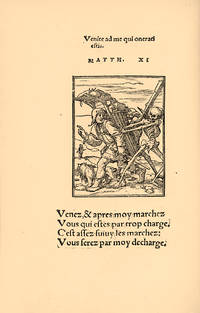
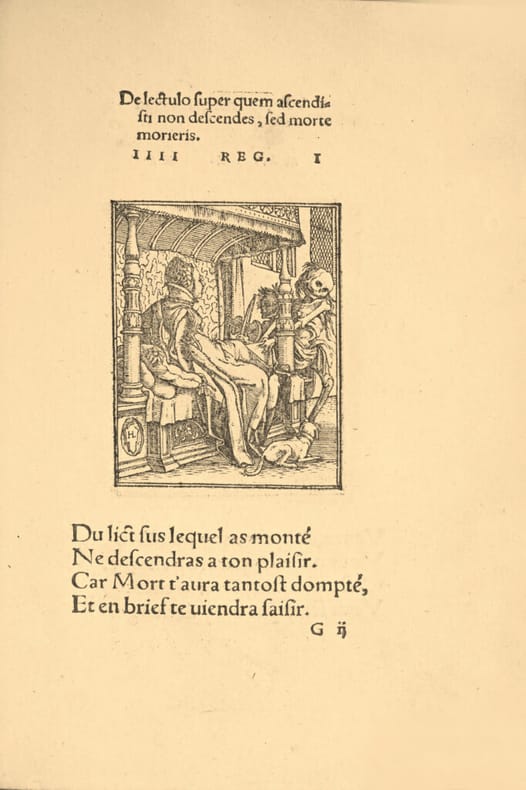
ABAA-75TH-VBF-11<p>Lyon Melchior & Gaspar Trechsel 1538.</p><p>Small 4to of 52 leaves signed A-M4.</p><p>Full brown morocco blind-stamped central fleuron decorated ribbed spine gilt inner border gilt edges. <em>Binding signed Trautz-Bauzonnet circa 1865.</em></p><p>177 x 123 mm.</p><p>" <em>Earliest known edition of this remarkable work with its most fascinating designs of exquisite finish </em>" Murray.</p><p>Brunet III 254 ; Brun <em>Le livre français illustré de la Renaissance</em> p. 222 ; Mortimer 284 ; Murray 247 ; Massmann S. 8 ; Minns 213 ; Holbein-Kat. Basel 1960 nr. 418 ; Woltmann92-149 ; Hollstein XIVa 202 99 ; 247 ; Brunschwig 428 ; Baudrier V 175 ; Rothschild I 15.</p><p><em>'Suite of 41 compositions beautifully engraved after Holbein's drawings. The monogram HL on l. 36 on the duchess's bed is by Hans Lützelbürger plate XX'.</em> Brun.</p><p>First edition of Holbein's Dance of Death whose iconographic influence continues to the present day. " <em>Holbein's contribution to the traditional Dance of Death was a sharpening of the humor and satire and a heightening of the drama so that the customary procession of figures becomes instead under his hand a series of fully realized scenes</em> " Mortimer.</p><p>Erste Druckausgabe von Holbeins Basler Totentanz. " Die Folge besteht aus 51 Bildern von denen 41 beim Tode Lützelburgers vor Johannistag 1526 vollendet waren und in der Ausgabe von 1538 erschienen. Melchior Trechsel hatte die Stöcke direkt bei Lützelburger bestellt und am Johannistag 1526 bezogen ; nach Aussage des Vorworts von 1538 getraute man sich nicht die restlichen Stöcke schneiden zu lassen " Holbein-Kat.</p><p>First printed edition of Holbein's Basel Dance of the Dead. 'The suite consists of 51 images 41 of which were completed at Lützelburger's death before Midsummer 1526 and which were published in the 1538 edition.</p><p><strong>Very rare first issue of this remarkable and famous suite of The Dance of the Dead imagined by Holbein and 'which' according to the bibliographers 'must be ranked among the most beautiful books ever published'. </strong></p><p><strong>This very precious dance of the dead comprises 41 prints engraved by Hanz Lützelburger based on drawings by Hans Holbein.</strong></p><p>The monogram <em>H</em> signs the engraving of the Duchess.</p><p><strong>In 1536 the brilliant artist was chosen as one of Henri VIII's painters.</strong></p><p><strong>In 1538 Holbein left for Belgium and then visited Lyon. This trip coincided with the first publication in that city by Gaspar and Melchior Trechsel of</strong> '<em>Simulacres et Historiées faces de la mort'</em>.</p><p>The 41 woodcuts that adorn the volume had been printed in Basel as early as 1530 but had never been brought together in a collection. Holbein's Basel collaborator Hans Lùtzelburger executed here the engravings from his master's drawings see his monogram 'HL' on f. 36. </p><p><strong>The first series of these chilling yet humorous images gives great importance to what was to become one of the most famous illustrated books of the Renaissance. </strong></p><p>Holbein's last known work was a drawing dated 1543 the year in which the great artist was struck down by a plague epidemic.</p><p><strong>The absolutely remarkable iconography bears witness to Holbein's genius in the originality expression and realism of the scenes evoking the different classes of society as well as in the extreme finesse of the drawing.</strong></p><p><em>'The wonderful pictures of his most facinating designs of exquisite finish'</em> were the source of inspiration for many later artists.</p><p>Each of the engravings is laid out under an extract of 3 Latin lines from the Bible and is accompanied by a quatrain in French.</p><p>All classes of society are represented in this masterly production with its fascinating realism.</p><p>The work was so successful that 12 editions were published between 1538 and 1562.</p><p>The quatrains and epistle in French are attributed to Jean de Vauzelles or Gilles Corrozet.</p><p>The widest copy height: 177 mm recorded on the market for several decades.</p><p>Provenance: the copy comes from the famous library of the entrepreneur philanthropist and bibliophile <em>Charles William Dyson Perrins</em> 1864-1958; <em>Sam Josefowitz Pully </em>- then by descent to the present owners. </p><p>FR</p><p>Lyon Melchior & Gaspar Trechsel 1538.</p><p>Petit in-4 de 52 feuillets signés A-M4.</p><p>Plein maroquin brun fleuron central à froid dos à nerfs orné filets or sur les coupes roulette intérieure tranches dorées. <em>Reliure signée de Trautz-Bauzonnet vers 1865.</em></p><p>177 x 123 mm.</p><p>" <em>Earliest known edition of this remarkable work with its most fascinating designs of exquisite finish </em>" Murray.</p><p>Brunet III 254 ; Brun <em>Le livre français illustré de la Renaissance</em> p. 222 ; Mortimer 284 ; Murray 247 ; Massmann S. 8 ; Minns 213 ; Holbein-Kat. Basel 1960 nr. 418 ; Woltmann92-149 ; Hollstein XIVa 202 99 ; 247 ; Brunschwig 428 ; Baudrier V 175 ; Rothschild I 15.</p><p>"<em>Suite de 41 compositions merveilleusement gravées d'après les dessins d'Holbein. Le monogramme HL qui se voit au f. 36 sur le lit de la duchesse est celui de Hans Lützelbürger planche XX</em> ". Brun.</p><p>First edition of Holbein's Dance of Death whose iconographic influence continues to the present day. " <em>Holbein's contribution to the traditional Dance of Death was a sharpening of the humor and satire and a heightening of the drama so that the customary procession of figures becomes instead under his hand a series of fully realized scenes</em> " Mortimer.</p><p>Erste Druckausgabe von Holbeins Basler Totentanz. " Die Folge besteht aus 51 Bildern von denen 41 beim Tode Lützelburgers vor Johannistag 1526 vollendet waren und in der Ausgabe von 1538 erschienen. Melchior Trechsel hatte die Stöcke direkt bei Lützelburger bestellt und am Johannistag 1526 bezogen ; nach Aussage des Vorworts von 1538 getraute man sich nicht die restlichen Stöcke schneiden zu lassen " Holbein-Kat.</p><p>Première édition imprimée de la danse macabre bâloise de Holbein. "La suite se compose de 51 images dont 41 étaient achevées à la mort de Lützelburger avant la Saint-Jean 1526 et qui ont été publiées dans l'édition de 1538….</p><p><strong>Premier tirage de grande rareté de cette remarquable et célèbre suite de la danse des morts imaginée par holbein et " qui doit " selon les bibliographes " être rangée parmi les plus beaux livres qui aient été publiés ". </strong></p><p><strong>Cette très précieuse danse des morts comprend 41 estampes gravées par hanz lützelburger sur les dessins de hans holbein.</strong></p><p>Le monogramme <em>H</em> signe la gravure de la Duchesse.</p><p><strong>en 1536 le génial artiste est choisi comme l'un des peintres de Henri VIII.</strong></p><p><strong>en 1538 Holbein part pour la Belgique puis visite Lyon. Ce voyage coïncida avec la première publication dans cette ville par Gaspar et Melchior Trechsel des</strong> " <em>Simulacres et Historiées faces de la mort</em> ".</p><p>Les 41 bois gravés qui ornent le volume avaient été tirés à Bâle dès 1530 mais n'avaient jamais été réunis en recueil. Le collaborateur bâlois de Holbein Hans Lùtzelburger exécute ici les gravures d'après les dessins de son maître voir son monogramme "HL" au f. 36. </p><p><strong>La première réunion en série de ces images à la fois glaçantes et teintées d'humour confère toute son importance à ce qui allait devenir l'un des livres illustrés les plus célèbres de la Renaissance. </strong></p><p>Le dernier ouvrage connu d'Holbein fut un dessin daté de 1543 année où le grand artiste fut terrassé par une épidémie de peste.</p><p><strong>L'iconographie absolument remarquable témoigne du génie d'Holbein dans l'originalité l'expression et le réalisme des scènes évoquant les différentes classes de la société ainsi que dans la finesse extrême du dessin.</strong></p><p>" <em>The wonderful pictures of its most facinating designs of exquisite finish</em> " furent la source où plusieurs artistes postérieurs puiseront leur inspiration.</p><p>Chacune des gravures est mise en page sous un extrait de 3 lignes latines de la Bible et est accompagnée d'un quatrain en français.</p><p>Toutes les classes de la société sont réunies dans cette mise en scène magistrale au réalisme fascinant.</p><p>L'ouvrage connut d'ailleurs un tel succès que 12 éditions se succédèrent de 1538 à 1562.</p><p>Les quatrains et épître en français sont attribués à Jean de Vauzelles ou Gilles Corrozet.</p><p>Le plus grand exemplaire hauteur : 177 mm répertorié sur le marché depuis plusieurs décennies.</p><p>Provenance : l'exemplaire provient de la célèbre bibliothèque de l'entrepreneur philanthrope et bibliophile <em>Charles William Dyson Perrins</em> 1864-1958 ; <em>Sam Josefowitz Pully</em> – puis par descendance aux propriétaires actuels. </p> hardcover
LCS-18475Les plus grand exemplaire (hauteur: 177 mm) répertorié sur le marché depuis plusieurs décennies. Lyon, Melchior & Gaspar Trechsel, 1538. Petit in-4 de (52) feuillets, signés A-M4. Plein maroquin brun, fleuron central à froid, dos à nerfs orné, filets or sur les coupes, roulette intérieure, tranches dorées. Reliure signée de Trautz-Bauzonnet, vers 1865. 177 x 123 mm.