HOLBEIN Hans:Livre Rare Book

91 résultats
184218637Paris, Jules Labitte, sans date [1842]. Petit in-12 de 252-[2] pages, demi-chagrin chocolat, dos à nerfs orné de filets et fleurons dorés. Reliure signée Faille.
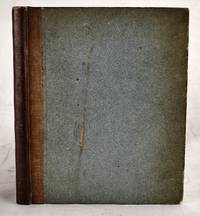
18032301030063Printed by S. Gosnell London 1803. Hardcover. Good. The Dances of Death: Memento Mori Small 4to. Rebacked in later cloth over early blue boards. Solid binding. Some shelf wear. Engraved frontispiece title in French of the 1786 ed: "Le triomphe de la mort grave d'apres les desins originaux de Jean Holbein par Deuchar" Some toning spotting. 41 of 46 copper engraved plates. Inscription of "Hugh Frazier Parker St. John's College Oxford 1932" on front end page. Han's Holbein's series of woodcuts was first published in 1536 and became the most famous illustrations published on this theme. Minns Collection 269. [Printed by S. Gosnell], [London] hardcover
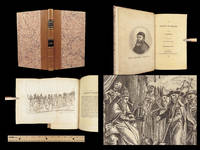
1804ABE-8815288054John Harding London 1804 small leather bound volume with engravings by W. Hollar after the work of Hans Holbein boards a bit worn spine worn ffep loose but generally in quite good shape one fold out ills. Danse McCaber missing front edge 30 engravings by W. Hollar from the original painting of Hans Holbeing including Danse of Macaber: In a contemporary English gold-tooled painted calf binding. Wencelas Hollar is viewed a one of the formost engravers of his time late 1600 his copper plates were known to be in use until the mid-1800's. Holbein is regarded as the premier portrait painter of all time and was attached to the court of Henry VIII. of the many copies of the Dance of Death this one is quite scarce There is a copy in the British Library. Hollar's engravings alone are quite collectable.The Dance of Death; painted by H. Holbein and engraved by W. Hollar. With introductory essays by Francis Douce. London: John Harding 1804. pp. 70: plates; Language: eng Language: eng 0.0 Language: eng Language: eng Language: eng Language: eng. 1st Edition. Hardcover. Good/No Jacket. John Harding, London hardcover
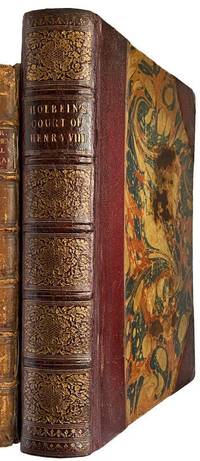
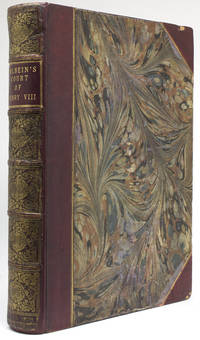
18842059London: Hamilton Adams 1884. Hardcover. Very Good. Very Good hardcover red leather spine and corners over marbled boards. Wear to lower edge of covers some starting separation over cover at lower spine area but not just weak. Glit edges on all sides. Pictures on request oversize item will require extra postage Hamilton, Adams hardcover
18842307070012London: Hamilton Adams Co 1884. Hardcover. Very Good. The Court of Henry VIII: Including a portrait of Queen Anne Boleyn Folio 60 cm. Bound in contemporary morocco over pattered boards. 50 pages 90 chromolithograph plates by Francis Bortolozzi after Holbein: chiefly color portraits. Scattered spotting. <br> This is an oversized or heavy book which requires additional postage for international delivery outside the US. London: Hamilton, Adams Co hardcover
18166531ALondon, Coxhead, 1816. 8°. 70 Textseiten, 2 gest. Portraits und 31 kolorierte Tafeln. Lederband d. Zeit mit reicher Rückenvergoldung, Steh,-Innen- und Aussenkantenfileten. Kanten u. Gelenke minimal berieben.
1803FB5537 /4D<p>Red leather binding with raised banding gilt decoration and title on the spine. Gilt 'Cambridge panel' on the boards.</p><p>"Descriptions of each plate in French and English with the Scripture Text from which the designs were taken. Printed by W. Smith and Co. King Street Seven Dials for John Scott No. 447 Strand: & Thomas Ostell No. 3 Ave Maria Lane 1803". Engraved frontispiece engraved title engraved portrait of Holbein. Full leather cover with embossed design and gilt decoration. This is a very hard to find rare book.</p><p>Note: this book is lovingly reset in its original papers by the expert bookbinder Brian Cole. It is again in fantastic condition which ought to see out a further two hundred years.</p><p>The Dance of Death 1493 by Michael Wolgemut from the Nuremberg Chronicle of Hartmann Schedel</p><p>The Danse Macabre also called the Dance of Death is an artistic genre of allegory from the Late Middle Ages on the universality of death.</p><p>The Danse Macabre consists of the dead or a personification of death summoning representatives from all walks of life to dance along to the grave typically with a pope emperor king child and laborer. The effect is both frivolous and terrifying beseeching its audience to react emotionally. It was produced as memento mori to remind people of the fragility of their lives and how vain the glories of earthly life. Its origins are postulated from illustrated sermon texts; the earliest recorded visual scheme apart from 14th century Triumph of Death paintings was a now-lost mural at Holy Innocents' Cemetery in Paris dating from 1424 to 1425.</p><p>Hans Holbein the Younger Hans Holbein der Jüngere; c. 1497 – between 7 October and 29 November 1543 was a German-Swiss painter and printmaker who worked in a Northern Renaissance style and is considered one of the greatest portraitists of the 16th century. He also produced religious art satire and Reformation propaganda and he made a significant contribution to the history of book design. He is called "the Younger" to distinguish him from his father Hans Holbein the Elder an accomplished painter of the Late Gothic school.</p><p>Holbein was born in Augsburg but worked mainly in Basel as a young artist. At first he painted murals and religious works and designed stained glass windows and illustrations for books from the printer Johann Froben. He also painted an occasional portrait making his international mark with portraits of humanist Desiderius Erasmus of Rotterdam. When the Reformation reached Basel Holbein worked for reformist clients while continuing to serve traditional religious patrons. His Late Gothic style was enriched by artistic trends in Italy France and the Netherlands as well as by Renaissance humanism. The result was a combined aesthetic uniquely his own.</p><p>Holbein travelled to England in 1526 in search of work with a recommendation from Erasmus. He was welcomed into the humanist circle of Thomas More where he quickly built a high reputation. He returned to Basel for four years then resumed his career in England in 1532 under the patronage of Anne Boleyn and Thomas Cromwell. By 1535 he was King's Painter to Henry VIII of England. In this role he produced portraits and festive decorations as well as designs for jewellery plate and other precious objects. His portraits of the royal family and nobles are a record of the court in the years when Henry was asserting his supremacy over the Church of England.</p><p>Holbein's art was prized from early in his career. French poet and reformer Nicholas Bourbon the elder dubbed him "the Apelles of our time" a typical accolade at the time. Holbein has also been described as a great "one-off" in art history since he founded no school. Some of his work was lost after his death but much was collected and he was recognized among the great portrait masters by the 19th century. Recent exhibitions have also highlighted his versatility. He created designs ranging from intricate jewellery to monumental frescoes.</p><p>Holbein's art has sometimes been called realist since he drew and painted with a rare precision. His portraits were renowned in their time for their likeness and it is through his eyes that many famous figures of his day are pictured today such as Erasmus and More. He was never content with outward appearance however; he embedded layers of symbolism allusion and paradox in his art to the lasting fascination of scholars. In the view of art historian Ellis Waterhouse his portraiture "remains unsurpassed for sureness and economy of statement penetration into character and a combined richness and purity of style'.</p><p>Renowned for his Dance of Death series the famous designs by Hans Holbein the Younger 1497–1543 were drawn in 1526 while he was in Basel. They were cut in wood by the accomplished Formschneider block cutter Hans Lützelburger.</p><p>William Ivins quoting W. J. Linton writes of Lützelburger's work wrote:</p><p>"'Nothing indeed by knife or by graver is of higher quality than this man's doing.' For by common acclaim the originals are technically the most marvelous woodcuts ever made."</p><p>These woodcuts soon appeared in proofs with titles in German. The first book edition containing forty-one woodcuts was published at Lyons by the Treschsel brothers in 1538. The popularity of the work and the currency of its message are underscored by the fact that there were eleven editions before 1562 and over the sixteenth century perhaps as many as a hundred unauthorized editions and imitations. Ten further designs were added in later editions.</p><p>The Dance of Death 1523–26 refashions the late-medieval allegory of the Danse Macabre as a reformist satire and one can see the beginnings of a gradual shift from traditional to reformed Christianity. That shift had many permutations however and in a study Natalie Zemon Davis has shown that the contemporary reception and afterlife of Holbein's designs lent themselves to neither purely Catholic or Protestant doctrine but could be outfitted with different surrounding prefaces and sermons as printers and writers of different political and religious leanings took them up. Most importantly "The pictures and the Bible quotations above them were the main attractions … Both Catholics and Protestants wished through the pictures to turn men's thoughts to a Christian preparation for death.".</p><p>The 1538 edition which contained Latin quotations from the Bible above Holbein's designs and a French quatrain below composed by Gilles Corrozet 1510–1568 actually did not credit Holbein as the artist. It bore the title: Les simulachres & / HISTORIEES FACES / DE LA MORT AUTANT ELE/gammēt pourtraictes que artifi/ciellement imaginées. / A Lyon. / Soubz l'escu de COLOIGNE. / M.D. XXXVIII. "Images and Illustrated facets of Death as elegantly depicted as they are artfully conceived." These images and workings of death as captured in the phrase "histories faces" of the title "are the particular exemplification of the way death works the individual scenes in which the lessons of mortality are brought home to people of every station."</p> John Scott & Thomas Ostell. hardcover
180428422<p><strong>1804 Dance of Death 1st edition Hans Holbein & Wenceslas Hollar Occult ART </strong></p><p>Wenceslaus Hollar first published his 30 copperplate adaptions of Hans Holbein's dark allegory of '<em>Dance of Death</em>' in 1651. The 1804 edition incorporates the 30 plates plus engravings of Holbein and Hollar and published at the waning of the gothic moment is most notable for its bold illustrated plates – the most famous of which is Hollar's "<em>The Dance of Death Procession</em>" originally engraved for a 1658 history of St. Paul's Cathedral. </p><p>Item number: #28422</p><p>Price: $950</p><p>HOLBEIN Hans</p><p><strong><em>The dance of death; from the original designs of Hans Holbein. Illustrated with thirty-three plates engraved by W. Hollar. With descriptions in English and French.</em></strong></p><p>London: printed by Whittingham for John Harding 1804. First edition.</p><p><u>Details</u>: </p><p><!-- if !supportLists-->· <!--endif-->Collation: Complete with all pages </p><p><!-- if !supportLists-->o <!--endif-->70 2</p><p><!-- if !supportLists-->o <!--endif-->32 engravings</p><p><!-- if !supportLists-->· <!--endif-->Language: English</p><p><!-- if !supportLists-->· <!--endif-->Binding: Leather; tight & secure</p><p><!-- if !supportLists-->· <!--endif-->Size: ~8in X 5.25in 20cm x 13cm</p><p><!-- if !supportLists-->· <!--endif-->Very rare and desirable with auction records and price comparisons as high as $2500</p><p>Our Guarantee:</p><p>Very Fast. Very Safe. Free Shipping Worldwide.</p><p>Customer satisfaction is our priority! Notify us with 7 days of receiving and we will offer a full refund without reservation!</p><p><u>Photos available upon request. </u></p> Whittingham, for John Harding hardcover
183218638Munchen, auf Kossten des Herausgebers, 1832. In-12 de 78 pages et l'avis au relieur, plein maroquin vert, dos à nerfs orné de caissons dorés, plats ornés de treize filets dorés encadrant les plats, simples sur les coupes, triples aux contreplats, armes de Léon Curmer frappées aux centres des plats, tranches dorées. Reliure signée Simier, r. du Roi.
1892009137London: George Bell and Sons 1892. Book. Very Good. Hardcover. Limited Edition. Imperial 16mo. One of 500 copies there were also 100 copies printed on Japanese vellum. Finely bound by Bayntun of Bath in half calf over brown buckram marbled end papers top edge gilt. Very Good lacking the labels calf rubbed at edges. With facsimile reproduction of title-page of original edition. Appended are 8 supplementary cuts added to later editions. Accompanying each cut is a related passage of Scripture in Latin with a quatrain giving its equivalent rendering in French probably by Gilles Corrozet. Copies of 41 woodcuts supposed to have been executed from Holbein's designs by Hans Lu¨tzelburger and originally published Lyons 1538. 2 preliminary leaves 18 pages 3 leaves : xlix plates illustrations facsimile. OCLC Number: 2813639. Uncommon in current commerce. George Bell and Sons Hardcover
182843911London: Printed by William Bulmer and Co. Shakspeare Printing Office 1828. folio 35x 25cm The Second Edition not paginated WITH: 84 hand-coloured portrait engravings with tissue guards 80 listed biography following each portrait plate In contemporary half dark crimson morocco gilt ruled raised bands full gilt decorations in the panels gilt block titles marbled boards and end papers early rebacked with inner linen hinges top edge gilt some slight shelf wear on the boards and some wear on the marble board edges the first two plates are foxed several other plates have slight occasion foxing. Very Good to Fine. Hans Holbein the Younger served in England for two periods the first 1526 to 1528 under the patronage of Thomas More and Anne Boleyn and the second period 1532 to 1540 becoming King's Painter to Henry VIII. This massive tome displays 84 Holbein portraits painted during this period including Anne Boleyn Anne of Cleeve Catherine Howard Sir Thomas More Jane Seymour Thomas Cromwell Edward Prince of Wales Queen Mary William Warham Archbishop of Canterbury and many other courtiers and nobles. 80 portraits are listed but also included are a self-portrait of Holbein and another of his wife as frontispieces and two miniatures of Charles and Henry sons of Charles Brandon Earl of Suffolk. The portraits are remarkable for their precision with many of the portraits being fixed images for posterity. Note this first twelve plates do not have the biographical plate text. Printed by William Bulmer and Co., Shakspeare Printing Office unknown
182844152London: William Bulmer and Co. Shakespeare Printing-Office 1828. Second edition. With 84 hand-colored stipple engravings after drawings by Hans Holbein in the Royal collections with tissue guards. Printed on pink or white paper. Unpaginated. 1 vols. Folio 14 x 10 inches. Contemporary 3/4 red morocco panelled spine elaborately gilt with brown morocco lettering-piece a.e.g. original spine neatly laid down. Second edition. With 84 hand-colored stipple engravings after drawings by Hans Holbein in the Royal collections with tissue guards. Printed on pink or white paper. Unpaginated. 1 vols. Folio 14 x 10 inches. A handsome collection of portraits many printed on toned paper with letterpress commentaries on the subjects' lives. In addition to the 80 portraits called for in the printed "List of Plates" there should also be 4 plates which that list omits: the portrait of Holbein himself that of his wife and the portraits of Henry and Charles sons of Charles Brandon Duke of Suffolk. William Bulmer and Co., Shakespeare Printing-Office unknown
182844152London: William Bulmer and Co. Shakespeare Printing-Office 1828. Second edition. With 84 hand-colored stipple engravings after drawings by Hans Holbein in the Royal collections with tissue guards. Printed on pink or white paper. Unpaginated. 1 vols. Folio 14 x 10 inches. Contemporary 3/4 red morocco panelled spine elaborately gilt with brown morocco lettering-piece a.e.g. original spine neatly laid down. Second edition. With 84 hand-colored stipple engravings after drawings by Hans Holbein in the Royal collections with tissue guards. Printed on pink or white paper. Unpaginated. 1 vols. Folio 14 x 10 inches. A handsome collection of portraits many printed on toned paper with letterpress commentaries on the subjects' lives. In addition to the 80 portraits called for in the printed "List of Plates" there should also be 4 plates which that list omits: the portrait of Holbein himself that of his wife and the portraits of Henry and Charles sons of Charles Brandon Duke of Suffolk. William Bulmer and Co., Shakespeare Printing-Office unknown books
1803985London: W. Smith and Co. 1803. Hardcover. Very Good. Very Good condition. "Descriptions of each plate in French and English with the Scripture Text from which the designs were taken. Printed by W. Smith and Co. King Street Seven Dials for John Scott No. 447 Strand: & Thomas Ostell No. 3 Ave Maria Lane 1803". Engraved frontispiece engraved title engraved portrait of Holbein. All gilt edges full leather cover with embossed design and gilt decoration. Foxing or spotting evident to many pages but is generally light. Note that two editions were printed this same year the other printed by Gosnell. Leather cover shows some slight corner wear cover wear and top of spine heavily worn. This is a very hard to find rare book. W. Smith and Co. hardcover
189220411<p>1 of 500 prints with written descriptions</p> Ex Libris Society hardcover
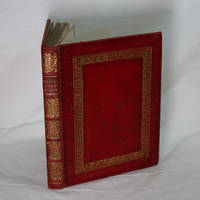
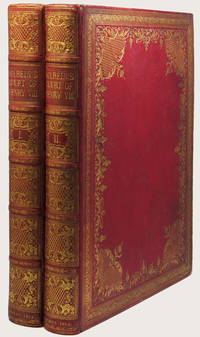
181234168London: Published by John Chamberlaine the Keeper of the King's Drawings and Medals. Printed by William Bulmer and Co. Shakespeare Printing Office 1812. 2 volumes. First Edition of the century First Issue the second edition overall. A RARE EXAMPLE WITH THE PLATES BOTH IN COLOURED AND UNCOLOURED STATE THUS WITH DOUBLE THE NUMBER OF PLATES NORMALLY ENCOUNTERED. With 84 hand-coloured plates and 84 plates uncoloured all separately printed on India paper and tipped onto full-page leaves each facing the other the plates with protective leaf separating the two each image with two variations mezzotint portraits of Holbein and his wife a total of 168 illustrations on full-page plates four plates dated from the first printing in 1792 the other 164 dated 1812 as with the publishing date. The plates are printed on a variety of papers slightly different from one another--grey buff white lavender and pink. Folio 34.5 x 2 beautifully bound in full red morocco gilt extra the spines with gilt tooled raised bands separating the compartments which are elaborately gilt decorated within triple gilt filleted frames gilt stippling to the borders of the frames lettered in gilt in one compartment the covers beautifully gilt decorated in all-over designs the borders with gilt stippled lines enclosing three gilt filleted borders surrounding an elaborate gilt inner border of floral tooling bordered again by a stippled and multi-filleted gilt frame the whole surrounding elaborate and large gilt tooled decorations at the inner corners and along the rules the edges gilt ruled the turnovers gilt rolled marbled endleaves all edges gilt very elaborate and beautifully preserved binding work. unpaginated. Fine copies beautifully preserved very light wear or age evidence to the bindings which remain strong the pages and plates all in good order some very occasional light foxing to the papers as is typical the colours remain vibrant and as printed the giltwork on the bindings is in very pleasing condition a very handsome set indeed. FIRST EDITION AND AN UNUSUALLY SPECIAL COPY BOUND IN FULL RED MOROCCO GILT EXTRA WITH THE PLATES PRINTED ON INDIA PAPER IN BOTH COLOURS AND BLACK AND WHITE A COPY WITH DOUBLE THE NUMBER OF PLATES USUALLY ENCOUNTERED. Hans Holbein the Younger; c. 1497 – between 7 October and 29 November 1543 was a German-Swiss painter and printmaker who worked in a Northern Renaissance style and is considered one of the greatest portraitists of the 16th century. He also produced religious art satire and Reformation propaganda and he made a significant contribution to the history of book design. He is called "the Younger" to distinguish him from his father Hans Holbein the Elder an accomplished painter of the Late Gothic school.<br> Holbein was born in Augsburg but worked mainly in Basel as a young artist. At first he painted murals and religious works and designed stained glass windows and illustrations for books from the printer Johann Froben. He also painted an occasional portrait making his international mark with portraits of humanist Desiderius Erasmus of Rotterdam.<br> Holbein travelled to England in 1526 in search of work with a recommendation from Erasmus. He was welcomed into the humanist circle of Thomas More where he quickly built a high reputation. He returned to Basel for four years then resumed his career in England in 1532 under the patronage of Anne Boleyn and Thomas Cromwell. By 1535 he was King's Painter to Henry VIII. In this role he produced portraits and festive decorations as well as designs for jewellery plate and other precious objects. His portraits of the royal family and nobles are a record of the court in the years when Henry was asserting his supremacy over the Church of England.<br> Holbein's art has sometimes been called realist since he drew and painted with a rare precision. His portraits were renowned in their time for their likeness and it is through his eyes that many famous figures of his day are pictured today such as Erasmus and More. He was never content with outward appearance however; he embedded layers of symbolism allusion and paradox in his art to the lasting fascination of scholars. In the view of art historian Ellis Waterhouse his portraiture "remains unsurpassed for sureness and economy of statement penetration into character and a combined richness and purity of style."<br> For Holbein "everything began with a drawing". A gifted draughtsman he was heir to a German tradition of line drawing and precise preparatory design. Holbein's chalk and ink portraits demonstrate his mastery of outline. He always made preparatory portraits of his sitters though many drawings survive for which no painted version is known suggesting that some were drawn for their own sake.<br> Ellis Waterhouse wrote that "modern" painting in England may be said to have begun with Holbein. That later artists were aware of his work is evident in their own sometimes explicitly. Hans Eworth for example painted two full-length copies in the 1560s of Holbein's Henry VIII derived from the Whitehall pattern and included a Holbein in the background of his Mary Neville Lady Dacre. The influence of Holbein's "monumentality and attention to texture" has been detected in Eworths' work. According to art historian Erna Auerbach: "Holbein's influence on the style of English portraiture was undoubtedly immense. Thanks to his genius a portrait type was created which both served the requirements of the sitter and raised portraiture in England to a European level. It became the prototype of the English Court portrait of the Renaissance period".<br> Holbein worked for Thomas Cromwell as he masterminded Henry VIII's reformation. Cromwell commissioned Holbein to produce reformist and royalist images including anti-clerical woodcuts and the title page to Myles Coverdale's English translation of the Bible. Henry VIII had embarked on a grandiose programme of artistic patronage. His efforts to glorify his new status as Supreme Head of the Church culminated in the building of Nonsuch Palace which started in 1538. By 1536 Holbein was employed as the King's Painter on an annual salary of 30 pounds—though he was never the highest-paid artist on the royal payroll. see C. Müller et al.<br> This striving for perfection is very evident in his portrait drawings where he searches with his brush for just the right line for the sitter's profile. The critical faculty in making this choice and his perception of its potency in communicating decisively the sitter's character is a true measure of Holbein's supreme greatness as a portrait painter. Nobody has ever surpassed the revealing profile and stance in his portraits: through their telling use Holbein still conveys across the centuries the character and likeness of his sitters with unrivalled mastery. see J. Rowlands Hans Holbein the Younger 1985 Published by John Chamberlaine, the Keeper of the King's Drawings and Medals. Printed by William Bulmer and Co., Shakespeare Pri hardcover